Fundación ProAves – por la conservación en el país de las aves

Categorías
News

Last 4 places for the VI course of ringing

It will be introduced to the systematization of data and analysis of results focused to answer questions relevant to the conservation of migratory and endemic birds.

The course will be attended by senior instructors from The Wetland Trust (England) and Fundación ProAves (Colombia).

Topics to be addressed:

Scientific ringing, capture and data collection (Silent, age, sex), monitoring, identification of migratory species, ecology.

Date:

March 26 to April 3, 2010.

Location:

Minca Hotel and Nature Reserve El Dorado Bird.

Sierra Nevada de Santa Marta – Magdalena – COLOMBIA.

Requirements for participants:

Students or professionals with experience in bird research or who intend to work with this group of organisms in the near future. Preferably with knowledge of English. Limited seating for 20 people.

Registration and Investment:

The information on enrollment and investment for the course will be published later.

Categorías
News

Conservation Plans

RNA_Colibr
Dusky Starfontlet Bird Reserve.

In order to guide strategies and actions for management, conservation, restoration and sustainable use of Dusky Starfrontlet Bird Reserve and its buffer zone, established a conservation plan. This plan was based on a methodology of The Nature Conservancy which guided us to analyze the most important aspects for effective planning, such as:

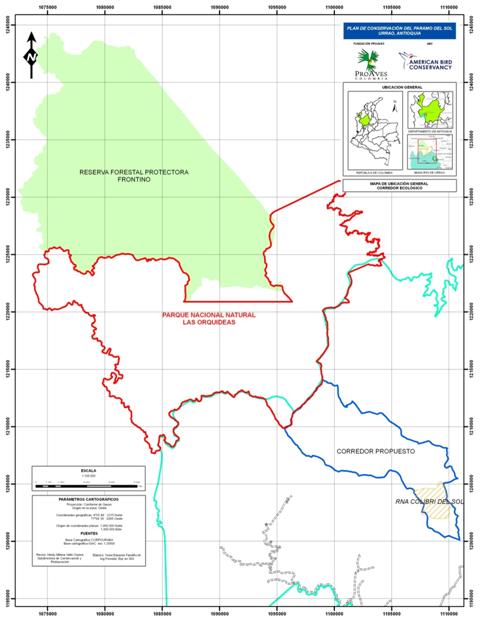
1. Conservation targets: potential and current use of habitat of the threatened species selected, which in our case were 16 species and the ecosystem: Páramo del sol, Quercus humboltii, Espeletia frontinoensis, Polylepis quadrijuga, Atelopus nicefori, Bolitoglossa Medemia, Centrolene geckoideum, Centrolene buckleyi , Coeligena urine, Hypopyrrhus pyrohypogaster, Diglossa gloriosissima, Hapalopsittaca amazonina, Grallaria alleni, Chlorochrysa nitidissima, Dendroica cerúlea and Tremarctos ornatus. Based on this information priority areas were identified to conserve in an area of 80,000 hectares defining a conservation corridor that will connect to the Natural Bird Reserve Colibrí del Sol with PNN Orchids.

2. Threat analysis: We worked with the program Miradi.

3. Sources of stress analysis.

4. Social and biophysical characterization.

5. Evaluation of environmental goods and services.

6. Zoning.

7. Characterization farm.

8. Planning targets.

9. Ecotourism plan. 

All information was analyzed in the same way with the tool of Geographical Information Systems (GIS).

The study area of 80,000 hectares covering the towns of Urrao, Abriaquí, Santa Fe de Antioquia and Caicedo in the department of Antioquia, and was selected as an area of high global importance for biodiversity conservation and other natural resources (EBA 2005). It offers a variety of habitats for a high diversity of fauna and flora and presents a unique scenic beauty as well as being ranked as the biggest hydrographic star of the Antioquia basin. This site has 12 species of birds have been seen for the first time in the western mountains, 28 species had extensions of range in the western mountains and three species listed by the IUCN are threatened with global extinction, on the other hand, is the Coeligena urine Hummingbird, known as Inca Frontino, which only had a registry entry by Carriker in 1951.

According to Krabbe et al 2005, the Frontino Páramo area is of particular relevance to global bird conservation and should be classified as a “key site” in this sense, which is also listed as a site AZE – CO2.

mapa_plan

Conservation Plan Páramo del Sol (Urrao, Antioquia).

An important product of this paper was to identify the area to where the conservation action of the Natural Bird Reserve Colibrí del Sol should be guided, this point was highlighted much because it is a tool that tells us how to effectively address conservation actions, which is why this plan will be a pilot plan at the time of planning and establishing private conservation areas in the country and Latin America.

With the support of:

abc


Categorías
News

Reciprocal Water Agreements

IMG_0722

Reciprocal Water Agreements is a strategy that meets many of the characteristics of PES. These are being developed on a medium scale between the municipalities of Roncesvalles (Tolima) with the Cucuana river basin (upper basin as a water regulator) and the urban area of Roncesvalles and El Espinal (Tolima) (lower basin as users of this water supply) .

This strategy has been developed thanks to the support of RARE Conservation, Roncesvalles Municipal Mayor’s Office, Roncesvalles Municipal Council, Roncesvalles Public Services Company ESPRON, the community of the La Yerbabuena, El Coco, San Miguel, San Marcos, Cucuanita villages , Tesoro and the USOCOELLO Irrigation District.

Location:

The Cucuana basin as a whole has 187,662 hectares (Roncesvalles, San Antonio, Rovira Guamo and Ortega). Only the upper part of the basin in Roncesvalles has more than 11,000 hectares; We are also linking the Cucuanita sub-basin, which is 8,142 hectares, the San Marcos river sub-account, which has 10,183 hectares, and the Quebrada el Arbolito micro-basin, which has 490 hectares, from which they take the water for the urban area of Roncesvalles.

Beneficiary human population:

The development of the PSA program will benefit more than 10,000 people, between owners and users of domestic consumption and irrigation in the two municipalities.

Biodiversity:

This project will contribute to the conservation of a population of yellow-eared parrots of more than 800 individuals, plus a large number of species of animals and plants that inhabit these two ecosystems (páramos and high Andean forest), which are also to some degree threat.

Objective:

The objective of this tool is to conserve the moors and forests located in the upper part of the Cucuana River as water regulators and habitat of the yellow-eared parrot, an AZE species and in danger of extinction by paying economic incentives to the owners with the support of the creation of a water fund which will be nourished by resources from the municipality and downstream users.

This tool will be developed in parallel with a social marketing strategy which will promote a change in behavior in the community that owns and uses the Cucuana basin.

P1090214

Currently it has been developed:

1. Delimitation of the work area.

2. Consensus workshops with the upper and lower basin communities.

3. Opportunity cost evaluation.

4. Meetings with the sidewalks.

5. Meetings with key stakeholders.

6. Legal study establishment of the fund.

Categorías
News

Acuerdos Recíprocos por Agua

IMG_0722

Los Acuerdos Recíprocos por Agua es una estrategia que cumple muchas de las características de los PSA. Estos se están desarrollando en mediana escala entre los municipios de Roncesvalles (Tolima) con la cuenca del río Cucuana (cuenca alta como regulador hídrico) y el casco urbano de Roncesvalles y El Espinal (Tolima) (cuenca baja como usuarios de esta oferta hídrica).

Esta estrategia se ha venido desarrollando gracias al apoyo de RARE Conservation, Alcaldía Municipal de Roncesvalles, el Concejo Municipal de Roncesvalles, Empresa de Servicios Públicos de Roncesvalles ESPRON, la comunidad de las veredas La Yerbabuena, El Coco, San Miguel, San Marcos, Cucuanita, Tesoro y el Distrito de Riego USOCOELLO.

Localización:

La cuenca del Cucuana en su totalidad tiene 187.662 hectáreas (Roncesvalles, San Antonio, Rovira Guamo y Ortega). Solo la parte alta de la cuenca en  Roncesvalles tiene más de 11.000 hectáreas; también estamos vinculando la subcuenca del Cucuanita que son 8.142 hectáreas, la subcuenta del río San Marcos que tiene 10.183 hectáreas y la microcuenca de la Quebrada el Arbolito que tiene 490 hectáreas, de la cual toman el agua para el casco urbano de Roncesvalles.

Población humana beneficiaria:

El desarrollo del programa PSA beneficiara a más de 10.000 personas, entre propietarios y usurarios de consumo domestico y de riego en los dos municipios.

Biodiversidad:

Con este proyecto se aportará a la conservación de una población de loros orejiamarillos de más de 800 individuos, más una gran cantidad de especies de animales y plantas habitantes de estos dos ecosistemas (páramos y bosque altoandino), las cuales también se encuentran bajo algún grado de amenaza.

Objetivo:

El objetivo de esta herramienta es la de conservar los páramos y bosques ubicados en la parte alta del río Cucuana como reguladores hídricos y hábitat del loro orejiamarillo, especie AZE y en peligro de extinción mediante el pago de incentivos económicos a los propietarios con el apoyo de la creación de un fondo de agua el cual será nutrido por recursos del municipio y los usuarios cuenca abajo.

Esta herramienta será desarrollada paralelamente con una estrategia de mercadotécnica social la cual propiciará un cambio de comportamiento en la comunidad propietaria y usuaria de la cuenca del Cucuana.

P1090214

Actualmente se ha desarrollado:

1. Delimitación de la zona de trabajo.

2. Talleres de consenso con las comunidades cuenca alta y baja.

3. Evaluación del costo oportunidad.

4. Reuniones con las veredas.

5. Reuniones con los actores clave.

6. Estudio jurídico establecimiento del fondo.

Categorías
News Uncategorized @en

Las Tangaras Bird Reserve

Historia:

La Reserva ProAves Las Tángaras fue creada en octubre del año 2009 para proteger el hábitat de dos especies de aves endémicas: la tángara de Tatama (Bangsia aureocincta) y la tángara aurinegra (Bangsia Melanochlamys). El Municipio del Carmen de Atrato firmó el memorando de entendimiento para ser parte de la Alianza para la Cero Extinción Colombia en Octubre del 2010.

Ubicación y área:

La Reserva ProAves Las Tángaras es uno de los sitios con bosques tropicales más diversos e importantes de la Tierra, con una altitud de 1.250 a 3.400 metros sobre el nivel del mar; son casi 4.000 hectáreas que protegen la cuenca del Río Atrato (el río más importante del Chocó), que sirve como un recurso económico vital para decenas de miles de habitantes que viven en las comunidades rurales aledañas. La adquisición de este terreno ayuda a consolidar una zona de seguridad para la protección de la biodiversidad, contra la colonización rápida e insostenible, y refuerza el resguardo de varias comunidades indígenas amenazadas.

La Reserva está ubicada cerca de varios resguardos de la comunidad indígena Embera y su objetivo es amortiguar una nueva ola creciente de colonos ávidos de explotar los ricos recursos naturales del área.

Hidrografía:

Dentro del área nacen innumerables fuentes de agua, destacándose la Quebrada La Sánchez, afluente del río Atrato.

Clima:

Se encuentra en un área donde predominan la neblina y las precipitaciones a lo largo del año, la  temperatura  anual oscila entre los 8 °C y 23°C, con una precipitación anual mayor a los 4.000 m.

Tangaras
Cabaña Reserva ProAves Las Tángaras

Biodiversidad:

En cuanto a flora se destaca la presencia de innumerables epifitas y orquídeas (gen. Epidendrum sp, árboles de gran tamaño de los que sobresalen encenillos (Weinmannia sp) y aguacatillos (Ocota sp.) entre otros.

Presenta un alto índice de diversidad con registros hasta el momento de 250 especies de aves, pertenecientes a 15 ordenes y 42 familias, destacándose la Tángara de Tatama (Bangsia aureocincta), la Tángara aurinegra (Bangsia melanochlamys), el verderón del Chocó (Vireo masteri), el Musguerito gargantilla (Iridosornis porphyrocephala), el Picaflor canela (Diglossa Indigotica) y el Corretroncos barbiblanco (Margaronis stellatus) y varias especies de colibríes como Coeligena wilsonii, Boissaneaua jardini y Heliodoxa imperatrix.

En anfibios es frecuente encontrar especímenes de las familias Centrolenidae, Bufonidae y Stabomantidae, sobresaliendo además la presencia de salamandras del género Bolitoglossa.

Importancia cultural:

De destaca el hecho de encontrarse cerca a comunidades afrocolombianas  y los  resguardos indígenas de Zabaleta y Playa, donde habitan los Emberá Katío, Emberá Chamí y Emberá  Dovida.

Características Biofísicas:

Comprende las zonas de vida: bosque muy húmedo premontano (bmh-PM), bosque muy húmedo (bmh-MB) y bosque pluvial montano bajo (bp-MB).

Visítanos:

Escriba a info@proaves.org

Con el apoyo de:

Categorías
News

Volunteers urgently needed in biodiversity paradise!

Monday 9 March 2009.

Now, you can get involved in direct conservation actions in the richest bird biodiversity country in the world by participating in our EcoVolunteers Program, offered by ProAves and Ecoturs and thanks to support from the Global Conservation Fund of Conservation International.

We are seeking EcoVolunteers could contribute with their work in three of the most amazing natural reserves on the planet: El Dorado, El Paujil and Cerulean Warbler Reserves. These sites are safe and offer excellent accommodation and facilities, including internet access in or close by to the reserves.

collaage_voluntarios

For a limited period we are offering 50%+ discounts to all volunteers, with full board provided for four or more weeks.

Join ProAves dedicated and experienced conservation and research teams to implement urgently-needed conservation actions, such as:

1) clearing non-native invasive pine species,

2) reforestation with key trees for threatened wildlife

3) monitoring threatened and migratory birds, endangered primates and other wildlife.

4) Guiding and assisting visitors and local school groups.

5) Assist important reserve management activities, such as the maintenance of tree nurseries and paths.

Volunteering in our reserves in Colombia will be an unforgettable experience.

conservation international
Categorías
News

Sign-up online to volunteer now!

Friday 31 July 2009.

This is an easy user-friendly didactic tool that will allow you to know more about the conservation activities, about the beautiful natural reserves and how to apply to participate. Find in this space the ideal place to know more about the Eco-volunteers team and hot you can contribute to the conservation in the country of birds.

ProAves offers the Ecovolunteers Programme in three of the Reserves: El Dorado, El Paujil and Reinita Cielo azul. Volunteers will develop activities such as research, conservation, environmental education, communitarian service, plant conservation, agro-forestry and maintenance of the reserves, all with the aim to promote biological diversity conservation, research, and education and communitarian projects being carried out daily by ProAves.

ecovoluntarios_collage2-2
Eco-volunteers Programme
www.eco-volunteers.com

The work of our Ecovolunteers is being supervised and supported by resident researchers, environmental education instructors and administrative personnel; each week different activities will be carried out related to the different projects of each reserve. This programme offer appropriate accommodation structures to host the volunteers.

Come and join this initiative! We are already 15 active volunteers working today for conservation in the country of Birds. Subscribe here

For more information visit www.eco-volunteer.com and contact Gloria Castillo at gcastillo@proaves.org

voluntarios


Categorías
News

Help needed to monitor Cerulean Warblers

Thursday 22 October 2009.

The population of the Cerulean Warbler (CERW) has been steadily declining for the last 40 years. Conservation actions to improve survivorship in its wintering grounds in Colombia are desperately needed to address and reverse the decline of the Cerulean Warbler.

We are looking for experienced birders to track the daily activities of warblers fitted with transmitters in order to develop a better understanding of the CERW wintering habitat.

Anillamiento.El_Castillo.Anori.COP_1_

CERWs will be captured in mist-nets, fitted with transmitters, and tracked from dawn until activity stops in the evening. Monitoring will be conducted on a daily basis for the life of the transmitter (average lifespan 21 days).

Two volunteers are needed to track each CERW. One volunteer will serve as the spotter holding the receiver and antenna; the other will be the data recorder. Volunteers will stay on location at the Cerulean Warbler Bird Reserve.

Further information, please do not hesitate contacting the volunteers program coordinator Gloria Castillo at gcastillo@proaves.org.

Visit our website www.eco-volunteer.com

Categorías
News

Eco-Volunteer at El Dorado Reserve for free

Tuesday 30 March 2010.

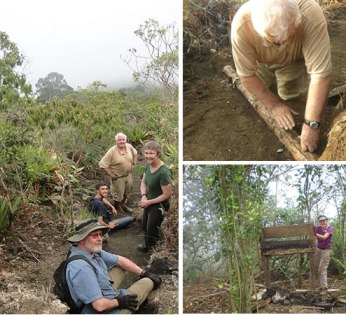
ProAves and EcoTurs are offering a special opportunity for students and professionals – volunteer for conservation in the wonderful El Dorado Reserve this summer for free! We have a limited number of spaces between June-August this summer in the Eco-volunteers Program to undertake physical activities to repair and improve the road and ecological trails in the El Dorado Nature Reserve in the Sierra Nevada de Santa Marta from 22 June to 31 August 2010. We require people in excellent physical condition, highly motivated and enthusiastic for a minimum duration of four weeks. In return, all accommodation and food is free.

Collage2-5

To apply please send letter of interest and your CV (including two referees) to gcastillo@ proaves.org before 20 April.

There are a limited number of places – so apply soon to save your place!!

Categorías
News

Volunteer in the Sierra Nevada de Santa Marta free!

Monday 26 April 2010.

We have a limited number of places for volunteers willing to perform activities that require physical effort, these activities will be carried out between 22nd June and 31st August 2010, to repair and improve roads and ecological trails of the reserve El Dorado in the Sierra Nevada de Santa Marta.

Colombian or foreign volunteers are required in good physical condition, with great enthusiasm to work a minimum of four weeks. In return we provide the accommodation and food free.

Activities will focus on the maintenance of the infrastructure of the reserve, and these activities involve the use of tools such as pickaxes, machetes, axes, shovels and wheel-burrow.

Collage2-5

At the time that applicants are approved, they must pay the registration fee and location which is $ 200,000 pesos or U.S. $ 100 (PayPal payment via credit card or other means).

Volunteers must pay travel costs to Santa Marta. The cost of all meals and accommodation in the Reserve El Dorado are provided for free. ProAves also provide transportation for all the volunteers from Santa Marta to the Reserve.

To apply please send letter of intent and resume (including two personal references) to gcastillo@proaves.org before 7th May.

There are only a limited number of places, so send your application now and secure your place!

Categorías
News

Great opportunity for volunteers

Tuesday 15 June 2010.

The volunteers will be participating in one of the most important events in the Serranía de los Yariguíes, Santander, one of the most biodiverse areas of Colombia. If you want a chance to expand your professional skills or simply learn more about Colombia’s natural wealth, come and be part of the ProAves team.

collage1-9

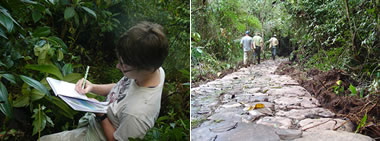
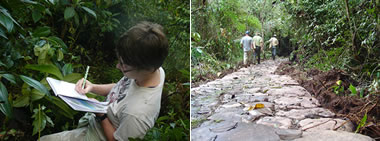
Activities such as reforestation and restoration along the Lengerke path, stone road built in 1840 by the German Geo Von Lengerke, with a length of 40 km which leads from the town of San Vicente to Zapatoca. Volunteers will also support wildlife research supported by the professional staff of the foundation, come and make a real difference in one of the most biodiverse countries on the planet!

Ask for the special offer that the ProAves Foundation and Project Yaré have for you and do not miss this great opportunity to make a difference.

paisaje-2

To apply please send a letter of intent and curriculum vitae (including two personal references) to gcastillo@proaves.org before 1 July.

There are a limited number of places, send your entry now and secure your place!

voluntarios
Categorías
News

8th Nazca Booby banding journey

Friday 5 December 2008.

As part of the institutions team participating in the Seascape Project: Promoting Marine Conservation through World Heritage in the Eastern Tropical Pacific – Sub Malpelo FFS, in September 2008 ProAves conducted the 8th banding expedition of the Nazca Booby on the Malpelo island Fauna and Flora Sanctuary.

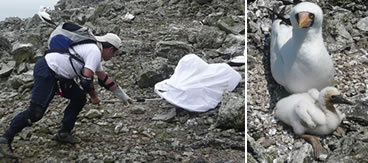
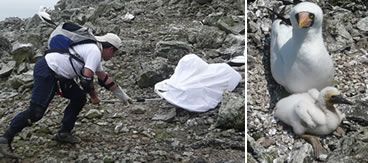
ProAves researcher Luis Felipe Barrera managed to capture and band 185 new individuals of the species and obtained new information on its population structure, patterns of molt, reproduction and behavior of the population on the island of this species.

collage_piquero

Individual of Nazca Booby with young; the researcher Luis Felipe Barrera; landscape of the island.

Through banding, ProAves has developed a long-term population monitoring of this species on the island, being its principal bird species, in order to obtain information necessary to ensure efficient parameters for their conservation in Colombia and eastern Pacific region.

During the expedition Luis Felipe obtained registers of a total of 29 bird species of which at least two are new records for the island.

This research has been supported by Fundación Malpelo and USFWS.

malpelo usfish
Categorías
News

ProAves recibe capacitación en el Reino Unido

Para fortalecer sus conocimientos y habilidades en anillamiento de aves y perfeccionar los cursos que dicta en este tema, ProAves recibió este semestre, en el Reino Unido, una capacitación de alto nivel de las organizaciones {{The Wetland Trust}} y {{[British Trust for Ornitology->http://www.bto.org/]}} (BTO).


Para fortalecer sus conocimientos y habilidades en anillamiento de aves y perfeccionar los cursos que dicta en este tema, ProAves recibió este semestre, en el Reino Unido, una capacitación de alto nivel de las organizaciones {{The Wetland Trust}} y {{[British Trust for Ornitology->http://www.bto.org/]}} (BTO).

Para ello, viajaron a Inglaterra nuestra coordinadora del {{[Programa de Aves Migratorias->https://www.proaves.org/rubrique.php?id_rubrique=4]}}, María Isabel Moreno, y la del {{[Programa de Anillamiento->https://www.proaves.org/recherche.php?recherche=Programa+de+Anillamiento]}}, Camila Gómez.

La enseñanza constó de una capacitación intensiva en métodos de anillamiento de aves -ofrecida por The Wetland Trust en su reserva natural Pannel Valley-, y un curso de anillamiento de alto nivel dictado por el BTO en la estación de anillamiento de Icklesham, una de las más reconocidas del Reino Unido.

Nuestras funcionarias aprendieron a determinar la edad y el sexo de las especies con métodos como entender las diferentes estrategias del ciclo de muda de las aves y la forma como influye en éste el desgaste del plumaje y su calidad.

La capacitación incluyó anillamiento de aves playeras y gaviotas, manipulación de polluelos y práctica de diferentes métodos de captura.

Esta instrucción, que se llevó a cabo entre julio y agosto, no sólo tendrá un efecto multiplicador en los cursos sino en las labores del Programa de Anillamiento de ProAves y en otras áreas de trabajo.

Categorías
News

Amazing records from the remote Malpelo Island

Tuesday 30 March 2010.

Banding Day 2010 SEASCAPE

Framed within the scientific research cruise SEASCAPE and as part of the monitoring program established for bird species on the island, the 13th expedition to the wildlife Sanctuary of Isla Malpelo was made by the ornithologist and Executive Director of Foundation ProAves, David Caro.

During the expeditions, ProAves has banded a total of 1500 individuals of the Nazca Booby (Sula granti); in this expedition 300 individuals were banded with all individuals being adults. The data collected during the expedition will continue to consolidate information towards the elucidation of population structure, dispersal, moult patterns, reproduction and behaviour of this population. Information was also obtained about the composition of the avifauna of the island.

collage1-7

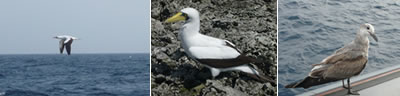
The Wildlife Sanctuary of Isla Malpelo has the largest breeding colony of Nazca Booby in the world, with 26,000 individuals (Pitman et al. 1995). The main objectives set by the scientific expeditions and days of monitoring through the ringing of the Nazca Booby (Sula granti) in the Malpelo Island are the elucidation of natural patterns of moult, behaviour and reproduction of this species so that efficient parameters to preserve them in Colombia and the world can be ensured.

During the investigation 18 species belonging to 11 bird families were recorded, of which 4 species are boreal migratory. Some of these species were recorded at sea en route between Buenaventura and the island.

Collage_aves

As a particular observation and important recording, 3 individuals were recognized as juvenile Snail Kite (Rostrhamus sociabilis), according to the literature and reports from the island such a kind has not been recorded for the island, the observations were made in the upper northern part of the island, on the way to the lighthouse.

See video:

{youtube}72ExPjKTnG0|425|344|1{/youtube}

Likewise, during this time of year the colony is in its breeding season, for this reason hatching eggs were observed, adults brooding and keeping chicks warm and a large number of pairs making nests ready; this behaviour is characterized primarily by offering the mate objects to build the nest, among the items offered are stones, feathers, glass and others.

See video:

{youtube}xe-jRz-TKyQ|425|344|1{/youtube}

Special thanks to the Marines for their support on the day of investigation.

With the support of:

proaves malpelo sistemadeparques
Categorías
News

Banding equipment available for researchers

Monday 21 June 2010.

LOAN AGREEMENTS OF EQUIPMENT AND BANDS FOR RESEARCHERS IN COLOMBIA

All researchers who wish to take part in scientific activities within the framework of a research project are invited to contact the ProAves with the goal of completing an agreement for the loan of band/rings and equipment.

Bird banding is a technique that provides information about the physical condition, molt patterns, movements and migration, birth and death rates and survival of banded birds and the populations to which they belong.

Anillando

For bird banding, special training is required to ensure above all the welfare of the birds and the quality of information that is collected. Since 2001 ProAves has supported, with the loan of their equipment, people of different public and private institutions, there by promoting knowledge of the birds of Colombia.

Anillando2

The requirements for the implementation of the agreement are:

· Presentation of a research project (max. 1 page).

· To have experience as bander.

· Research permit or a copy of home-based process granted by the Ministry.

In the case of no availability of rings or equipment priority will be given to investigations within the reserves of the Foundation.

For more information about the conventions write an email to the following address: mescano@proaves.org.

With the support of:

wetlandtrust porzana
Categorías
News

Workshop on population monitoring and conservation for parrots

Monday 8 February 2010.

Fundación ProAves in its commitment to the conservation of birds in Colombia within the program of threatened parrots is looking for people interested in learning construction techniques, maintenance and monitoring of artificial nests; techniques to climb trees and palms and techniques monitoring parrot populations.

collage-20

Responsibilities:

- Commit to support the research work carried out in different areas where the program is developed.

- Commit to train people in the community who may in the future to support these processes.

Profile:

Professionals, graduates, biology or ecology students, and interested community support processes on monitoring Andean populations of parrots.

Experience: 

- Basic knowledge birds, enthusiastic, committed and willing to work for the conservation of threatened parrots in Colombia.

The site:

Roncesvalles, Tolima

ProAves, for this activity, will room and board.

Date:

1 to 8 March 2010

Interested send resume and letter of intent fundación@proaves.org, sescudero@proaves.org and lfbarrera@proaves.org.

Workshop participants will be selected according to their resume, commitment and interest in the program.

With the support of:

lpf
Categorías
News

Multi-national efforts to save Golden-winged Warbler

Monday 14 December 2009.

Based on a model of potential distribution of the species using MAXENT, we selected 34 blocks of 100Km2 in four countries. A total of 919 censuses in 350 point counts were conducted and 194 new records of the species were obtained.

Most of the records occurred in secondary forest (with about 60% of the records), so it is suggested that this type of habitat, including wooded pastures and patches of forest in early successional states, are used more frequently than expected.

Collage2-2

We also develop a new model of potential distribution of the species adding the new records. The model shows that optimal areas for the species are related to mountain areas of central and northern South America.

The data obtained on this study along with the next surveys will be used to produce a conservation action plan to protect the species on its wintering grounds.

Environmental Education

Collage1-2

We also did several activities to raise awareness about the species, that included the printing of 3,000 copies of a new poster about the species where it reinforces the idea of connectivity between different countries and the importance of joint efforts and develop actions coordinated conservation to ensure their protection.

Poster:

Edit_afiche

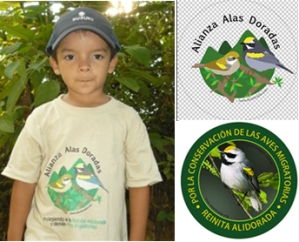
400 shirts were printed with the logo of Alliance, 10,000 stickers with the photograph of the species and 2,500 species in transparent vinyl stickers with the alliance logo and website address.

Sample of shirts and stickers:

Edit_piezas

All the educational material can be downloaded from the website www.alasdoradas.org so that other countries, our partners and other people can use it s a tool for educational purposes multiplying the efforts we make in this matter.
 

Supported by:

proaves alianza asocostarica nationalfish
cornell abc audubon


Categorías
News

Why are migratory warblers in decline?

Tuesday 12 January 2010.

collage-18

Scientists trying to find out why warblers are dwindling

As many as half a million tiny golden-winged warblers used to make the annual round trip flight from Latin America to the Midwest. Now, the number is down to 200,000, and an international consortium is trying to find out why.

Michigan Technological University forestry and environmental science graduate student Amber Roth is part of the Golden-winged Warbler Working Group, which seeks to understand and reverse the decline.

“Its numbers are declining sharply, and we don’t know why,” Roth said. “We don’t know where the patient is bleeding.” The group includes scientists from the United States, Canada and Colombia, and has a small grant from the U.S. Fish and Wildlife Service.

“Some of the researchers are examining the bird’s genetics, to locate genetically pure populations,” said university spokeswoman Jennifer Donovan. “Others are studying the biochemical signature in the golden-winged warbler’s feathers, which can reveal where the young birds go after their first migration. And a third group is working to connect where the birds winter … to where they breed.” Golden-winged warblers weigh about 0.3 ounce and migrate thousands of miles each way twice a year from breeding grounds in the northern Midwest to winter homes in Central and South America. They make the trip 6 to 10 times in a lifetime.

Michigan Tech has supplied nylon nets to safely capture birds for study and release.

“These are older, damaged nets that I have in my lab, and the Latin American scientists know people who can repair them so that they can be reused,” said associate professor David Flaspohler, one of Roth’s doctoral advisers. AP

Source: www.suntimes.com/news

Categorías
News

Eco-guide’s training, main focus on birds

Friday 31 July 2009.

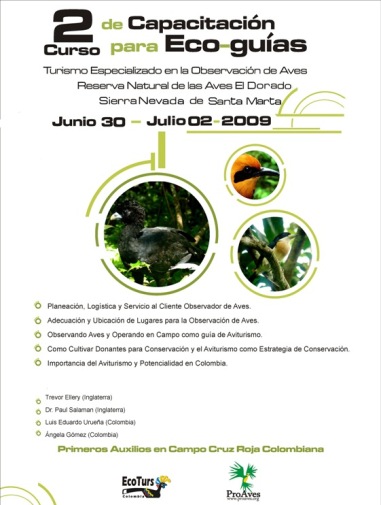
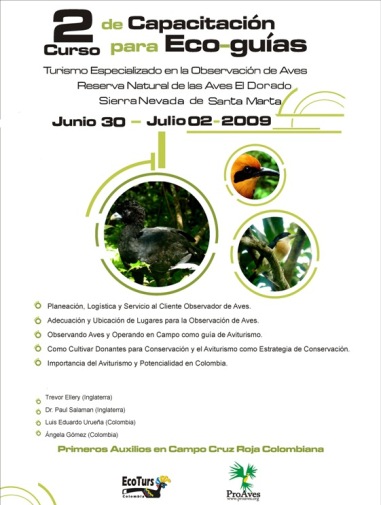
ProAves and Ecoturs offered the Second Training for Eco-guides. This training was held at El Dorado Natural Reserve of Birds, Colombia, from June 30th to July 2nd 2009. The training was offered to staff working as eco-tourism guides as to better serve the special market of bird watchers, but also for experienced watchers who wish to become guides.

The topics covered by the training were:

Planning, logistics and customer service for the observers.

Localization and “adjustment” for bird watching.

Bird watching and field operation as bird watching touristic guides.

How to fundraise for conservation and the use of bird watching tourism as a conservation strategy.

Importance and potential of bird watching in Colombia.

poster_fecha_30_junio

The specialist speakers providing the training were:

Trevor Ellery (UK), International bird watching guide, team member of EcoTurs.

Dr. Paul Salaman (UK), PhD Philosophy, ornithologist and discoverer of four new bird species. Bird-watching guide.

Angela Gómez, EcoTurs Manager.

EcoTurs, associate company of ProAves, founded in 2006, is the pioneer and leader in bird watching tourism in Colombia. It bears great experience in this field, works together with the main international companies of bird watching tourism and offers tours all over the country.

For more information, visit: www.ecoturs.org, or contact via info@ecoturs or via tel. (571) 287-6592.

Categorías
News

ProAves and EcoTurs on the Wall Street Journal

Friday 31 July 2009.

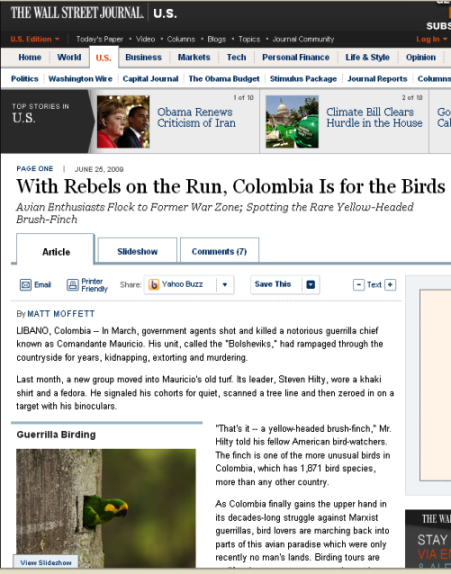
Last June 25th 2009, the re-known North American paper, The Wall Street Journal published on its front page, both online and printed editions, an article by journalist Matthew Moffett, whom traveled to Colombia with the aim to investigate the existing relationship between enhancing security conditions within the country and the great peak of bird watching tourism in this country.

Below you will find an abstract from this article. If you wish to read the full version of it and see the Photo gallery, click here:

wall_street

Matthew Moffett interviewed ProAves, EcoTurs and Steven Hilty, famous North-American guide on bird-watching tourism, working for one of the biggest companies in this field, Victor Emanuel Nature Tours (VENT), and whom 23 years ago brought bird watcher groups to Colombia in a regular basis; however, he stop doing it due the deterioration of security conditions in the country, but this year he returned, exclusively to guide four tours with EcoTurs.

As part of one of those tours, Moffett wanted to demonstrate how this dynamic is being developed in Colombia.

Moffett takes as an example the visit to a community close to Líbano, Tolima, where, together with the expertise of Hilty, a group of visitors was able to get to know one of the unique and most difficult to find species of Colombia (geographically restricted to Tolima), the Yellow-headed Brush-finch (Atlapetes flaviceps).

Moffett also explains how ProAves has created a network of 15 natural reserves dedicated to conservation of birds – several of which are included within the tours -, and also explains about the conservation and research projects carried out since 1998.

Given the outreach and importance of the Wall Street Journal and the work carried out by Moffett, it is for sure that this article will contribute to improve the image of Colombia abroad and it will also be an effective stimulus to draw more observers to the country, of course benefiting with employment generation and economical benefits for Colombia.

To visit the reserves of ProAves or to arrange a tour around Colombia with EcoTurs, visit www.ecoturs.org, or contact us at info@ecoturs.org or by calling (571) 287-6592.

Categorías
News

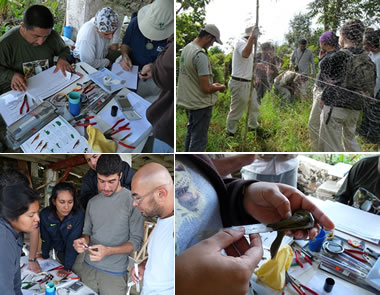
Great results in the V Banding Course

Monday 10 May 2010.

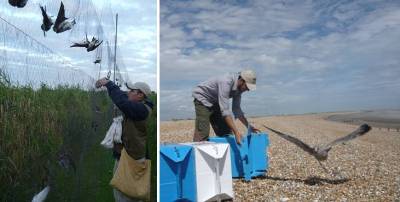
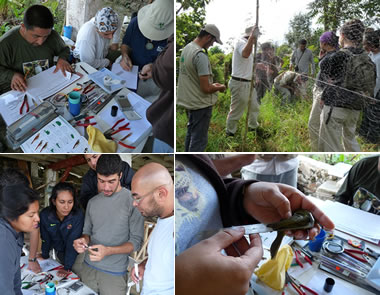
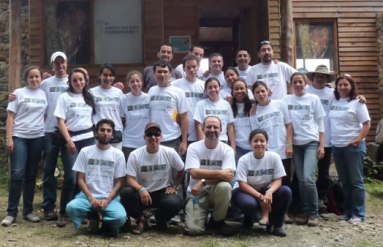
From March 27th to April 4th the V course of banding was carried out with great success the V course of banding with emphasis on migratory birds and endangered species in the Natural Birds Reserve El Dorado. The course was organized by the Foundation ProAves supported by The Wetland Trust and attended by 20 students from Colombia, Ecuador, Mexico, Peru, Chile and Argentina. The training was conducted by four instructors from various organizations, Christian Olaciregui and Esteban Botero of ProAves, Kevin Thornton of The Wetland Trust and Nick Bayly of SELVA.

During the course theoretical and practical activities were developed where they discussed topics such as techniques for capturing, handling, banding and data collection, ethics of ringing, age determination by plumage, moult and ossification of the skull; determining fitness of the bird through the records of fat and muscle and reproductive condition.

CollageCampo2

Additionally, special sessions took place where it deepened issues such as handling and banding of hummingbirds, colored rings, ringing big birds, foraging ecology, habitat use and analysis.

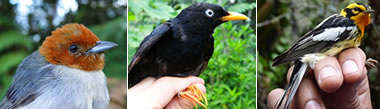
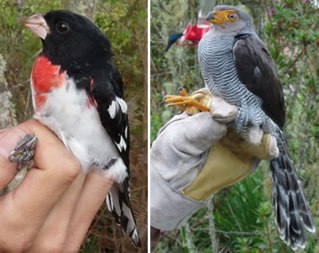
A total of 370 individuals belonging to 15 families and 49 species were banded. There were several species of interest such as Turdus leucops, Thlypopsis Tachyphonus fulviceps and rufus; melanogenys Anisognathus endemic species and threatened like Atlapetes melanocephalus and floriceps and Basileuterus Anthocephala conspicillatus.

Collage_Aves_2

Thlypopsis fulviceps, Turdus leucops, Dendroica fusca.

CallageAves2-2

Pheuticus ludovicianus, Micrastur rufficollis.

Upon completion of this course, the students were evaluated and two of the participants, Valentina Gómez of the University of the Andes and Diego Alarcon of the Catholic University of Ecuador were selected to attend intensive training in bird banding methods offered by The Wetland Trust in England.

Through these courses ProAves Foundation continues to strengthen opportunities for learning and banding techniques, helping to train future senior banders, who through their research, promote knowledge of the birds of Colombia and contribute to their conservation and their habitats.

gente-2

List of Participants:

Participant name

Organization
José Alejandro Vergara Universidad de Córdoba
Marcela Fernández Pérez Universidad de Popayán
José Ignacio Giraldo Arango Universidad Sto. Tomás
Laura Andrea Córdoba Parrado Universidad Militar
Laura Rubio Universidad del Valle
Astrid Castellanos Universidad Distrital
Jorge Ayarza Universidad Militar
Juan Carlos Obando Chacón Universidad de Caldas
Zoraida Buitrago Universidad Distrital
Valentina Gómez Universidad de los Andes
John Albert Guevara Universidad de Caldas
Pilar Carbo Universidad Autónoma de México
Primavera romero Universidad Autónoma de México
Eduardo Militello Administración de Parque Nacionales – Argentina
Antonio Goycochea Ecoan – Perú
Geven Erasmo Rodríguez Suarez Universidad Javieriana
Cristian Suazo Universidad Austral de Chile
diego Germán Alarcón Pontificia Universidad Católica de Ecuador
Lina Restrepo Universidad de Antioquia
Fabio Bacca ProAves

With the support of:

golden alianza nationalfish porzana
cornell wetlandtrust proaves


Categorías
News

Record-breaking birding tour in Colombia

Saturday 26 December 2009.

Collage_record

42 Endemics,7 Antpittas, 8 Tapaculos: Record-breaking Colombian birding tour.

The first ProAves/EcoTurs “40 Endemic Bonanza Tour” that ran from 15th November – 1st December 2009 recorded no less than 42 Endemics in just 17 days birding in Colombia. That’s way over half of all Colombian endemics! This is the most successful birding tour seeking Colombian bird endemics over a two week period.

Lead by the experienced birding guides Trevor Ellery and Juan Carlos Luna the tour began with Flame-winged Parakeets in the high elevation températe forests near Bogota and finished with the recently split Santa Marta Foliage-gleaner in the El Dorado Bird Reserve in the Santa Marta mountains.

CollagePaisajes

“This was the most ambitious tour we’ve undertaken with the aim of 40 endemics with a money back guaranteed,” noted Trevor, “but we easily outstripped our expectations, scoring many incredible endemics with an outstanding new itinerary.”

EcoTurs Colombia, a for-profit venture by Fundación ProAves to raise funds to protect critical bird habitat, organized the tour that visited some of the most spectacular birding sites in Colombia and produce a mouthwatering list of endemic, near endemic or hard to find species. No less than two-thirds of the endemics were seen within ProAves Reserves! Plus 7 Antpitta and 8 Tapaculo species were recorded!

“We also made a special effortto see near endemic species or those that are potential future splits (especially in the SantaMartamountains) and this further added to the excitement of the tour.”said Trevor.

collageAves_2

All but one of the 17 Santa Marta mountain endemics were seen – all within the El Dorado Bird reserve, including the Santa Marta Screech Owl perched low by the side of the road, while two often difficult-to-see endemic hummingbirds, the Santa Marta Woodstar and White-tailed Starfrontlet, came to feeders at the El Dorado Bird Lodge.

This first “pilot” tour was so successful, EcoTurs will be running further tours in 2010 with Trevor Ellery guiding. Two of the tour participates, Betty and Elaine from the US and Belgium, both in their 70s, had a wonderful time and testified that while the tour was fast paced and involved the odd uphill walk it was more than manageable bybirders from any age group with reasonable fitness. You had best book fast if you want to join the next Endemic Bonanza Tour!!

collage_Aves2

Endemics list

· Antioquia Bristle-tyrant — Mariquita

· Apolinar’s Wren — Parque La Florida (Bogotá)

· Beautiful Woodpecker — Mariquita

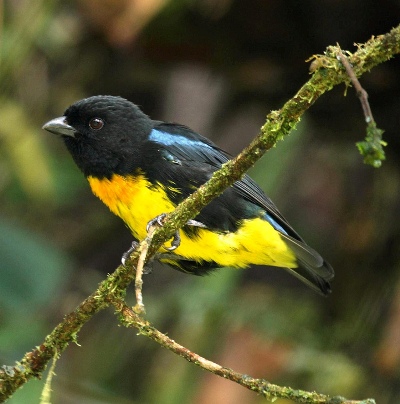
· Black-and-gold Tanager — Arrerito and Chocó (ProAves Reserve)

· Bogotá Rail — Parque La Florida, Bogotá

· Brown-rumped Tapaculos — El Dorado (ProAves Reserve)

· Brown-banded Antpitta — Rio Blanco

· Brown-breasted Parakeet — Chingaza (ProAves nestbox scheme)

· Cauca Guan — La Suiza

· Chestnut Capped Piha — Arrerito (ProAves Reserve)

· Chestnut-bellied Flowerpiercer — Colibri del Sol (ProAves Reserve)

· Colombian Chachalaca — Mariquita

· Dusky Starfrontlet — Colibri del Sol (ProAves Reserve)

· Fenwick’s Antpitta — Colibri del Sol (ProAves Reserve)

· Flame-rumped Tanager — Choco

· Gold-ringed Tanager — Choco (ProAves Reserve)

· Multicolored Tanager — La Suissa and Arrerito (ProAves Reserve)

· Munchique Wood-Wren — Choco

· Parkers Antbird — Arrerito (ProAves Reserve)

· Red-bellied Grackle — Jardin (ProAves Reserve)

· Rusty-headed Spinetail — El Dorado (ProAves Reserve

· Santa Marta Antpitta — El Dorado (ProAves Reserve)

· Santa Marta Brush-finch — El Dorado (ProAves Reserve)

· Santa Marta Bush-tyrant — El Dorado (ProAves Reserve)

· Santa Marta Foliage-gleaner — El Dorado (ProAves Reserve)

· Santa Marta Mountain-tanager — El Dorado (ProAves Reserve)

· Santa Marta Parakeet — El Dorado (ProAves Reserve)

· Santa Marta Screech-Owl — El Dorado (ProAves Reserve)

· Santa Marta Stripe-headed Brush-finch — El Dorado (ProAves Reserve)

· Santa Marta Tapaculo — El Dorado (ProAves Reserve)

· Santa Marta Warbler — El Dorado (ProAves Reserve)

· Santa Marta Woodstar — El Dorado (ProAves Reserve)

· Silvery-throated Sinetail — Parque La Florida Bogotá

· Sooty Ant-Tanager — Mariquita

· Tolima Dove — Libano

· Velvet Fronted Euphonia — Mariquita

· White Lored Warbler — El Dorado (ProAves Reserve)

· White-mantled Barbet — Mariquita

· White-tailed Starfrontlet — El Dorado (ProAves Reserve)

· Yellow Crowned Whiestart — El Dorado (ProAves Reserve)

· Yellow Eared Parrot — Jardín (ProAves Reserve)

· Yellow-Headed Brush Finch — Libano

Categorías
News

Second year of the Golden-winged Warbler project

Monday 10 May 2010.

In addition to bringing the project to over 20 locations in these two years, the results of 2009 and 2010 show that the species is distributed in the Colombian Andes between 1500 and 2200 m elevation, although there have been some under and above that range. It is also clear that apart from using fragments of native forest in good condition, they frequent shrubs, stubble, coffee plantations and open vegetation with scattered trees.

Collage3

Coffee plantations visited by the Golden-winged WarblerSocialization with the community in Genova, Quindío.

The density ratios obtained were quite low, like in 2009, with two individuals per km 2. It is assumed that this low density is a result of their aggressive and territorial behaviour, as the species seems to patrol relatively large areas for a bird of its size. However, the project’s researchers and collaborators detected in some cases, two males foraging nearby.

Collage2-7

Photographic records in the Natural Reserve of Birds Arrierito Antioqueño Anorí, Antioquia.

One of the most striking records was obtained in the Amphibian Nature Reserve Ranita Dorada in the municipality of Falan, Tolima, where they documented the interaction and aggression among males, while one of these seemed to defend the territory and its position in the mixed flock of the other individual. As if this were not enough, one of the individuals issued vocalizations for more than seven minutes, and responded to playback of the song with a twist, something quite rare in migratory species.

In summery, the results suggest the need for more surveys to permit the collection of information about their ecology, abundance and distribution in order to carry out the conservation plan for the species.

With the support of:

golden alianza

abc

cornell nationalfish proaves


Categorías
News

Discover ProAves Bird Reserves in videos

Thursday 11 February 2010.

As a strategy for outreach and awareness, ProAves Foundation has produced some promotional videos of their most beautiful and accessible nature reserves, where they show their great attraction for ecotourism and conservation actions, research and environmental education team of the Foundation performed in each area.

In them we find the location of the reserves, their landscapes, forests and diverse flora and fauna, represented among other groups in a variety of birds, some endangered and endemic to Colombia, as well as endemic and threatened monkeys and frogs, also their trails and their comfortable facilities, equipped with comfortable rooms with beautiful views and excellent restaurants with typical food.

Some of the activities in the reserves are the growing and planting of trees produced with the support of the wardens and the children of the Ecological Group Friends of the Birds, the maintenance of artificial nests installed for threatened parrots and handicraft production by the group Women for conservation and research and birdwatching.

ProAves invites all nature lovers in Colombia and abroad to visit these wonderful places, with the assurance that not only will they live an unforgettable experience, but contribute to the preservation of these sites because the money that comes under this heading is invested exclusively in conservation by the company that manages the ecotourism reserves ProAves EcoTurs.

Income and visits: Contact EcoTurs in the Carrera 20 No. 36 – 61, Bogota, Colombia, telephone             (57) (1) 287-6592      , or info@ecoturs.org

El Dorado Bird Reserve

{youtube}4dJu2LJUzZU|425|344|1{/youtube}


Yellow-eared parrot Bird Reserve

{youtube}n72ADPjHmeI|425|344|1{/youtube}

Cerulean Warbler Bird Reserve

{youtube}8znCG9seTPg|425|344|1{/youtube}

El Paujil Bird Reserve

{youtube}wgeQxTqTSSc|425|344|1{/youtube}

Fuertes’s Parrot Bird Reserv

{youtube}c8CJ2t1I-k0|425|344|1{/youtube}

Loros Andinos Bird Reserve

{youtube}C4Rg8ub2UyM|425|344|1{/youtube}

Ranita Dorada Amphibian Reserve

{youtube}27f2nsypylc|425|344|1{/youtube}

Chestnut-capped piha Bird Reserve

{youtube}namBi1tNTOI|425|344|1{/youtube}

Dusky starfrontler Bird Reserve

{youtube}WHWD6-wC9Pw|425|344|1{/youtube}

Categorías
News

International EcoTourism Initiative to Save Birds

Wednesday 17 February 2010.

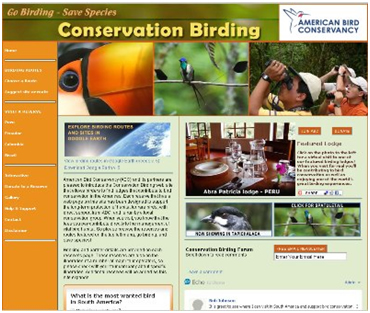
American Bird Conservancy and its partners in 12 countries throughout the Americas have launched a new, international birdwatching tourism initiative aimed at preventing the extinction of bird species. The initiative known as “Conservation Birding,” will help to finance bird reserves across the Americas by developing them as birding tourism destinations with lodges, trails, and other facilities for visitors.

The partners have already created thirty-six reserves, 18 of which have visitor accommodations on site. These reserves include more than 250,000 acres of critically important bird habitat, providing refuge for more than 2,000 bird species-nearly half of the total found throughout all the Americas. Some of the world’s most endangered species are among them. These include the spectacular Yellow-eared Parrot in Tolima, the Dusky Starfrontlet hummingbird in Antioquia, and the enigmatic Blue-billed Curassow in Boyaca. Many of the reserves also provide key wintering habitat for migratory birds, such as the declining Cerulean Warbler, that nest in the United States.

“International birding travel is already popular, and we want more birders to know that their pastime can actually contribute to saving the species they love,” said Mike Parr, Vice President of American Bird Conservancy. “Visiting birders can provide a source of direct financial support to the reserves, helping them become self-sufficient and sustainable in the long-term.”

Visitors can browse reserves online by visiting the new Conservation Birding website at www.conservationbirding.org. The site has been designed specifically to help visitors plan their birding trips to help conservation, by presenting detailed information on the reserves and ecolodges established by the conservation groups. A Google Earth component adds another dimension to the site, presenting suggested routes, photographs of lodges and birds, and videos of rare and interesting species.
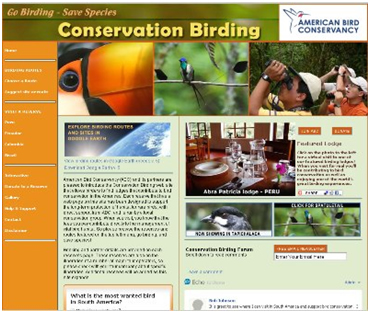
conservation

http://www.conservationbirding.org/

“Birdwatching in the U.S. has millions of participants who contribute billions of dollars to the economy through the purchase of equipment, travel, books, and bird seed for backyard feeders,” said Parr. “The groups behind the Conservation Birding initiative aim to tap into this market to cover the costs of managing habitat at each of these rare bird reserves.”

Eighteen of the reserves protect Alliance for Zero Extinction sites – the last refuges for some of the world’s rarest species. Not only are these places important for birds, but a new study has shown that they are often carbon stores, watersheds, and even cultural centers, since they exhibit high diversity among rare indigenous languages.

cabanas2

One country where birding tourism is rapidly gaining popularity is Colombia, and one lucky group of birders recently made a special discovery when they found a previously unknown species of owl – the Santa Marta Screech-owl Megascops gilesi at one of the reserves there – located during an American Bird Conservancy-led bird tour to the El Dorado Reserve in the Sierra Nevada de Santa Marta. Another previously unknown species of antpitta was recently discovered at another one of the Colombian reserves by two reserve staff.

The partners plan to continue growing the reserve network, and hope to add at least two new reserves in the near future. The work is supported by a range of donors including Conservation International, the Jeniam Foundation, the Gordon and Betty Moore Foundation, New York philanthropist Robert Wilson, and many additional individual donors. If you would like to help purchase land for a reserve, or support the conservation of the reserves in another way, please contact us at ProAves.

Partners:

American Bird Conservancy (USA)
Fundación ProAves (Colombia)
Asociación Ecosistemas Andinos – ECOAN (Peru)
Jocotoco Fundación (Ecuador)
Reserva Ecológica de Guapiaçu – REGUA (Brazil)

FREQUENTLY ASKED QUESTIONS

How many birds are there in the world?

There are approximately 10,000 bird species in the world.

What is the world’s rarest bird?

There are a number of bird species that have not been recorded in the wild in recent years and may or may not be extinct. The Ivory-billed Woodpecker is a recent high-profile example. The Hawaiian Crow is presently the rarest bird known to persist in the United States. However, the entire population of less than 100 birds is currently held in captivity. Several other species around the world are only known in captivity at present, following the extinction of their wild populations. These include the Socorro Dove, the Spix’s Macaw, and the Alagoas Curassow.

Can ecotourism stop extinction?

Ecotourism provides a significant contribution to the economies of many countries around the world. South Africa uses tourism income to provide significant financial support to its National Parks system, as do Ecuador, and Costa Rica. In the case of reserves run by American Bird Conservancy and its partners, relatively few visitors can cover the modest costs of supporting a reserve of a few thousand acres. The impact of tourists on the environment can become an issue, so it is important to ensure that birding tourists have a low impact, for example by managing group size and total visitation numbers.

How many birding tourists are there?

U.S. Fish and Wildlife Service public surveys regularly show that more than 15 million Americans travel away from home each year to watch birds, spending more than $30 billion in the process. A much smaller number make long-distance and international trips, and though we do not have precise numbers for birding tourists traveling to each country, a number of specialized companies both in the U.S. and Europe service this market (e.g. Victor Emanuel Nature Tours, Sunbird, and Birdquest).

Which is the most popular birding destination?

The Texas coast is the most popular birding tourism destination in the U.S. Outside this country, Costa Rica, Galapagos (Ecuador), and Panama are among the most popular destinations within the Americas.

Who has seen the most birds?

It is widely considered to be impossible to see all the world’s birds in the wild in a single lifetime. British-born birder Tom Gullick has seen 87% of them, while two more British birders, John Hornbuckle and Hugh Buck have each seen more than 84%. The top 10 all-time list is rounded out by four Americans, two more British birders, and a Canadian. The top American, Phoebe Snetsinger, passed away in 1999, having become famous for out-living a terminal cancer diagnosis by nearly two decades, and finally dying in an auto accident. Many credit her remarkable survival story to the pursuit of birds.

Which is the hardest bird see?

This is a judgment call, but among the hardest are:

· The Junin Rail, a tiny, primarily nocturnal marshbird that only lives in the dense reeds of one high-altitude Peruvian lake.

· The Long-whiskered Owlet, only seen in the wild by three people in history, despite many more having heard it at the one place it can be found in a dense Andean cloud forest.

· The Inaccessible Island Rail, another skulking bird of the dense grass found only on Inaccessible Island, one of Earth’s most remote spots.

Who are the best-known birding celebrities?

President Jimmy Carter is perhaps the most famous birder in the U.S. In the U.K., TV comedian Bill Oddie is perhaps the best-known celebrity birder. Leonardo di Caprio has been known to pick up a pair of binoculars, and Darryl Hannah has also professed an interest in birding.
Categorías
News

Apply now: advanced training course for bird guides

Tuesday 12 October 2010.

Third Advanced Training Course for Eco-guides

Specializing in bird watching.
Minca – Sierra Nevada de Santa Marta.
24 – 28 November 2010

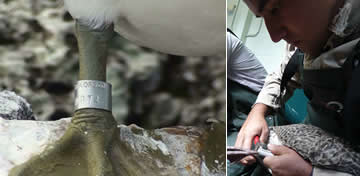
ProAves and EcoTurs Colombia invite you to participate in the Third Advanced Training Course for Eco-guides, specializing in bird watching. This course will have four instructors – guides of national and international stature. In addition you can access 8 scholarships available to cover 100% of course costs.
Objectives

• To train guides with expertise in Bird Watching in Colombia in order to refine and improve techniques.

• Identify over 200 species of birds visually and more than 100 species by song in the Sierra Nevada de Santa Marta.

Profile: You must have birding experience and basic knowledge in tour-guiding, preferably being able to manage English.

Capacity: 12 people max

Scholarships: 8 available with 100% of registration fee (value $ 1,200,000).

Date of registration: Registrations will be received until October 30, 2010.

El Dorado Bird Reserve

Course Structure:

Participants will spend most of their time in the field and three (3) hours per day will be lectures. The areas to visit include: Minca and El Dorado Bird Reserve in the Sierra Nevada de Santa Marta.

The ecosystems to be visited include:

Dry tropical forest, tropical rainforest, shade-grown coffee plantations, premontane rainforest and montane forest. Every day the group will leave early from the hotel to go to the birding sites. Afternoon lunch will be according to the site. After lunch they will have their lectures and during the afternoon field trips will be resumed. The names in English will be emphasized and will be used throughout the course.

Scholarship Instructions:

People who want to apply for scholarships must submit a letter attached to the application form explaining their experience with the birds and why they believe they deserve this scholarship. Successful scholarship applicants only need to pay transport to get to Minca.

Instructors:

Miles McMullan (author of “Guide to the Birds of Colombia” and professional guide)

Trevor Ellery (professional guide for over 10 years)

Robert Giles (expert in product design, bird watching in Colombia)

Christian Olaciregui (Local guide for over 5 years in the Sierra Nevada de Santa Marta)

Categorías
News

Flame-winged Parakeet nesting filmed

As part of Project Pyrrhura supported by Loro Parque Fundación, ProAves has monitored artificial nest-boxes located close to the capital Bogotá. A night vision camera installed in the nest box recorded the successful breeding of a pair of the threatened and endemic Flame-winged Parakeet (Pyrrhura caeruleiceps), between October and December 2008. These are the first images of this species behaviour inside a nest, captured by ProAves researcher Fabián Guzmán.

The Flame-winged Parakeet is endemic to Colombia, with a narrow range in the northern part of the Eastern Cordillera and Vulnerable to extinction. The project’s aim is to document population, ecological and reproductive aspects of this species, and therefore increasing awareness of the main factors affecting the reproductive success during this critical stage. In this way, we seek to develop effective conservation measures.

It is clear that artificial nest-boxes are an extremely important tool to assist the species breeding, which suggests natural nest-site availability is limited due to selective logging of the largest trees which typically hold cavities.

{youtube}R3uiMVPW0Zs&tracker=False|425|344|1{/youtube}

With the support of:

lpf
Categorías
News

Officially: Colombia has the most bird species on earth

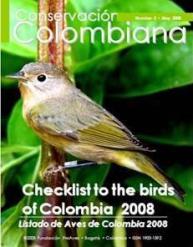
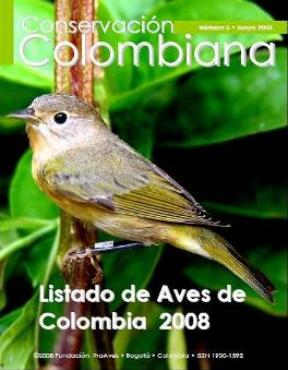
The checklist to the birds of Colombia 2008” just published by Fundación ProAves on line in its journal Conservación Colombiana reveals that Colombia has officially recorded 1,870 species, against official reports from Peru and Brazil, of 1,817 and 1,767 species respectively. After over ten years of compilation, fieldwork and detailed revisions by the authors, the report reveals that incredibly Colombia hosts almost one fifth of all birds known on earth, in an area eight times smaller than the USA.

CC_listado_2008

A surge of interest in birds within Colombia followed the publication of “The field guide to the birds of Colombia” in 1986. The guide’s authors, Steven Hilty and William Brown, educated and enthused a new generation of birders and ornithologists in Colombia, who in turn have greatly expanded the country’s knowledge. Since the guide was published a further 172 species have been documented, including 22 species of bird new for science listed in the new checklist. In the same publication as the checklist, ProAves researchers document 16 bird species previously known from other countries but not recorded in Colombia. These were mostly from remote regions on the frontier with Ecuador and San Andres Island.

Worryingly, a total of 161 bird species in Colombia are at imminent risk of extinction, including 70% of the 73 endemic bird species restricted to the country, while two bird species have already gone extinct. Fundación ProAves has been working towards the protection of these species, including establishing 12 bird reserves as refuges for the most critically endangered species in recent years. However, threats have been mounting and bird populations have been plummeting, particularly the clearing of lowland tropical forest for conversion to African oil palm plantations for ethanol production (biofuels), and from the conversion of traditional shade coffee plantations , that provide excellent habitat for North American migrants, to coffee varieties that require no canopy shade.

Interestingly, significant improvements in the security situation in large parts of Colombia in recent years have led to a new phenomenon – birding tours by foreigners desperate to see Colombia’s stunning bird diversity. For almost three decades, Colombia has been extremely difficult to visit; so many birders in North America and Europe are now seizing the chance, such as through the Colombian company Ecoturs which specializes in birding tours in Colombia. With a sharp increase in avitourism and the continuing increase of Colombian birders, it is predicted that the Colombian bird list will continue to grow and highlight the region as key area for bird conservation.

Categorías
News

New locality for the Todd’s Parakeet

Monday 27 September 2010.

A ProAves expedition in Cesar managed to discover a new population of Todd’s Parakeet (Pyrrhura caeruleiceps) which is critically endangered. This is the first record in patches of tropical forest in the foothills of the Perijá and only the third population of the existing species.

The enigmatic and little known Todd’s Parakeet (Pyrrhura caeruleiceps) has a highly restricted range in the tropical forest, mainly between 500 and 900 meters attitude along the border between Colombia and Venezuela. As part of the Pyrhurra project, supported by the Loro Parque Fundación, Fabián Guzmán, a ProAves researcher, is conducting an expedition in the eastern department of Cesar and managed to find a new population of this species which is critically endangered.

collage-3

Todd’s Parakeet (Pyrrhura caeruleiceps).

After analyzing the possible range (within the Parrot Conservation Plan 2010-2020 in press), this exploration uncovered a new population of the Todd’s Parakeet. Patches of tropical forest in the foothills of the Serranía de Perijá are the first record in an area of 130 km between historical populations and only the third population of the existing species.

habitat

Cotorrita de Perijá habitat (Pyrrhura caeruleiceps).

Forest loss and fragmentation are the major threats facing these birds. ProAves is trying to determine the current status of the population and the habitat characteristics of this species, among other aspects of its natural history.

With the support of:

lpf conservacioninternacionalcolombia

Categorías
News

Environmental Victory for Colombia

Wednesday 26 May 2010.

In a move that rarely happens, the IUCN Red List will change the status of the Yellow-eared Parrot from “Critically Endangered” to “Endangered.” The move recognizes the remarkable achievements of three conservation organizations – Fundación ProAves, Fundación Loro Parque, and American Bird Conservancy (ABC) – in conserving the species.

Many in the birding and wildlife community rejoiced in 1998 when Fundación ProAves, funded by ABC and Loro Parque (an environmental group focused on saving parrots) rediscovered a colony of 81 Yellow-eared Parrots in the Andes of Colombia, South America after the species was thought to be extinct.

Collage2-6

That jubilation was tempered by the fact that a new responsibility and challenge needed to be faced – protecting the environment around these birds and growing the colony to levels that would better ensure its long term viability. The IUCN Red List announcement by BirdLife International confirms that the challenge is being successfully met with the Yellow-eared Parrot now standing at more than 1,000 individuals.

“Today, almost 11 years later, we see the results of the ongoing work of over 180 individuals and 47 organizations around the world. This also includes contributions by local communities as well as success in research, conservation and environmental education activities,” said Alonso Quevedo, President of of ProAves.

Fabio Arjona, Director of Conservation International Colombia said: “One of the most important aspects of the Eared Parrot Initiative, was to get involve several environmental authorities (CARs), The Ministry of Environment , the church and other organizations, which jointly supported and continue to support this initiative, through high-impact communication campaigns as “Reconciled With Nature,” which began with the parrot “Umbrella” species and has involved other threatened species”.

“Since 1999 the Loro Parque Foundation has supported ProAves in its exceptional efforts to bring about the recovery of the Yellow-eared Parrot. With the announcement today that this species is no longer Critically Endangered, we are proud that our support has paid off in the best possible way. The come-back of the Yellow-eared Parrot is singularly impressive, and the conservation program of ProAves should be used as a model of success to avoid the extinction of other threatened parrots.” added Wolfgang Kiessling, President of Loro Parque Fundación.

“This stunning and truly remarkable success shows what can be achieved when committed organizations, institutions and individuals come together with a clear and common purpose — to save a species,” said ABC’s President George Fenwick.

Fundación ProAves implemented several major initiatives to help save the Yellow-eared Parrot.

In 2009 the Parrot Conservation Corridor was established to protect the Yellow-eared Parrot and included the strategic acquisition of over 4,000 has (10,000 acres) of critical habitat with significant reforestation efforts. A Nest Box Program was another effective conservation tool, created and implemented by ProAves since 2003 that has provided critical new nest sites and directly increased the Yellow-eared Parrot population.

nidos

Another important effort has involved the wax palm, Colombia’s national tree which is also in danger of extinction. Because the tree palm provides critical habitat for the Yellow-eared Parrot, a campaign was successfully instituted to reduce the use of the wax palm for Palm Sunday celebrations by the Catholic Church in Colombia, which whole-heartedly supported the campaign.

Collage3-2

The Yellow-eared Parrot conservation effort was further advanced by the support and commitment of local governments, rural communities and environmental education projects such as the “Environmental Education Mobile Classroom Loro Bus.” The bus has had a remarkable array of achievements through its visits to 17 departments and 43 municipalities in Colombia, reaching over 120,000 children.

Eleven years after starting conservation efforts to save the Yellow-eared Parrot, we can celebrate that its population now numbers over 1000 individuals, a key threshold for the recovery of the population. Conservation efforts continue with the hope that the spectacular Yellow-eared parrot is once again a common sight across the Andes of Colombia.

{youtube}e1a4WuxvIRU&tracker=False|425|344|1{/youtube}

American Bird Conservancy  conserves native birds and their habitats throughout the Americas by safeguarding the rarest species, conserving and restoring habitats, and reducing threats while building capacity of the bird conservation movement. ABC is a 501(c)(3) not-for-profit membership organization that is consistently awarded a top, four-star rating by the independent group, Charity Navigator.

ProAves is a Colombian non-profit organization that focuses on the study and conservation of our biodiversity, especially birds at risk of extinction and their habitats, in partnership with local communities. Their objective is to support and promote the protection of Colombia’s incredible but endangered natural heritage with the ultimate aim of benefiting the planet and humanity.

Loro Parque Fundación is a non profit organization in Spain operating on an international basis to promote conservation of parrots, biodiversity, the environment and sustainable development.

lpf abc disney fpaa conservacioninternacionalcolombia
cortolima corantioquia worldlandtrust
Jardin roncesvalles genova

Jardín (Antioquia)

Roncesvalles (Tolima)

Génova (Quindío)

Environmental Victory for Colombia

  Wednesday 26 May 2010.

In a move that rarely happens, the IUCN Red List will change the status of the Yellow-eared Parrot from “Critically Endangered” to “Endangered.” The move recognizes the remarkable achievements of three conservation organizations – Fundación ProAves, Fundación Loro Parque, and American Bird Conservancy (ABC) – in conserving the species.

Many in the birding and wildlife community rejoiced in 1998 when Fundación ProAves, funded by ABC and Loro Parque (an environmental group focused on saving parrots) rediscovered a colony of 81 Yellow-eared Parrots in the Andes of Colombia, South America after the species was thought to be extinct.

That jubilation was tempered by the fact that a new responsibility and challenge needed to be faced – protecting the environment around these birds and growing the colony to levels that would better ensure its long term viability. The IUCN Red List announcement by BirdLife International confirms that the challenge is being successfully met with the Yellow-eared Parrot now standing at more than 1,000 individuals.

“Today, almost 11 years later, we see the results of the ongoing work of over 180 individuals and 47 organizations around the world. This also includes contributions by local communities as well as success in research, conservation and environmental education activities,” said Alonso Quevedo, President of of ProAves.

Fabio Arjona, Director of Conservation International Colombia said: “One of the most important aspects of the Eared Parrot Initiative, was to get involve several environmental authorities (CARs), The Ministry of Environment , the church and other organizations, which jointly supported and continue to support this initiative, through high-impact communication campaigns as “Reconciled With Nature,” which began with the parrot “Umbrella” species and has involved other threatened species”.

“Since 1999 the Loro Parque Foundation has supported ProAves in its exceptional efforts to bring about the recovery of the Yellow-eared Parrot. With the announcement today that this species is no longer Critically Endangered, we are proud that our support has paid off in the best possible way. The come-back of the Yellow-eared Parrot is singularly impressive, and the conservation program of ProAves should be used as a model of success to avoid the extinction of other threatened parrots.” added Wolfgang Kiessling, President of Loro Parque Fundación.

“This stunning and truly remarkable success shows what can be achieved when committed organizations, institutions and individuals come together with a clear and common purpose — to save a species,” said ABC’s President George Fenwick.

Fundación ProAves implemented several major initiatives to help save the Yellow-eared Parrot.

In 2009 the Parrot Conservation Corridor was established to protect the Yellow-eared Parrot and included the strategic acquisition of over 4,000 has (10,000 acres) of critical habitat with significant reforestation efforts. A Nest Box Program was another effective conservation tool, created and implemented by ProAves since 2003 that has provided critical new nest sites and directly increased the Yellow-eared Parrot population.

Another important effort has involved the wax palm, Colombia’s national tree which is also in danger of extinction. Because the tree palm provides critical habitat for the Yellow-eared Parrot, a campaign was successfully instituted to reduce the use of the wax palm for Palm Sunday celebrations by the Catholic Church in Colombia, which whole-heartedly supported the campaign.

The Yellow-eared Parrot conservation effort was further advanced by the support and commitment of local governments, rural communities and environmental education projects such as the “Environmental Education Mobile Classroom Loro Bus.” The bus has had a remarkable array of achievements through its visits to 17 departments and 43 municipalities in Colombia, reaching over 120,000 children.

Eleven years after starting conservation efforts to save the Yellow-eared Parrot, we can celebrate that its population now numbers over 1000 individuals, a key threshold for the recovery of the population. Conservation efforts continue with the hope that the spectacular Yellow-eared parrot is once again a common sight across the Andes of Colombia.

Note to editors:

American Bird Conservancy (www.abcbirds.org) conserves native birds and their habitats throughout the Americas by safeguarding the rarest species, conserving and restoring habitats, and reducing threats while building capacity of the bird conservation movement. ABC is a 501(c)(3) not-for-profit membership organization that is consistently awarded a top, four-star rating by the independent group, Charity Navigator.

ProAves (www.proaves.org) is a Colombian non-profit organization that focuses on the study and conservation of our biodiversity, especially birds at risk of extinction and their habitats, in partnership with local communities. Their objective is to support and promote the protection of Colombia’s incredible but endangered natural heritage with the ultimate aim of benefiting the planet and humanity.

Loro Parque (www.loroparque-fundacion.org)is a non profit organization in Spain operating on an international basis to promote conservation of parrots, biodiversity, the environment and sustainable development.

Acknowledgements:

Categorías
News

Huge increase in the Yellow-eared Parrot population

Monday 4 October 2010.

The Yellow-eared parrot (Ognorhynchus icterotis) population in Tolima has reached historically high population levels with 727 individuals following there most successful breeding season with 291 chicks fledged from 131 nests.

In 1998, Fundación ProAves, with support from the Loro Parque Foundación and American Bird Conservancy, initiated the Yellow-eared Parrot Project with the primary objective of ensuring the survival of the species, as well as habitat protection in the Colombian Andes.

Through the population census conducted in Tolima in recent months, the largest count of individuals and chicks in the history of Yellow-eared Parrot project has been established.

{youtube}3OMjfbmspYY&tracker=False|425|344|1{/youtube}

There were 727 individuals of the species, 291 were registered as chicks in 131 nests located around the town, in the municipality. This data is evidence of a significant increase in the population of Yellow-eared Parrot.

This report comes after the IUCN lowered the threatened category of the Yellow-eared Parrot from Critically Endangered CR to Endangered EN in May.

Collage

The recovery of populations of this species is due to the numerous efforts in environmental research and education made by the Foundation ProAves during the 11-year project, which has successfully developed thanks to support from the community and various city agencies.

With the support of:

lpf abc conservacioninternacionalcolombia
worldlandtrust roncesvalles parrotsociety
Roncesvalles (Tolima)


Categorías
News

Yellow-eared parrot & Wax Palm Festival news

Wednesday 26 August 2009.

Thanks to the efforts of the environmental teachers all over the country, each year in July, we organize the Parrot Festival with the aim to share knowledge, defense and protection to all endangered species of parrots in Colombia, among those endangered species we can find the Yellow-eared Parrot (Ognorhynchus icterotis), and the Indigo-winged Parrot (Hapalopsittaca fuertesi), found in the Andean forest of Tolima, Antioquia and Quindío.

The main objective is to adapt into the community an identity based in the pride generated by the presence of these unique and endangered birds in their land, spreading this activity alongside our country, allowing local and regional integration in the strengthening of the natural and cultural heritage.

Tolima

From 17 to 20 July 2009, it was celebrated in Roncesvalles, Tolima, the IV Yellow-eared Parrot and the Wax Palm tree Festival. Leaded by ProAves and with the kind support of the Municipal Mayoralty of Roncesvalles.

Wax Palm trees, Parrots, princesses, witches, old men, chicks, characters from Roncesvalles, folk dances, the municipal orchestra and procession cars, teachers, students, parents and the entire community worked hard in order to make this event a great success. Youngsters and kids enjoyed the most the event, dancing and parading at the beat of the music, sharing their energy and happiness with the entire public.

collageRonces

Comparsas, cultural presentations, games, drawing and short story contests, and a bird Yellow-eared Parrot watching expedition were some of the activities carried out, achieving participation of 90% of the educational institutions of the region, the linkage among the entities committed in the preservation of the Wax Palm tree and the Yellow-eared Parrot, the intervention of different cities and the recognition of the importance of this event in other areas of the national territory www.roncesvalles-tolima.gov.co

Antioquia

The festival was from 28 to 30 July, and its main objective was to celebrate 10 years of the “Yellow-eared Parrot Project”, sharing with the community the achievements of this project.

During three days educational, cultural and dynamic activities were carried out counting with the participation of the community. One of the main activities was the Launching Parade, were more than 500 people walked in the main streets of the city, reaching the Main Park were the opening of the festival was celebrated.

collageJardin

This event had the special collaboration of the students and the teachers of the 16 Friends of the Birds schools, the Ecological Group Friends of the Birds, Young researchers and the Social Service group. Kids of each school and their teachers participated in the activity wearing masks and disguises of the Yellow-eared Parrot exhibiting banners allusive to its conservation and with congratulations to ProAves for ten years of hard work. www.eljardin-antioquia.gov.co

Quindío

After five years of hard work on conservation of the Indigo-winged Parrot (Hapalopsittaca fuertesi), the First Indigo-winged Parrot Festival was organized.

The festival ended with a big cultural parade with the participation of the entire community, school groups, the Ecological Group Friends of the birds, Chicks, Picardia y Angelitos, Young Researchers, youngsters providing social service at ProAves and the youth group Little Giants of the ICBF. The closure activities of this festival were the contest for the best representation of the Indigo-winged Parrot, and a contest of short stories and poetry.

Presents and prizes for the participants of the event were given with the support of the Mayoralty and the Corporación Autónoma Regional del Quindío (CRQ) www.genova-quindio.gov.co

internaGenova

Parade at the Municipality of Genova, participating schools and the Ecological Group Friends of the Birds.

To see more pictures from all Festivals organized by ProAves, check Flickr

lpf
Categorías
News

A month for the Caribbean birds!

Wednesday 22 April 2009.

With birding journeys, lectures, radio interviews and a photo exhibition, ProAves is contributing to the VIII Caribbean Endemic Bird Festival on San Andrés Island, held by 20 organizations in the region and led by the Caribbean Society for the Study and Conservation of Birds. This year’s slogan is “Celebrating birds in culture.”

Festival_Caribe

The festival takes place April 22, 2009 (Earth Day) to May 22 (International Biodiversity Day), it is part of the International Migratory Bird Day, and it will take advantage of the opportunity to explore birds and culture. In San Andrés, ProAves activities are mainly focused on the conservation of the endemic San Andrés Vireo.

Promo_festival_en_sai

The festival is important as it draws attention to the 67 critically endangered and endangered bird species of the Caribbean region. The event is supported by institutions such as Partners in Flight, National Wildlife Federation and Puerto Rican Ornithological Society, and in San Andrés, by Universidad Nacional de Colombia, Jardín Botánico and Coralina. Activities by ProAves are organized by our representative on the island, Andrea Pacheco. Please help support this work.

Categorías
News

Warm welcome for migrants in Colombia!

Monday 16 February 2009.

More than 8000 people of all ages welcomed migratory birds in 2008 in seven departments of Colombia and in the city of Bogotá through the V Migratory Bird Festival, of ProAves, participating in many activities such as parades, workshops, talks, walks and birding tours.

Collage_Festival_migratorias_San_Vicente
San Vicente de Chucurí.

The activities were carried out between August and November, particularly in the municipalities of El Tambo (Cauca), Ocaña (Norte de Santander), Jardín (Antioquia), Génova (Quindío), and San Vicente de Chucurí (Santander), based in our Natural Bird Reserves of Mirabilis Swarovski, Recurve-billed Bushbird, Yellow-eared Parrot, El Mirador, Fuertes’s Parrot, and Cerulean Warbler, and in Roncesvalles (Tolima), and Guasca, Cundinamarca.

Activities, which also included the distribution of over 6,159 educative materials, were led by the Environmental Education and Conservation areas of ProAves.

Collage_festival_migratorias_Genova
Génova.

We have the support of these institutions with which we are very grateful: NMBCA – USFWS, Cerulean Warbler Working Group, Grupo Cerúleo, International Migratory Bird Day, Bird Conservation Alliance, Major of Bogotá, World Land Trust – U.S., Cornell Lab of Ornithology, American Bird Conservancy, Alianza Alas Doradas, National Fish and Wildlife Foundation, Disney Wildlife Conservation Program, Loro Parque Fundación, Wisconsin Department of Natural Resources, Conservation International, Environmental for the Americas, Cooperative of Coffee Growers in Andes COOPERA, Jardín Botánico José Celestino Mutis, Asociación Bogotana de Ornitología, Conoco Phillips, Instituto Alexander von Humboldt, Red de Humedales de la Sabana de Bogotá, Partner of Americas and Majors of Génova, Roncesvalles, Jardín, San Vicente de Chucurí and Ocaña, as well as principals and teachers of all the educational institutions participants and of community.

In future, other institutions and individuals can support the festival by writing to fundacion@ proaves.org or, in general, giving a secure donation.

with the support of:

usfish
Categorías
Aves migratorias News

ProAves celebrates International Migratory Bird Day

Tuesday 19 May 2009.

ProAves participated in the launch of the International Migratory Bird Day and the Bird Fest at the Smithsonian National Zoological Park in Washington D.C. We participated with many organizations in North America in the race to raise awareness of bird migratory conservation across the Americas.

The 17th International Migratory Bird Day was launched on April 30th with a reception and keynote lecture by ProAves council member, Dr. Nigel Collar, who gave a wonderful presentation on the amazing relationship between man and birds. Nigel also presented his book Birds and People: Bonds in a timeless journey.

Copia_de_Bird_fest

The Bird Fest is an outdoor festival organized by The Environment for the Americas and Smithsonian Migratory Bird Center and attended by many thousands of visitors at the National Zoo. This year, May 2, ProAves held an exhibit at the Bird Fest which presented our work on migratory bird conservation in Colombia, and distributed materials which drew the attention of many visitors, including Colombian tourists.

You can learn more about the International Migratory Bird Day at www.birdday.org and remember we also celebrate this event in Colombia in October!

efta

Categorías
News

The extreme travellers are on their way to Colombia!

Monday 31 August 2009.

“Colombia welcomes the extreme travellers:
6th Migratory Bird Festival”

 Every year as the winter approaches many migratory bird species from North America fly thousands of miles to reach Central and South America. This long journey called migration allows them to find more food in milder climates and to avoid this cold and hard season until they are ready to return to the North where they will start the breeding season.

Interna-2

This year 3000 visitors are expected to welcome the seasonal visit of these birds and you will be able to enjoy a wonderful and varied festive programmed in Bogotá and the municipalities of San Vicente de Chucuri in Santander, Jardín, Antioquia, Génova in the department of Quindío and Roncesvalles, Tolima. The aim of this celebration is to present the different protected areas for the preservation of migratory birds existing in the region and to secure the commitment of local communities to preserve these habitats.

It is very easy to participate and to be part of this welcome reception. You can register your school; receive samples of educational materials, examples of activities, and you can even volunteer!. To receive more information about the participation process please contact: dvega@proaves.org. If you would like to be a volunteer and you are over 18 years please contact: gcastillo@proaves.org.
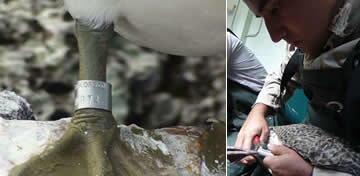
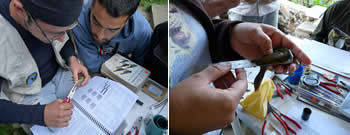
For more information about this event please contact: Ph.: (571) 340 3261 – (571) 340 3229

Come along and help us to preserve the migratory birds in Colombia!

usfish nationalfish NMBCA abc alianza
golden efta cornell Grupo_Cerulea
Categorías
News

“Colombia welcomes the extreme travelers “

Friday 9 October 2009.
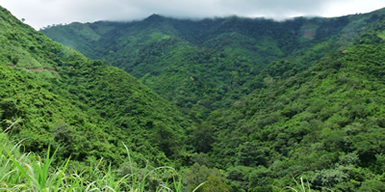
The launch will be on October, Friday the 16th at the premises of the Jardín Botánico wich will have a big party where children and adults will participate in different playful activities where they will get to know migratory birds and their habitat and the way to contribute to their conservation.

The Festival is a national event, the activities also extend to the municipalities of San Vicente de Chucuri in Santander, Jardín, Antioquia; Génova in the department of Quindío, Los Córdobas in Cordoba, Roncesvalles, Tolima and other regions of the country where we expect the participation of more than 6000 people in parades, carnival, contests, birding hikes, workshops, lectures, exhibits and other activities more.

collage-11

Fundación ProAves has held the Festival each year in order to disclose protected areas for the conservation of migratory bird habitat and create awareness and commitment of communities to preserve and ensure their return in each migratory journey.

Activities in the different regions:

• Workshops and presentations on migratory birds Escuelas Amigas de las Aves.

• Talks in educational institutions.

• Development of games with students

• ecological Hiking, outputs species identification, and observation runs calls Migratory Routes for youth and children.

• Radio Programs

• Parades.

• Visit to neighborhoods in the various sectors of the municipalities.

• Mural Painting

• Cinema Park

Programming in Bogota:

LAUNCH

Location: Bogotá Jardín Botánico (free admission)

Date: Friday October 16th

Time: 9am

WORKSHOP 1

Location: Bogotá Jardín Botánico (free admission)

Name of workshop: Migratory birds, True Extreme travelers

Date: Tuesday, October 20th

Time: 9am and 2pm

WORKSHOP 2

Location: Bogotá Jardín Botánico (free admission)

Name of workshop: Knowing the Migratory Bird

Date: Wednesday, October 21st

Time: 9am and 2pm

WORKSHOP 3

Location: Bogotá Jardín Botánico (free admission)

Name of workshop: Painting migratory birds

Date: Thursday October 22nd

Time: 9am and 2pm

WORKSHOP 4

Location: Bogotá Jardín Botánico (free admission)

Name of workshop: Knowing the golden wings Warbler

Date: Friday, October 23rd

Time: 9am and 2pm

You can participate in all activities and workshops where you will meet migratory birds and their habitat, you’ll know why they are traveling so extreme, so learn to appreciate and know how to contribute to their conservation.

Come and participate!

With the support of:

usfish nationalfish NMBCA abc alianza
golden efta cornell Grupo_Cerulea
Categorías
News

Welcoming the arrival of Extreme Travelers to Colombia
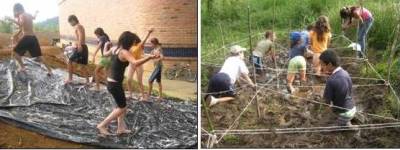
Wednesday 11 November 2009.

The festival was launched on 16 October on the premises of the Jardín Botanico de Bogotá José Celestino Mutis, where more than 200 people participated in the national opening of the Festival. The launch was attended by students from the Instituto Técnico Industrial Francisco José de Caldas and Distrital Eduardo Umana Mendoza Schools, as well as employees of the Jardín Botanico and other guests.

final

A play performed by the students of Colegio Distrital Eduardo Umaña Mendoza.


Colegio

Students of the Instituto Técnico Industrial Francisco José de Caldas.

The Festival is a national event, including the participation of municipalities and cities from all over the country. San Vicente de Chucuri, Santander is one such city; here the Festival was held from the 1st to the 23rd of October, and included radio programs, ecological walks, talks, workshops, and a parade through the main streets of the city, culminating in a ceremonial performance at the municipal theater.

San_Vicente-2

Parade in San Vicente de Chucuri, Santander.

Another city that celebrated the Festival was the Córdobas in the department of Córdoba. The city developed workshops and observational outings directed at students. There were also talks and dynamic events and teachings in Jardín and Urrao, Antioquia which culminated in a parade that included the participation of more than 400 children of the town of Jardín.

otro

Outings for bird watching in los Córdobas and Canalete.

jardin2_1

Parade of Migratory Birds Jardín, Antioquia.

jardin

Observation route Jardín, Antioquia.

In Génova, Quindío department, the festival closed with a parade accompanied by the city marching band, included the participation of local schools, and ended with an award for the migratory bird drawing contest. In Roncesvalles, Tolima, the Festival was celebrated with workshops in rural and urban schools of the town, rural outings to view birds, and parades with more than 200 people from the town participating.

It was similar in the village of Puerto Pinzón in the municipality of Puerto Boyacá, and in Bogotá also migratory bird workshops were held, directed at students from different schools.

Roncesvalles
Parade in Roncesvalles, Tolima.

In this way, Colombia celebrated and recognized the arrival of these extreme travellers, achieving the engagement of children, adults, educational and government institutions and communities in order to preserve and secure these birds’ return in each migratory journey. 
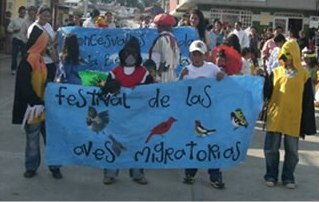
Nationwide media coverage

During the days of the Festivals, there was wide coverage by national and international communications media who received and widely disseminated the importance of the Festival. More than 30 notices and interviews were published in some of the most important news sources of the country, such as El Tiempo, Revista Semana, Canal RCN, Canal CityTv, Canal Capital and Agencia EFE; similarly information was published in the web pages of Mexico, Spain, and Panama.

medios
Newspaper El Tiempo and Magazine Semana.


usfish nationalfish NMBCA abc alianza
golden efta cornell Grupo_Cerulea
Categorías
News

VII Migratory Bird Festival 2010

Afiche

Paula Romero and Fernando Laverde. Fundación Arte y Conservación.

October has come  and we welcome 183 species of migratory birds that arrive in our country to celebrate the VII Migratory Bird Festival which, this year, will be held in 7 municipalities of Colombia.

Until 29th October different games and educational activities will be held in San Vicente de Chucuri, Zapatoca and Betulia, Santander; in Jardín, Antioquia; in Roncesvalles, Tolima department; in Genova, Quindio; Puerto Pinzón, village of Puerto Boyacá and Bogotá.

This Festival celebrates the incredible journey back and forth these birds make each year flying thousands of miles over glaciers, forests, mountains, beaches, islands and oceans. During their journey they face extreme weather conditions including storms, high winds and extreme temperature changes. In the same way they must overcome their own physical limits to combat fatigue caused by the strenuous exercise that comes from such an enormous displacement.

On reaching our countries these birds seek favorable habitats to spend two thirds of the year but unfortunately on each trip they find a landscape more more transformed which increasingly threatens their survival.

Aware of this threat ProAves has been developing since 2004 the Migratory Bird Festival and this year, our seventh version, we want to emphasize the importance of the conservation of migratory bird habitat and create awareness and community engagement to preserve and ensure their return on every migration trip.

The migration occurs thanks to physiological adaptations that allow birds to fly long distances to exploit food resources depending on the season and increase their reproductive success. Variations in patterns of migration are as many as the numerous types of birds that migrate. Tanagers, warblers, raptors, vultures, finches, herons, ducks, among others.

Of the 183 species of migratory birds that are registered in Colombia, neotropical migrants, i.e. those species that breed in Canada and the United States from April to June, are the most abundant. These birds spend two thirds of the year in the tropics and can be seen from July to March, with October, the highest peak of abundance.

Colombia’s strategic position in northern South America is the gateway for millions of these individuals, year after year, some stay in our country and others continue their way further south. Most birds that migrate over long distances travel at night when temperatures are cooler, the air is calm and their predators, birds of prey, are not active.

[slickr-flickr search=”sets” set=”72157625169690272″ items=”20″ type=”gallery”]

Environmental education activities performed in the Festival.

Although birds accumulate fat reserves of up to 50% of their body weight before leaving the rigors of long distance flights require that most of the birds stop, rest and refuel several times before reaching their final destination. Without suitable places along the route that provide a fast and adequate supply of fat reserves, shelter from predators and water for rehydration it is difficult for them to continue their journey.

As part of its activities, Fundación ProAves has developed the National Monitoring and Migratory Bird Conservation Program which has, as one of its purposes, to implement a monitoring network of migratory birds along the Colombian territory to assess their distribution, movements and the threats they face to ensure their survival through effective conservation action in key areas, raising awareness in communities, strengthening local capacity in monitoring techniques and creating strategic alliances for conservation.

The fact that biodiversity is at risk is a reflection of the health of the environment that supports it. Human beings need a healthy environment to survive, with availability of fresh water, fertile soils and clean air. To that extent conserving migratory birds is conserving ourselves, it is to begin to rebuild a better environment, to ensure a better future for coming generations.

With support from the following organizations:

Dibujo
Categorías
News

Blue-billed Curassow Festival starts

Tuesday 8 September 2009.

The 5th Blue-billed Curassow Festival gets underway between the 1st-25th of September and involves communities around the Paujil Bird Reserve. This annual event raises awareness for this endangered species which is a conservation flagship for the highly threatened tropical rainforests in the Magdalena valley of Colombia.

The El Paujil Bird reserve was created in 2004 to save and protect the Critically Endangered Blue-billed Curassow (Crax alberti), endemic to Colombia and a conservation flagship for the highly threatened tropical rainforests of the Magdalena valley – one of the most vulnerable ecosystems in Colombia. The reserve is the Blue-billed Curassows most important refuge, together with many other endangered species and over 330 species of birds.
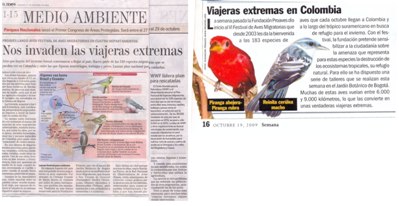

interna-3

As part of the festival, we have published 500 posters, thanks to the artists and illustrators Paula Laverde and Fernando Romero of the Conservation and Arts Foundation.

During the month-long celebration will be workshops, field trips in the reserve, wall paintings in schools, story competitions, painting and theater events. These activities will generate awareness of the importance of the natural resources and biodiversity of the region and strengthen the sense of belonging and commitment of communities to the conservation of the Blue-billed Curassow and its habitat.

If you want to volunteer and help this festival, please contact gcastillo@proaves.org or call +57 1.340 3261 57 1.340.3229.

Come and help us save the biodiversity of Colombia!

birdlife abc worldlandtrust
usfish