
Fundación ProAves – por la conservación en el país de las aves

Categorías
News

New El Dorado Reserve in Sierra Nevada de Santa Marta

Monday 21 January 2008.

There are many priority sites for conservation in the world, but there is a site international recognized by over 60 conservation organizations worldwide through the Alliance for Zero Extinction, which is the most important site in terms of extreme concentration of endemic and endangered bird and amphibian species. The NW mountain spur of the Sierra Nevada de Santa Marta in Northern Colombia looms above the Caribbean coastal cities of Santa Marta and Rodadero. While just 10-15 km from the cities, this small ridge contains a fragment of humid forest that is gravely threatened and under protected.

”For over 100 years, the San Lorenzo area has been explored by biologists to provide an extraordinary catalogue of endemic species restricted to the forest on the ridge,” said Alonso Quevedo, President of Fundación ProAves. “Today, we know that the San Lorenzo forest boosts the highest concentration of continental range-restricted bird species in the world, with 21 endemics such as the Santa Marta Parakeet (Pyrrhura viridicata) and Santa Marta Antpitta (Grallaria bangsi). In 2007, a new species of owl was discovered, and some of the over 50 endemic subspecies of birds were shown to warrant species status”.

Mosaico_El_Dorado

Furthermore, amphibians, butterflies, plants, and other groups show exceptional levels of endemism. One example of this biodiversity is Atelopus nahumae, a frog that is critically endangered.

“The surviving forest fragment is a biodiversity oasis,” said George Fenwick, President of American Bird Conservancy (ABC), “but it was at high risk of deforestation, vacation home developments, and an invasion of non-native pines into native broadleaf forests.”

Considering this situation, Fundación ProAves in Colombia launched a campaign to protect the area. With support from ABC, Conservation International (CI) and others, ProAves has acquired various properties to protect over 1700 acres of one of the world’s most unique living jewel, and named after the legendary city of gold, El Dorado for its phenomenal biological value. “And, with the support of CorpaMag,” said Alonso Quevedo, “ProAves is now replacing the aggressive pines with native trees of the Sierra Nevada and ensuring the finest water for cities on the coast.”

On January 18, 2008, ProAves, ABC, CI and others launched the El Dorado Reserve at the spectacular “Sierra Nevada EcoCentro”, a set of ecotourism facilities to help sustain the reserve, consisting of the spacious Jeniam Ecolodge and the Blue Moon restaurant.

El Dorado is located between 2900 and 8500 feet above sea level and situated in the midst of a stunning landscape of dense forests, with views to the tall peaks and glaciers of the Sierra Nevada and down to the Caribbean beaches and mangroves of Ciénaga Grande de Santa Marta.

With the support of:

abc conservacioninternacionalcolombia robert
Categorías
News

Yellow-throated Warbler: Colombia first “twitch”

Tuesday 2 June 2009.

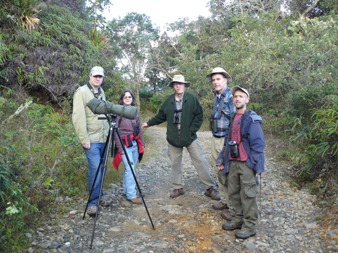
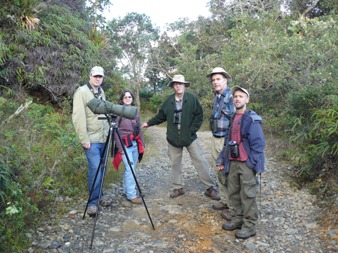
On 4 November 2007 EcoTurs guide Trevor Ellery first observed a Yellow-throated Warbler at El Dorado Bird Reserve.Unaware of the previous observation, Thomas Donegan observed presumably the same individual at the very same spot on 3 January 2009. Two observations of this Neotropical vagrant at the same locality sparked what may be one of the first examples of a “twitch” in Colombia (an activity where sometimes hundreds of birdwatchers will travel to a site to observe a very rare bird species).

Aviturismo

Birding in El Dorado Bird Reserve.

News of the sighting was spread on the www.birdingcolombia.com website, by Ecoturs to groups visiting the reserve and by reserve staff to other visitors. Various bird tour groups and birdwatchers made a special effort to observe this rarespecies. For example, on 20 February 2009,photographs and a video were taken by Deb Hahn and Guy Foulks respectively on another tour guided by Trevor Ellery.

You can see the video of this rare bird at www.youtube.com

Categorías
News

Total prevention of bird crashes in El Dorado

Friday 31 July 2009.

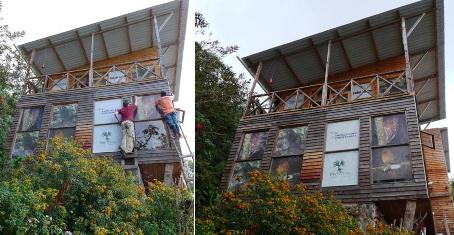
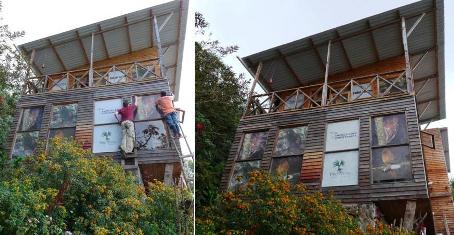
Thanks to the support of the American Bird Conservancy and Joan Hero, ProAves has manage to avoid in El Dorado Reserve one of the mayor issues presented in bird conservation around infrastructures with windows, which is the crash of birds against glass reflecting the landscape of their habitat. These crashes normally end up as injuries or death to the birds.

The window covers produced by the company www.lfdcollidescape.com, are auto adherent to the surface of the window. Thousand of small perforations allow light pass through the inside, reducing the reflection and transparency of the window, two factors involved in the reflection of the landscape and consequently cause the crash of birds against the windows.

collage_vidrios

Installation Process.

Nowadays we can announce with satisfaction that since the installation of these covers at the end of 2008, there has been no new coalition. This proves this technology is rather efficient. Additionally, the covers specially produced with bird images taken within the reserve are a visual complement to the environment.

If you wish to contribute with this and more conservation actions organized by ProAves, you can contribute with an on line donation, or contact us at fundacion@proaves.org or by calling (571) 245-5134.

abc
Categorías
News

El Dorado: a critical site for plant conservation

Wednesday 4 November 2009.

In the El Dorado Natural Reserve one can find one of the highest concentrations of endemic bird species in the world.

One of the groups in the El Dorado Nature Reserve with the highest number of priority species for conservation, due to either their threatened status or their restricted distribution are plants. Up to 28 species have been registered, of which 21 are exclusive to the Sierra Nevada and 16 have been reported as threatened species.

collage2-4

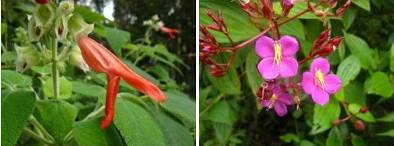
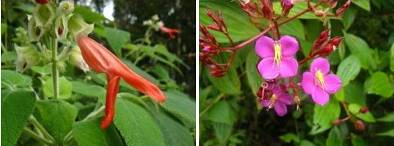
Salvia de San Lorenzo – Arbusto Monochaetum magdalenense.

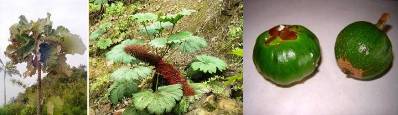
collage1

Colmenero (Paragynoxys undatifolia) – Paraguas (Gunnera tavrona) – Manzano de monte (Pouteria arguacoensium).

Some of the priority protected species of the El Dorado Nature Reserva are: the mountain apple (Pouteria arguacoensium), the Colmenero (Paragynoxys undatifolia), the Colombian pine (Podocarpus oleifolius), and the paraguas (Gunnera tavrona). The bromeliads and the melastomes in particular stand out within this group of important plants because of their diversity and beauty.

Several of these species are being recovered within the reserve, through reforestation and habitat restoration. 

Visit the El Dorado reserve and get to know these beautiful and unique species!

abc robert
Categorías
News

Ecovolunteer’s uncover the Raptors of El Dorado

Tuesday 6 July 2010.

The now retired Dr. Jean Marc Thiollay, was a researcher and then director of research at the French National Centre for Scientific Research (CNRS) at the University of Paris, first at the Superior Normal School, then at the Museum National d’Histoire Naturelle. His main interest is the tropical raptors and general ecology of Neotropical birds and their conservation. Since 1962, he has published nearly 200 articles in books or scientific journals. He has always been deeply involved with scientific conservation organizations, both in France and elsewhere.

His volunteer work focused on the monitoring of diurnal raptors in the region. For this he did intensive monitoring of buzzards, gualas, eagles, hawks and falcons for two weeks. The monitoring consisted in searching the entire altitudinal gradient of La Cuchilla de San Lorenzo, from the Santa Marta area to Cerro Kennedy, being more frequent the explorations and observations in the El Dorado Bird Reserve.

collage1-10
Jean Marc Thiollay and his wife Francoise.

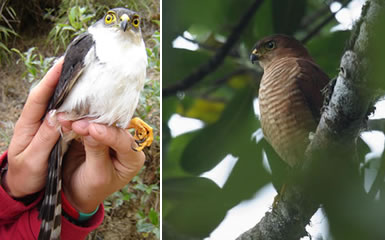
In all Dr. Thiollay found 22 species of raptors between Santa Marta and the upper of La Cuchilla de San Lorenzo. The Sharp shinned Hawk (Accipiter striatus), White-rumped hawk (Buteo leucorrhous) and Turkey vulture (Cathartes aura) being the most common. Among the species of conservation importance recorded were the Semicollared hawk (Accipiter collaris) and the Black-and-chestnut Eagle (Spizaetus isidori).

It also emerged that four species breed within the reserve. However, maintaining long-term viable populations of predators depends on the protection and conservation of large areas and the minimization of deforestation and habitat degradation. For this reason Dr Thiollay said: “At present, the management and forest rehabilitation (restoration, limitation of introduced pine, non-intervention in the areas of secondary growth in recovery, and the restriction of hunting) is the best thing that is being done in the Reserve El Dorado”.

collage_rapaces2

Sharp shinned Hawk (Accipiter striatus) and Semicollared hawk (Accipiter collaris).

To date the monitoring results and observations made by ProAves in the region and with the support of groups of bird watchers who visit the Reserve El Dorado through Ecoturs, the review of historical information and results of this report, report a total of 35 species of raptors for the sector. Of these, four belong to species of conservation concern and six boreal migrants.

We invite you to participate as a volunteer in the Reserve El Dorado and get to know the biodiversity in the Sierra Nevada de Santa Marta. More information Ecovolunteers or contact Gloria Castillo by email: gcastillo@proaves.org

Admission and tours:

Contact headquarters EcoTurs Race 20 N º 36-61, Bogotá, Colombia, telephone (57) (1) 287-6592, o info@ecoturs.org

Con el apoyo de:

ecoturs Ecovoluntarios
Categorías
News Noticias Hormiguero de Torcoroma Noticias Reinita Cielo Azul

Recurve-billed Bushbird discovered at the Cerulean Warbler Reserve

Thursday 30 April 2009.

EcoTurs guides at ProAves’s Cerulean Warbler Nature Reserve in central Colombia have confirmed the presence of a small population of the near-endemic and endangered Recurve-billed Bushbird. It is estimated up to four pairs are present in dense scrub and forest on a steep slope beside the reserve lodge. Although elusive, a number of sightings confirmed the species presence, which is the first confirmation for the species and expands the species know range from Norte de Santander and Antioquia. ProAves and EcoTurs are establishing a Bushbird trail to allow greater access to territories for birding groups and researchers.

collage_fotos_cly

The Cerulean Warbler Nature Reserve already holds such endangered and endemic specialities as the Gorgeted Wood-quail, Colombian Mountain Grackle, Chestnut-bellied Hummingbird, Black Inca and White-mantled Barbet. Together with the Bushbird and over 300 bird species in the area, this reserve is unmissable for any birding trip to Colombia.

To join EcoTurs’ trips, please write to info@ecoturs.org

proaves ecoturs abc robert howard
Categorías
News

Gorgeted Wood-Quail up close and personal

Thursday 3 June 2010.

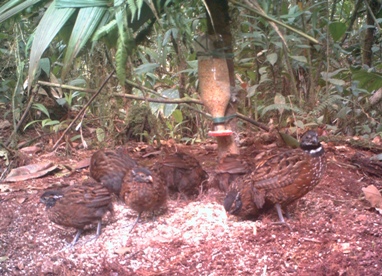
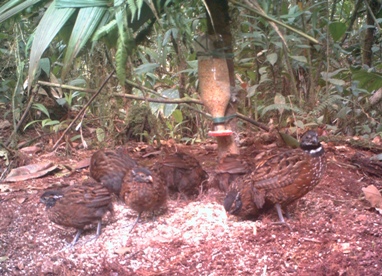
The Gorgeted Wood-Quail is endemic to Colombia and highly Endangered. Feral dogs, that were attacking this species frequently, have been controlled and now the population is showing signs of recovery in the Reinita Cielo Azul Reserve. View the first ever photograph of a couple with their five young at one of our feeders.

With the aim of documenting aspects of their behavior and capture evidence of any feral dogs or hunters in the reserve, two camera traps were installed in the Reinita Cielo Azul Bird Reserve. They have been able to capture unique images of the Gorgeted Wood-Quail about which little is known.

Odontophorus

In the picture we can see a family of seven individuals, with both adult female and male plus five chicks. This gives us hope that conservation actions to trap and control feral dogs and educate hunters has been successful.

The Gorgeted Wood-Quail (Odontophorus strophium) (EN) continues at serious risk due to factors affecting the reduction of its population, such as hunting and habitat loss due to deforestation for the establishment of grassland and farmland. This is why ProAves continues to perform specific actions for conservation and environmental education in the community and in schools where the children get to know the species and learn to take care of it sharing their knowledge with their families.

This project is been conducted by ProAves and Proyecto YARE, which is supported by the Conservation Leadership Program and American Bird Conservancy.

With the support of:

abc Yar
Categorías
News

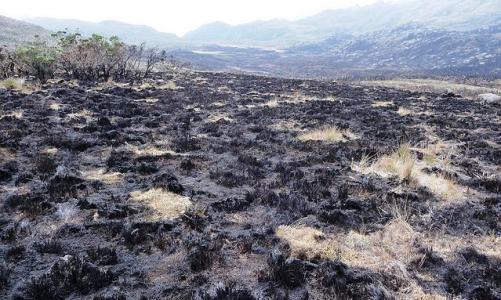
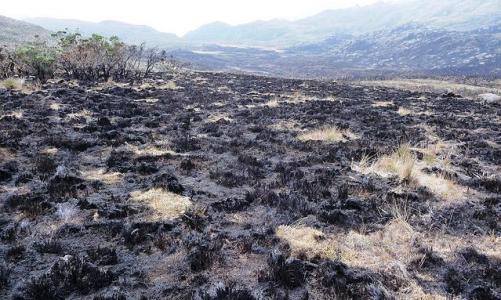
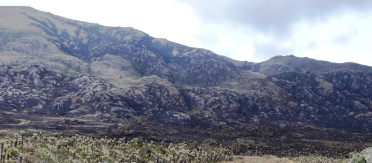
Fire destroys 253 has of the Páramo del Sol

Tuesday 9 March 2010.

95% of wildfires are caused by man, usually by misuse or careless handling of fire, both in agricultural activities or, as in this case, by tourist recreation or walkers irresponsibly leaving fires badly put out, combustible waste, cigarette stubs thrown away and lighted matches or glass.

incendio

The environmental impact of this particular fire is huge, it attacked the source of the river and the gully of Santa Bárbara, which are the most important tributaries of water that supply the municipality and municipal water, likewise, in the Páramo del Sol live countless species of fauna and flora that are at some degree of risk, among these species there is the Dusky starfrontlet (Coeligena orina), the Chestnut-bellied Flowerpiercer (Diglossa gloriosissima) and Rusty-faced Parrot (Hapalopsittaca amazonina) the 3 endemic and endangered species. We estimate that more than 10% of the population of Paramillo Tapaculo’s habitat was lost with the destruction of some 50 has of habitat.

Likewise, the flora was affected and thousands of spectacled frailejones (Espeletia frontinensis) individuals and Polylepis trees were destroyed, not to mention the grasslands and wetlands that were lost and are of vital importance for the water regulation of the moor, besides it is natural habitat of wonderful mammals like the spectacled bear and deers.

According to the version of the Reserve rangers apparently approximately 2 has of the Dusky Starfrontlet Bird Reserve were affected, of the Fundación ProAves, which is regrettable since it is a reserve of the civil society linked to SINAP.

Edit_Incendio

Recovery. Taking into account the height of the moor, above 3400 m, and the climatic conditions, which means that growth is very slow, we believe the recovery process of this part of the moor will take more than a century.

Prevention. We would like to give an invitation to enjoy the moors and generally of nature, responsibly; our main recommendation is NOT to light fires.

Without fire there will be no fires. Besides, do not throw away lighted matches or cigarettes, nor plastic, paper, glass or any type of residue that serves as a concentrated solar radiation.

Categorías
News

Protecting key habitat for Fuertes’s Parrot

Thursday 30 April 2009.

The Municipality of Génova, Department of Quindío, and ProAves celebrated an agreement to continue a further five years protecting and managing the El Mirador Municipality Reserve which is key for the survival of the Critically Endangered Fuertes’s Parrot.

“The signing of this agreement allow us to continue the activities carried out there with the Threatened Parrots of Central Cordillera project supported by Fundación Loro Parque”, said Lina Eugenia Daza, legal advisor of ProAves. “The renewed agreement for a further five years is in recognition of the good management implemented by ProAves at the site.”

Both in the reserve and its regional headquarters in the beautiful town of Génova, ProAves has conducted an extensive environmental education, conservation and research program.

TallerCiclodelagua_Agosto2008_YSLG_9_

Initially, ProAves was confronted by many problems managing the municipality land, as over 150 head of cattle had to be relocated off the municipality land to allow reforestation. This created tensions with cattle owners that depended on the public lands, but ProAves has worked closely with the community and now over 1000 acres of pasturelands are being recovered to critical cloud forest habitat.

ProAves is extremely grateful to the Mayor of Génova by the trust for the renewal of this agreement and support of Fundación Loro Parque.

proaves genova lpf
Génova (Quindío).
Categorías
News

Threatened Parrot Corridor established-6700 has saved

Saturday 26 December 2009.

Location and total area of conservation

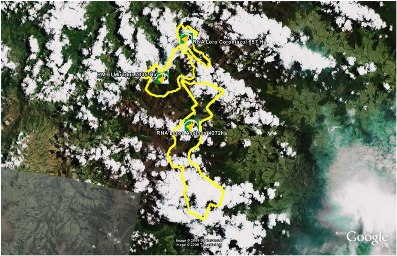
Conservation Corridor for Threatened Parrots of the Andean Cordillera Central, is located between the municipalities of Roncesvalles, Tolima and Genova, Quindio; it is composed of the Loro Coroniazul, (657 hectares), El Mirador, (2.035 hectares), Loros Andinos, (4.072 hectares), Reserves which gives us a total of more than 6,700 hectares of Andean forest, high Andean and protected wilderness corridor.

collage2-9

In this way we can protect 5 endangered species of parrots including 3 endemic to Colombia: Yellow-eared Parrot (Ognorhynchus Icterotis) (CR), the Indigo-Winged Parrot (Hapalopsittaca fuertesi) (CR) and the Rufous- fronted Parakeet (Bolborhynchus ferrugineifrons) (VU); in the same way we preserve the Golden-plumed Parakeet (Leptosittaca branickii) (VU), and the Rusty-faced Parrot (Hapalopsittaca amazonina) (VU).

The Conservation Corridor is a strategy action initiative that continues the work developed in Roncesvalles for 10 years with the Yellow-Eared parrot Project and 6 years in the municipality of Genova with Threatened parrots of the Central mountains project. The strategy guarantees the conservation of the 5 species of threatened parrots present there, increasing the population of yellow-eared parrot from 80 to over 1000 individuals and the reforestation of over 100 hectares of forest.

With the establishment of the corridor, the Foundation guarantees the protection of the forests that were previously highly threatened due to human direct actions, such as the wood extraction, elaboration of carbon, potato cultivation and cattle, as well as prevention of hunting activities which threatens the populations of big mammals, such as the deer, spectacled bear and Mountainous Danta.

On the other hand, with the establishment of the corridor, the direct conservation of vital bodies of water for the development of communities in Roncesvalles and Genova has been achieved, specifically the conservation of the Cucuana and Cucuanita rivers, which supply the aqueduct of the municipality with sufficient water., benefiting the community of Roncesvalles.

It is very important to highlight that in order be successful with this initiative, ProAves counts with the Reserve Municipal El Mirador, acquired by the Foundation .This actions clearly demonstrate how you can generate this kind of conservation actions with the collaboration of different non governmental organizations and municipal entities.

During the whole process the community has been involved in specific conservation actions, bringing as a result, the acceptance of the community, their collaboration, recognition and support in all the Foundation initiatives. Till date, the objective is to continue the establishment of the corridor and strengthen the land properties through the implementation of conservation activities and reforestation for the improvement of the parrot’s habitat, ensuring the nourishment and zones of nesting which is essential for the stability of the populations of threatened parrots and their security. Concluded Luis Felipe Barrera Sub Director of the Central Areas of Protected Areas.

Implementing conservation projects in the Corridor

Project Ognorhynchus:

The Project has been implemented since 1998 in the town of Roncesvalles and aims to protect the yellow-eared parrot’s population present in this county through conservation and restoration of natural habitat, environmental education and research.

{youtube}C4Rg8ub2UyM|425|344|1{/youtube}

Project Parrots under threat in the central cordillera:

we have been working on this project since 2004 in the town of Genoa, Quindío and its main objective is to conserve the Indigo-Winged Parrot, the Golden-plumed Parakeet, Rusty-faced Parrot and the Rufous- fronted Parakeet through research, habitat conservation and environmental education.

{youtube}c8CJ2t1I-k0|425|344|1{/youtube}

With the support of:

abc iucn lpf


worldlandtrust roncesvalles genova

Municipio de Roncesvalles

Municipio de Génova


In this way we can protect 5 endangered species of parrots including 3 endemic to Colombia: Yellow-eared Parrot (Ognorhynchus Icterotis) (CR), the Indigo-Winged Parrot (Hapalopsittaca fuertesi) (CR) and the Rufous- fronted Parakeet (Bolborhynchus ferrugineifrons) (VU); in the same way we preserve the Golden-plumed Parakeet (Leptosittaca branickii) (VU), and the Rusty-faced Parrot (Hapalopsittaca amazonina) (VU).

The Conservation Corridor is a strategy action initiative that continues the work developed in Roncesvalles for 10 years with the Yellow-Eared parrot Project and 6 years in the municipality of Genova with Threatened parrots of the Central mountains project. The strategy guarantees the conservation of the 5 species of threatened parrots present there, increasing the population of yellow-eared parrot from 80 to over 1000 individuals and the reforestation of over 100 hectares of forest.

With the establishment of the corridor, the Foundation guarantees the protection of the forests that were previously highly threatened due to human direct actions, such as the wood extraction, elaboration of carbon, potato cultivation and cattle, as well as prevention of hunting activities which threatens the populations of big mammals, such as the deer, spectacled bear and Mountainous Danta.

Categorías
News

Secret insights into the Blue-billed Curassow

Tuesday 19 May 2009.

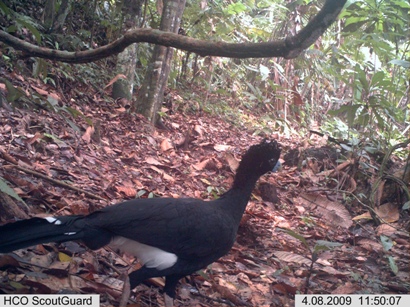
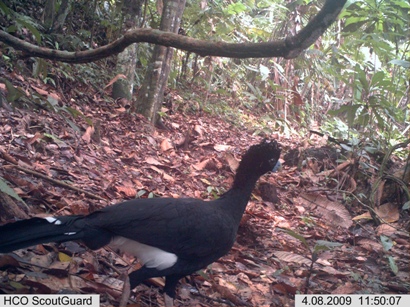
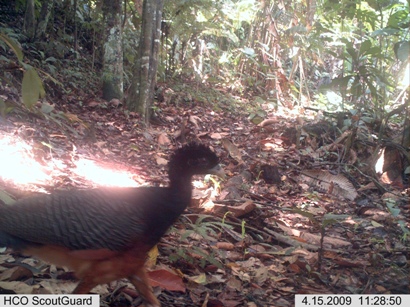
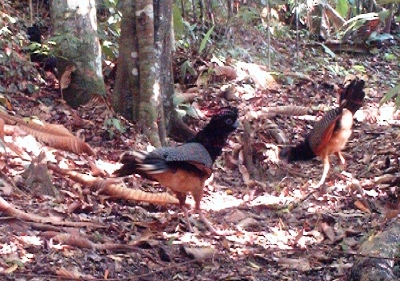
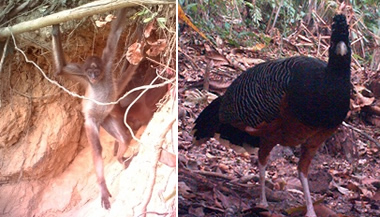
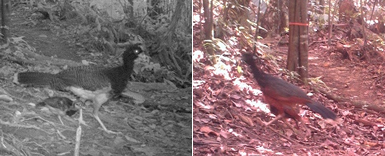
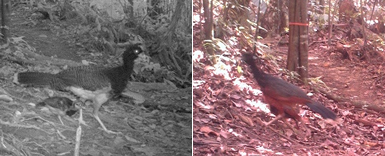
Thanks to a trail camera installed near the headquarters of the El Paujil Nature Reserve, ProAves has graphically confirmed that the enigmatic, endemic and Critically Endangered Blue-billed Curassow, so difficult to be seen, not only visits trails in the vicinity of the house, but does so very often!!

“The photographic proof of the abundant presence of the Curassow (Paujil) in the reserve is an indication that the conservation processes carried out by ProAves in this place and its hinterland has benefited the species,” said Luis Gabriel Mosquera, Regional Director for Magdalena of ProAves Protected Areas.

Paujil_de_pico_azul

Blue-billed Curassow.

The camaras were installed by ProAves on April 3 2009 in easily accessible trails near the reserve’s house. Within two days records of the Curassow were obtained!! The species had been photographed numerous times thereafter. The photographs correspond to at least one male and one female, and were conducted throughout the day (there are records from 6:00 AM until 5:26 PM), almost every day. This indicates a high recurrence of the species to this place.

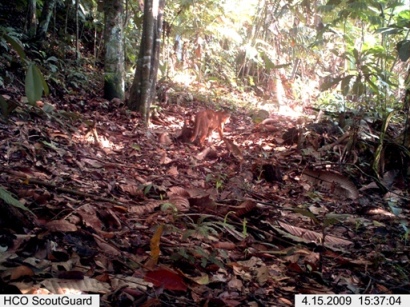
“But with the reserve we have not only benefited the Blue-billed Curassow but all its associated biodiversity”, said Mosquera. “Proof of this is that the camera was also able to photograph, to our surprise, a puma (Puma concolor), which we have had only three visual records in the reserve but no photographs, and other mammals such as Zain (Pecari tajacu)“.

More photos in Flickr.

The reserve can be accessed through EcoTurs. Please call (571) 287-6592 or write to info@ecoturs.org.

Blue-billed Curassow

Blue-billed Curassow.
puma
Puma.


Categorías
News

Exciting news for the Blue-billed Curassow

Tuesday 11 August 2009.

With an estimated population of nearly 250 individuals and a large decline in habitat loss and hunting, the Blue-billed Curassow (Crax alberti) is considered one of the most endangered species of the Americas. Definitely the El Paujil Bird Reserve in Serranía de las Quinchas now represents the most important sites for their protection and conservation as almost their entire original rainforest habitat has been destroyed.

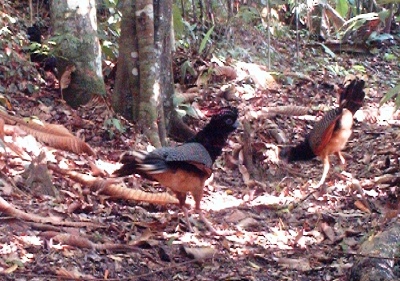
Since the beginning of the El Paujil Bird Reserve in 2003, Blue-billed Curassow observations were sporadic and rare and almost always of single individuals. Luis Gabriel Mosquera, who has studied and protected the Blue-billed Curassow since 2003 and is now the Director of the El Paujil Bird Reserve, noted a significant increase in sightings and of group sizes in just the past year. Recent observations by birders included groups of up to three males at the same time and recently photos confirmed, up to four females together!

Luis Gabriel also noted that the earliest colonists to the region commented that when they first settled the area of the reserve, they found large groups of Blue-billed Curassows, up to 30 individuals together!! Sadly, the same colonists hunted the species, almost exterminating it from the region. It may take many years for the Curassow to recover to its original population, but protection of El Paujil Bird Reserve in just the last five years has shown the importance of establishing and enforcing protected areas as well as working with local communities as the most important steps to saving the species.

Crax_alberti-tres

One male and two female Blue-billed Curassows. Can you see the male?

ProAves remains committed to the protection of the Blue-billed Curassows across Colombia and likewise hope to achieve more significant progress in the conservation of this unique species and unique to Colombia.

Thanks to support from American Bird Conservancy and BirdLife International, especially Species Champion Ted Reissing.

abc birdlife
Categorías
News

A secret view of the Magdalena Spider Monkey

Wednesday 14 April 2010.

The Magdalena Spider Monkey (Ateles hybridus) is a primate almost endemic to Colombia and listed as one of the 25 most endangered primate species on the planet, according to the International Union for Conservation of Nature IUCN. Historically distributed across the Magdalena River of north-eastern Colombia and western Venezuela.

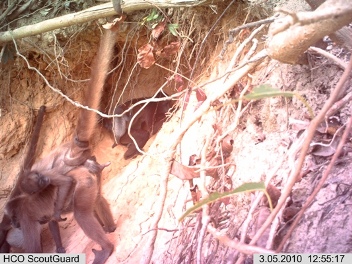
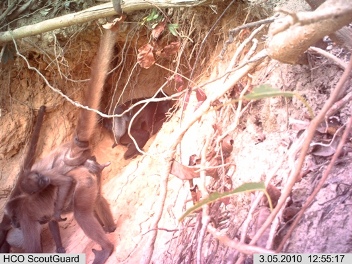
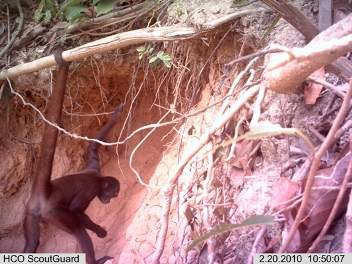
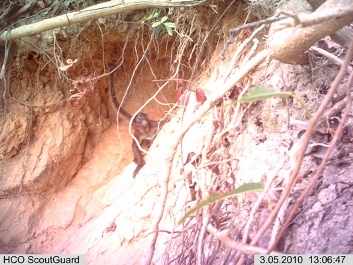
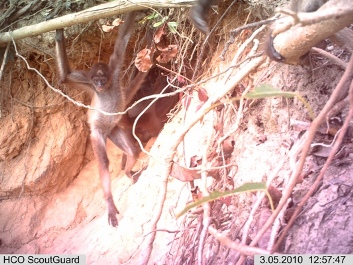
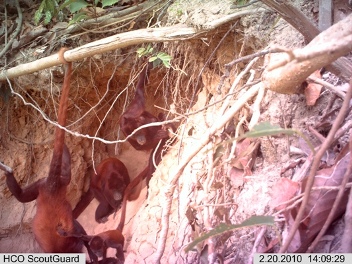
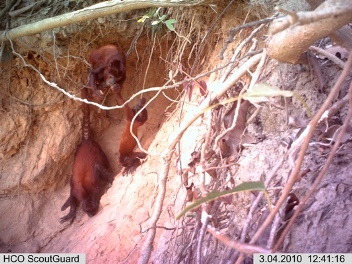
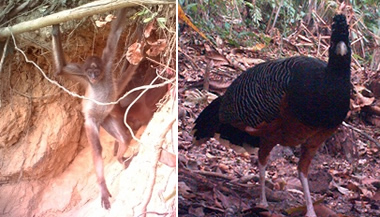
The use of camera traps has become an important strategy by ProAves to collect biological and ecological information from different species of endangered fauna found in the El Paujil Bird Reserve. This tool has yielded excellent images never before recorded in the natural habitat of two species of primates, the Red Howler Monkey (Alouatta seniculus) and Magdalena Spider Monkey (Ateles hybridus), the latter one of the largest within the neotropical primates in America and that is protected in perpetuity in the forests of the Reserve.

With the installation of camera traps in strategic sites, we were able to obtain images of a troop of Spider Monkeys and Howler Monkeys who came to the only salt for miles around, places that offer mineral and salt dissolved in a mixture of sandy-clay soil and we documented unique moments in wildlife species. Such places become strategic points to assess possible agonistic encounters inter and intra species specific and also facilitate the assessment of population structure and other aspects of their biology that contribute to future conservation plans for the groups that approach the area where the salt is to be found.

4_individuos
4 individuals Ateles hybridus, 2 females breeding.
individuo_Aletes

Individual Ateles Hybridus male.

Individuo_juvenil_aletes

Youth Individual Ateles Hybridus.

Individuo_juvenil_2

Youth Individual Ateles Hybridus.

tropa_de_monos

Troop of howler monkeys Alouatta seniculus.

3_individuos

3 individuals Alouatta seniculus.

Spider Monkey Video taken in the El Paujil Bird Reserve

{youtube}FSerdYBY844|425|344|1{/youtube}


Categorías
News

Economic alternatives workshop for hunters

Wednesday 14 July 2010.

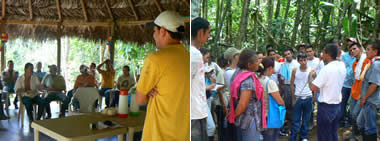
Framed within the objectives of conservation of wildlife and their habitats in Colombia, ProAves, as a conservation strategy for two species listed as Critically Endangered, the Blue beak paujil (Crax alberti) and the Spider monkey (Ateles hybridus ), developed the first training workshop on economic alternatives for hunters in the community of the Municipality of Puerto Pinzón in the El Paujil Bird Reserve. These two species have lost almost 98% of their habitat by deforestation, hunting and fragmentation.

Mono-paujil

Individual Ateles hybridus and female Crax alberti. Photos taken with camera traps installed in the El Paujil Reserve.

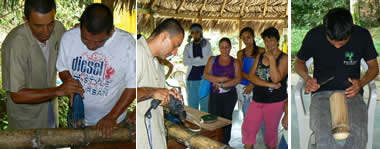
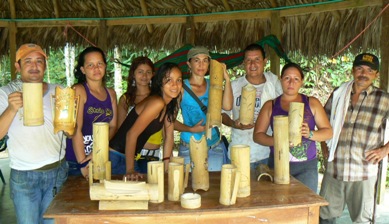
Through this workshop, with support from SENA and UMATA, advice was offered on the manipulation of bamboo for the production of products made from this material; the workshop also included a talk on food security, friendly crops and reforestation.

The aim of these workshops is to provide economic alternatives to people from the community and continue with our efforts to conserve endangered species and their key areas in Colombia.

reuniones

To meet this objective, the SENA, Tolima branch, helped us to provide advice on the use of bamboo with manipulation techniques for obtaining products made from this material, plus a representative of the UMATA gave a talk on food security, environmentally friendly crops and reforestation in the watershed of the Ermitaño river which passes through the Reserva El Paujil to empower people in the community and providing opportunities for environmentally sustainable living.

taller

The main focus of the workshop was handling bamboo, which is explained in a guadual located within the reserve, important aspects to be taken into account when selecting the bamboo to work with, when it should be cut, external features and the preparation for processing. Through photographs it was also possible to show the community that this is a good economic alternative because of the importance and popularity the products made from this material in our country have obtained.

grupo

At the end of the workshop SENA certified the participants, obtaining their commitment and enthusiasm to continue the training and managing an extensive course for the management of bamboo, likewise, the Foundation will provide for these courses, the bamboo found within the Reserve.

With the support of:

abc birdlife
Categorías
News

Blue-billed Curassow with chick photographed

Wednesday 18 August 2010.

Since the creation of the El Paujil Bird Reserve in 2003, significant effort has been focused on the recovery of the population of Crax alberti and its habitat through concrete conservation actions, strengthening links direct academic institutions, the local community around the Reserve and regional and national organizations. Through such joint actions nearly 6,000 hectares of rainforest have been recovered on the banks of the river Ermitaño, the natural boundary of the departments of Boyacá and Santander, and main habitat of the species.

paujila_pareja
Female with her chick in the El Paujil Bird Reserve in June 2010.

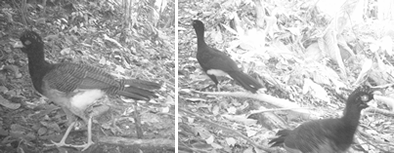
By these means and through the continuation of management policies established by ProAves ,we have been able to monitor the recovery of the population of the Blue-billed Curassow (Crax alberti) within the Reserve, recording up to five individuals in the same place where in previous years the records were limited to one individual. Even more rewarding are the recent and unpublished records of a female with her chick in this area which represents a substantial recovery in plant cover and density of the species, supplemented by standardized census data which are being carried out continuously.

collage
Photos taken with camera traps.

It is very encouraging for ProAves to share this information with the scientific community, conservation enthusiasts, active members and the entire membership of the Foundation, showing that committed and conscientious work can achieve great results that ultimately trigger the recovery of our natural wealth by becoming an example of conservation for the world. 

With the support of:


abc birdlife
?
Categorías
News

Paujil Bird Reserve expanded to 14,830 acres

Friday 12 November 2010.

Since the creation of the El Paujil Bird Reserve in November 2003, this reserve has ensured the perpetual protection of birds and their habitat in the unique and endangered Magdalena valley rainforest ecosystem. After eight years of gradually acquiring and protecting private properties that were either cleared of pastureland or about to be cleared, we have increased the reserve area to 14,830 acres by the end of 2010. (See map).

Thanks to the continued support of partners such as American Bird Conservancy, the World Land Trust-US, USFWS Wildlife without Borders (Critically Endangered Species Fund), Ted Riesling, Earth’s Birthday and The Rainforest Site, the expansion of the Reserve was successfully completed with 1,480 acres of forest and reforestation protected. Important populations of threatened species are saved, including the Blue-billed Curassow (Crax alberti) CR, the Magdalena Spider Monkey (Ateles hybridus) CR, the Spectacled Bear (Tremarctos ornatus) VU, the Colombian Tapir (Tapirus terrestris colombianus) VU and the Jaguar (Panthera onca) NT and other species.

ProAves continues to consolidate this area as one of the largest and most important areas within its protected area system so fulfills important guidelines for habitat conservation in the Serrania de las Quinchas, included within the strategic conservation plan where there are established objectives and methodology that lead to the perpetual protection of this important and vulnerable habitat and biodiversity.

Video Paujil in camera trap

{youtube}ZX9j0kov7d0|425|344|1{/youtube}

Thanks to the support the following organizations:

abc worldlandtrust wildlife_without_borders
the_rainforest_site earths_birthday conservacioninternacionalcolombia


Categorías
News

Rediscovery of lost Bromeliad species in El Dorado

Wednesday 1 December 2010.

Bromeliads are a distinctive and unique group of plants that play a fundamental role in many Neotropical ecosystems providing a habitat for many species of animals and resources for others, as well as water storage sites. Colombia, with nearly 500 species, ranks second in the world in terms of richness of bromeliads, after Brazil, however 160 of these are endangered (about 33%) mainly due to the destruction and deterioration of habitats.

The Sierra Nevada de Santa Marta is a special place in the Neotrópico, its geological history and isolation of the Andes made this mountain an island within the continent, causing the evolution of many endemic species in all biological groups. Of these, many have been recorded in the Natural Bird Reserve El Dorado which is located in the Cuchilla de San Lorenzo, protecting 800 ha of pre-montane and montane rain forests important for a great number of priority bird species for conservation, including 18 endemic species of the mountain and about 40 migratory species.

[slickr-flickr search=”sets” set=”72157625301276531″ items=”20″ type=”gallery”]

The development of inventories of biodiversity and the search for endemic and threatened species has produced satisfactory results in the group of bromeliads. Explorations and observations during four years have produced an inventory which includes 11 species of conservation concern.

This news marks the rediscovery of three species not located / reported from the description in 1946, two since 1960, two since 1972, two since 1977, and other since 1983. Of these species: two Critically Endangered, six Endangered and two Vulnerable nationally, and 7 are endemic to the Sierra Nevada.

Currently, only a small area of the Cuchilla de San Lorenzo is under a legal form of protection and require more efforts and conservation strategies involving communities to allow recovery of native habitats.

We appreciate the conservation efforts and support of the following organizations:

robert abc lpf


Categorías
News

Threatened Parrot Action Plan being developed

Tuesday 12 January 2010.

Workshop for socialization and discussion of the Plan for Conservation of Threatened Parrots of Colombia 2010 – 2020

The objective to the workshop is the consideration of the Plan for the Conservation of Threatened Parrots in Colombia 2010 – 2020, which is enshrined in the National Policy for Biodiversity and the Convention of Biological Diversity, prepared by the Foundation ProAves of Colombia within the National Programme for the conservation of threatened parrots that has been developed since 1998 in conjunction with local communities and environmental agencies.

This Programme has been promoted by Fundación Loroparque and has the support of a large number of local organizations.

The Plan for Conservation of Threatened Parrots of Colombia 2010 – 2020 focuses on the species of threatened parrots of Colombia under IUCN categories and other species not included about which information has been compiled that permits their inclusion in this, such as:

· Military Macaw – Ara Militaris (VU)

· Great Green Macaw – Ara ambiguus (EN)

· Yellow-eared Parrot – Ognorhynchus icteriotis (CR)

· Golden-plumed Parakeet – Leptosittaca branickii (VU)

· Santa Marta Parakeet – Pyrrhura viriditaca (EN)

· Maroon-tailed Parakeet – Pyrrhura melenura

· Brown-breasted Parakeet – Pyrrhura calliptera (VU)

· Rufoud-fronted Parakeet – Bolborhynchus ferrugineifrons (VU)

· Spot-winged Parrotlet – Touit stictopterus (VU)

· Saffron-headed Parrot – Pyrilia pyrilia (NT)

· Ruty-faced Parrot – Hapalopsittaca amazonina (VU)

· Indigo-Winged Parrot – Hapalopsittaca fuertesi (CR)

The document contains:

1. A general framework of the national plan, with aspects of reference and methodological framework developed for its construction.

2. A detailed analysis for each priority species, including analysis of its distribution, population trends, ecology, habitat use and conservation status as well as actions proposed for specific conservation.

3. A national conservation plan that meets the most important aspects to consider for the general maintenance of this group of species.

The plan is aimed at researchers, conservationists and government representatives responsible for managing natural resources that have an impact on priority areas for the protection of the Parrots of Colombia, so that collectively they can comply with the proposed objectives for the next ten years.

With the support of:

lpf
corantioquia

roncesvalles

Roncesvalles (Tolima)

genova

Genova (Quindío)

Jardin

Jardín (Antioquia)

Categorías
News

Conservation plan on threatened parrots

Friday 5 February 2010.

It successfully developed the workshop “Work Desk – National Action Plan for the conservation of threatened parrots of Colombia 2010 – 2020”. In that Governmental and non-governmental organizations that have collaborated with the Program ProAves Threatened Parrots attended in addition to ornithologists, conservationists and people from local communities and other entities with the foundation or who have not developed an action plan framed within the 2002 – 2007 plan or independently that are involved in research and conservation of the Parrots of the country. There were 23 people and 11 institutions in all.

The objectives of the workshop sought to evaluate the scope of the results raised during the first plan and the appropriateness of the current framework to develop new guidelines and ensure the permanence of populations of threatened parrots, based on the progress of the conservation status of each species.

Objectives met

During the discussions the current state of knowledge on natural history for the threatened parrot species from Colombia was outlined, threats to national and local level were identified and assessed, the current conservation status was identified, actions were proposed and undertaken, and the conservation needs of each, finally, the relevance of the guidelines established in the plan 2002 – 2007 were evaluated and recommended in the plan 2010 – 2020, to propose alternatives consistent with the current state of conservation of the species.

One of the points satisfying the workshop shows that the most critical species (ie Indigo-winged Parrot, Yellow-eared Parrot and Pyrrhura viridicata) are those with the most complete scientific information and with the greatest number of conservation activities, an increase in populations of Ognorhynchus Parrot and a successful use of artificial nests by Hapalopsittaca fuertesi has been documented.The needs of these parrots in terms of research should focus on population studies, ecological and genetic detail.

Our findings show the clear presence of a group of species whose situation is alarming, as well as presenting distributions and small populations or strong pressure at different spatial scales, ignorance about their biology and ecology worse they are: A. ambiguus, P. subandina, P. caeruleiceps, P. peaceful and Touit stictopterus.

{youtube}TRWq6Gm9DZU|370|270|1{/youtube}

For more photos visit the workshop Flickr

With the support of:

lpf

Institutions:

conservacioninternacionalcolombia sistemadeparques bioparque corpocaldas cortolima
Jardin roncesvalles Logo_ProyectoCordillera RCC_1
Jardín (Antioquia) Roncesvalles (Tolima)
Categorías
News

First conservation workshop for parrots of Colombia

Wednesday 17 March 2010.

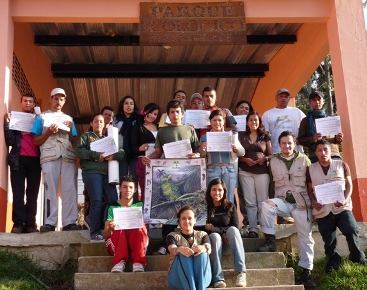
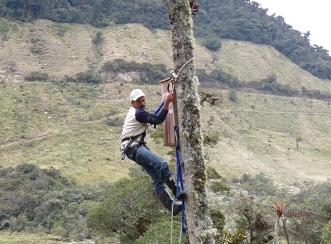
From 1st to 6th March the first version of the technical workshop of population monitoring and management of artificial nests for High Andean parrots of Colombia was held in Roncesvalles, Tolima, with the aim of empowering the community where ProAves, with support from Loro Parque Foundation, has developed the program Threatened Parrots. The workshop lectures were on the monitoring and installation of artificial nests, population monitoring techniques, reproductive aspects, handling and management of chicks, basic treatment information and techniques of climbing palms and trees. The objective of the workshop was to provide participants the basic tools to take ownership of the project and become those conducting the monitoring in the future.

The workshop was attended by 20 people from different parts of the country where the project with threatened parrots is being developed: Roncesvalles, Tolima; Jardín and Urrao, Antioquia; Barbacoas, Nariño; Genova, Quindio; Santa Marta, Magdalena and Ocaña, Norte de Santander, we also count on the participation of two postgraduate students who will begin their undergraduate work this year with the Santa Marta Parakeet (Pyrrhura viridicata) in RNA El Dorado.

The training workshop was conducted by Gonzalo Cardona with over 11 years experience in monitoring and conservation of threatened parrots with the Fundación ProAves, Adriana Mayorquín has 8 years experience with parrots, Esteban Botero has experience with P.viridicata and is co-author of the National Action Plan for the conservation of threatened parrots of Colombia 2010-2020 and Luis Felipe Barrera, current deputy director of protected areas, central region, to coordinate the development of project objectives threatened parrots.

During the workshop the first 5 artificial nests were placed in the new Bird Reserve Loros Andinos to be used by the Rusty-faced Parrot (Hapalopsittaca amazonina) and indigo-winged Parrot (Hapalopsittacafuertesi), climbing techniques were practised and experiences on different methods of monitoring populations were shared.

Finally we strengthened the commitment of the participants to continue the monitoring process, trying this way that the community maintains continuity in the conservation of species in their natural habitats.

For more photos visit flickr.

Thanks to the municipal authorities of Roncesvalles, Tolima, Jardín and Urrao, Antioquia;Barbacoas, Nariño; Genova, Quindio; Santa Marta, Magdalena and Ocaña, Norte de Santander and the Voz de la Tierra school in Roncesvalles, Tolima.

With the support of:

lpf


Categorías
Articles News

EcoTurs Team

Angela_Gomez_EcotursÁngela Gómez García

Deputy Director.

Environmental administrator manages the area of ecotourism because she believes that this activity contributes to the conservation of ecosystems and sustainably of biodiversity and in an educational context.


Ana_Avila

Ana Avila

Accounting and administrative assistant.

Public Accounting student, I have experience in accounting and human resources. I work for EcoTurs since February 2011. I have skills and abilities to assist in the growth of the company with a high commitment by providing the knowledge acquired, contributing from my area to the awareness of continuous improvement of our ecosystem. Always looking to succeed in the professional, labor and personal.


Paula_Snchez


Paula Sánchez

Auxiliary operations.

From my position as assistant operations, support for more people to leave happy and satisfied in knowing the reserves ProAves working for ecotourism and helping the conservation of birds in our country.


Categorías
Articles

Directors

Alonso_Quevedo_Gil_Alonso Quevedo Gil

Executive Director.

Conservation in Colombia, for a secure future for our birds.


Monica_Parada

Mónica Parada

Assistant Director.

Biologist of the University El Bosque, Interested in the study and conservation of biodiversity in Colombia, a person with technical knowledge for both the development of working methods and the development of ideas and projects.

Categorías
News

Monitoring 2009- 2010

Initiative for the conservation of Golden-winged Warbler – Results 2010

Sampling

Sampling of Golden-winged Warbler (Vermivora chrysoptera) were conducted in five countries in winter: Colombia, Panama, Costa Rica, Nicaragua and Venezuela. These countries were selected based on several parcels MAXENT model, where the probability of occurrence of the species was greater than or equal to 80%. A total of 242 individuals were recorded: 161 in Nicaragua, 50 in Costa Rica, 14 in Panama, 13 in Colombia and 4 in Venezuela. In general, most records of the species were collected in secondary forest (59%).

Reforestation

As a conservation strategy, four nature reserves were reforested in Colombia: RNA Cieloazul Warbler (115.1 ha), RNA Pauxi Pauxi (37.44 ha), Loro Coroniazul RNA (5 ha), and amphibians Ranita Dorada Reserve (13 ha). Reforestation projects were presented to the community, established several nurseries and reforestation carried out several acres of which are in cash monitoring and maintenance.

Environmental education

To promote the conservation of Golden-winged Warblers within local communities wintering areas held the Migratory Bird Festival 2010 during the month of October in Colombia, Panama, Costa Rica and Nicaragua. Golden-winged Warbler was used as flagship species of the festival which held lectures, workshops and other activities such as parades, plays, dance, painting and poetry, among others.

Dissemination

The results of international collaboration for the modeling and sampling winged Warbler (Vermivora chrysoptera), during non-breeding season (2010), were published in a poster and presented at the XXV International Ornithological Congress which took place in Brazil In August 2010.

Categorías
News

Pyrrhura calliptera

Calliptera

P. calliptera

The Brown-breasted Parakeet (P. calliptera) is considered a species vulnerable to extinction (VU) by IUCN, mainly because of its restricted geographical distribution, as is known in less than 10 localities (BirdLife International 2009). In each of these, it is assumed that the population has decreased and continues to decline due to habitat loss.

Since 2004 in the Municipality of Guasca (Cundinamarca) buffer zone of PNN Chingaza, ProAves has studied various aspects of reproductive biology of this parrot in the framework of the Pyrrhura Project. In general, P. calliptera often uses cavities in trees located in wooded pastures surrounded by secondary forest fragments, both for sleeping and nesting.

By implementing the Programme of artificial nests for several species of threatened parrots, it has been possible to get to know deeply various aspects of reproductive biology essential to develop more precise and realistic measurements about their conservation.

Categorías
News

Threatened Parrots

Ognorhynchus_icterotis

Yellow-eared Parrot

(Ognorhynchus icterotis)

The Psittacidae family is one of the bird families most threatened in the world. In Colombia it is represented by 53 species; 21% of them are included in an endangered category due to the destruction of their habitat and the exploitation of these birds for commercial purposes.

There are currently two species considered to be severely endangered -Yellow-eared Parrot Ognorhynchus icterotis and Fuerte’s Parrot Hapalopsittaca fuertesi; two in danger -Great Green Mackaw Ara ambiguus and Santa Marta Parakeet Pyrrhura viridicata– and seven vulnerable – Military Macaw Ara militaris, Golden-plumed Parakeet Leptosittaca branickii, Brown-breasted Parakeet Pyrrhura calliptera, Rufous-fronted Parakeet Bolborhynchus ferrugineifrons, Spot-winged Parrotlet Touit stictopterus, Saffron-headed parrot Gypopsitta pyrilia and Rusty-faced Parrot Hapalopsittaca amazonina.

Hapalopsittaca_fuertesi
Fuerte’s Parrot
(Hapalopsittaca fuertesi)

To alleviate this situation ProAves began in 1999 the Yellow-eared Parrot Project after rediscovering this endangered species considered to be extinct up to then. Afterwards it was created the Threatened Parrots Project with the objective of working towards the preservation of the threatened parrot species in Colombia.

Within this programme we have developed different research projects like the “Threatened Parrots in the Central Mountain Range Project” and the “Pyrrhura Project” both aimed at evaluating threats and directing the preservation efforts involving the local communities as much as possible. One of the main achievements of this Programme was the rediscovery of the Hapalopsittaca fuertesi colony, also considered to be an extinct species after 90 years of lack of records.

Up to now more than 60 studies have been concluded regarding 9 of the 11 species of threatened parrots. This has led to a recompilation of very important data such as their diet, distribution, reproductive biology, use of their habitat and demography among others. Moreover, expeditions have been organized in search of new colonies of parrots and for the first time there have been registers of the Hapalopsittaca amazonina in the Western Mountain Range of Colombia and of the Pyrrhura caeruleiceps in the Santander region.

Periquito_de_Santa_Marta2
Santa Marta Parakeet (Pyrrhura viridicata) 

Moreover, to contribute to the preservation of the existent parrot colonies we have implemented two specific strategies, namely, the Artificial Nest Programme and the establishment of 8 Natural Bird Reserves with more than 10.000 hectares dedicated to the protection and recovery of the parrot’s habitat. The civil society has also dedicated 2,600 hectares of woods, in particular within the municipality of Jardín and other neighbouring communities, to the preservation of the parrots through the Reserves linked to the Civil Society Network of Nature Reserves.

The numerous achievements of this programme are the result of the hard work made by the ProAves team that have cooperated with the local communities and many national and international institutions that also support the preservation process for this species.

Vulnerable species threat status:

collage

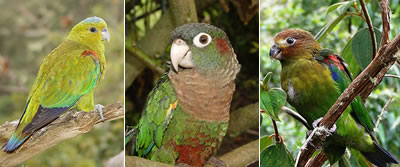
Military Macaw(Ara militaris), Rusty-faced Parrot (Hapalopsittaca amazonina),

Golden-plumed Parakeet (Leptosittaca branickii) y Brown-breasted Parakeet (Pyrrhura callipetra).


Related news


Inicio-7

First conservation workshop for parrots of Colombia
Wednesday 17 March 2010.

From 1st to 6th March, was held the first Workshop of population monitoring techniques and management of artificial nests for endangered Andean parrots of Colombia. It was attended by 20 people from different parts of the country.


inicioR

Conservation plan on threatened parrots
Friday 5 February 2010.

On 15 January, the workshop successfully developed Plan for the conservation of threatened parrots of Colombia from 2010 to 2020 which was attended by representatives of 11 organizations and local communities, ornithologists and conservationists.


Inicio-6

Threatened Parrot Action Plan being developed
Tuesday 12 January 2010.

Parrot experts and conservation groups are working with ProAves to develop a ten-year conservation Action Plan for threatened parrot species in Colombia. A workshop will be held on January 15 at the headquarters of ProAves to discuss the plan.


collage_filmacion_nidos-2

New insight into Endangered species
Tuesday 26 August 2008.

ProAves has published the first videos inside the nests of the Yellow-eared Parrot and Fuertes’s Parrot from its Threatened Parrots program supported by Fundación Loro Parque.

Categorías
Field Guides News

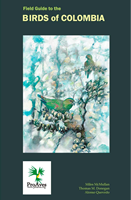
Field Guide to the Birds of Colombia

Field Guide to the Birds of Colombia.

Description: Coinciding with Colombia’s 200th anniversary as a republic, the world’s most bird-rich nation finally has a new field guide. The book is easy to use and constitutes the first pocket field guide for the world’s most diverse avifauna.

Authors: Miles McMullan, Thomas M. Donegan, Alonso Quevedo.
Language: English 
Size: 21 x 12.5 cm.
Number of pages: 225
ISBN: 978-0-9827615-0-252995 
Price: $ 55.000 pesos

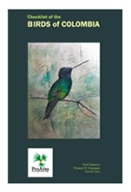
Checklist of the Birds of Colombia.

Description: The 4th edition of the Checklist to the Birds of Colombia contains data on each of the 1,879 bird species that occur in Colombia. The checklist is conveniently in the same compact pocket-size as the Field Guide to the Birds of Colombia and also follows the same sequence and nomenclature to make it easy to switch between the two books.

Authors: Paul Salaman, Thomas M. Donegan, David Caro.
Language: English / Spanish 
Size: 21 x 12.5 cm.
Number of pages: 72
ISBN: 978-0-9827615-1-9 
Price: $ 20.000 pesos

Buy guide & checklist here

 For USA and Canadá: Buteo Books
For Europe: NHBS

Categorías
News Noticias Pauxi Pauxi

Critical expansion for the Pauxi pauxi Reserve

The site is located in el Cerro de la Paz, specifically in the municipalities of San Vicente, Zapatoca and Betulia (Santander); this a mountain system that is affected and threatened by intensive livestock activities developed in the buffer zone.

Activities such as hunting, subsistence and trapping, the opening of areas for crops such as cocoa, coffee, & to a lesser extent, of food crops, livestock and illicit crops have put great pressure on these forest fragments.

On the Cerro de la Paz 220 bird species have been registered, of which 15 are migratory species, 7 endemic, 9 near-endemic and 4 threatened, making the achievement of new lands for conservation and expansion of the protected area a priority.

In recent reports from the CAS (Corporación Autónoma de Santander) it is estimated that the Santander forests are disappearing at the accelerated rate of 30 hectares a day, due to illegal timber trafficking, drug trafficking and agricultural sectors. In the past 10 years, 140 thousand hectares of forest were cleared and this trend will continue if nothing is done to done to stop the deforestation process.

For the above reasons and in addition to the inevitable current threats such as the damming of the river Sogamoso for the construction of a hydroelectric plant “Hidrosogamoso”, recent explorations for coal mining and oil drilling in nearby areas, making the region “a priority area for conservation.” The reserve includes areas of tropical moist forest life (Bh-T), average annual temperature of 27.8 ° C and a rainfall exceeding 2000 mm.

Pictures taken with camera traps in the Pauxi Pauxi Bird Reserve.

PROJECTS TO DEVELOP

Easements: ProAves as primary tool has created this project to promote conservation in the area with the help of the community. 7 legal ecological easements have been created for this reserve, with legalized commitments set and covenanted not to cut trees and forests on their land, making reseeding (native seedlings from our nursery) and not to carry out activities that threaten nature.

Corridor conservation: in agreement with the management plan of the reserve, ProAves has launched a conservation project which has as its main task to connect the mountain forests Cerro de la Paz (Pauxi Pauxi Bird Reserve) with the mountains of Yariguíes (Reinita Cielo Azul Bird Reserve) to allow movement of species between the two formations, ensuring genetic exchange, the survival of birds, amphibians, mammals etc. It also develops methods of planting native trees in the corridor of approximately 10 kilometers long by 1 kilometer wide.

Environmental education: for the development of such projects, ProAves has held conferences, group discussions, visits, presentations to government and private entities, radio and television programs, festivals and parades, to make known to the community the importance of such projects and create local awareness to take a decisive attitude of support for the success of these programs.

Ecotourism: is one of the pillars of great interest to national and international communities interested in observing birds and their protection, regardless of the adverse features of the pathways leading to the reserve.

With this expansion project, ProAves ensures a better habitat winning a sheltered space to poor forestry practices that threaten the environment in the region.

With the support of the following organizations:

abc

NMBCA usfish conservationleadership Yar
Categorías
News

Community conservation workshop in El Paujil Reserve

This project was developed from the need to generate initiatives that promote the recovery and conservation of stocks of Blue-Billed Curassow (Crax alberti) and Magdalena Spider Monkey (Ateles hybridus) are Critically Endangered according to the International Union for Conservation of Nature (IUCN) and the Convention on International Trade in Endangered Species of Fauna and Flora (CITES) in Appendix III.

These two species are also framed within the National Policy on Biodiversity and the Convention of Biological Diversity, also funded by the U.S. Fish and Wildlife Service.

grupo

Workshop socialization El Paujil Bird Reserve July 23, 2010.

The main threats identified were deforestation and habitat destruction caused by farming, logging and agriculture, hunting, for medicine and food, lack of knowledge about the importance of species, poor production systems that prevent a better income familiar and natural resource sustainability. Lack of land titles, property owners who generate rootlessness, lack of sense of belonging and increased uncontrolled exploitation of natural resources.

A representative of WWF and other researchers met on July 16th at the ProAves installations in Bogotá to find possible solutions for the improvement of natural resources and conservation of the species of interest.

Finally, concrete actions and agreements were established to provide solutions to these threats and the partners committed to develop these measures.

With the support of:

birdlife
Categorías
News

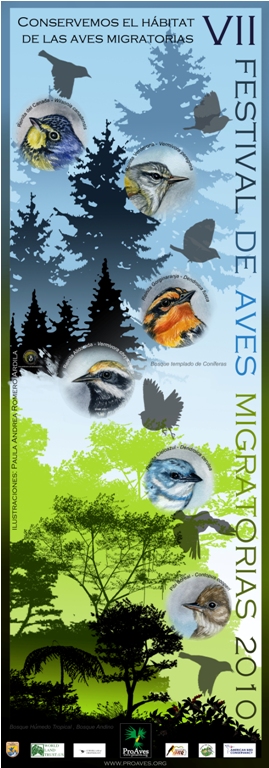
ProAves celebrated the VII Migratory Bird Festival

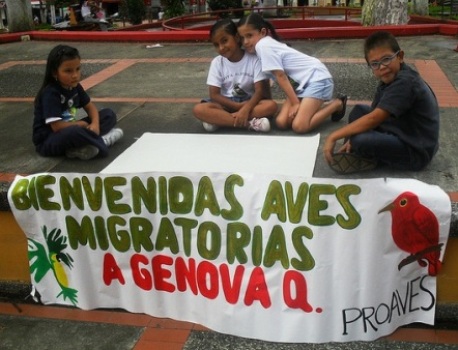
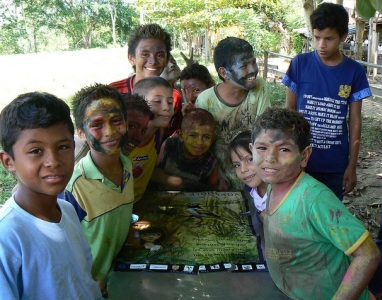
The Festival is a national event, where participating towns and cities across the country take part; Jardín in Antioquia is one of them. In this town various activities were held throughout the month of October where the community, especially children, attended various ecological workshops on birds in which ballads, poems, songs and dances, alluding to migratory birds and their conservation, were performed, likewise, more than 600 people participated in the homecoming parade, where children dressed up as the migratory birds that come to Jardín. These children worked for two weeks preparing their own costumes.

[slickr-flickr search=”sets” set=”72157625169690272″ items=”20″ type=”gallery”]

Another town that participated actively in the celebration was Puerto Pinzón, Boyacá, where more than 180 children, youths and adults were in the parade to welcome the migratory birds with the slogan “conserve the migratory birds’ habitat”. Students and teachers marched through the streets of Puerto Pinzón, bringing a message of respect and preservation of habitat for these birds.

In San Vicente de Chucuri, Santander department, various activities were done in spaces that allowed the creativity of children free reign to work with clay, make figures with balloons, parades and carnivals.

In Genova, Quindío department, workshops and some very dynamic walks with the children of the communities were held, informing them of the biodiversity of birds in the town, what the migratory birds are like and their importance through activities such as coloring, cutting and pasting, rounds and costumes.

In the town of Roncesvalles, Tolima department, a mini documentary about the importance of festivals in the town was made.

{youtube}ECsJNzrvK3w|425|344|1{/youtube}

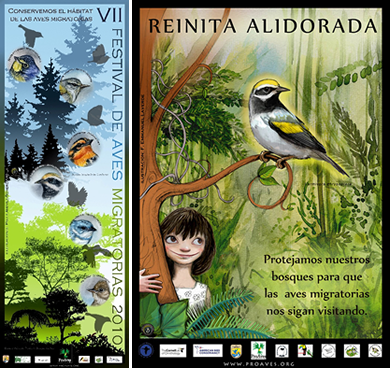
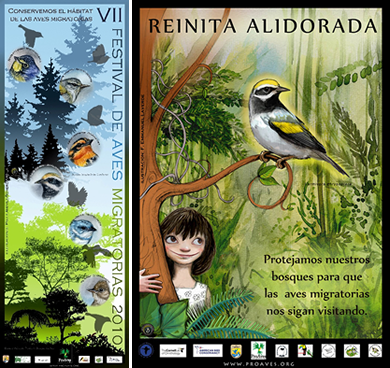
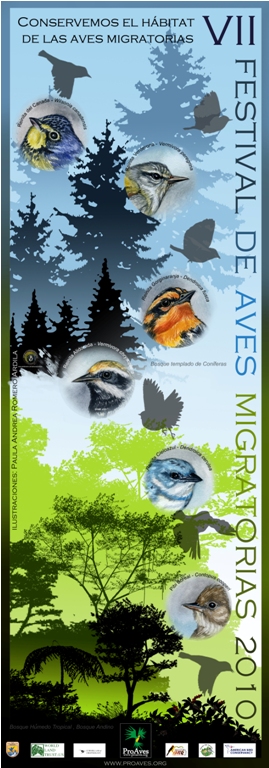
Posters that were part of the diffusion

Afiches

Paula Romero y Fernando Laverde from Fundación Arte y Conservación.


The VII Migratory Bird Festival was carried out with support from the following organizations:

worldlandtrust cornell Yar
conservacioninternacionalcolombia alianza abc


Categorías
News

DISTINCIÓN VIDA PARA LA FUNDACIÓN PROAVES

El pasado 23 de Septiembre, la Corporación Autónoma Regional Corantioquia, Territorial Citará, celebró sus 15 años de labores con una ceremonia en la que hizo un reconocimiento a aquellas entidades que han trabajado de manera muy comprometida y constante por la preservación de los Recursos Naturales, haciendo la entrega de la Distinción Vida, máximo galardón que entrega la Corporación a una persona o institución.

El evento contó con la participación de las organizaciones gubernamentales y no gubernamentales más importantes que trabajan en la Territorial Citará y fueron condecorados la organización EcoRegion, la Cooperativa de Caficultores de AndesCooperan y la Fundación ProAves Colombia, destacándose por todas las acciones puntuales de conservación que ha realizado desde 1998, en especial por el desarrollo del Proyecto Ognorhynchus en el Municipio de Jardín, Antioquia.

De izquierda a derecha: Ignacio Castaños, Director Territorial Citará; Luis Felipe Barrera, ProAves; Liliana Taborda González, Ecoregion; Luis Bernardo Benjumea, Cooperan.

Terminado el acto protocolario de condecoración, se hizo presentación de la muestra fotográfica “Citará, miradas al territorio, allende el Cauca” realizada por los funcionarios de la Corporación. Además del lanzamiento del “Plan Colegas”, acuerdo de Voluntades que nos compromete a seguir con la Protección y preservación de nuestro Patrimonio Natural.

Equipo ProAves invitado a la ceremonia

En representación de la Fundación ProAves fueron invitados: Luis Felipe Barrera, Subdirector de Áreas protegidas Cordillera Central, Ana Cristina Velasquez, Educadora Ambiental de Jardín y Ana Esperanza Contreras, Coordinadora de Áreas Protegidas para el Norte de la Cordillera Occidental.

Agradecemos a La Corporación Autónoma Regional Corantioquia, por este reconocimiento y los felicitamos por sus 15 años de buena gestión en la protección de los recursos naturales de la región.

Categorías
News

PREMIO PARA MIEMBRO DE PROAVES

Los premios Alejandro Ángel Escobar son considerados como el más alto galardón científico del país no sólo por la alta calidad de quienes los han recibido, sino por el rigor de los jurados encargados de adjudicarlos.

En esta oportunidad, el premio se otorga en la categoría de Medio Ambiente y Desarrollo Sostenible al trabajo “Estado del conocimiento de la flora silvestre en la jurisdicción de Corantioquia 2009” de JUAN LÁZARO TORO MURILLO. “esta obra es un importante ejemplo de exploración e investigación de nuestros recursos naturales, escrito en forma clara y accesible a un público amplio, sin dejar de lado la rigurosidad científica fundamental de una obra de esta índole.
La investigación surge de un esfuerzo institucional de muchos años de trabajo, el cual debe verse como el producto del amplio conocimiento del tema por parte de su autor, a raíz de su larga dedicación a su labor tanto de estudio científico de la flora antioqueña como administrativa y de gestión en CORANTIOQUIA.” Jurado de Ciencias

La Mención de Honor se otorga al “Programa de Investigación para la Gestión Integral del Agua en Colombia” del grupo Red de Cooperación en Investigación Sobre el Agua (GRECIA) liderado por GERMÁN POVEDA JARAMILLO. “Por sus invaluables aportes al conocimiento de la gestión integral del agua en Colombia.”

El Jurado de Ciencias está conformado por: Edgar Eduardo Daza, Carlos Arturo Guerrero Fonseca, Hugo Fazio Vengoa, Juan Plata Caviedes Y Santiago Madriñán Restrepo; quienes acogieron para la evaluación de los trabajos presentados criterios como Rigor, Innovación y Claridad.

La ceremonia de entrega se llevará a cabo el miércoles 27 de octubre, a las 6.30 p.m, en la sala de conciertos de la biblioteca Luis Ángel Arango, en Bogotá.

Categorías
News

Festivals

ProAves’ objective to conserve wild birds in Colombia, carries out three Bird festivals each year, through out the country and with the support of local communities, with the aim to demonstrate the importance and richness of our biodiversity and the influence mankind has in Nature’s equilibrium.

The festivals are:

AvesM

Migratory Bird Festival

In order to ensure the survival of migratory birds in Colombia, ProAves develops this festival with local communities in key areas for migratory birds.


festival_paujil

Blue-billed Curassow Festival

This festival is carried out in Boyacá aiming to preserve Blue-billed Curassow Crax alberti, endemic and unfortunately endangered species of Colombia.


Aves_EndmicasCaribbean Endemic Bird Festival

Festival developed in the San Andrés Island, as part of the festival carried out in Colombia and in 23 countries of the Caribbean Region.


Festival_Loros_Amenazados

Threatened Parrots Festival

Threatened Parrots Festival is a massive event that takes place in the second half of each year to preserve the species of parrots found in any state of threat.


Related news


inicio-5

Blue-billed Curassow Festival starts
Tuesday 8 September 2009.

The 5th Blue-billed Curassow Festival gets underway between the 1st-25th of September and involves communities around the Paujil Bird Reserve. This annual event raises awareness for this endangered species which is a critical conservation flagship for the highly threatened tropical rainforests in the Magdalena valley.


InicioLoro

Yellow-eared parrot & Wax Palm Festival news
Wednesday 26 August 2009.

Incredible costumes, folk music, colors, and banners, filled the streets as processions of local conservationists in towns across Tolima, Quindío and Antioquia to proclaim the 4th Festival of the Yellow-eared parrot and the Wax Palm thanks to Fundación Loro Parque.

Categorías
News

Migratory Bird Festival


Afiche_migratorias_2010_final_copy

Paula Romero y Fernando Laverde

Fundación Arte y Conservación. Campaña 2010.

Each year during winter, thousands of birds travel from North America and from South America towards Central and South America looking for warm climate. This phenomenon is called migration, but due to the destruction of the ecosystems, each time fewer birds are able to find a place where to eat, live and spend the months of the migratory season.

Because of that, since 2004, ProAves, has been carrying out activities of conservation and environmental education, together with local communities and in key areas for migration, the Migratory Bird Festival. The festival is developed through-out the country and it has been established as a dynamic and educational event where diverse activities focused to environmental education are carried out. This Festival is made during October, enhancing the importance of migration and conservation of the ecosystems where migratory birds arrive. These activities are directed to the general public, but there is always more emphasis to kinds since they are the conservationist of the future.

The objective of this festival is to promote the interest of the communities in the knowledge of migratory birds and the importance to preserve their habitat. In addition, the festival seeks to strengthen and consolidate the network of organizations and people committed to wild birds’ conservation in the country. Migratory birds make a dangerous trip and it’s the duty of the tropical countries to ensure their survival.

Related news

Inicio3-2

ProAves celebrated the VII Migratory Bird Festival
Wednesday 1 December 2010.

The VII Colombian Migratory Bird Festival linked more than 10,000 people across Colombia in leisure and cultural events and activities last October to spread knowledge about the amazing phenomenon of migration and the need to protect these species in Colombia.


Inicio-2

VII Migratory Bird Festival 2010
Tuesday 19 October 2010.

October has come and we welcome 183 species of migratory birds that arrive in our country to celebrate the VII Migratory Bird Festival which, this year, will be held in 7 municipalities of Colombia.


inicio2-5

Welcoming the arrival of Extreme Travelers to Colombia
Wednesday 11 November 2009.

This past October, the 6th Festival of Neotropical Migratory birds brought together more than 7,000 people in academic, leisure, and cultural activities undertaken to raise awareness of their plight and to help support the protection of these species in Colombia.


inicio2-3

“Colombia welcomes the extreme travelers “
Friday 9 October 2009.

October came with the 6th Festival of Migratory Birds and with it we welcome these extremes travelers. From the 16th to the 25th various activities will take place throughout Colombia. In Bogota, El Jardín Batánico and ProAves have come together to have a varied program.


inicio_afiche-2

The extreme travellers are on their way to Colombia!
Monday 31 August 2009.

We are getting ready to welcome our migratory birds back to Colombia. We invite everyone to participate in the 6th Migratory Bird Festival held across the country from the 1st until the 23rd of October. We look forward on having you participate on various activities thanks to the support of US Fish & Wildlife Service.


nuevo_inicio_bird_fest

ProAves celebrates International Migratory Bird Day
Tuesday 19 May 2009.

ProAves participated in the launch of the International Migratory Bird Day and the Bird Fest at the Smithsonian National Zoological Park in Washington D.C. We participated with many organizations in the race to raise awareness of bird migratory conservation.


Imagen_inicio_nota_festval_migratorias

Warm welcome for migrants in Colombia!
Monday 16 February 2009.

More than 8,000 people of all ages welcomed migratory birds in late 2008 in seven departments of Colombia and in the city of Bogotá through the V Migratory Bird Festival of ProAves, participating in many activities such as parades, workshops, talks, walks and birding trips.


f-10

Success of 4th Migratory Bird Festival
Tuesday 29 January 2008.

The Migratory Bird Festival of 2007, led by ProAves in Colombia, reached more than 13,000 people in a more than a fourth of the country, bringing environmental education to the community during October.


Inicio_cubrimiento_migratorias

Great media coverage of the Migratory Bird Festival 2007!
Tuesday 4 December 2007.

The 2007 Migratory Bird Festival was hugely welcomed by both Colombian and the international media. More than 32 articles and broadcasts were published, reaching millions of people in Colombia.


Inicio_Festival_Migratorias_2007_9_

The Migratory Bird Festival in the Andes begins
Friday 26 October 2007.

In front of an enthusiastic public at the Bogota Botanical Gardens on October 5, the Migratory Bird Festival began in the Andes, thanks to the support of American Bird Conservancy and NMBCA.

Categorías
News

Ecotourism

ecoturs

Birding and nature tourism for conservation.

www.ecoturs.org

In a pioneering initiative, ProAves and EcoTurs Colombia have teamed up to offer high quality and safe birding and nature tours with 100% of profit going to conservation in Colombia.

In the past decade, thanks to the support of many donors, in particular to American Bird Conservancy   (ABC), ProAves has established a spectacular network of reserves protection over 60% of all threatened bird occurring in Colombia and 1,000 bird species, as well as numerous endangered amphibians, mammals and other species.

If you would like to visit our reserves visit www.ecoturs.org  

With the support of:

abc


Related news


Inicio2jpg

EcoTurs and ProAves were present in III Colombia Show
Thursday 20 October 2011.

With the main theme of “Birdwatching tourism: sustainable alternatives for conservation”, EcoTurs and ProAves were present at the III Colombia Show held by the Colombian Association of Travel and Tourism (ANATO) on 28th September in Bogota. This is the most important event for tourism operators in Colombia.


Inicio_feria

ProAves and EcoTurs representing Colombia at the 2011 British Birdfair
Thursday 1 September 2011.

For the 5th consecutive year ProAves & EcoTurs represented Colombia at the world’s largest international birdwatching event. The British Bird Fair has brought together birding and conservation organizations from five continents. We had our best ever year.


curso_ecoguias

Apply now: advanced training course for bird guides
Tuesday 12 October 2010.

ProAves y EcoTurs invite participates to the 3rd Eco-guide Training Course, specializing in bird guiding. The course will be held in Minca, Santa Marta, from 24-28 November.


iniciativa

International EcoTourism Initiative to Save Birds
Wednesday 17 February 2010.

An international bird conservation partnership has launched an initiative to encourage birders and tourists to visit nature reserves protecting endangered birds in Latin America. The initiative includes four ProAves reserves across Colombia. Go birding and help bird conservation!! See: www.conservationbirding.org


videos

Discover ProAves Bird Reserves in videos
Thursday 11 February 2010.

ProAves has published three promotional videos of its natural bird reserves El Dorado, El Paujil and Cerulean Warbler, highlighting on-going conservation work and attractions for ecotourism. You can see these and 22 other videos by ProAves on YouTube.


Record

Record-breaking birding tour in Colombia
Saturday 26 December 2009.

The first ProAves/EcoTurs “Endemic Bonanza Tour” recorded no less than 42 Colombian endemic birds in just 17 days! That’s over half of all Colombian endemics on a phenomenal birding route across ProAves Bird Reserves. This is the most successful birding tour by number of endemics over such a short period within Colombia.


Copia_de_wall

ProAves and EcoTurs on the Wall Street Journal
Friday 31 July 2009.

The Wall Street Journal published on June 25 2009 on its front page an article about the increase in bird watching tourism in Colombia, taking the stream because of four tours organized this year by the famous guide Steven Hilty with EcoTurs, and the conservation efforts of ProAves.


Inicio_guias

Eco-guide’s training, main focus on birds
Friday 31 July 2009.

Colombia requires each time more guides for bird watching tours, given the increase of this market activity in Colombia. With the aim to professionalize this activity in the country, EcoTurs and ProAves offered a specialized training from June 30th to July 2nd at the Reserve El Dorado.

Categorías
News

Thereatened Amphibians

Rana_1

Phyllobates terribilis.

Colombia ranks second worldwide after Brazil with 753 species of amphibians, making it one of the most diverse and rich in amphibians (Frost et al. 2010). During the last two decades, dramatic population declines and extinctions of amphibians have been reported around the world.

Several factors acting in synergy have been the main players: climate change, infectious diseases, loss and fragmentation of habitat, introduction of exotic species, pollution and lack of information on different populations of amphibians (Rueda et al. 2004, Blaston & Bancroft, 2007). Currently, it is estimated that 32% of all amphibian species worldwide are at risk of extinction. The highest concentration of endangered species has been recorded in countries like Colombia.

The enormous ignorance about relevant aspects of natural history in general and about the identity of many species living in various regions unexplored or partially explored leads to the large number of species, data deficient (DD), near threatened (NT) listed in the latest global assessment of amphibians in 2004 according to IUCN criteria, substantially alter and increase the number of species in threat levels (CR, EN, VU) (Angulo et al, 2006).

Rana_2

Ranitomeya opisthomelas.

ProAves wanted to work to obtain baseline information for several species of this group to get this way to contribute evidence and carry out actions to counter this crisis that we find this group.

Examples of these investigations is the rediscovery in 2006, after fourteen years without information, two critically endangered amphibian species in our Bird Nature Reserve El Dorado, with support from Conservation International: Variegated Harlequin Frog (Atelopus laetissimus) and the San Lorenzo harlequin frog (Atelopus nahumae).

Recently work has been done seeking the latest information of the status of amphibian populations Sonsón Paramo, Oophaga terribilis and Phyllobates lehmanni.


Related news


InicioRanas

Search for the Lost Amphibians of Colombia
Friday 8 October 2010.

An international expedition in search of amphibians in the Chocó, lead by ProAves, Global Wildlife Conservation, and Conservation International, made several major discoveries including finding three amphibian species considered new to science.


inicio

La Brea Poison Frog rediscovered, but in critical condition
Monday 27 September 2010.

In the Chocó lowland rainforests of Cauca Department, a ProAves expedition has rediscovered the amazing La Brea Poison Frog (Oophaga occultator) since it was first described in 1976. Despite its “Data Deficient” IUCN status, its habitat is being rapidly destroyed and completely unprotected.