Categorías
Fundación ProAves – por la conservación en el país de las aves

|
PRESENTACIÓN La Biblioteca de Ornitología se encuentra abierta a todas las personas, estudiantes, ornitologos, investigadores y conservacionistas de aves y sus hábitats en Colombia, cuyo fin es brindar la posibilidad de obtener material para consulta. Horario de Atención Lunes a Viernes 8:30 AM a 5:30 PM Los documentos presentes en la biblioteca están organizados por temas y por medios de consulta en los que se incluyen documentos de identificación, investigación, conservación, revistas científicas, revistas divulgativas y educación ambiental. En cumplimiento del objetivo de desarrollo de un sistema de información para el estudio y seguimiento del estado poblacional de las aves, de la estrategia para conservación de las aves. ProAves apoya las metas de desarrollo de bases de datos de literatura ornitológica y compilación de la literatura ornitológica colombiana. |


| ALLIES
– Zoological Society for the Protection of Species and their populations e.V.ZGAP The Zoological Society for the Protection of Species and populations e.V.ZGAP (For its acronym in German) was founded in 1982 by a small group of dedicated conservationists in Munich, Germany. The primary goal of the society is the preservation of poorly known species and endangered species and habitat protection.
-Shared Responsibility Shared Responsibility is a campaign led by Vice-President of the Republic and seeks to raise awareness about the environmental effects caused by illicit crops.
http://www.responsabilidadcompartida.gov.co/
-Regional Autonomous Corporation of Magdalena – CORPAMAG Entity responsible for environmental conservation and sustainable development of the department of Magdalena.
-Regional Autonomous Corporation of North Santander – CORPONOR Its jurisdiction is the Norte de Santander Department and its main function is to act as top environmental authority of the Department, in accordance with the rules and guidelines issued by the Ministry of Environment, Housing and Territorial Development.
-Natura Foundation
Natura Foundation works for life represented in human communities, animals and plants in the country and the planet. It is a nongovernmental organization (NGO) non-profit organization created in 1984 with a mission to help conserve the biodiversity of Colombia and the search for alternative sustainable use of natural resources.
|
Related news
 Help ProAves through Healthy Planet
Tuesday 22 November 2011.
Merry Christmas! Help the environment during the holiday season and throughout the rest of the year too! Visit our partner Healthy Planet at www.healthyplanet.org
 Celebrating Colombia’s 200th anniversary, in London
Tuesday 20 July 2010.
The 200th anniversary of the declaration of independence of Colombia was celebrated in Britain. The Natural History Museum in London hosted an event entitled “Colombia: Paradise of Biodiversity” with 200 guests that included the former President of Colombia, Belisario Betancur.
 Official Announcement of the description of a new bird species in Colombia
Friday 21 May 2010.
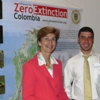
A new species of Antpitta endemic to Colombia, was announced on Wednesday 19 May at a ceremony at the Embassy of Colombia to the USA, and was attended by Ambassador Dr. Carolina Barco.
Original Yellow-eared Parrot painting for sale!
Monday 26 April 2010.
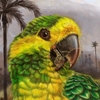
In an exciting initiative between ProAves and “Art & Conservation”, a group of artists dedicated to support conservation through art, the original Yellow-eared Parrot painting is for sale with proceeds used to support conservation. The artist, Paula Andrea Romero, did a magnificent job painting this beautiful parrot in its habitat.
 ProAves is member of the Environment Alliance Pact
Tuesday 16 March 2010.
ProAves is part of the Environment Alliance Pact, which seeks the commitment of the candidates for President of Colombia to place ecology as the center and heart of public policy.
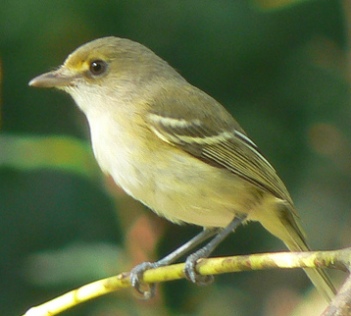
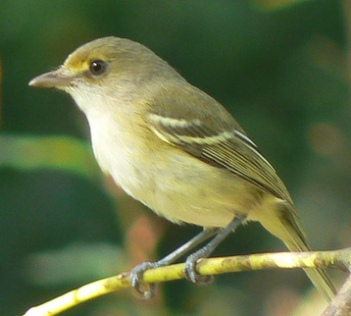
Since the creation of the National Network of Monitoring in 2003, we have established 43 cooperation agreements with 61 organizations to create a monitoring network for migratory and resident birds that has had the support of more than 49 researchers.
The primary target is to establish monitoring stations in different regions of the country. In 2006, we focused monitoring activities towards our protected areas, in which already we have 29 stations. That year we initiated a program of monitoring the marine birds in the island of Malpelo in the Pacific Ocean.
 |
 |
 |
Related news
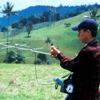 |
Workshop on population monitoring and conservation for parrots
Monday 8 February 2010.
ProAves is looking for people interested in learning construction techniques, maintenance and monitoring of artificial nests; techniques to climb trees and palms and techniques monitoring parrot populations.
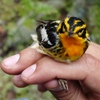
As a system to regulate the activities of capture and handling of birds, ProAves has been standardizing and elevating the quality of bird banding in Colombia, so that it contributes to monitoring and conservation efforts.
After two years of work our greatest achievement has been to increase the capacity of Colombian banders, bringing together a group of international trainers that disseminate their experience in the country.
Among the achievements of the program are:
 An online recording system to report of recaptures and recoveries. A banding protocol available for qualified people, which includes banding formats for data recording. A SNA webpage, updated by more than 12,000 visits up to December 2006. 31 banding agreements. Two volunteer banding groups formed in 2006. Nine training courses (three in 2006) with three defined levels of training. An online database with 70,000 records. Chair of the Western Hemisphere Bird banding Network. The certification of two members of ProAves as banders and trainers by the North American Banding Council. Training of two members of ProAves in banding by the Wetland Trust, England. The recovery in Guatemala of a Nazca Booby banded in Malpelo Island. The record was made through the program that is carried out with Malpelo Foundation, Calidris Association, Invemar and Conservation International.
Related news
 |
Banding equipment available for researchers
Monday 21 June 2010.
All researchers wishing to undertake banding projects in Colombia are invited to receive free bird bands and loan of technical field equipment with the aim of assisting bird research.
 |
Amazing records from the remote Malpelo Island
Tuesday 30 March 2010.
During February 2010, ProAves participated in the 13th expedition to Colombia’s remote Malpelo Island in the Pacific Ocean. During the expedition 300 Nazca Booby individuals were banded as well as other seabirds. Amazingly, three young and very lost Snail Kites were filmed on the island!
 |
8th Nazca Booby banding journey
Friday 5 December 2008.
ProAves completed our 8th Nazca Booby banding expedition to the Malpelo Fauna and Flora Sanctuary, obtaining information on its population structure, molting patterns, and reproduction, of this species on the island.
 |
Birds banded in Colombia captured in North America
Wednesday 5 December 2007.
Two birds banded in Colombia as part of the ProAves Migratory Bird Monitoring Program supported by NMBCA (USFWS) were recaptured in Canada and USA: a Rose-breasted Grosbeak and a Blue Grosbeak.
 |
New training to ProAves in the UK
Friday 26 October 2007.
Two ProAves staff members recently received advanced bird banding training in the United Kingdom thanks to The Wetland Trust and the British Trust for Ornithology.


Visit our Eco-Volunteer website www.eco-volunteer.com
ProAves is a non-profit organisation that was set up in 1998. It was created to protect birds and their habitats in Colombia and the organisation sought to do this through research, conservation actions and community outreach.
Considering that the community is able to lead numerous conservation actions, ProAves has launched its Eco-volunteer Program in its natural reserves; this program will allow conservationists (national or foreigners) to help us carry out specific conservation actions to protect extremely important habitats for critical bird species in Colombia.
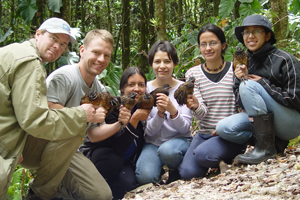
ProAves have several objectives with the Ecovolunteer program such as to improve and guarantee the sustainability of the work that is being done in Colombia, allowing the reserves to be run efficiently for years to come. Also being an indispensable feature of the reserves, helping with everything from maintenance to research. We know that the role that volunteers play in conservation cannot be overstated.
Volunteer positions are held at three of our wonderful natural reserves: El Dorado, El Paujil y Reinita Cielo Azul.
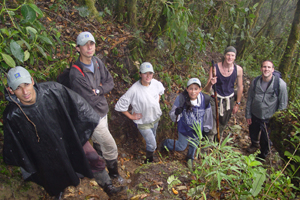 More information in www.eco-volunteer.com or with Daniel Vega dvega@proaves.org
Related news
 |
Great opportunity for volunteers
Tuesday 15 June 2010.
ProAves and YARÉ Project offer a unique opportunity to contribute to nature conservation in Colombia! Students and professional volunteers are invited to support the restoration of one of the country’s most important ecosystems at Serranía de los Yariguíes Yariguíes in Santander Department.
 |
Volunteer in the Sierra Nevada de Santa Marta Free!
Monday 26 April 2010.
ProAves and Ecoturs invites you to volunteer in one of the most biodiverse areas of the planet and best of all for free! Limited places are available for volunteers to perform activities that require physical exertion, such as repair and improve roads and nature trails in the Reserve El Dorado in the Sierra Nevada de Santa Marta.
 |
Eco-Volunteer at El Dorado Reserve for free
Tuesday 30 March 2010.
We are offering a special opportunity for students and professionals – volunteer for conservation in the wonderful El Dorado Reserve in the Sierra Nevada de Santa Marta this summer for free!
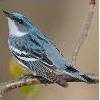 |
Help needed to monitor Cerulean Warblers
Thursday 22 October 2009.
We are seeking volunteers with bird banding and bird survey experience to join a team surveying and radio-tracking Cerulean Warblers in the Cerulean Warbler Reserve.
 |
Sign-up online to volunteer now!
Friday 31 July 2009.
Looking for an amazing opportunity to contribute to conservation and have an unforgettable experience? Then sign-up on ProAves new Eco-Volunteers Program website and help us protect the most endangered species and their habitats in South America.Check it out! www.eco-volunteer.com
 |
Volunteers urgently needed in biodiversity paradise!
Monday 9 March 2009.
ProAves launched its EcoVolunteer Program in Colombia, with amazing opportunities for anyone interested to help biodiversity conservation and protect critical habitats for threatened birds and wildlife in Colombia.
La Fundación ProAves agradece a todos sus Ecovoluntarios por su esmerado y desinteresado trabajo que aporta en gran manera a la continuidad de los procesos de conservación, educación e investigación que se llevan a cabo en las reservas naturales.
Voluntarios 2010
|
Nombre
|
Nacionalidad
|
Área de trabajo
|
Reserva
|
|
David King
|
Gran Bretaña
|
Traducción de textos
|
Online
|
|
Theo Wood
|
Estados Unidos
|
Traducción de textos
|
Online
|
|
Andrea Almeida
|
Ecuador
|
Investigación
|
RNA Colibrí del Sol
|
|
Sokhieng Au
|
Estados Unidos
|
Apoyo logístico en oficina Bogotá
|
Bogotá
|
|
Lauren Alleman
|
Estados Unidos
|
Restauración de hábitat
|
RNA El Dorado
|
|
Viviana Peña
|
Colombia
|
Inventario entomológico
|
RNA El Dorado
|
|
Jorge Romero
|
Colombia
|
Inventario entomológico
|
RNA El Dorado
|
|
Avery Bartels
|
Canadá
|
Monitoreo de aves
|
Chocó y Colibrí del sol
|
|
Henrietta List
|
Estados Unidos
|
Apoyo mantenimiento de Reserva
|
RNA El Dorado
|
|
James List
|
Estados Unidos
|
Apoyo mantenimiento de Reserva
|
RNA El Dorado
|
|
Patricia Parsons
|
Estados Unidos
|
Apoyo mantenimiento de Reserva
|
RNA El Dorado
|
|
Jeff Parsons
|
Estados Unidos
|
Apoyo mantenimiento de Reserva
|
RNA El Dorado
|
|
Jane Mark Triollay
|
Fracia
|
Investigación de Raptores
|
RNA El Dorado
|
|
Jane Triollay
|
Francia
|
Jardinería
|
RNA El Dorado
|
|
María Luisa Botero
|
Colombia
|
Apoyo a proyecto de Crax alberti y mantenimiento reserva
|
RNA El Paujil y El Dorado
|
|
Jorge Ayarza
|
Colombia
|
Apoyo a proyecto Crax albertiy ateles
|
RNA El Paujil
|
|
Michael Blackwood
|
Estados Unidos
|
Apoyo a coordinación de Programa voluntarios
|
Bogotá
|
|
Gordon Fitch
|
Estados Unidos
|
Apoyo a proyecto Crax albertiy ateles
|
RNA El Paujil
|
|
Nate Blackwood
|
Estados Unidos
|
Mantenimiento Reserva
|
RNA El Dorado
|
|
Francine Mejia
|
Estados Unidos
|
Restauración de hábitat
|
RNA El Dorado
|
|
Eric Berntsen
|
Estados Unidos
|
Restauración de hábitat
|
RNA El Dorado
|
|
Ingrid Arcila
|
Colombia
|
Mantenimiento de reserva
|
RNA El Dorado
|
|
Inmaculada Ferniz
|
España
|
Mantenimiento de reserva
|
RNA El Dorado
|
|
Pamila Cabrera
|
Colombia
|
Mantenimiento de reserva
|
RNA El Dorado
|
|
Vilma Chicue
|
Colombia
|
Mantenimiento de reservas
|
RNA El Dorado
|
Voluntarios 2009
|
NombredelVoluntario
|
Nacionalidad
|
Área o proyecto que apoyó
|
Reserva
|
|
Hellmuth Vargas
|
Colombiano
|
Apoyo al sistema de bases de datos, formularios y anillamiento en la web.
|
Bogotá
|
|
Charlotte Allagnat
|
Francesa
|
Apoyo en actividades de conservación
|
RNA El Paujil
|
|
Jeanne Seaume
|
Francesa
|
Apoyo en actividades de conservación
|
RNA El Paujil
|
|
Juan Camilo Cubillos
|
Colombiano
|
Apoyo en actividades de conservación
|
RNA El Paujil
|
|
Maria Alejandra Chadid
|
Colombiana
|
Apoyo en actividades de conservación
|
RNA El Paujil
|
|
Avery Bartels
|
Canadiense
|
Apoyo en monitoreo y anillamiento de aves migratorias
|
RNA Reinita Cielo Azul
|
|
Kelly Wester
|
Estadounidense
|
Traducción de textos
|
Online
|
|
Teresa Oliveros
|
Costarricense
|
Traducción de textos
|
Online
|
|
Maria D. Tenorio
|
Estadounidense
|
Traducción de textos
|
Online
|
|
Maria Eugenia Villegas
|
Española
|
Traducción de textos
|
Online
|
|
Jorge Grandini
|
Mexicano
|
Apoyo en actividades de conservación
|
RNA El Dorado
|
|
Nicolas Fioretti
|
Argentino
|
Apoyo en Proyecto Polylepis
|
RNA Colibrí del Sol
|
|
Maria Eugenia Valencia
|
Colombiana
|
Diseño certificado de Ecovoluntarios
|
Online
|
|
Olga Lucia Martínez
|
Colombiana
|
Apoyo a actividades festival del Paujil
|
RNA El Paujil
|
|
Pedro Navas
|
Colombiano
|
Apoyo en actividades de educación
|
Bogotá
|
|
Carolina Lobo
|
Colombiana
|
Apoyo en actividades de educación
|
Bogotá
|
|
Laura Mendez
|
Colombiana
|
Apoyo en actividades de educación
|
Bogotá
|
|
Jennifer Forero
|
Colombiana
|
Apoyo en actividades de educación
|
Bogotá
|
|
Diana Arteaga
|
Colombiana
|
Marketing online
|
Online
|
|
Adam Williams
|
Estadounidense
|
Producción de videos
|
RNA El Dorado y Reinita Cielo azul
|
|
Daven Hafey
|
Estadounidense
|
Apoyo a actividades de conservación
|
El Dorado
|
 The success of ProAves depends on the support of people like you. Many birds in Colombia are at risk of extinction so there is much work to do.
Ways you can help to save the threatened birds of Colombia:
1.Becoming a member of ProAves FREE!
You would receive our e-bulletin Aleteo , news and invitations to participate in our events, and discounts in the purchase of publications (books and magazines).
 2.Make a donation
Making a safe donation online will support our programs: Investigation, Conservation and Environmental Education to implement immediate actions to prevent bird extinction and their habitats.
3.Become part of our Ecological Group Amigo de las Aves (Friends of the Birds)!
Make an inscription to our Ecological Group Amigo de las Aves (Friend of the Birds). You would receive information about our ecological campaigns, local groups, activities and locations where to be involved.
4.Inscribe your school to the program Bird Friendly Schools (Escuela Amiga de las Aves)
Schools can become a Bird Friendly School and contribute to the conservation of threatened birds and their habitats, helping us to share knowledge about birds and habitats.
5.Adopt a nest box
You can help us avoid the extinction of a parrot species in Colombia through de program Adopt a Nest Box. You will sponsor the construction and installation of an artificial nest and its monitoring and maintenance during a year.
6.Tell your friends about us
Help to spread news of our work. Every person can do something to help!
Related news

Tragic demise of the Magdalena Spider Monkey
Thursday 15 April 2010.
This wonderful primate is targeted by hunters who kill mothers with infants. The infants cling in desperation as their shot mothers fall from the canopy… the helpless infants are taken and sold as pets. Please donate to help work with communities and stop hunting to save one of the planet’s most endangered primates.
|
|
|
Paula Romero y Fernando Laverde Fundación Arte y Conservación. Campaign 2010 |
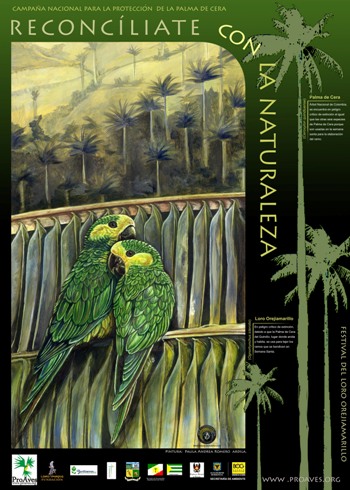
The Critically Endangered Wax Palm is cut down to adorn churches and processions on Palm Sunday. Sadly, the palm takes centuries to mature and is the sole habitat for the Yellow-eared Parrot.The second phase of the campaign, now Reconcile with Nature begun in 2003, Conservación Internacional Colombia and later the Episcopal Conference and the Environment Ministry joined conservation efforts that have being carried our since 1998 by ProAves with the support of the Fundación Loro Parque in the municipality of Jardin, Antioquia.
Since the year 2000, when ProAves highlighted the plight of the Yellow-eared Parrot and Colombia’s national tree, the Quindío Wax Palm, the campaign Reconcile with Nature, initially Wax Palm and Yellow-eared Parrot campaign, has been growing in strengthen thanks to the many partners, particularly the Catholic Church, Conservación Internacional-Colombia and the Ministry of the Environment.
This campaign has being carried out since its creation uninterruptedly in a national level.
The activities implemented via this campaign, are designed to create conscience and to educate diverse sectors of the community. Taking advantage of didactic methodologies, the campaign aims to give a sense of ownership over the National Colombian symbol, the Wax Palm tree, and last habitat of the Yellow-eared parrot, both highly endangered species.
As a result, diverse changes in the near-by populations to these endangered species have been achieved:
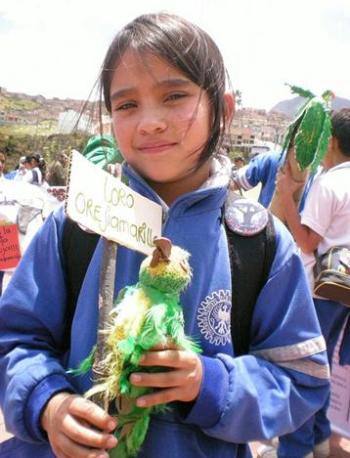
 Change of attitude towards the traditional use of the Wax Palm tree during the Holly Week, when other species such as the Iraca Palm or other plants are being used instead.
National and International recognition has been achieved over the campaign and its aims to take care of these two endangered species.
In the municipality of Roncesvalles, in the department of Tolima, the Yellow-eared Parrot and the Wax Palm tree Festival has been institutionalized as a cultural celebration.
This campaign is carried out through out the country with governmental and non-governmental entities, diverse local, national and international communications means, in addition to diverse international institutions, such as American Bird Conservancy, Loro Parque Foundation and Disney Wildlife Conservation Fund, among others.
With the support of:
|
|
 |
 |
Related news
 |
Reconcile with nature 2012 success
Thursday 29 March 2012.
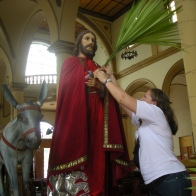
Last month the 11th annual “Reconcile with nature” campaign was launched across Colombia. After 11 years, our message about conservation and respecting nature, especially the wax palm, is still going strong! Importantly, the Endangered Wax Palm is no longer used in Palm Sunday processions, ensuring that the habitat of the Yellow-eared Parrot will survive.
 |
Nature conservation celebrated on Palm Sunday in colombia
Wednesday 14 April 2010.
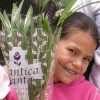
From 24-26th March, the 9th annual Reconcile with Nature Campaign was held across Colombia. The results were excellent with no Endangered Quindio Wax Palm fronds used on Palm Sunday, especially in key areas for the Yellow-eared Parrot and wax palm in Tolima, Antioquia, and Quindio departments. We are grateful to the Catholic Church and many institutions for their support.
 |
Reconcile with Nature Campaign 2010
Wednesday 17 March 2010.
“Your future depends on what you do in the present” this is the slogan of the 9th campaign of “Reconcile with Nature”. On March 24th 2010, we will official launch the campaign at Entre Nubes Ecological Park.
 |
Palm Sunday without wax palms!
Wednesday 15 Abril 2009.
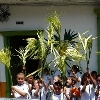
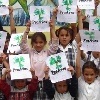
After 8 years of ProAves leading the campaign to protect the Wax Palm during Palm Sunday in the Colombian Andes where the Yellow-eared Parrot occurs, we can give the good news: NO wax palms were used during this past Palm Sunday!
 |
Yellow-eared Parrot and Wax Palm parade
Wednesday 15 April 2009.
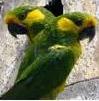
On March 17, 2009 the streets of Jardin, Antioquia were filled with the colours and images of the Yellow-eared Parrot and Wax Palm, to celebrate the beginning of the 8th Palm Sunday campaign and rejoice the campaigns origins that started in Jardín in 2002.
 |
2009 Wax Palm Campaign begins!
Monday 9 March 2009.
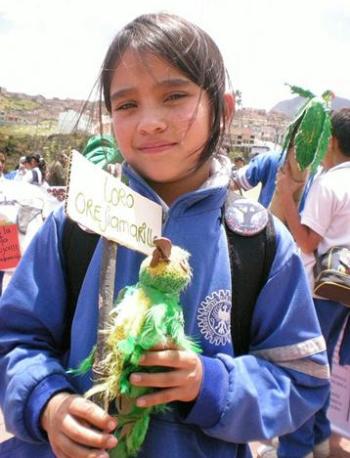
With more than 500 people, Fundación ProAves and its partners launched the 8th “Reconcile with Nature” campaign on 7 March, 2009, in the municipality of San Francisco, Cundinamarca, Colombia, to generate awareness for the protection of the Quindío Wax Palm and Yellow-eared Parrot.
|
Fundación ProAves develops diverse campaigns throughout the country in benefit of conservation of bird species and their habitats. With the help of environmental educators, ecological groups, young researchers and friends of the bird’s schools, the organization of workshops, parades, site-seeing trips and public events, aim to reach the general public. The same way, using radio and TV shows in regional, local and national broadcast, we are letting the general public know about the importance of taking care of the environment, all within the framework of the activities planned for the campaign. These events are dynamic and educational and are developed in different regions of the country, depending on the species and its habitat.
With this campaign, since 2001, we are aiming to take care of the species of Wax Palm and Yellow-eared Parrot, both critically endangered.
This other campaign intends to make kids and youngsters understand the importance of taking care of birds, disposing the use of slingshots and stop attempting against the life of the birds living in the same areas as them. |


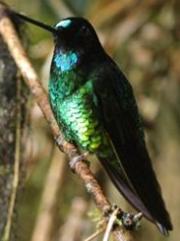
Establishment: In order to protect the habitat of the Dusky Starfrontlet (Coeligena orina) and conserve a sample of one of the moorland ecosystems in the best state of preservation in Colombia, ProAves established the Dusky Starfrontlet Bird Reserve on 6th October 2005. Location and Area: It is located in the village of El Chuscal, on the axis of the Cordillera Occidental, at a distance of 17 km north of the town of Urrao, Antioquia, and has an area of 1.801 acres of high Andean forest and moorland, which comprises a large portion of the watershed of the creek Santa Barbara, one of the main tributaries of Urrao. It is located between 2,800m and 4,060m above sea level. (See map). Biological Significance:
Some species of birds found in the reserve are the Dusky Starfrontlet (Coligena orina), critically endangered, Rusty-faced Parrot (Hapalopsittaca amazonina), the Chestnut-bellied Flowerpiercer (Diglossa gloriosissima), The Moustached Antpitta (Grallaria alleni), in a vulnerable state, and Golden-crowned Tanager (Iridosornis rufivertex). Recently, at the reserve, was discovered a new species of Grallaria, known as Urrao Antpitta (Grallaria fenwickorum). Moreover, the site is recognized as an area of labor and training or Spectacled Bear (Tremarctos ornatos), which holds the vulnerable category. Climate: The climate is bimodal, with rainfall ranging between 2,500m and 3,000 mm and a minimum temperature of between 2 and 18 º C.
Biophysical Features: The reserve is composed of oaks (Quercus humboltii) in good condition and mixed forest epiphytes. Above 3,500 m., the moorland presents associations, including the endemic Frailejón de Frontino (Espeletia frontinoensis) and chaparrales dominated by associations of (Polylepis quadrijuga). Its terrain is predominantly mountainous, with about 70% of the area with steep slopes, 20% hills and 10% flat. The soils have Andic, high porosity, medium textured, moderately well-structured and highly acidic properties. As for flora, for the area 450 species belonging to 247 genera included in 136 families of fanerogamas and Cryptogamas have been reported. Among them was found a new species of Asteraceae, which was described by Cuatrecasas as Espeletia frontinoensis.
Conservation: Ecological easements y Restoration, reforestation programs of the Páramo del Sol, páramo conservation plan of the Páramo del sol and Artificial nests program. Research:
Monitoring Migratory Bird, evaluation of the Dusky Starfrontlet population status, monitoring the Rusty-faced Parrot (Hapalopsittaca Amazonina).
Education: Bird friendly Schools and Parrot Bus.
Facilities: Capacity of accommodation for ten people; electricity and potable water.
Tourist Attractions: Belleza paisajística, avistamiento de aves amenazadas, Eco ruta del Sol, mirador Páramo del Sol y sendero Rusty faced, bebederos para colibríes y comederos para Grallaria – Tororoide urrao (Grallaria fenwickorum). General recommendations:
Admission and tours: Contact: visit@conservation.co or visit: Colibrí del Sol Ecolodge
Related news
Fire destroys 253 has of the Páramo del Sol The fire originated in the Páramo del Sol, Urrao municipality, Antioquia department, in early february destroyed 253 has of wasteland vital for water regulation of the department. The consequences of forest fires are many and their environmental impact is incalculable.
|

Establishment: The Andean Parrots Birds Reserve was established on 21st April 2009 with the aim of protecting the habitat of five endangered species of parrots among we have the Yellow-eared Parrot (Ognorhynchus Icterotis) (CR), the Fuertes’s Parrot (Hapalopsittaca fuertesi) (CR) and Rufous-fronted Parakeet (Bolborhynchus ferrugineifrons) (VU), and also preserve the Golden-plumed Parakeet (Leptosittaca branickii) (VU) and the Rusty-faced Parrot (Hapalopsitaca amazonina) (VU) and 10.063072 ha of conservation Andean forest and moorland in the town of Roncesvalles Tolima. Location and Area: The Reserve is part of the Central Cordillera Conservation Corridor of Threatened Andean Parrots, which is located between the towns of Roncesvalles, Tolima and Genova in the department of Quindío; the Fuertes’s Parrot Bird Reserve consists of 657 hectares, El Mirador of 2,035 hectares and Loros Andinos of 4,072 hectares giving us a total of more than 6,700 hectares of Andean forest, high Andean plateau and moorland protected by the corridor. (See Map). With the establishment of the corridor the protection of forests that were previously highly threatened by human activities such as cutting trees for wood, extraction of wood for domestic use, construction and development of coal, growing potatoes and livestock is ensured. Biological Significance: The reserve is home to 5 endangered species of parrots including 3 endemic to Colombia: the Yellow-eared Parrot (Ognorhynchus Icterotis) (CR), Fuertes’s Parrot (Hapalopsittaca fuertesi) (CR) and Rufous-fronted Parakeet (Bolborhynchus ferrugineifrons) (VU), and so preserve the Golden-plumed Parakeet (Leptosittaca branickii) (VU) and the Rusty-faced Parrot (Hapalopsitacca amazonina) (VU). Additionally, we found populations of large mammals as the spectacled bear, mountain tapir and deer. Climate: The area has a climate with bimodal rainfall between 2,500 and 3,200 mm of rain, temperatures range between 9 and 16 ° C Biophysical characteristics: the reserve includes a large sample of Andean forest and moorland. Similarly, the area where the reserve is located has the source of a great number of bodies of water of vital importance for the development of communities in the municipality of Roncesvalles, specifically the source of the rivers Cucuanita and Cucuana from which the aqueduct takes water for the town of Roncesvalles favoring the community in this regard. Research: The project has been carried out since 1998 in the town of Roncesvalles and seeks to protect the population of Yellow-eared Parrot present in this municipity through conservation activities and the restoration of its natural habitat, environmental education activities and research. Conservation: Silvopastoral Project, Ecological Easements, Environmental Restoration and artificial nests program.
Educaction: Parrot Bus and Bird Friendly Schools. Facilities: Accommodation for 4 people. Attractions: watching threatened and endemic bird species, landscaping, trail to moorland lakes, hummingbird fountains, Grallaria feeder – Tororoi de urrao (Grallaria fenwickorum). General recommendations:
Income and visits: fundacion@proaves.org With the support of:
|
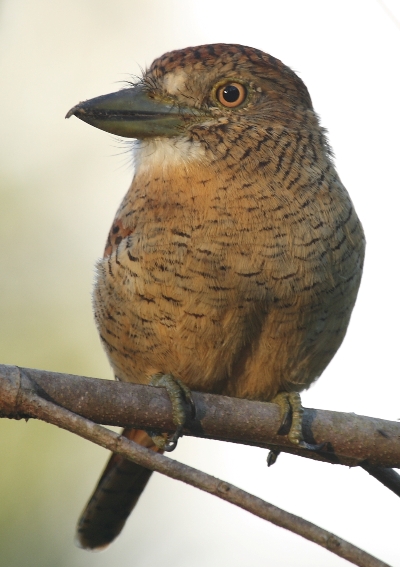 |
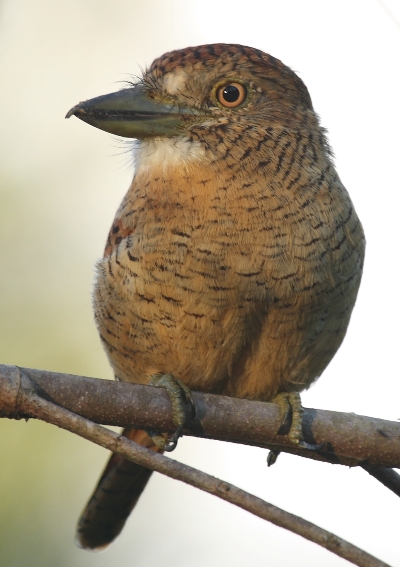
| Nystalus radiatus |
ProAves provides annually, with the assistance of his staff and guest instructors from different institutions at national and / or international training courses on techniques for monitoring and bird banding.
Banding courses are offered for groups of 5, 10, 15 people. If you are interested in booking a seat for courses scheduled on demand cursos@proaves.org write an email to stating your full name, name of the entity to which it belongs, place of origin and why you are interested in learn about banding.
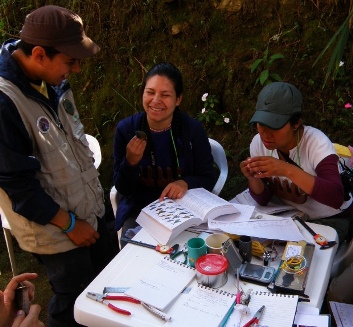
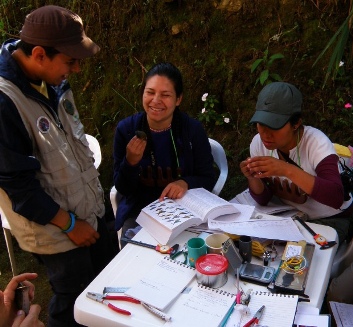
ProAves is leader in training young researchers in Colombia, with our Scholarships, Thesis Program, aimed to link biology students or young professionals, so that they make short investigations on different species and subjects.
Fundación ProAves since 2001 has supported over 70 thesis studies, and small investigations.
Since we started, about 70 students and/or researchers from 12 universities have been involved. In addition, the studies of the program have covered 12 departments within Colombia and extended the knowledge of 31 threatened species of Colombia, 28 studies on birds, and 3 other groups.
This program has focused its studies mainly in ecology and reproduction of threatened species of Colombia. Among these projects there are: identification of aspects related to foraging and reproduction of a threatened parrots, habitat selection for the Gorgeted Wood-quail and a study of the population and conservation of the Chestnut-capped Piha populations.
Related news
 |
Seeking for graduates and interns in the program of parrots
Monday 8 February 2010.
ProAves opens a call for those interested in doing work degrees, internships and volunteering in the program of threatened parrots in several of the Foundation’s reserves.
La Fundación ProAves ofrece oportunidad a estudiantes y jóvenes investigadores para realizar proyectos de investigación.
La Fundación ProAves ofrece a estudiantes de últimos semestres de Biología, Ecología, Ingeniería Forestal o afín, o a profesionales jóvenes con deseos de ganar experiencia en campo, becas para la realización de tesis de pregrado y/o pequeñas investigaciones en los temas y zonas presentados a continuación. Con estas becas se busca ayudar a subsidiar los costos de transporte, alimentación y hospedaje que representan el trabajo de campo, y prestar los equipos pertinentes que estén a disposición de la Fundación. Se trata de becas pequeñas de apoyo y en ningún momento representan pago de honorarios.



ProAves produce documentación práctica y de sensibilización sobre las aves y su conservación, dirigida tanto al público en general como especializado.
Contamos con publicaciones electrónicas y publicaciones impresas, documentación práctica que se distribuye en cursos, boletín Aleteo, folletos, reportes, libros, etc.
| Conozca los reportes publicados por los investigadores que trabajan en el Proyecto EBA |
Presentación de las primeras exploraciones biológicas a la Serranía de San Lucas, Antioquia y Bolivar.
 |
|
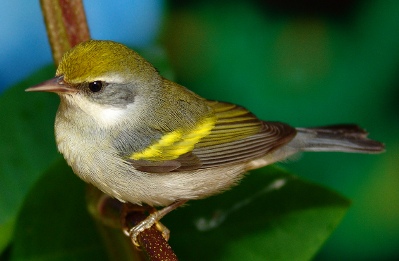
(Vermivora chrysoptera) |
Alianza Alas Doradas is a Golden-winged Warbler research and conservation group. The Golden-winged Warbler is a migratory bird listed as Near Threatened on its non-breeding grounds.
Alianza Alas Doradas is open to any researcher or conservationist who contributes non-breeding ground information about the Golden-winged Warbler. Its goal is to conserve the species and its associated habitats by implementing recommendations and strategies for long-term protection in areas of Latin America where the bird migrates and is resident.
The group was started by members of the International Committee for Golden-winged Warbler Non-breeding Ground Research, Monitoring, and Conservation during the August 2005 Conservation Workshop held in Siren, WI. It is open to any person and/or organization interested in working cooperatively for the conservation of the species and associated species.
To join the Alianza’s listserve, send an email to listserv@listserv.uark.edu with the following text in the body of the message (not the subject line): Subscribe GWWINT-L and your name. You will be notified by email with listserve instructions when your subscription has been processed.
The Golden-winged Warbler (Vermivora chrysoptera) and the Blue-winged Warbler (V. pinus) are species of high conservation interest (Partners in Flight North American Landbird Conservation Plan, 2004). In particular, the Golden-winged Warbler has experienced more than a 50% decline in its breeding ground populations over the last 35 years (Breeding Bird Survey). The main hypotheses to explain this population decline include climate change, loss of habitat on breeding and non-breeding grounds, mortality during migration, and hybridization with the Blue-winged Warbler.
Alexander Monsalve
Subdirector de Investigación
Fundación ProAves
marteaga@proaves.org
Tom Will
Alianza Alas Doradas Co-Chair
US Fish and Wildlife Service
612.713.5362
tom_will@fws.gov
David Buehler
Working Group Chair
Reseach Co-Chair
Dept. of Forestry, Wildlife and Fisheries
University of Tennessee
865.974.8845
dbuehler@utk.edu
Rachel Vallender
Research Co-Chair
613.808.9990
r.vallender@cornell.edu
Amber Roth
Breeding Grounds Management Conservation Committee Chair
Outreach Chair
School of Forest Resources and Environmental Science
Michigan Technological University
906.487.3417
amroth@mtu.edu
Mailing List
We have developed a mailing list for all the Working Group GWWALL-L for the purpose of exchanging information relevant to the conservation of Golden-winged Warbler. The mailing list will be the main way to stay updated on the conservation actions we take, upcoming meetings, etc.
To register, send an email to listserv@listserv.uark.edu. This email address is being protected from spam bots. You need JavaScript enabled to view it This email address is being protected from spam bots. You need JavaScript enabled to view it This email address is being protected from spam bots, you need JavaScript enabled to view it and type in the message body (not the sender):
SUBSCRIBE GWWALL-L, followed by your name.
You can also subscribe to various committees by sending a message to various mailing lists:
Comité de Investigación y Monitoreo en Áreas de Reproducción:
SUBSCRIBE GWWRM-L, followed by your name.
Comité de Conservación y Manejo en Áreas de Reproducción:
SUBSCRIBE GWWCON-L, followed by your name.
Comité de Conservación en Areas no reproductivas (Alianza Alas Doradas):
SUBSCRIBE GWWINT-L, followed by your name.
After registering you will receive a confirmation email with information about how the list works, such as sending messages and how to get out of it.
Related news
 |
Why are migratory warblers in decline?
Tuesday 12 January 2010.
As many as half a million tiny Golden-winged warblers used to make the annual round trip flight from Latin America to the USA and Canada. Now, the number is down to 200.000 and an international consortium is trying to find answers.
 |
Multi-national efforts to save Golden-winged Warbler
Monday 14 December 2009.
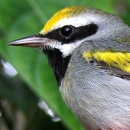
An intensive research program was conducted in four countries by members of the Alas Doradas Alliance with the objective of determining the abundance, distribution and habitat preferences of this rare and declining Neotropical migrant during its non-breeding residence in Central America and Colombia.
 Concerned with the constant threat that species and their habitats face in Colombia, ProAves has developed an effective conservation strategy following three main lines:
1. Investigation
Establishment of conservation priorities in Colombia.
Increase knowledge of avifauna in Colombia, with an emphasis on threatened species.
2. Conservation
Establishment, management, and strengthening of Protected Areas focused within the regions of the Alliance for Zero Extinction in Colombia.
3. Environmental Education
Provide communities knowledge and participation skills in activities that promote the conservation of habitats for endangered bird species in Colombia.
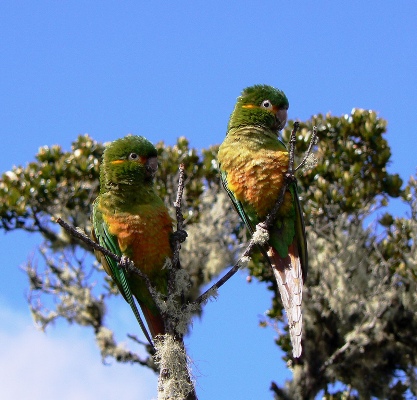
|
Establishment:
The properties that make up the reserve was acquired by the town of Génova, Quindío (Colombia), in order to comply with Act 99 of 1993 in its Article 111, within the project “Acquisition of land for protection and conservation areas supplying municipal water”. These were acquired between 2000 and 2002. ProAves is responsible for its care, loan quality since 2004, due to its ability to carry out conservation actions, research and education in the area.
Location and Area: The reserve is located on the western flank of the Cordillera Central, in the village of Rio Gris Alto, in the municipality of Génova, Quindío, with an area of 5,028 acres and an altitude ranging between 2,900 and 3,800 meters above sea level. It is the area having a large sample of moors, besides being a place that is home to five species of parrots that are in some degree of threat. It is ranked by the Alliance for Zero Extinction as an AZE site. Biological importance: There are species in the reserve such as the Fuertes’s Parrot(Hapalopsittaca fuertesi),endemic and critically endangered, the Golden-plumed parakeet(Leptosittaca branickii), vulnerable, Rufous-fronted Parakeet(Bolborhynchus ferrugineifrons), endemic and endangered species, the Crescent-faced Antpitta( Grallaricula lineifrons), vulnerable, Bicolored Antpitta(Grallaria rufocinerea), vulnerable, the Masked Mountain Tanager (Buthraupis wetmorei), vulnerable, and the Masked Saltator(Saltator cinctus), vulnerable, among others. Climate: Presents a minimum temperature of 6 º C and 12 º C maximum, and a minimum rainfall of 1,548 mm and a maximum of 1,852 mm. Biophysical characteristics: The area has 80% of steep slopes, located in the Río Gris basin. Conservation: Ecological Restoration and Central Cordillera Project. Facilities: Accommodation for ten people, electricity and drinking water. General recommendations:
Admission and tours: Contact fundacion@proaves.org With the support of:
Related news
Threatened Parrot Corridor established-6700 has saved During 2009, ProAves, with the support of ABC, IUCN-NL and WLT, has acquired and protected a vast area of montane cloud forest in the Central Cordillera, from the eastern slope in Tolima to the western slope in Quindio department. The corridor stretches 12 miles and encompasses key foraging and breeding areas for the Critically Endangered Fuertes’s Parrot and Yellow-eared Parrot.
Protecting key habitat for Fuertes’s Parrot The Municipality of Génova (Quindío) and ProAves celebrate an agreement to continue a further five years protecting and managing the Mirador Municipality Reservewhich is important for the survival of the Critically Endangered Fuertes´s Parrot and many other endangered species.
|

|
Click on the image for more information |
||
|
|
|
|
 |
 |
|
|
El Aleteo es el boletín informativo de ProAves desarrollado con el fin de divulgar las actividades realizadas por los miembros del equipo durante el mes. Últimas ediciones Aleteo Click AQUÍ
|
 |
|
Restoration and reforestation. |
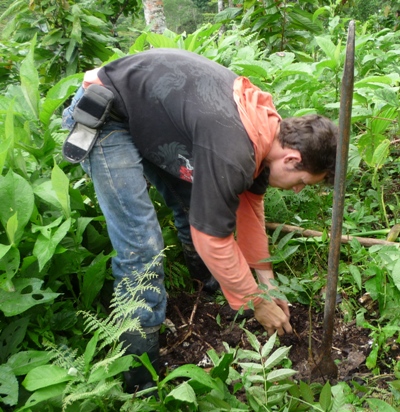
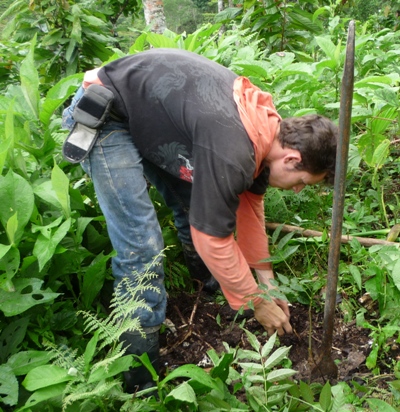
The reforestation process started with the production of seedlings in light of the need to restore and enhance forest habitat. After the establishment of the reserves, the regeneration and restoration were also favored.
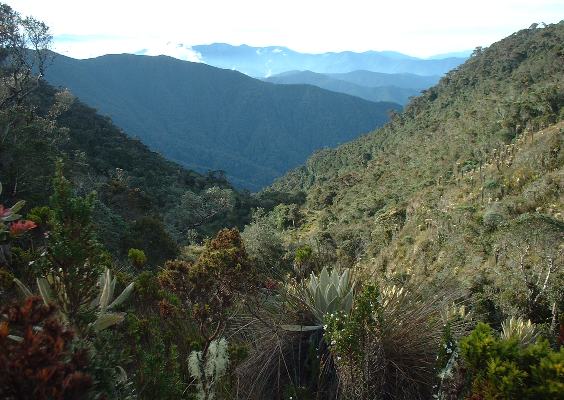
This program has developed various strategies for reforestation and restoration in order to meet each objective according to the needs of the projects:
 |
|
Frontino (Antioquia). |
The reforestations carried out are given a monthly maintenance monitoring and clean up of the grass and, when required, fertilizer is applied to the plants: this is done together with the owners of the lands and in the presence of a member of the group.
In addition, each reforested farm also has a coordinate which indicates its location, this is especially useful when working with reforestation for the runners.
Finally, during these 7 years with the reforestation program over 1,200 acres of pastures, margins of streams and rivers in different parts of the country have been replanted and restored, not just giving a proper management of these areas but also providing a food supply for wildlife.
Every process of reforestation that we do is based on the following methodologies:
Related news
 |
Restoring Native Habitat for Migratory Birds
Thursday 10 December 2009.
ProAves’ Habitat Restoration Program has been working on reforestation with native trees in strategic areas to promote connectivity between forest fragments and provide vital native habitat for wildlife especially migratory birds.
 |
ProAves and the municipality of Jardín join forces
Friday 31 July 2009.
Through joint management of the botanical nursery of the municipality of Jardín in Antioquia, ProAves and the local community are demonstrating that joint efforts and synergies are achievable between the non-profit and public sector, contributing to habitat conservation for the Yellow-eared Parrot.
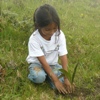 |
Kids restore the forest in Sierra Nevada
Friday 31 July 2009.
Around the Reserve El Dorado, a group of kids wanted to preserve the forest for their future and benefit an endemic unique parrot specie of the Sierra Nevada de Santa Marta. These activities were carried out with the leadership of ProAves.
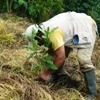 |
Restoration in Sierra Nevada de Santa Marta
Monday 16 February 2009.
ProAves is clearing non-native invasive pines in the Sierra Nevada de Santa Marta, around El Dorado Bird Reserve, and replacing them with thousands of native trees important for the native fauna. We urgently seek volunteers to help clear pines and reforest.
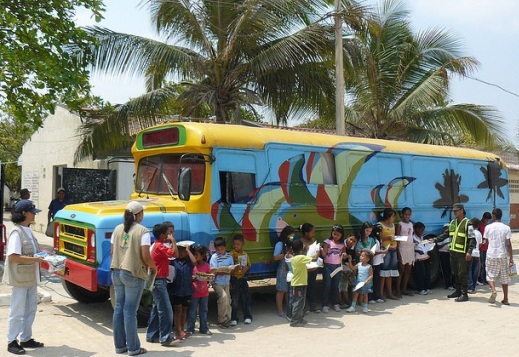
The parrot bus acts as a mobile environmental education classroom. Since 2005, Parrot Bus has been used as environmental educational tool driving all over the country developing fun activities with kids, youngsters and adults, carrying out the message of conservation and care of nature to more than 70,000 people in 145 cities of 16 provinces all over the country. Since this initiative was created, it has visited 2.392 educational institutions and it has driven more than 80,000 km of Colombia.
Trough talks, workshops, games and videos performed inside the bus, ProAves is trying to involve all visited communities, teaching them respect for biodiversity, especially to birds.
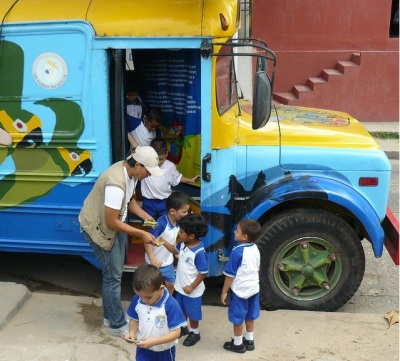
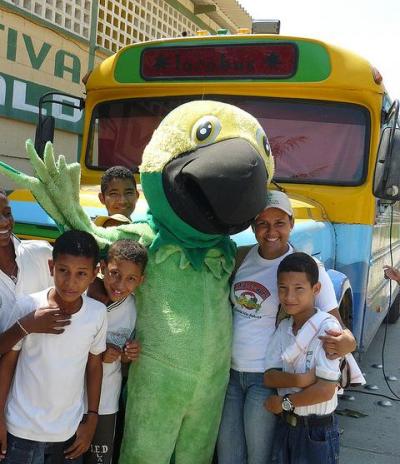
The intention of the methodology used within the Parrot Bus is to teach knowledge trough fun activities. Thanks to the projection of documentaries and videos about ecosystems, fauna and flora of Colombia, all participants can learn about it, in the company of Oto Rico, the traveling pet on board of the Parrot Bus.
Finally, and as a accompaniment to the activities carried out on board of the Parrot Bus, board games are organized within the participants, such as stairs of migratory birds (a variant of the board game snakes and stairs), wild birds lottery, endangered parrots dominó, among others. At the end of the activities, didactic material is delivered. This material is mostly composed by bird cards, mini-guides, stickers, pins, posters and t-shirts.
Ecological routes
Fundación ProAves has established several itineraries for the Parrot Bus, known as ecological routes. The objective of these routes is to reach a higher number of populations in Colombia, having as priority the visit of locations where there are more endangered species.
The project is supported by Disney Wildlife Conservation Fund and the routes are: Green Coast, which includes the departments of Córdoba, Bolívar, Magdalena and Atlantic Biodiversity Ecological Oriental, which covers the departments of Santander, Norte de Santander and Boyacá, Green-eared parrot, which travels through the departments of Antioquia, Tolima, Quindio and Caldas, and Ecological Jungle South, which includes the departments of Valle del Cauca and Nariño.
With the support of:
|
|
|
|
 |
 |
Related news
 |
Parrot Bus visits the department of Córdoba
Monday 7 December 2009.
The Mobile Environment Classroom, the “LoroBus” (Parrot Bus), visited nine municipalities in northern Colombia. Twelve educational institution assisted with two massive education activities for the general community. A total of 5,164 people participated and pledged their support for conservation.
 |
ProAves wins Energy Globe Award
Wednesday 15 April 2009.
On April 13, 2009, at the opening meeting of the EU Environmental Ministers in Prague, Czech Republic, ProAves was awarded the national prize by the Energy Globe World Awards for ProAves Parrot Bus initiative. Over 769 projects participated from 111 nations.
|
Parrot Bus visits department of Boyacá
Monday 9 March 2009.
Three new municipalities of Colombia were visited by ProAves’ Parrot Bus in February, with over 1,000 participants educated. To date the Parrot Bus has visited 148 municipalities reaching more than 73,000 children who learned about the need to protect birds and biodiversity.
Driving Conservation August 2007 – May 2008
Monday 5 May 2008.
During August 2007 – May 2008, the results of the project Driving Conservation, with the support of Disney Wildlife Conservation Fund, show how the project successfully reached 25.413 people from beginning to end.
 |
Slingshot Amnesty success
Tuesday 15 January 2008.
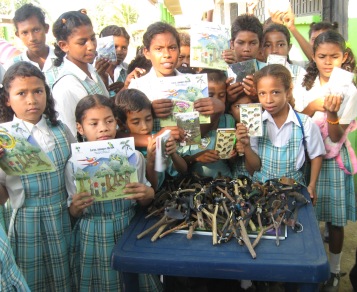
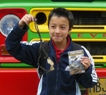
It is all to common place to see children carrying slingshots with the sole purpose of hunting birds. ProAves launched a campain against hunting birds across Colombia and delighted when over 330 children voluntariary handed slingshots and traps to ProAves staff.
Slingshot amnesty campaign success!
Thursday 20 September 2007.
After many trips conducted by the Parrot Bus in different regions of Colombia, ProAves have launched a new amnesty campaign to request children to hand in their slingshot and other objects use to attempt against birds.
 |
Parrot Bus is re-released in Jardín, Antioquia
Friday 24 August 2007.
Our mobile environmental classroom has been renewed with beautiful inner panels about the diverse and threatened ecosystems of Colombia and its representative fauna and flora.
|
Our online database for bird monitoring and research by ProAves has recorded data on 1,163 species (61.8%) of birds in Colombia. Among these species, 107 are migratory, 78 are almost endemic and 47 are endemic. Among the 86 species of threatened birds listed by IUCN (2007), ProAves has information about, and monitors 68.3% of them. Information has been collated monthly since 2003 and the banding database has 82,061 records. Furthermore the database of observations, censuses, count points and transects has 168,780 records, distributed in 12 localities and corresponds to 240,078 individuals. 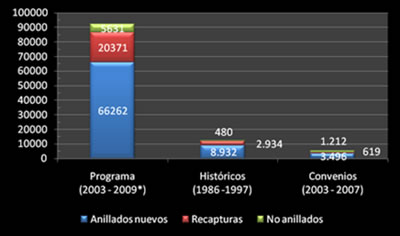
Catch sampling effort 2003-2009 and number of individuals of species recorded by category for years.
To view the results of the endangered species present in the database: https://www.proaves.org/images/stories/IMG/pdf/Tablas.pdf In some of these areas is conducted monthly monitoring, using methods of census and mist-net catches, there are places where research has been conducted short (less than a year) and to key sites where exploration has been largely obtained important information birds of conservation concern. 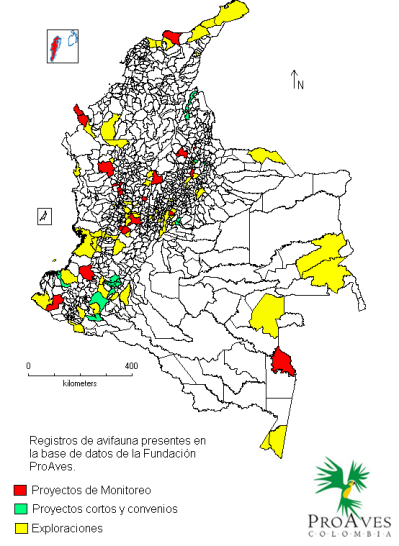
Figure 1. Map of Colombia restricted to municipal boundaries, showing where ProAves Foundation has information of birds in your database. Information contained in the database is present since 1986. ProAves Foundation invites the general public and amateur ornithologists to register and query data · Base Monitoring Program and the Migratory Bird Conservation, which is constantly updated to take into account access following recommendations: – Enter the login button “user registration”. With the support of:
|
Related news
 |
ProAves bird database exceeds 270,000 records
Monday 30 November 2009.
With seven years of targeted bird research and monitoring across a strategic network of research stations and protected areas, we have established a database of over 270,000 bird records that is assisting bird conservation activities.
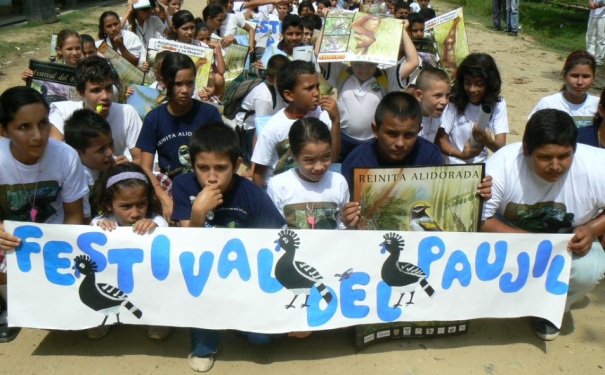 The Blue-billed Curassow is an endemic and highly endangered species in Colombia. In the frame of the Environmental Education program, ProAves develops, in Puerto Pinzón, municipality of Puerto Boyacá, department of Boyacá, Colombia, the Blue-billed Curassow Festival since 2004.
This is a dynamic and educational event where diverse activities for all the community, especially kids and youngsters living closer to the Blue-billed Curassow Natural Bird Reserve, take place, where ProAves focuses conservation efforts for this species.
The Festival intends to increase the interest of the community in the conservationist programmes carried out by ProAves, changing the way people sees and thinks about the Blue-billed Curassow.
 |
 |
|
Related news
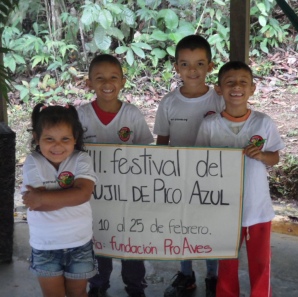 |
8th Blue-billed Curassow Festival 2012
Friday 13 April 2012.
With the participation of over 400 people, the 8th Blue-billed Curassow Festival was held in the town of Puerto Pinzón in Boyacá, aiming to raise awareness among communities, especially children and young people who live beside the area El Paujil Bird Reserve.
 |
Paujil Festival 2009 – Saving the Blue-billed Curassow
Friday 9 October 2009.
More than 830 people took part in the 5th Blue-billed Curassow Festival that was held in September in the town of Puerto Boyacá and villages of La Arenosa, Quince Letras and Dos Quebrados, in Boyaca and Santander Departments.
 |
4th Blue-billed Curassow Festival completed
Friday 26 October 2007.
With the completion of 23 environmental workshops and the participation of over 800 people, the 4th Blue-billed Curassow Festival was conducted in the Magdalena valley.
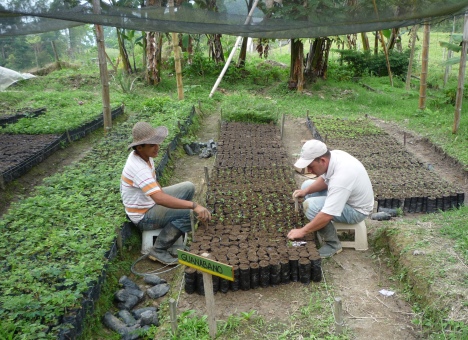 |
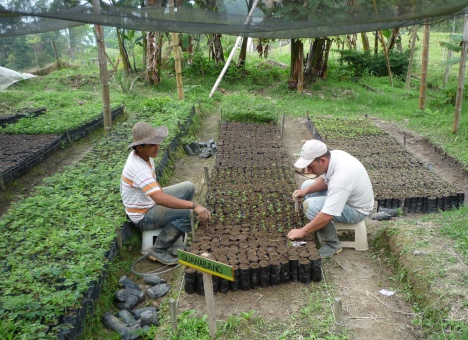
| Nurserie Cerulean Warbler Bird Reserve. |
Since 2003 ProAves Foundation has been working with the establishment of nurseries to produce native seedlings needed for the recovery of habitat for bird species in addition to providing the food supply based on information provided by research on habitat use and ecology that has been generated about the various endangered species and migratory birds.
That is why from the studies and work sites, we located 8 Temporary Nurseries producing native plants according to the ecosystems. These nurseries are located at the following locations: Santa Marta, Magdalena (rainforests and Andean forests), San Vicente de Chucuri, Santander (tropical and sub-Andean forests) and Zapatoca, Santander (dry forest); Anori (sub-Andean forests), Jardín (Andean forests) and Urrao, Antioquia (Andean forests and moors.) Roncesvalles (Andean forests and moors) and Falán, Tolima (sub-Andean forests).
It has an annual production of over 250,000 seedlings of 56 species.
|
||||||||||||||||||
|
Table with some species produced. |
The selection of seedlings is likewise based on the following characteristics as it has recently expanded the approach to reforestation.
ProAves until 2010 with the support of a large number of organizations such as the Fundación Loro Parque, NMBCA, American Bird Conservancy and CORPOURABA has managed to produce more than 680,000 seedlings, which have been used in reforestation, restoration and donations.
|
|
 |
Colombia es el país más diverso del mundo en aves, con 1871 especies, más que cualquier otro país del mundo. La Fundación ProAves mantiene y publica elListado de Aves de Colombia cada año desde el 2007, siguiendo el primer listado de aves de Colombia, publicado en el 2001. La publicación se mantiene actualizada con nuevos datos sobre la distribución y taxonomía de las especies que ocurren en Colombia, y se publica anualmente como una edición deConservación Colombiana. Lo invitamos a colaborar mandando sus registros nuevos a listado@proaves.org
Próximamente se va a establecer un Foro Nacional de Registros de Aves para Colombia con el fin de formalizar el proceso de cambiar el listado nacional.
Ver El Listado, en sus varias ediciones:
2009: Conservación Colombiana 8
2008: Conservación Colombiana 5 (versión PDF y versión Excell)
2007: Conservación Colombiana 2 (Suplemento)
2001 (no disponible en línea)
favor comunicarse a dcaro @ proaves.org o en la sede de ProAves, Cra 20 No. 36-61, Bogotá.
Ver las revisiones más recientes:
Donegan, T.M., Salaman, P. Caro, D. 2009. Revision of the status of various bird species occurring or reported in Colombia. Conservación Colombiana 8: 80-86; 87.
Salaman, P., Bayly, N., Burridge, R., Grantham, M., Gurney, M., Quevedo, A., Urueña, L.E., Donegan, T. 2008. Sixteen bird species new for Colombia.Conservación Colombiana 5: 80-85.
|
Fundación ProAves hatched in 1998 out of the initiative of a group of dedicated Colombian conservationist interested in saving the Yellow-eared Parrot. ProAves’s mission is to protect birds and their habitats in Colombia through research, conservation actions and community outreach. ProAves is a registered non-profit organization with free membership, open to all who share our vision to prevent the extinction of threatened species and protect key sites, with the help of citizens who are proud of their natural resources and who will promote development in harmony with nature. The passion and commitment of the ProAves family thrives on our partnerships and collaboration with different individuals, groups and organizations, at local, regional and national levels, working together for conservation. Colombians have a great passion for nature and we are always encouraged to find communities eager and willing to cooperate. ProAves Foundation is a UK registered charity that supports the work of Fundación ProAves in Colombia. |
 Threatened Parrots Festival is a massive event that takes place in the second half of each year to invite the community to help protect the habitat of species that are endangered species like the Yellow-eared Parrot, bird its dependence on the habitat and food has been strongly affected almost taking it to extinction. Like this there are other species that are going through the same situation as in the case of Loro Coroniazul.
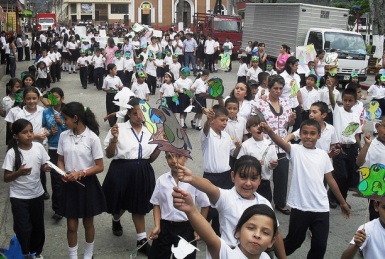
ProAves has been promoting for over 6 years this campaign to raise awareness and educate the public against the environmental impacts that are generating the different types of ecosystems.
Related news
 |
Celebrating the birds of Colombia
Wednesday 30 November 2011.
With the objective of creating community interest in the protection of the Yellow-eared Parrot and migratory birds in Colombia, the 8th Migratory Birds Festival and the 3rd Yellow-eared Parrot Festival were celebrated in Antioquia and the 7th Fuertes’s Parrot Festival in Quindío.
 |
VII Fuertes’s Parrot Festival 2011
Friday 30 September 2011.
A celebration will take place celebrating the Fuertes’s Parrot (Hapalopsittaca fuertesi) becoming the official environmental symbol for the Municipality of Génova in Quindío. This beautiful and Critically Endangered parrot is now the flagship for the community Festival on Oct 4.
 |
Yellow-eared parrot & Wax Palm Festival news
Wednesday 26 August 2009.
Incredible costumes, folk music, colors, and banners, filled the streets as processions of local conservationists in towns across Tolima, Quindío and Antioquia to proclaim the 4th Festival of the Yellow-eared parrot and the Wax Palm thanks to Fundación Loro Parque.
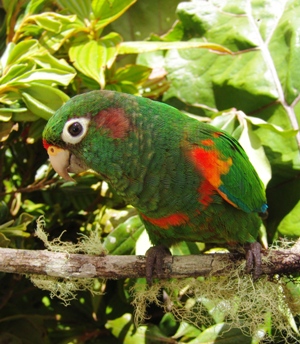
The parrot Pyrrhura viridicata in Sierra Nevada is an endemic species inhabiting the mountains of the Sierra Nevada de Santa Marta.It was listed by IUCN in 2006 as an endangered species mainly due to the deterioration and destruction of its habitat.
Oliveros Chambers, HA 2005. Populational and ecological assessment of Santa Marta Parrot Pyrrhura viridicatain the area of San Lorenzo, Sierra Nevada de Santa Marta, Colombia. Resume.
Olaciregui Pineda, CA 2006. Monitoring the use of artificial nests by the parrot Pyrrhura viridicata in “El Dorado” Bird Reserve and buffer zone of San Lorenzo, Sierra Nevada de Santa Marta. Resumen.
{youtube}-BKEjlBPMMg|300|250|1{/youtube}
Gracias a un número de diferentes proyectos realizados por tesistas e investigadores, localizamos en el 2006 una población importante del mono Choibo (Ateles hybridus) en la reserva El Paujil. Este mono está clasificado como En Peligro y solo se conoce que sobreviva en la reserva y sus alrededores.
Gracias al Premio de Conservación de BP, el esfuerzo de investigación comenzó en 2004 con la tesis de un estudiante, y a diciembre de 2006 estaban otras cuatro tesis en proceso, a nivel de graduado y postgraduado.
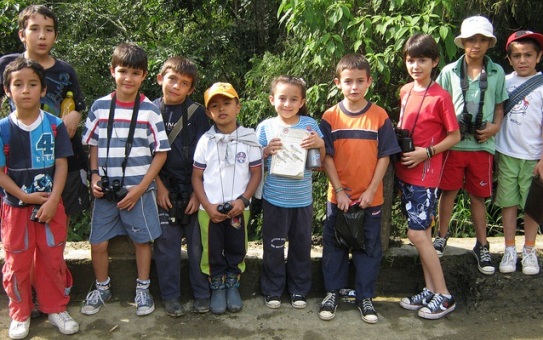
Última actualización : Miércoles 17 de mayo de 2006
GRUPO ECOLÓGICO AMIGOS DE LAS AVES
1. ¿Quienes somos?
Somos grupos ecológicos creados y apoyados por la Fundación ProAves e integrados por niños, niñas y jóvenes entre los 6 y 17 años de edad de diferentes regiones del país, en especial donde la fundación desarrolla sus acciones. Dedicamos nuestro tiempo libre a apoyar y desarrollar iniciativas para la conservación de la naturaleza y en especial de las aves y sus habitats.
Queremos asumir un compromiso desde niños con el cuidado y protección del medio ambiente que nos permita vivir en armonía con la naturaleza y contribuir a la conservación de los recursos naturales.
2. Nuestra misión
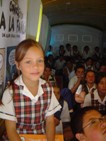 Liderar y desarrollar acciones para el conocimiento y conservación de las aves silvestres y los recursos naturales en las diferentes regiones del país a través del desarrollo de iniciativas locales que promueven la adopción de criterios y prácticas para su conservación.
3. Con nuestras acciones buscamos…
Crear una conciencia ecológica en los miembros de los grupos que contribuya a la protección y conservación de los recursos naturales en las diferentes regiones del país.
Desarrollar en la comunidad infantil la capacidad de analizar su entorno ambiental, de tal forma que les permita elaborar sus propios proyectos de acuerdo a sus necesidades de conservación.
Promover el conocimiento y conservación de las especies de aves amenazadas en las diferentes regiones del país.
Contribuir a la formación de carácter y liderazgo de los miembros del los grupos fomentando los valores de colaboración, disciplina, respeto y responsabilidad.
Crear fuertes lazos de hermandad entre los miembros de los diferentes grupos “Amigos de las Aves”.
Brindar un espacio para el aprovechamiento del tiempo libre.
Ayudar a que la comunidad y los visitantes conozcan las especies que se encuentran en las diferentes áreas donde la Fundación desarrolla sus proyectos y la importancia de estas.
4. Nuestras actividades:
Participación en eventos ambientales (Festivales, Campañas, Actividades masivas).
Desarrollo de actividades para el buen uso del tiempo libre (Cine Club, Centros de Documentación).
Programas al Aire Libre. (salidas de observación de aves, reforestación y jornadas complementarias).
Charlas sobre temas ecológicos de relevancia.
Observar especies silvestres en sus hábitat naturales.
Formación de líderes y guías ambientales.
Participación en las políticas ambientales locales.(PRAES, mesas municipales ambientales).
Apoyo en las actividades de las líneas de trabajo de la fundación Investigación, conservación y educación ambiental.
5. ¿Como puedes hacer parte de los Grupos Amigos de las Aves?
Es muy fácil, debes llenar el FORMATO DE INSCRIPCION DEL GRUPO ECOLÓGICO AMIGOS DE LAS AVES, con tus datos completos. Una vez se formalice tu inscripción tendrás a vuelta de correo el carnet que te acredita como miembro activo del “Grupo Amigos de las Aves” de tu Región.
Actualmente el programa cuenta con más de 200 niños(as) y jóvenes reunidos en grupos locales “Amigos de las Aves” de los municipios de Jardín-Antioquia, Génova-Quindío, Roncesvalles-Tolima.
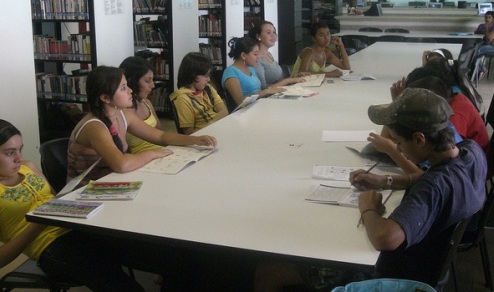
A group of young investigators arose in 2007 in the regions of Antioquia and Quindío, spurred by the need to train and shape youth as future conservationists, particularly for wild birds.
Our youth learn about birds, and engage in their study and conservation. They are involved in environmental education, investigation, and conservation activities directed by the Foundation.
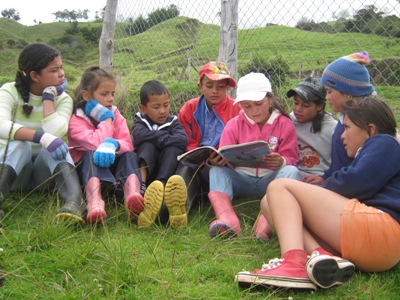
The groups are integrated from students in the 11th and 12th grades. Some, after participating for an extended period with the ecological group ¨friends of birds,¨ come to influence this group and others who come because of their interest in the subject.
ProAves Foundation has two groups of Young Investigators, one in the municipality of Jardín in the department of Antioquia, created in 2007 and consisting of 8 youths, and the other in the municipality of Génova in the department of Quindío, created in 2008 and consisting of 12 young people and Roncesvalles, Tolima has 11 youth.
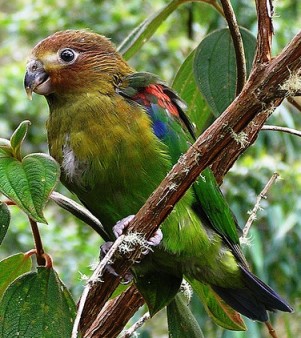
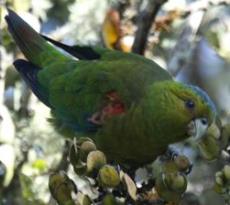
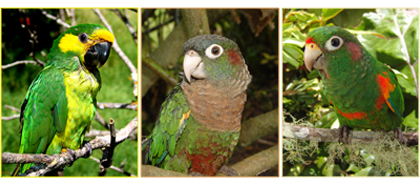
Rusty-faced Parrot (Hapalopsittaca amazonina velezi) is categorized as an endangered species in the international scope and as vulnerable in the Colombian national scope. The reason for this classification is the small population size and the loss and fragmentation of its habitat caused by the expansion of the feed-crops extensions in the Andean forest.
Some of the studies conducted so far regarding the situation of this species are:
Mayorquín, LA 2004. Identification of issues related to the foraging and reproduction of the endangered subspecies of parrot Hapalopsittaca amazonina velezi in an area of the eastern flank of the Central Ridge. Resume.
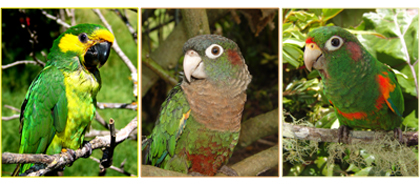
If you want to help to avoid the extinction of three species of parrots in Colombia you can do it through the program Adopt a nest box, by sponsoring the construction and installation of an artificial nest and its monitoring and maintenance during a year.
This program is the result from seven years of research carried out by Fundacion ProAves with the threatened parrots of Colombia, during which we discovered that logging of mature trees for timber in the Andes of Colombia has removed many of the natural nest cavities that are so vital for parrots to nest each year.
So, with the help of Loro Parque Fundación, American Bird Conservancy and International Conure Association, we launched a nest box program in 2003. We were immediately astounded that sometimes within just hours of installing boxes, pairs started nesting in them, showing just how desperate the birds were for somewhere to nest! Importantly, pairs nesting in our boxes were far more successfully at raising all their chicks to fledging than the few pairs nesting in natural cavities.
To make your donation for US$85 or £45, you can click here, complete a simple form and select which species you wish to help save: Santa Marta Parakeet (Endangered), Fuertes’s Parrot (Critically Endangered), or Yellow-eared Parrot (Critically Endangered).
|
MUNICIPIO
|
ESCUELAS AMIGAS
|
|
JARDÍN, ANTIOQUIA
|
|
|
BOGOTÁ D.C.
|
|
|
RIO SUCIO, CALDAS
|
|
|
SUESCA, CUNDINAMARCA
|
|
|
OCAÑA, NORTE DE SANTANDER
|
|
|
GÉNOVA, QUINDÍO
|
|
|
SAN VICENTE DE CHUCURÍ, SANTANDER
|
|
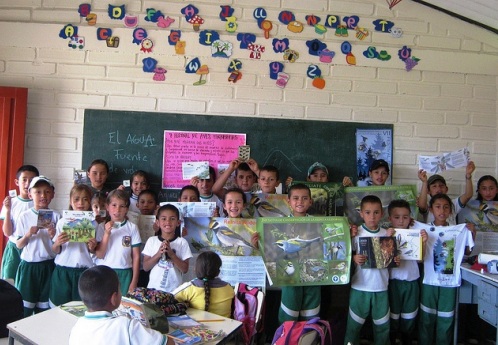
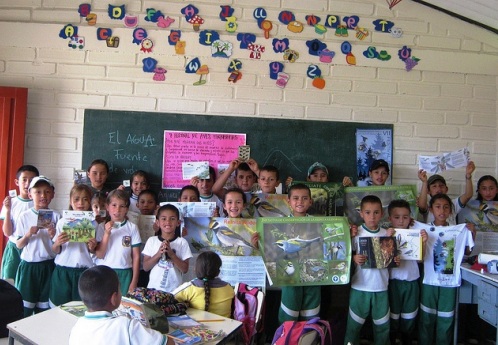
With the Programme Bird Friendly Schools, Fundación ProAves aims to link the educational institutions with conservation, research and environmental education processes being carried out, in order to generate educational projects that will allow the reach and understanding, use and care of biodiversity knowledge with a special emphasis in birds.
Environmental instructors of ProAves perform a close follow up with the institutions through training, creation of groups, organization of workshops, all with topics related to sustainability and the environment.
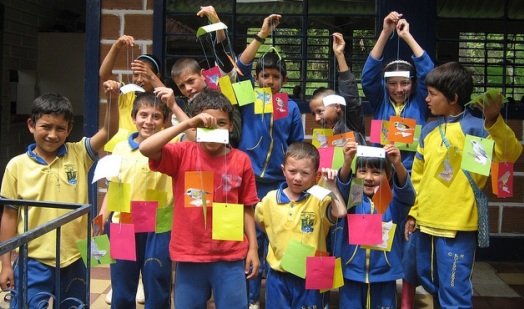
All schools undergo a process, in which they demonstrate the sustainability of the project, and that it has been included in the educational programme; in this way, ProAves commits its work together to the one of the educational institutions in this process.
For the year 2011 with 80 educational institutions in 7 departments.