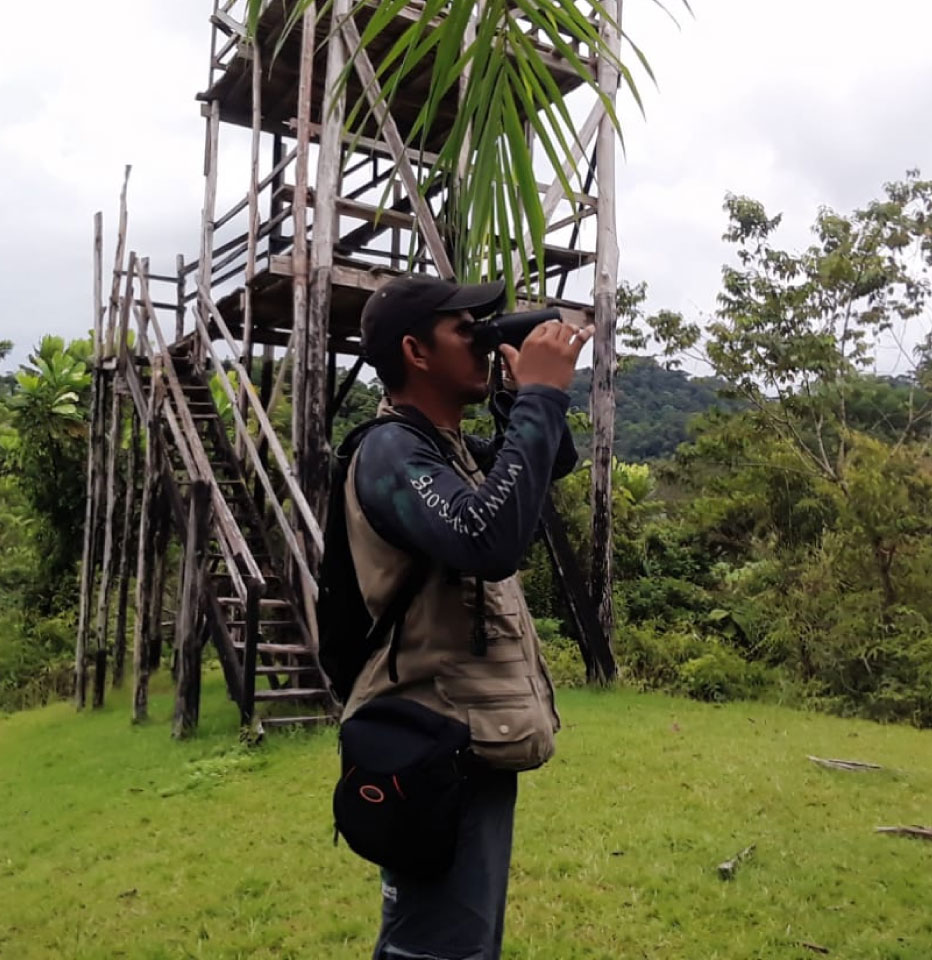
ProAves participated in the October Big Day and added a total of 81 eBird lists– with 3,578 individuals and 588 distinct species of birds across 12 of their reserves.
This puts the Foundation’s Nature Reserves among the top tier of the eBird listings in Colombia: The reserve “El Jaguar” came in first place at the national level with a total of 150 species, the “El Pangán” reserve ranked fourth place with 113 species and the “Arrierito Antioqueño” reserve came in eighth place with 106 registered species.
OCTOBER BIG DAY, EVERY BIRD COUNTS
With 253 countries participating in the October Big Day (OBD), Colombia ranked first in the number of species registered worldwide on the eBird platform. The country topped the list in bird watching with 1,343 published bird species. Second and third place belongs to Peru and Ecuador, with 1,222 and 1,098 recorded species, respectively.
Colombia, known as the world’s premier hotspot for avian biodiversity, came together again and demonstrated its love for birds on the October Big Day. This citizen science initiative, organized by the Cornell Laboratory of Ornithology, mobilized thousands of Colombians, accumulating an incredible sum of 3,476 eBird checklists across the country. In comparison, birders from the United States submitted over 33,000 checklists, summing only 631 total species (less than half that Colombia). This is a testament to the immense biodiversity of Colombia.
The largest bird count in the world was held on a very special date, coinciding with World Migratory Bird Day and the arrival of thousands of avian migrants, coming to spend the winter months feeding in the ecological haven that is Colombia.
We thank all the people and institutions that support the conservation of birds, especially:
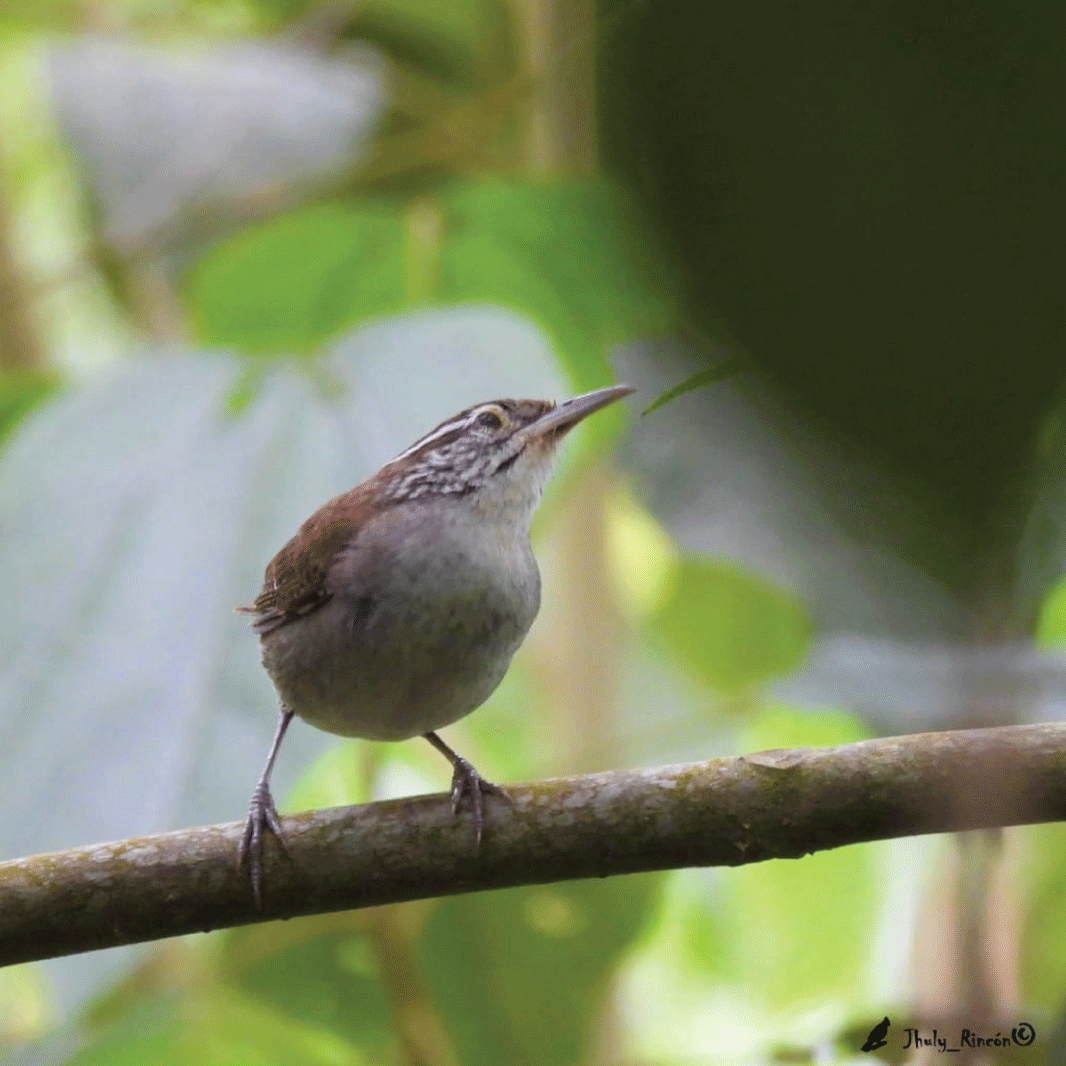
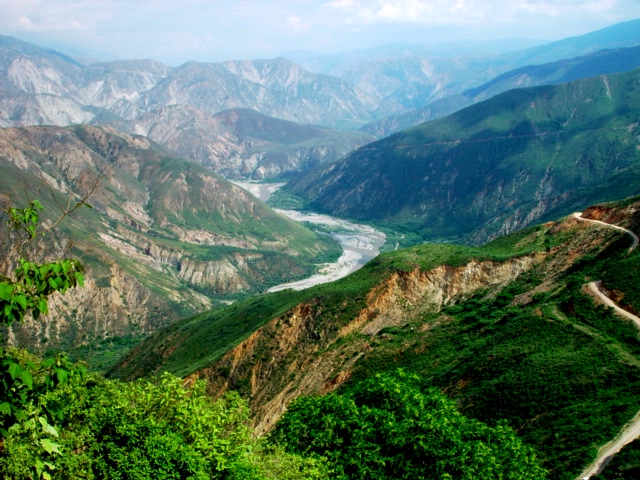
Thryophilus nicefori is an endemic species of Colombia that was discovered in the 1940s and described by Rodolphe Meyer de Schaeunsee (author of “Birds of the Republic of Colombia”) in 1946. It was first discovered in the Fonce river basin, in the vicinity of San Gil, to the west of the Eastern Andes Range in the department of Santander. Since 2003, scattered populations have been discovered in the basins of the Chicamocha, Suárez, and Sogamoso rivers, in the departments of Boyacá and Santander. In Santander, populations have been confirmed in the sub-Andean forests of the municipality of Floridablanca and the surrounding areas of the city of Bucaramanga, which were believed to correspond to Thryophilus rufalbus. More populations are believed to exist on the western slope of the eastern Andes range in the departments of Santander, Cesar, and Norte de Santander.
Current Threats
All known populations of the species face a progressive loss of habitat caused by the transformation of forests into farmland, the pressure of goat farming, forest fires, and the drying of streams and rivers. These activities have generated massive destruction of vegetation and have prevented its regeneration, which is why Thryophilus nicefori is currently listed as Critically Endangered (CR) according to the IUCN Red List.
In residential areas, they are exposed to predation by domestic animals, such as cats. In the municipality of San Gil, where the species was first described and where seven pairs were reported in 2004, several have disappeared as a result of the urban expansion. The loss of territories and pairs has also been detected in the Butaregua and Macaregua villages due to the expansion of tobacco crops and pastures for livestock.
The Fundación ProAves, aware of the serious condition of the species, contribute to the conservation of Niceforo’s Wren by protecting its habitat in 2 of its Nature Reserves: Reinita Cielo Azul, in San Vicente de Chucurí, and Cucarachero de Chicamocha, in Zapatoca, both in the department of Santander.
Their habitat
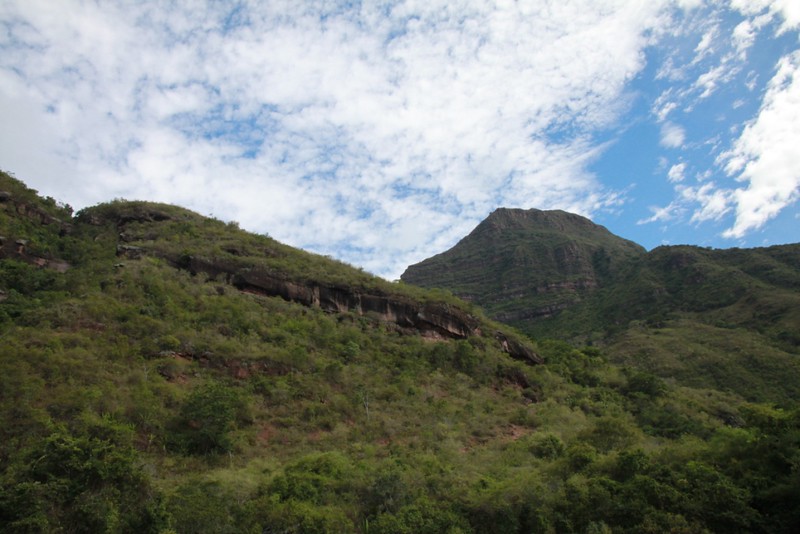
The Niceforo’s wren inhabits dense understory tangled with forest fragments along rivers and streams between 1,100 and 2,100 meters. The most important characteristics of its habitat are the presence of leaf litter, on which it depends to look for arthropods that serve as food, and the presence of a canopy that maintains the humidity of the understory. In addition, it is observed in gallery forests with a predominance of large evergreen trees such as Anacardium excelsum, Ficus spp., Trichanthera gigantea, Myrsine floridana, Clusia sp., Ochroma pyramidale, Inga spectabilis, Inga vera, Syzygium jambos, Guazuma ulmifolia, and Platypodium elegans.
In the understory, Thryophilus nicefori has been observed in seedlings and shrubs as Croton sp., Piper aduncum and Eugenia victoriana. Other common plants are Xanthosoma sagittifolium and Carludovica palmata. It also inhabits subxerophytic forests with deciduous trees such as Bauhinia variegata, Guazuma ulmifolia, Cedrela ordorata and Bursera simaruba, and evergreen trees such as Pithecellobium unguis-cati, Zanthoxylum fagara, Fagara rhoifolia and Thevetia peruviana. In this type of forest, a great abundance of annual herbs of the Verbenaceae family has been recorded during the rainy season as Bouchea sp., Lantana sp. and species such as Commelina erecta and Peperomia pellucida. Some epiphytes found in both gallery forests and subxerophytic forests include Tillandsia flexuosa, T. juncea and T. recurvada. Among the most abundant vines are Smilax cumanenses, Serjania sp. and Aristolochia maxima. Niceforo’s wren has also been observed in crops of shade coffee and cocoa near streams.
The Niceforo’s wren is a monogamous species. The pairs defend territories of 1 to 4 hectares, along streams and rivers, and it’s population density in suitable habitat is estimated to be one individual per every two hectares. They are difficult to observe but can be easily identified by their flute-like songs. They occupy the lower layer of the forest between the ground and 7 m high. They frequently use high perches for singing, and foraging activities take place in the leaf litter, where individuals spend 60% of their time searching for insects. The reproductive season varies between July and October, where nests are often placed near hornets’ nests, possibly as an anti-predatory strategy.
Due to the fragmentation of its habitat, it has a discontinuous distribution. Although it can exist in considerably transformed landscapes, its survival depends on the permanence and connectivity of forest remnants along waterways.
We thank Neotropical Migratory Bird Conservation Act (NMBCA), World Land Trust (WLT), American Bird Conservancy (ABC), Fondo Acciónfor their support in the protection and conservation of threatened species in Colombia.