Fundación ProAves – por la conservación en el país de las aves

Categories
Field Guides Investigación News Noticias El Dorado Noticias Reservas Proaves @en Revista Conservación Colombiana

The Flora of the Sierra Nevada de Santa Marta Documented in a New Guide for the ProAves El Dorado Reserve

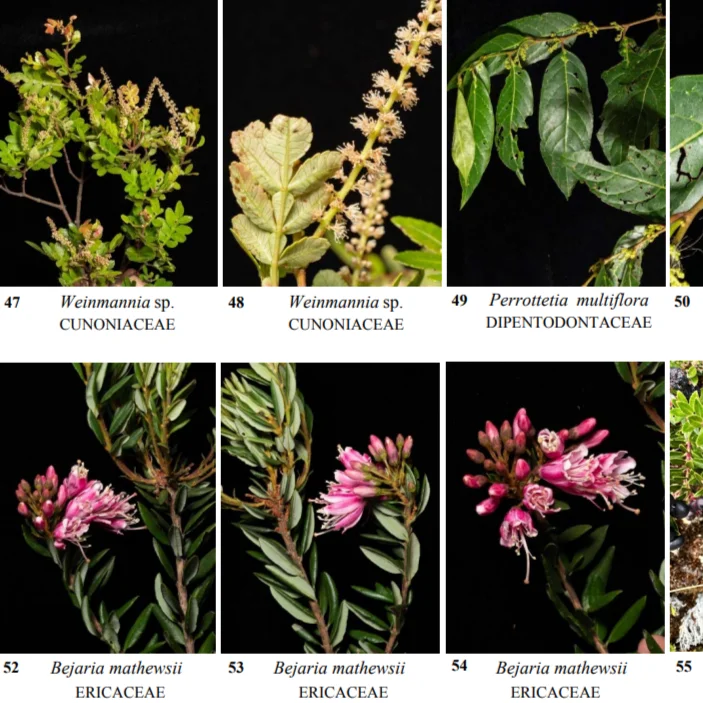
The ProAves El Dorado Reserve continues to strengthen its position as a leading site for biodiversity research and conservation in Colombia. Recently, the Plant Guide of the ProAves El Dorado Reserve was officially published on the Field Museum’s Field Guides platform, one of the most internationally recognized scientific institutions.

This guide is the result of a collaborative effort led by researchers and botanists¹ who, throughout the project, documented and systematized a significant portion of the plant diversity found in the Reserve. The ProAves El Dorado Natural Reserve is located in the Sierra Nevada de Santa Marta, one of the most biodiverse and unique ecosystems on the planet.

The publication of this material represents a key contribution to the knowledge of the region’s flora, as it provides identification and reference tools for researchers, students, local guides, and visitors interested in understanding the botanical richness of the territory.
As a next step, the research team plans to submit a scientific article derived from this work to the journal Conservación Colombiana, which will further expand the dissemination of the results and reinforce the importance of research applied to conservation.

The guide is freely accessible through the Field Museum’s platform: https://science.fieldmuseum.org/fieldguides/guides/guide/1729, reaffirming ProAves’ commitment to generating and sharing scientific knowledge in support of the conservation of Colombia’s biodiversity.

Additionally, as part of this same research effort, the article Orchids in the Caribbean: Characterization of the Orchidaceae Family in the ProAves El Dorado Reserve, was published in the journal Conservación Colombiana. Authored by researcher Miguel Ángel Gómez Riaño, this study deepens the understanding of one of the most diverse and representative plant groups in the region, providing detailed information on its diversity and distribution.
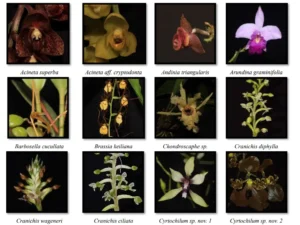
Both the plant guide and this scientific article are the only publications of their kind available for San Lorenzo, a key sector of the Sierra Nevada de Santa Marta. This highlights their scientific value and their relevance for conservation, research, and environmental education.

These products not only expand knowledge of the floristic diversity of the ProAves El Dorado Reserve, but also strengthen conservation management and planning by providing essential information for monitoring, decision-making, and the appreciation of the territory’s natural heritage.

At ProAves, we recognize and thank the commitment and dedication of the individuals who made these works possible. Their impact extends beyond the Reserve and contributes to a broader understanding and appreciation of the plant diversity of the Sierra Nevada de Santa Marta as a whole.

¹ Photo credits: The photographs included in the Plant Guide of the ProAves El Dorado Reserve were taken by Yeison Herrera Medina, Alyssa T. Kullberg, Camilo Palacios, Juan Camilo Osorio Ospina, Maria Paula Contreras, Riley P. Fortier, and Lina Aragón, as part of the collaboration agreement developed for this project.

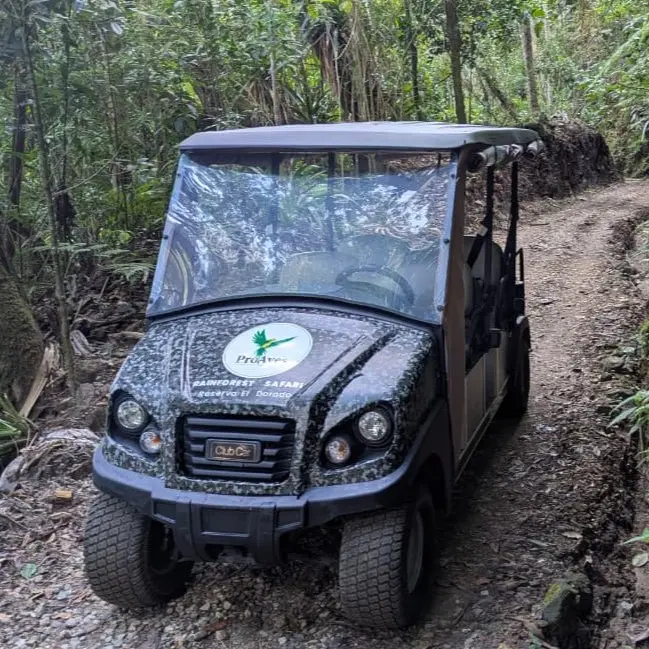
Imagen 1
Categories
Conservacion News Noticias El Dorado Noticias Reservas

Clean Mobility and Conservation: ProAves El Dorado Reserve Incorporates Electric Vehicle into Its Operations

In the heart of one of the most biodiverse ecosystems on the planet, the ProAves El Dorado Reserve has taken a new step in its commitment to environmental conservation. In recent days, a multipurpose electric vehicle was officially incorporated into the Reserve’s operations—a key tool to improve conservation logistics and offer a more sustainable experience.

This fully electric vehicle will enable silent, efficient, and emission-free transportation within the Reserve. It is an environmentally friendly solution designed to minimize the impact on the species that inhabit this unique region, especially endemic birds and other animals sensitive to noise and air pollution.

Located in the Cuchilla de San Lorenzo in the Sierra Nevada de Santa Marta, the ProAves El Dorado Reserve is home to nearly 420 bird species, including the iconic Santa Marta Parakeet (Pyrrhura viridicata) and the Santa Marta Bush-Tyrant (Myiotheretes pernix). It also hosts several endemic species of amphibians, mammals, and plants that depend on highly fragile ecosystems.

In line with its commitment to protecting this valuable natural heritage, the El Dorado Reserve is investing in improved transportation conditions while strengthening internal logistics for the efficient transport of materials, photographic equipment, supplies, and scientific gear.

The decision to adopt electric technology not only enhances the Reserve’s operational infrastructure but also reinforces its approach to carrying out conservation actions in an environmentally responsible way. This move complements other sustainability initiatives such as active reforestation, the use of clean energy through solar panels, and the protection of threatened species’ habitats.

With initiatives like this, the ProAves El Dorado Reserve continues to establish itself as an exemplary model of conservation in Colombia and Latin America. The incorporation of sustainable solutions into daily operations shows that it is possible to harmonize the protection of natural heritage with the development of responsible and transformative experiences. Every step toward cleaner, more conscious management strengthens not only the local ecosystem but also the hope for a future in balance between humanity and nature.

Imagen 1
Categories
Conservacion Investigación News Noticias Águila Harpía Noticias Arrierito Antioqueño Noticias Chamicero de Perijá Noticias El Dorado Noticias El Jaguar Noticias El Mirador Noticias El Pangán Noticias El Paujil Noticias Giles Fuertesi Noticias Gorrión de Andivia Noticias Halcón Colorado Noticias Hormiguero de Torcoroma Noticias Las Tángaras Noticias Lora Carirosada Noticias Loro Coroniazul Noticias Mirabilis Swarovki Noticias Pauxi Pauxi Noticias Ranita Dorada Noticias Ranita Terribilis Noticias Reinita Cielo Azul Noticias Tití Cabeciblanco Noticias Zamarrito del Pinche

ProAves Reserves: Key Refuges for Colombia’s Most Threatened Primates

Colombia is home to 43 primate species, making it the country with the third highest primate diversity in Latin America, after Brazil and Peru. This figure is particularly significant considering that South America hosts 177 primate species, many of which are endemic and highly threatened—positioning Colombia as a key player in regional conservation efforts.

These charismatic mammals play a crucial role in maintaining ecosystem health: they disperse seeds, aid in forest regeneration, and act as indicators of environmental balance. 

According to the Red List of the International Union for Conservation of Nature (IUCN), Colombia has 3 primate species classified as Critically Endangered (CR), 5 as Endangered (EN), and 15 as Vulnerable (VU). 

Among the most threatened are the Caquetá Titi (Plecturocebus caquetensis), the Cotton-top Tamarin (Saguinus oedipus), and the Brown Spider Monkey (Ateles hybridus), whose populations have drastically declined due to habitat loss and fragmentation, agricultural expansion, and the illegal wildlife trade. This situation calls for urgent action to strengthen conservation and ecosystem restoration strategies in the areas these species inhabit.

At Fundación ProAves, we actively work across our 27 Nature Reserves, protecting strategic habitats for these at-risk species:

These mammals inhabit tropical forests that, thanks to continuous conservation, restoration, and education efforts, remain vital refuges for their survival.

To protect them, we implement actions such as:


Icono bosque

Habitat conservation and restoration to ensure safe areas where primates can thrive free from threats.


Icono libro

Environmental education programs with local communities to discourage the keeping of primates as pets and reduce hunting.


Icono mono

Scientific research to better understand their ecology, behavior, and population status.

Our commitment to primate conservation is a pledge to preserve ecosystem balance and ensure a healthy future for the generations to come. We will continue to strengthen our efforts through joint work with local communities, environmental authorities, and strategic allies—promoting a comprehensive conservation model that values and respects the natural wealth of our territories.

Learn more about these charismatic mammals at:

Imagen 1
Categories
Conservacion Investigación News Noticias El Dorado Proaves @en

New Orchid Species Discovered in Colombia

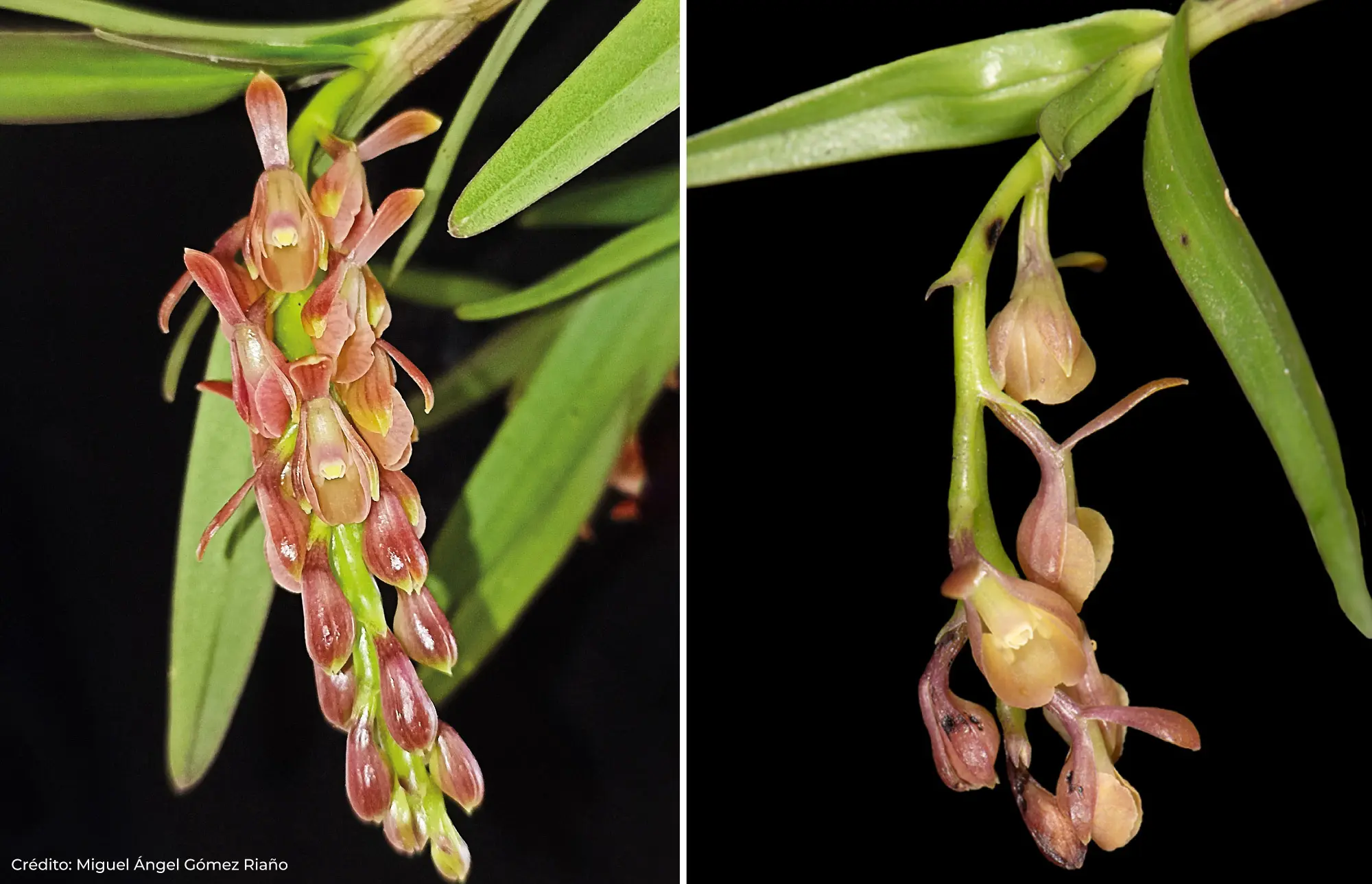
In an exciting new scientific discovery, Universidad Nacional de Colombia researchers supported by Fundación ProAves have identified a beautiful new species of orchid, Rasmussen Star Orchid Epidendrum rasmussenii, in the Sierra Nevada de Santa Marta, Colombia. 

This stunning discovery highlights the region’s incredible biodiversity and underscores the importance of conservation efforts in one of the world’s most unique ecosystems.

The new species, officially described in the scientific journal Phytotaxa, was named in honor of Nathan Jens Rasmussen, whose family has played a crucial role in supporting conservation initiatives to protect this orchid and a myriad of biodiversity restricted to cloud forest in the Sierra Nevada de Santa Marta

“We are thrilled to support important discoveries like this one,” said Dr. Paul Salaman, President of Conservation Allies. “Rasmussen Star Orchid highlights the extraordinary biodiversity of Colombia and the critical need for sustained research and conservation efforts to protect the country’s endangered forests.”

The orchid was found within El Dorado ProAves Reserve, which is managed by Fundación ProAves with support from Conservation Allies. The reserve has long been a global stronghold for endemic and endangered species, providing a safe haven for Colombia’s rich flora and fauna. The discovery of the Rasmussen Star Orchid reinforces the importance of protecting these habitats from deforestation.

“This discovery would not have been possible without the invaluable support of Nathan Jens Rasmussen’s family and the support of Conservation Allies. It is not only a tribute to the beauty and complexity of our flora, but also a reflection of the urgency to conserve our natural ecosystems. The ProAves El Dorado Reserve continues to be a stronghold of wildlife and a refuge for biological diversity. Orchids, as a symbol of resilience and ecological richness, inspire us to redouble our efforts to safeguard our natural heritage for future generations. 

Thank you for making it possible for science and conservation to continue flourishing in Colombia,” Cited by Kruzi Paloma Carrillo León, Executive Director of Fundación ProAves.

The newly identified orchid is distinguished by its striking red-carmin and yellow-green flowers. It is currently classified as an Endangered species due to its highly restricted location, emphasizing the urgency of preserving the forests it calls home.

“The Sierra Nevada, celebrated for its biological and cultural richness, high endemism, and unique geography, now unveils a new botanical gem. This discovery not only deepens our taxonomic understanding of orchids. But also underscores the urgent need to explore, study, and safeguard these extraordinary lands, which today face mounting threats,” Stated by researcher Miguel Ángel Gómez Riaño.

This finding was made possible through extensive fieldwork, scientific collaboration, and the dedication of conservationists working tirelessly to document and protect Colombia’s extraordinary biodiversity.

Categories
Conservacion News Noticias El Dorado Noticias Reservas Proaves @en

A Historic Visit: Welcoming World Land Trust to Our El Dorado Reserve

After 17 years of collaboration, we had the honour of welcoming the Chief Executive and board members of our long-standing partner, World Land Trust (WLT), to Colombia. To mark this special occasion, we were proud to host them at our El Dorado Reserve, one of the most biodiverse and ecologically important regions on Earth.

The WLT delegation included Dr. Catherine Barnard, Chief Executive; Claire Ashby, Board Member and Trustee; and Emma Tozer, Board Member and Honorary Treasurer, who were accompanied by our Executive Director, Kruzi Paloma Carrillo.

The purpose of this visit was to showcase the conservation impact made possible through World Land Trust’s support, which has been vital in safeguarding some of Colombia’s most threatened biodiversity across our network of nature reserves. It also offered an immersive experience, allowing our guests to witness firsthand the day-to-day efforts of our dedicated reserve teams.

Throughout the visit, we reflected on the major milestones achieved during our 17-year partnership. Highlights included exploring iconic sites within the El Dorado Reserve, such as La Laguna, where we enjoyed birdwatching and connected deeply with the area’s spiritual and ecological richness. We also organised a night walk, offering the opportunity to observe frogs and other fascinating nocturnal wildlife, further underscoring the extraordinary biodiversity we work to protect.

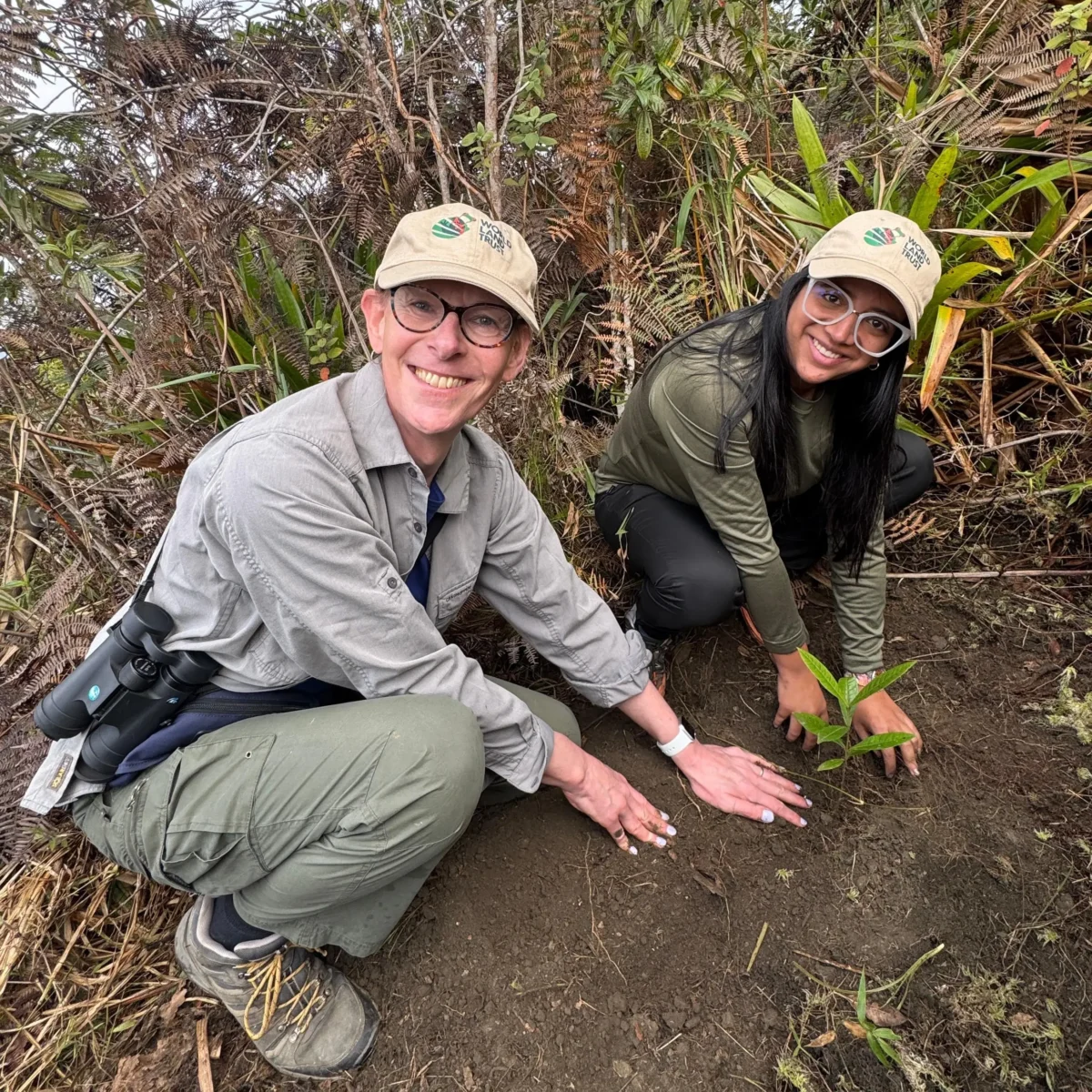
One of the most symbolic and heartfelt moments of the visit was the planting of native tree seedlings in designated restoration zones, an act that powerfully embodied our shared commitment to regenerating forest ecosystems and ensuring a future for Colombia’s rich biodiversity. The group also hiked to La Cumbre, a scenic trail that provided opportunities to observe diverse wildlife, hear the haunting calls of red howler monkeys (Alouatta seniculus), and experience the extraordinary biodiversity of the Sierra Nevada’s cloud forests up close.

This visit marks a pivotal milestone for our organisation, deepening our alliance with World Land Trust and reaffirming our mutual commitment to the long-term protection and preservation of Colombia’s extraordinary biodiversity.


“It was a true pleasure to finally visit ProAves’ remarkable El Dorado Reserve—not only to experience this incredible place firsthand, but also to learn more about the far-reaching impact ProAves is making across Colombia. This visit exemplifies how World Land Trust operates: by supporting locally rooted organisations that protect land to save species, combat climate change, and uplift local communities. I look forward to strengthening our collaboration and achieving even greater conservation outcomes together in Colombia,”
stated Dr. Catherine Barnard, Chief Executive of World Land Trust.


“On behalf of the ProAves Foundation of Colombia, I want to sincerely thank the World Land Trust team for their visit. It was truly moving to spend these days together, strengthening the connection between our organisations and allowing them to directly witness the conservation efforts led by ProAves on the ground. It was a truly enriching experience.
I deeply appreciate the commitment shown by World Land Trust in making this visit possible. Both personally and on behalf of ProAves, I look forward to continuing to join forces to ensure the long-term success of conservation actions in Colombia, efforts that ultimately benefit the entire planet. Once again, thank you so much!”

We are profoundly grateful to our allies for their visit and for their continued partnership in our mission to conserve biodiversity.

Categories
Conservacion Investigación News Noticias Arrierito Antioqueño Noticias El Dorado Noticias El Paujil Noticias Las Tángaras Noticias Loro Coroniazul Noticias Loro Orejiamarillo Noticias Pauxi Pauxi Noticias Ranita Dorada Noticias Reinita Cielo Azul Proaves @en

These Are the People Who Will Contribute to the Conservation of Migratory Birds Through Research in Our Country

At ProAves, we have concluded the selection process for our call for applications: Migratory Bird Research Scholarships, where we selected 12 researchers to conduct studies focused on the conservation of these extreme travelers, which are protected in our Natural Reserves.
The objective of these scholarships is to promote the knowledge and study of migratory birds, species that amaze us with their behaviors as they embark on epic journeys to protect themselves from the cold and find food.
Thanks to these scholarships, scientific research will be promoted, helping to identify the threats these species face during their journeys and behaviors. Through collaboration and a commitment to science, we aim to ensure that migratory birds continue to be a vital part of our biodiversity and, consequently, of the Natural Reserves we protect.
Here are the selected researchers, the titles of their projects, and the reserves where their research will be applied:

Cristian Mateo Ospina Montoya
Research project: Comparison of the Response of Resident and Migratory Birds to the Edge Effect in an Andean Landscape in the Department of Antioquia, Colombia
ProAves Reserve: Arrierito Antioqueño
University: University of Quindío – Biology

Juan Camilo Úsuga Fuentes
Research project: Study of the Occupation of Migratory Birds in the ProAves Arrierito Antioqueño Reserve located in the rural area of Anorí, Antioquia
ProAves Reserve: Arrierito Antioqueño
University: University of Antioquia – Coastal Zone Ecology

Ider Humberto Diaz Rivas
Research project: Migratory Avifauna in a Landscape Mosaic of the Coffee Belt of the Colombian Andes, Municipality of Génova-Quindío
ProAves Reserve: Loro Coroniazul
University: University of the Amazon – Biology

Jessica Esmeralda Lozano Romero
Research project: Interaction Between Migratory and Resident Birds in Different Vegetation Coverages in the ProAves Reinita Cielo Azul Reserve, Municipality of San Vicente de Chucurí, Santander
ProAves Reserve: Reinita Cielo Azul
University: Pedagogical and Technological University of Colombia (UPTC) – Environmental Management Specialist

Diego Mejía Tovar
Research project: Vocal Behavior of Setophaga cerulea and Vermivora chrysoptera in Wintering Areas of the ProAves Reinita Cerúlea and Pauxi Pauxi Reserves, Located in the Rural Area of San Vicente de Chucurí, Santander
ProAves Reserve: Reinita Cerúlea, Pauxi Pauxi
University: University of Rosario – Biology

Jhonatan Arias Martínez
Research project: Ecological Segregation Dynamics in Migratory Birds of the Parulidae Group (warblers) in the ProAves Las Tangaras Reserve, Located in the Municipality of El Carmen de Atrato, Chocó
ProAves Reserve: Las Tángaras
University: Francisco de Paula Santander University – Environmental Engineering

Laura Catalina Guarín Oviedo

David Steven Valero Vargas
Research project: Contrast in Habitat Occupation Between Resident and Migratory Birds in an Altitudinal Gradient: Diversity, Abundance, and Temporal Variation in the El Dorado Reserve, Municipality of Santa Marta, Magdalena
ProAves Reserve: El Dorado
University: Military University Nueva Granada – Applied Biology

Isaac Daniel Diaz Rivera 

Laura Vanessa Rodríguez Figueroa
Research project: Approaches to the Foraging Ecology of Setophaga swainsoni, WJ 1827 in the ProAves El Dorado Reserve
ProAves Reserve: El Dorado
University: University of the Atlantic – Biology

Yuly Milena Rincón Gómez
Research project: Analysis of a Migratory Species Assembly in the Various Covers in the Ranita Dorada Reserve in the Municipality of Falan, Tolima
ProAves Reserve: Ranita Dorada
Independent Researcher – Tourist Guide Technologist, Agroecology Student

Ángela Gutiérrez Suárez 

Juan Esteban Albán Laverde
Research project: Evaluating the Importance of Spatial Segregation Between Nearctic Migratory Birds and Resident Birds Through the Comparison of Habitat Use Patterns and Vertical Strata
ProAves Reserve: Loro Orejiamarillo
University: University of Valle – Biology

Romario Andrés Barona Muñoz

Leandro Rodríguez Peña
Research project: Evaluating the Importance of Temporal Segregation Between Nearctic Migratory Birds and Resident Birds Through the Comparison of Habitat Use Patterns and Vertical Strata
ProAves Reserve: Loro Orejiamarillo
University: University of Valle – Biology

Juanita Angarita Ricaurte

Paula Tatiana Alméciga Camargo

Daniel Rincón
Research project: Habitat Use and Selection of Migratory Bird Species in the El Paujil Reserve, Puerto Boyacá, Colombia
ProAves Reserve: El Paujil
University: Francisco José de Caldas District University – Bachelor in Biology

We are excited to announce that the 12 selected researchers will begin working on projects that will contribute to understanding and conserving these birds, which are essential to the health of ecosystems and conservation strategies in our protected areas.
We thank all those interested and passionate about birds, and we invite you to stay tuned for updates on the progress of these investigations, which will contribute to the preservation of these extreme travelers and their habitats.

Categories
Articles Blog Investigación News Noticias El Dorado Proaves @en Uncategorized @en

ProAves and CORPAMAG signed an agreement that will contribute to the conservation of the most endangered ecosystems and species in the Magdalena department.

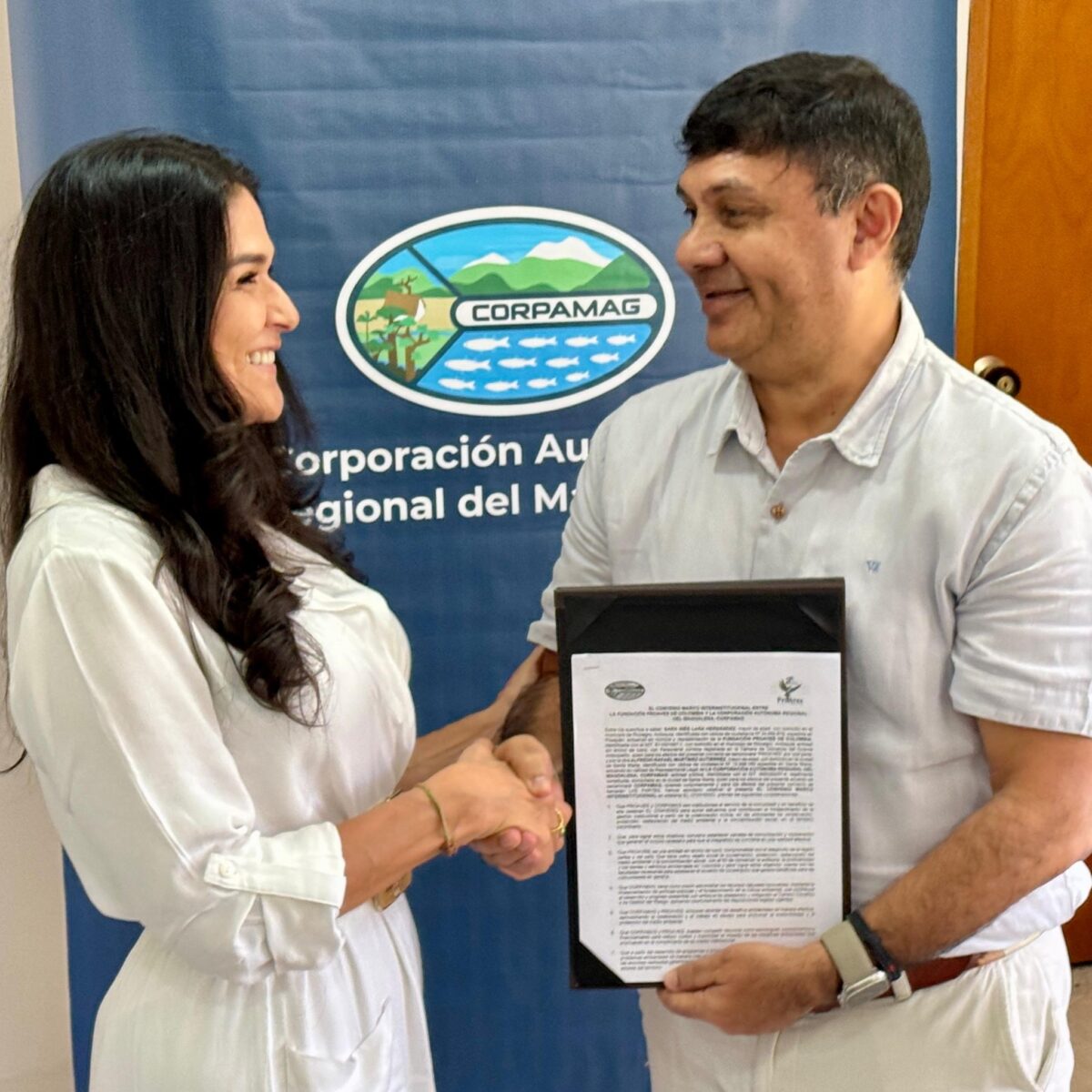
In an important step towards biodiversity conservation, ProAves and the Magdalena Regional Autonomous Corporation (CORPAMAG) signed an inter-institutional agreement that seeks to carry out conservation and restoration actions on the San Lorenzo ridge, in the Santa Marta District, to protect prioritised species in the Department of Magdalena.   


The signing of this agreement took place at the Corporation’s headquarters, with the presence of Sara Inés Lara, Executive Director of ProAves and the General Director of CORPAMAG, Alfredo Martínez Gutiérrez.

The agreement establishes a framework for collaboration that will allow the execution of specific projects aimed at protecting critical habitats and preserving biodiversity. The region faces various threats due to the loss of its natural environment and human activities. Through this alliance, we hope to implement ecological restoration and community awareness strategies, involving local communities in the defense of their natural heritage.

One of the main focuses of the agreement is the protection of the remaining habitats on the upper part of the San Lorenzo ridge, in the ProAves El Dorado Reserve, a vital area for biodiversity that protects more than a thousand hectares of forest in an excellent state of conservation. There, reforestation campaigns, eradication of invasive species and conservation programs focused on the protection of species such as the Santa Marta Parakeet (Pyrrhura viridicata) and various species of endemic amphibians, such as the Magdalena giant glass frog (Ikakogi tayrona).

The agreement also includes a research component to measure the impact of conservation actions and monitor birdlife and its population growth. This effort will allow the effectiveness of the implemented strategies to be evaluated and contribute to scientific knowledge of the species that are inhabiting the region’s ecosystems.

“This agreement marks a very important point for the protection and conservation of biodiversity of the Sierra Nevada de Santa Marta. With this collaboration, we will advance in the protection of habitats that are in danger of extinction and the species that inhabit them. We are working closely together to implement conservation, research and environmental education strategies. That will allow us to have quick and concrete results that would benefit local communities and biodiversity,” said Sara Inés Lara, Executive Director of ProAves during the signing of the document.

On its behalf, the Autonomous Corporation of Magdalena highlighted the importance of inter-institutional collaboration as a key tool to address the environmental challenges affecting the region.

“With the signing of this agreement, we will have an opportunity to continue strengthening the protection and conservation of the Sierra Nevada of Santa Marta. We are joining forces to allow us to have planning instruments that, through regulations, guarantee the use of protection and conservation of these important areas. Areas such as the El Dorado Reserve, which is of great interest from an ecosystemic point of view.  As well with this agreement working hand in hand with the communities. Taking into account the great experience that ProAves already has in the territory” said Alfredo Martínez Gutiérrez, General Director of CORPAMAG.

This agreement is a reflection of the commitment of both parties to promote sustainable development and guarantee the health of the ecosystems that sustain life in Magdalena. With this joint effort, ProAves and the Magdalena Autonomous Corporation hope not only to protect local biodiversity but also to foster a culture of perpetual conservation with the communities of the region.

Categories
Conservacion Investigación News Noticias El Dorado Proaves @en

Astounding new species of bird for Science discovered in the Sierra Nevada de Santa Marta, Colombia

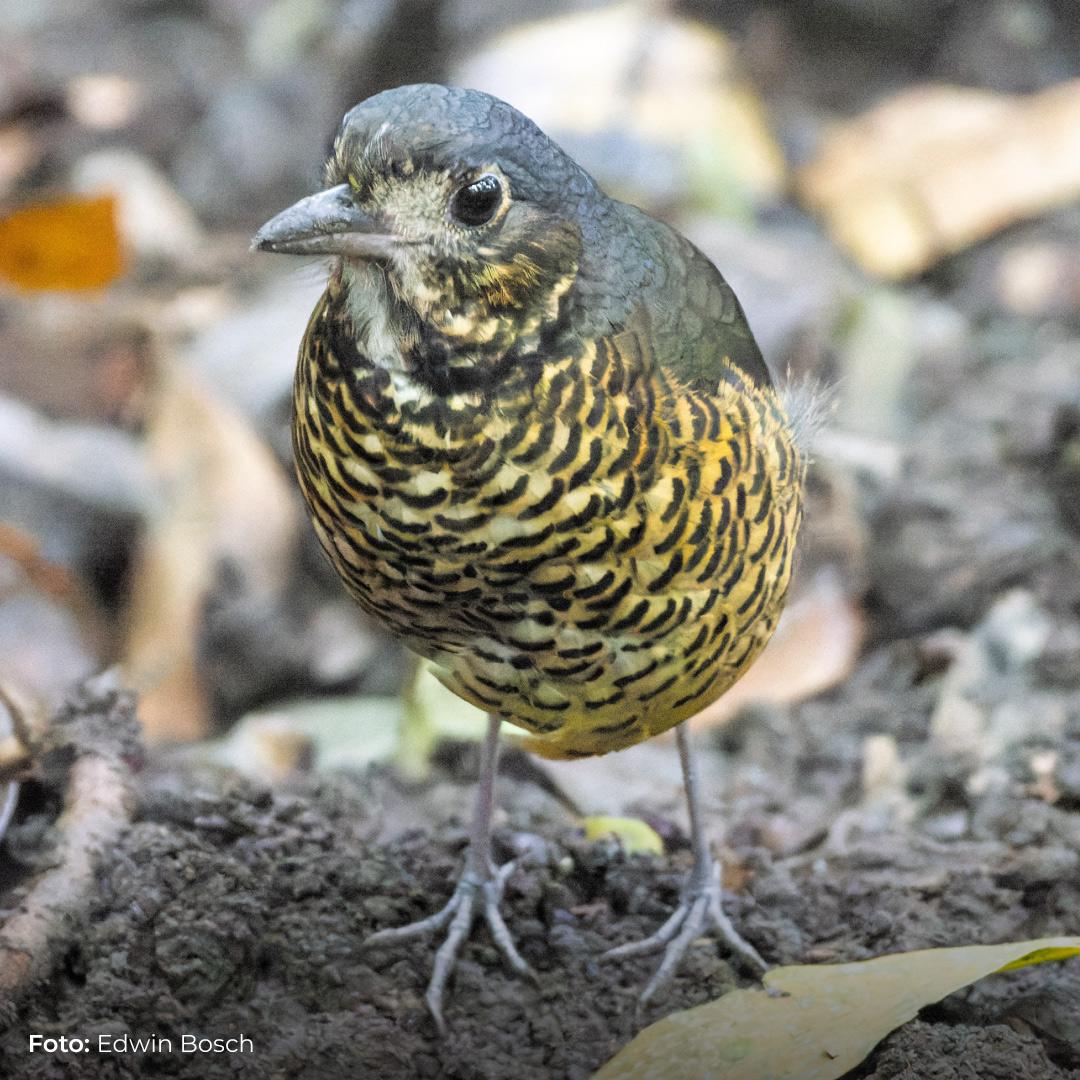
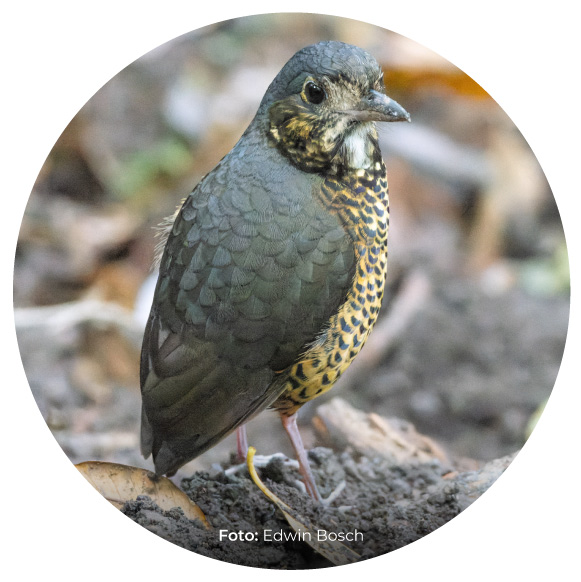
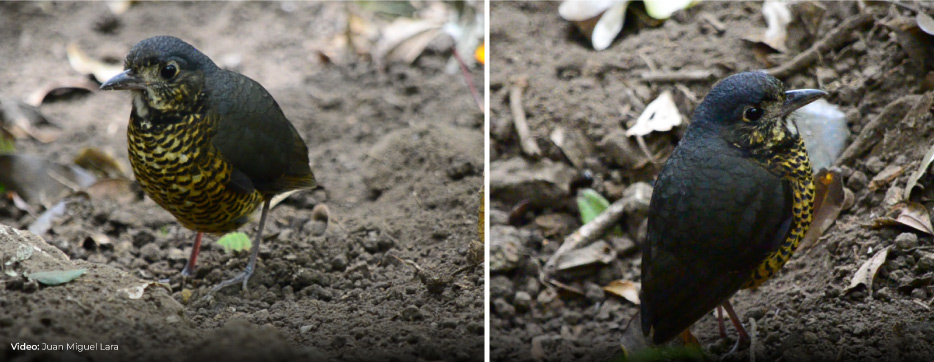
Fundación ProAves team member Nemesio Andres Gulfo discovered a mysterious huge antpitta – a thrush-like bird with powerful legs and appears tailless – that was feeding on the ground close to the El Dorado ProAves Reserve eco-lodge.  

ProAves ornithologists rushed to the El Dorado reserve and worked with Nemesio to identify the species. At first it appeared to be similar to the Undulated Antpitta Grallaria squamigera – a species found across the main Andean cordilleras of Colombia. However, after intensive observations, song tape recordings and finally the capture, measurement and release of an adult bird, the ProAves research team was able to confirm that Nemesio’s discovery represented a unique and distinctive new species of Antpitta for science!

In fact, the species may be closely related to the geographically closer Great Antpitta Grallaria excelsa known only from the Merida mountains of Venezuela, which is likewise a subtropical forest specialist, but over 400 km distant. The new isolated species in the El Dorado reserve has a distinct gray head contrasting with an olivaceous back and wings. But its facial characteristics are particularly strong with a bright white “beard” and black collar. The vocalizations are especially interesting as they are very similar to another species in the reserve, meaning this shy species has been almost completely overlooked by the countless birdwatchers and ornithologists visiting El Dorado ProAves Reserve since 2005.

While more evidence is being documented, such as its distinctive ecological traits, measurements and vocalizations, the team are provisionally referring to the new species as the “El Dorado Antpitta”. The research team composed of Nemesio Andres Gulfo, Alex Cortes, Juan Carlos Luna, Paul Salaman and Thomas Donegan aim to publish all the evidence in the coming year in collaboration with the University of Antioquia who are undertaking phylogenetic studies using blood taken from a captured individual – that was released unharmed after study.

Approximately 10,000 ornithologists and birdwatchers have visited the El Dorado ProAves Reserve and surrounding area in the past two decades and never seen or heard the species. There was one sighting of a bird for five minutes in 2015 by Sophie Osborn and Chad Olson, but only a distant blurred photograph was taken and which they considered to be of Undulated Antpitta. 

Even more astounding is that the new species occurs in the former property called Vista Nieves of one of South America’s most famous bird collectors, Melbourne Carriker. He and his family lived in the early 20th century and collected thousands of birds, but bizarrely never this species

It is very rare to find a new species of bird nowadays. Just three new species were described globally in 2023. Colombia is the world’s #1 country for birds with over 1,979 bird species recorded and yet new species can still be found there – the last bird described in the country was the Chami Antpitta in 2020.

This exciting new discovery further highlights the global importance of the 1,300 hectare El Dorado ProAves Reserve for biodiversity conservation thanks to Fundacion ProAves. It already protects over 20 endemic bird species and hundreds of other species of amphibians, orchids, reptiles and much more restricted to the subtropical and montane forests of the reserve and Sierra Nevada de Santa Marta.

Tragically, deforestation is accelerating in the cooler subtropical forests around the El Dorado ProAves Reserve and the Sierra Nevada because of a property boom to escape the increasing hot and dry coastal plain and city of Santa Marta attributed to climate change. This is pushing housing into the mountains where land prices have sky-rocketed and as a consequence unprotected subtropical forests in the region are being sold and cleared (often without authorization) to make way for holiday homes and new farms.  

This remarkable discovery of El Dorado Antpitta should be a moment of triumph for Colombia, however, it is worrying as the species is so endangered and its populations appear to be too small, which we fear for its future survival.

Categories
News Noticias Águila Harpía Noticias Arrierito Antioqueño Noticias Chamicero de Perijá Noticias Colibrí del Sol Noticias Cucarachero de Chicamocha Noticias El Dorado Noticias El Jaguar Noticias El Mirador Noticias El Pangán Noticias El Paujil Noticias El Tapir Noticias Giles Fuertesi Noticias Gorrión de Andivia Noticias Halcón Colorado Noticias Hormiguero de Torcoroma Noticias Las Tángaras Noticias Lora Carirosada Noticias Loro Coroniazul Noticias Loro Orejiamarillo Noticias Loros Andinos Noticias Mirabilis Swarovki Noticias Pauxi Pauxi Noticias Ranita Dorada Noticias Ranita Terribilis Noticias Reinita Cielo Azul Noticias Tití Cabeciblanco Noticias Zamarrito del Pinche

Great Bird Count in ProAves Reserves

ProAves participated in the October Big Day and added a total of 81 eBird lists– with 3,578 individuals and 588 distinct species of birds across 12 of their reserves.

This puts the Foundation’s Nature Reserves among the top tier of the eBird listings in Colombia: The reserve “El Jaguar” came in first place at the national level with a total of 150 species, the “El Pangán” reserve ranked fourth place with 113 species and the “Arrierito Antioqueño” reserve came in eighth place with 106 registered species.

OCTOBER BIG DAY, EVERY BIRD COUNTS

With 253 countries participating in the October Big Day (OBD), Colombia ranked first in the number of species registered worldwide on the eBird platform. The country topped the list in bird watching with 1,343 published bird species. Second and third place belongs to Peru and Ecuador, with 1,222 and 1,098 recorded species, respectively.

Colombia, known as the world’s premier hotspot for avian biodiversity, came together again and demonstrated its love for birds on the October Big Day. This citizen science initiative, organized by the Cornell Laboratory of Ornithology, mobilized thousands of Colombians, accumulating an incredible sum of 3,476 eBird checklists across the country. In comparison, birders from the United States submitted over 33,000 checklists, summing only 631 total species (less than half that Colombia). This is a testament to the immense biodiversity of Colombia.

The largest bird count in the world was held on a very special date, coinciding with World Migratory Bird Day and the arrival of thousands of avian migrants, coming to spend the winter months feeding in the ecological haven that is Colombia.

We thank all the people and institutions that support the conservation of birds, especially:

usfish