Fundación ProAves – por la conservación en el país de las aves

Categories
Conservacion Investigación News Noticias Águila Harpía Noticias Arrierito Antioqueño Noticias Chamicero de Perijá Noticias El Dorado Noticias El Jaguar Noticias El Mirador Noticias El Pangán Noticias El Paujil Noticias Giles Fuertesi Noticias Gorrión de Andivia Noticias Halcón Colorado Noticias Hormiguero de Torcoroma Noticias Las Tángaras Noticias Lora Carirosada Noticias Loro Coroniazul Noticias Mirabilis Swarovki Noticias Pauxi Pauxi Noticias Ranita Dorada Noticias Ranita Terribilis Noticias Reinita Cielo Azul Noticias Tití Cabeciblanco Noticias Zamarrito del Pinche

ProAves Reserves: Key Refuges for Colombia’s Most Threatened Primates

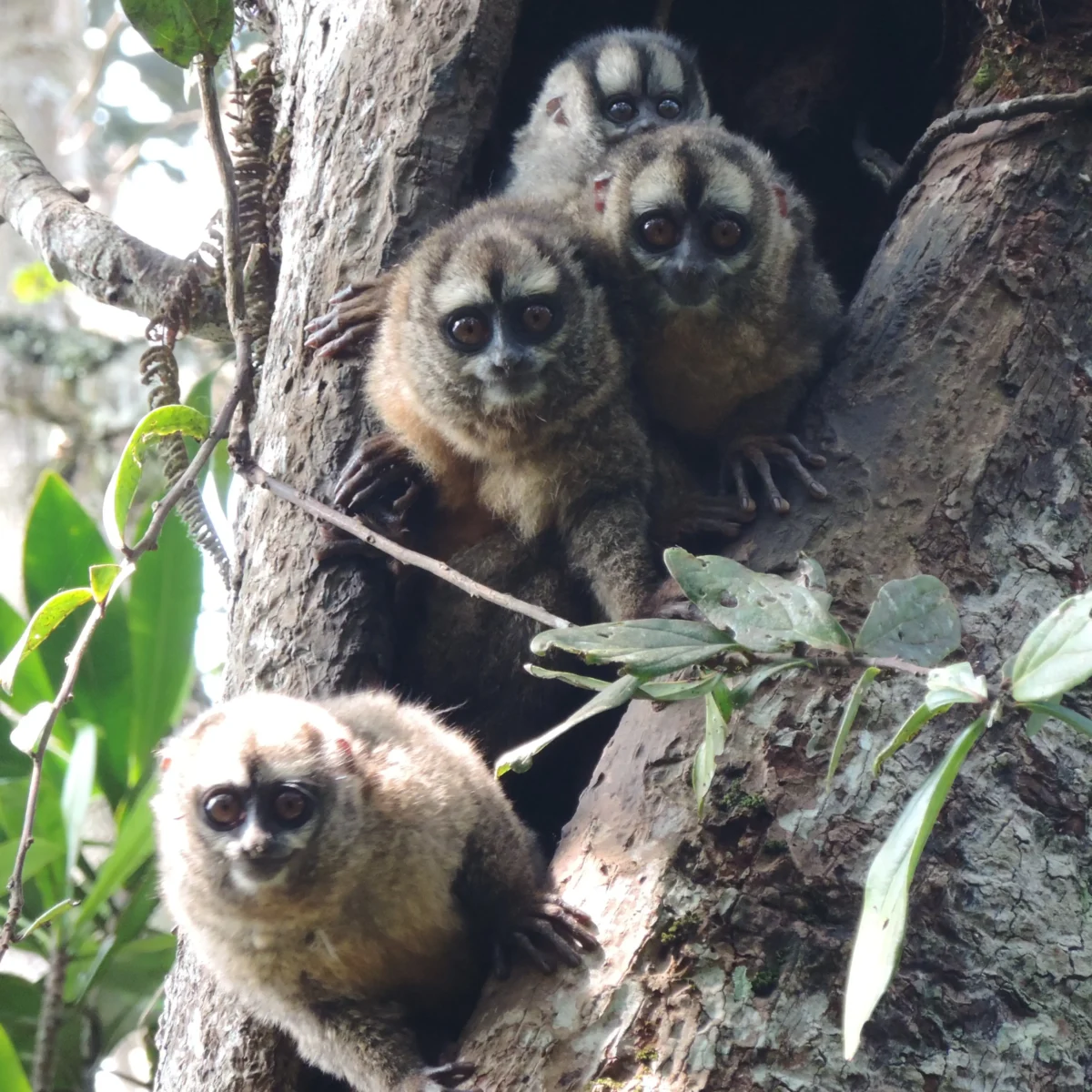
Colombia is home to 43 primate species, making it the country with the third highest primate diversity in Latin America, after Brazil and Peru. This figure is particularly significant considering that South America hosts 177 primate species, many of which are endemic and highly threatened—positioning Colombia as a key player in regional conservation efforts.

These charismatic mammals play a crucial role in maintaining ecosystem health: they disperse seeds, aid in forest regeneration, and act as indicators of environmental balance. 

According to the Red List of the International Union for Conservation of Nature (IUCN), Colombia has 3 primate species classified as Critically Endangered (CR), 5 as Endangered (EN), and 15 as Vulnerable (VU). 

Among the most threatened are the Caquetá Titi (Plecturocebus caquetensis), the Cotton-top Tamarin (Saguinus oedipus), and the Brown Spider Monkey (Ateles hybridus), whose populations have drastically declined due to habitat loss and fragmentation, agricultural expansion, and the illegal wildlife trade. This situation calls for urgent action to strengthen conservation and ecosystem restoration strategies in the areas these species inhabit.

At Fundación ProAves, we actively work across our 27 Nature Reserves, protecting strategic habitats for these at-risk species:

These mammals inhabit tropical forests that, thanks to continuous conservation, restoration, and education efforts, remain vital refuges for their survival.

To protect them, we implement actions such as:


Icono bosque

Habitat conservation and restoration to ensure safe areas where primates can thrive free from threats.


Icono libro

Environmental education programs with local communities to discourage the keeping of primates as pets and reduce hunting.


Icono mono

Scientific research to better understand their ecology, behavior, and population status.

Our commitment to primate conservation is a pledge to preserve ecosystem balance and ensure a healthy future for the generations to come. We will continue to strengthen our efforts through joint work with local communities, environmental authorities, and strategic allies—promoting a comprehensive conservation model that values and respects the natural wealth of our territories.

Learn more about these charismatic mammals at:

Imagen 1
Categories
Conservacion News Noticias El Jaguar Noticias Reservas Proaves @en

Important Sighting: Jaguar Captured by Camera Trap in Our ProAves El Jaguar Reserve

The Jaguar (Panthera onca) is considered the largest feline in Latin America and a keystone species for maintaining ecosystem balance. Thanks to the camera traps installed in our Nature Reserves, we have recorded video footage of a Jaguar in our ProAves El Jaguar Reserve, located in the municipality of Mapiripán, Meta.

This sighting confirms the strategic role of our Reserve as a key ecological corridor for the survival of one of the most iconic and enigmatic big cats in the world. It also highlights the Jaguar’s importance in maintaining ecosystem health, as it helps regulate populations of other species and contributes to the well-being of forests.

Despite these encouraging records, the Jaguar is facing a worrying decline in Colombia. According to reports by media outlets such as Mongabay, the species has lost around 39% of its habitat over the past decade due to deforestation, hunting, and habitat fragmentation. In this context, the protection of its biological corridors is crucial to reversing this trend and ensuring its long-term conservation.

This recent camera trap record is compelling evidence of the impact of our conservation efforts and the good health of the ecosystems we protect. Over the years, ProAves has established three strategic reserves in the Amazon region: El Jaguar, Águila Arpía, and Halcón Colorado. These protected areas not only safeguard the Jaguar but also provide refuge for other emblematic species such as the Pink River Dolphin (Inia geoffrensis) and the Giant River Otter (Pteronura brasiliensis), all inhabitants of this vital region of the world, known for its rich biodiversity.

Each new record of these important wildlife species strengthens our commitment to conserving these biological corridors and inspires us to engage new allies in securing a safe future for the Jaguar and many other species in Colombia.

Imagen 1
Categories
Conservacion Investigación News Noticias El Jaguar Noticias Reservas Proaves @en

Sighting of the Majestic Harpy Eagle in El Jaguar ProAves Reserve

The Harpy Eagle (Harpia harpyja) is one of the most impressive and powerful birds of prey in the world, known for its large size and hunting ability. Recently, in our ProAves El Jaguar Reserve, located in Mapiripán, Meta, one of these important individuals for our country was recorded for the second time in less than a year.


Jefferson Rodríguez, ProAves Ranger, had the privilege of sighting this majestic species: “We saw it because we were at home and suddenly we heard the screeches and cries of the monkeys, when I went out to see there was the harpy eagle perched on a guarumo tree.”
This imposing bird can weigh up to 6.5 kilos and measure between 86 and 107 centimeters in height, being one of the most majestic and imposing birds that flies over the skies.
The harpy eagle stands out as an important hunter with its gigantic claws of up to 10 centimeters, it can catch and hold prey with extraordinary strength, and its vision is eight times more developed than that of humans, which allows it to detect subtle movements among the dense vegetation.


According to the Red List of the International Union for Conservation of Nature (IUCN), this species is considered to be in the Vulnerable (VU) category, where its main threats have been due to the loss and degradation of forests, poaching and collision with power lines.

The sighting of this emblematic species in our ProAves El Jaguar Reserve underlines the importance of conserving these ecosystems that allow us to protect, in addition to the aforementioned species, the palm anteater (Myrmecophaga tridactyla), the tapir (Tapirus terrestres), the jaguar (Panthera onca), among others.

This important sighting adds to the one carried out a year ago in this same Reserve and which represents this conservation area as a safe space for the survival of this species.

¡Visit our Nature Reserves! Be amazed by the wonderful species that inhabit our country.

Categories
News Noticias Águila Harpía Noticias Arrierito Antioqueño Noticias Chamicero de Perijá Noticias Colibrí del Sol Noticias Cucarachero de Chicamocha Noticias El Dorado Noticias El Jaguar Noticias El Mirador Noticias El Pangán Noticias El Paujil Noticias El Tapir Noticias Giles Fuertesi Noticias Gorrión de Andivia Noticias Halcón Colorado Noticias Hormiguero de Torcoroma Noticias Las Tángaras Noticias Lora Carirosada Noticias Loro Coroniazul Noticias Loro Orejiamarillo Noticias Loros Andinos Noticias Mirabilis Swarovki Noticias Pauxi Pauxi Noticias Ranita Dorada Noticias Ranita Terribilis Noticias Reinita Cielo Azul Noticias Tití Cabeciblanco Noticias Zamarrito del Pinche

Great Bird Count in ProAves Reserves

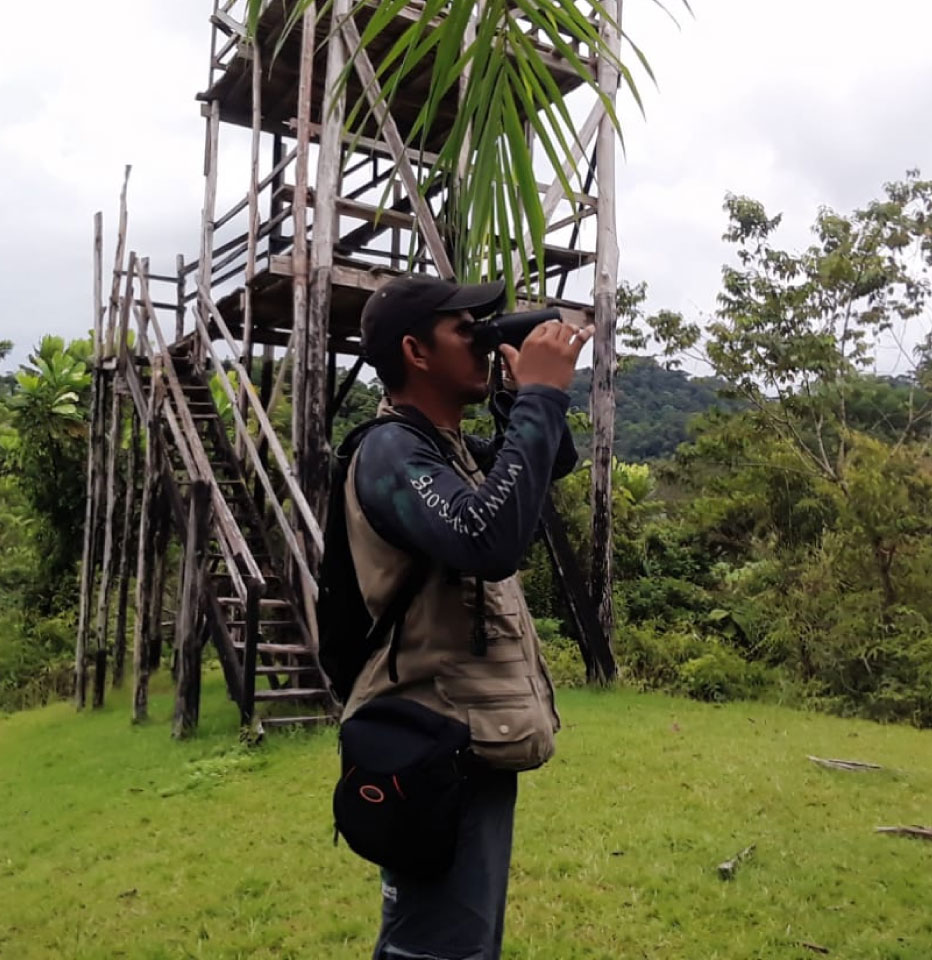
ProAves participated in the October Big Day and added a total of 81 eBird lists– with 3,578 individuals and 588 distinct species of birds across 12 of their reserves.

This puts the Foundation’s Nature Reserves among the top tier of the eBird listings in Colombia: The reserve “El Jaguar” came in first place at the national level with a total of 150 species, the “El Pangán” reserve ranked fourth place with 113 species and the “Arrierito Antioqueño” reserve came in eighth place with 106 registered species.

OCTOBER BIG DAY, EVERY BIRD COUNTS

With 253 countries participating in the October Big Day (OBD), Colombia ranked first in the number of species registered worldwide on the eBird platform. The country topped the list in bird watching with 1,343 published bird species. Second and third place belongs to Peru and Ecuador, with 1,222 and 1,098 recorded species, respectively.

Colombia, known as the world’s premier hotspot for avian biodiversity, came together again and demonstrated its love for birds on the October Big Day. This citizen science initiative, organized by the Cornell Laboratory of Ornithology, mobilized thousands of Colombians, accumulating an incredible sum of 3,476 eBird checklists across the country. In comparison, birders from the United States submitted over 33,000 checklists, summing only 631 total species (less than half that Colombia). This is a testament to the immense biodiversity of Colombia.

The largest bird count in the world was held on a very special date, coinciding with World Migratory Bird Day and the arrival of thousands of avian migrants, coming to spend the winter months feeding in the ecological haven that is Colombia.

We thank all the people and institutions that support the conservation of birds, especially:

usfish