Categories
Impact Report 2025
Fundación ProAves – por la conservación en el país de las aves

¿Eres un apasionado de la contabilidad y las finanzas?
En la Fundación ProAves de Colombia, estamos en la búsqueda de un Tecnólogo en Contabilidad y Finanzas o estudiante de últimos semestres en Contaduría Pública para formar parte de nuestro equipo de trabajo y contribuir a la conservación de la biodiversidad en Colombia.
? Manejo del Software Contable SIIGO – SIIGO NOMINA (Indispensable)
? Conocimiento actualizado de la normatividad contable colombiana
? Gestión y archivo de la correspondencia contable y administrativa
? Control de firmas, códigos de cuenta y consecutivos de documentos equivalentes a la factura
? Elaboración de Comprobantes de Egreso, Recibos de Caja y legalizaciones
? Actualización de novedades de nómina
? Contabilización de nómina y aportes parafiscales/seguridad social
? Otras tareas asignadas para el desarrollo del contrato
De lunes a viernes de 8:00 a.m. a 5:30 p.m.
Salario a convenir de acuerdo a la experiencia
Si cuentas con la experiencia y habilidades necesarias para contribuir con nuestra misión, esperamos tu postulación.
En la Fundación ProAves, nos importa tanto tu crecimiento profesional como el bienestar de la fauna colombiana, forma parte de un equipo comprometido y haz la diferencia.
¡Postúlate ahora y sé parte de nuestra misión por la conservación!
Envía tu hoja de vida al correo electrónico: recursoshumanos@proaves.org
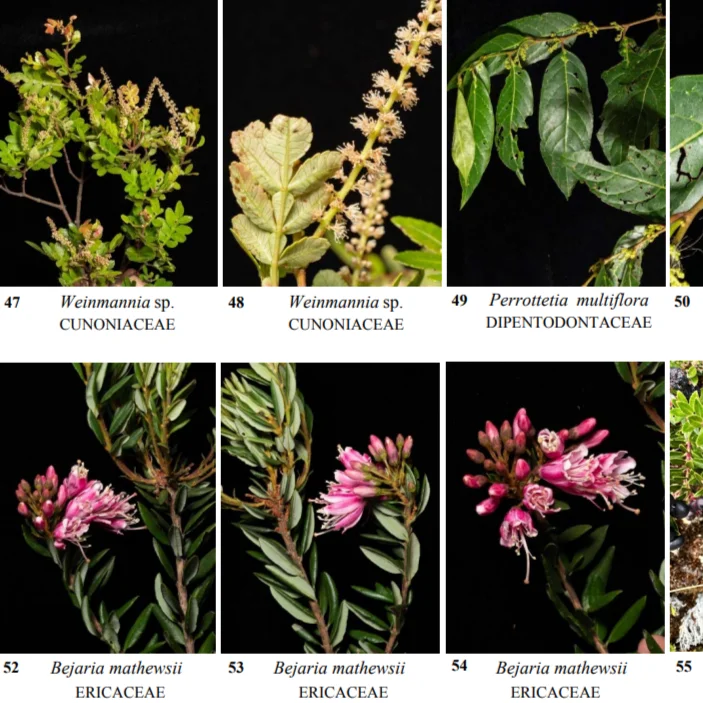
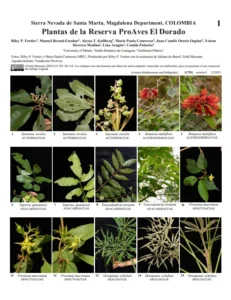
The ProAves El Dorado Reserve continues to strengthen its position as a leading site for biodiversity research and conservation in Colombia. Recently, the Plant Guide of the ProAves El Dorado Reserve was officially published on the Field Museum’s Field Guides platform, one of the most internationally recognized scientific institutions.
This guide is the result of a collaborative effort led by researchers and botanists¹ who, throughout the project, documented and systematized a significant portion of the plant diversity found in the Reserve. The ProAves El Dorado Natural Reserve is located in the Sierra Nevada de Santa Marta, one of the most biodiverse and unique ecosystems on the planet.

The publication of this material represents a key contribution to the knowledge of the region’s flora, as it provides identification and reference tools for researchers, students, local guides, and visitors interested in understanding the botanical richness of the territory.
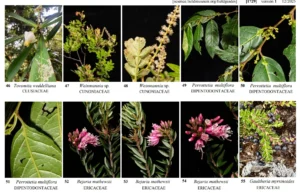
As a next step, the research team plans to submit a scientific article derived from this work to the journal Conservación Colombiana, which will further expand the dissemination of the results and reinforce the importance of research applied to conservation.
The guide is freely accessible through the Field Museum’s platform: https://science.fieldmuseum.org/fieldguides/guides/guide/1729, reaffirming ProAves’ commitment to generating and sharing scientific knowledge in support of the conservation of Colombia’s biodiversity.
Additionally, as part of this same research effort, the article “Orchids in the Caribbean: Characterization of the Orchidaceae Family in the ProAves El Dorado Reserve”, was published in the journal Conservación Colombiana. Authored by researcher Miguel Ángel Gómez Riaño, this study deepens the understanding of one of the most diverse and representative plant groups in the region, providing detailed information on its diversity and distribution.
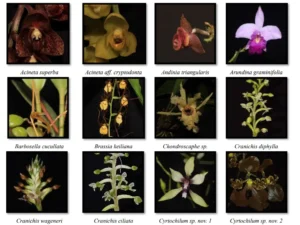
Both the plant guide and this scientific article are the only publications of their kind available for San Lorenzo, a key sector of the Sierra Nevada de Santa Marta. This highlights their scientific value and their relevance for conservation, research, and environmental education.
These products not only expand knowledge of the floristic diversity of the ProAves El Dorado Reserve, but also strengthen conservation management and planning by providing essential information for monitoring, decision-making, and the appreciation of the territory’s natural heritage.
At ProAves, we recognize and thank the commitment and dedication of the individuals who made these works possible. Their impact extends beyond the Reserve and contributes to a broader understanding and appreciation of the plant diversity of the Sierra Nevada de Santa Marta as a whole.
¹ Photo credits: The photographs included in the Plant Guide of the ProAves El Dorado Reserve were taken by Yeison Herrera Medina, Alyssa T. Kullberg, Camilo Palacios, Juan Camilo Osorio Ospina, Maria Paula Contreras, Riley P. Fortier, and Lina Aragón, as part of the collaboration agreement developed for this project.

Un llamado global por la vida desde Colombia
Abu Dabi, Emiratos Árabes Unidos — Octubre de 2025.
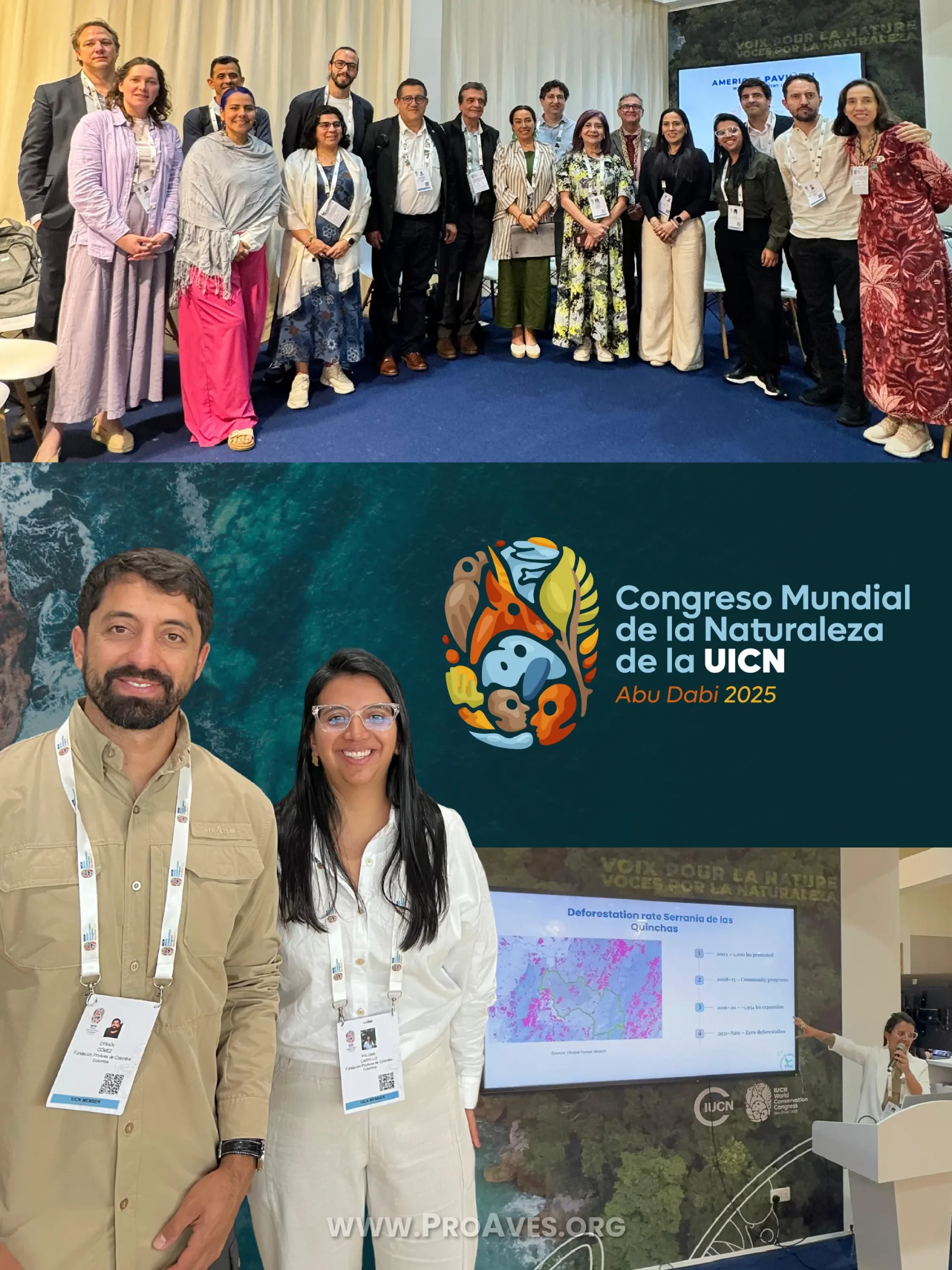
La Fundación ProAves de Colombia participó activamente en el Congreso Mundial de la Naturaleza de la UICN 2025, uno de los escenarios internacionales más importantes para el diálogo y la acción en torno a la conservación ambiental.
Desde este encuentro global, ProAves llevó la voz de Colombia, presentando avances, experiencias y desafíos desde los territorios donde la organización trabaja por la protección de la biodiversidad.
Más que una ponencia: un mensaje de país
Durante el evento, la Directora Ejecutiva de ProAves, Paloma Carrillo, fue una de las voces protagonistas en el panel “Conservación en Colombia tras 10 años de paz con la naturaleza”, donde compartió la experiencia de la Fundación en restauración ecológica, trabajo comunitario y monitoreo científico.
En su intervención, destacó cómo la conservación se ha convertido en una herramienta poderosa de reconciliación en territorios que históricamente han enfrentado conflictos sociales y ambientales.
“La conservación es también un camino hacia la paz. Proteger la vida es proteger las oportunidades de un futuro común”, afirmó Carrillo durante su ponencia.
Más que una ponencia: un mensaje de país
Durante el evento, la Directora Ejecutiva de ProAves, Paloma Carrillo, fue una de las voces protagonistas en el panel “Conservación en Colombia tras 10 años de paz con la naturaleza”, donde compartió la experiencia de la Fundación en restauración ecológica, trabajo comunitario y monitoreo científico.
En su intervención, destacó cómo la conservación se ha convertido en una herramienta poderosa de reconciliación en territorios que históricamente han enfrentado conflictos sociales y ambientales.
“La conservación es también un camino hacia la paz. Proteger la vida es proteger las oportunidades de un futuro común”, afirmó Carrillo durante su ponencia.
Colombia: un modelo de acción y compromiso
ProAves presentó ante los miembros de la UICN resultados concretos derivados de su trabajo en las 27 Reservas Naturales que la organización protege a lo largo del país.
Entre los principales aportes se destacaron:
“La conservación no se logra desde los escritorios; se construye caminando junto a las comunidades que habitan y cuidan el territorio.”
El stand de Colombia: una vitrina de diversidad y esperanza
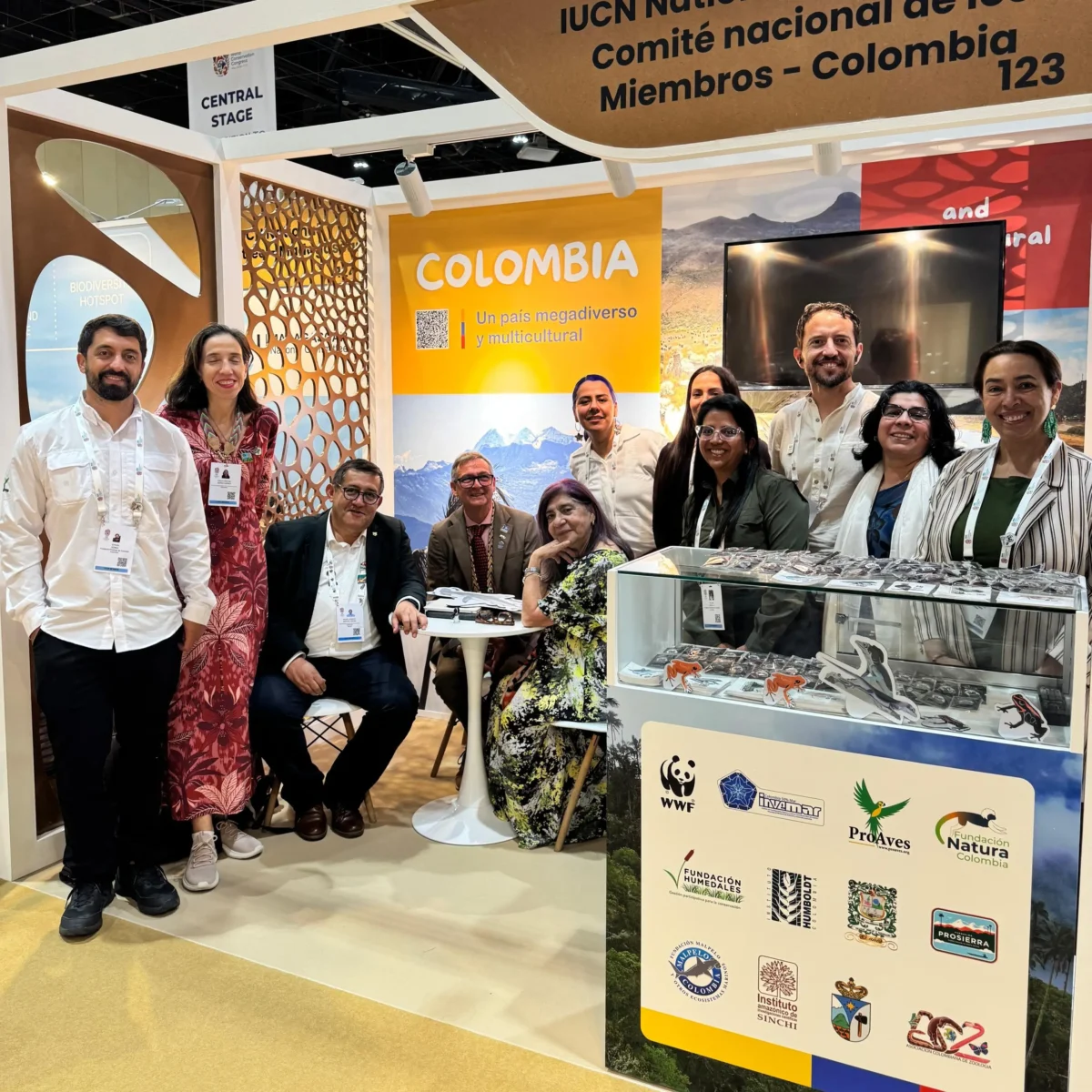
El Comité Nacional de Miembros de la UICN – Colombia contó con un espacio destacado dentro del pabellón principal del Congreso.
ProAves, junto con otras organizaciones miembro, presentó su trabajo, resultados científicos y materiales educativos que visibilizan la riqueza natural del país y las acciones de conservación en marcha.

El espacio sirvió además como punto de encuentro para fortalecer alianzas, compartir experiencias y consolidar estrategias conjuntas para el futuro ambiental del país.
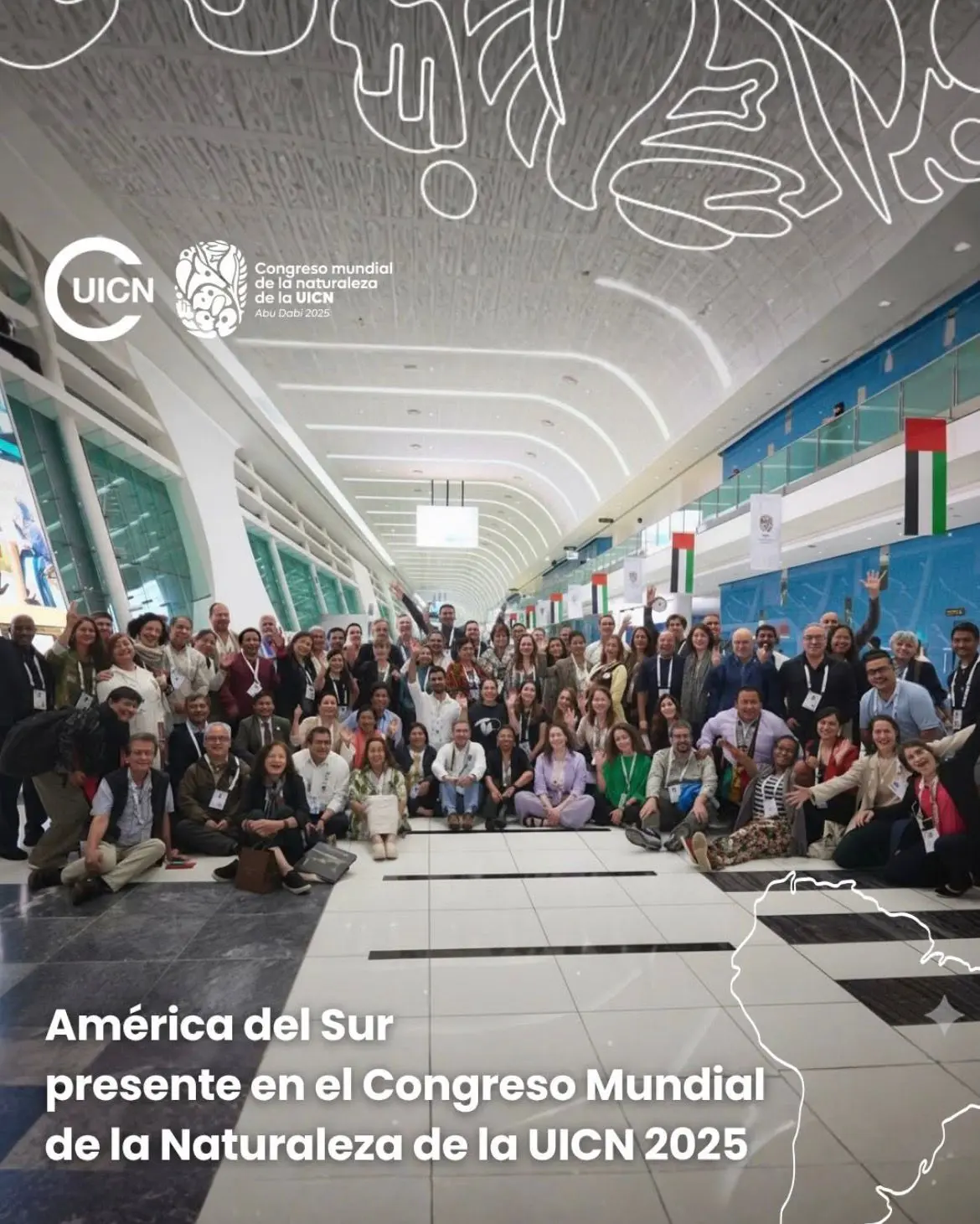
Un mensaje desde el territorio para el mundo
Durante su participación, ProAves insistió en que la conservación no es solo un esfuerzo técnico, sino un proceso humano y colectivo que involucra a comunidades, investigadores, gobiernos y organizaciones.
En los diferentes espacios del Congreso, la Fundación reiteró su compromiso de seguir trabajando por una Colombia que lidera con hechos la protección de la vida.
Presencia mediática y visibilidad internacional
La participación de ProAves fue destacada por diversos medios nacionales e internacionales, resaltando el papel de la organización como referente de conservación en América Latina.
Las notas y entrevistas publicadas resaltaron la visión de la Fundación: una conservación con justicia social, participación comunitaria y enfoque científico, que trasciende fronteras.
Hacia nuevas acciones por la naturaleza
El mensaje que llevó ProAves a Abu Dabi no termina con el cierre del Congreso.
Durante los próximos meses, la organización integrará las conclusiones y alianzas obtenidas en el encuentro global a su estrategia nacional, fortaleciendo el trabajo en campo y la educación ambiental en las reservas.
“Este es un llamado global desde Colombia por la vida que nos une. Cada acción, cada Reserva y cada especie protegida son una esperanza compartida para el planeta.”
Sobre la UICN 2025
El Congreso Mundial de la Naturaleza de la UICN es el encuentro ambiental más importante del planeta, que reúne a gobiernos, científicos, comunidades y organizaciones para definir políticas globales en materia de biodiversidad.
Este año, en Abu Dabi, se destacaron los avances y desafíos en torno al cambio climático, la pérdida de biodiversidad y la necesidad de una transición justa hacia la sostenibilidad.
ProAves de Colombia
Fundación líder en conservación de aves y biodiversidad en Colombia, con 27 Reservas Naturales y más de dos décadas de trabajo continuo. Su misión es proteger la vida, fortalecer la ciencia y promover la educación ambiental desde el territorio.
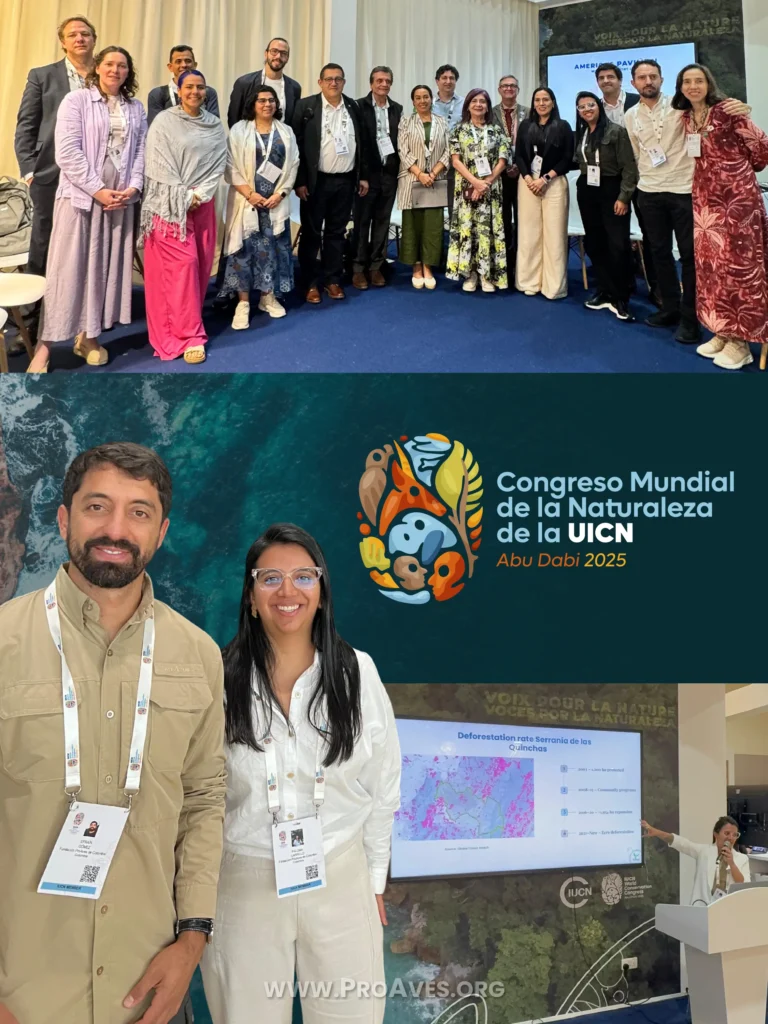
ProAves presented to IUCN members tangible results stemming from its work in the 27 Natural Reserves the organization manages across the country.
Among the key achievements highlighted were:
“Conservation doesn’t happen behind desks; it’s built by walking alongside the communities who live in and care for the land.”
The Colombia Pavilion: A Showcase of Diversity and Hope
The IUCN Colombia National Committee had a prominent space within the main exhibition hall of the Congress.
ProAves, together with other member organisations, presented its work, scientific results, and educational materials that highlighted the country’s natural wealth and ongoing conservation efforts.
The pavilion also served as a meeting point to strengthen alliances, exchange experiences, and consolidate joint strategies for Colombia’s environmental future.
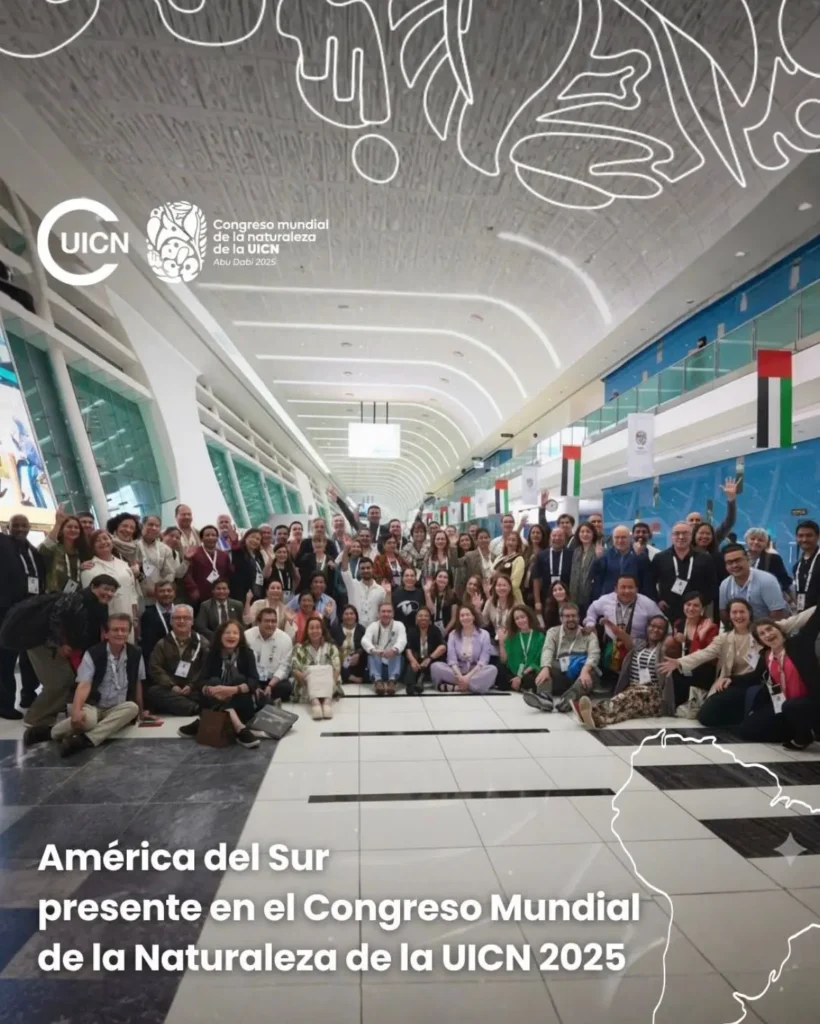
The message ProAves carried to Abu Dhabi will not end with the Congress. In the coming months, the organisation will integrate the conclusions and partnerships forged during the global gathering into its national strategy, strengthening on-the-ground conservation and environmental education across its reserves.
“This is a global call from Colombia for life that unites us all. Every action, every Reserve, and every protected species represents a shared hope for our planet.”
About the IUCN 2025 Congress
The IUCN World Conservation Congress is the world’s leading environmental event, bringing together governments, scientists, communities, and organizations to define global biodiversity policies.
This year in Abu Dhabi, the Congress spotlighted progress and challenges related to climate change, biodiversity loss, and the urgent need for a just transition toward sustainability.
ProAves Colombia
A leading conservation foundation dedicated to protecting birds and biodiversity in Colombia, managing 27 Natural Reserves and over two decades of continuous work.
Its mission is to protect life, strengthen science, and promote environmental education from the field.
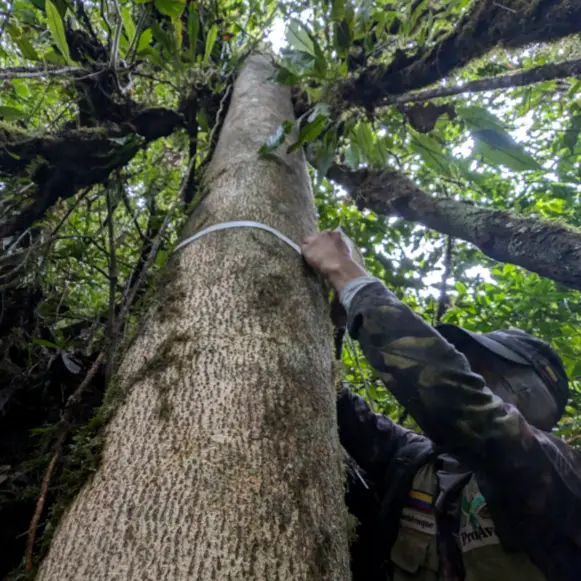
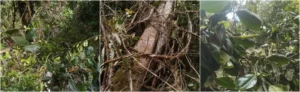
The fallen Magnolia coronata in the Arrierito Antioqueño Reserve — a symbol of life and memory in the forests of Anorí.
The forest ranger Alexander Arango reported the fall of the tree. According to his account, the heavy rains of recent weeks, combined with the natural aging of this giant, likely contributed to its collapse. Though the loss of such a specimen brings sadness, its legacy lives on in the ecosystem it helped sustain for decades.
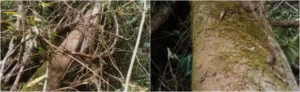
The roots of the forest elder: silent witnesses to decades of life and balance.
This Magnolia coronata is an endemic species, listed as Critically Endangered (CR) by the IUCN (2025). It grows in the Andean forests of the Antioquia department, between 1,800 and 2,500 meters above sea level. Its flowers and seeds play a vital role in pollination and seed dispersal, while providing shelter and food to birds, insects, and other forest dwellers.
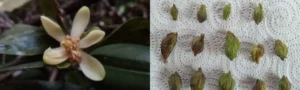
The flowers and seeds of Magnolia coronata are essential for pollination and the spread of life across the Andean forests.
This “Crowned Almanegra” was a monumental tree, rising above the forest canopy. It measured approximately 32 meters in height and 50 centimeters in diameter at chest level, growing beside a natural spring within the humid forest of the Reserve.
The ranger noted in his field notebook:
“…the Antioquia Brush-Finch (Lipaugus weberi) came to feed on one of its fruits,”
illustrating how this tree was an active part of the local landscape and its web of life.
As Ana María Rueda, coordinator of the Magnolia Project at ProAves, explains:
“Although the fall of this elder moves us deeply, it also opens the way for life: the light now reaching the understory will allow young Magnolia coronata saplings and other native species to grow — reminding us that in the forest, nothing is lost, everything transforms.”
This event is not just the farewell to a single tree, but a reaffirmation of the importance of conserving and restoring Andean forests — home to unique and threatened species.
According to specialist Dr. Marcela Serna (IUCN, 2025),
“The population of Magnolia coronata has declined by more than 80% due to habitat fragmentation. Remaining subpopulations are small and isolated, composed mainly of mature individuals.”
At the Arrierito Antioqueño ProAves Reserve, monitoring and reforestation efforts will continue, honoring the memory of this forest elder by protecting the new generations of magnolias sprouting beneath its fallen canopy.
New magnolia seedlings emerge where the elder once stood — life always finds its way.
The images captured from the site show the magnitude of the fallen tree and the life that still thrives around it — a reminder that nature always finds ways to renew itself.
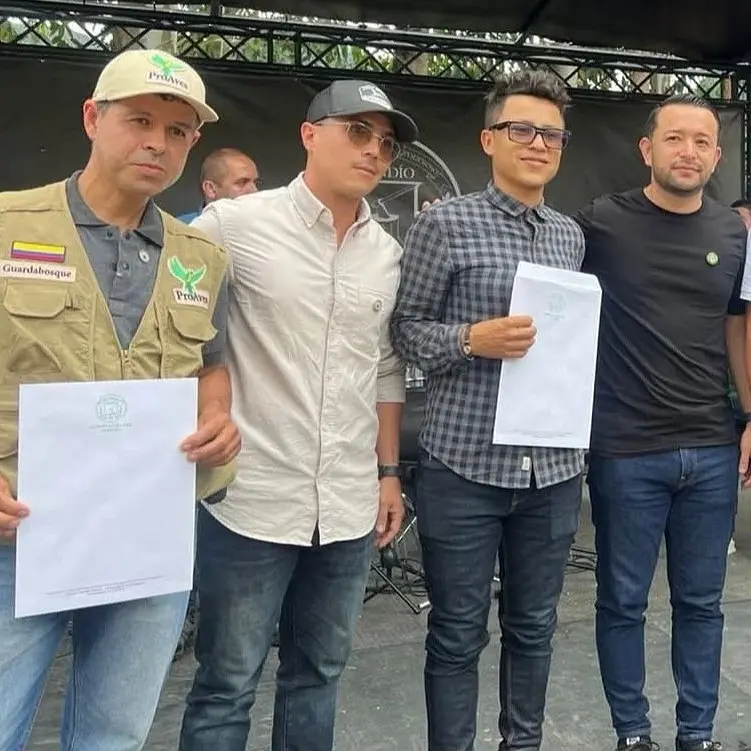
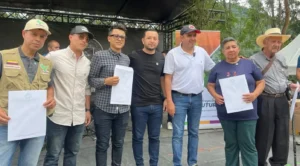
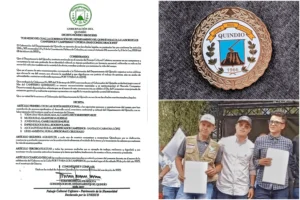
The ProAves Foundation is proud to announce that its park ranger, Sergio Raúl Cruz, has been awarded the Institutional Medal as Rural Environmental Leader by the Government of Quindío. This recognition, granted under Decree No. 688 of 2025, honors the work of the farmers and rural communities of the departmen.
Sergio was recognized for his significant contribution to the social, economic, environmental, and cultural development of Quindío, thanks to his exemplary work in the rural territory of the municipality of Génova.
We are deeply proud to have park rangers like Sergio Cruz, who demonstrate an exceptional commitment to conservation efforts in the areas where our reserves are established. His dedication is a cornerstone in the protection of our natural heritage.

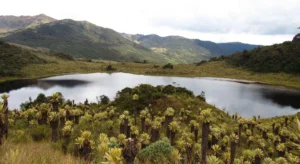
The ProAves Loros Andinos Reserve, located between the municipalities of Roncesvalles (Tolima) and Génova (Quindío), celebrates 16 years as a stronghold for the conservation of high Andean forests and páramos of the Central Cordillera, and as a key refuge for endangered parrot species.
Established in 2009 as a Civil Society Nature Reserve, it was reclassified in 2024 as the Loros Andinos Regional Natural Park in coordination with the Tolima Regional Environmental Authority (CORTOLIMA). The park protects more than 2,500 hectares of strategic ecosystems at altitudes ranging from 3,250 to 3,980 meters above sea level, forming part of the Loros Andinos Conservation Corridor, which also includes the El Mirador and Fuertes’s Parrot Reserves. Together, these areas safeguard over 6,700 hectares of vital habitat for endemic and threatened species, playing a crucial role in conserving the region’s unique biodiversity.
Among the main species protected in the reserve are five parrots classified as threatened, three of them endemic to Colombia: the Yellow-eared Parrot (Ognorhynchus icterotis), Fuertes’s Parrot (Hapalopsittaca fuertesi), and the Rufous-fronted Parakeet (Bolborhynchus ferrugineifrons). Additionally, more than 360 bird species have been recorded here, as well as emblematic mammals such as the spectacled bear, mountain tapir, and páramo deer.
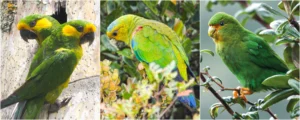
The diversity of ecosystems — including montane forests, very humid forests, and páramo zones — makes the Reserve a privileged space for scientific research, ecological restoration, and environmental education.
Over the past 16 years, the Loros Andinos Reserve has been the site of multiple conservation efforts led by Fundación ProAves, including:
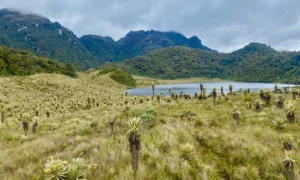
On this anniversary, we reaffirm our commitment to protecting Andean ecosystems and conserving species found only in Colombia. Through science, education, and community engagement, the ProAves Loros Andinos Reserve continues to be a model of active and effective conservation.
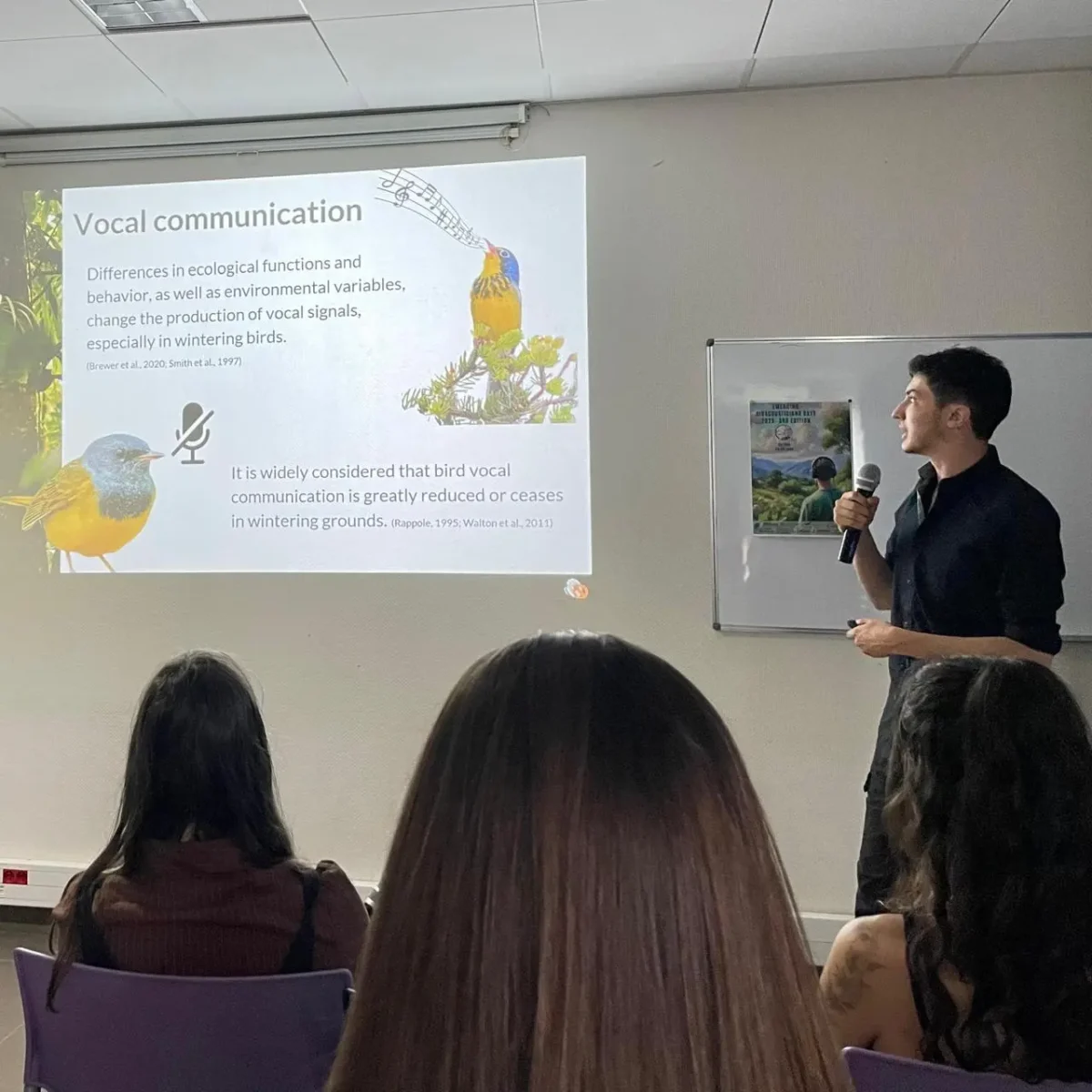

Thanks to the Migratory Bird Scholarship Program awarded by Fundación ProAves, researcher Diego Mejía presented his scientific work at the third edition of the international JJBA conference (Journées Jeunes BioAcousticiens), held from June 23 to 26, 2025, in Vernon, France. His presentation reached an audience of over 60 bioacoustics and biology experts from various European countries,

This project was made possible through the support of Fundación ProAves, which fosters scientific advancement among young Colombians through its scholarship program—providing real opportunities for a new generation of researchers to contribute to biodiversity knowledge and conservation.
The research focused on identifying components of vocal behavior in two migratory bird species: the Golden-winged Warbler (Vermivora chrysoptera) and the Cerulean Warbler (Setophaga cerulea) during their stay in wintering areas in Colombia, specifically within the ProAves Arrierito Antioqueño and Reinita Cielo Azul reserves.

The goal was to understand how the ecological and developmental functions of their vocalizations vary in contrast to their breeding grounds in North America.

Mejía emphasized the importance of conducting research in tropical regions. His message was clear: “If studies focus only on temperate regions like Europe or the United States, we are seeing only half of the ecological story of migratory birds. In this sense, conducting research in megadiverse countries like Colombia is essential to understanding their full life cycles.”

The scholarship developed by Diego was one of twelve awarded by ProAves in the second half of 2024, and it represents not only a scientific achievement but also a powerful example of how academic support initiatives are paving the way for conservation and research in Colombia to gain international recognition and voice.

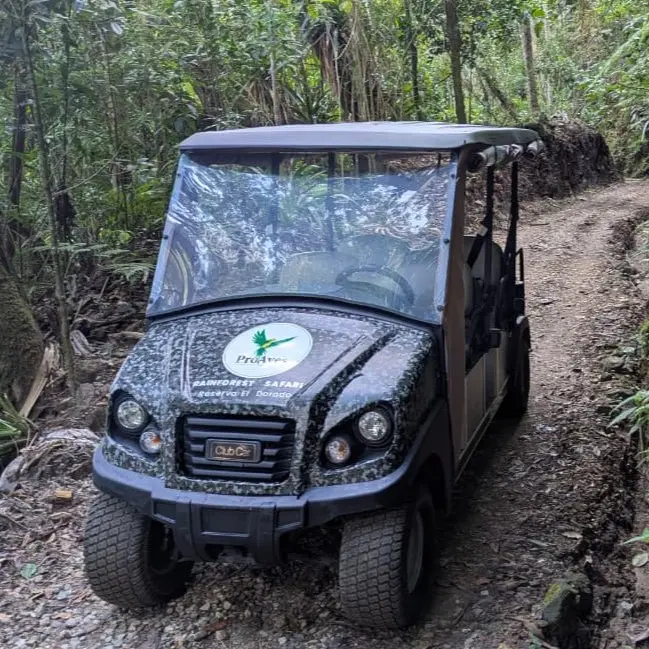
In the heart of one of the most biodiverse ecosystems on the planet, the ProAves El Dorado Reserve has taken a new step in its commitment to environmental conservation. In recent days, a multipurpose electric vehicle was officially incorporated into the Reserve’s operations—a key tool to improve conservation logistics and offer a more sustainable experience.
This fully electric vehicle will enable silent, efficient, and emission-free transportation within the Reserve. It is an environmentally friendly solution designed to minimize the impact on the species that inhabit this unique region, especially endemic birds and other animals sensitive to noise and air pollution.
Located in the Cuchilla de San Lorenzo in the Sierra Nevada de Santa Marta, the ProAves El Dorado Reserve is home to nearly 420 bird species, including the iconic Santa Marta Parakeet (Pyrrhura viridicata) and the Santa Marta Bush-Tyrant (Myiotheretes pernix). It also hosts several endemic species of amphibians, mammals, and plants that depend on highly fragile ecosystems.
In line with its commitment to protecting this valuable natural heritage, the El Dorado Reserve is investing in improved transportation conditions while strengthening internal logistics for the efficient transport of materials, photographic equipment, supplies, and scientific gear.

The decision to adopt electric technology not only enhances the Reserve’s operational infrastructure but also reinforces its approach to carrying out conservation actions in an environmentally responsible way. This move complements other sustainability initiatives such as active reforestation, the use of clean energy through solar panels, and the protection of threatened species’ habitats.

With initiatives like this, the ProAves El Dorado Reserve continues to establish itself as an exemplary model of conservation in Colombia and Latin America. The incorporation of sustainable solutions into daily operations shows that it is possible to harmonize the protection of natural heritage with the development of responsible and transformative experiences. Every step toward cleaner, more conscious management strengthens not only the local ecosystem but also the hope for a future in balance between humanity and nature.


In response to the urgent need to conserve the Blue-billed Curassow (Crax alberti), one of Colombia’s most threatened bird species, Fundación ProAves held a national meeting to develop its Conservation Action Plan. The goal is to prevent the loss of this critically endangered and endemic species.
The meeting took place at the facilities of the Marine and Coastal Research Institute – INVEMAR, in Santa Marta, and brought together representatives from key national institutions, including: ASOCARS, Conservation International, the Alexander von Humboldt Institute for Biological Resources Research, representatives from Regional Environmental Authorities (CARs), environmental agencies, National Parks representatives, ornithological associations, members of the scientific and academic communities, and other strategic actors.
 During the event, participants shared the main advances in research, monitoring, and conservation of the species, identified priority threats, and agreed on strategic actions that will serve as the foundation for the design of the action plan. This process seeks to coordinate institutional, academic, and community efforts both nationally and internationally to address the critical situation of Crax alberti.


“This meeting reaffirms the urgency and importance of joining forces to save the Blue-billed Curassow. Although we have made progress in protection and monitoring, the threat remains severe and requires coordinated, determined, and ongoing action. Only by working together — institutionally, communally, and scientifically — can we guarantee a future for this critically endangered endemic species,”
stated Kruzi Paloma Carrillo León, Executive Director of Fundación ProAves.
According to a recent article published in our journal Conservación Colombiana, over the past 25 years the Blue-billed Curassow has lost 92.8% of its natural habitat, with its estimated distribution shrinking from 12,003 km² in 1999 to just 1,150 km² in 2024. This drastic decline is mainly due to deforestation, forest fragmentation, and indiscriminate hunting.
This species, endemic to the humid forests of northern and northwestern Colombia, is listed as Critically Endangered (CR) on the International Union for Conservation of Nature (IUCN) Red List. According to the latest estimates, the wild population includes approximately 1,000 adult individuals — representing a decline of over 95%.

Although the creation of the ProAves El Paujil Reserve in 2004 has led to important efforts in habitat protection, population monitoring, and environmental education in the region, the rapid loss of forest cover and ongoing hunting pressure continue to threaten the species’ survival.
“Crax alberti is perhaps Colombia’s most iconic bird species, recognized by the Zenú communities as early as 200 to 900 B.C. Unfortunately, it is also the one that has lost the most habitat—nearly 92.8% of its original range,” stated Alex Cortés, Director of Research at ProAves.

During the meeting, thematic and regional working groups were also held, identifying concrete actions under six strategic pillars: Habitat protection and management; Policies and management instruments; Research and monitoring; Actions against hunting and illegal trade; Improvement of captive breeding and reintroduction programs; Community participation and education.

The contributions from participants — representing regions where the species is still present, such as Magdalena, Antioquia, Bolívar, Santander, and Boyacá — will be key to the final structure of the National Action Plan for the Blue-billed Curassow. This roadmap seeks to stop its extinction through an integrated, territory-based approach.

From Fundación ProAves, we reaffirm our commitment to the conservation of this unique species and to the collective construction of solutions that ensure the protection of its habitat and its survival in Colombia’s forests.

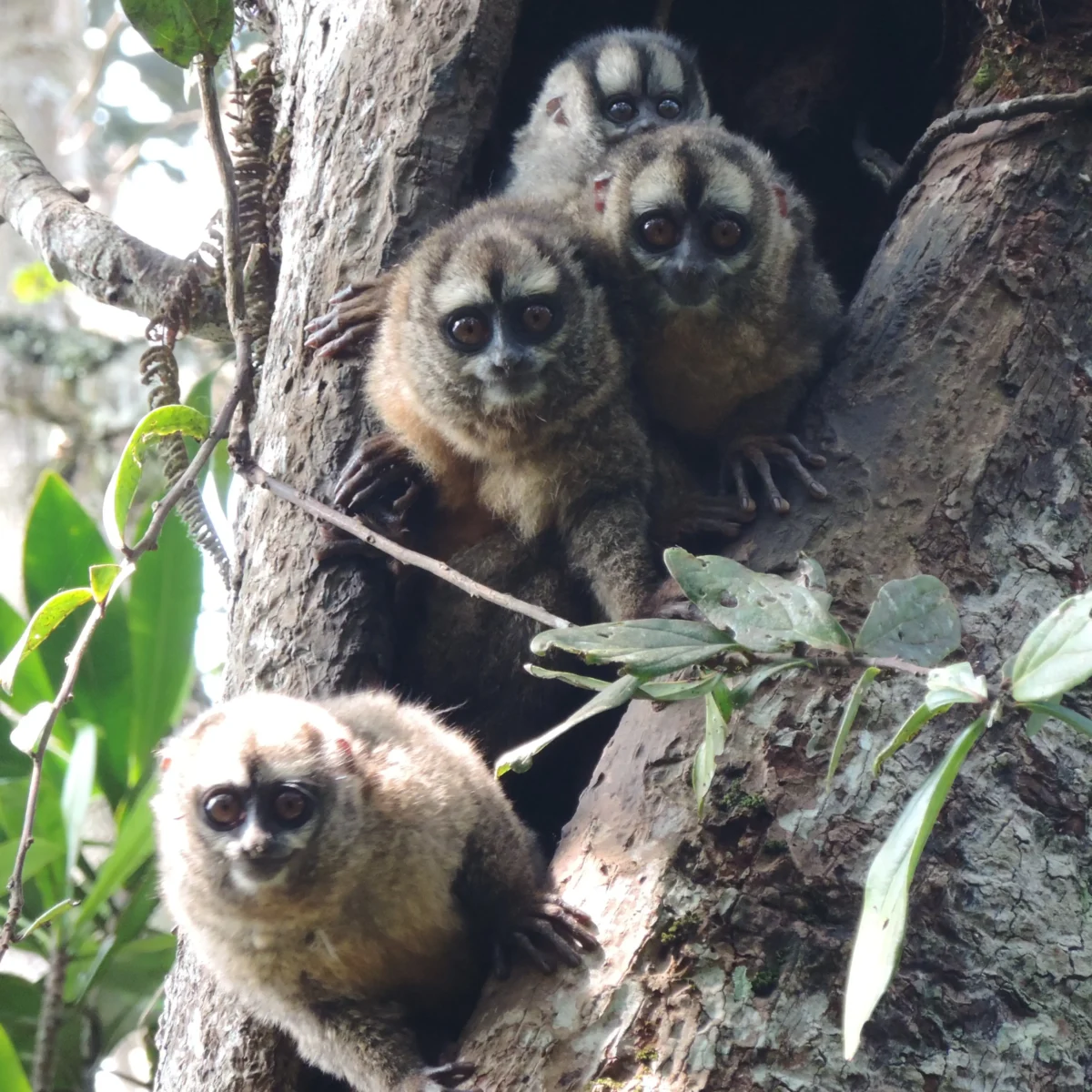

Colombia is home to 43 primate species, making it the country with the third highest primate diversity in Latin America, after Brazil and Peru. This figure is particularly significant considering that South America hosts 177 primate species, many of which are endemic and highly threatened—positioning Colombia as a key player in regional conservation efforts.

These charismatic mammals play a crucial role in maintaining ecosystem health: they disperse seeds, aid in forest regeneration, and act as indicators of environmental balance.
According to the Red List of the International Union for Conservation of Nature (IUCN), Colombia has 3 primate species classified as Critically Endangered (CR), 5 as Endangered (EN), and 15 as Vulnerable (VU).
Among the most threatened are the Caquetá Titi (Plecturocebus caquetensis), the Cotton-top Tamarin (Saguinus oedipus), and the Brown Spider Monkey (Ateles hybridus), whose populations have drastically declined due to habitat loss and fragmentation, agricultural expansion, and the illegal wildlife trade. This situation calls for urgent action to strengthen conservation and ecosystem restoration strategies in the areas these species inhabit.

At Fundación ProAves, we actively work across our 27 Nature Reserves, protecting strategic habitats for these at-risk species:

These mammals inhabit tropical forests that, thanks to continuous conservation, restoration, and education efforts, remain vital refuges for their survival.
To protect them, we implement actions such as:

Habitat conservation and restoration to ensure safe areas where primates can thrive free from threats.

Environmental education programs with local communities to discourage the keeping of primates as pets and reduce hunting.

Scientific research to better understand their ecology, behavior, and population status.

Our commitment to primate conservation is a pledge to preserve ecosystem balance and ensure a healthy future for the generations to come. We will continue to strengthen our efforts through joint work with local communities, environmental authorities, and strategic allies—promoting a comprehensive conservation model that values and respects the natural wealth of our territories.
Learn more about these charismatic mammals at:

To promote knowledge building and the study of amphibians in our country, ProAves, with the support of The Mohamed bin Zayed Species Conservation Fund, held the I National Course on Amphibian Study Techniques in Colombia, October 12-16 at the ProAves Reinita Cielo Azul Reserve, located in the municipality of San Vicente de Chucurí, department of Santander.
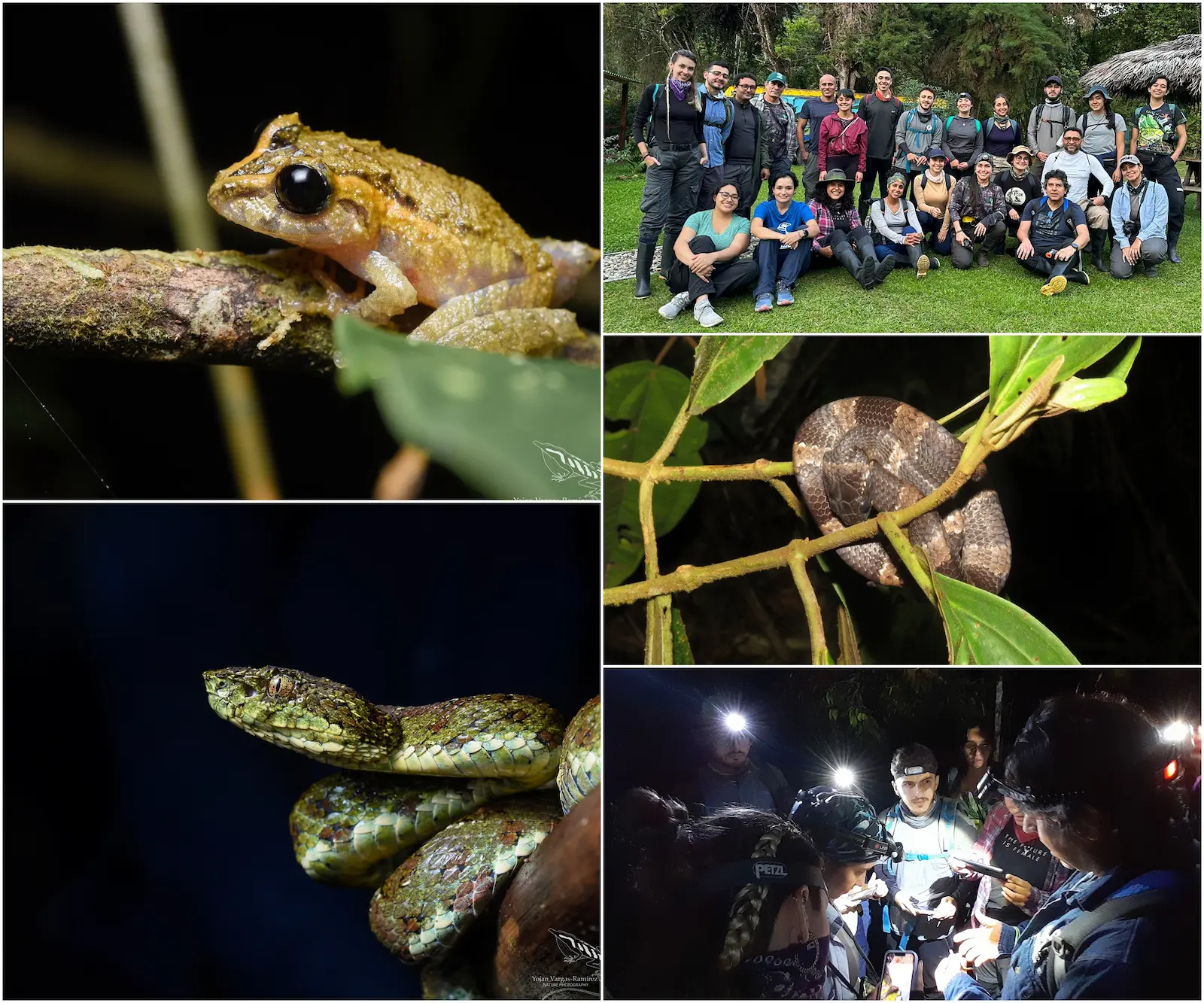
For several years, ProAves has been promoting the development of projects involving this kind of species, given their biological relevance, and in an effort to stop the numerical decline that has led to the disappearance of several of them. In this sense, and to contribute to the gathering of information that allows appropriate decision-making processes for the preservation of amphibians, this pertinent course was held with the participation of 15 undergraduate students representing 12 universities from all over the country who are pursuing their bachelor’s degrees in biology and environmental engineering.
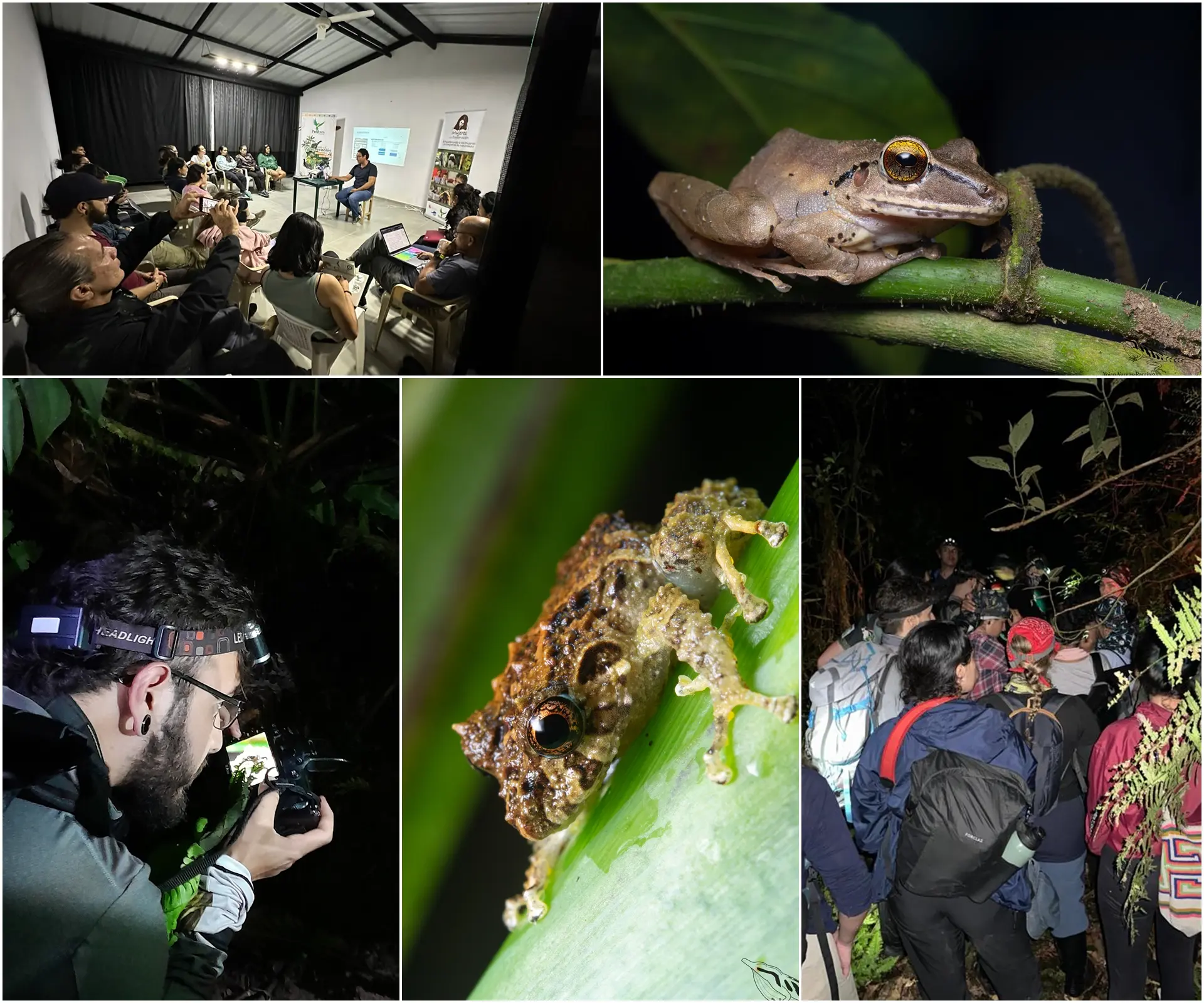
The course addressed species distribution models, taxonomy and diversity, data analysis, sampling techniques, and bioacoustics. These subjects had the guidance of researchers and expert professors, including Ph.D. Wilmar Bolívar and Ph.D. Oscar Murillo, from the Universidad del Valle; Ph.D. Juan Manuel Daza from the University of Antioquia; Magister Eliana Barona Cortés from the Alexander von Humboldt Biological Resources Research Institute and Ph.D. María Juliana Bedoya Durán of the Corporation for Environmental Management BIODIVERSA. In addition, the Research Director of ProAves Colombia, Alex Cortés, and the Deputy Director of the Central Region, Jhoana Castro, also attended the sessions.
This knowledge exchange provided the participants with the possibility of putting into practice the learnings of the course. Teamwork sessions were held to develop work field projects to collect data, analyze them, and present results.
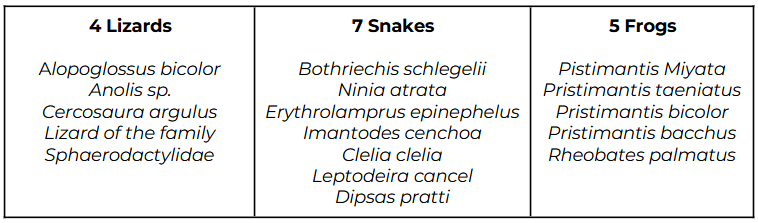
As a result of this exercise, 16 species of herpets, including lizards, snakes, and frogs, were registered within the Reinita Cielo Azul – ProAves Reserve.
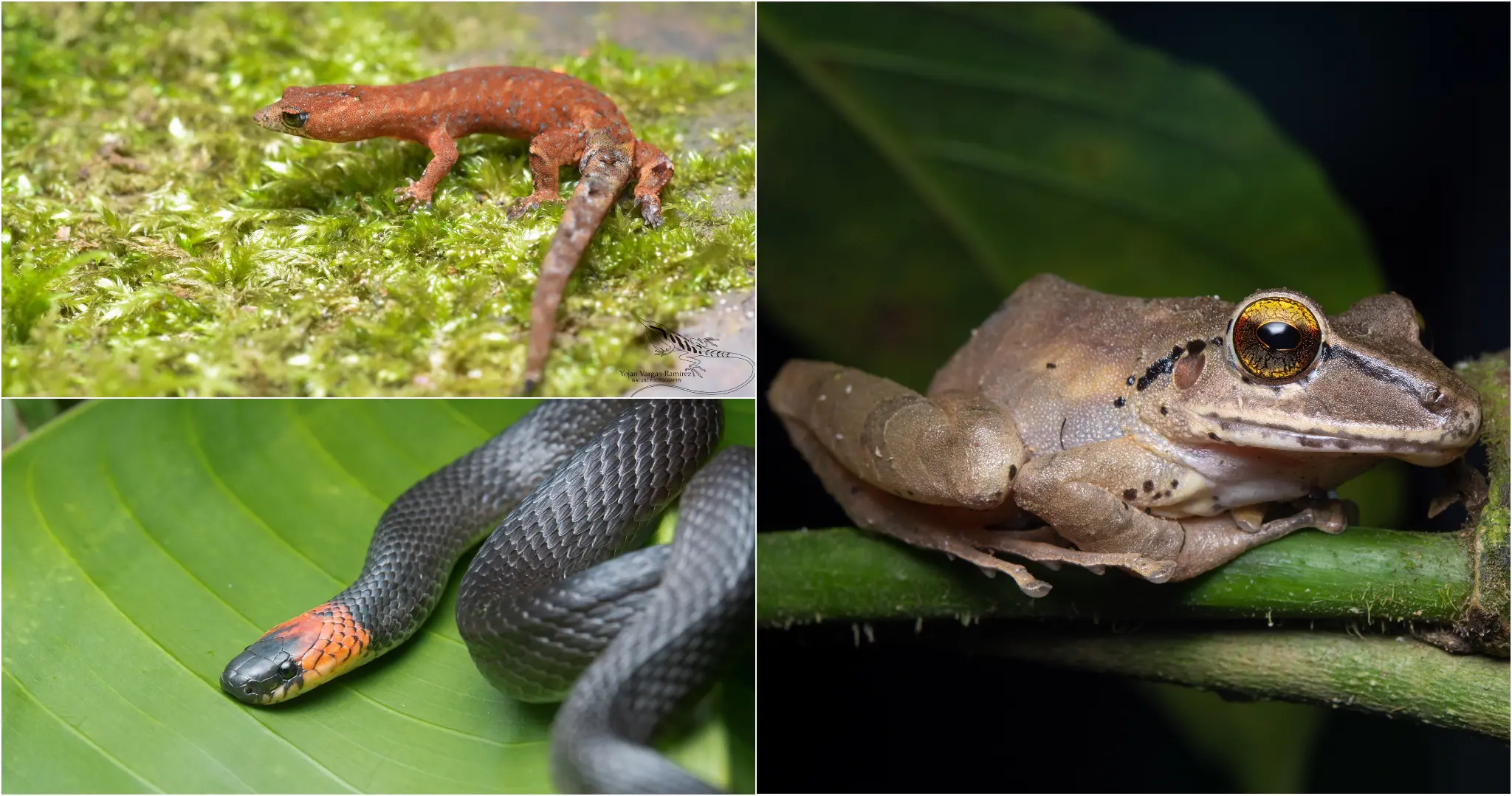
“Personally, what I liked the most about this Course was having the possibility to share with people with the same passion for amphibians and anuros. Also, I feel that learning and having different tools can be applied in many contexts for amphibian monitoring, and studying this group has been very valuable, especially the learning and the tools the professors have given us.”
Natalia Mejía, Universidad del Valle
ProAves will continue promoting initiatives and spaces, such as the I National Course on Amphibian Study Techniques, to contribute to science, the exchange of knowledge, and the preservation of wildlife.

This is premium coffee produced within the plantations of the Cerulean Warbler Bird Reserve and is certified by Rainforest Alliance, in the category of “Specialty Coffee.”
These coffee plantations constitute the habitat of the Cerulean Warbler (Dendroica cerulea), during their winter migration from North America to the montane forests in the center of Colombia.
[slickr-flickr search=”sets” set=”72157628487462609″ items=”20″ type=”gallery”]
The Cerulean Warbler Coffee is grown under the shade of native trees (reforestation with native species) with approximately 150 trees per lot, providing the soil with nutrients and moisture for growing coffee. We avoid the use of agrochemicals, allowing the beans to ripen slowly, increasing the content of sugars and proteins that result in a better quality bean with excellent aroma, flavor, acidity, and body.
The coffee we consume daily has a significant effect on forests around the world, by supporting Cerulean Warbler Coffee, consumers are contributing to the conservation of these ecosystems and the preservation of not only the Cerulean Warbler but other great birds like the Boreal Pewee (Contopus cooperi) and the Canada Warbler (Wilsonia Canadensis) which are also migratory and utilize this same habitat.
Support bird conservation by purchasing some quality Colombian coffee!!!!
Sales:
Contact EcoTurs headquarters at Carrera 20 No. 36 – 61, Bogotá, Colombia, telephone (57) (1) 287-6592, info@ecoturs.org
Video Shade Coffee and the Birds
{youtube}L9zVJWZaHKc|425|344|1{/youtube}
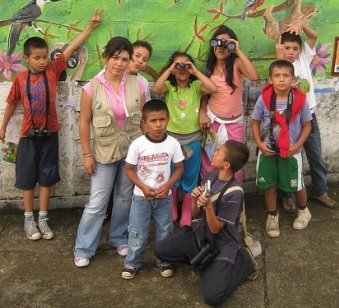
 In the attempt to strengthen activities of environmental education carried out in San Andrés Island to promote the knowledge and conservation of birds, ProAves joins the yearly Caribbean Endemic Birds Festival, celebrated in Colombia and in 23 other countries of the region.
In the Festival’s framework, diverse environmental education workshops, bird site-seeing walks, creative painting contests and art-crafts workshops are carried out, especially about the endemic species of the Island, the Vireo (Vireo caribaeus), and the importance to know and preserve this species.
Related news
 |
A month for the Caribbean birds!
Wednesday 22 April 2009.
With the slogan “Celebrating Birds in Culture”, the VIII Caribbean Endemic Bird Festival is being held from April 22 to May 22, 2009, organized by the Society for the Conservation and Study of Caribbean Birds. On San Andrés Island, Colombia, ProAves is supporting the festival with various activities.
 |
Sixth Caribbean Endemic Birds Festival
Wednesday 23 May 2007.
To strengthen our environmental education and bird conservation program on the Island of San Andrés, ProAves joined the Caribbean Endemic Birds Festival which was celebrated in 23 countries.
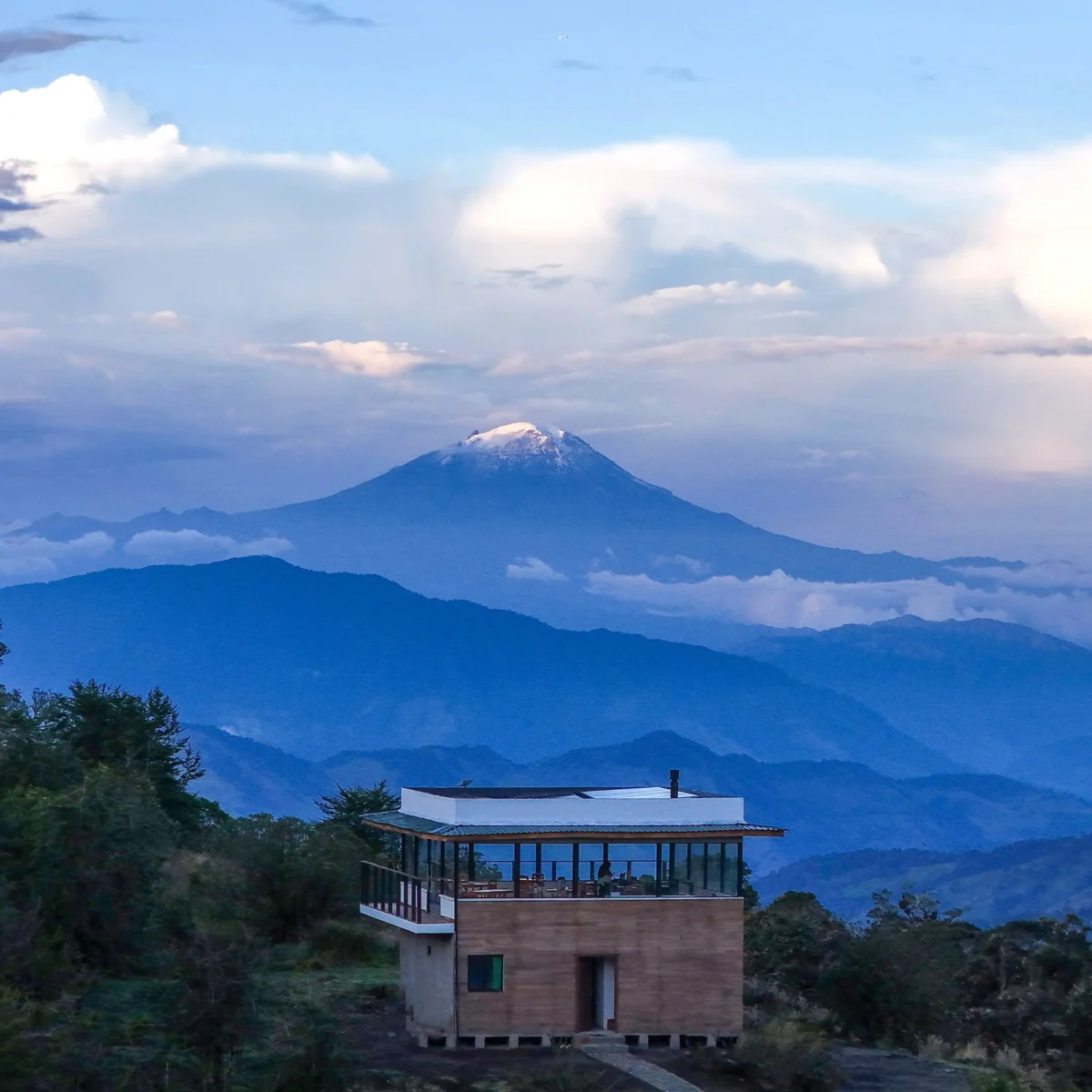

We are proud to commemorate the 15th anniversary of our ProAves Fuertesi’s Parrot Reserve, a unique refuge in the Colombian Andes that, since 2010, has become a stronghold for the conservation of the country’s most threatened parrot species.
Located on the eastern slope of Colombia’s Central Andes, in the village of Potosí Alto in the municipality of Cajamarca, Tolima, the Reserve spans altitudes ranging from 2,750 to 3,600 meters above sea level. It safeguards Andean forest, high Andean forest, and páramo ecosystems, preserving a rich diversity of fauna and flora.
The ProAves Fuertesi’s Parrot Reserve is home to five threatened parrot species: the Yellow-eared Parrot (Ognorhynchus icterotis), Fuertes’s Parrot (Hapalopsittaca fuertesi), Rusty-faced Parrot (Hapalopsittaca amazonina), Rufous-fronted Parakeet (Bolborhynchus ferrugineifrons), and the Andean Parakeet (Leptosittaca branickii). The first three are endemic to Colombia, meaning they are found nowhere else on Earth.

The importance of our Reserve goes beyond parrot conservation. It also shelters populations of emblematic Andean mammals that find refuge in these cloud forests, such as the Spectacled Bear (Tremarctos ornatus), Mountain Tapir (Tapirus pinchaque), and White-tailed Deer (Odocoileus virginianus).
This protected area is part of the Central Andes Threatened Parrot Conservation Corridor, an initiative that connects critical ecosystems to ensure the long-term survival of these unique species.

These fifteen years of continuous work reaffirm our commitment to the conservation of Colombia’s birdlife. At ProAves, we will continue protecting Andean ecosystems and the species that depend on them, with the purpose of showcasing to future generations the extraordinary natural wealth of our country’s Andes.
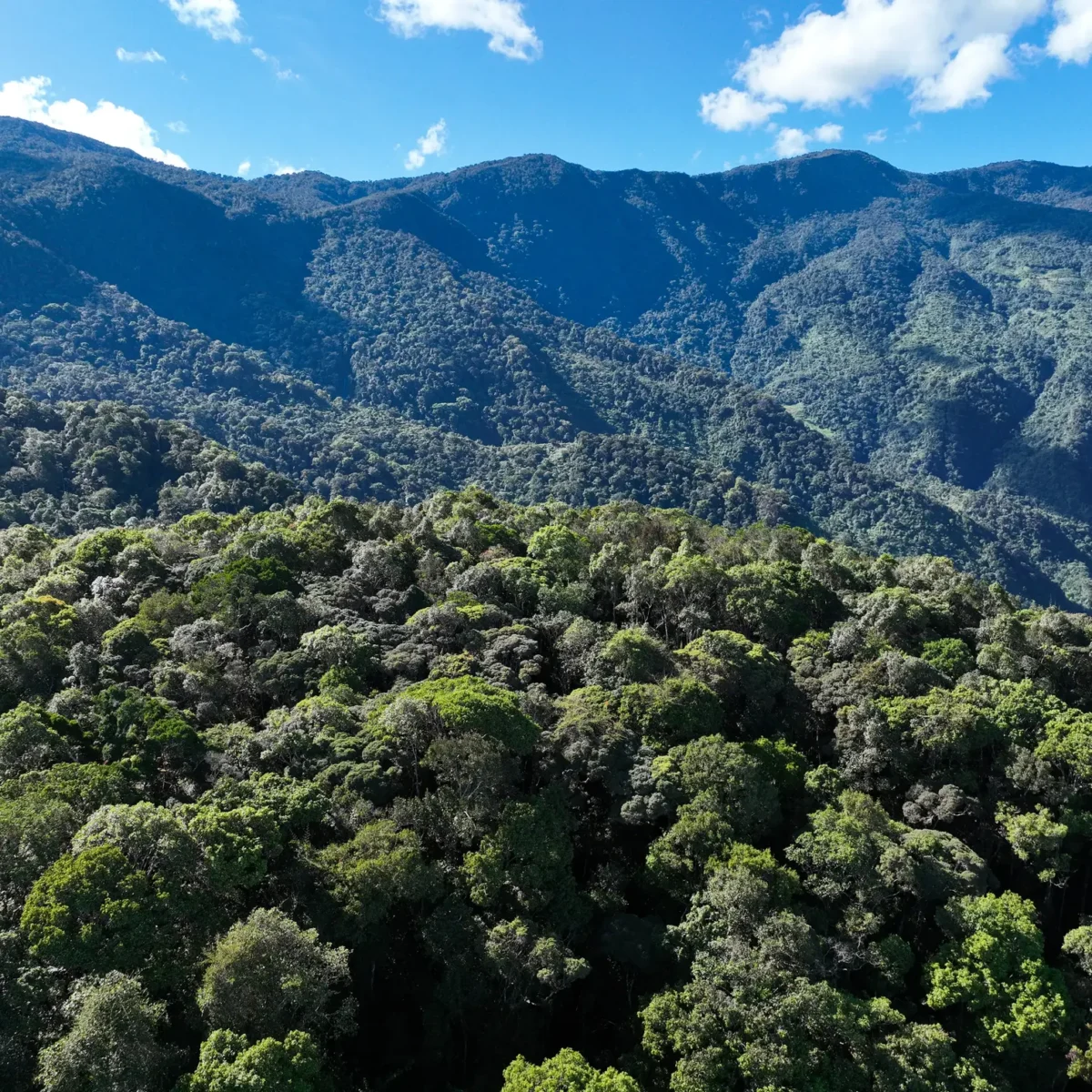

Twenty years ago, in the municipality of San Vicente de Chucurí, our dream began: to dedicate a protected area to the conservation of one of the migratory birds that visits our country every year — the Cerulean Warbler (Setophaga cerulea). This vision came to life in 2005 with the creation of the first nature reserve in South America focused on the conservation of a migratory bird, highlighting the importance of preserving strategic corridors that ensure the safe passage of these extreme travelers through the tropical forests of the Americas.

The ProAves Reinita Cielo Azul Reserve is located within the Serranía de los Yariguíes National Natural Park, a jewel of Colombian biodiversity that protects one of the best-preserved montane ecosystems in the country. Its strategic location strengthens ecological connectivity between protected areas and emphasizes the value of initiatives that contribute to the conservation of high mountain landscapes.
Over the past two decades, our reserve has become a vital protected area for the preservation of unique ecosystems and endemic species. Notable birds include the Chestnut-bellied Hummingbird (Amazilia castaneiventris), Niceforo’s Wren (Thryophilus nicefori), Black Inca (Coeligena prunellei), White-mantled Barbet (Capito hypoleucus), Parker’s Antbird (Cercomacroides parkeri), Upper Magdalena Tapaculo (Scytalopus rodriguezi), Mountain Grackle (Macroagelaius subalaris), Recurve-billed Bushbird (Clytoctantes alixii), and the Chestnut-naped Antpitta (Grallaria nuchalis).
The biological richness of our reserve also includes emblematic fauna such as the Virolin Poison Frog (Myniobates virolinensis) and key mammals like the Spectacled Bear (Tremarctos ornatus) and Puma (Puma concolor).

In addition, the reserve has served as the epicenter for important academic and scientific gatherings, including the National Amphibian Course, which brought together students from multiple Colombian universities. These initiatives strengthen knowledge and help train a new generation of conservationists committed to protecting biodiversity.
These have been twenty years of continuous work, reflecting our deep commitment to conserving Colombia’s biodiversity and safeguarding the migratory corridors that connect our country with the rest of the American continent.
From the ProAves Reinita Cielo Azul Reserve, we continue working to protect these remarkable travelers and reaffirm the importance of preserving unique ecosystems for future generations.

Learn more about our reserve here



The biodiversity that our protected areas harbour continues to amaze us. In the ProAves Colibrí del Sol Reserve, located in the municipality of Urrao, Antioquia, we made an important observation of an Andean Bear (Tremarctos ornatus), one of the most iconic and endangered species of the tropical Andes.
The observation was made close to the main house by our ranger, Walter Galindo and he even captured the mammal on video! This sighting marks a milestone for the conservation of the region and highlights the effectiveness of the protection strategies implemented by ProAves. It also shows that the Andean Bear is actively using these ecosystems, reinforcing the importance of maintaining and connecting biological corridors in the Colombian Andes.

The Andean Bear, also known as the Spectacled Bear, is the only bear species in South America and is currently listed as Vulnerable (VU) by the International Union for Conservation of Nature (IUCN). Its survival is threatened by habitat loss and fragmentation and illegal hunting.
This charismatic mammal inhabits mountain ecosystems, such as inter-Andean forests, cloud forests, and páramos, where it plays a crucial role as a seed disperser and regulator of ecological processes.

“I was going about my usual rounds, bringing water to the páramo feeders, when I noticed something unusual: several birds flew off in fear. I quickly grabbed my camera to capture the moment, and that’s when I saw it—the Andean Bear coming down the trail. I was scared because it was the first time I had encountered one and it was only 25 meters away. Despite the fear, I felt a wave of emotion having it so close, realising that our conservation efforts are directly contributing to the protection of this incredible biodiversity,” said Walter Galindo, ProAves Ranger.
In addition to protecting the Andean Bear, our ProAves Colibrí del Sol Reserve also protects a wide diversity of unique flora and fauna. We conserve species like Dusky starfrontlet (Coeligena orina), an endemic hummingbird species endangered (EN) species that has not been observed for more than 50 years. Furthermore, we preserve one of the best-conserved páramo ecosystems in the region.

This new sighting of the Andean Bear reaffirms the strategic importance of our ProAves Colibrí del Sol Reserve as a vital wildlife refuge. Species like the Andean Bear are highly sensitive to environmental changes, and this observation underscores that our ongoing conservation efforts, through ecological restoration and monitoring are producing tangible, positive outcomes for biodiversity.

At ProAves, we reaffirm our commitment to protecting high-Andean ecosystems and preserving biological corridors that ensure the movement and survival of threatened species. Discoveries like this reinforce the critical importance of continuing to collaborate with local communities, environmental authorities, and both national and international partners to safeguard Colombia’s rich natural heritage.
La biodiversidad que albergan nuestras áreas protegidas no deja de sorprendernos, en la Reserva ProAves Colibrí del Sol, ubicada en el municipio de Urrao, Antioquia, obtuvimos un importante registro del Oso Andino (Tremarctos ornatus), una de las especies más emblemáticas y amenazadas de los Andes tropicales.
El registro realizado por nuestro Guardabosques, Walter Galindo, logró captar en video al mamífero mientras se desplazaba en las inmediaciones de la Reserva, cerca a la casa principal. Este avistamiento constituye un hito para la conservación en la región y evidencia la efectividad de las estrategias de protección implementadas en esta área protegida. Además, demuestra que el Oso Andino (Tremarctos ornatus) está utilizando activamente estos ecosistemas conservados, lo que refuerza la importancia de mantener y conectar corredores biológicos en los Andes colombianos.
El Oso Andino, también conocido como Oso de Anteojos, es la única especie de oso en Sudamérica y se encuentra catalogado como Vulnerable (VU) por la Unión Internacional para la Conservación de la Naturaleza (UICN), su supervivencia está amenazada por la pérdida y fragmentación del hábitat, así como por la caza ilegal.
Este carismático mamífero habita ecosistemas de alta montaña, como bosques andinos, bosques de niebla y páramos, donde cumple un papel crucial como dispersor de semillas y regulador de procesos ecológicos.
“Salía a hacer mis recorridos habituales para llevar agua a los bebederos del páramo cuando noté algo extraño: varios pájaros bajaban asustados, entonces tomé la cámara para registrar lo que ocurría y en ese momento, lo vi, era el Oso Andino bajando por el sendero. Me asusté, porque era la primera vez que lo veía, y estaba a solo 25 metros de mí. Sentí mucha emoción al tenerlo tan cerca y darme cuenta que nuestros esfuerzos por la conservación están aportando al cuidado de nuestra biodiversidad”. señaló Walter Galindo, Guardabosques de ProAves.
Nuestra Reserva ProAves Colibrí del Sol, además de proteger al Oso Andino, protege una gran diversidad de fauna y flora única, es así como también conservamos especies como Coeligena orina, una especie de colibrí endémico en peligro de extinción del cual no se tuvo registro por más de 50 años. Además, preservamos uno de los ecosistemas de páramo mejor conservados de la región.
Este nuevo registro del Oso Andino reafirma el valor estratégico de nuestra Reserva ProAves Colibrí del Sol como un refugio para la vida silvestre, así mismo, la presencia de esta especie, altamente sensible a las transformaciones del entorno, demuestra que los esfuerzos sostenidos de conservación, restauración ecológica y vigilancia están dando resultados tangibles.
Desde ProAves, reiteramos nuestro compromiso con la protección de los ecosistemas altoandinos y con la preservación de corredores biológicos que garanticen la movilidad y supervivencia de especies amenazadas, este tipo de hallazgos refuerza la importancia de seguir trabajando de la mano con las comunidades locales, autoridades ambientales y aliados nacionales e internacionales para salvaguardar el patrimonio natural de nuestro país.

After 17 years of collaboration, we had the honour of welcoming the Chief Executive and board members of our long-standing partner, World Land Trust (WLT), to Colombia. To mark this special occasion, we were proud to host them at our El Dorado Reserve, one of the most biodiverse and ecologically important regions on Earth.
The WLT delegation included Dr. Catherine Barnard, Chief Executive; Claire Ashby, Board Member and Trustee; and Emma Tozer, Board Member and Honorary Treasurer, who were accompanied by our Executive Director, Kruzi Paloma Carrillo.

The purpose of this visit was to showcase the conservation impact made possible through World Land Trust’s support, which has been vital in safeguarding some of Colombia’s most threatened biodiversity across our network of nature reserves. It also offered an immersive experience, allowing our guests to witness firsthand the day-to-day efforts of our dedicated reserve teams.
Throughout the visit, we reflected on the major milestones achieved during our 17-year partnership. Highlights included exploring iconic sites within the El Dorado Reserve, such as La Laguna, where we enjoyed birdwatching and connected deeply with the area’s spiritual and ecological richness. We also organised a night walk, offering the opportunity to observe frogs and other fascinating nocturnal wildlife, further underscoring the extraordinary biodiversity we work to protect.

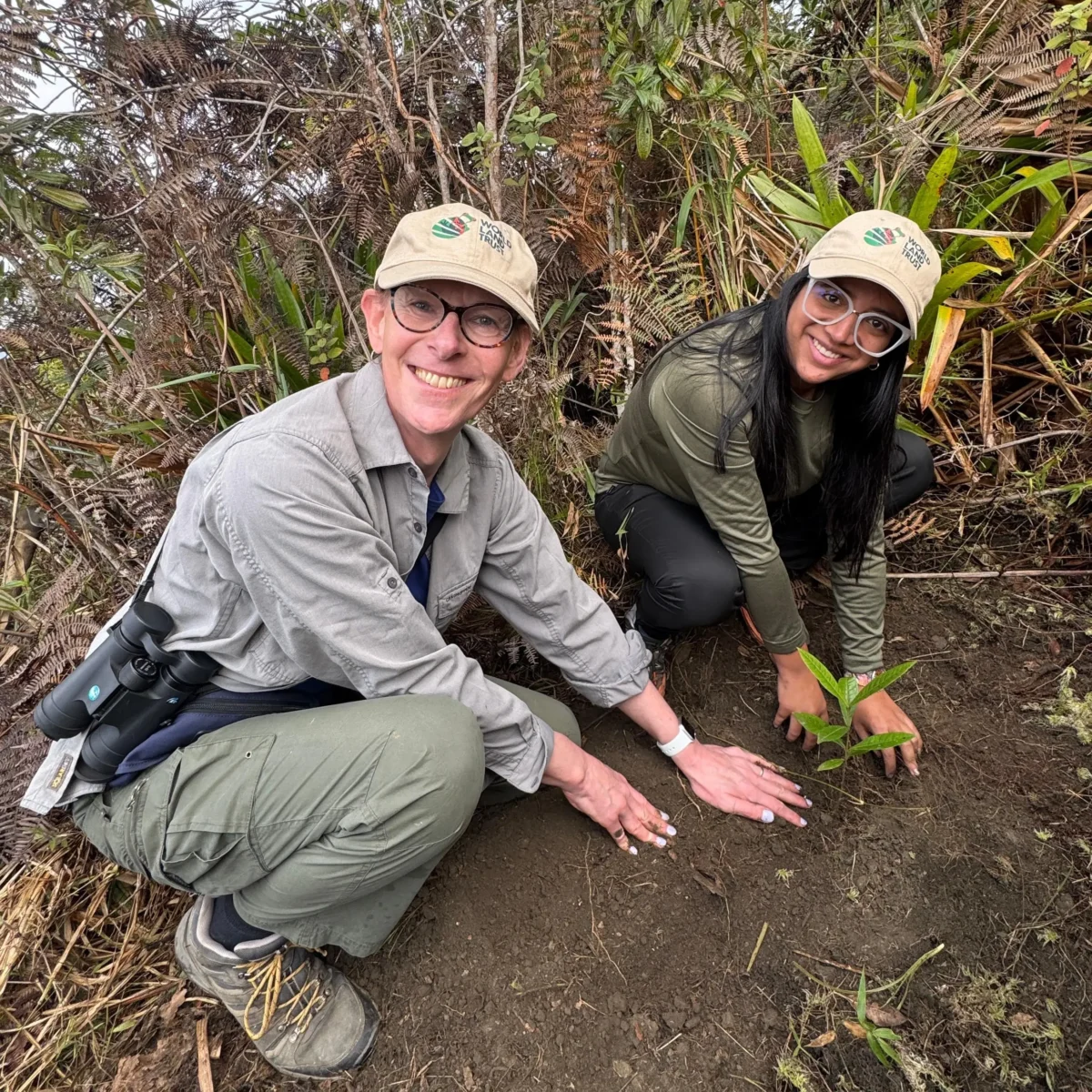
One of the most symbolic and heartfelt moments of the visit was the planting of native tree seedlings in designated restoration zones, an act that powerfully embodied our shared commitment to regenerating forest ecosystems and ensuring a future for Colombia’s rich biodiversity. The group also hiked to La Cumbre, a scenic trail that provided opportunities to observe diverse wildlife, hear the haunting calls of red howler monkeys (Alouatta seniculus), and experience the extraordinary biodiversity of the Sierra Nevada’s cloud forests up close.

This visit marks a pivotal milestone for our organisation, deepening our alliance with World Land Trust and reaffirming our mutual commitment to the long-term protection and preservation of Colombia’s extraordinary biodiversity.
“It was a true pleasure to finally visit ProAves’ remarkable El Dorado Reserve—not only to experience this incredible place firsthand, but also to learn more about the far-reaching impact ProAves is making across Colombia. This visit exemplifies how World Land Trust operates: by supporting locally rooted organisations that protect land to save species, combat climate change, and uplift local communities. I look forward to strengthening our collaboration and achieving even greater conservation outcomes together in Colombia,”
stated Dr. Catherine Barnard, Chief Executive of World Land Trust.


“On behalf of the ProAves Foundation of Colombia, I want to sincerely thank the World Land Trust team for their visit. It was truly moving to spend these days together, strengthening the connection between our organisations and allowing them to directly witness the conservation efforts led by ProAves on the ground. It was a truly enriching experience.
I deeply appreciate the commitment shown by World Land Trust in making this visit possible. Both personally and on behalf of ProAves, I look forward to continuing to join forces to ensure the long-term success of conservation actions in Colombia, efforts that ultimately benefit the entire planet. Once again, thank you so much!”
We are profoundly grateful to our allies for their visit and for their continued partnership in our mission to conserve biodiversity.

Después de 17 años de colaboración con ProAves, recibimos una importante visita del CEO y miembros de la junta de nuestro aliado World Land Trust (WLT) a nuestra organización. En esta ocasión, tuvimos el honor de compartir con ellos en nuestra Reserva ProAves El Dorado, ubicada en la Sierra Nevada de Santa Marta, uno de los ecosistemas más biodiversos del mundo.
La delegación de WLT estuvo conformada por la Dra. Catherine Barnard, Directora Ejecutiva; Claire Ashby, miembro de la Junta Directiva y Fideicomisaria y Emma Tozer, miembro de la Junta Directiva y Tesorera Honoraria en compañía de nuestra Directora Ejecutiva, Kruzi Paloma Carrillo.
El propósito de esta visita se centró en las acciones de conservación que se hacen posible gracias al apoyo de WLT y que permite la protección de la biodiversidad más amenazada en nuestras Reservas Naturales. Además, brindó una experiencia donde se dieron a conocer de cerca las labores que se ejecutan a diario en nuestras áreas protegidas.
Durante los días de recorrido, compartimos los principales hitos alcanzados a lo largo de esta valiosa alianza de 17 años. Visitamos lugares emblemáticos de nuestra Reserva como La Laguna, donde tuvimos la oportunidad de realizar observación de aves y conectar con la riqueza espiritual y ecológica del territorio. Además, se realizó una salida nocturna para el avistamiento de ranas y otras especies de fauna activa durante la noche.
Uno de los momentos más simbólicos y significativos de la visita fue la siembra de plántulas nativas en zonas de restauración de la Reserva, acción que representa nuestro compromiso compartido por regenerar la vida de los bosques. Posteriormente, recorrimos el sendero hacia La Cumbre, una caminata que nos permitió disfrutar del avistamiento de la vida silvestre, escuchar a los monos aulladores (Alouatta seniculus) y explorar la biodiversidad que habita los bosques de niebla de la Sierra Nevada de Santa Marta.
Esta visita marca un hito significativo para nuestra organización al permitirnos fortalecer aún más la alianza con World Land Trust y reafirmar nuestro compromiso compartido por proteger y preservar la biodiversidad de Colombia.
“Me alegró enormemente poder visitar la increíble Reserva ProAves El Dorado y no solo ver esa asombrosa Reserva, sino también tener la oportunidad de conocer el gran impacto que están teniendo en toda Colombia. Este es un excelente ejemplo de cómo trabaja World Land Trust: apoyando a organizaciones locales para salvar tierras, conservar especies, proteger el clima y beneficiar a las comunidades locales. Espero con entusiasmo que sigamos colaborando para lograr un impacto aún mayor en la conservación en Colombia.” Señaló la Dra. Catherine Barnard, Directora Ejecutiva de World Land Trust
“En nombre de la Fundación ProAves de Colombia quiero agradecer al equipo de World Land Trust por su visita, nos llenó de emoción compartir algunos días que facilitan una adecuada comunicación entre entidades, y que permiten constatar de manera directa la ejecución de las actividades de conservación del medio ambiente que está a cargo de ProAves, fue una gran experiencia.
Valoro mucho el esfuerzo realizado por World Land Trust y que nos hayan visitado, mi deseo personal y el de ProAves, es que sigamos aunando esfuerzos para perpetuar la ejecución de acciones de conservación en el territorio colombiano, lo que redundará en beneficios para el planeta. ¡Nuevamente muchas gracias!”, destacó Kruzi Paloma Carrillo León, Directora Ejecutiva de ProAves.
Agradecemos profundamente a nuestros aliados por su visita y por seguir caminando juntos en este propósito por conservar la biodiversidad.
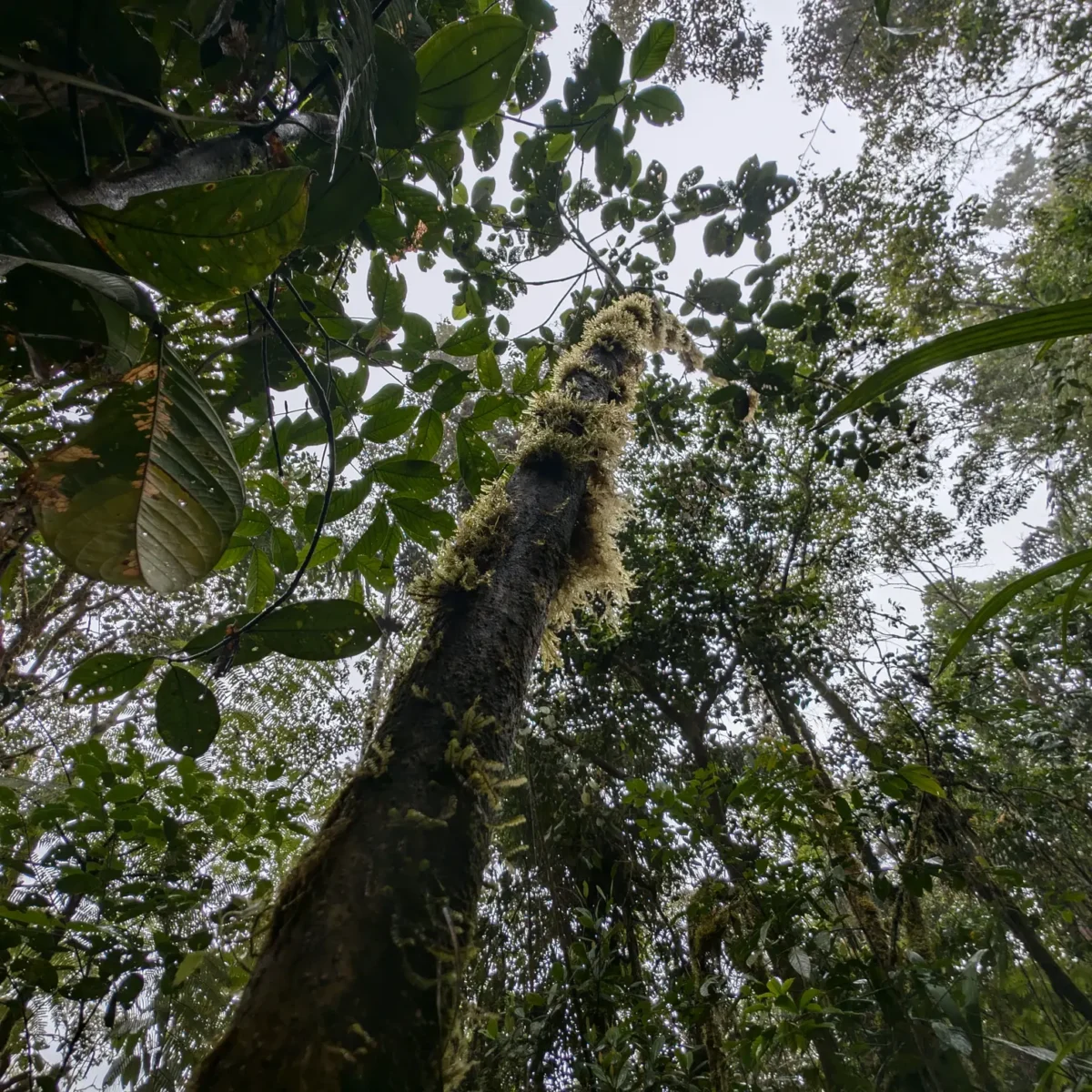

Every April 29th, Colombia commemorates Arbor Day, a moment to reflect on the vital role forests play in our ecological, cultural, and climatic well-being. Forests are not only the lungs of the planet but also guardians of biodiversity and our collective local heritage. Yet, according to the Humboldt Institute, 45% of Colombia’s endemic trees and shrubs are currently at risk of extinction. Protecting them is no longer optional, it’s essential for safeguarding biodiversity and ensuring the resilience of future generations.
At Fundación ProAves, we mark this day by celebrating the tireless efforts of our forest rangers, who work daily to protect one of Colombia’s most threatened plant groups: the Magnolias. Our country is home to 42 Magnolia species, many of which are endemic and critically endangered. Their survival depends on continued conservation, restoration and awareness.

Through our Magnolia Project, in collaboration with Fondation Franklinia and Women for Conservation, we work on the identification, monitoring and restoration of these species in our Nature Reserves with the goal of ensuring their survival in their natural habitat.

Through this project, we implement a range of strategies to protect these “souls of the forest”, including monitoring sessions, identification of individual trees, seed collection, nursery propagation, planting in strategic restoration zones and environmental education activities with local communities. Each action brings us closer to securing a future where Magnolias continue to thrive in Colombia’s forests.

From a research perspective, this work has been crucial in highlighting both the remarkable richness of Magnolia species and the serious threats they face in Colombia. Ongoing restoration and reforestation efforts have not only helped regenerate key habitats but also led to the documentation of several Magnolia species across different regions. These efforts have generated valuable data on their distribution and conservation status within our network of Nature Reserves, information that is essential for guiding future protection strategies.
Discover the Magnolias recorded in our Reserves:


In addition to Magnolias, our Nature Reserves shelter many other threatened tree species, which we protect every day with unwavering commitment and care. At Fundación ProAves, we remain steadfast in our mission to ensure the comprehensive conservation of Colombia’s forests, recognising that every single tree is a vital thread in the web of life.
This Arbor Day, we renew our commitment to biodiversity and redouble our efforts to defend the forest ecosystems that sustain thousands of species and the future of our planet.
With the support of:


Cada 29 de abril conmemoramos en Colombia el Día del Árbol, una fecha que nos invita a reflexionar sobre la importancia de proteger los bosques y reconocer su valor ecológico, cultural y climático en nuestros territorios. Según el Instituto Humboldt, el 45% de los árboles y arbustos endémicos de nuestro país están en riesgo de extinción, en este sentido, su protección se vuelve una prioridad para la conservación de la biodiversidad y el bienestar de las generaciones futuras.
Desde la Fundación ProAves, celebramos esta fecha resaltando el trabajo que realizan nuestros guardabosques para la protección de un grupo particularmente vulnerable: las Magnolias, de las cuales, Colombia cuenta con 42 especies, muchas de ellas endémicas y en peligro de extinción.
Por medio de nuestro Proyecto Magnolias, en articulación con Fondation Franklinia y Mujeres por la Conservación, trabajamos en la identificación, monitoreo y restauración de estas especies en nuestras Reservas Naturales con el propósito de garantizar la supervivencia en su entorno natural.
Acciones como jornadas de monitoreo, identificación de individuos, colecta de semillas, propagación en viveros, siembra en zonas estratégicas de restauración y actividades de educación ambiental con las comunidades, hacen parte de las estrategias de este proyecto que buscan proteger estas almas del bosque.
Desde la investigación, este trabajo ha sido clave para visibilizar tanto la riqueza que representan estas especies como el riesgo que enfrentan en nuestro país. Gracias al avance en restauración y siembra, ha sido posible documentar la presencia de varias Magnolias en distintos territorios y a su vez, generar información valiosa sobre su distribución y estado de amenaza en nuestras Reservas Naturales.
Conoce las Magnolias registradas en nuestras Reservas:
Además de las Magnolias, nuestras Reservas Naturales son el hogar de muchas otras especies de árboles amenazados que día a día protegemos con compromiso y dedicación.
Desde ProAves seguimos trabajando por la conservación integral de los bosques, reconociendo que cada árbol representa un eslabón esencial de nuestros ecosistemas. En el marco del Día del Árbol, reiteramos nuestro compromiso con la biodiversidad y reafirmamos nuestra labor en defensa de los ecosistemas boscosos que dan vida a miles de especies en nuestro país.
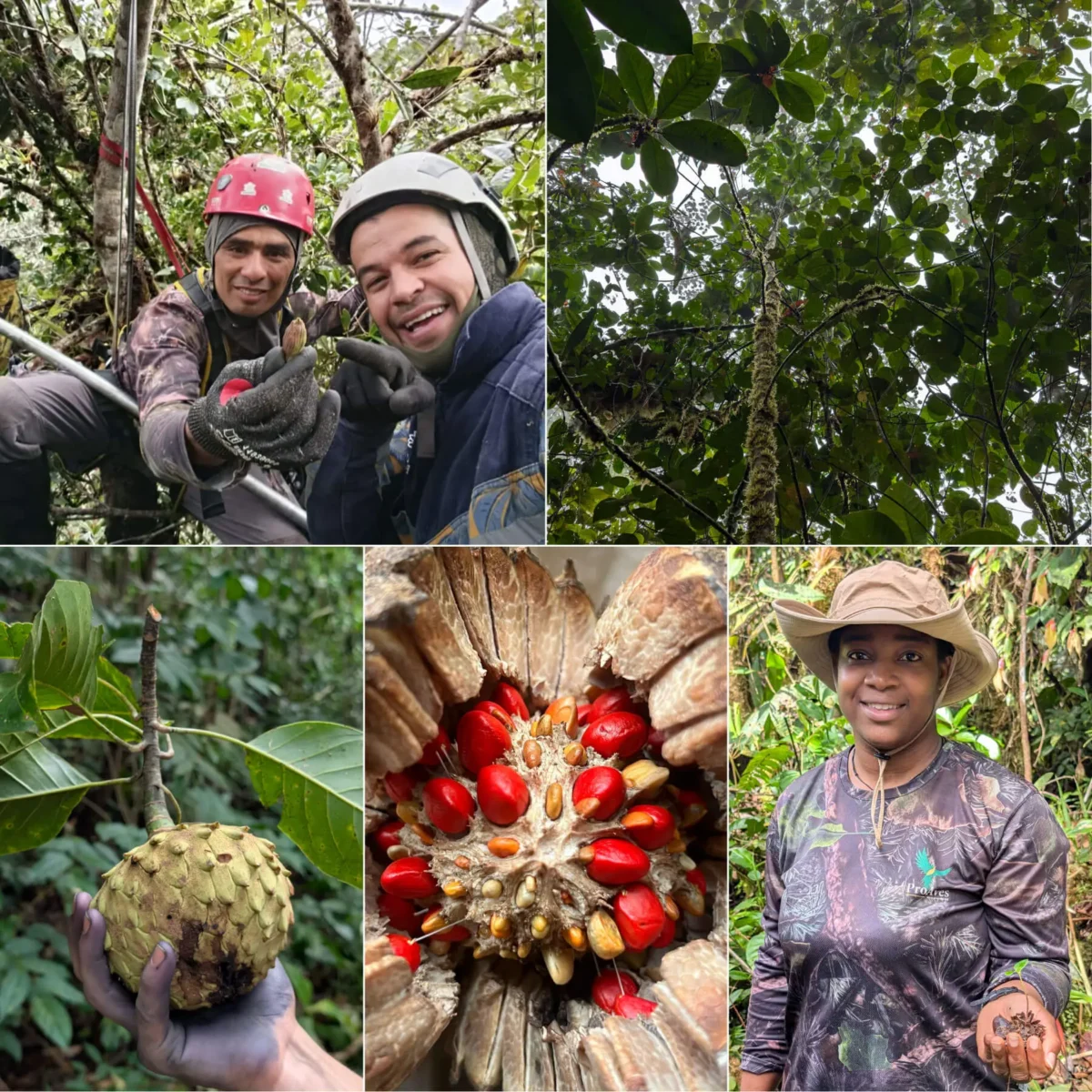

At ProAves, we’ve dedicated over 25 years to the conservation of Colombia’s most threatened species—protecting critical habitats and taking bold, tangible action to ensure their survival. As one of the most biodiverse countries on Earth, Colombia is home to thousands of species found nowhere else in the world.
This Earth Day, we proudly reaffirm our unwavering commitment to safeguarding biodiversity and preserving the unique ecosystems that make Colombia a global conservation priority.

Among the natural treasures we work tirelessly to protect are Magnolias—an ancient lineage of trees and shrubs found across Asia and the Americas. Colombia alone is home to 42 Magnolia species, of which 36 are endemic. Sadly, many of these are at serious risk of extinction due to deforestation, climate change, and agricultural expansion.
Beyond their striking beauty and valued timber, Magnolias play a vital ecological role: they capture carbon and help regulate the climate, support the water cycle, and provide essential habitat for a wide range of species. Their protection is not only about saving individual species—it’s about preserving the integrity and resilience of entire ecosystems.

Thanks to the generous support of Fondation Franklinia and the collaboration between ProAves and Women for Conservation, we are making great strides with the Magnolia Project—an initiative dedicated to the identification, monitoring, and restoration of Magnolia species within our Nature Reserves. To date, we’ve identified around 20 different Magnolia species, many of which are rare and endemic, underscoring the critical importance of protecting their habitats.

Through dedicated fieldwork, we’ve developed and implemented a comprehensive conservation strategy to safeguard Colombia’s Magnolia species. Our approach includes:

An essential component of this project is the work of our forest rangers, who, through their ongoing efforts, ensure the protection of these trees and their ecosystems.

“Working on the Magnolia Project at the Las Tángaras Reserve has been a truly special experience. We are helping to rescue trees that are on the brink of extinction. I’ve learned so much about germination, dealing with pests, planting, and nursery care. It fills me with joy to care for nature and to contribute, with my own hands, to the protection of a species that could otherwise disappear.” Fanis Mosquera, Forest Ranger and Nursery Leader, Magnolia Project
Several Magnolia species are currently in their reproductive phase, with fruits maturing and requiring close monitoring to ensure viable seed production and support natural regeneration. These efforts highlight ProAves’ steadfast commitment to the conservation of endangered species and the protection of the forests that sustain Colombia’s incredible biodiversity.

With every rescued seed, every monitored tree, and every trained forest guardian, we are sowing hope for Colombia’s Magnolias and for the future of its rich biodiversity. On this meaningful day, we call for united action to protect these vital species, which are essential to the health, balance, and resilience of the Andean forests.
Discover the Magnolia species documented in our ProAves Reserves at our microsite: Souls of the Forest → https://proaves.org/blog/proyecto-magnolias/
Desde ProAves, trabajamos hace más de 25 años por la conservación de las especies más amenazadas, protegiendo sus hábitats y promoviendo acciones concretas para garantizar su supervivencia. Colombia es uno de los países más biodiversos del planeta, hogar de miles de especies únicas que no se encuentran en ningún otro lugar del mundo. En el marco del Día de la Tierra, reafirmamos nuestro compromiso con la biodiversidad y con la protección de estos ecosistemas únicos.
Entre los tesoros naturales que buscamos proteger se encuentran las Magnolias, un grupo primitivo de árboles y arbustos distribuidos entre Asia y América, del cual Colombia alberga 42 especies, 36 de ellas endémicas de nuestro país, muchas en grave peligro de extinción debido a la deforestación, el cambio climático y la expansión de la frontera agrícola.
Estos árboles, valorados por su belleza y sus propiedades maderables, también desempeñan un papel crucial en los ecosistemas, ayudan a regular el clima mediante la captura de carbono, controlan el ciclo del agua y brindan hábitats a una gran diversidad de especies.
Gracias al apoyo de Fondation Franklinia y la articulación entre ProAves y Mujeres por la Conservación, adelantamos el Proyecto Magnolias, una iniciativa que busca trabajar en la identificación, monitoreo y restauración de estas especies en nuestras Reservas Naturales, donde hemos identificado alrededor de 20 Magnolias.
Durante nuestro trabajo en campo hemos implementado estrategias integrales de conservación que incluyen:
Un componente esencial de este proyecto es la labor de los guardabosques, quienes, mediante su trabajo constante, garantizan la protección de estos árboles y sus ecosistemas.
“Trabajar en el Proyecto de Magnolias en la Reserva ProAves Las Tángaras, ubicada en El Carmen de Atrato, Chocó, ha sido una experiencia muy especial, estamos rescatando árboles en peligro de extinción y he aprendido sobre germinación, plagas, siembra y embolsado. Me llena de alegría cuidar la naturaleza y aportar con mis manos a la protección de una especie en peligro de desaparecer.”
Fanis Mosquera, Guardabosques y Líder de Vivero en el Proyecto Magnolias.
Actualmente, varias Magnolias se encuentran en fase reproductiva, con frutos en maduración que requieren un seguimiento constante para garantizar la producción de semillas viables y su regeneración natural. Estos esfuerzos reflejan el compromiso de ProAves con la conservación de especies en peligro y la protección de los bosques que sustentan la vida silvestre.
Con cada semilla rescatada, cada árbol monitoreado y cada guardabosques capacitado, seguimos sembrando esperanza para las Magnolias y la biodiversidad de Colombia. En esta fecha emblemática, hacemos un llamado a reforzar las acciones por la protección de estas especies fundamentales para la salud y el equilibrio de los bosques andinos.
Conoce las especies de Magnolias registradas en nuestras Reservas ProAves en nuestro micrositio: Almas del Bosque: https://proaves.org/blog/proyecto-magnolias/


The Blue-billed Curassow (Crax alberti) is one of Colombia’s most emblematic and critically endangered species, classified as Critically Endangered (CR) by the International Union for Conservation of Nature (IUCN). Its populations are scarce and highly fragmented, making research that contributes to its conservation an urgent priority.
In this context, and with the goal of continuing to strengthen the participation of women in science and conservation in our country, we are opening a new call for applications to our scholarship program, aimed at:
Five (5) women who wish to conduct undergraduate or graduate research in the ecology of endemic and/or threatened species in the ProAves El Paujil Reserve.
One (1) of the scholarships must specifically focus on estimating the abundance and density of the Blue-billed Curassow (Crax alberti) within our Reserve.
One (1) of the scholarships must be focused on the diversity of herpetofauna in the Reserve.

The scholarship includes:
Location: ProAves El Paujil Reserve, Puerto Pinzón (district), municipality of Puerto Boyacá, Boyacá, Colombia
Selected candidates must:
Requirements to apply:
This call aims to encourage the active participation of women in science and conservation, offering a unique opportunity to carry out research projects in one of the most biodiverse areas of Colombia.
Applications will open on May 1, 2025, and will close as selected candidates are approved.
Applications must be submitted through the following form: https://forms.gle/eByPVekHa73nbDSNA
Opening date: May 1, 2025
Application deadline: June 13
Project socialization: June 19 and 20
Results announcement: June 27
Fieldwork: Minimum of 4 weeks (between July and August)
Article submission deadline: October 1
The article must be submitted following these guidelines: https://proaves.org/guia-para-autores/
If you have any questions or would like more information, please contact:
| Alex Cortés
acortes@proaves.org aborrero@proaves.org Celular: 315 4745155 |
Luis Gabriel Mosquera
Celular: 3105375059 |

El Paujil de Pico Azul (Crax alberti) es una de las especies más emblemáticas y amenazadas de Colombia, categorizada En Peligro Crítico (CR) de extinción por la Unión Internacional para la Conservación de la Naturaleza (UICN), sus poblaciones son escasas y están altamente fragmentadas, lo que hace urgente el desarrollo de investigaciones que contribuyan a su conservación.
En este sentido, y con el objetivo de seguir fortaleciendo la participación de las mujeres en la ciencia y la conservación en nuestro país, abrimos una nueva convocatoria de nuestro programa de becas, dirigida a cinco (5) mujeres interesadas en realizar investigaciones de pregrado o posgrado en nuestra Reserva ProAves El Paujil, enfocadas de la siguiente manera:
Tres (3) investigaciones centradas en la ecología de especies de aves endémicas y/o amenazadas.
Una (1) investigación enfocada en la estimación de abundancias y densidades del Paujil de Pico Azul (Crax alberti).
Una (1) investigación sobre la diversidad de herpetofauna de la Reserva.

La beca contempla:
– $ 3.000.000 COP para transporte y alimentación
– 50% del valor del hospedaje en la Reserva ProAves El Paujil durante su estadía
– Publicación en la Revista Conservación Colombiana
Localización: Reserva ProAves El Paujil, corregimiento de Puerto Pinzón, municipio de Puerto Boyacá, Boyacá
Las mujeres que resulten seleccionadas para desarrollar las becas de investigación, deben:
Requisitos para aplicar a la beca:
Esta convocatoria busca fomentar la participación activa de mujeres en la ciencia y la conservación, brindando una oportunidad única para que desarrollen sus proyectos de investigación en una de las áreas más biodiversas del país.
Las inscripciones estarán abiertas a partir del 01 de mayo de 2025 y se cerrarán en la medida que se vayan aprobando. La postulación se debe realizar a través del siguiente formulario: https://forms.gle/eByPVekHa73nbDSNA
Apertura: 1 de mayo de 2025
Cierre de convocatoria: 13 de junio
Socialización: 19 y 20 de junio
Informe de resultados: 27 de junio
Trabajo de campo: Mínimo 4 semanas (entre julio y agosto)
Entrega de informe tipo artículo: 1 de octubre
El artículo se debe presentar de acuerdo a los siguientes parámetros: https://proaves.org/guia-para-autores/
En caso de tener alguna inquietud o querer ampliar la información puede comunicarse a los siguientes contactos:
| Alex Cortés
acortes@proaves.org aborrero@proaves.org Celular: 315 4745155 |
Luis Gabriel Mosquera
Celular: 3105375059 |
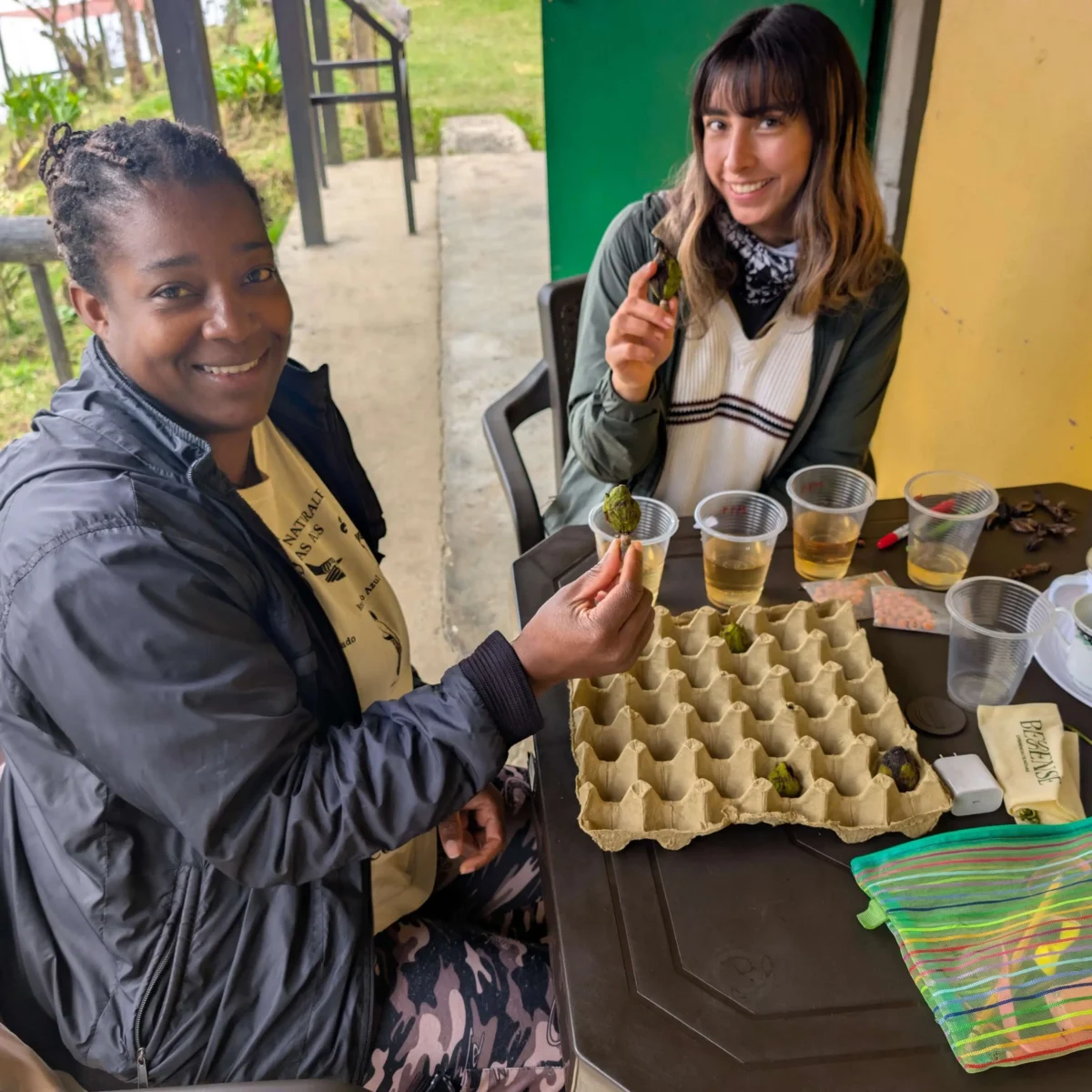

Thanks to the support of Fondation Franklinia, ProAves, together with Women for Conservation, is leading a targeted conservation strategy to protect 20 endemic and critically endangered Magnolia species across several Nature Reserves managed by the ProAves Foundation.

This initiative aims not only to regenerate, restore, and replant Magnolia species, but also to empower women by strengthening their leadership in nursery management and ecological restoration efforts.
Conserving Magnolia species and preventing their extinction demands meticulous, hands-on work—from locating parent trees and carefully harvesting their fruits, to the delicate process of germination, nurturing seedlings until they reach optimal planting size, selecting ideal reforestation sites, and conducting ongoing monitoring to ensure successful adaptation to their new environment.
A cornerstone of this process has been the construction of specialised nurseries. These spaces are designed for post-harvest handling, equipped with germination chambers, and set up for the close monitoring and care of each seedling, ensuring that every step of the restoration process is handled with precision and dedication.

Following fruit collection, our rangers and women leaders in the nurseries work together to carefully sort viable from non-viable seeds—an essential step for ensuring the success of the germination process. Additionally, we maintain close monitoring of humidity levels within the germination chambers to create optimal conditions for seedling growth.

Following the fruit harvest, the women leaders of the nursery, in collaboration with the rangers, undertake a crucial task: classifying the seeds. Separating the viable seeds from the non-viable ones demands both expertise and patience, as this step is critical to the overall success of the conservation process. Meanwhile, the germination chambers are continuously monitored to maintain optimal conditions for the healthy development of the future plants.
At ProAves and Women for Conservation, we actively promote the participation of women from local communities in the production of Magnolia seedlings as a key strategy for advancing gender equity. Through this initiative, we not only involve them in ecological restoration efforts but also work to strengthen their technical skills in nursery management, empowering them to play a central role in conservation.

Through the Magnolias Project, we remain dedicated to empowering women in critical conservation areas. With every Magnolia that blooms in our nurseries, we are not only sowing life and hope but also reinforcing the vital connection between ecological restoration and women’s leadership within our communities.
Currently, the nursery project is being implemented across several conservation areas, with a focused effort on reforesting endangered endemic Magnolia species in the following Nature Reserves:

With the support of:
Gracias al apoyo de Fondation Franklinia, ProAves en articulación con Women for Conservation, lidera la estrategia de conservación de 20 especies de Magnolias endémicas y altamente amenazadas de extinción, localizadas en diferentes Reservas Naturales de la Fundación ProAves.
Esta iniciativa busca regenerar, restaurar y sembrar especies de Magnolias, y a su vez, contribuir al fortalecimiento del liderazgo femenino en procesos de viverismo y restauración ecológica.
Conservar las Magnolias para evitar su extinción requiere un trabajo minucioso que incluye desde la ubicación de los árboles parentales para cosechar cuidadosamente sus frutos, hasta el delicado proceso de germinación, el cuidado especializado de las plántulas hasta alcanzar una altura adecuada, la selección del lugar más apropiado para sembrarlas y la vigilancia continua para asegurar su adaptación al nuevo ecosistema.
En este sentido, la construcción de viveros ha sido una de las fases de este proceso donde se han adecuado espacios para las actividades post-cosecha, la instalación de germinadores y el seguimiento detallado de las plántulas.
Tras la recolección de frutos, nuestros guardabosques y las mujeres líderes de los viveros se han enfocado en la clasificación de semillas viables e inviables, un paso clave para garantizar el éxito en los procesos de germinación. Además, se realiza un monitoreo constante de la humedad en las cámaras de germinación.
Luego de la cosecha de frutos, las mujeres líderes de los viveros, en compañía de los guardabosques, se han dedicado con esmero a una tarea fundamental: clasificar las semillas. Separar las viables de las inviables no solo requiere experiencia, sino también paciencia, pues de esta etapa depende en gran medida el éxito del proceso. Mientras tanto, en las cámaras de germinación, se mantiene un monitoreo constante de la humedad, cuidando cada detalle para asegurar que las condiciones sean óptimas y que las futuras plantas puedan desarrollarse.
Desde ProAves y Women for Conservation promovemos la participación activa de las mujeres de la comunidad en la producción de plántulas de Magnolias, como una forma de avanzar hacia la equidad de género. Con esta iniciativa buscamos incluirlas en los procesos de restauración ecológica y, al mismo tiempo, fortalecer sus capacidades técnicas en el manejo de viveros.
En el Proyecto Magnolias seguimos comprometidos con el empoderamiento de las mujeres en territorios clave para la conservación. Con cada magnolia que florece en nuestros viveros, sembramos vida y esperanza, fortaleciendo el vínculo entre la restauración ecológica y el liderazgo femenino en nuestras comunidades.
Actualmente, el proyecto de viveros se desarrolla en distintas áreas de conservación, con énfasis en la reforestación de especies de Magnolias endémicas y en peligro de extinción, en las siguiente Reservas Naturales:
Con el apoyo de:


Every year, many Wax Palms are used in religious celebrations without knowing that this practice is destroying the home of the Yellow-eared Parrot, an endangered bird species endemic to Colombia that depends on this palm. During this season, we make a call to reconcile with these species and prevent their extinction.
The Reconnect with Nature campaign is an environmental education strategy led by ProAves for over 25 years, carried out prior to Holy Week. Its goal is to raise awareness about the importance of conserving two iconic species that represent Colombia’s biodiversity: the Wax Palm (Ceroxylon quindiuense) and the Yellow-eared Parrot (Ognorhynchus icterotis).

This year, the campaign was implemented in Jardín, Antioquia; and Cajamarca and Roncesvalles, Tolima, where various activities were carried out with local communities on Palm Sunday to raise awareness among residents of these towns — known for hosting the largest populations of the Yellow-eared Parrot — about the importance of protecting this emblematic species.

The town of Jardín, located in the department of Antioquia, welcomed us with open arms, allowing children to learn about environmental conservation through playful activities focused on preserving this species. Additionally, adults received messages about the importance of conserving this threatened parrot, which was once on the brink of extinction.
During the event, Wax Palm seedlings were distributed to people who had suitable areas on their land to plant these species, contributing to the recovery of the palm and the improvement of the Yellow-eared Parrot’s habitat in the future.

In the towns of Cajamarca and Roncesvalles, in the department of Tolima, community engagement and awareness-raising efforts also took center stage. Through printed materials such as posters and stickers, we shared the message of reconciliation with nature and promoted environmental responsibility to protect the Yellow-eared Parrot and the Wax Palm.

The Reconnect with Nature campaign is a call to protect and respect wildlife. At ProAves, we recognize environmental education as a key action to instill awareness in children, youth, and adults, helping us move forward in protecting emblematic species of our biodiversity, such as the Yellow-eared Parrot and the Wax Palm.
With the support of:

Cada año, muchas Palmas de Cera son utilizadas en celebraciones religiosas sin saber que se está destruyendo el hogar del Loro Orejiamarillo, un ave endémica en peligro de extinción que depende de esta palma. Durante estas fechas hacemos un llamado para reconciliarnos con estas especies y evitar su extinción.
La campaña Reconcíliate con la Naturaleza es una estrategia de educación ambiental previa a la Semana Santa que ProAves ha abanderado hace más de 25 años. Su objetivo es sensibilizar a la población sobre la importancia de conservar dos especies símbolo de la biodiversidad en nuestro país: la Palma de Cera (Ceroxylon quindiuense) y el Loro Orejiamarillo (Ognorhynchus icterotis).
Este año, la campaña se llevó a cabo en Jardín, Antioquia; Cajamarca y Roncesvalles, Tolima, donde se ejecutaron diferentes actividades con las comunidades durante el Domingo de Ramos, con el fin de concientizar a los habitantes de estos municipios, reconocidos por albergar las poblaciones más numerosas del Loro Orejiamarillo, sobre la importancia de proteger esta emblemática especie.
El municipio de Jardín, ubicado en el departamento de Antioquia nos abrió sus puertas para que los niños y niñas por medio de actividades lúdicas tomaran conciencia ambiental sobre la preservación de esta especie. Además, la población adulta recibió el mensaje de conservación de este importante Loro amenazado que años atrás estuvo al borde de la extinción.
Durante el evento se entregaron plántulas de Palma de Cera a las personas interesadas y con espacios adecuados en sus predios para la siembra de estas especies, como una forma de aportar a la recuperación de la palma y de mejorar a futuro el hábitat del Loro Orejiamarillo.
En los municipios de Cajamarca y Roncesvalles, en el departamento del Tolima la sensibilización y el trabajo con comunidades también fue protagonista, donde por medio de material impreso como afiches y stickers llevamos el mensaje de reconciliación con la naturaleza y le apostamos al compromiso ambiental para proteger al Loro Orejiamarillo y la Palma de Cera.
La campaña Reconcíliate con la Naturaleza es un llamado a proteger y respetar la vida silvestre. Desde ProAves, reconocemos la educación ambiental como una acción clave para sembrar conciencia en los niños, jóvenes y adultos para así avanzar en la protección de especies emblemáticas de nuestra biodiversidad, como el Loro Orejiamarillo y la Palma de Cera.
Con el apoyo de:
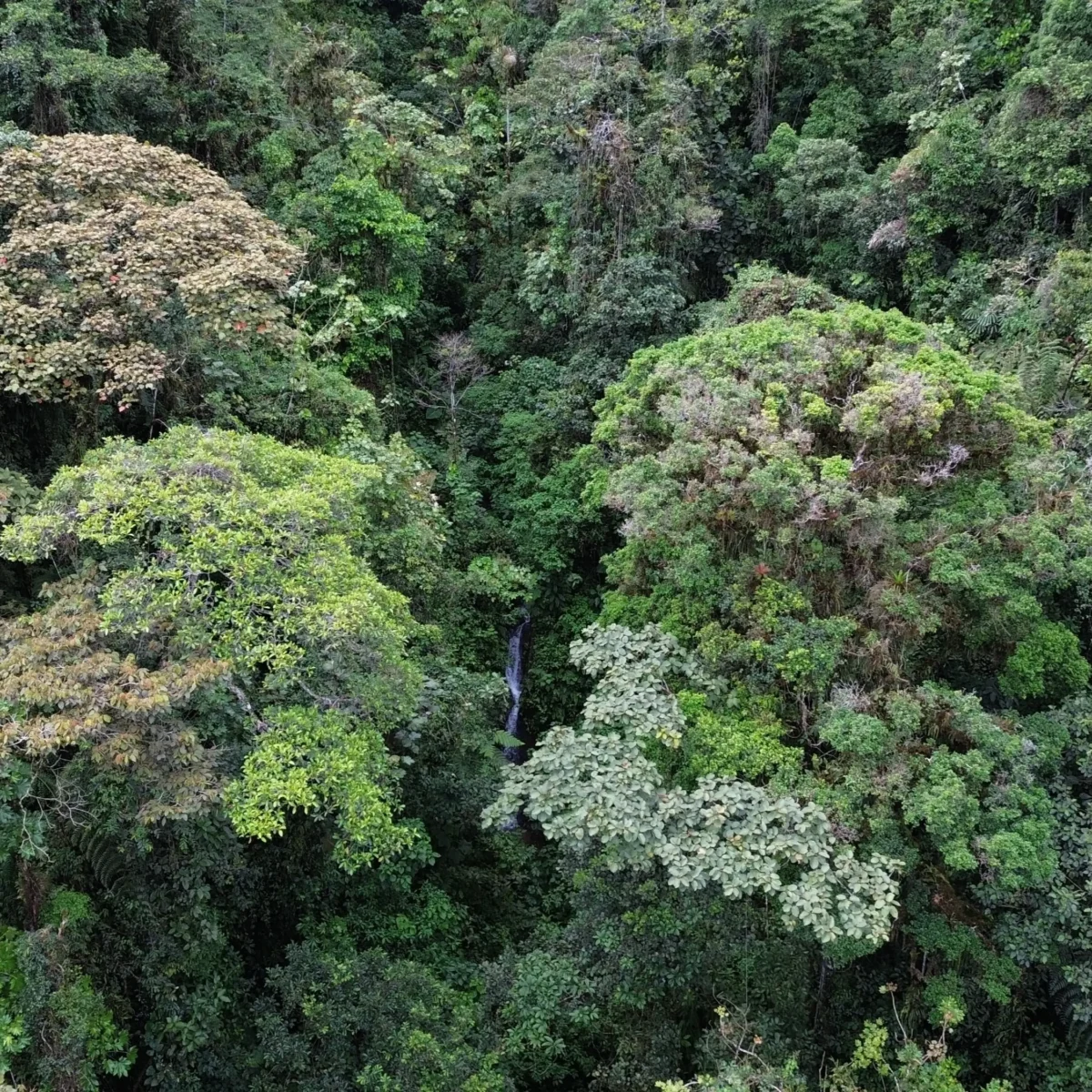

For over 25 years, ProAves has worked to protect key ecosystems under critical threat in Colombia — a mission we continue daily, contributing to the conservation of our biodiversity. A clear example of this commitment is the inclusion of 1,632.8 hectares of our ProAves Las Tángaras Reserve in the National System of Protected Areas (SINAP) — an important recognition that strengthens our dedication to preserving the Chocó Biogeographic Region, one of the most naturally rich areas in the world.
Our ProAves Las Tángaras Reserve is located in the municipality of El Carmen de Atrato, on the western slope of the Chocó Biogeographic Region. It is strongly influenced by the Atrato River and surrounded by very humid and rainy Andean and sub-Andean forests—ecosystems that shelter a great number of fauna and flora species, many of them endemic or endangered. Thanks to ProAves’ conservation efforts, nearly 95% of this reserve has been incorporated into SINAP under the categories of Regional Natural Park (65%) and Civil Society Nature Reserve (30%).

This is one of the richest birdwatching sites in Colombia, with a record of 348 bird species belonging to 45 families. Among them are the Munchique Wood-Wren (Henicorhina negreti), the Gold-ringed Tanager (Bangsia aureocincta), and the Black-and-gold Tanager (Bangsia melanochlamys) — all endemic and categorized as Vulnerable (VU) according to the IUCN Red List of Threatened Species. The reserve also protects a wide variety of orchids and bromeliads, characteristic of the region.

Our reserve is also home to a rich diversity of amphibians, with 26 registered species, nine of which are endemic to Colombia. Among them are the Lumpy-nosed Toad (Rhinella lindae), categorized as Endangered (EN), and the Rocket Frog (Silverstoneia nubicola), listed as Vulnerable (VU).
In terms of mammals, we have recorded 32 species, including nine of high conservation interest. These include the Spectacled Bear (Tremarctos ornatus) and the Oncilla (Leopardus tigrinus), both categorized as Vulnerable (VU).

The National System of Protected Areas (SINAP) is the network responsible for integrating and managing the country’s protected areas, ensuring their long-term conservation. In this context, registering new areas of our ProAves Las Tángaras Reserve encourages us even more to continue protecting the most threatened species in this invaluable biodiversity hotspot of the Chocó Biogeographic Region.
By joining this system, we receive official recognition as an area of strategic importance for biodiversity, which allows us to connect with other conservation initiatives and access key tools to strengthen nature protection efforts.

“This affiliation is a key aspect for ecosystem management, land-use planning, and sustainable development, in addition to facilitating monitoring and tracking efforts for biodiversity conservation, reforestation, proper water management, and pollution reduction. It is fundamental for a more efficient, responsible, and sustainable territorial management that promotes environmental conservation and community well-being,” emphasized Kruzi Paloma Carrillo León, Executive Director of ProAves.
At ProAves, we reaffirm our commitment to the conservation and restoration of forests and the species that depend on them. The inclusion of our ProAves Las Tángaras Reserve in SINAP motivates us to continue strengthening our actions in monitoring, ecological restoration, research, and environmental education, working hand in hand with communities and strategic allies to ensure a sustainable future for our biodiversity.
For conservation in the country of birds!

Durante más de 25 años, desde ProAves hemos trabajado para proteger ecosistemas clave y en estado crítico de amenaza en Colombia, una labor que seguimos realizando a diario y aporta a la conservación de nuestra biodiversidad. Muestra de ello, es la inclusión de 1,632.8 hectáreas de nuestra Reserva ProAves Las Tángaras en el Sistema Nacional de Áreas Protegidas (SINAP), un reconocimiento que refuerza nuestro compromiso para preservar el Chocó biogeográfico, una de las regiones con mayor riqueza natural del mundo.
Nuestra Reserva ProAves Las Tángaras se encuentra en el municipio de El Carmen de Atrato, en la vertiente occidental del Chocó biogeográfico. Está influenciada fuertemente por el río Atrato y rodeada de bosques muy húmedos y pluviales andinos y subandinos, ecosistemas que resguardan numerosas especies de fauna y flora, muchas de estas son endémicas o en peligro de extinción. Gracias a los esfuerzos de conservación de ProAves, casi el 95% de esta Reserva ha sido incorporado al SINAP bajo las figuras de Parque Natural Regional (65%) y Reserva Natural de la Sociedad Civil (30%).
Este es uno de los sitios más ricos en avifauna de Colombia, con un registro de 348 especies de aves pertenecientes a 45 familias, entre las que se destacan el Cucarachero de Munchique (Henicorhina negreti), la Tángara de Tatamá (Bangsia aureocincta) y la Tángara Aurinegra (Bangsia melanochlamys), endémicas y categorizadas como Vulnerable (VU) según la Lista Roja de la Unión Internacional para la Conservación de la Naturaleza (UICN). Además, conservamos una gran diversidad de orquídeas y bromelias, características de la región.
Nuestra Reserva también es hogar de una gran diversidad de anfibios, con 26 especies registradas, de las cuales nueve son endémicas de Colombia, como es el caso del Sapito Narizón (Rhinella lindae), categorizado como En Peligro (EN) y la Rana Cohete (Silverstoneia nubicola) en estado Vulnerable (VU).
En cuanto a mamíferos, hemos registrado la presencia de 32 especies, incluyendo nueve de alto interés para la conservación. Entre estas, el Oso de Anteojos (Tremarctos ornatus) y el Tigrillo (Leopardus tigrinus) ambos clasificados como Vulnerables (VU).
El Sistema Nacional de Áreas Protegidas (SINAP) es la red encargada de integrar y gestionar las áreas protegidas del país, garantizando su conservación a largo plazo. En este sentido, registrar nuevos predios de nuestra Reserva ProAves Las Tángaras nos motiva aún más a seguir trabajando por la protección de las especies más amenazadas de este invaluable hotspot de biodiversidad en el Chocó Biogeográfico.
Al incorporarnos a este sistema, obtenemos un reconocimiento oficial como un área de importancia estratégica para la biodiversidad, lo que nos permite seguirnos articulando con otras iniciativas de conservación y acceder a herramientas clave para fortalecer la protección de la naturaleza.
“Esta vinculación, es un aspecto clave para la gestión de ecosistemas, la planificación del territorio y el desarrollo sostenible, además de facilitar el monitoreo y seguimiento para la conservación de la biodiversidad, la reforestación, el manejo adecuado de las aguas y la reducción de la contaminación. Es fundamental para una gestión territorial más eficiente, responsable y sostenible, que promueva la conservación del medio ambiente y el bienestar de las comunidades.“, destacó Kruzi Paloma Carrillo León, Directora Ejecutiva de ProAves.
En ProAves, reafirmamos nuestro compromiso con la conservación y restauración de los bosques y las especies que dependen de ellos. La inclusión de nuestra Reserva ProAves Las Tángaras en el SINAP nos motiva a seguir fortaleciendo nuestras acciones de monitoreo, restauración ecológica, investigación y educación ambiental, trabajando de la mano con las comunidades y aliados estratégicos con el propósito de garantizar un futuro sostenible para nuestra biodiversidad.
¡Por la conservación en el país de las aves!

The Jaguar (Panthera onca) is considered the largest feline in Latin America and a keystone species for maintaining ecosystem balance. Thanks to the camera traps installed in our Nature Reserves, we have recorded video footage of a Jaguar in our ProAves El Jaguar Reserve, located in the municipality of Mapiripán, Meta.
This sighting confirms the strategic role of our Reserve as a key ecological corridor for the survival of one of the most iconic and enigmatic big cats in the world. It also highlights the Jaguar’s importance in maintaining ecosystem health, as it helps regulate populations of other species and contributes to the well-being of forests.

Despite these encouraging records, the Jaguar is facing a worrying decline in Colombia. According to reports by media outlets such as Mongabay, the species has lost around 39% of its habitat over the past decade due to deforestation, hunting, and habitat fragmentation. In this context, the protection of its biological corridors is crucial to reversing this trend and ensuring its long-term conservation.
This recent camera trap record is compelling evidence of the impact of our conservation efforts and the good health of the ecosystems we protect. Over the years, ProAves has established three strategic reserves in the Amazon region: El Jaguar, Águila Arpía, and Halcón Colorado. These protected areas not only safeguard the Jaguar but also provide refuge for other emblematic species such as the Pink River Dolphin (Inia geoffrensis) and the Giant River Otter (Pteronura brasiliensis), all inhabitants of this vital region of the world, known for its rich biodiversity.

Each new record of these important wildlife species strengthens our commitment to conserving these biological corridors and inspires us to engage new allies in securing a safe future for the Jaguar and many other species in Colombia.
El Jaguar (Panthera onca) es considerado el felino más grande de América Latina y a su vez una especie clave para el equilibrio de los ecosistemas, gracias a las cámaras trampa instaladas en nuestras Reservas Naturales hemos registrado en video el paso de este individuo en nuestra Reserva ProAves El Jaguar, ubicada en el municipio de Mapiripán, Meta.
Este avistamiento confirma el papel estratégico de nuestra Reserva como un corredor ecológico fundamental para la supervivencia de uno de los felinos más icónicos y enigmáticos del mundo. Además, resalta su importancia en el equilibrio de los ecosistemas, ya que el Jaguar regula las poblaciones de otras especies y contribuye a la salud de los bosques.
A pesar de estos alentadores registros, el Jaguar enfrenta un preocupante declive en Colombia. Según reportes de medios como Mongabay, en la última década esta especie ha perdido cerca del 39% de su hábitat debido a la deforestación, la cacería y la fragmentación del territorio, en este sentido, la protección de sus corredores biológicos es crucial para revertir esta tendencia y garantizar su conservación a largo plazo.
El reciente registro mediante cámaras trampa es una prueba contundente del impacto de nuestras acciones y del buen estado de los ecosistemas que protegemos. Desde ProAves, a lo largo de nuestra trayectoria hemos establecido tres Reservas estratégicas en la región amazónica: El Jaguar, Águila Arpía y Halcón Colorado, estas áreas de conservación no solo resguardan al Jaguar, sino también a especies emblemáticas como el Delfín Rosado (Inia geoffrensis) y la Nutria Gigante de Río (Pteronura brasiliensis), que habitan en este pulmón del mundo, reconocido por sus altos niveles de biodiversidad.
Cada registro de estas importantes especies de la vida silvestre refuerza nuestro compromiso con la conservación de dichos corredores biológicos y nos motiva a sumar nuevos aliados para garantizar un futuro seguro para el Jaguar y muchas otras especies en Colombia.
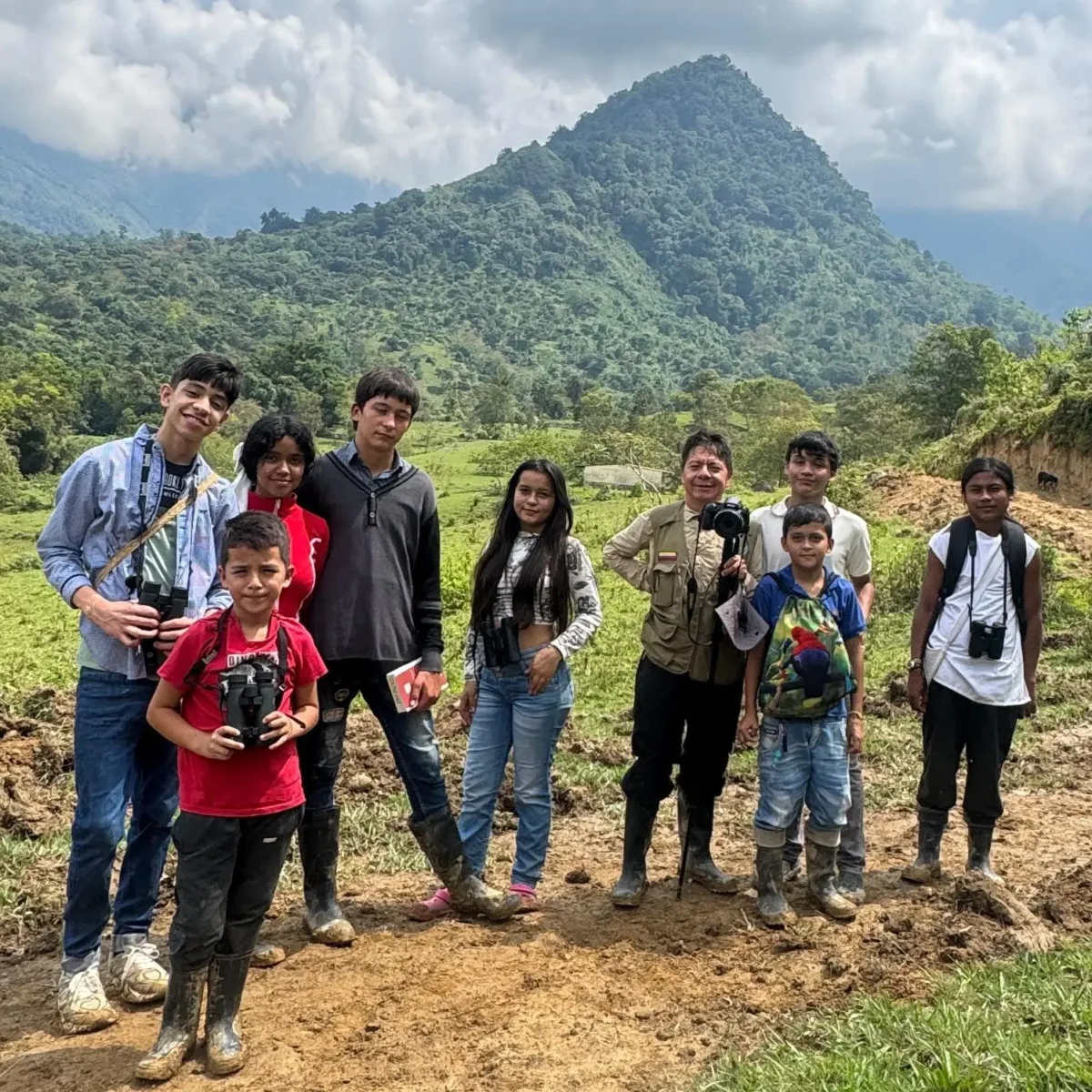

At ProAves, we work to promote ecotourism and environmental education in communities near our conservation areas. As part of this commitment, we continue to provide training in birdwatching and identification. This time, the initiative was directed at a group of rural youth and Kogui Indigenous people from the Bethel district and the Palestina village, located in the heart of the Sierra Nevada de Santa Marta, within the area of influence of our ProAves El Dorado Reserve.
With this initiative, we seek to promote knowledge and the conservation of local biodiversity through learning and observing the birdlife that inhabits the region.

The training was led by Juan Carlos Luna, a member of Fundación ProAves and an expert ornithologist, who shared specialized bird identification techniques with the participants. He also provided key information about their behavior, habitats, and the importance of their protection.
During the training sessions, the young participants had the opportunity to take field trips, where, equipped with binoculars and specialized guides, they put their new skills into practice and recorded various iconic species of the Sierra Nevada de Santa Marta. Among them were migratory species such as the Blackburnian Warbler (Setophaga fusca) and the Rose-breasted Grosbeak (Pheucticus ludovicianus), as well as endemic species like the Santa Marta Foliage-gleaner (Clibanornis rufipectus) and the Santa Marta Tapaculo (Scytalopus sanctaemartae).

This activity not only expanded their knowledge of birdlife but also sparked a greater interest in protecting the natural environment and considering ecotourism as a sustainable alternative for their communities’ development.
This training program adds to previous efforts carried out with the Emberá Katío Indigenous community in the Chocó department, offering them an opportunity to enhance their economic activities while fostering a deeper connection to the biodiversity that surrounds them.
At ProAves, we reaffirm our commitment to environmental education and biodiversity conservation, creating learning spaces that connect new generations with nature and provide them with the tools to protect it.

En ProAves trabajamos para promover el ecoturismo y la educación ambiental en las comunidades cercanas a nuestras áreas de conservación. Como parte de este compromiso, continuamos realizando capacitaciones en avistamiento e identificación de aves, en este caso, dirigida a un grupo de jóvenes de la zona rural e indígenas Kogui del corregimiento de Bethel y la vereda Palestina en el corazón de la Sierra Nevada de Santa Marta, zona de influencia de nuestra Reserva ProAves El Dorado.
Con esta iniciativa, queremos promover el conocimiento y la conservación de la biodiversidad local por medio del aprendizaje y la observación de la avifauna que habita en la región.
El proceso de capacitación estuvo a cargo de Juan Carlos Luna, integrante de la Fundación ProAves y experto en ornitología, quien compartió con los participantes técnicas especializadas para la identificación de aves, así como información clave sobre su comportamiento, hábitats y la importancia de su protección.
Durante la jornada, los jóvenes tuvieron la oportunidad de realizar salidas de campo en las que, equipados con binoculares y guías especializadas, pusieron en práctica lo aprendido y registraron diversas especies emblemáticas de la Sierra Nevada de Santa Marta. Entre ellas, algunas especies migratorias como la Reinita Gorginaranja (Setophaga fusca) y el Picogordo Degollado (Pheucticus ludovicianus), además especies endémicas, como: el Ticotico de Santa Marta (Clibanornis rufipectus) y el Tapaculo Buchirrufo (Scytalopus sanctaemartae).
Esta actividad les permitió obtener conocimientos sobre la avifauna y también, despertó en los jóvenes un mayor interés en la protección del entorno natural y en el ecoturismo como una alternativa sostenible para el desarrollo de sus comunidades.
Esta capacitación se suma a las ya realizadas anteriormente con las comunidades indígenas Embera Katío en el departamento del Chocó, brindándoles una alternativa para mejorar sus actividades económicas y apropiar el conocimiento asociado a la diversidad que los rodea.
Desde ProAves, reafirmamos nuestro compromiso con la educación ambiental y la conservación de la biodiversidad, impulsando espacios de aprendizaje que conecten a las nuevas generaciones con la naturaleza y les brinden herramientas para su protección.


2024 marked significant achievements in our mission of conservation, environmental education, and research. Through collaborative efforts, we protected the most threatened wildlife, preserved their habitats, and promoted initiatives for biodiversity conservation.
This report provides a detailed overview of the conservation actions carried out in Colombia, including the designation of two ProAves Reserves as Regional Natural Parks, the protection of endangered ecosystems, the strengthening of our scientific projects, and our participation in COP16. Additionally, we highlight the positive impact on communities through our environmental education strategies.
All of this has been possible thanks to the integration of multiple processes in key areas such as conservation, research, environmental education, communication, sustainability, as well as in legal, financial, and administrative matters.
We invite you to explore the progress, challenges, and impact of our work: