Fundación ProAves – por la conservación en el país de las aves

Categories
Conservacion Investigación News Noticias Águila Harpía Noticias Arrierito Antioqueño Noticias Chamicero de Perijá Noticias El Dorado Noticias El Jaguar Noticias El Mirador Noticias El Pangán Noticias El Paujil Noticias Giles Fuertesi Noticias Gorrión de Andivia Noticias Halcón Colorado Noticias Hormiguero de Torcoroma Noticias Las Tángaras Noticias Lora Carirosada Noticias Loro Coroniazul Noticias Mirabilis Swarovki Noticias Pauxi Pauxi Noticias Ranita Dorada Noticias Ranita Terribilis Noticias Reinita Cielo Azul Noticias Tití Cabeciblanco Noticias Zamarrito del Pinche

ProAves Reserves: Key Refuges for Colombia’s Most Threatened Primates

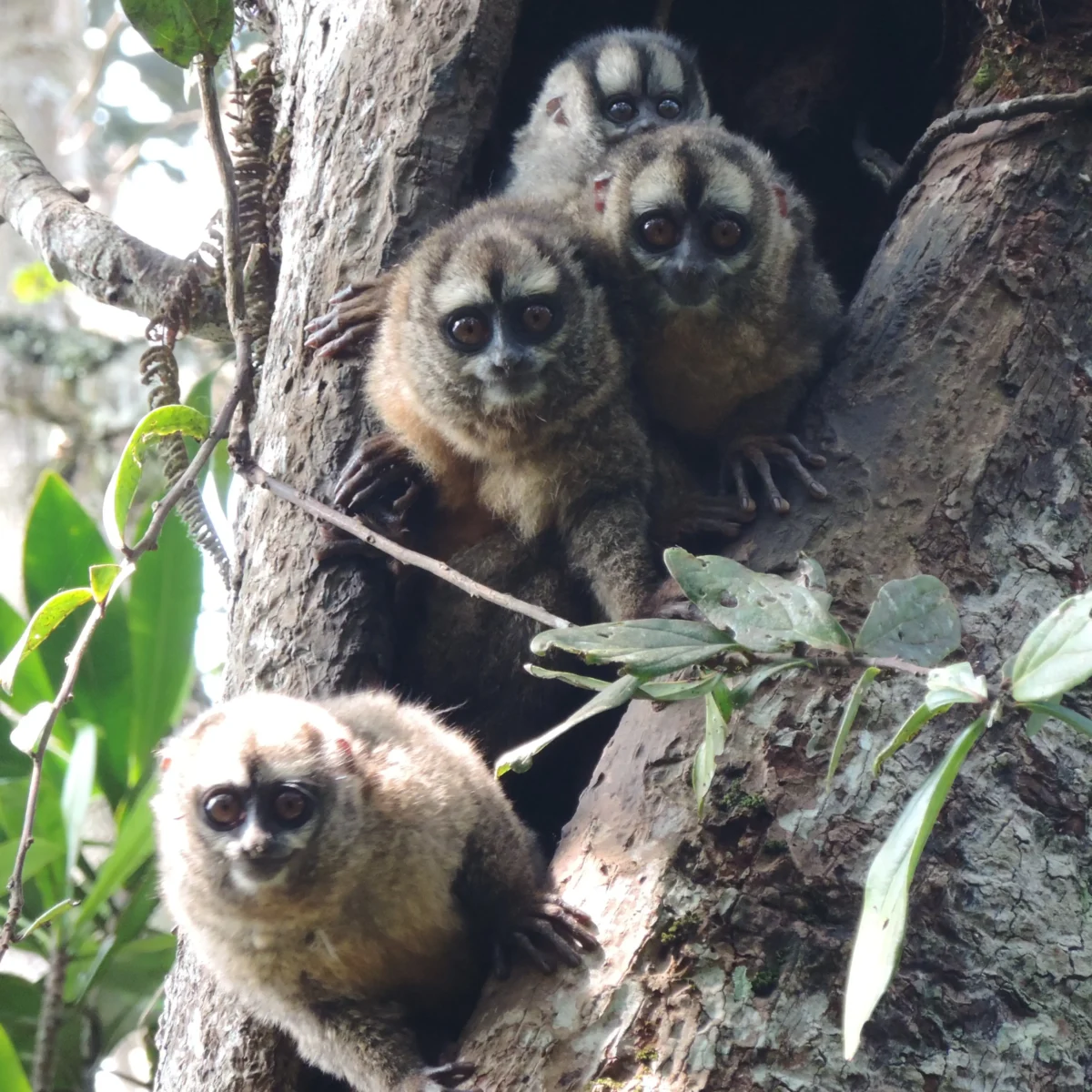
Colombia is home to 43 primate species, making it the country with the third highest primate diversity in Latin America, after Brazil and Peru. This figure is particularly significant considering that South America hosts 177 primate species, many of which are endemic and highly threatened—positioning Colombia as a key player in regional conservation efforts.

These charismatic mammals play a crucial role in maintaining ecosystem health: they disperse seeds, aid in forest regeneration, and act as indicators of environmental balance. 

According to the Red List of the International Union for Conservation of Nature (IUCN), Colombia has 3 primate species classified as Critically Endangered (CR), 5 as Endangered (EN), and 15 as Vulnerable (VU). 

Among the most threatened are the Caquetá Titi (Plecturocebus caquetensis), the Cotton-top Tamarin (Saguinus oedipus), and the Brown Spider Monkey (Ateles hybridus), whose populations have drastically declined due to habitat loss and fragmentation, agricultural expansion, and the illegal wildlife trade. This situation calls for urgent action to strengthen conservation and ecosystem restoration strategies in the areas these species inhabit.

At Fundación ProAves, we actively work across our 27 Nature Reserves, protecting strategic habitats for these at-risk species:

These mammals inhabit tropical forests that, thanks to continuous conservation, restoration, and education efforts, remain vital refuges for their survival.

To protect them, we implement actions such as:


Icono bosque

Habitat conservation and restoration to ensure safe areas where primates can thrive free from threats.


Icono libro

Environmental education programs with local communities to discourage the keeping of primates as pets and reduce hunting.


Icono mono

Scientific research to better understand their ecology, behavior, and population status.

Our commitment to primate conservation is a pledge to preserve ecosystem balance and ensure a healthy future for the generations to come. We will continue to strengthen our efforts through joint work with local communities, environmental authorities, and strategic allies—promoting a comprehensive conservation model that values and respects the natural wealth of our territories.

Learn more about these charismatic mammals at:

Imagen 1
Categories
Conservacion Investigación News Noticias Arrierito Antioqueño Noticias El Dorado Noticias El Paujil Noticias Las Tángaras Noticias Loro Coroniazul Noticias Loro Orejiamarillo Noticias Pauxi Pauxi Noticias Ranita Dorada Noticias Reinita Cielo Azul Proaves @en

These Are the People Who Will Contribute to the Conservation of Migratory Birds Through Research in Our Country

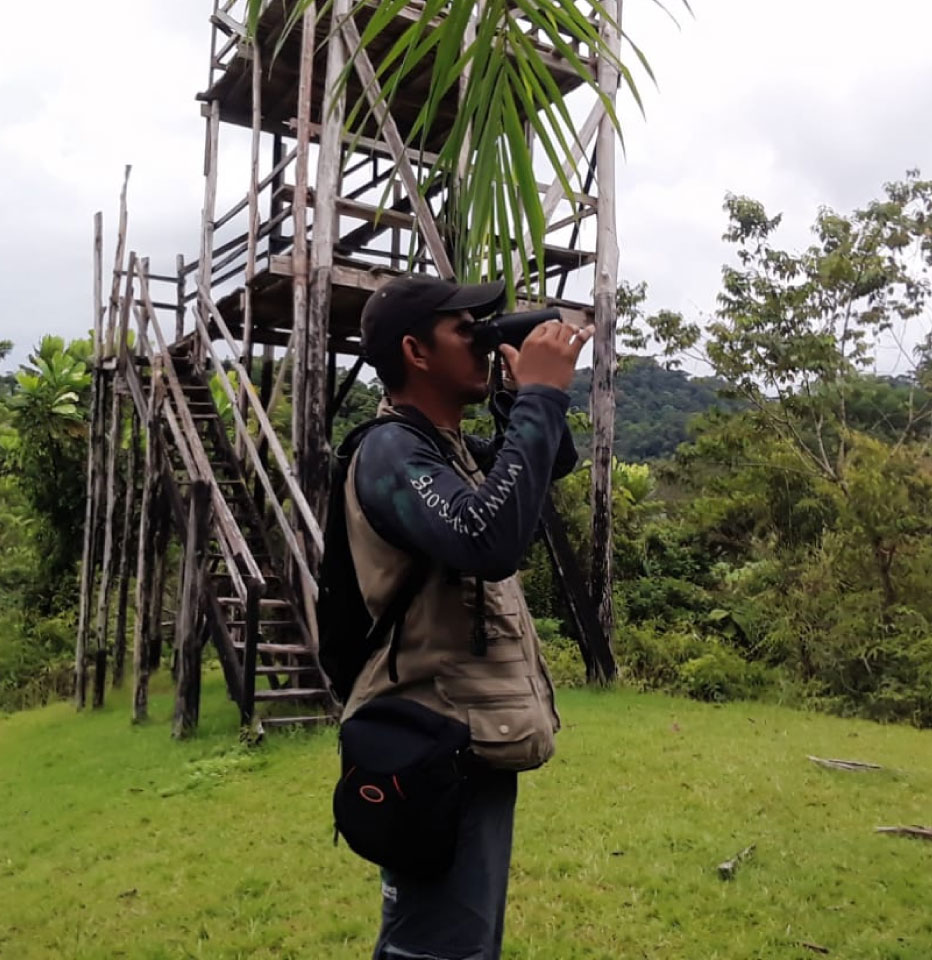
At ProAves, we have concluded the selection process for our call for applications: Migratory Bird Research Scholarships, where we selected 12 researchers to conduct studies focused on the conservation of these extreme travelers, which are protected in our Natural Reserves.
The objective of these scholarships is to promote the knowledge and study of migratory birds, species that amaze us with their behaviors as they embark on epic journeys to protect themselves from the cold and find food.
Thanks to these scholarships, scientific research will be promoted, helping to identify the threats these species face during their journeys and behaviors. Through collaboration and a commitment to science, we aim to ensure that migratory birds continue to be a vital part of our biodiversity and, consequently, of the Natural Reserves we protect.

Here are the selected researchers, the titles of their projects, and the reserves where their research will be applied:

Cristian Mateo Ospina Montoya
Research project: Comparison of the Response of Resident and Migratory Birds to the Edge Effect in an Andean Landscape in the Department of Antioquia, Colombia
ProAves Reserve: Arrierito Antioqueño
University: University of Quindío – Biology

Juan Camilo Úsuga Fuentes
Research project: Study of the Occupation of Migratory Birds in the ProAves Arrierito Antioqueño Reserve located in the rural area of Anorí, Antioquia
ProAves Reserve: Arrierito Antioqueño
University: University of Antioquia – Coastal Zone Ecology

Ider Humberto Diaz Rivas
Research project: Migratory Avifauna in a Landscape Mosaic of the Coffee Belt of the Colombian Andes, Municipality of Génova-Quindío
ProAves Reserve: Loro Coroniazul
University: University of the Amazon – Biology

Jessica Esmeralda Lozano Romero
Research project: Interaction Between Migratory and Resident Birds in Different Vegetation Coverages in the ProAves Reinita Cielo Azul Reserve, Municipality of San Vicente de Chucurí, Santander
ProAves Reserve: Reinita Cielo Azul
University: Pedagogical and Technological University of Colombia (UPTC) – Environmental Management Specialist

Diego Mejía Tovar
Research project: Vocal Behavior of Setophaga cerulea and Vermivora chrysoptera in Wintering Areas of the ProAves Reinita Cerúlea and Pauxi Pauxi Reserves, Located in the Rural Area of San Vicente de Chucurí, Santander
ProAves Reserve: Reinita Cerúlea, Pauxi Pauxi
University: University of Rosario – Biology

Jhonatan Arias Martínez
Research project: Ecological Segregation Dynamics in Migratory Birds of the Parulidae Group (warblers) in the ProAves Las Tangaras Reserve, Located in the Municipality of El Carmen de Atrato, Chocó
ProAves Reserve: Las Tángaras
University: Francisco de Paula Santander University – Environmental Engineering

Laura Catalina Guarín Oviedo

David Steven Valero Vargas
Research project: Contrast in Habitat Occupation Between Resident and Migratory Birds in an Altitudinal Gradient: Diversity, Abundance, and Temporal Variation in the El Dorado Reserve, Municipality of Santa Marta, Magdalena
ProAves Reserve: El Dorado
University: Military University Nueva Granada – Applied Biology

Isaac Daniel Diaz Rivera 

Laura Vanessa Rodríguez Figueroa
Research project: Approaches to the Foraging Ecology of Setophaga swainsoni, WJ 1827 in the ProAves El Dorado Reserve
ProAves Reserve: El Dorado
University: University of the Atlantic – Biology

Yuly Milena Rincón Gómez
Research project: Analysis of a Migratory Species Assembly in the Various Covers in the Ranita Dorada Reserve in the Municipality of Falan, Tolima
ProAves Reserve: Ranita Dorada
Independent Researcher – Tourist Guide Technologist, Agroecology Student

Ángela Gutiérrez Suárez 

Juan Esteban Albán Laverde
Research project: Evaluating the Importance of Spatial Segregation Between Nearctic Migratory Birds and Resident Birds Through the Comparison of Habitat Use Patterns and Vertical Strata
ProAves Reserve: Loro Orejiamarillo
University: University of Valle – Biology

Romario Andrés Barona Muñoz

Leandro Rodríguez Peña
Research project: Evaluating the Importance of Temporal Segregation Between Nearctic Migratory Birds and Resident Birds Through the Comparison of Habitat Use Patterns and Vertical Strata
ProAves Reserve: Loro Orejiamarillo
University: University of Valle – Biology

Juanita Angarita Ricaurte

Paula Tatiana Alméciga Camargo

Daniel Rincón
Research project: Habitat Use and Selection of Migratory Bird Species in the El Paujil Reserve, Puerto Boyacá, Colombia
ProAves Reserve: El Paujil
University: Francisco José de Caldas District University – Bachelor in Biology

We are excited to announce that the 12 selected researchers will begin working on projects that will contribute to understanding and conserving these birds, which are essential to the health of ecosystems and conservation strategies in our protected areas.
We thank all those interested and passionate about birds, and we invite you to stay tuned for updates on the progress of these investigations, which will contribute to the preservation of these extreme travelers and their habitats.

Categories
News Noticias Águila Harpía Noticias Arrierito Antioqueño Noticias Chamicero de Perijá Noticias Colibrí del Sol Noticias Cucarachero de Chicamocha Noticias El Dorado Noticias El Jaguar Noticias El Mirador Noticias El Pangán Noticias El Paujil Noticias El Tapir Noticias Giles Fuertesi Noticias Gorrión de Andivia Noticias Halcón Colorado Noticias Hormiguero de Torcoroma Noticias Las Tángaras Noticias Lora Carirosada Noticias Loro Coroniazul Noticias Loro Orejiamarillo Noticias Loros Andinos Noticias Mirabilis Swarovki Noticias Pauxi Pauxi Noticias Ranita Dorada Noticias Ranita Terribilis Noticias Reinita Cielo Azul Noticias Tití Cabeciblanco Noticias Zamarrito del Pinche

Great Bird Count in ProAves Reserves

ProAves participated in the October Big Day and added a total of 81 eBird lists– with 3,578 individuals and 588 distinct species of birds across 12 of their reserves.

This puts the Foundation’s Nature Reserves among the top tier of the eBird listings in Colombia: The reserve “El Jaguar” came in first place at the national level with a total of 150 species, the “El Pangán” reserve ranked fourth place with 113 species and the “Arrierito Antioqueño” reserve came in eighth place with 106 registered species.

OCTOBER BIG DAY, EVERY BIRD COUNTS

With 253 countries participating in the October Big Day (OBD), Colombia ranked first in the number of species registered worldwide on the eBird platform. The country topped the list in bird watching with 1,343 published bird species. Second and third place belongs to Peru and Ecuador, with 1,222 and 1,098 recorded species, respectively.

Colombia, known as the world’s premier hotspot for avian biodiversity, came together again and demonstrated its love for birds on the October Big Day. This citizen science initiative, organized by the Cornell Laboratory of Ornithology, mobilized thousands of Colombians, accumulating an incredible sum of 3,476 eBird checklists across the country. In comparison, birders from the United States submitted over 33,000 checklists, summing only 631 total species (less than half that Colombia). This is a testament to the immense biodiversity of Colombia.

The largest bird count in the world was held on a very special date, coinciding with World Migratory Bird Day and the arrival of thousands of avian migrants, coming to spend the winter months feeding in the ecological haven that is Colombia.

We thank all the people and institutions that support the conservation of birds, especially:

usfish
Categories
News Noticias Ranita Dorada

Deforestation is Threatening the Unique Habitat for the Tolimense Poison Frog

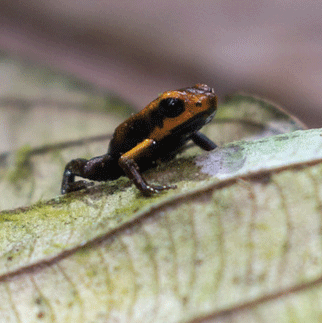
The deforestation of tropical moist forests in the buffer zones of the Ranita Dorada ProAves Reserve, located in the mountains of the Falan municipality, in the Tolima department, threatens the biodiversity of the conserved area, in which 2 species of frogs are found: the Tolimense poison frog (Andinobates tolimensis) and the dotted poison frog (andinobates dorisswansonae) endemic to Colombia and categorized as Vulnerable (VU) by the International Union for the Conservation of Nature (IUCN).

In the last few decades, the transformation of native forests in areas dedicated to deforestation have become the main threat to habitat for many species that depend on these conservation areas for survival. After many years of significant environmental destruction, the Fundación ProAves acquired the property that makes up the Ranita Dorada ProAves Reserve. It succeeded in a notable regeneration of native plant species in primary and secondary succession in what used to be paddocks, ultimately recuperating part of the habitat for various amphibious, mammal and bird species. 

The Ranita Dorada ProAves Reserve, established in 2008 to prevent the extinction of the Andinobates tolimensis and the Andinobates dorisswansonae, is considered an area of exceptional ecological importance. Here, any disturbance in the natural area has the potential to create an irreparable environmental disequilibrium, triggering the loss of unique species, especially amphibians. The latter are exceptionally sensitive to environmental changes. Until now, Andinobates tolimensis has only been registered in the locality it was first discovered in 2007, the ProAves Reserve, which is the only habitat of the Tolimense poison frog. 

Unfortunately, as of late, new deforestation activities are underway in an area adjacent to the Ranita Dorada ProAves Reserve, posing a real menace to the conservation efforts in progress there. The Fundación ProAves of Colombia makes an urgent call to the right entities so that they help us disseminate this dire situation, and help stop this great threat against the environment and, against the thousands of species that live in this area.

We appreciate the great support of IUCN, Dendrobatidae Nederland, Conservation International, Netherlands Postcode Lottery, and ASG for making this dream of saving the Tolimense poison frog a reality.

News translated by Sophie Maas