Fundación ProAves – por la conservación en el país de las aves

Categories
Conservacion Investigación News Noticias Águila Harpía Noticias Arrierito Antioqueño Noticias Chamicero de Perijá Noticias El Dorado Noticias El Jaguar Noticias El Mirador Noticias El Pangán Noticias El Paujil Noticias Giles Fuertesi Noticias Gorrión de Andivia Noticias Halcón Colorado Noticias Hormiguero de Torcoroma Noticias Las Tángaras Noticias Lora Carirosada Noticias Loro Coroniazul Noticias Mirabilis Swarovki Noticias Pauxi Pauxi Noticias Ranita Dorada Noticias Ranita Terribilis Noticias Reinita Cielo Azul Noticias Tití Cabeciblanco Noticias Zamarrito del Pinche

ProAves Reserves: Key Refuges for Colombia’s Most Threatened Primates

Colombia is home to 43 primate species, making it the country with the third highest primate diversity in Latin America, after Brazil and Peru. This figure is particularly significant considering that South America hosts 177 primate species, many of which are endemic and highly threatened—positioning Colombia as a key player in regional conservation efforts.

These charismatic mammals play a crucial role in maintaining ecosystem health: they disperse seeds, aid in forest regeneration, and act as indicators of environmental balance. 

According to the Red List of the International Union for Conservation of Nature (IUCN), Colombia has 3 primate species classified as Critically Endangered (CR), 5 as Endangered (EN), and 15 as Vulnerable (VU). 

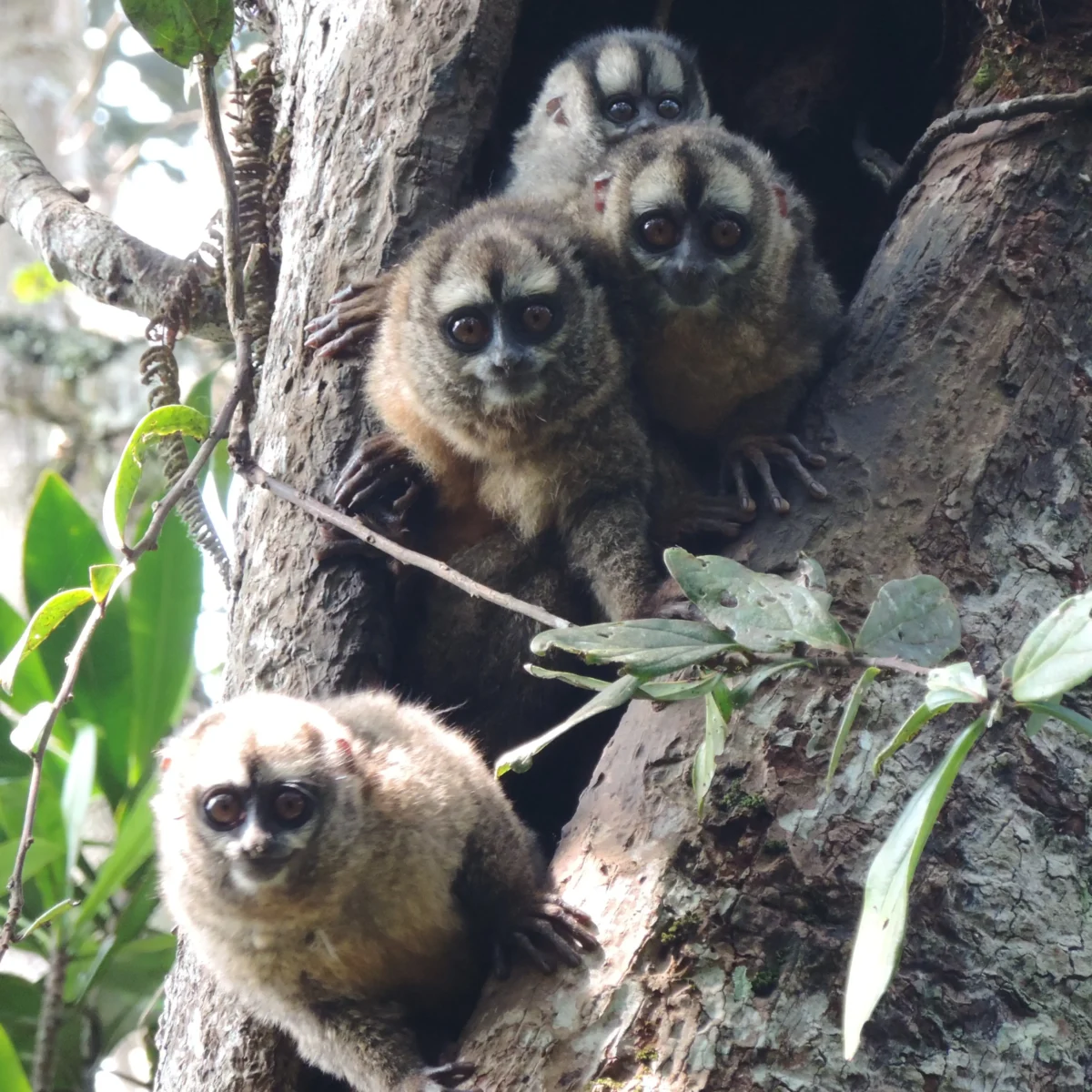
Among the most threatened are the Caquetá Titi (Plecturocebus caquetensis), the Cotton-top Tamarin (Saguinus oedipus), and the Brown Spider Monkey (Ateles hybridus), whose populations have drastically declined due to habitat loss and fragmentation, agricultural expansion, and the illegal wildlife trade. This situation calls for urgent action to strengthen conservation and ecosystem restoration strategies in the areas these species inhabit.

At Fundación ProAves, we actively work across our 27 Nature Reserves, protecting strategic habitats for these at-risk species:

These mammals inhabit tropical forests that, thanks to continuous conservation, restoration, and education efforts, remain vital refuges for their survival.

To protect them, we implement actions such as:


Icono bosque

Habitat conservation and restoration to ensure safe areas where primates can thrive free from threats.


Icono libro

Environmental education programs with local communities to discourage the keeping of primates as pets and reduce hunting.


Icono mono

Scientific research to better understand their ecology, behavior, and population status.

Our commitment to primate conservation is a pledge to preserve ecosystem balance and ensure a healthy future for the generations to come. We will continue to strengthen our efforts through joint work with local communities, environmental authorities, and strategic allies—promoting a comprehensive conservation model that values and respects the natural wealth of our territories.

Learn more about these charismatic mammals at:

Imagen 1
Categories
News Noticias Águila Harpía Noticias Arrierito Antioqueño Noticias Chamicero de Perijá Noticias Colibrí del Sol Noticias Cucarachero de Chicamocha Noticias El Dorado Noticias El Jaguar Noticias El Mirador Noticias El Pangán Noticias El Paujil Noticias El Tapir Noticias Giles Fuertesi Noticias Gorrión de Andivia Noticias Halcón Colorado Noticias Hormiguero de Torcoroma Noticias Las Tángaras Noticias Lora Carirosada Noticias Loro Coroniazul Noticias Loro Orejiamarillo Noticias Loros Andinos Noticias Mirabilis Swarovki Noticias Pauxi Pauxi Noticias Ranita Dorada Noticias Ranita Terribilis Noticias Reinita Cielo Azul Noticias Tití Cabeciblanco Noticias Zamarrito del Pinche

Great Bird Count in ProAves Reserves

ProAves participated in the October Big Day and added a total of 81 eBird lists– with 3,578 individuals and 588 distinct species of birds across 12 of their reserves.

This puts the Foundation’s Nature Reserves among the top tier of the eBird listings in Colombia: The reserve “El Jaguar” came in first place at the national level with a total of 150 species, the “El Pangán” reserve ranked fourth place with 113 species and the “Arrierito Antioqueño” reserve came in eighth place with 106 registered species.

OCTOBER BIG DAY, EVERY BIRD COUNTS

With 253 countries participating in the October Big Day (OBD), Colombia ranked first in the number of species registered worldwide on the eBird platform. The country topped the list in bird watching with 1,343 published bird species. Second and third place belongs to Peru and Ecuador, with 1,222 and 1,098 recorded species, respectively.

Colombia, known as the world’s premier hotspot for avian biodiversity, came together again and demonstrated its love for birds on the October Big Day. This citizen science initiative, organized by the Cornell Laboratory of Ornithology, mobilized thousands of Colombians, accumulating an incredible sum of 3,476 eBird checklists across the country. In comparison, birders from the United States submitted over 33,000 checklists, summing only 631 total species (less than half that Colombia). This is a testament to the immense biodiversity of Colombia.

The largest bird count in the world was held on a very special date, coinciding with World Migratory Bird Day and the arrival of thousands of avian migrants, coming to spend the winter months feeding in the ecological haven that is Colombia.

We thank all the people and institutions that support the conservation of birds, especially:

usfish
Categories
News Noticias Chamicero de Perijá

Colombian forests are disappearing

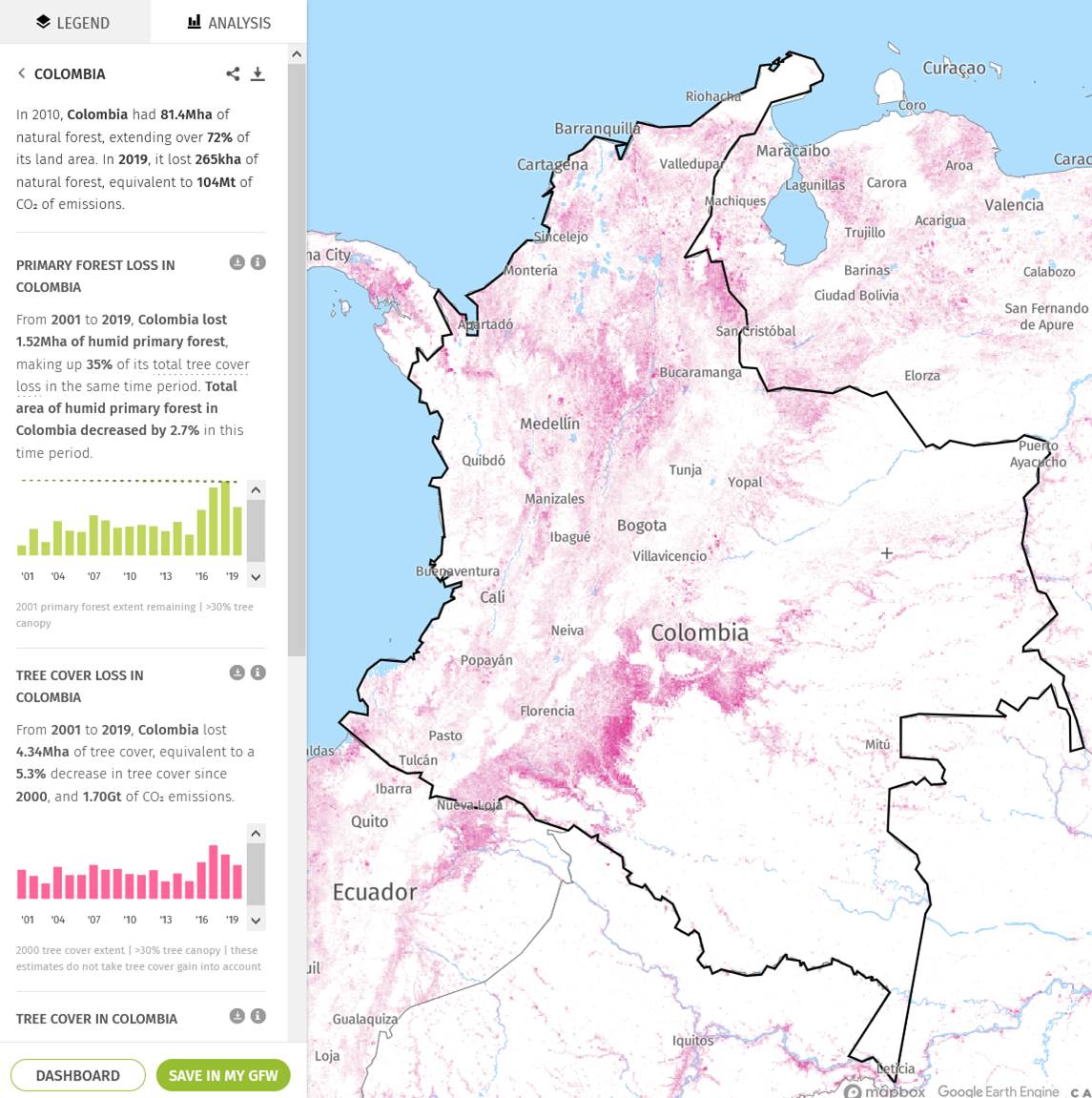
Colombian forests have been ruthlessly cut down – we have lost 563,000 hectares of primary rainforest from 2016-2019 and that was before the tsunami of increased illegal logging and land invasions during the pandemic.  An area three times the size of Bogota D.C. has been destroyed and over 1.4 billion trees have been  lost. 

If every Colombian, a population of 50.3 million individuals, planted a tree every month it would take over 2 years just to recover those trees lost from 2016-2019. Yet Colombian’s unparallel biodiversity – for example its #1 world ranking diversity in birds – is also being lost with those forests and these species can not be replanted.

While planting trees is inspiring it is merely symbolic. Stopping the destruction of Colombia’s amazing wild places, like the neotropical rainforests, alpine tundra ecosystems and cloud forests. Preserving all species in these ecosystems – is undeniably the most important priority.

Pandemic has created the Wild West

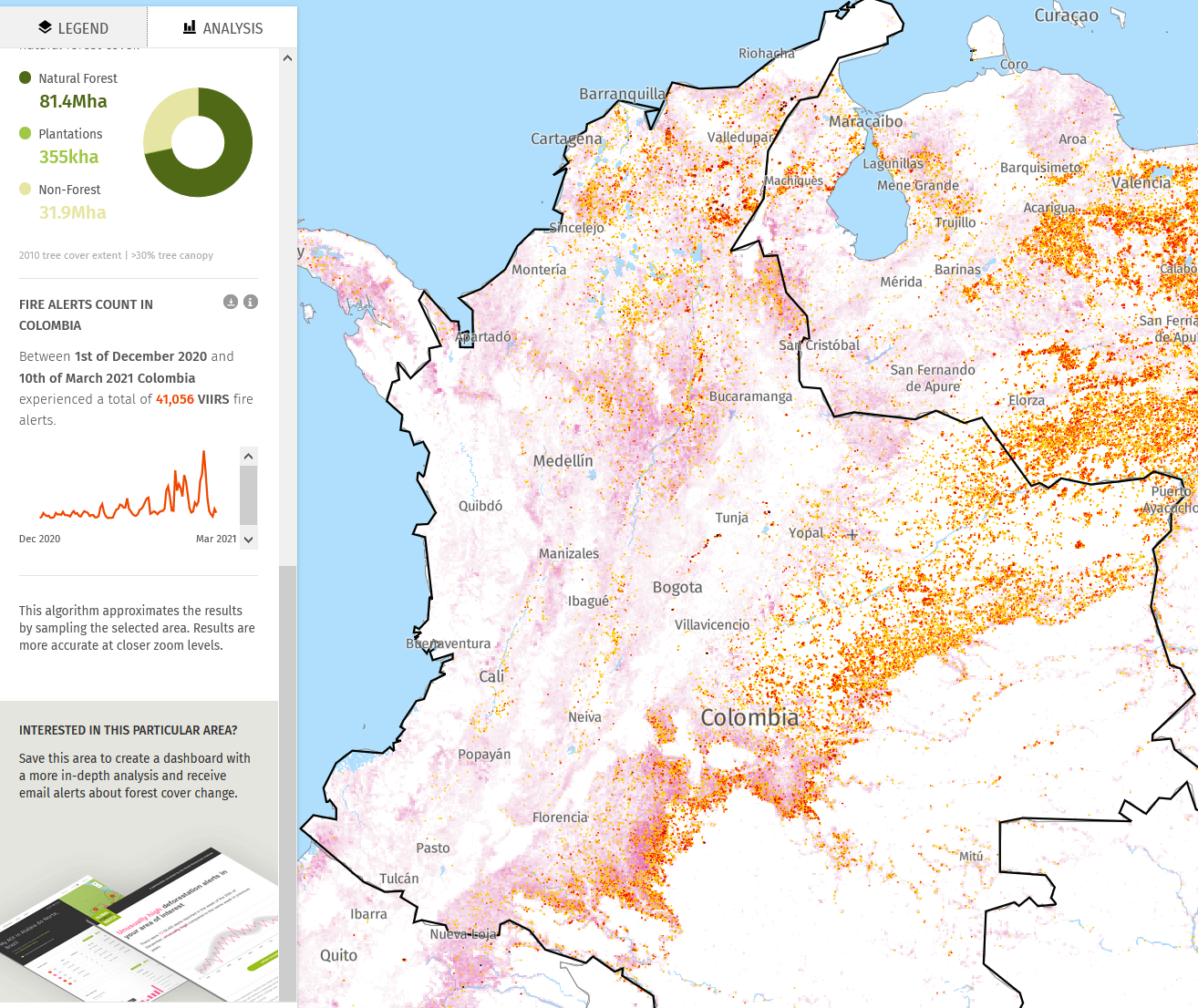
But anti-deforestation programs have no chance.  Current deforestation rates are accelerating. In just the past 3 months, Global Forest Watch – a free online tool that provides daily deforestation alerts for all of Colombia – shows a massive spike in forest fires – over 41,000 forest fires between 1st December 2020 to 10 March 2021.

Sadly, the recent spike in deforestation has greatly affected Colombia’s precious Protected Area system – with the media and Global Forest Watch reporting extensive threats from illegal mining and logging across National Parks and Nature Reserves. 

Threats against conservation

Since 1998, Fundación ProAves has faced many challenges to conserve its 28 Nature Reserves, where more than 1,600 species of the country are protected, and most of the endemic or threatened birds exist in Colombia. Today, COVID-19 presents us with another great challenge for conservation.

Unscrupulous people have seen the pandemic as an opportunity to aggressively inflict natural areas and cause irreversible environmental detriment to the ProAves Reserves:

Unfortunately, in 10 of the 28 ProAves Reserves, attacks of different kinds were registered, for which it was necessary to hire trained personnel and strengthen the patrolling and control of the limits of the conservation areas. In addition, 5 complaints were filed with the Attorney General’s Office, 10 complaints with the Municipal Inspections, three complaints with the environmental authorities, one complaint with the National Aquaculture and Fisheries Authority, two complaints with civil courts, and three complaints with the Army National.

The misfortune of Colombia, its precious natural resources

The withdrawal of the FARC has created an opportunity for legal and illegal industries to take advantage of Colombia’s natural forest treasure’s.

Colombian government receives tens of million of dollars from Norway, Germany and Great Britain for forest protection programs to fight climate change and preserve tropical forests that produce life-sustaining oxygen and capture CO2 in vegetation. Independent satellite data from Global Forest Watch show these programs are having virtually no effect in Colombia primarily because they are not supporting grassroots efforts by communities and small NGOs like Fundación ProAves. 

If Colombia is to salvage what remains of its most precious asset – its living natural wonders – it needs to start supporting and empowering local efforts to protect what remains and aggressively penalize illegal mining and logging with the full weight of the judiciary government.