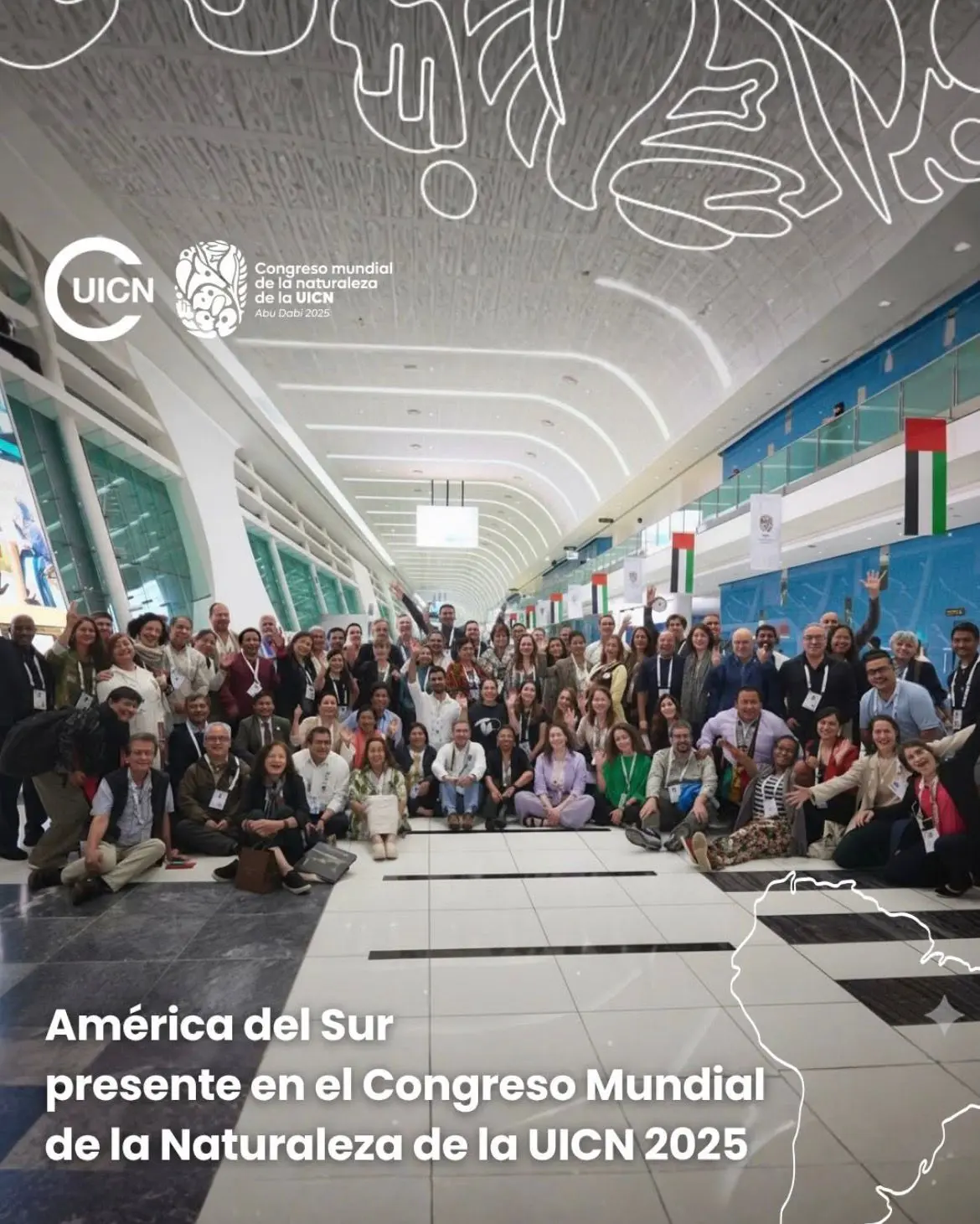
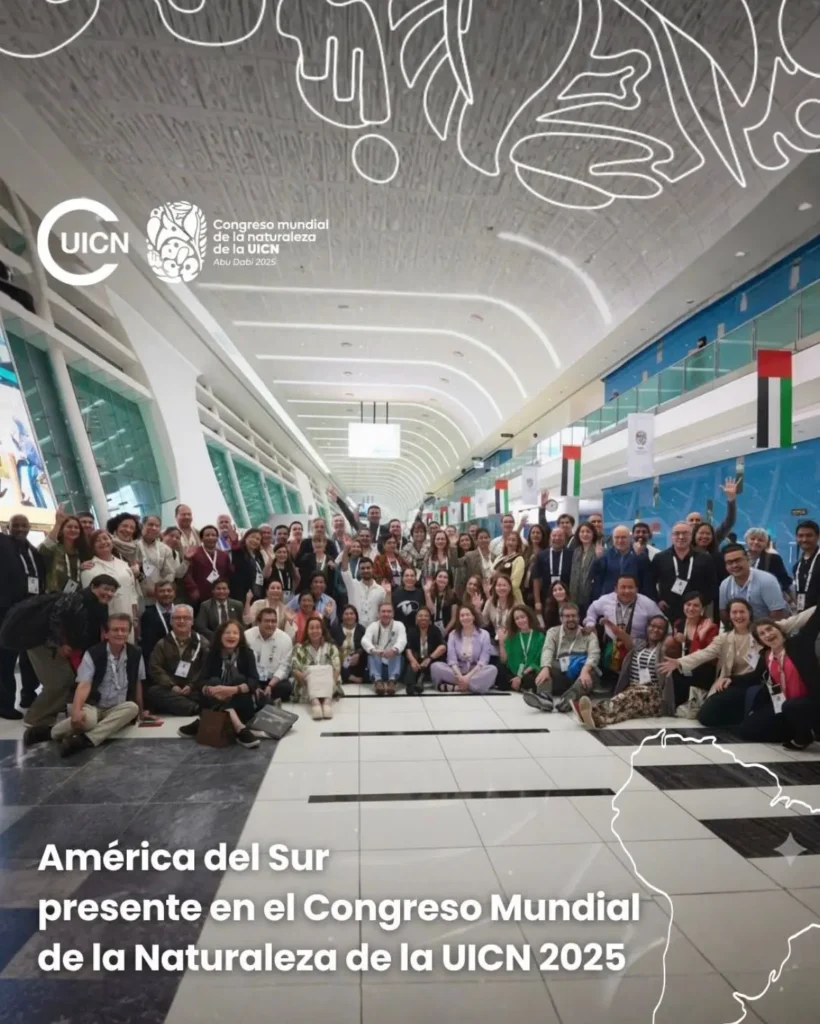
Abu Dabi, Emiratos Árabes Unidos — Octubre de 2025. La Fundación ProAves de Colombia participó activamente en el Congreso Mundial de la Naturaleza de la UICN 2025, uno de los escenarios internacionales más importantes para el diálogo y la acción en torno a la conservación ambiental. Desde este encuentro global, ProAves llevó la voz de Colombia, presentando avances, experiencias y desafíos desde los territorios donde la organización trabaja por la protección de la biodiversidad.
Más que una ponencia: un mensaje de país
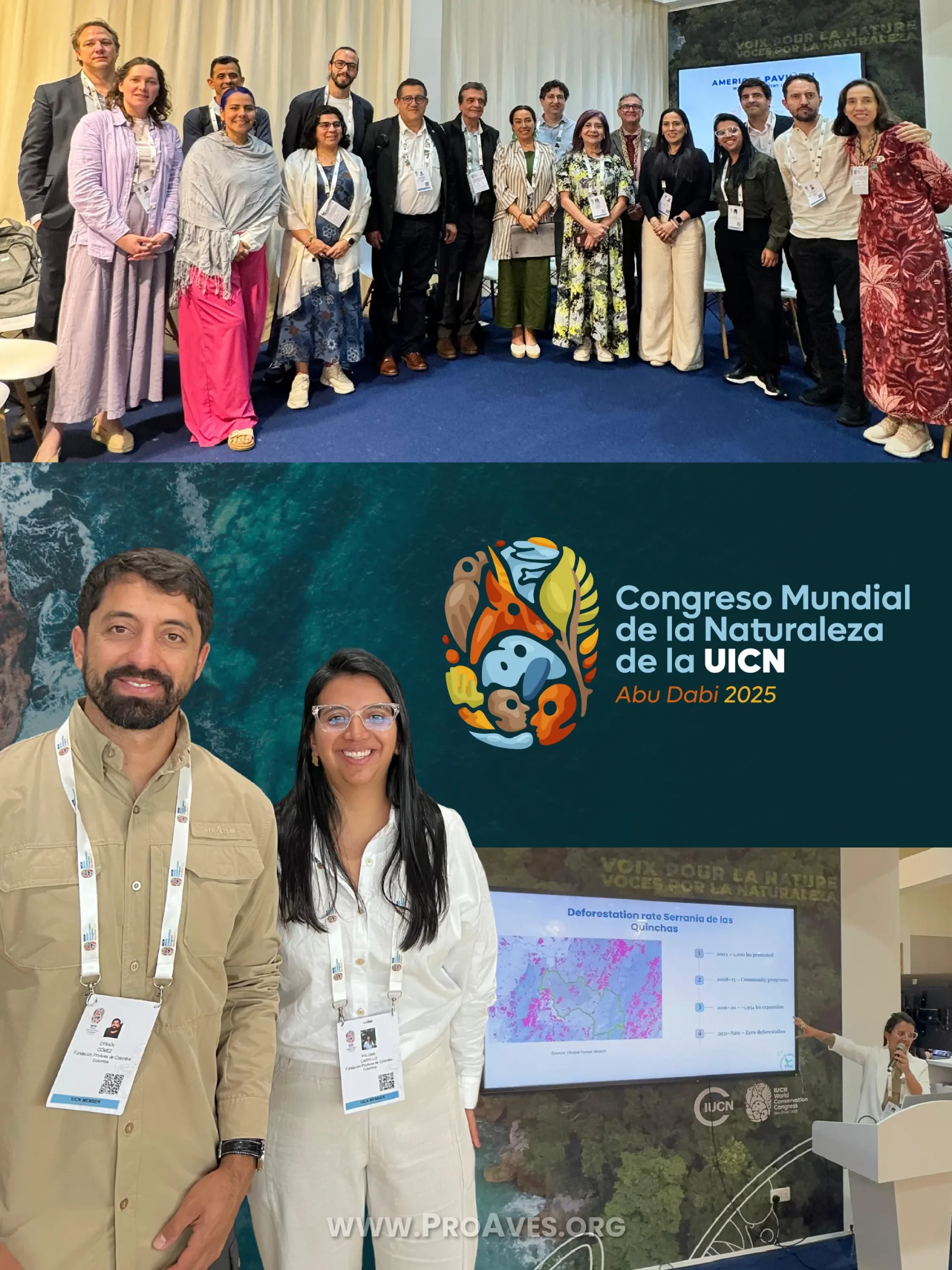
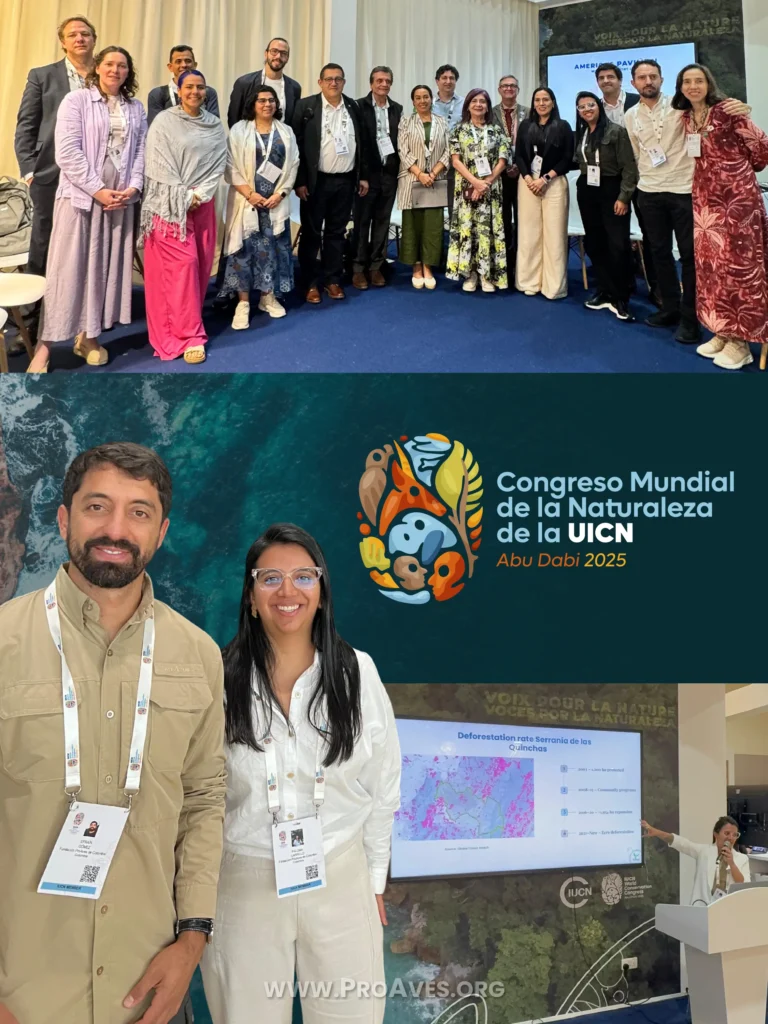
Durante el evento, la Directora Ejecutiva de ProAves, Paloma Carrillo, fue una de las voces protagonistas en el panel “Conservación en Colombia tras 10 años de paz con la naturaleza”, donde compartió la experiencia de la Fundación en restauración ecológica, trabajo comunitario y monitoreo científico.
En su intervención, destacó cómo la conservación se ha convertido en una herramienta poderosa de reconciliación en territorios que históricamente han enfrentado conflictos sociales y ambientales.
“La conservación es también un camino hacia la paz. Proteger la vida es proteger las oportunidades de un futuro común”, afirmó Carrillo durante su ponencia.
Más que una ponencia: un mensaje de país
Durante el evento, la Directora Ejecutiva de ProAves, Paloma Carrillo, fue una de las voces protagonistas en el panel “Conservación en Colombia tras 10 años de paz con la naturaleza”, donde compartió la experiencia de la Fundación en restauración ecológica, trabajo comunitario y monitoreo científico.
En su intervención, destacó cómo la conservación se ha convertido en una herramienta poderosa de reconciliación en territorios que históricamente han enfrentado conflictos sociales y ambientales.
“La conservación es también un camino hacia la paz. Proteger la vida es proteger las oportunidades de un futuro común”, afirmó Carrillo durante su ponencia.
Colombia: un modelo de acción y compromiso
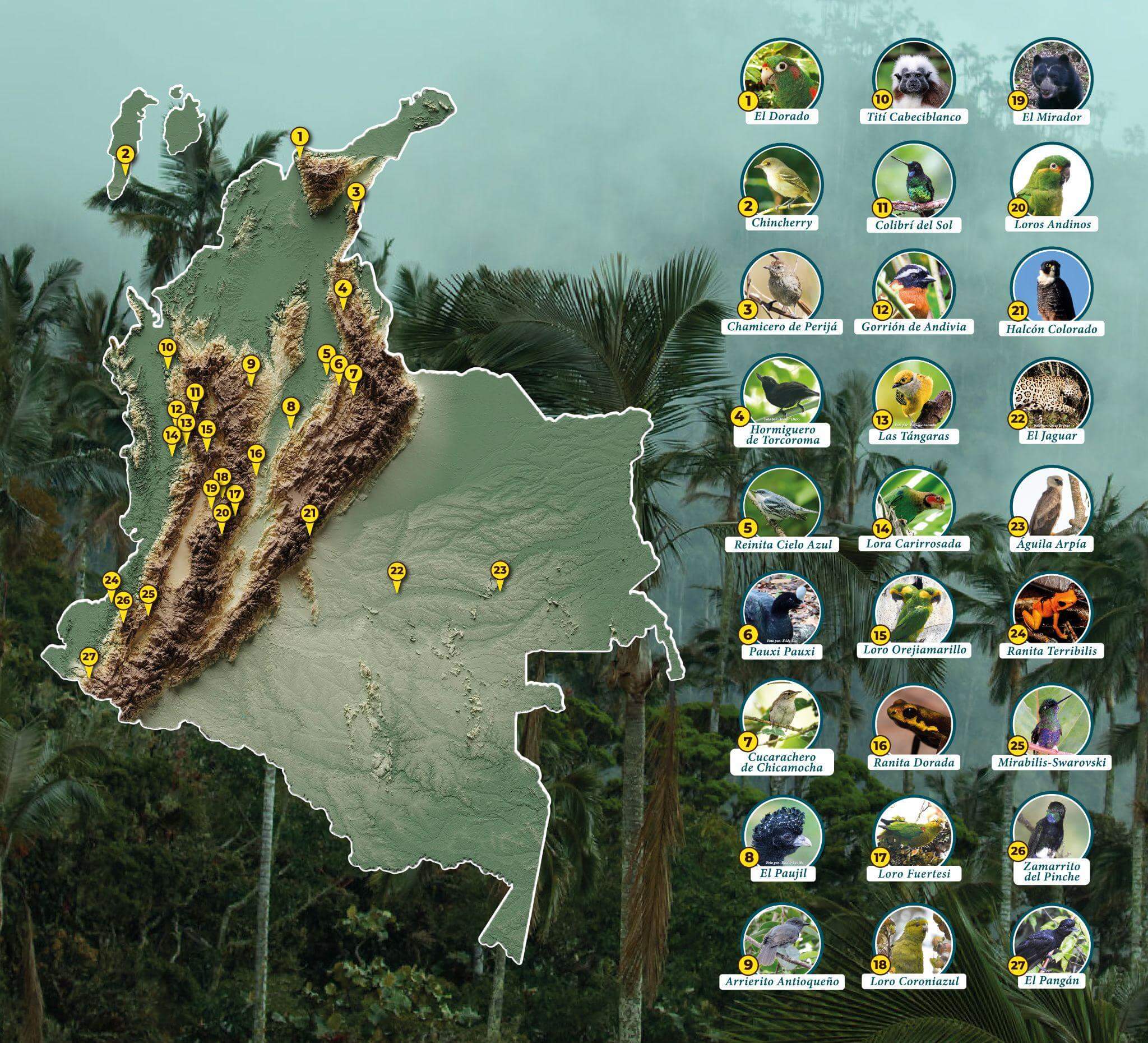
ProAves presentó ante los miembros de la UICN resultados concretos derivados de su trabajo en las 27 Reservas Naturales que la organización protege a lo largo del país. Entre los principales aportes se destacaron:
Restauración de hábitats y corredores biológicos: la Fundación ha liderado la siembra y recuperación de miles de hectáreas de bosque nativo, garantizando la conectividad entre ecosistemas fragmentados.
Protección de especies amenazadas: se resaltaron los programas de conservación del Loro Orejiamarillo (Ognorhynchus icterotis), Paujil de Pico Azul (Crax alberti), el Periquito de Santa Marta (Pyrrhura viridicata) y la, especies emblemáticas que representan el compromiso de Colombia con su fauna endémica.
Alianzas locales e internacionales: Paloma Carrillo subrayó que la clave está en el trabajo articulado con comunidades, instituciones públicas y organizaciones internacionales.
“La conservación no se logra desde los escritorios; se construye caminando junto a las comunidades que habitan y cuidan el territorio.”
El stand de Colombia: una vitrina de diversidad y esperanza
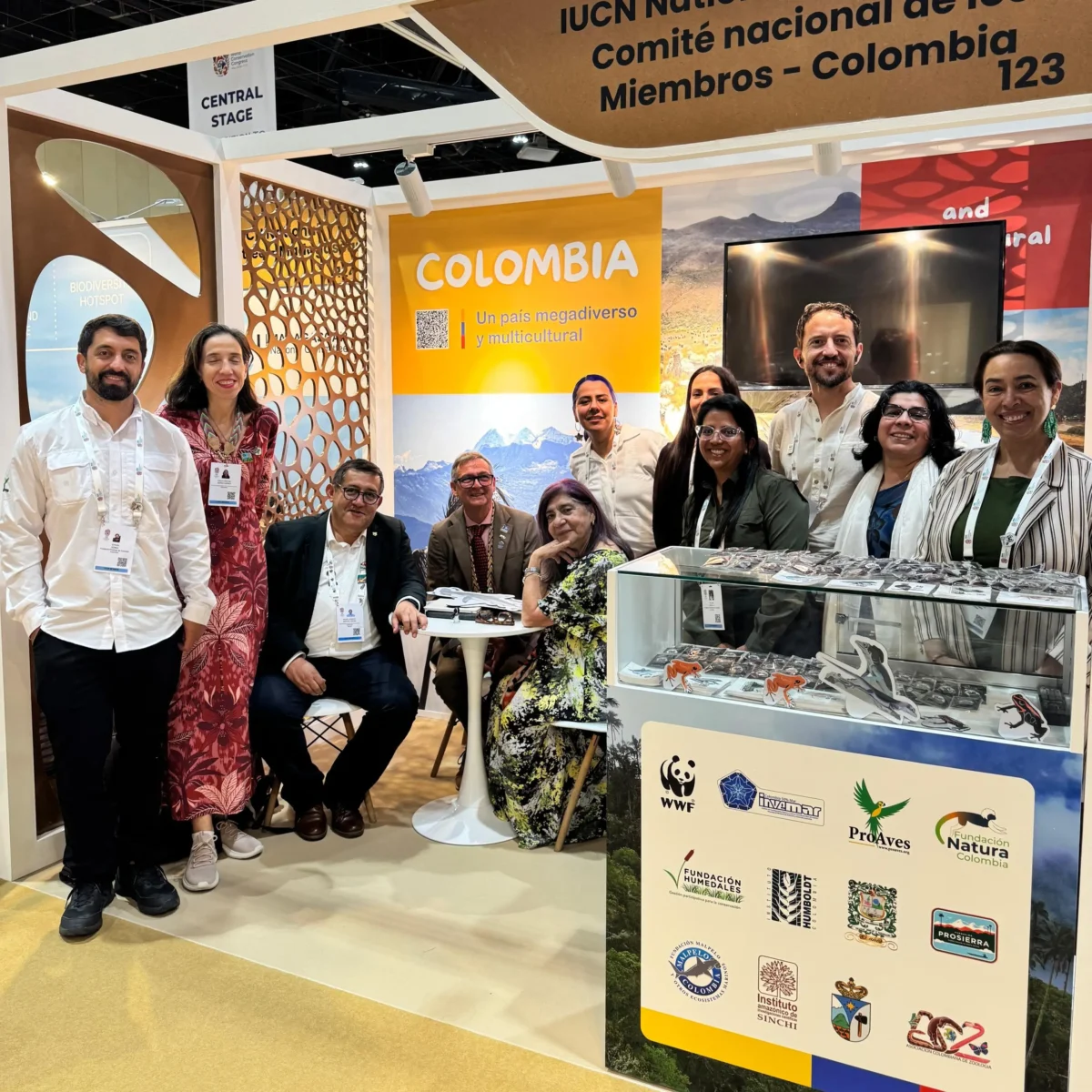
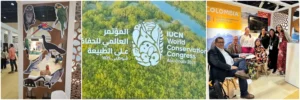
El Comité Nacional de Miembros de la UICN – Colombia contó con un espacio destacado dentro del pabellón principal del Congreso. ProAves, junto con otras organizaciones miembro, presentó su trabajo, resultados científicos y materiales educativos que visibilizan la riqueza natural del país y las acciones de conservación en marcha.
El espacio sirvió además como punto de encuentro para fortalecer alianzas, compartir experiencias y consolidar estrategias conjuntas para el futuro ambiental del país.
Un mensaje desde el territorio para el mundo
Durante su participación, ProAves insistió en que la conservación no es solo un esfuerzo técnico, sino un proceso humano y colectivo que involucra a comunidades, investigadores, gobiernos y organizaciones. En los diferentes espacios del Congreso, la Fundación reiteró su compromiso de seguir trabajando por una Colombia que lidera con hechos la protección de la vida.
Presencia mediática y visibilidad internacional
La participación de ProAves fue destacada por diversos medios nacionales e internacionales, resaltando el papel de la organización como referente de conservación en América Latina. Las notas y entrevistas publicadas resaltaron la visión de la Fundación: una conservación con justicia social, participación comunitaria y enfoque científico, que trasciende fronteras.
Hacia nuevas acciones por la naturaleza
El mensaje que llevó ProAves a Abu Dabi no termina con el cierre del Congreso. Durante los próximos meses, la organización integrará las conclusiones y alianzas obtenidas en el encuentro global a su estrategia nacional, fortaleciendo el trabajo en campo y la educación ambiental en las reservas.
“Este es un llamado global desde Colombia por la vida que nos une. Cada acción, cada Reserva y cada especie protegida son una esperanza compartida para el planeta.”
Sobre la UICN 2025
El Congreso Mundial de la Naturaleza de la UICN es el encuentro ambiental más importante del planeta, que reúne a gobiernos, científicos, comunidades y organizaciones para definir políticas globales en materia de biodiversidad. Este año, en Abu Dabi, se destacaron los avances y desafíos en torno al cambio climático, la pérdida de biodiversidad y la necesidad de una transición justa hacia la sostenibilidad.
ProAves de Colombia
Fundación líder en conservación de aves y biodiversidad en Colombia, con 27 Reservas Naturales y más de dos décadas de trabajo continuo. Su misión es proteger la vida, fortalecer la ciencia y promover la educación ambiental desde el territorio.
A Global Call for Life from Colombia
Abu Dhabi, United Arab Emirates — October 2025. The ProAves Foundation of Colombia actively participated in the 2025 IUCN World Conservation Congress, one of the most important international forums for dialogue and action on environmental conservation. At this global gathering, ProAves brought Colombia’s voice to the world, sharing progress, experiences, and challenges from the territories where the organisation works to protect biodiversity.
More Than a Presentation: A Message from a Nation
During the event, ProAves’ Executive Director, Paloma Carrillo, was one of the key speakers on the panel “Conservation in Colombia: Ten Years of Peace with Nature,” where she shared the Foundation’s experience in ecological restoration, community engagement, and scientific monitoring. In her remarks, she highlighted how conservation has become a powerful tool for reconciliation in territories historically affected by social and environmental conflict.
“Conservation is also a path toward peace. To protect life is to protect the opportunities for a shared future,” Carrillo stated during her presentation.
Colombia: A Model of Action and Commitment
ProAves presented to IUCN members tangible results stemming from its work in the 27 Natural Reserves the organization manages across the country. Among the key achievements highlighted were:
Habitat restoration and biological corridors: The Foundation has led the planting and recovery of thousands of hectares of native forest, ensuring connectivity between fragmented ecosystems.
Protection of threatened species: Conservation programs for the Yellow-eared Parrot (Ognorhynchus icterotis), Blue-billed Curassow (Crax alberti), and Santa Marta Parakeet (Pyrrhura viridicata) were showcased — emblematic species that embody Colombia’s commitment to its endemic fauna.
Local and international partnerships: Carrillo emphasized that success depends on working hand in hand with communities, public institutions, and international organizations.
“Conservation doesn’t happen behind desks; it’s built by walking alongside the communities who live in and care for the land.”
The Colombia Pavilion: A Showcase of Diversity and Hope
The IUCN Colombia National Committee had a prominent space within the main exhibition hall of the Congress. ProAves, together with other member organisations, presented its work, scientific results, and educational materials that highlighted the country’s natural wealth and ongoing conservation efforts.
The pavilion also served as a meeting point to strengthen alliances, exchange experiences, and consolidate joint strategies for Colombia’s environmental future.
A Message from the Field to the World
Throughout its participation, ProAves emphasised that conservation is not only a technical effort but also a human and collective process involving communities, researchers, governments, and organisations.
In various Congress sessions, the Foundation reiterated its commitment to continue building a Colombia that leads with tangible actions in the protection of life.
Media Presence and International Visibility
ProAves’ participation was featured by several national and international media outlets, which highlighted the organisation’s leadership in Latin American conservation. Articles and interviews underscored the Foundation’s vision, a model of conservation rooted in social justice, community participation, and scientific rigour that transcends borders.
Moving Forward: New Actions for Nature
The message ProAves carried to Abu Dhabi will not end with the Congress. In the coming months, the organisation will integrate the conclusions and partnerships forged during the global gathering into its national strategy, strengthening on-the-ground conservation and environmental education across its reserves.
“This is a global call from Colombia for life that unites us all. Every action, every Reserve, and every protected species represents a shared hope for our planet.”
About the IUCN 2025 Congress
The IUCN World Conservation Congress is the world’s leading environmental event, bringing together governments, scientists, communities, and organizations to define global biodiversity policies. This year in Abu Dhabi, the Congress spotlighted progress and challenges related to climate change, biodiversity loss, and the urgent need for a just transition toward sustainability.
ProAves Colombia
A leading conservation foundation dedicated to protecting birds and biodiversity in Colombia, managing 27 Natural Reserves and over two decades of continuous work. Its mission is to protect life, strengthen science, and promote environmental education from the field.
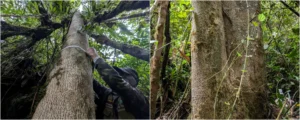
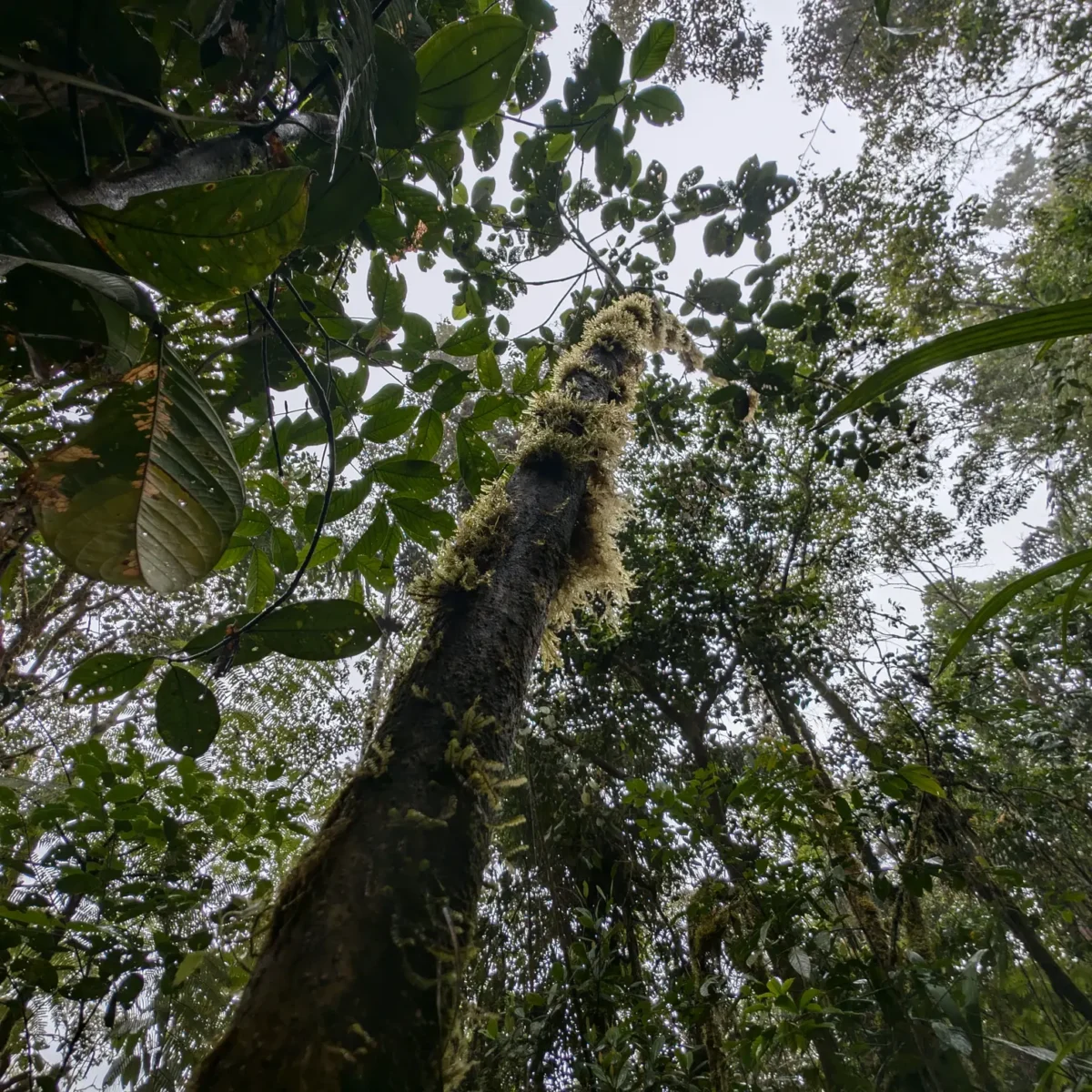
In the Arrierito Antioqueño ProAves Reserve, located in Anorí (Antioquia), one of the most emblematic and ancient trees of the forest has fallen. It was a Magnolia coronata, known locally as the “Crowned Almanegra,” regarded by the inhabitants and caretakers of the territory as a true elder of the forest — for its majestic size and the many years it had stood rooted in these mountains.
The fallen Magnolia coronata in the Arrierito Antioqueño Reserve — a symbol of life and memory in the forests of Anorí.
The forest ranger Alexander Arango reported the fall of the tree. According to his account, the heavy rains of recent weeks, combined with the natural aging of this giant, likely contributed to its collapse. Though the loss of such a specimen brings sadness, its legacy lives on in the ecosystem it helped sustain for decades.
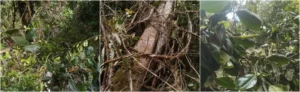
The roots of the forest elder: silent witnesses to decades of life and balance.
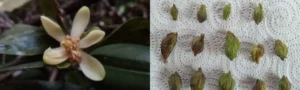
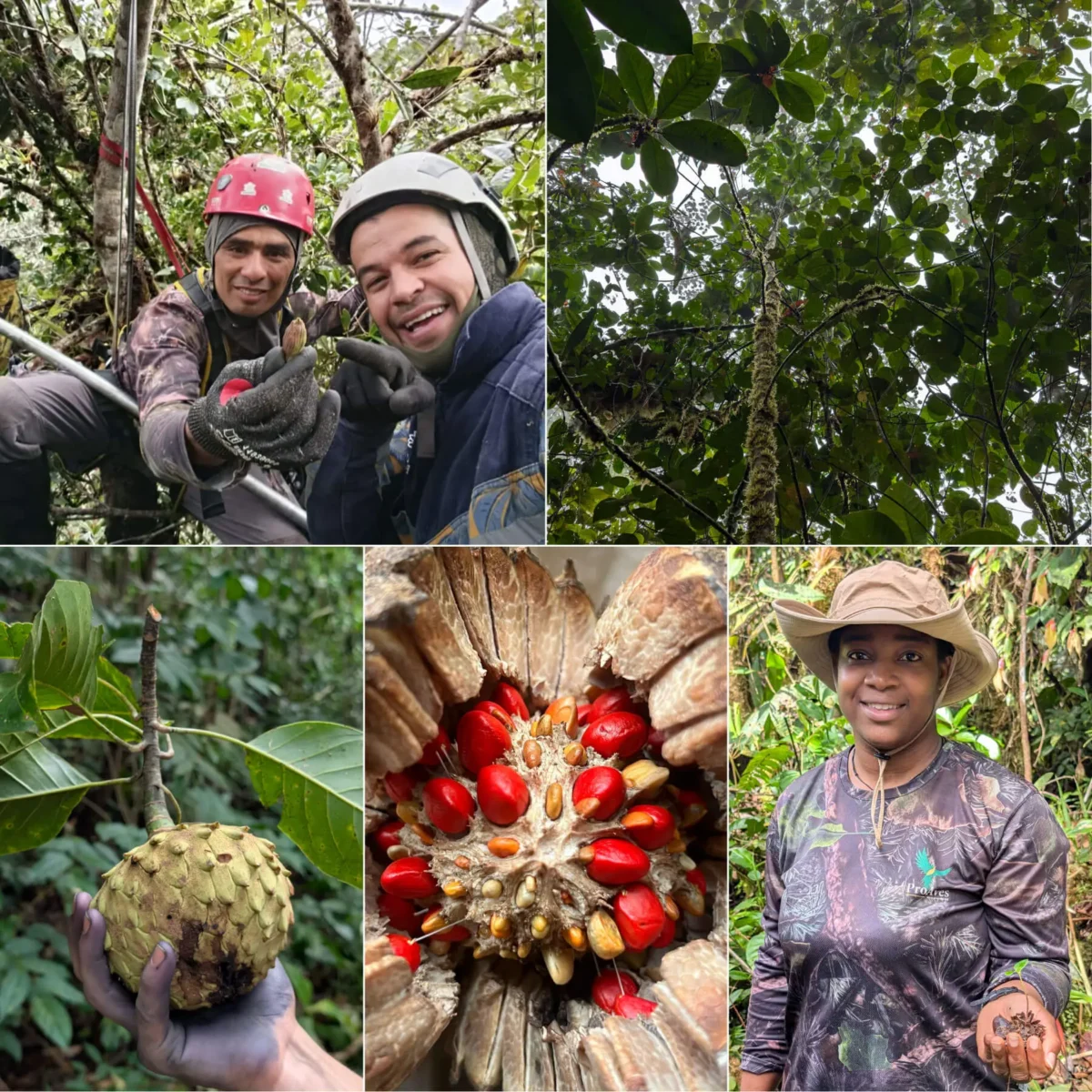
This Magnolia coronata is an endemic species, listed as Critically Endangered (CR) by the IUCN (2025). It grows in the Andean forests of the Antioquia department, between 1,800 and 2,500 meters above sea level. Its flowers and seeds play a vital role in pollination and seed dispersal, while providing shelter and food to birds, insects, and other forest dwellers.
The flowers and seeds of Magnolia coronata are essential for pollination and the spread of life across the Andean forests.
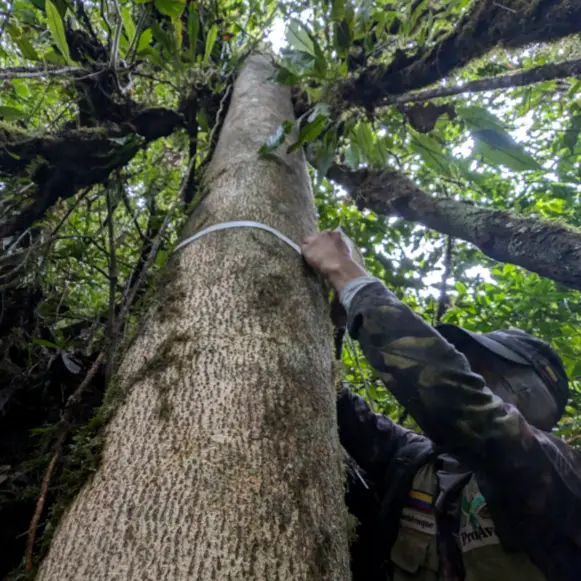
This “Crowned Almanegra” was a monumental tree, rising above the forest canopy. It measured approximately 32 meters in height and 50 centimeters in diameter at chest level, growing beside a natural spring within the humid forest of the Reserve.
The ranger noted in his field notebook:
“…the Antioquia Brush-Finch (Lipaugus weberi) came to feed on one of its fruits,” illustrating how this tree was an active part of the local landscape and its web of life.
As Ana María Rueda, coordinator of the Magnolia Project at ProAves, explains:
“Although the fall of this elder moves us deeply, it also opens the way for life: the light now reaching the understory will allow young Magnolia coronata saplings and other native species to grow — reminding us that in the forest, nothing is lost, everything transforms.”
This event is not just the farewell to a single tree, but a reaffirmation of the importance of conserving and restoring Andean forests — home to unique and threatened species.
According to specialist Dr. Marcela Serna (IUCN, 2025),
“The population of Magnolia coronata has declined by more than 80% due to habitat fragmentation. Remaining subpopulations are small and isolated, composed mainly of mature individuals.”
At the Arrierito Antioqueño ProAves Reserve, monitoring and reforestation efforts will continue, honoring the memory of this forest elder by protecting the new generations of magnolias sprouting beneath its fallen canopy.
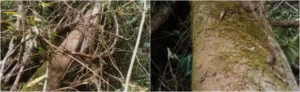
New magnolia seedlings emerge where the elder once stood — life always finds its way.
The images captured from the site show the magnitude of the fallen tree and the life that still thrives around it — a reminder that nature always finds ways to renew itself.
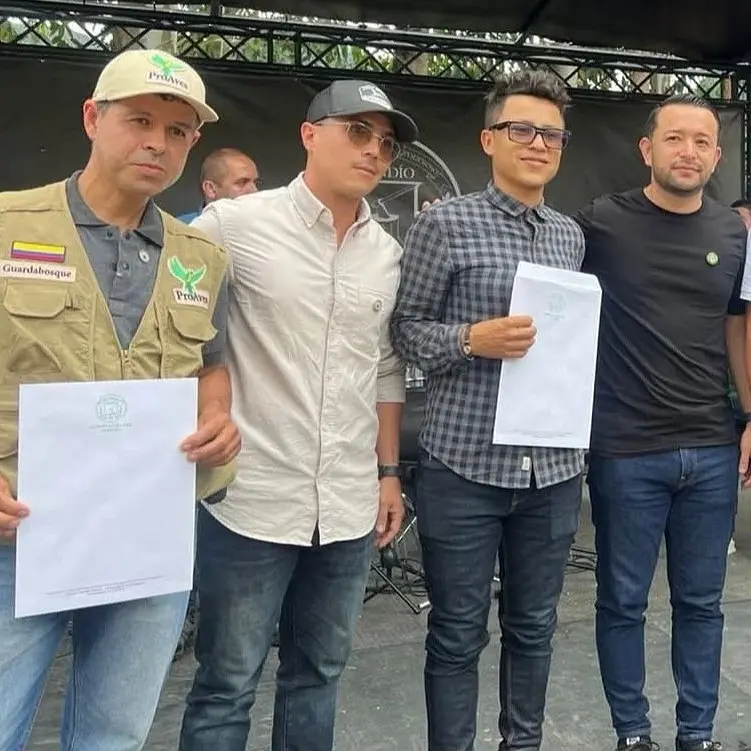
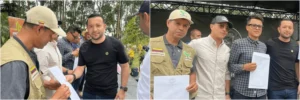
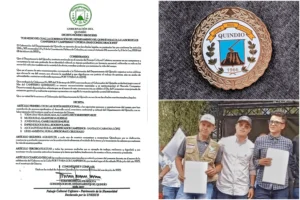
The ProAves Foundation is proud to announce that its park ranger, Sergio Raúl Cruz, has been awarded the Institutional Medal as Rural Environmental Leader by the Government of Quindío. This recognition, granted under Decree No. 688 of 2025, honors the work of the farmers and rural communities of the departmen.
Sergio was recognized for his significant contribution to the social, economic, environmental, and cultural development of Quindío, thanks to his exemplary work in the rural territory of the municipality of Génova.
We are deeply proud to have park rangers like Sergio Cruz, who demonstrate an exceptional commitment to conservation efforts in the areas where our reserves are established. His dedication is a cornerstone in the protection of our natural heritage.
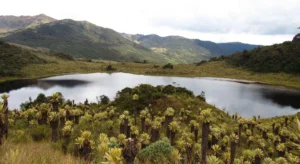
The ProAves Loros Andinos Reserve, located between the municipalities of Roncesvalles (Tolima) and Génova (Quindío), celebrates 16 years as a stronghold for the conservation of high Andean forests and páramos of the Central Cordillera, and as a key refuge for endangered parrot species.
Established in 2009 as a Civil Society Nature Reserve, it was reclassified in 2024 as the Loros Andinos Regional Natural Park in coordination with the Tolima Regional Environmental Authority (CORTOLIMA). The park protects more than 2,500 hectares of strategic ecosystems at altitudes ranging from 3,250 to 3,980 meters above sea level, forming part of the Loros Andinos Conservation Corridor, which also includes the El Mirador and Fuertes’s Parrot Reserves. Together, these areas safeguard over 6,700 hectares of vital habitat for endemic and threatened species, playing a crucial role in conserving the region’s unique biodiversity.
A refuge for unique species
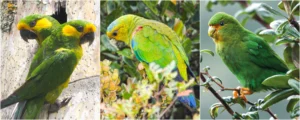
Among the main species protected in the reserve are five parrots classified as threatened, three of them endemic to Colombia: the Yellow-eared Parrot (Ognorhynchus icterotis), Fuertes’s Parrot (Hapalopsittaca fuertesi), and the Rufous-fronted Parakeet (Bolborhynchus ferrugineifrons). Additionally, more than 360 bird species have been recorded here, as well as emblematic mammals such as the spectacled bear, mountain tapir, and páramo deer.
The diversity of ecosystems — including montane forests, very humid forests, and páramo zones — makes the Reserve a privileged space for scientific research, ecological restoration, and environmental education.
Over the past 16 years, the Loros Andinos Reserve has been the site of multiple conservation efforts led by Fundación ProAves, including:
Monitoring of threatened bird populations.
Propagation and restoration of key plant species, such as magnolias.
Environmental education activities with local communities and visitors.
On this anniversary, we reaffirm our commitment to protecting Andean ecosystems and conserving species found only in Colombia. Through science, education, and community engagement, the ProAves Loros Andinos Reserve continues to be a model of active and effective conservation.
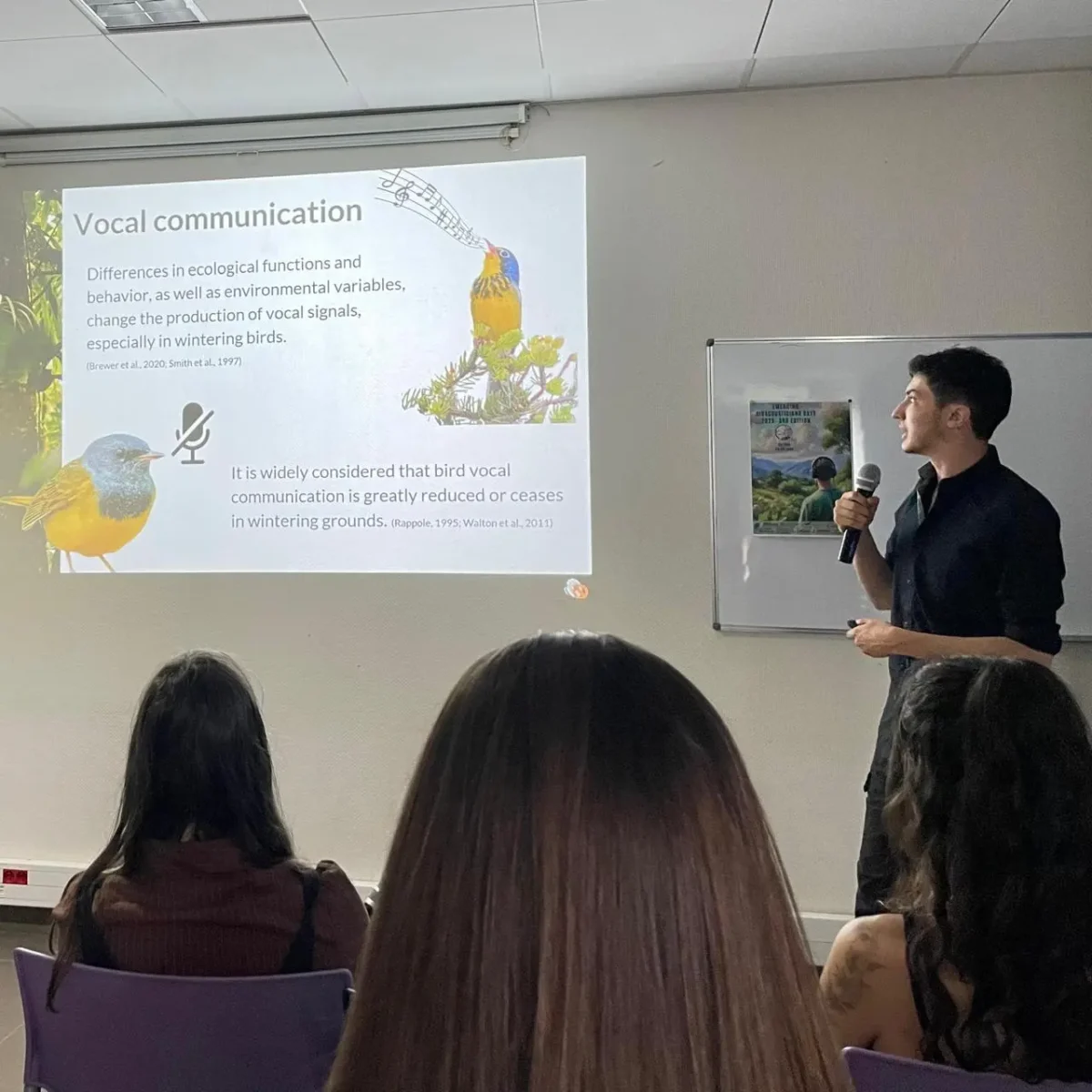
Thanks to the Migratory Bird Scholarship Program awarded by Fundación ProAves, researcher Diego Mejía presented his scientific work at the third edition of the international JJBA conference (Journées Jeunes BioAcousticiens), held from June 23 to 26, 2025, in Vernon, France. His presentation reached an audience of over 60 bioacoustics and biology experts from various European countries,
This project was made possible through the support of Fundación ProAves, which fosters scientific advancement among young Colombians through its scholarship program—providing real opportunities for a new generation of researchers to contribute to biodiversity knowledge and conservation.
The research focused on identifying components of vocal behavior in two migratory bird species: the Golden-winged Warbler (Vermivora chrysoptera) and the Cerulean Warbler (Setophaga cerulea) during their stay in wintering areas in Colombia, specifically within the ProAves Arrierito Antioqueño and Reinita Cielo Azul reserves.
The goal was to understand how the ecological and developmental functions of their vocalizations vary in contrast to their breeding grounds in North America.
Mejía emphasized the importance of conducting research in tropical regions. His message was clear: “If studies focus only on temperate regions like Europe or the United States, we are seeing only half of the ecological story of migratory birds. In this sense, conducting research in megadiverse countries like Colombia is essential to understanding their full life cycles.”
The scholarship developed by Diego was one of twelve awarded by ProAves in the second half of 2024, and it represents not only a scientific achievement but also a powerful example of how academic support initiatives are paving the way for conservation and research in Colombia to gain international recognition and voice.
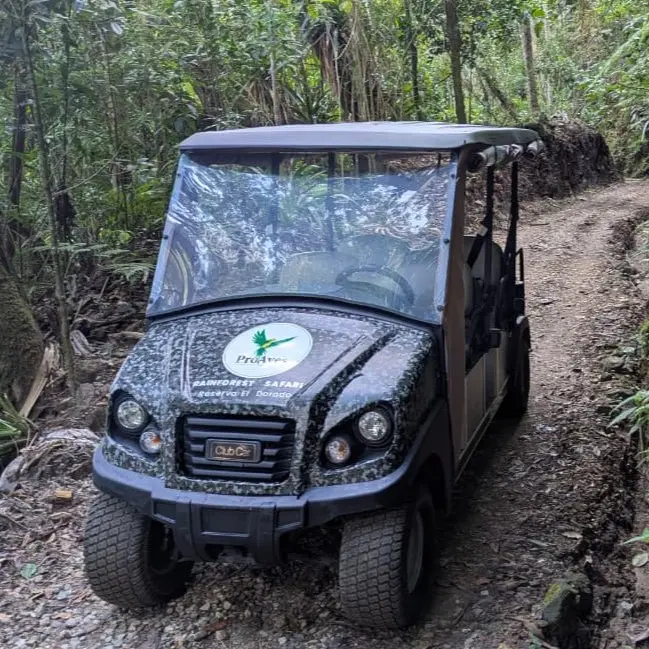
In the heart of one of the most biodiverse ecosystems on the planet, the ProAves El Dorado Reserve has taken a new step in its commitment to environmental conservation. In recent days, a multipurpose electric vehicle was officially incorporated into the Reserve’s operations—a key tool to improve conservation logistics and offer a more sustainable experience.
This fully electric vehicle will enable silent, efficient, and emission-free transportation within the Reserve. It is an environmentally friendly solution designed to minimize the impact on the species that inhabit this unique region, especially endemic birds and other animals sensitive to noise and air pollution.
Located in the Cuchilla de San Lorenzo in the Sierra Nevada de Santa Marta, the ProAves El Dorado Reserve is home to nearly 420 bird species, including the iconic Santa Marta Parakeet (Pyrrhura viridicata) and the Santa Marta Bush-Tyrant (Myiotheretes pernix). It also hosts several endemic species of amphibians, mammals, and plants that depend on highly fragile ecosystems.
In line with its commitment to protecting this valuable natural heritage, the El Dorado Reserve is investing in improved transportation conditions while strengthening internal logistics for the efficient transport of materials, photographic equipment, supplies, and scientific gear.
The decision to adopt electric technology not only enhances the Reserve’s operational infrastructure but also reinforces its approach to carrying out conservation actions in an environmentally responsible way. This move complements other sustainability initiatives such as active reforestation, the use of clean energy through solar panels, and the protection of threatened species’ habitats.
With initiatives like this, the ProAves El Dorado Reserve continues to establish itself as an exemplary model of conservation in Colombia and Latin America. The incorporation of sustainable solutions into daily operations shows that it is possible to harmonize the protection of natural heritage with the development of responsible and transformative experiences. Every step toward cleaner, more conscious management strengthens not only the local ecosystem but also the hope for a future in balance between humanity and nature.
In response to the urgent need to conserve the Blue-billed Curassow (Crax alberti), one of Colombia’s most threatened bird species, Fundación ProAves held a national meeting to develop its Conservation Action Plan. The goal is to prevent the loss of this critically endangered and endemic species.
The meeting took place at the facilities of the Marine and Coastal Research Institute – INVEMAR, in Santa Marta, and brought together representatives from key national institutions, including: ASOCARS, Conservation International, the Alexander von Humboldt Institute for Biological Resources Research, representatives from Regional Environmental Authorities (CARs), environmental agencies, National Parks representatives, ornithological associations, members of the scientific and academic communities, and other strategic actors.
During the event, participants shared the main advances in research, monitoring, and conservation of the species, identified priority threats, and agreed on strategic actions that will serve as the foundation for the design of the action plan. This process seeks to coordinate institutional, academic, and community efforts both nationally and internationally to address the critical situation of Crax alberti.
“This meeting reaffirms the urgency and importance of joining forces to save the Blue-billed Curassow. Although we have made progress in protection and monitoring, the threat remains severe and requires coordinated, determined, and ongoing action. Only by working together — institutionally, communally, and scientifically — can we guarantee a future for this critically endangered endemic species,”
stated Kruzi Paloma Carrillo León, Executive Director of Fundación ProAves.
Critical and Rapid Decline
According to a recent article published in our journal Conservación Colombiana, over the past 25 years the Blue-billed Curassow has lost 92.8% of its natural habitat, with its estimated distribution shrinking from 12,003 km² in 1999 to just 1,150 km² in 2024. This drastic decline is mainly due to deforestation, forest fragmentation, and indiscriminate hunting.
This species, endemic to the humid forests of northern and northwestern Colombia, is listed as Critically Endangered (CR) on the International Union for Conservation of Nature (IUCN) Red List. According to the latest estimates, the wild population includes approximately 1,000 adult individuals — representing a decline of over 95%.
Although the creation of the ProAves El Paujil Reserve in 2004 has led to important efforts in habitat protection, population monitoring, and environmental education in the region, the rapid loss of forest cover and ongoing hunting pressure continue to threaten the species’ survival.
“Crax alberti is perhaps Colombia’s most iconic bird species, recognized by the Zenú communities as early as 200 to 900 B.C. Unfortunately, it is also the one that has lost the most habitat—nearly 92.8% of its original range,” stated Alex Cortés, Director of Research at ProAves.
Science, Territory, and Collective Commitment
During the meeting, thematic and regional working groups were also held, identifying concrete actions under six strategic pillars: Habitat protection and management; Policies and management instruments; Research and monitoring; Actions against hunting and illegal trade; Improvement of captive breeding and reintroduction programs; Community participation and education.
The contributions from participants — representing regions where the species is still present, such as Magdalena, Antioquia, Bolívar, Santander, and Boyacá — will be key to the final structure of the National Action Plan for the Blue-billed Curassow. This roadmap seeks to stop its extinction through an integrated, territory-based approach.
From Fundación ProAves, we reaffirm our commitment to the conservation of this unique species and to the collective construction of solutions that ensure the protection of its habitat and its survival in Colombia’s forests.
Colombia is home to 43 primate species, making it the country with the third highest primate diversity in Latin America, after Brazil and Peru. This figure is particularly significant considering that South America hosts 177 primate species, many of which are endemic and highly threatened—positioning Colombia as a key player in regional conservation efforts.
These charismatic mammals play a crucial role in maintaining ecosystem health: they disperse seeds, aid in forest regeneration, and act as indicators of environmental balance.
According to the Red List of the International Union for Conservation of Nature (IUCN), Colombia has 3 primate species classified as Critically Endangered (CR), 5 as Endangered (EN), and 15 as Vulnerable (VU).
Among the most threatened are the Caquetá Titi (Plecturocebus caquetensis), the Cotton-top Tamarin (Saguinus oedipus), and the Brown Spider Monkey (Ateles hybridus), whose populations have drastically declined due to habitat loss and fragmentation, agricultural expansion, and the illegal wildlife trade. This situation calls for urgent action to strengthen conservation and ecosystem restoration strategies in the areas these species inhabit.
At Fundación ProAves, we actively work across our 27 Nature Reserves, protecting strategic habitats for these at-risk species:
These mammals inhabit tropical forests that, thanks to continuous conservation, restoration, and education efforts, remain vital refuges for their survival.
To protect them, we implement actions such as:
Habitat conservation and restoration to ensure safe areas where primates can thrive free from threats.
Environmental education programs with local communities to discourage the keeping of primates as pets and reduce hunting.
Scientific research to better understand their ecology, behavior, and population status.
Our commitment to primate conservation is a pledge to preserve ecosystem balance and ensure a healthy future for the generations to come. We will continue to strengthen our efforts through joint work with local communities, environmental authorities, and strategic allies—promoting a comprehensive conservation model that values and respects the natural wealth of our territories.
We are proud to commemorate the 15th anniversary of our ProAves Fuertesi’s Parrot Reserve, a unique refuge in the Colombian Andes that, since 2010, has become a stronghold for the conservation of the country’s most threatened parrot species.
Located on the eastern slope of Colombia’s Central Andes, in the village of Potosí Alto in the municipality of Cajamarca, Tolima, the Reserve spans altitudes ranging from 2,750 to 3,600 meters above sea level. It safeguards Andean forest, high Andean forest, and páramo ecosystems, preserving a rich diversity of fauna and flora.
The ProAves Fuertesi’s Parrot Reserve is home to five threatened parrot species: the Yellow-eared Parrot (Ognorhynchus icterotis), Fuertes’s Parrot (Hapalopsittaca fuertesi), Rusty-faced Parrot (Hapalopsittaca amazonina), Rufous-fronted Parakeet (Bolborhynchus ferrugineifrons), and the Andean Parakeet (Leptosittaca branickii). The first three are endemic to Colombia, meaning they are found nowhere else on Earth.
The importance of our Reserve goes beyond parrot conservation. It also shelters populations of emblematic Andean mammals that find refuge in these cloud forests, such as the Spectacled Bear (Tremarctos ornatus), Mountain Tapir (Tapirus pinchaque), and White-tailed Deer (Odocoileus virginianus).
This protected area is part of the Central Andes Threatened Parrot Conservation Corridor, an initiative that connects critical ecosystems to ensure the long-term survival of these unique species.
These fifteen years of continuous work reaffirm our commitment to the conservation of Colombia’s birdlife. At ProAves, we will continue protecting Andean ecosystems and the species that depend on them, with the purpose of showcasing to future generations the extraordinary natural wealth of our country’s Andes.
Twenty years ago, in the municipality of San Vicente de Chucurí, our dream began: to dedicate a protected area to the conservation of one of the migratory birds that visits our country every year — the Cerulean Warbler (Setophaga cerulea). This vision came to life in 2005 with the creation of the first nature reserve in South America focused on the conservation of a migratory bird, highlighting the importance of preserving strategic corridors that ensure the safe passage of these extreme travelers through the tropical forests of the Americas.
The ProAves Reinita Cielo Azul Reserve is located within the Serranía de los Yariguíes National Natural Park, a jewel of Colombian biodiversity that protects one of the best-preserved montane ecosystems in the country. Its strategic location strengthens ecological connectivity between protected areas and emphasizes the value of initiatives that contribute to the conservation of high mountain landscapes.
Over the past two decades, our reserve has become a vital protected area for the preservation of unique ecosystems and endemic species. Notable birds include the Chestnut-bellied Hummingbird (Amazilia castaneiventris), Niceforo’s Wren (Thryophilus nicefori), Black Inca (Coeligena prunellei), White-mantled Barbet (Capito hypoleucus), Parker’s Antbird (Cercomacroides parkeri), Upper Magdalena Tapaculo (Scytalopus rodriguezi), Mountain Grackle (Macroagelaius subalaris), Recurve-billed Bushbird (Clytoctantes alixii), and the Chestnut-naped Antpitta (Grallaria nuchalis).
The biological richness of our reserve also includes emblematic fauna such as the Virolin Poison Frog (Myniobates virolinensis) and key mammals like the Spectacled Bear (Tremarctos ornatus) and Puma (Puma concolor).
In addition, the reserve has served as the epicenter for important academic and scientific gatherings, including the National Amphibian Course, which brought together students from multiple Colombian universities. These initiatives strengthen knowledge and help train a new generation of conservationists committed to protecting biodiversity.
These have been twenty years of continuous work, reflecting our deep commitment to conserving Colombia’s biodiversity and safeguarding the migratory corridors that connect our country with the rest of the American continent.
From the ProAves Reinita Cielo Azul Reserve, we continue working to protect these remarkable travelers and reaffirm the importance of preserving unique ecosystems for future generations.
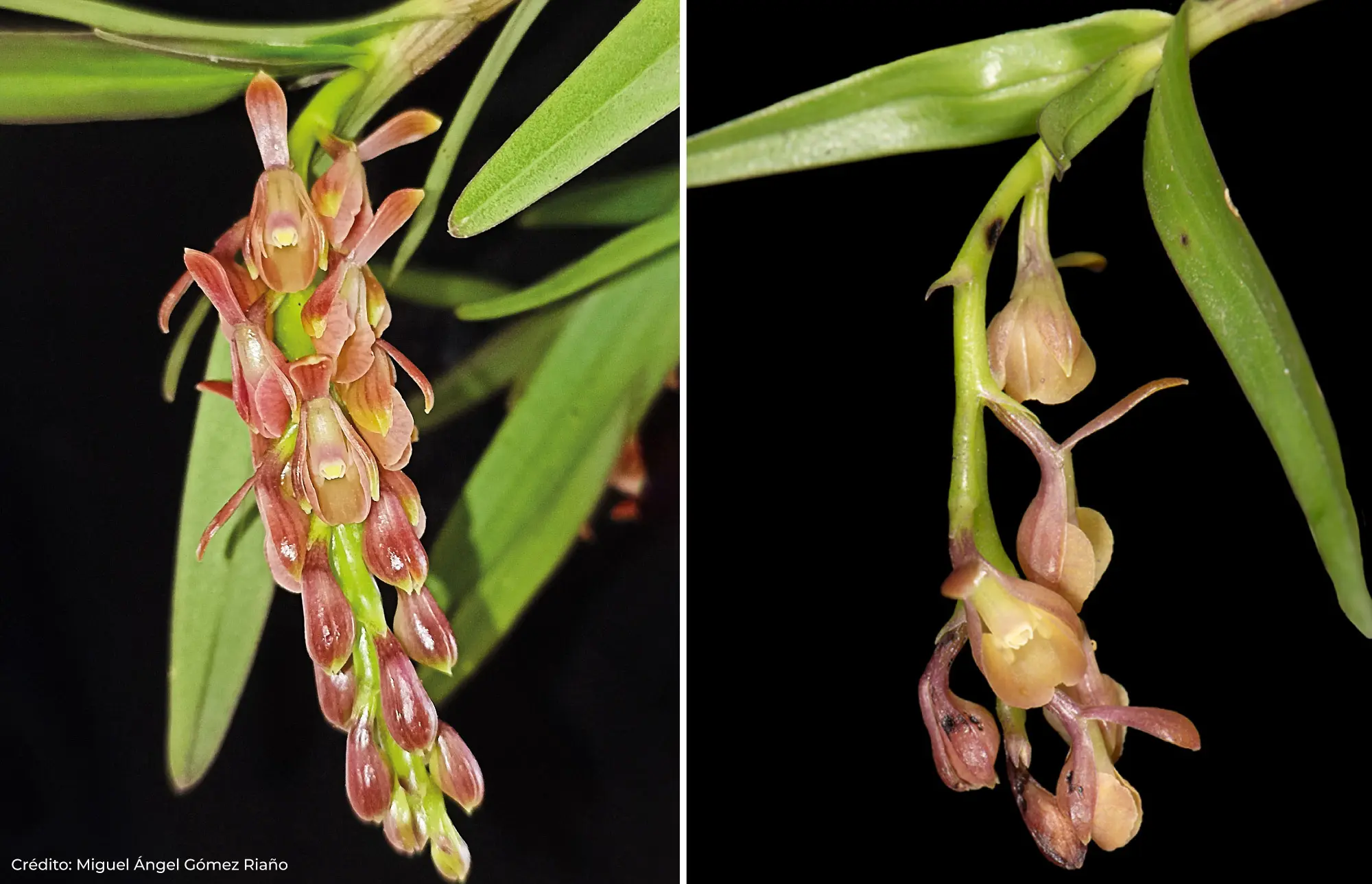
In an exciting new scientific discovery, Universidad Nacional de Colombia researchers supported by Fundación ProAves have identified a beautiful new species of orchid, Rasmussen Star Orchid Epidendrum rasmussenii, in the Sierra Nevada de Santa Marta, Colombia.
This stunning discovery highlights the region’s incredible biodiversity and underscores the importance of conservation efforts in one of the world’s most unique ecosystems.
The new species, officially described in the scientific journal Phytotaxa, was named in honor of Nathan Jens Rasmussen, whose family has played a crucial role in supporting conservation initiatives to protect this orchid and a myriad of biodiversity restricted to cloud forest in the Sierra Nevada de Santa Marta
“We are thrilled to support important discoveries like this one,” said Dr. Paul Salaman, President of Conservation Allies. “Rasmussen Star Orchid highlights the extraordinary biodiversity of Colombia and the critical need for sustained research and conservation efforts to protect the country’s endangered forests.”
The orchid was found within El Dorado ProAves Reserve, which is managed by Fundación ProAves with support from Conservation Allies. The reserve has long been a global stronghold for endemic and endangered species, providing a safe haven for Colombia’s rich flora and fauna. The discovery of the Rasmussen Star Orchid reinforces the importance of protecting these habitats from deforestation.
“This discovery would not have been possible without the invaluable support of Nathan Jens Rasmussen’s family and the support of Conservation Allies. It is not only a tribute to the beauty and complexity of our flora, but also a reflection of the urgency to conserve our natural ecosystems. The ProAves El Dorado Reserve continues to be a stronghold of wildlife and a refuge for biological diversity. Orchids, as a symbol of resilience and ecological richness, inspire us to redouble our efforts to safeguard our natural heritage for future generations.
Thank you for making it possible for science and conservation to continue flourishing in Colombia,” Cited by Kruzi Paloma Carrillo León, Executive Director of Fundación ProAves.
The newly identified orchid is distinguished by its striking red-carmin and yellow-green flowers. It is currently classified as an Endangered species due to its highly restricted location, emphasizing the urgency of preserving the forests it calls home.
“The Sierra Nevada, celebrated for its biological and cultural richness, high endemism, and unique geography, now unveils a new botanical gem. This discovery not only deepens our taxonomic understanding of orchids. But also underscores the urgent need to explore, study, and safeguard these extraordinary lands, which today face mounting threats,” Stated by researcher Miguel Ángel Gómez Riaño.
This finding was made possible through extensive fieldwork, scientific collaboration, and the dedication of conservationists working tirelessly to document and protect Colombia’s extraordinary biodiversity.
The biodiversity that our protected areas harbour continues to amaze us. In the ProAves Colibrí del Sol Reserve, located in the municipality of Urrao, Antioquia, we made an important observation of an Andean Bear (Tremarctos ornatus), one of the most iconic and endangered species of the tropical Andes.
The observation was made close to the main house by our ranger, Walter Galindo and he even captured the mammal on video! This sighting marks a milestone for the conservation of the region and highlights the effectiveness of the protection strategies implemented by ProAves. It also shows that the Andean Bear is actively using these ecosystems, reinforcing the importance of maintaining and connecting biological corridors in the Colombian Andes.
The Andean Bear, also known as the Spectacled Bear, is the only bear species in South America and is currently listed as Vulnerable (VU) by the International Union for Conservation of Nature (IUCN). Its survival is threatened by habitat loss and fragmentation and illegal hunting.
This charismatic mammal inhabits mountain ecosystems, such as inter-Andean forests, cloud forests, and páramos, where it plays a crucial role as a seed disperser and regulator of ecological processes.
“I was going about my usual rounds, bringing water to the páramo feeders, when I noticed something unusual: several birds flew off in fear. I quickly grabbed my camera to capture the moment, and that’s when I saw it—the Andean Bear coming down the trail. I was scared because it was the first time I had encountered one and it was only 25 meters away. Despite the fear, I felt a wave of emotion having it so close, realising that our conservation efforts are directly contributing to the protection of this incredible biodiversity,” said Walter Galindo, ProAves Ranger.
In addition to protecting the Andean Bear, our ProAves Colibrí del Sol Reserve also protects a wide diversity of unique flora and fauna. We conserve species like Dusky starfrontlet (Coeligena orina), an endemic hummingbird species endangered (EN) species that has not been observed for more than 50 years. Furthermore, we preserve one of the best-conserved páramo ecosystems in the region.
This new sighting of the Andean Bear reaffirms the strategic importance of our ProAves Colibrí del Sol Reserve as a vital wildlife refuge. Species like the Andean Bear are highly sensitive to environmental changes, and this observation underscores that our ongoing conservation efforts, through ecological restoration and monitoring are producing tangible, positive outcomes for biodiversity.
At ProAves, we reaffirm our commitment to protecting high-Andean ecosystems and preserving biological corridors that ensure the movement and survival of threatened species. Discoveries like this reinforce the critical importance of continuing to collaborate with local communities, environmental authorities, and both national and international partners to safeguard Colombia’s rich natural heritage.
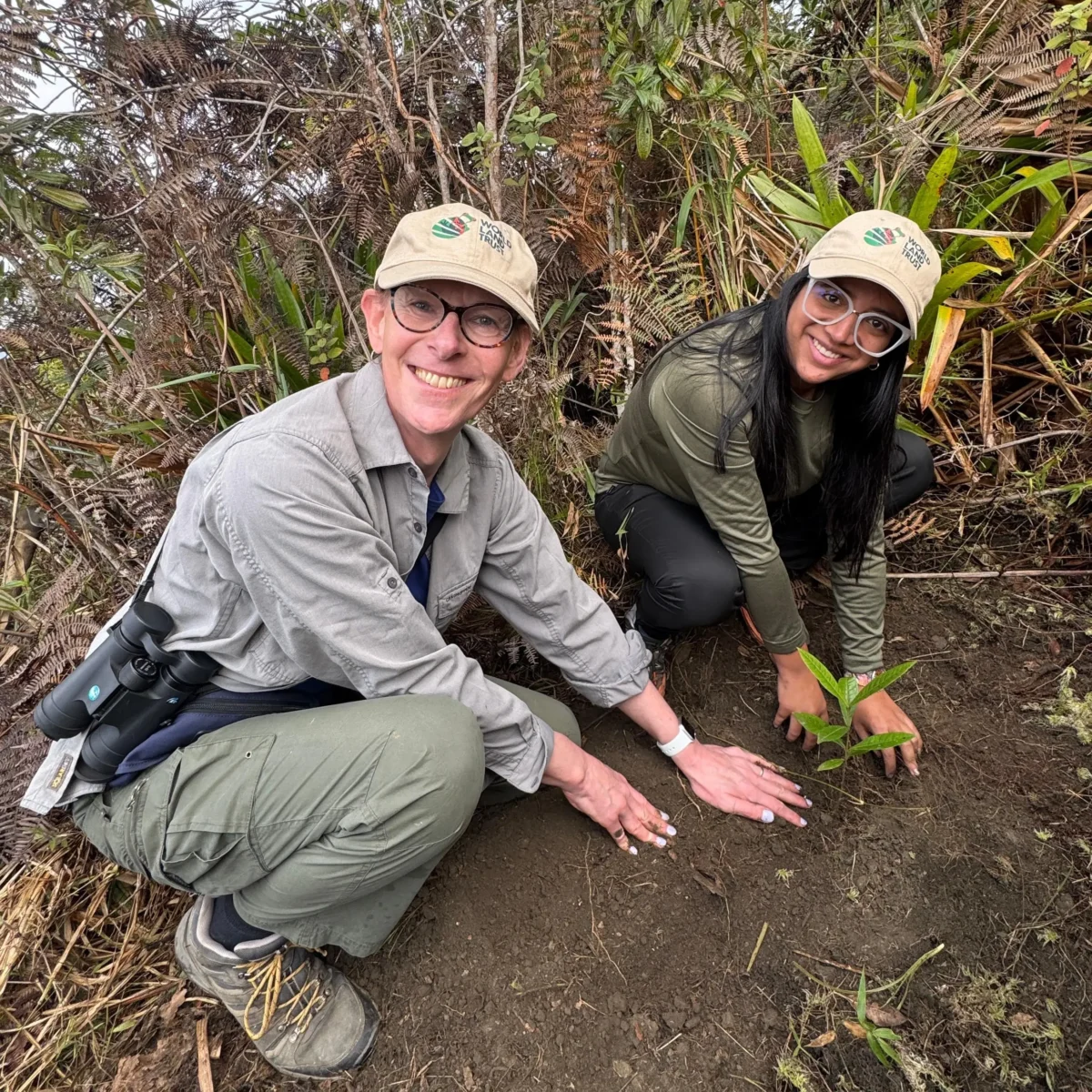
After 17 years of collaboration, we had the honour of welcoming the Chief Executive and board members of our long-standing partner, World Land Trust (WLT), to Colombia. To mark this special occasion, we were proud to host them at our El Dorado Reserve, one of the most biodiverse and ecologically important regions on Earth.
The WLT delegation included Dr. Catherine Barnard, Chief Executive; Claire Ashby, Board Member and Trustee; and Emma Tozer, Board Member and Honorary Treasurer, who were accompanied by our Executive Director, Kruzi Paloma Carrillo.
The purpose of this visit was to showcase the conservation impact made possible through World Land Trust’s support, which has been vital in safeguarding some of Colombia’s most threatened biodiversity across our network of nature reserves. It also offered an immersive experience, allowing our guests to witness firsthand the day-to-day efforts of our dedicated reserve teams.
Throughout the visit, we reflected on the major milestones achieved during our 17-year partnership. Highlights included exploring iconic sites within the El Dorado Reserve, such as La Laguna, where we enjoyed birdwatching and connected deeply with the area’s spiritual and ecological richness. We also organised a night walk, offering the opportunity to observe frogs and other fascinating nocturnal wildlife, further underscoring the extraordinary biodiversity we work to protect.
One of the most symbolic and heartfelt moments of the visit was the planting of native tree seedlings in designated restoration zones, an act that powerfully embodied our shared commitment to regenerating forest ecosystems and ensuring a future for Colombia’s rich biodiversity. The group also hiked to La Cumbre, a scenic trail that provided opportunities to observe diverse wildlife, hear the haunting calls of red howler monkeys (Alouatta seniculus), and experience the extraordinary biodiversity of the Sierra Nevada’s cloud forests up close.
This visit marks a pivotal milestone for our organisation, deepening our alliance with World Land Trust and reaffirming our mutual commitment to the long-term protection and preservation of Colombia’s extraordinary biodiversity.
“It was a true pleasure to finally visit ProAves’ remarkable El Dorado Reserve—not only to experience this incredible place firsthand, but also to learn more about the far-reaching impact ProAves is making across Colombia. This visit exemplifies how World Land Trust operates: by supporting locally rooted organisations that protect land to save species, combat climate change, and uplift local communities. I look forward to strengthening our collaboration and achieving even greater conservation outcomes together in Colombia,”
stated Dr. Catherine Barnard, Chief Executive of World Land Trust.
“On behalf of the ProAves Foundation of Colombia, I want to sincerely thank the World Land Trust team for their visit. It was truly moving to spend these days together, strengthening the connection between our organisations and allowing them to directly witness the conservation efforts led by ProAves on the ground. It was a truly enriching experience.
I deeply appreciate the commitment shown by World Land Trust in making this visit possible. Both personally and on behalf of ProAves, I look forward to continuing to join forces to ensure the long-term success of conservation actions in Colombia, efforts that ultimately benefit the entire planet. Once again, thank you so much!”
We are profoundly grateful to our allies for their visit and for their continued partnership in our mission to conserve biodiversity.
Every April 29th, Colombia commemorates Arbor Day, a moment to reflect on the vital role forests play in our ecological, cultural, and climatic well-being. Forests are not only the lungs of the planet but also guardians of biodiversity and our collective local heritage. Yet, according to the Humboldt Institute, 45% of Colombia’s endemic trees and shrubs are currently at risk of extinction. Protecting them is no longer optional, it’s essential for safeguarding biodiversity and ensuring the resilience of future generations.
At Fundación ProAves, we mark this day by celebrating the tireless efforts of our forest rangers, who work daily to protect one of Colombia’s most threatened plant groups: the Magnolias. Our country is home to 42 Magnolia species, many of which are endemic and critically endangered. Their survival depends on continued conservation, restoration and awareness.
Through our Magnolia Project, in collaboration with Fondation Franklinia and Women for Conservation, we work on the identification, monitoringand restoration of these species in our Nature Reserves with the goal of ensuring their survival in their natural habitat.
Through this project, we implement a range of strategies to protect these “souls of the forest”, including monitoring sessions, identification of individual trees, seed collection, nursery propagation, planting in strategic restoration zones and environmental education activities with local communities. Each action brings us closer to securing a future where Magnolias continue to thrive in Colombia’s forests.
From a research perspective, this work has been crucial in highlighting both the remarkable richness of Magnolia species and the serious threats they face in Colombia. Ongoing restoration and reforestation efforts have not only helped regenerate key habitats but also led to the documentation of several Magnolia species across different regions. These efforts have generated valuable data on their distribution and conservation status within our network of Nature Reserves, information that is essential for guiding future protection strategies.
Discover the Magnolias recorded in our Reserves:
In addition to Magnolias, our Nature Reserves shelter many other threatened tree species, which we protect every day with unwavering commitment and care. At Fundación ProAves, we remain steadfast in our mission to ensure the comprehensive conservation of Colombia’s forests, recognising that every single tree is a vitalthread in the web of life.
This Arbor Day, we renew our commitment to biodiversity and redouble our efforts to defend the forest ecosystems that sustain thousands of species and the future of our planet.
At ProAves, we’ve dedicated over 25 years to the conservation of Colombia’s most threatened species—protecting critical habitats and taking bold, tangible action to ensure their survival. As one of the most biodiverse countries on Earth, Colombia is home to thousands of species found nowhere else in the world.
This Earth Day, we proudly reaffirm our unwavering commitment to safeguarding biodiversity and preserving the unique ecosystems that make Colombia a global conservation priority.
Among the natural treasures we work tirelessly to protect are Magnolias—an ancient lineage of trees and shrubs found across Asia and the Americas. Colombia alone is home to 42 Magnolia species, of which 36 are endemic. Sadly, many of these are at serious risk of extinction due to deforestation, climate change, and agricultural expansion.
Beyond their striking beauty and valued timber, Magnolias play a vital ecological role: they capture carbon and help regulate the climate, support the water cycle, and provide essential habitat for a wide range of species. Their protection is not only about saving individual species—it’s about preserving the integrity and resilience of entire ecosystems.
Thanks to the generous support of Fondation Franklinia and the collaboration between ProAves and Women for Conservation, we are making great strides with the Magnolia Project—an initiative dedicated to the identification, monitoring, and restoration of Magnolia species within our Nature Reserves. To date, we’ve identified around 20 different Magnolia species, many of which are rare and endemic, underscoring the critical importance of protecting their habitats.
Through dedicated fieldwork, we’ve developed and implemented a comprehensive conservation strategy to safeguard Colombia’s Magnolia species. Our approach includes:
Identification and monitoring of Magnolia trees in the field.
Fruit collection and seed germination in specialised nurseries.
Planting of seedlings in strategic ecological restoration zones within our Nature Reserves.
Environmental education and community awareness programs focused on the ecological and cultural importance of Magnolias.
An essential component of this project is the work of our forest rangers, who, through their ongoing efforts, ensure the protection of these trees and their ecosystems.
“Working on the Magnolia Project at the Las Tángaras Reserve has been a truly special experience. We are helping to rescue trees that are on the brink of extinction. I’ve learned so much about germination, dealing with pests, planting, and nursery care. It fills me with joy to care for nature and to contribute, with my own hands, to the protection of a species that could otherwise disappear.” Fanis Mosquera, Forest Ranger and Nursery Leader, Magnolia Project
Several Magnolia species are currently in their reproductive phase, with fruits maturing and requiring close monitoring to ensure viable seed production and support natural regeneration. These efforts highlight ProAves’ steadfast commitment to the conservation of endangered species and the protection of the forests that sustain Colombia’s incredible biodiversity.
With every rescued seed, every monitored tree, and every trained forest guardian, we are sowing hope for Colombia’s Magnolias and for the future of its rich biodiversity. On this meaningful day, we call for united action to protect these vital species, which are essential to the health, balance, and resilience of the Andean forests.
The Blue-billed Curassow (Crax alberti) is one of Colombia’s most emblematic and critically endangered species, classified as Critically Endangered (CR) by the International Union for Conservation of Nature (IUCN). Its populations are scarce and highly fragmented, making research that contributes to its conservation an urgent priority.
In this context, and with the goal of continuing to strengthen the participation of women in science and conservation in our country, we are opening a new call for applications to our scholarship program, aimed at:
Five (5) women who wish to conduct undergraduate or graduate research in the ecology of endemic and/or threatened species in the ProAves El Paujil Reserve.
One (1) of the scholarships must specifically focus on estimating the abundance and density of the Blue-billed Curassow (Crax alberti) within our Reserve.
One (1) of the scholarships must be focused on the diversity of herpetofauna in the Reserve.
The scholarship includes:
COP $3,000,000 for transportation and food
50% of lodging costs at the ProAves El Paujil Reserve during the stay
Publication in the journal Conservación Colombiana
Location: ProAves El Paujil Reserve, Puerto Pinzón (district), municipality of Puerto Boyacá, Boyacá, Colombia
Selected candidates must:
Submit a report of the activities carried out to the ProAves Director of Research
Conduct community workshops related to the research topics Submit an article on the research conducted for publication in Conservación Colombiana
Requirements to apply:
Be a woman enrolled in an undergraduate or graduate program (to be verified by official documentation)
Conduct a research project focused on estimating the abundance and density of the Blue-billed Curassow at the ProAves El Paujil Reserve
If not currently enrolled in an academic program, applicants must submit a letter of intent explaining why they are a suitable candidate for the project and what research topic they would like to pursue. The letter should be sent to: acortes@proaves.org and lgmosquera@proaves.org
Applicants may also seek co-financing or additional support from other organizations if needed.
This call aims to encourage the active participation of women in science and conservation, offering a unique opportunity to carry out research projects in one of the most biodiverse areas of Colombia.
Applications will open on May 1, 2025, and will close as selected candidates are approved.
Opening date: May 1, 2025 Application deadline: June 13 Project socialization: June 19 and 20 Results announcement: June 27 Fieldwork: Minimum of 4 weeks (between July and August) Article submission deadline: October 1 The article must be submitted following these guidelines: https://proaves.org/guia-para-autores/
If you have any questions or would like more information, please contact:
Thanks to the support of Fondation Franklinia, ProAves, together with Women for Conservation, is leading a targeted conservation strategy to protect 20 endemic and critically endangered Magnolia species across several Nature Reserves managed by the ProAves Foundation.
This initiative aims not only to regenerate, restore, and replant Magnolia species, but also to empower women by strengthening their leadership in nursery management and ecological restoration efforts.
Conserving Magnolia species and preventing their extinction demands meticulous, hands-on work—from locating parent trees and carefully harvesting their fruits, to the delicate process of germination, nurturing seedlings until they reach optimal planting size, selecting ideal reforestation sites, and conducting ongoing monitoring to ensure successful adaptation to their new environment.
A cornerstone of this process has been the construction of specialised nurseries. These spaces are designed for post-harvest handling, equipped with germination chambers, and set up for the close monitoring and care of each seedling, ensuring that every step of the restoration process is handled with precision and dedication.
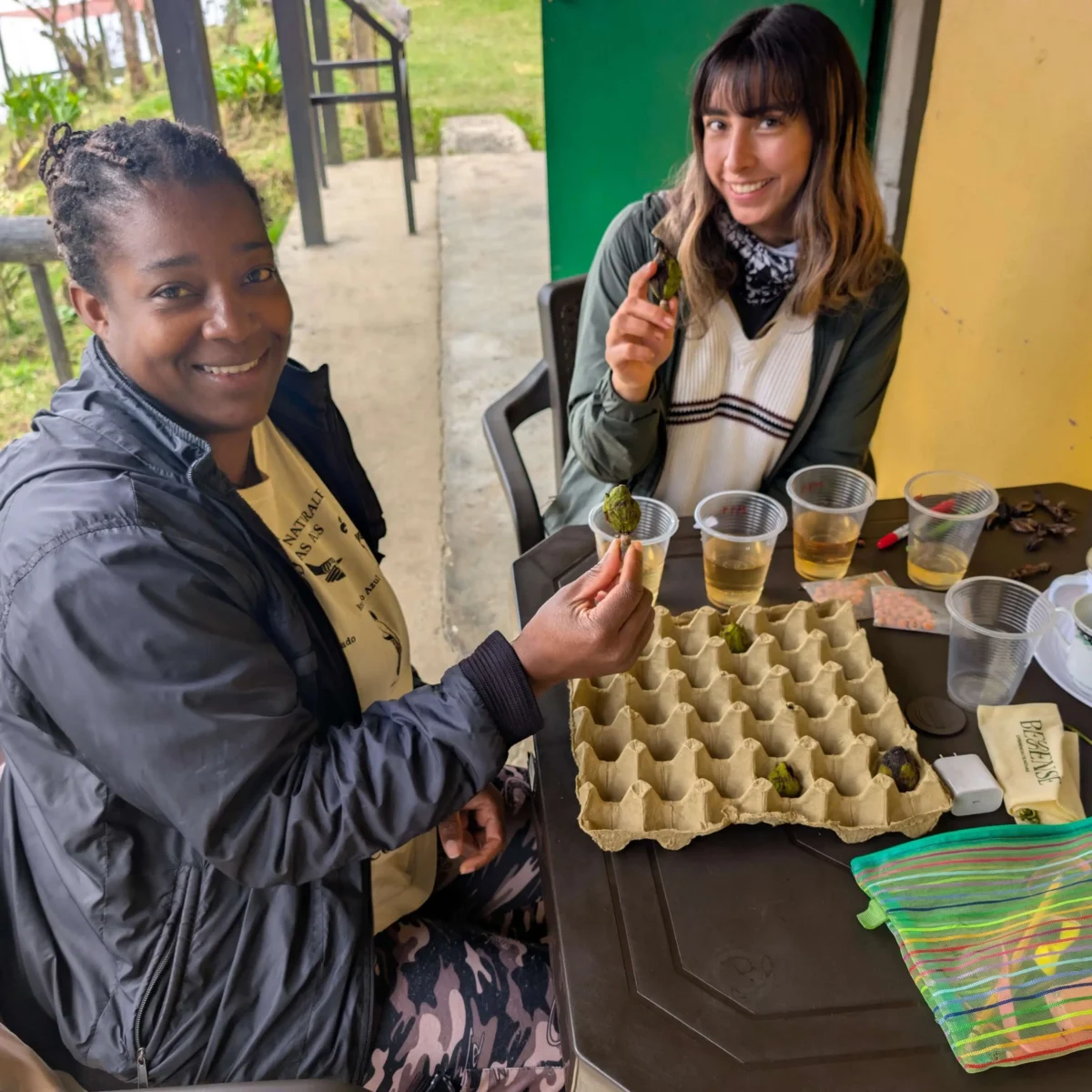
Following fruit collection, our rangers and women leaders in the nurseries work together to carefully sort viable from non-viable seeds—an essential step for ensuring the success of the germination process. Additionally, we maintain close monitoring of humidity levels within the germination chambers to create optimal conditions for seedling growth.
Following the fruit harvest, the women leaders of the nursery, in collaboration with the rangers, undertake a crucial task: classifying the seeds. Separating the viable seeds from the non-viable ones demands both expertise and patience, as this step is critical to the overall success of the conservation process. Meanwhile, the germination chambers are continuously monitored to maintain optimal conditions for the healthy development of the future plants.
At ProAves and Women for Conservation, we actively promote the participation of women from local communities in the production of Magnolia seedlings as a key strategy for advancing gender equity. Through this initiative, we not only involve them in ecological restoration efforts but also work to strengthen their technical skills in nursery management, empowering them to play a central role in conservation.
Through the Magnolias Project, we remain dedicated to empowering women in critical conservation areas. With every Magnolia that blooms in our nurseries, we are not only sowing life and hope but also reinforcing the vital connection between ecological restoration and women’s leadership within our communities.
Currently, the nursery project is being implemented across several conservation areas, with a focused effort on reforesting endangered endemic Magnolia species in the following Nature Reserves:
Every year, many Wax Palms are used in religious celebrations without knowing that this practice is destroying the home of the Yellow-eared Parrot, an endangered bird species endemic to Colombia that depends on this palm. During this season, we make a call to reconcile with these species and prevent their extinction.
The Reconnect with Nature campaign is an environmental education strategy led by ProAves for over 25 years, carried out prior to Holy Week. Its goal is to raise awareness about the importance of conserving two iconic species that represent Colombia’s biodiversity: the Wax Palm (Ceroxylon quindiuense) and the Yellow-eared Parrot (Ognorhynchus icterotis).
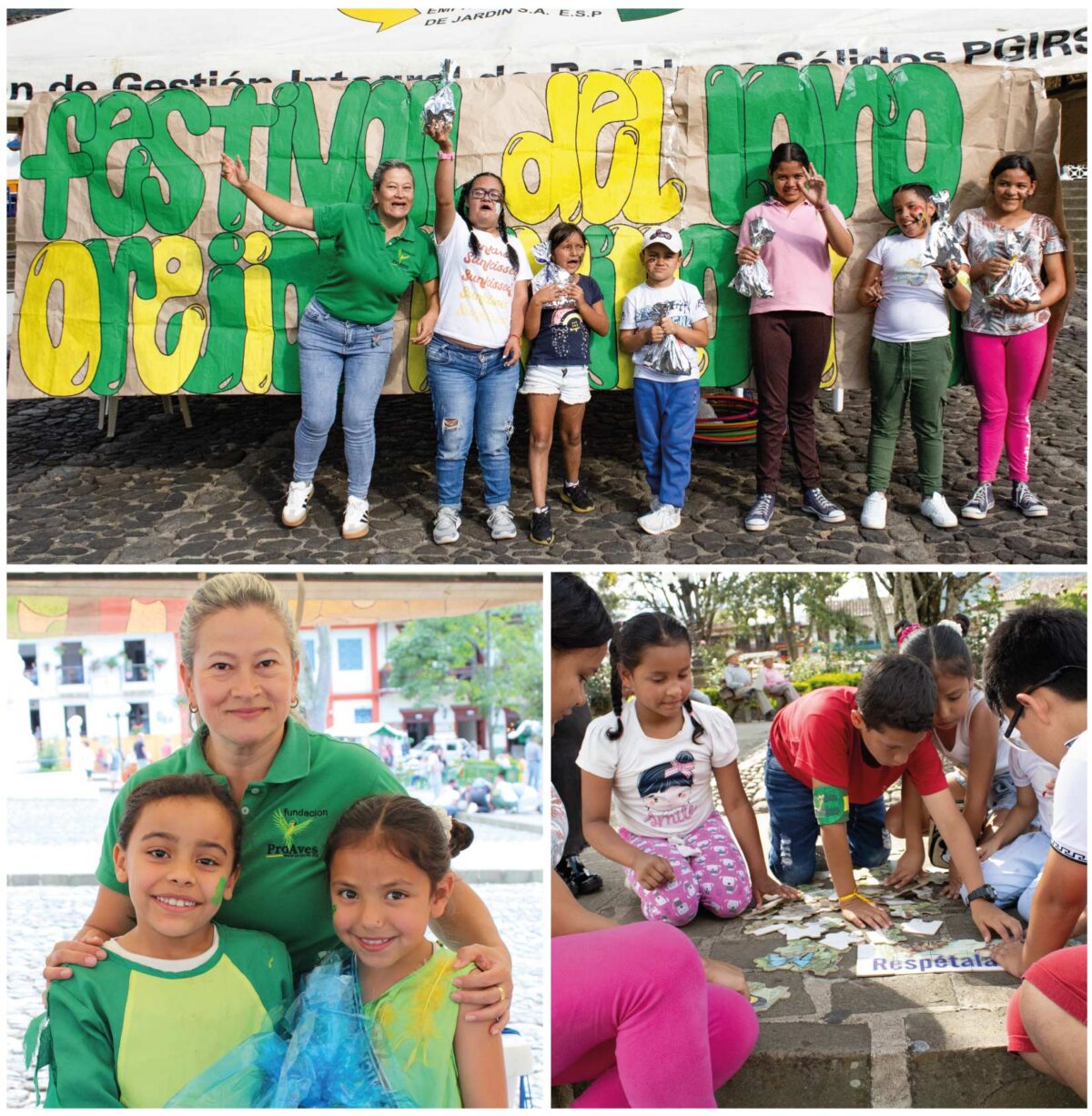
This year, the campaign was implemented in Jardín, Antioquia; and Cajamarca and Roncesvalles, Tolima, where various activities were carried out with local communities on Palm Sunday to raise awareness among residents of these towns — known for hosting the largest populations of the Yellow-eared Parrot — about the importance of protecting this emblematic species.
The town of Jardín, located in the department of Antioquia, welcomed us with open arms, allowing children to learn about environmental conservation through playful activities focused on preserving this species. Additionally, adults received messages about the importance of conserving this threatened parrot, which was once on the brink of extinction.
During the event, Wax Palm seedlings were distributed to people who had suitable areas on their land to plant these species, contributing to the recovery of the palm and the improvement of the Yellow-eared Parrot’s habitat in the future.
In the towns of Cajamarca and Roncesvalles, in the department of Tolima, community engagement and awareness-raising efforts also took center stage. Through printed materials such as posters and stickers, we shared the message of reconciliation with nature and promoted environmental responsibility to protect the Yellow-eared Parrot and the Wax Palm.
The Reconnect with Nature campaign is a call to protect and respect wildlife. At ProAves, we recognize environmental education as a key action to instill awareness in children, youth, and adults, helping us move forward in protecting emblematic species of our biodiversity, such as the Yellow-eared Parrot and the Wax Palm.
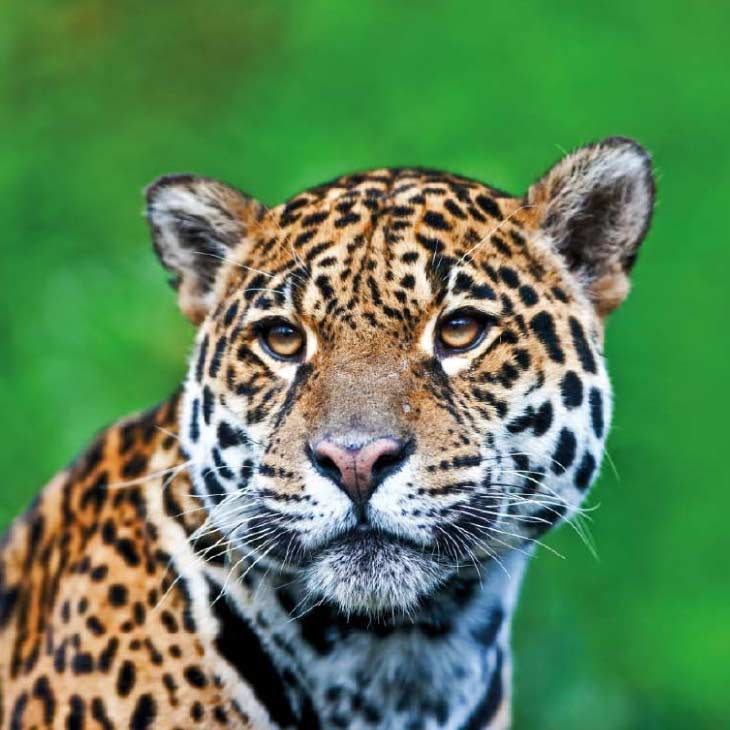
The Jaguar (Panthera onca) is considered the largest feline in Latin America and a keystone species for maintaining ecosystem balance. Thanks to the camera traps installed in our Nature Reserves, we have recorded video footage of a Jaguar in our ProAves El Jaguar Reserve, located in the municipality of Mapiripán, Meta.
This sighting confirms the strategic role of our Reserve as a key ecological corridor for the survival of one of the most iconic and enigmatic big cats in the world. It also highlights the Jaguar’s importance in maintaining ecosystem health, as it helps regulate populations of other species and contributes to the well-being of forests.
Despite these encouraging records, the Jaguar is facing a worrying decline in Colombia. According to reports by media outlets such as Mongabay, the species has lost around 39% of its habitat over the past decade due to deforestation, hunting, and habitat fragmentation. In this context, the protection of its biological corridors is crucial to reversing this trend and ensuring its long-term conservation.
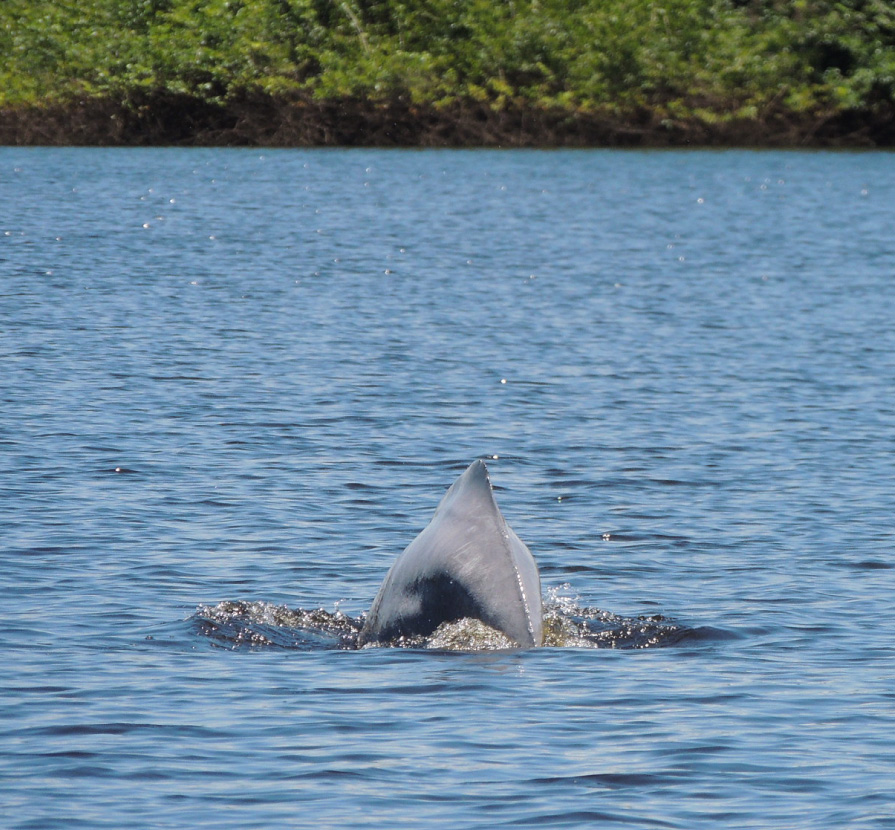
This recent camera trap record is compelling evidence of the impact of our conservation efforts and the good health of the ecosystems we protect. Over the years, ProAves has established three strategic reserves in the Amazon region: El Jaguar, Águila Arpía, and Halcón Colorado. These protected areas not only safeguard the Jaguar but also provide refuge for other emblematic species such as the Pink River Dolphin (Inia geoffrensis) and the Giant River Otter (Pteronura brasiliensis), all inhabitants of this vital region of the world, known for its rich biodiversity.
Each new record of these important wildlife species strengthens our commitment to conserving these biological corridors and inspires us to engage new allies in securing a safe future for the Jaguar and many other species in Colombia.
In an effort to protect Colombia’s biological diversity, ProAves and Fondation Franklinia are making progress in the identification, monitoring, and restoration of 16 magnolia species across 13 of our Natural Reserves. This work not only contributes to scientific knowledge but also strengthens conservation strategies for these unique and threatened trees.
Magnolias belong to the Magnoliaceae family, a primitive group of trees and shrubs with over 350 species distributed across Asia and the Americas. Colombia is home to 42 recorded species, making it the most magnolia-diverse country in the Neotropics. Of these, 36 species are endemic and urgently require protection measures.
Monitoring Progress and Key Findings
To date, our team of rangers and botanists has identified different magnolia species in reserves located in the Antioquia-Chocó and Santander-Boyacá regions.
In the ProAves Reserves Arrierito Antioqueño, Las Tángaras, Colibrí del Sol, and Loro Orejiamarillo, 165 magnolia trees have been documented, including new records expanding the known distribution of species such as M. coronata, M. chocoensis, M. espinalii, and M. lenticellata. Additionally, it has been confirmed that these areas host the largest recorded populations of M. coronata and M. urraoensis, a valuable contribution to their conservation.
In the El Paujil and Pauxi Pauxi reserves, magnolias of great ecological importance have also been identified. In El Paujil, six individuals of M. cespedesii were recorded, some in a reproductive state, along with other high-value species such as Dacryodes colombiana (EN) and Brownea santanderensis (CR). Meanwhile, in Pauxi Pauxi, one individual of M. resupinatifolia was recorded, alongside several threatened species, highlighting the importance of preserving these habitats.
Training and Restoration: Planting Hope
As part of this project, rangers have received training in species identification, seed management, and nursery practices, achieving:
Collection of 107 fruits containing 251 seeds
Monitoring of 20 developing fruits
Rescue of 13 seedlings, with 8 actively growing
Germination of 214 individuals of M. urraoensis, 16 of M. lenticellata, and 19 of M. espinalii
In Pauxi Pauxi, pilot plantations with endangered species have been carried out, marking an initial step in restoring these ecosystems.
Additionally, progress is being made in the development of six nurseries, managed by Women for Conservation, a key partner organization, to facilitate magnolia reproduction.
Seeds of Hope for Magnolia Conservation
Magnolias in the ProAves Reserves are currently in a reproductive phase, with maturing fruits requiring constant monitoring to ensure the production of viable seeds and their natural regeneration. These efforts reflect ProAves’ commitment to conserving endangered species and protecting the forests that sustain wildlife.
With each rescued seed, each monitored tree, and each trained ranger, we continue to plant hope for magnolias and Colombia’s biodiversity.
As part of our commitment to community work and supporting the populations surrounding our conservation areas, we conducted training sessions on birdwatching and identification with members of the Emberá Katío El 18 Indigenous Reserve, located in the department of Chocó, near Quibdó, in the areas influenced by the ProAves Las Tángaras and Lora Carirrosada Reserves.
Over the course of seven days, participants acquired essential knowledge about bird observation, including the proper use of binoculars, effective use of field guides, species identification in the field, and the management of specialized applications for recording and consulting local birdlife.
The training covered key aspects of birdwatching guiding, fostering community ownership of the species inhabiting their territory, and providing tools for sharing their knowledge with both locals and visitors. This initiative presents an opportunity to leverage nature tourism as a sustainable economic alternative
The training was led by biologist Juan Carlos Luna, a member of Fundación ProAves and an ornithology expert, with the support of Hader Correa, Deputy Director of the Northwestern Region, and park rangers Luis Rubelio García and Hernán Bataquí. The group of trained Indigenous participants included both men and women, who will now have the opportunity to engage in birdwatching activities as a means to improve their economic conditions while deepening their knowledge of the biodiversity that surrounds them.
Through these efforts, we reaffirm our commitment to working in partnership with local communities, promoting birdwatching as a sustainable model that contributes to the conservation of birds and their habitats while also improving the living conditions of those residing near our Natural Reserves.
At ProAves, alongside Women for Conservation, we carried out the second edition of our Women in Research and Science Scholarships program, an initiative designed to promote women’s participation in the generation of scientific knowledge.
After a rigorous selection process, we chose three researchers to develop their projects in our ProAves El Paujil Reserve, located in the Puerto Pinzón district, in Puerto Boyacá, Boyacá. Over several months, they dedicated themselves to exploring, analyzing, and documenting three threatened species: the Blue-billed Curassow (Crax alberti), the Brown Spider Monkey (Ateles hybridus), and the White-fronted Capuchin (Cebus albifrons versicolor).
Investigating the Habitat of the Blue-billed Curassow: Foundations for Its Protection
Laura Sofía García Monroy, a Biology student at Universidad Distrital Francisco José de Caldas, focused her research on understanding the habitat use of the Blue-billed Curassow, a critically endangered species endemic to Colombia. This bird, restricted to dry and humid Andean forests, is a key indicator of ecosystem health and plays a crucial role in seed dispersal and biological control.
Her research results revealed that the Blue-billed Curassow primarily uses secondary vegetation habitats as feeding areas, demonstrating its ability to adapt to altered landscapes. This pattern highlights the importance of fragmented areas and the need for conservation strategies that prioritize habitat connectivity and the restoration of degraded areas. Additionally, the observed reproductive behavior reinforces the importance of the nature reserve as a refuge for this endangered species.
Conserving the Brown Spider Monkey and the White-fronted Capuchin
Dalia Katiana Arias Macedo, a Biology student at the National University of Colombia, and Dahiana García Vargas, an Environmental Engineering student at Fundación Universitaria de San Gil, focused their research on the Brown Spider Monkey (Ateles hybridus), a species essential for seed dispersal in tropical forests that faces serious threats such as deforestation and hunting.
Dalia also studied the White-fronted Capuchin(Cebus albifrons versicolor) and analyzed the population density of both primates in the ProAves El Paujil Reserve using direct observation methods and line transects.
These two researchers found that the Reserve harbors a high density of these species: 16 individuals of Brown Spider Monkey and 51 of White-fronted Capuchin per square kilometer. Their findings highlight the Reserve as a key refuge for these species and reinforce the need to protect their habitats to ensure their conservation.
They also recorded 24 sightings of Brown Spider Monkeys and determined that there are 5.50 groups per square kilometer, with a detection probability of 61.74%. Their results reflect a moderate population and a good sighting rate, emphasizing the importance of continuing conservation efforts for this endangered species.
Both studies reaffirm the importance of the ProAves El Paujil Reserve as a conservation area for these primates and other at-risk species..
Community Impact
In addition to their research, the women carried out community activities in Puerto Pinzón, sharing information about the studied species with local residents and students. These activities included visits to our Reserve, where children learned about biodiversity and the importance of protecting it.
With this second edition of the program, we reaffirm our commitment to empowering women in science and celebrate the positive impact these research projects have on the conservation of species such as the Blue-billed Curassow, the Brown Spider Monkey, and the White-fronted Capuchin. These initiatives strengthen female leadership and significantly contribute to biodiversity protection.
The Conservación Colombiana Journal is a space dedicated to scientific research and knowledge on biodiversity in Colombia and other regions of Latin America. With a rigorous and multidisciplinary approach, the journal has established itself over more than 25 years as an essential tool for researchers, educators, and conservation enthusiasts, significantly contributing to the care of biodiversity and the protection of wildlife and their ecosystems.
Volume 29 (2) of the journal includes nine articles highlighting innovative research and important findings for the preservation of species and their habitats. Among the key topics covered in this edition are details on the ecological characterization of flora, herpetofauna, mammal fauna, and birds in the ProAves Las Tángaras Reserve, located in El Carmen de Atrato, Chocó, which has been declared a Regional Natural Park. This declaration underscores the importance of conserving one of the country’s most biodiversity-rich ecosystems, the Biogeographic Chocó.
Additionally, one of the articles reports the main challenges and opportunities for agrobiodiversity in Perú, providing a comprehensive analysis exploring how biodiversity can be key to sustainable development.
Foto: Nigel Voaden
This edition highlights the notable sighting of Eriocnemis mirabilis in the Peñas Blancas district, rural area of Cali, Valle del Cauca. This hummingbird, classified as Endangered (EN) and endemic to Colombia, is also the emblematic bird of the Munchique National Natural Park. This sighting is a significant record, expanding knowledge about its distribution and conservation efforts.
The Conservación Colombiana Journal not only highlights advances in research and conservation in Colombia and Latin America, but this content also serves as a reference for the academic community and a key resource for those working to protect wildlife and their ecosystems.
To access the full journal, visit the following link: https://proaves.org/blog/conservacion-colombiana-volumen-29-numero-2/
At ProAves, we have concluded the selection process for our call for applications: Migratory Bird Research Scholarships, where we selected 12 researchers to conduct studies focused on the conservation of these extreme travelers, which are protected in our Natural Reserves.
The objective of these scholarships is to promote the knowledge and study of migratory birds, species that amaze us with their behaviors as they embark on epic journeys to protect themselves from the cold and find food.
Thanks to these scholarships, scientific research will be promoted, helping to identify the threats these species face during their journeys and behaviors. Through collaboration and a commitment to science, we aim to ensure that migratory birds continue to be a vital part of our biodiversity and, consequently, of the Natural Reserves we protect.
Here are the selected researchers, the titles of their projects, and the reserves where their research will be applied:
Cristian Mateo Ospina Montoya Research project: Comparison of the Response of Resident and Migratory Birds to the Edge Effect in an Andean Landscape in the Department of Antioquia, Colombia ProAves Reserve: Arrierito Antioqueño
University: University of Quindío – Biology
Juan Camilo Úsuga Fuentes Research project: Study of the Occupation of Migratory Birds in the ProAves Arrierito Antioqueño Reserve located in the rural area of Anorí, Antioquia ProAves Reserve: Arrierito Antioqueño
University: University of Antioquia – Coastal Zone Ecology
Ider Humberto Diaz Rivas Research project: Migratory Avifauna in a Landscape Mosaic of the Coffee Belt of the Colombian Andes, Municipality of Génova-Quindío ProAves Reserve: Loro Coroniazul
University: University of the Amazon – Biology
Jessica Esmeralda Lozano Romero Research project: Interaction Between Migratory and Resident Birds in Different Vegetation Coverages in the ProAves Reinita Cielo Azul Reserve, Municipality of San Vicente de Chucurí, Santander ProAves Reserve: Reinita Cielo Azul
University: Pedagogical and Technological University of Colombia (UPTC) – Environmental Management Specialist
Diego Mejía Tovar Research project: Vocal Behavior of Setophaga cerulea and Vermivora chrysoptera in Wintering Areas of the ProAves Reinita Cerúlea and Pauxi Pauxi Reserves, Located in the Rural Area of San Vicente de Chucurí, Santander ProAves Reserve: Reinita Cerúlea, Pauxi Pauxi
University: University of Rosario – Biology
Jhonatan Arias Martínez Research project: Ecological Segregation Dynamics in Migratory Birds of the Parulidae Group (warblers) in the ProAves Las Tangaras Reserve, Located in the Municipality of El Carmen de Atrato, Chocó ProAves Reserve: Las Tángaras
University: Francisco de Paula Santander University – Environmental Engineering
Laura Catalina Guarín Oviedo
David Steven Valero Vargas Research project: Contrast in Habitat Occupation Between Resident and Migratory Birds in an Altitudinal Gradient: Diversity, Abundance, and Temporal Variation in the El Dorado Reserve, Municipality of Santa Marta, Magdalena ProAves Reserve: El Dorado
University: Military University Nueva Granada – Applied Biology
Isaac Daniel Diaz Rivera
Laura Vanessa Rodríguez Figueroa Research project: Approaches to the Foraging Ecology of Setophaga swainsoni, WJ 1827 in the ProAves El Dorado Reserve ProAves Reserve: El Dorado
University: University of the Atlantic – Biology
Yuly Milena Rincón Gómez Research project: Analysis of a Migratory Species Assembly in the Various Covers in the Ranita Dorada Reserve in the Municipality of Falan, Tolima ProAves Reserve: Ranita Dorada
Independent Researcher – Tourist Guide Technologist, Agroecology Student
Ángela Gutiérrez Suárez
Juan Esteban Albán Laverde Research project: Evaluating the Importance of Spatial Segregation Between Nearctic Migratory Birds and Resident Birds Through the Comparison of Habitat Use Patterns and Vertical Strata ProAves Reserve: Loro Orejiamarillo
University: University of Valle – Biology
Romario Andrés Barona Muñoz
Leandro Rodríguez Peña Research project: Evaluating the Importance of Temporal Segregation Between Nearctic Migratory Birds and Resident Birds Through the Comparison of Habitat Use Patterns and Vertical Strata ProAves Reserve: Loro Orejiamarillo
University: University of Valle – Biology
Juanita Angarita Ricaurte
Paula Tatiana Alméciga Camargo
Daniel Rincón Research project: Habitat Use and Selection of Migratory Bird Species in the El Paujil Reserve, Puerto Boyacá, Colombia ProAves Reserve: El Paujil
University: Francisco José de Caldas District University – Bachelor in Biology
We are excited to announce that the 12 selected researchers will begin working on projects that will contribute to understanding and conserving these birds, which are essential to the health of ecosystems and conservation strategies in our protected areas.
We thank all those interested and passionate about birds, and we invite you to stay tuned for updates on the progress of these investigations, which will contribute to the preservation of these extreme travelers and their habitats.
Colombia has a record of 1,450 native fern species, of which 110 are endemic, representing a remarkable 15% of the global diversity. In this context, a group of biologists conducted an important expedition in the ProAves Reinita Cielo Azul Reserve and the Serranía de los Yariguíes to explore the richness of these plants in this region.
Ferns are vascular plants that do not produce flowers or seeds; they reproduce through spores. Despite their ecological importance, they have been little collected and studied, leaving much still to be researched regarding their biodiversity and potential.
During 11 days of fieldwork, the team collected 407 specimens, distributed across 27 families and 151 different species. Among the most notable findings, the following was identified:
Pterozonium brevifrons
A specimen from the Pterozonium brevifrons, ugenus, a particularly significant finding as it represents the first record of this species in the department of Santander. Furthermore, it is a rare species in the country, previously only known from collections in the department of Caquetá.
This study not only expands scientific knowledge about the fern biodiversity in Colombia, but it also emphasizes the importance of conserving unique ecosystems like those in the ProAves Reinita Cielo Azul Reserve and the Serranía de los Yariguíes. The obtained records demonstrate that these areas are essential for the preservation of species that, in many cases, are endemic or have very limited distributions.
The expedition reinforces ProAves’ and its allies’ commitment to scientific research, highlighting research as an essential pillar for biodiversity conservation in Colombia.
Carrying out conservation work in Colombia requires great efforts and a race against time to save numerous endemic and vulnerable species from extinction. These conservation challenges have been tackled by ProAves for over 25 years and were shared at events like the 12th Birdwatching Congress held in the department of Caldas from November 7 to 10, 2024.
Undoubtedly, the passion for observing the marvelous world of birds continues to grow every year in the country. Activities such as photographing, recording sounds, identifying birds, and enjoying their natural habitats bring birdwatchers together for this event, which also featured forums, conferences, and a commercial exhibition.
Through a booth, attendees had the opportunity to learn more about the 27 conservation areas that ProAves has established to safeguard not only the bird species but also the most threatened mammals and amphibians in Colombia. These Natural Reserves are located in key biodiversity hotspots where environmental education, research, and community engagement are necessary to address deforestation, the expansion of agricultural and livestock borders, illegal mining, among others, while also seeking to reduce the impacts of climate change affecting our planet.
On Sunday, November 12, Efraín Gómez, Director of Protected Areas, gave a conference titled “The Yellow-eared Parrot and the Role of ProAves in Its Population Recovery.” This was a space to share one of the most significant species recovery milestones in Latin America: saving the yellow-eared parrot from extinction. This species of parrot, belonging to the Psittacidae family, also includes parakeets, conures, and macaws, all known for their colorful plumage and intelligence.
The recovery of the yellow-eared parrot (Ognorhynchus icterotis) from nearly 81 individuals in 1998 to over 3,500 today is undoubtedly one of the most important species recovery examples in Latin America. The work with communities has been key to preventing this valuable species from disappearing.
Conservation efforts in Colombia, especially in protecting emblematic species like the yellow-eared parrot, are a testament to tireless work. Over more than 25 years, ProAves has shown that combining science, environmental education, and social commitment can yield significant results, even in the face of the most complex challenges.
Events like the 12th Birdwatching Congress not only allow for the celebration of these achievements but also raise awareness and educate new generations about the importance of preserving our natural environment. With continuous support and collective effort, Colombia can continue advancing in the protection of its invaluable biodiversity.
The yellow-eared parrot is a symbol of biodiversity and its conservation in Colombia, being a species that thanks to the efforts of many entities has had great success in its recovery. Moving from the Critically Endangered category to a Vulnerable category according to the Red List of Threatened Species of the International Union for Conservation of Nature IUCN. For this reason and because this species has had a great significance for environmental awareness in the municipality of Jardín, it is a perfect reason to celebrate the Yellow-eared Parrot Festival year after year.
The municipality of Jardín, in the southwest of Antioquia, was the scene for this festival on the 11th and 12th of October. A festival that brings together those who are interested in birds and their conservation, as well as the community in general. Providing a recreational and educational space to teach about the importance of the conservation of the Yellow-eared Parrot and the conservation of nature in general.
Since the 12th of October 2024, was also the International Day of Migratory Birds, the festival also included a joint celebration. Where we also paid tribute to these extremely far travellers who arrive in our territory every year. For this reason, it was called the “Festival of the Yellow-eared Parrot and Migratory Birds.”
On October 11th, the Festival was held in the main park of the municipality, where children enjoyed various interactive activities and workshops focused on the knowledge and conservation of birds. During that day, not only was the beauty of the Yellow-eared Parrot, an emblematic species of the region, highlighted but also the importance of migratory birds was made known. Some species travel thousands of kilometres/miles to protect themselves from the cold, seek food and find a safe harbour during the winter season in our territory.
El día 12 de octubre se programó una visita y recorrido a la Reserva ProAves Loro Orejimarillo de con un grupo de niños que hacen parte del programa Escuelas Amigas de las Aves, para que fueran participes del avistamiento y registro de las especies de aves propias de la Reserva, durante la jornada mundial de avistamiento de aves migratorias denominada October Big Day OBD, liderada por el Laboratorio de Ornitología de la Universidad de Cornnell y apoyada por cientos de organizaciones ornitológicas de todo el mundo, al igual que por todas las organizaciones ornitológicas del país.
On October 12th, a visit was scheduled to the ProAves Loro Orejimarillo Reserve with a group of children who are part of the Bird-Friendly Schools program. S in that way they could participate in the observations and recordings of the Reserve’s native bird species, during the global day of migratory birds called October Big Day OBD, led by the Cornell University Laboratory of Ornithology. This event is supported by hundreds of ornithological organizations from around the world, as well as by all the ornithological organizations in the country.
At ProAves we continue our work of raising awareness and environmental education, promoting love for nature and the need to protect Colombia’s wealth of biodiversity. Year after year, this festival consolidates itself as a key space to connect the community with its natural environment and promote the conservation of birds and nature.
We participated in COP16, the most important biodiversity event on the planet, where we were able to tell the whole world about our work on bird conservation we have been doing for more than 25 years.
The ProAves team, led by our Executive Director Sara Inés Lara, actively participated in the key spaces of COP16 such as the Blue Zone, an area dedicated to negotiations and the exchange of ideas between governments, organizations and biodiversity experts themselves.
In addition, our Executive Director was a speaker at the symposium “Women of Biodiversity for Biocultural Water Territories” and moderator of the panel: Exchange of Experiences, organized by the E.O. Wilson Foundation. In these spaces, the importance of women’s participation in the preservation of territories and their ecosystems was highlighted.
On the other hand, Andrea Borrero, from the ProAves research area, participated in the discussion “Zero Extinction Areas in Colombia”, organized by the Humboldt Institute. Here is where strategies for the protection of Colombian ecosystems and the prevention of species extinction were discussed.
We also had an information stand in the Green Zone at COP16, where we welcomed visitors from around the world interested in learning more about our 27 nature reserves and the conservation work that is linked to environmental education and research.
The presence of costumed performerssuch as the majestic harpy eagle (Harpia harpyja), the gorgeted puffleg (Eriocnemis isabellae) and the blue-billed curassow (Crax Alberti) caught the attention of many visitors due to their realism and size. The attendees of the event took advantage of taking photographs or just having fun with these species of great importance for Colombian birdlife.
To foster the love for birds and their ecosystems, theConservation Chiva bus travelled more than 1,200 kilometres (750 miles) to reach COP16 and tell the world about the wonderful event of bird migration. With educational activities, games and hundreds of smiles. This mobile environmental classroom managed to transmit playfully the importance of conserving migratory birds, captivating both children and adults alike.
Our participation at the COP16 reaffirms our commitment to conservation. To strengthen national and international alliances to protect the wildlife and natural heritage of Colombia and therefore the world.
Migratory birds are amazing species that travel thousands of kilometers to protect themselves from the cold, get food and find safe spaces during the winter season to reach countries like Colombia. Understanding the importance of these birds, our environmental mobile classroom has evolved to become the ReinitaChiva, a change that represents a conservation challenge focused on education about these extreme travelers.
We are excited to begin a new phase that will contribute to the conservation of boreal and austral migratory species where communities play a key role in preserving them.
This colorful vehicle that will visit schools, parks, squares and communities throughout Colombia will allow the enjoyment of a journey full of learning, games and smiles around the fascinating world of migratory birds, in addition, the experience in the chiva includes interactive activities, games and workshops, aimed at children and adults, with the aim of promoting the love of nature and the protection of biodiversity.
Our emblematic conservation chiva has now completed its first kilometers of travel with 4 visits. The first stop was in Santa Marta, in the town of Bonda, then visited the South American Regional Forum of the International Union for Conservation of Nature (IUCN). From there, he continued his journey to Cajamarca, Tolima and now he is at the COP16, the most important event in the world dedicated to biodiversity conservation.
Join this exciting adventure and learn more about the incredible world of these extreme travelers that beautify the Colombian sky with their visit every year.
ProAves Colombia will show the work it has been developing for 25 years at the Conference of the Parties to the Convention on Biological Diversity (COP16) and is considered the most important event worldwide for the protection of biodiversity.
At COP16 we will have a stand in the green area, a space where we will develop awareness campaigns, educational activities, cultural exhibitions and other civic activities that enhance the agenda planned during the development of the Conference of the Parties.
In addition, we will have our ReinitaChiva, a mobile classroom that will tell the world about the wonderful event of migration through environmental education.
We are proud to participate in COP16, a key scenario that will allow us to contribute to the global dialogue on biodiversity protection where we have worked from research, conservation and environmental education contributing to the dream of saving our planet.
This event brings together close to 190 countries and will be a key moment for the fulfillment of global goals for biodiversity conservation.
Group of women scholarship recipients from the ProAves Foundation in the El Jaguar reserve
“We think that the tribe is like an eagle. One wing is male and the other is female. And only when the two wings are equal, the tribe is able to fly.”
These words are from Jane Goodall, renowned English ethologist who the world knew for her pioneering studies on chimpanzees. He cited them from the head of an indigenous tribe in Latin America when he was asked about gender equality in science during a public conversation with women, framed in a consecrated educational project.
In congruence with the primatologist’s reflection, ProAves and Women for Conservation reaffirm the great value that women represent in conservation activity and in science through the recognition of their potential, their willingness to learn and teach, their demands for equal participation. for environmental protection.
“Woman in science, research and conservation means diversity of approach, inexhaustible source of curiosity, scientific devotion, capacity for adaptation, generation of knowledge; Just as it fertilizes life, it engenders wisdom, at any level, with methodological tools for science; with intuitive and practical mechanisms in their daily lives,” said Sara Inés Lara, executive director of ProAves.
The equitable access of women in matters of environmental preservation does not only contemplate the capacity that they have demonstrated to carry out with the same rigor the tasks inherent to scientific work: contributions that help to understand the changes and the actions that must be undertaken to make recovery and exercise defense. Also, the way they throw themselves into the uncertain, overcome the adversities of work in the field, bond with the actors involved and build new futures.
Part of a study by the Universidad del Rosario, disclosed on its virtual channels, points out that, although the number of researchers in Colombia has been increasing in the last decade, the number of women dedicated to this activity in natural sciences does not reach 40 %, (Our U, 2024).
The reasons are associated with multiple factors, social, cultural, economic, even academic. According to these reports, some limitations such as the classification of projects into medium and low categories affect access to opportunities to finance them.
Closing gender gaps in science and research in Colombia becomes one of the most challenging tasks for the ProAves Foundation that arises from its missionary umbrella: the conservation of threatened species.
Women scholarship holders from the ProAves Foundation in the El Jaguar reserve-land
Aware of the role that organized civil society must play in dismantling these barriers, ‘Women in Research and Science Scholarships’ was born, a program that promotes the equal participation of women when generating knowledge and with which the organization honors its inspirational influence and transformative power in society.
“There is no evidence that, in the field of science, the distinction of roles due to gender status produces better results. Rather, it could benefit from a balance in the course of its processes, as usually happens in nature,” added the CEO of ProAves.
An evaluation committee made up of a team from multiple disciplines articulated between Mujeres por la Conservación and Fundación ProAves chose, among 30 applicants, the first five young researchers to accompany them in the development of undergraduate or postgraduate projects focused on the conservation of species and their habitats in the ProAves El Jaguar reserve, where life still abounds, but also challenges.
Each initiative had to consider one or more species from a list with threat categories. Among the mammals, the Tapir, the Jaguar, the Churuco Monkey, the Amazon Pink Dolphin, the Giant River Otter, the Palm Bear and the Plains Night Monkey. Among amphibians and reptiles, the Terecay Turtle; and among the birds, the Brown Monjita, the Chestnut-rumped Curassow and the Harpy Eagle.
“It is important to highlight that they did not do their work isolated from the communities. Through workshops, they interacted with the communities that responded by accompanying them, taking them to the sites, showing them their areas to work on populations of different species. It is important that scientific knowledge resonates among the communities and among the women of those communities,” added Alex Cortés, Research Director of the ProAves Foundation.
This is how in a month and a half, five young women, with their selected projects and expectations in tow, crossed almost half the country of residence or work to arrive where the morichales and savannahs of the Colombian Orinoquía begin their journey towards the Amazon jungle.
The ProAves El Jaguar Reserve in Mapiripán
Guaviare River-El Jaguar ProAves Reserve
In Mapiripán, Meta, the ProAves El Jaguar reserve rises between 160 and 230 meters above sea level. Until the second half of the 20th century, this entire territory and beyond was home to nomadic indigenous communities, including Guaíbos, Sikuani, Achagua; and at the same time, a rich diversity of fauna and flora, which no one was ever in charge of observing and counting because although some lived off of others, balance always prevailed, perhaps a product of ancestral indigenous wisdom and the lack of interest of the Spanish conquerors considering it immense, distant and not very fertile for their interests.
In 2013, when ProAves’ concern for this territory led to a series of efforts to make a sanctuary for flora and fauna a reality, 50 years of predation had already been completed.
Public records say that deep into the 60’s, after the arrival of the first settlers, some foreign aviators and adventurers came to occupy vacant lands of the nation in an area that today includes almost all of Mapiripán.
Partisan violence had already thrown hundreds of political refugees to these latitudes who, with the permission of the plundering landowners, founded a small town.
The rest is history. The first livestock practices were followed by more families in search of a future, then the FARC guerrillas and the Self-Defense Forces, and more illegal occupants, then coca plantations and disputes over drug trafficking routes. It is impossible to avoid the massacre for which this municipality became tragically famous in 1997 when a paramilitary commando invaded its inhabitants with force and blood.
All the natural wealth that resonated among the gallery forests with the voices of hundreds of birds, mammals and aquatic species that occupied its lagoons, swamps and rivers, began to be silenced with the noise and effects of violence.
“Mapiripán, where the El Jaguar reserve is located, has historically been a victim of violence in every sense, social, economic, territorial, environmental; However, the biodiversity it has has been one of its greatest obstacles. With the biological station we set out to protect this great natural heritage and, with these first scholarships, to facilitate knowledge practices for its development and positioning. Gender inclusion is a useful mechanism in conservation processes because the work, exploration and generation of new skills in the hands of women help us better understand these threats to guarantee protection,” said Sara Inés Lara, executive director of the ProAves Foundation.
The ProAves El Jaguar reserve, deployed in a kind of corridor between the Caño Evaristo and Esteros Altos trails, includes the last remaining forest of this territory located in the south-central part of the department of Meta.
Towards the north, phenomena such as extensive livestock farming, monocultures and deforestation have generated great tension between nature and community.
But there, in the conservation area and its surroundings, endangered species to varying degrees such as the Jaguar, the Harpy Eagle, the Pink River Dolphin, the Giant River Otter and the Tapir survive with miraculous stoicism.
Work for the survival of more than 420 species of birds, around 70 species of mammals, nearly 20 species of amphibians, more than 40 species of reptiles and no less than 159 species of trees and plants registered to date in the reserve and its surroundings, is a higher purpose for ProAves and Women for Conservation, which contemplates a series of processes and initiatives where the equation: research, gender and education, constitutes an ambitious strategy to link the communities as they are the main custodians and legatees of this treasure called biodiversity.
Five research projects selected to receive funding and support from the ProAves and Mujeres por la Conservación teams began their field phase in January 2024. The analysis of the results is underway to later be recorded and disseminated in a scientific article. .
Here are some memories and asides from three of the projects.
On the trail of the Giant River Otter
Yeimi Natalia Parra Mendoza is 22 years old. He studies a degree in Biology at the Francisco José de Caldas District University in Bogotá. Since she was little she felt the call of nature under threat and when she met the Giant River Otter (Pteronura brasiliensis) thanks to scientific literature, she began to cultivate a curious interest in this critically endangered mammal.
Giant River Otter (Pteronura brasiliensis)
Deep into her study, the young biologist in training discovered an overwhelming reality: that it was a species endemic to South America but that for many years it had suffered persecution by man for its fur, its offspring and its prey, which was also a target of deforestation. , the pollution of rivers and a long list of problems related to human activities that surround their habitat.
“The ‘water dog’, as the giant otter is known, has predators such as the Black Caiman, Orinoco Caiman, babillas, anacondas and the jaguar; However, humans became one of their biggest predators due to the increase in unsustainable agricultural practices, cutting and burning of forests, overexploitation of wood, expansion of the agricultural and livestock frontier, inadequate waste disposal, and progressive deterioration of water. , loss of vegetation cover, fishing pressure, among other activities that are directly affecting the population growth of this species,” added Yeimi Parra.
In his theoretical exploration she also learned that they play a fundamental role as bioindicators of the quality of river ecosystems and are regulators of fish populations, but knowing that was not enough for Yeimi. So he decided to act.
Yeimi Parra in workshops with the community of Mapiripán, Meta.
“Distribution and population abundance of Pteronura brasiliensis and its relationship with local communities in the ProAves el Jaguar Reserve (Mapiripán-Meta)” was the title of the research with which he responded to the ProAves call and with which he convinced the selectors of the foundation after a masterful exhibition.
Her project included actions to contribute to the conservation of the Giant Otter such as field monitoring, sighting, observation of its behavior and the state of its habitat, as well as the implementation of environmental education processes with the participation of local communities and students. of the area. In less than three months, Yeimi Parra was on board a bus that would take her in 12 hours from Bogotá to the El Jaguar reserve, to carry out her field work.
A count of otters present at four observation points, established in Caño Evaristo and Laguna Encanto, produced a record of different groups made up of six to eight individuals, identified by their gulars (spots on the chest). Likewise, it was recognized that the habitats of these otters are not so close to the activities carried out by humans, but the pressure from the territory’s fishermen does represent a threat when competition between otters and humans for food arises.
A fundamental component of the giant otter project resided in environmental education implemented through workshops with residents and students of the territory to involve them in the initiative. Yeimi created a video “Otter Cinema, a footprint for conservation” with which he documented experiences, chronicles and results of the sightings carried out together with the community, natural guardian of the species, in order to make them take much more responsibility for the safeguarding of the giant river otter to stop its extinction.
“It was an opportunity that taught me to value each organism, how fundamental teamwork is and how silence can guide us on the path to finding what we are looking for. The immensity of the Guaviare River and its jungles, the grandeur and respect that must be given to nature is immense. Just as it allows us to be knowledgeable about its wonders, we must also return that with our bioethical work.”
Yeimi Parra, Biology Student. Project: Strategies to mitigate threats and promote coexistence between Pteronura brasiliensis and local communities of Mapiripán, Meta.
The protection of the Jaguar in an educational communication strategy
Katherine Becerra, social communicator-journalist with a master’s degree in Environmental Management and Sustainable Development.
Katherine Becerra has a great fascination for felids. This is confirmed by the deep bond with his three domestic cats Pachamama, Picasso and Libertad and a genuine concern for the fragility of the Jaguar (Panthera onca), the only big cat in America, categorized as a vulnerable species by the Colombian Ministry of Environment in 2024. there, the topic on which he structured his research proposal:
“Educommunication, a strategy to strengthen governance and protect the Jaguar and its habitat in Mapiripán.”
After having been chosen to be part of the five scholarship recipients of the Proaves program that encourages the participation of women in science and research, Katherine was interned for 45 days in this corner of eastern Colombia with clear objectives and a greater goal. : identify the governance processes aimed at the protection of the jaguar, analyze results, the impact on the reproduction of the Jaguar and the species-farmers relationship to converge on the design of a strategy based on communication pedagogy.
At that time, the social communicator-journalist with a master’s degree in Environmental Management and Sustainable Development from the University of the West, did not have the luck of spotting a jaguar, but she did have the opportunity to identify three great challenges to overcome to guarantee its survival: loss of their habitat due to deforestation, hunting of their prey and deaths due to retaliation associated with conflicts with ranchers.
“In this research, what I present is a balance of the knowledge that the Mapiripán community has about the Jaguar, the problems that endanger this species and the identification of opportunities to raise awareness and take the first steps towards governance processes from the educommunication,” said Katherine Becerra.
Like no one before for this purpose, Katherine traveled inch by inch through the municipal capital of Mapiripán and areas near the reserve to interview, with the rigor of the journalist that she is, the inhabitants, the professionals of the Jorge Eliecer Gaitán Educational Institution, to teachers from the indigenous communities settled in this territory, to forest rangers, to civil authorities, livestock leaders, to spokespersons for the agro-industrial multinationals that operate in the area and international foundations that work for felines.
From the reading of data obtained, the project showed, among other results, that there is an urgent need to pave the way for governance processes around the protection of this species because, although there are governance and citizen participation initiatives, Mapiripán as a society suffers from of a “realization of relationships between various actors involved in the process of deciding, executing and evaluating matters of public interest”, as ECLAC defines governance (Biblioguía. May 2024).
The expert in environmental management corroborated the decline of Jaguar prey such as the deer, the Lapa, the Cafuche, the Zaino, due to a rivalry unleashed with the communities to obtain sustenance, which causes the jaguar to look for food on the farms. livestock.
To this he added among his arguments, the problem of deforestation. According to the annual study of the Foundation for Conservation and Sustainable Development (FCDS) for the years 2022-2023, Mapiripán registers just over 11,400 hectares deforested since 2016.
Katherine Becerra in workshops at the I.E Jorge Eliécer Gaitán in Mapiripán, Meta
The researcher finally arranged her analysis to formulate an educommunication proposal with four specific propositions:
*Promote environmental education in educational institutions and in prioritized trails to provide knowledge about coexistence with the Jaguar.
*Reactivate the celebration of ‘Jaguar Day’ and extend awareness activities to the prioritized areas (San Fernando, Buenos Aires, Rincón del Indio, Puerto Siare, Anzuelo and Esteros Altos).
*Encourage silvopasture to avoid the extension of areas to feed livestock.
*Encourage citizen participation to boost the interest of farmers and ranchers in the conservation of this species with the ‘Jaguar Friendly Farms’ initiative.
*Manage more conservation projects.
“My dream as a conservationist woman is that spaces for environmental education and awareness continue to be promoted, that this path of awareness and love for nature, for flora and fauna continues to open so that Colombia maintains its heritage in biodiversity and For this, political will is clearly necessary not only from the Government, from the executive branch, but from the legislative branch.”
Katherine Becerra, social communicator, master in Environmental Management and Sustainable Development. project: Educommunication, strategy to strengthen governance and protect the Jaguar and its habitat in Mapiripán.
The call of the Pink River Dolphin
Pink River Dolphin (Inia geoffrensis)
Amazonian legends speak of an enchanting being, a magical creature that from time to time emerges from the sweet currents of the river to seduce the inhabitants and lead them to its underwater world. They are one of the mythological stories that describe the endearing relationship built since ancient times between humans and dolphins, but deteriorated in the last 25 years due to the dramatic transformation that the Colombian jungle is undergoing on uncontrollable scales at the hands of man.
The Bogotá veterinary medicine student at the National University, Luisa Díaz, was able to attest to this disconnection, when addressing the youngest people of Mapiripán and its river towns. In the development of his research, he noticed a certain strangeness when he asked them about the species, he noticed a kind of “collective amnesia” fueled by the few sightings today and the nostalgia with which the grandparents evoke the “Boto” or “Tonina”. ”, popular names of the Pink River Dolphin (Inia geoffrensis). Seeing it crossing some section of the Guaviare River basin, where the laboratory was developed, is a marvel.
Luisa Díaz in field work, Guaviare River.
“They are species that have been forgotten by generations and are no longer remembered as before, this is evidenced by work in the field, therefore, it is important to work on education so that this generational knowledge is not lost because it is interesting to see that The older adults did manage to get to know these species, they interacted with them, they recognized their place in the environment and the younger ones do not know them. They will be the ones who will generate these conservation, development and rehabilitation initiatives for these species,” added Luisa Díaz.
The young scholarship recipient of the ProAves incentive program for research with gender equality, realized the gaps in the knowledge of the species and let herself be carried away by the charms of the Pink Dolphin that legends tell, the most intelligent and social of cetaceans, with which she fell in love when she also discovered that the two freshwater species in the country are one of the few that can be counted on the planet.
Both dolphin species were declared endangered by the Union for Conservation of Nature (IUCN) due to the impact of dam construction, mercury pollution and loss of river connectivity, irresponsible fishing exploitation, capture for use as bait , climate change, entanglements in fishing nets, inappropriate tourism practices and countless anthropogenic activities that contribute to the degradation of ecosystems.
Then, he proposed to develop an ambitious project that focused his hypothesis on the health of the habitats of the Pink Dolphin and the Giant River Otter. He named it “Detection of antimicrobial-resistant pathogens considered a priority for public health in bodies of water near the Proaves El Jaguar Reserve.”
After intensive work in the field, taking samples, collecting testimonies and implementing protocols and laboratory analysis, the future veterinarian managed to propose several approaches related to the object of her research:
Luisa Díaz in workshops with the community of Mapiripán, Meta.
*Observed a decrease in the population trend of the Pink River Dolphin.
* Obtained a large number of cultures of microorganisms in the habitats of these dolphins, samples that are in the process of analysis.
* Warned a high microbiological variability whose studies and laboratory results will not only provide knowledge about the Pink Dolphin and the Giant Otter, the state of their habitats and environments, but also could be relevant to the area of public health because They are areas with a high presence of human communities that require support in the implementation of projects related to population medicine and epidemiology.
Like her fellow researchers, Luisa Díaz contemplated an ingredient of capital importance in her project. The communication of results to the communities that interact with the dolphin and the otter through clear and understandable language, which in the end leaves no doubt about the urgency of preserving this species and the biological richness of its territories.
And it was there, in the field work, where and when Luisa most felt reaffirming her weight as a woman agent of change in environmental issues, actions that, according to the researcher, are supported by scientific methods, but also values such as love, patience, tolerance, empathy, perseverance and resilience when transmitting this knowledge to the actors involved in decision-making, such as the women of the territory, who will determine the future of this species.
“The role of women gives a special touch and certain power in the world of conservation. We cannot waste the opportunity of the Foundation, it is difficult for us because we are generating new initiatives, new paths, but I feel that it is important to inspire female scientists who are growing. Let us determine this space as ours, appropriate it and sit there.”
Luisa Diaz. Veterinary Medicine student. Project: “Detection of antimicrobial-resistant pathogens considered priorities for public health in bodies of water near the ProAves El Jaguar Reserve”: preliminary study of the habitat and distribution of the Giant River Otter and the Pink River Dolphin.
In recent months, the media reported the news of the trafficking of 130 individuals of the Sylvatic Poison Frog (Oophaga sylvatica) by a woman apprehended at the El Dorado International Airport in Bogotá. These species were intended to be transported to the city of São Paulo in Brazil, posing a risk to the biodiversity richness our country possesses.
Sadly, illegal wildlife trafficking is one of the leading causes of biodiversity loss worldwide. Additionally, it is considered the fourth most profitable global crime according to the United Nations Office on Drugs and Crime (UNODC). Therefore, over time, the work of raising awareness to discourage humans from engaging in trafficking becomes increasingly urgent in order to prevent species extinction.
The Kiki frog (Oophaga sylvatica) is a species of poison dart frog, also known as the Red Devil, which is distributed in the tropical humid forests of the southern Pacific region in the departments of Cauca and Nariño in southwestern Colombia and in the northwest of Ecuador. It belongs to the Dendrobatidae group (poison dart frogs) and is one of the 7 species of frogs in the genus Oophaga found in our country.
ProAves, which has been engaged in biodiversity conservation efforts for over 25 years, has also undertaken actions to protect amphibians. Currently, in the ProAves El Pangán and Ranita Terribilis Reserves, located respectively in the departments of Nariño and Cauca, 7 different morphs of Oophaga sylvatica are recognized (5 in El Pangán and 2 in Ranita Terribilis).
This frog, like the vast majority of amphibians in Colombia, faces serious threats to its survival due to ongoing habitat fragmentation, poisoning of water sources by mining activities, agrochemicals, and sewage. In addition to these challenges, these impressive frogs, known for their aposematic colors, are affected by the chytrid fungus or Bd (Batrachochytrium dendrobatidis), which attacks the skin of these amphibians.
In addition to these risks, these individuals are collected and traded by unscrupulous individuals who remove them from their habitats, pushing them to the brink of extinction. Websites such as Terraristik.com and Seshop.es.tl are dedicated to the commercialization of species, offering prices ranging from €250 to €350, which corresponds to over 1 million Colombian pesos per individual. According to Juan Carlos Arévalo, operational commander of the Metropolitan Police of Bogotá, collectors are willing to pay up to $1,000 per individual.
Unfortunately, in addition to amphibians, species of utmost importance such as the white-headed titi monkey, marine turtles, pink dolphins, spectacled bear, among others, are among the most common targets of these commercialization practices, putting biodiversity at risk.
The richness of fauna and flora in our country is of utmost importance, and conserving it requires actions ranging from environmental education to research aimed at raising awareness about the need to protect these individuals that give Colombia its astonishing beauty.
Join our conservation efforts! Say no to illegal wildlife trafficking!
Fundación ProAves team member Nemesio Andres Gulfo discovered a mysterious huge antpitta – a thrush-like bird with powerful legs and appears tailless – that was feeding on the ground close to the El Dorado ProAves Reserve eco-lodge.
ProAves ornithologists rushed to the El Dorado reserve and worked with Nemesio to identify the species. At first it appeared to be similar to the Undulated Antpitta Grallaria squamigera – a species found across the main Andean cordilleras of Colombia. However, after intensive observations, song tape recordings and finally the capture, measurement and release of an adult bird, the ProAves research team was able to confirm that Nemesio’s discovery represented a unique and distinctive new species of Antpitta for science!
In fact, the species may be closely related to the geographically closer Great Antpitta Grallaria excelsa known only from the Merida mountains of Venezuela, which is likewise a subtropical forest specialist, but over 400 km distant. The new isolated species in the El Dorado reserve has a distinct gray head contrasting with an olivaceous back and wings. But its facial characteristics are particularly strong with a bright white “beard” and black collar. The vocalizations are especially interesting as they are very similar to another species in the reserve, meaning this shy species has been almost completely overlooked by the countless birdwatchers and ornithologists visiting El Dorado ProAves Reserve since 2005.
While more evidence is being documented, such as its distinctive ecological traits, measurements and vocalizations, the team are provisionally referring to the new species as the “El Dorado Antpitta”. The research team composed of Nemesio Andres Gulfo, Alex Cortes, Juan Carlos Luna, Paul Salaman and Thomas Donegan aim to publish all the evidence in the coming year in collaboration with the University of Antioquia who are undertaking phylogenetic studies using blood taken from a captured individual – that was released unharmed after study.
Approximately 10,000 ornithologists and birdwatchers have visited the El Dorado ProAves Reserve and surrounding area in the past two decades and never seen or heard the species. There was one sighting of a bird for five minutes in 2015 by Sophie Osborn and Chad Olson, but only a distant blurred photograph was taken and which they considered to be of Undulated Antpitta.
Even more astounding is that the new species occurs in the former property called Vista Nieves of one of South America’s most famous bird collectors, Melbourne Carriker. He and his family lived in the early 20th century and collected thousands of birds, but bizarrely never this species.
It is very rare to find a new species of bird nowadays. Just three new species were described globally in 2023. Colombia is the world’s #1 country for birds with over 1,979 bird species recorded and yet new species can still be found there – the last bird described in the country was the Chami Antpitta in 2020.
This exciting new discovery further highlights the global importance of the 1,300 hectare El Dorado ProAves Reserve for biodiversity conservation thanks to Fundacion ProAves. It already protects over 20 endemic bird species and hundreds of other species of amphibians, orchids, reptiles and much more restricted to the subtropical and montane forests of the reserve and Sierra Nevada de Santa Marta.
Tragically, deforestation is accelerating in the cooler subtropical forests around the El Dorado ProAves Reserve and the Sierra Nevada because of a property boom to escape the increasing hot and dry coastal plain and city of Santa Marta attributed to climate change. This is pushing housing into the mountains where land prices have sky-rocketed and as a consequence unprotected subtropical forests in the region are being sold and cleared (often without authorization) to make way for holiday homes and new farms.
This remarkable discovery of El Dorado Antpitta should be a moment of triumph for Colombia, however, it is worrying as the species is so endangered and its populations appear to be too small, which we fear for its future survival.
Every April 22, the world celebrates Earth Day, with the aim of raising awareness about issues such as climate change, species loss, and pollution. This day serves as a reminder for organizations around the world to promote responsible actions in harmony with nature.
Earth Day 2023 marks the 20th anniversary of ProAves acquiring the first plots of land to establish the ProAves El Pangán Reserve, which has since been committed to the perpetual protection and conservation of this majestic ecosystem and its wonderful species.
In 2003, our first ProAves Nature Reserve was established: the ProAves El Pangán Reserve, with the support of BirdLife International and Conservation International, in partnership with the Strategic Ecosystem Alliance Fund (CEPF) program.
Thanks to the ProAves Trust Fund, a dedicated and passionate team of rangers has sustained protection of this reserve from unprecedented threats such as illegal logging, trafficking of endangered amphibians for the illegal pet trade, multiple oil spills due to illegal handling, and land invasion for illicit crop production. Working in partnership with local indigenous communities has been crucial in helping to protect natural resources in this area.
The El Pangán Reserve is located in the foothills of the western Cordillera of the Andes in the municipality of Barbacoas, department of Nariño. This protected area is also located within the biogeographic region of Chocó, one of the habitats with the highest number of endemism on the continent. Therefore, this Natural Reserve is among the 25 regions in the world classified as priorities for nature conservation and is designated as a Biodiversity Hotspot. Currently, this conservation area covers hundreds of key hectares for the protection of fauna and flora in the country.
The presence of species such as the Mache glass frog (Cochranella mache), which had only been reported in the departments of Valle del Cauca, Antioquia, and Chocó, is a testament to the high biodiversity of this territory. In addition, the amphibian Pristimantis ornatissimus, previously thought to be endemic to Ecuador, was first recorded in Colombia in this reserve.
This incredible reserve boasts an incredible biodiversity of over 350 species of birds, including 21 threatened, 2 endangered, 13 almost threatened, 4 vulnerable, and 49 endemic species. No other protected area of comparable size within the Andean Biodiversity Evaluation (EBA) harbors populations of so many restricted-range bird species, making it one of the highest priority ecosystems for conservation.
Thanks to all the donors, communities, and organizations that have joined this conservation dream, which began with the establishment of the ProAves El Pangán Reserve and has since evolved into the formation of 27 Natural Reserves throughout the country to preserve the most threatened terrestrial species and contribute to the care of the planet.