Fundación ProAves – por la conservación en el país de las aves

Categorías
News

1st illustration and photography contest: “Migratory Birds, Extreme Travelers”

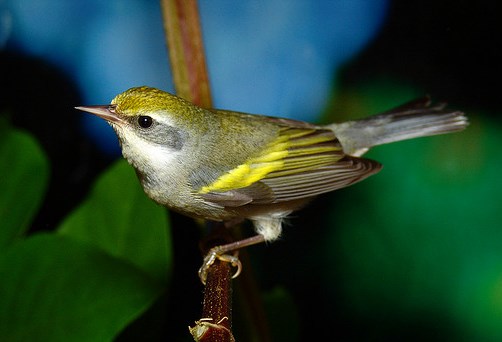
chrysoptera_2
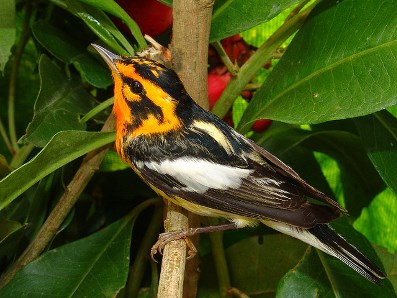
Reinita Alidorada (Vermivora chrysoptera)

To celebrate International Migratory Bird Day on October 9th, ProAves is organizing the 1st contest of photography and illustration for active members: “Migratory Birds, Extreme Travelers”.

IF YOU ARE NOT ALREADY A MEMBER REGISTER NOW 

Participate and win: two nights for two people in one of our reserves and a Migration Kit that includes the new edition of the Field Guide to the Birds of Colombia.

Every year hundreds of birds travel from North America and southern South America to Central America and South America in search of warm areas to spend the winter season, this phenomenon is called migration, but due to the destruction of the environment, fewer birds are finding a place to eat, sleep and spend the winter months .

For that reason ProAves has held the Migratory Bird Festival since 2004 in which they do conservation and environmental education with local communities in key areas for migrating bird species.

The aim of this activity is to promote interest in the communities, the knowledge of migratory birds and the importance of conserving their habitat. It also seeks to strengthen and consolidate a network of organizations and individuals committed to the conservation of wild birds in the country. Migratory birds perform a risky journey and it is our duty to ensure their survival


Schedule:

Reception of  material: Wednesday October 10th 

Deadline for receipt ofmaterial: Tuesday, October 28.

Publication of finalists: Wednesday, November 5th.

Start of voting  in social networks: Thursday, November 6.

Close of voting:  Thursday, November 13.

Publication of winners: Friday, November 14.


Who can participate?

All active members of ProAves. If you are not already a member you may register at  https://www.proaves.org/join-for-free/?lang=en


Categories:

1. Photography.

2. Illustration.
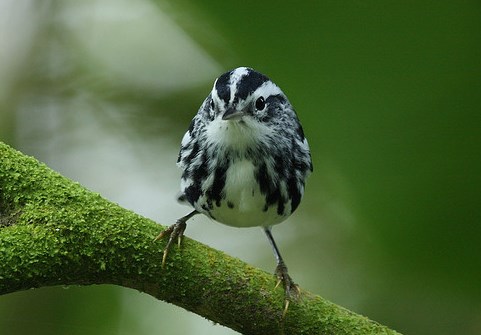
 

varia
Cebrita trepadora (Mniotilta varia)

Requirements for participating:

 1. Photographs and / or illustrations should be the participant’s own and unpublished.

2. The topic at hand is “Migratory Birds, Extreme Travelers”.

3. You can only participate with a photo and / or drawing.

4. In the case of the photography category size should be at least 2400 pixels and should be sent in .jpg format.

5. In the category of illustration, you can send the digital photograph or scanned drawing (jpg.)

6. Retouching Photos: The picture presented may not be retouched considerably. Nothing in the  photographs (people, animals, landscapes, objects, etc.) may be altered, deleted, or rearranged or increased in size.

7. The photographs and / or illustrations must not have been submitted in other events.

8. Photographs should be named as follows: Name_surname_ID. For example: Sandra_Moreno_12345678910.jpg

9. ProAves reserves the right to disqualify, at its sole and absolute discretion, any photo that does not comply with these criteria and with the intent and content of the Official Rules.

10. Acceptation of the Official Rules will be understood to have been accepted once the relevant photograph and / or illustration is sent.

11. The Participant must submit a document written in Spanish, which declares and certifies you as the sole author of the image.

12. Authorized publication of your pictures on the Foundation’s website and social networks and other disclosures after the contest are required to meet educational purposes.


Sending your Proposal:

1. Submit the photograph and / or illustration by email to fmartinez@proaves.org as an attachment. In the subject field you must specify the category, followed by the name of the participant, such as: Photography, Sandra Moreno

2. In a Word document bearing the name of the contestant, you must include the following information:

Title of the photo and / or drawing

Category

In the case of photographs, the place where it was taken

Full name of author

Age

Identification Number

Email

Phone 

migrante
Reinita castaña (Setophaga castanea)


Proceso de evaluación:

The jury will be composed by Alonso Quevedo CEO ProAves, Mónica Parada Assistant to the Director, Research Director Oswaldo Cortes, Juliana Toro Deputy Director of Environmental Education and Membership and Ivón Alzate Deputy Director of Communications. The jury will select 3 photos per category and will be posted on Facebook.

2.The result with the finalists will be announced on Friday, October 24, in the social networks of the Foundation and six days will be given for voting.

3. Incentive: The work in each category that has the highest number of likes will receive a Migration Kit by certified mail which includes the Field Guide to the Birds of Colombia in its second edition. Similarly, the images will be used as cover photos in social networks of the Foundation and will be published in the membership newsletter.

Award:

The award for the winner in each category includes the second edition of the Field Guide to the Birds of Colombia, an accommodation pass for two nights for two people in one of the reserves of the Foundation (El Dorado, Las Tangaras, Colibrí del Sol, El Paujil, Reinita Cielo Azul), a collection of mini guides to neotropical biodiversity, ecological bag Reinita Cielo Azul, Migratory Birds handle, pen, Festival of Migratory Birds poster and assorted stickers.

Conditions:

Participants must not be affiliated by formal contract or provide permanent or sporadic service with ProAves, or members of the Directive Board and the Council. To redeem passes accommodation must be booked at least 15 days in advance and are subject to availability at the time of booking. The pass covers lodging for two people for two nights, the cost ​​of food, transportation and expenses not specified are the responsibility of the visitor. Passes have a validity of 12 months from the time of delivery. The delivery of the package with the award shall be made ​​by certified mail to the city in which the winner lives; if the winner should be located in the city of Bogotá, the winner can claim their prize at the ProAves office located at la carrera 20 # 36-61 Barrio La Soledad. If winner lives outside Colombia they should bear the shipping costs or the Guide will be given at the time of redeeming the accommodation pass.


Categorías
News

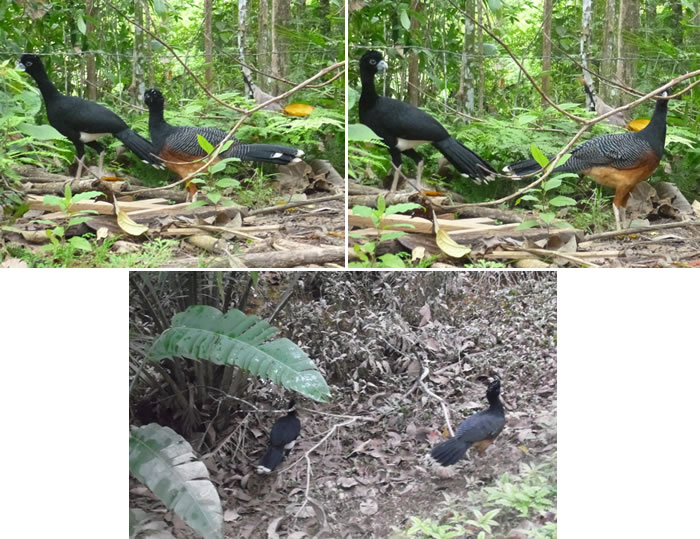
494 additional acres for protection in perpetuity of the Blue-billed curassow

With this major acquisition El Paujil Bird Reserve reaches 8448 acres of conservation for one of the most vulnerable ecosystems in Colombia, the tropical rainforest, protecting a wide range of endemic and critically endangered species.

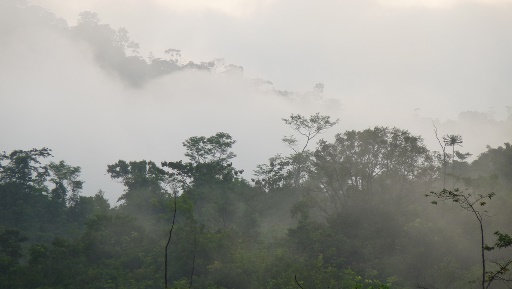
El Paujil Bird Reserve was created in 2003 is located in the highlands of Quinchas, between the departments of Boyacá and Santander, and is a critical habitat for the conservation of the Blue-billed curassow (Crax alberti).


paujil_reserva
Reserva Natural de las Aves El Paujil


Recently and thanks to the continued support of conservation partners including American Bird Conservancy, and Rainforest Trust the expansion of the reserve  has been completed  successfully in the area of the Cuchilla del Minero, department of Santander; 494 acres of forest that are little worked with numerous records of important species that are under threat levels such as the Blue-billed Curassow (Crax alberti) CR, the Marimonda del Magdalena (Ateles hybridus) CR, the Spectacled bear (Tremarctos ornatus) VU, the Tapir (Tapirus terrestris) VU and Jaguar (Panthera onca) NT and other species.


RNA_ Paujil


Two rangers, Ramón Ciro and Luis Rubelio Garcia are responsible for performing border processes, demarcation and monitoring in the new land, this activity is to establish and georeference properties, install markers at points of division, erect billboards and perform surveillance and monitoring sessions.

In this way ProAves continues consolidating this Reserve as one of the largest and most important in the Middle Magdalena of Colombia and its system of protected areas, thus fulfilling important conservation guidelines for this ecosystem in the Serranía de las Quinchas.


grafica_1
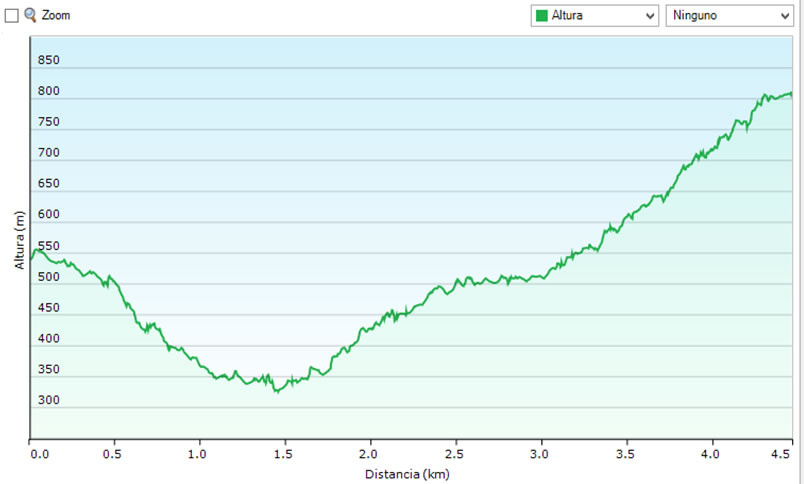
Altimetry of the expansion zone of the reserve, note the change in altitude which increases the possibility of the presence of other species and groups of fauna and flora in the area.


With the support of

ABCRTVmain1

Categorías
News

A promising future for Harlequin frogs in El Dorado Bird Reserve

Colombia is one of the richest countries on the planet in amphibian species, according to censuses conducted in the month of July, there is an encouraging abundance of these frogs at El Dorado Bird Reserve.

This Biological group represents an ecologically valuable ecosystem given their importance as bio-indicators of environmental quality, and are key organisms in the ecological dynamics of forests. Unfortunately, in recent years, a special group of these frogs, particularly the genus Atelopus, commonly known as Harlequin frogs, characterized by their striking coloration (aposematic) and their presence in almost all climatic zones from humid forests, mist and paramos, is declining due to multiple causes, including water pollution, deforestation, climate change and the fungus Chytri, a fungus that threatens the world’s amphibians.

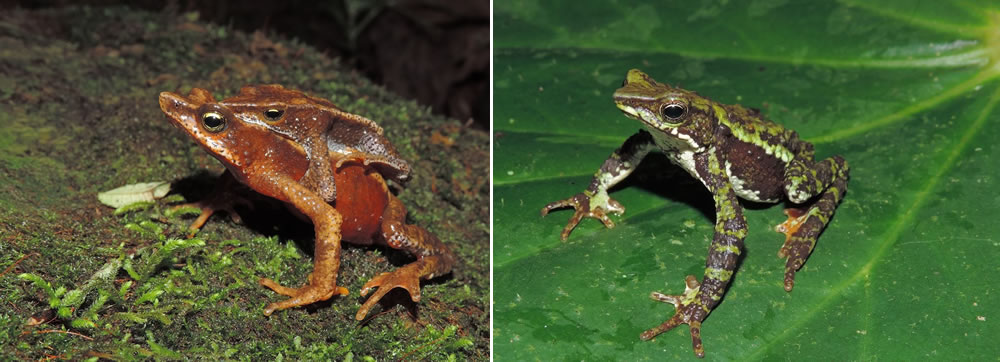
Fortunately, two Harlequin frog species are protected in perpetuity in the El Dorado Bird Reserve, Atelopus nahumae and Atelopus laetissimus, endemic to the Sierra Nevada de Santa Marta and listed as Critical Endangered CR by the International Union for Conservation of Nature censuses.

collage_arlequin
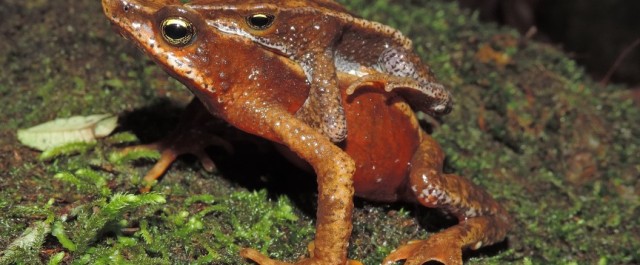
Atelopus nahumae y Atelopus laetissimus

Today, we are advancing detailed censuses in the Reserve to quantify and update the distribution of these frogs and other amphibians endemic to Santa Marta; as preliminary results, we have abundances recorded for the Harlequin frog, Atelopus nahumae; in the space of 3 hours in a ravine 400m long, 10-9 individual Harlequin frogs were found, in the same creek there were 8 individuals of Atelopus laetissimus.

These species use the habitat of the soil adjacent to water bodies and secondary forests and all were observed near areas of high presence of epiphytes (mosses and lichens) and soil with a high presence of leaf litter. On July 18th, we observed two pairs of Atelopus nahumae in amplexus or nuptial embrace.

These abundances, apparently encouraging, make us join our efforts and work as a team with the peoples in the areas surrounding the Reserve to learn more about the demographics and anthropogenic threats that threaten these populations and to generate a future management plan and contribute to the conservation of this beautiful amphibian group approaching extinction.

Supported by:

ABC loro_parque_fundacion RTVmain1


Categorías
News

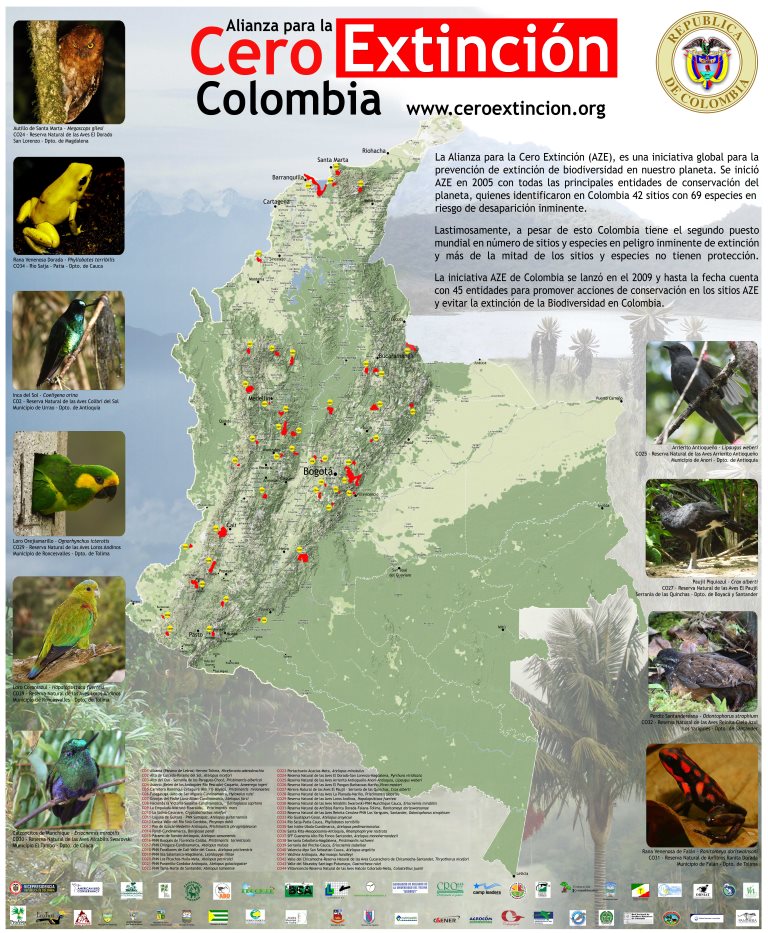
Invitation to a workshop on the Alliance for Zero Extinction-Colombia

MapaAZE-FormatoVerticalVersiónESPAÑOL423_low

ProAves invites organizations and individuals working with different animal groups to participate in the workshop of the Alliance for Zero Extinction to be held in the framework of the IV Congress of Zoology 2014 in Cartagena.

The workshop’s main objective is to integrate all conservation entities in Colombia who are interested in preventing the extinction of species in our country through the Colombia AZE-initiative. In this way promoting conservation actions by identifying sites that require protection and identify needs for conservation of such locations in order to implement programs to protect these species and their sites. Joining the Alliance is open to any conservation group that adheres to the principles of collaborative conservation.

Additional information about  the congress  www.congresocolombianozoologia.org

Additional information about  the workshop www.congresocolombianozoologia.org

For registration or additional information contact Mónica Parada Email  mparada@proaves.org


logos abc aze


Categorías
News

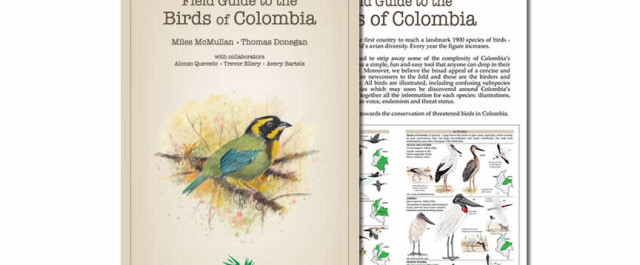
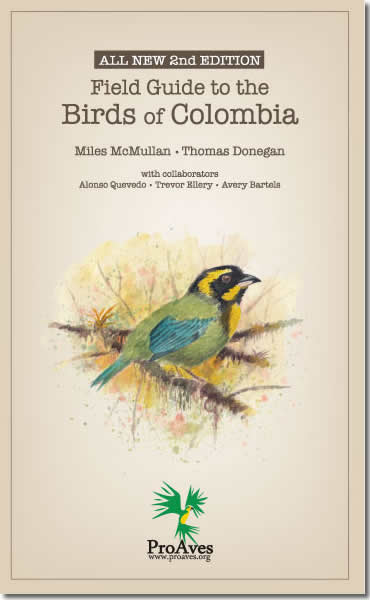
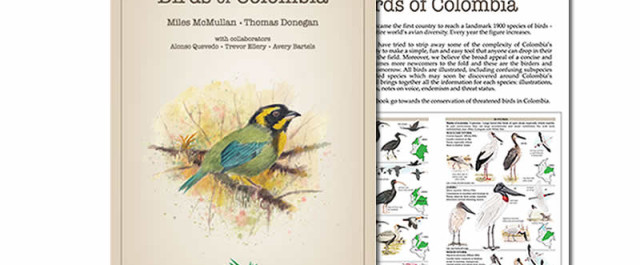
ProAves launches the 2nd Edition of the Field Guide to the Birds of Colombia


portada_shadow

Today, the 2nd Edition of the Field Guide to the Birds of Colombia is published by Fundación ProAves. The book is almost twice as large as the original 2010 edition and almost entirely re-illustrated.

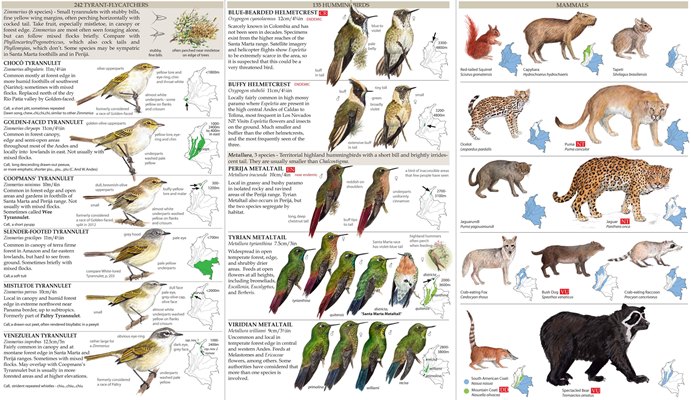
With 4500 color illustrations, almost 2000 color range maps; a new mammal identification section, and a guide to the top birding sites, this edition is without doubt Colombia’s finest field guide available to-date.

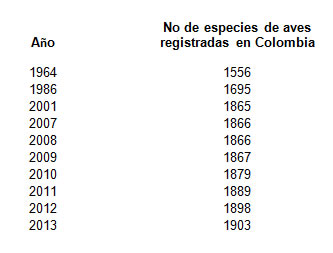
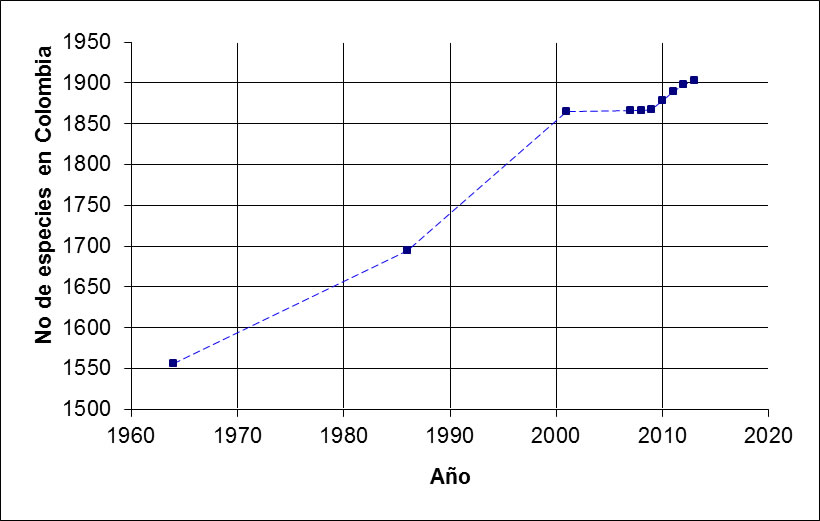
In 2013, Colombia became the first country to record a landmark 1900 species of birds, almost 20% of the world’s total. Every year the figure increases!

First published in 2010 and followed by a Spanish version Gui­a de Campo de Las Aves de Colombia in 2011. These compact field guides were an innovative tool to strip away some of the complexity of the Colombia’s unparalleled diversity. The ProAves field guides have proved to be a huge success and are helping to redefine what a field guide for a complex tropical avifauna can be.

This drastically improved second edition has been fully updated, expanded and almost entirely re-illustrated by the two authors, Miles McMullan and Thomas Donegan. However, the aim remains the same – to produce a compact pocket guide that can be quickly consulted with a single hand; and yet a user-friendly tool that anyone can use.

The field guide is just US $34.95 or £25 with a 10% discount for ProAves members who purchase the guide from ProAves in Colombia, and is available via Amazon in North America & Europe.

All proceeds (excluding mailing)from the sale of this publication will be donated to the vital conservation work of ProAves protecting birds and biodiversity across Colombia.

Purchase options:


In USA via Amazon     In Europe via Amazon 

amazon EU

amazon UK


In Bogotá, at the ProAves office (Cra 20 36-61 – La Soledad)

Info: paula@ecoturs.org tel: 571 – 2876592


muestra de 3_peque
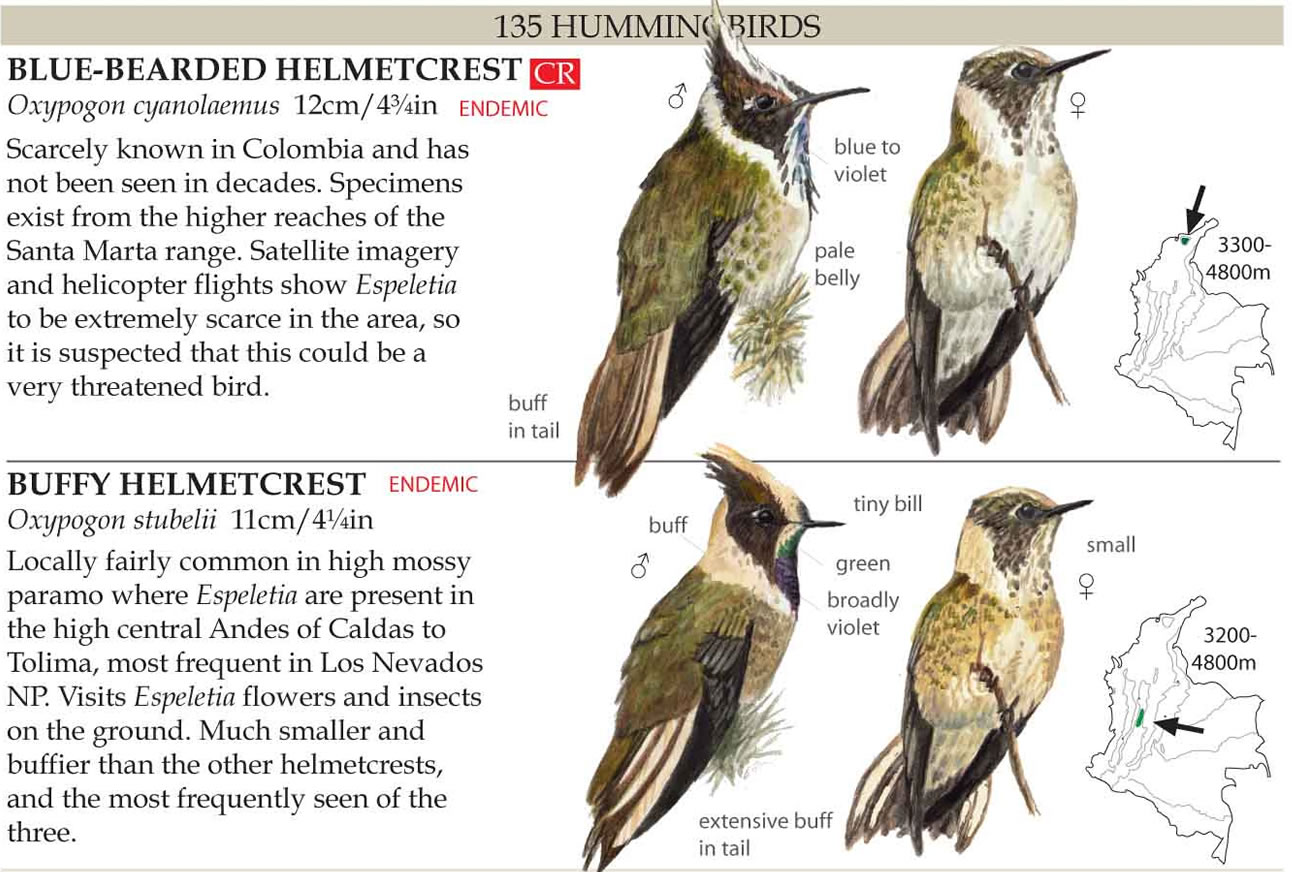
Sample of some pages


detalle 3
Detalle de la Publicación


Categorías
Field Guides News

Field Guide to the Birds of Colombia – 2nd Edition


portada_shadowDescription: 4500 color illustrations, over 3500 new illustrations; almost 2000 color range maps; new mammal identification section with 60 common species. In 2013 Colombia became the first country to record a landmark 1900 species of birds, almost 20% of the world’s total. The figure continues to increase every year.

Title: Field Guide to the Birds of Colombia – 2nd Edition
Authors: Miles McMullan, Thomas Donegan, Alonso Quevedo (contributor), Avery Bartels (contributor), Trevor Ellery (contributor)
Publisher: ProAves
Paperback
396 pages
Size: 13 x 21 x 2cm
Weight: 750g
ISBN: 9780982761557

The field guide is just US $34.95 or £25 with a 10% discount for ProAves members who purchase the guide from ProAves in Colombia, and is available via Amazon in North America & Europe.

All proceeds (excluding mailing) from the sale of this publication will be donated to the vital conservation work of ProAves protecting birds and biodiversity across Colombia.

Sales in Colombia at the ProAves office in Bogotá (Cra 20 36-61 – La Soledad) or paula@ecoturs.org Tel: 571 – 2876592


For purchases in Europe via Amazon

For purchases in North America via Amazon

muestra de 3_peque
Sample of some pages
detalle 3
Publication Detail
Categorías
News

Hope for the last lowland Bears in Colombia

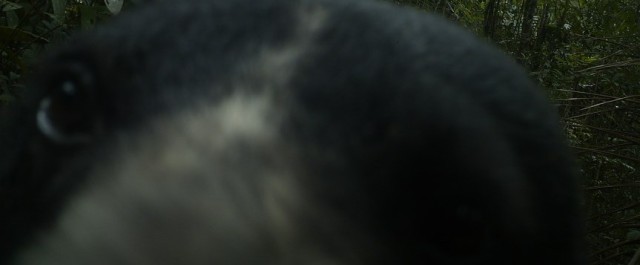
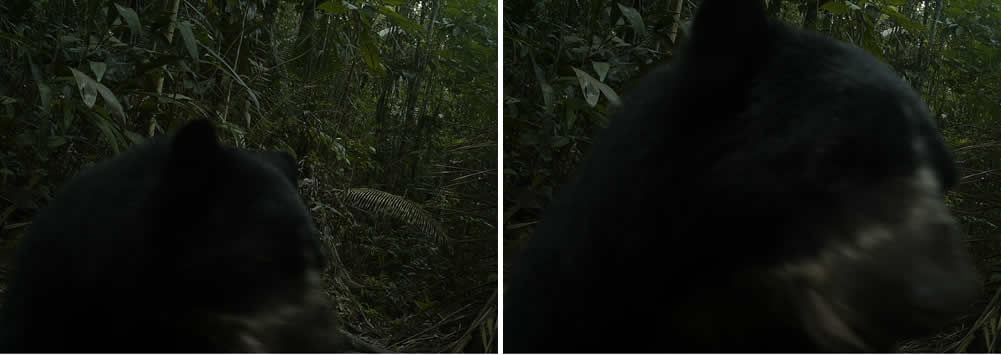
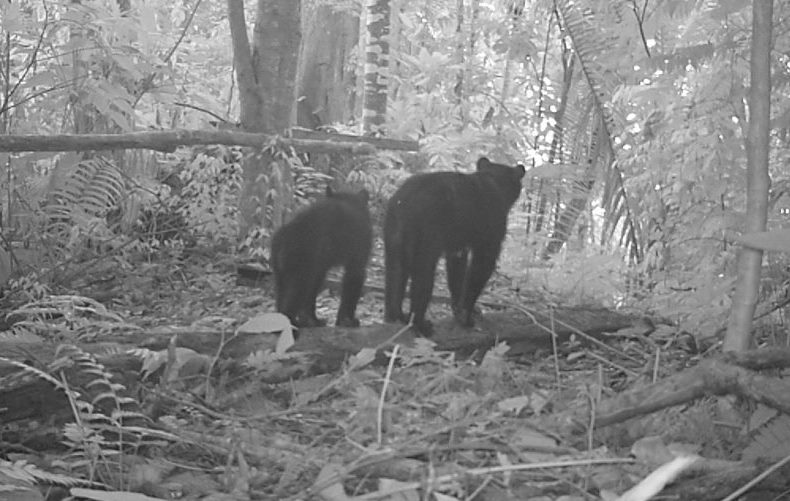
Recent records of the spectacled bear in ProAves reserves warn about the need to conserve the rainforests with the creation and strengthening of protected areas and the inclusion of the surrounding community.

The ecosystem of the Colombian Magdalena Medio region has undergone a very rapid degradation resulting from human activities such as farming, mining and deforestation, activities increasingly demanding more nature resources. Such threats appear to have restricted distribution and, in some cases, populations of the Spectacled Bear (Tremarctos ornatus) the only bear in South America have become extinct.

oso_pauxi
Record at the Pauxi Pauxi Bird Reserve

For this reason, ProAves has taken the initiative to establish reserves for perpetual conservation of some of these areas of distribution of the spectacled bear in the lowlands.

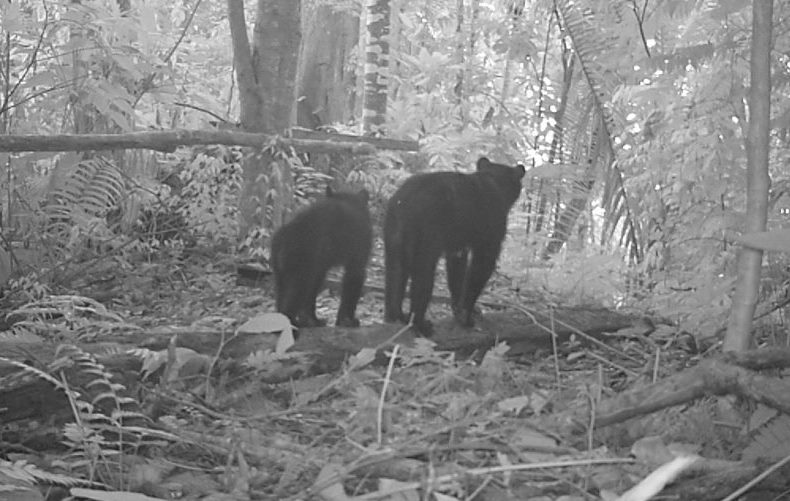
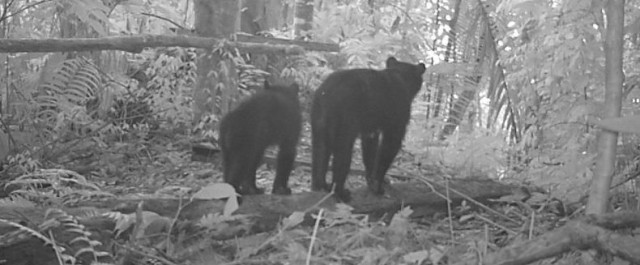
Recently we achieved important records with cameras trap of an individual in the Pauxi pauxi Bird Reserve, at an elevation of 1200 m and 3 individuals (mother and 2 cubs) in El Paujil Reserve at 700 meters above the sea. Although historically it is natural to find these bears at these elevations and areas, currently, the ecosystem of lowland Colombia, in the Magdalena River valley, has undergone drastic changes with the loss of the original vegetation.

Currently there is little information about the ecology of these populations in rainforests or lowland forests therefore it becomes essential to continue monitoring and coordinating the management plans of natural corridors between the Andean rainforest and moorland.

M2E3L17-27R350B300
Record at El Paujil Bird Reserve

In this work we found that the species suffers many pressures in the buffer zones of ProAves reserves, so we are looking for the cooperation of the local community with the purpose of generating conservation strategies such as conservation easements, conservation corridors, restoration and reforestation programs that transcend the boundaries of protected areas and include areas where the land use is farmland and livestock, places that could be used by the spectacled bear traveling between patches of rainforest areas

This threatened mammal requires our attention and support, between us all we can save it from extinction.

Supported by:

logos_oso_pauxi

Categorías
News

In the distant Colombian Orinoco, an educational venue replicates ProAves biological based education

In rural based educational venue, Policarpa Salvarrieta in el Anzuelo, Meta, Luis Alberto Pallares teacher and his rector Jairo Novoa, have shown that the remoteness and lack of resources are not an excuse to manage school activities aimed at conservation.

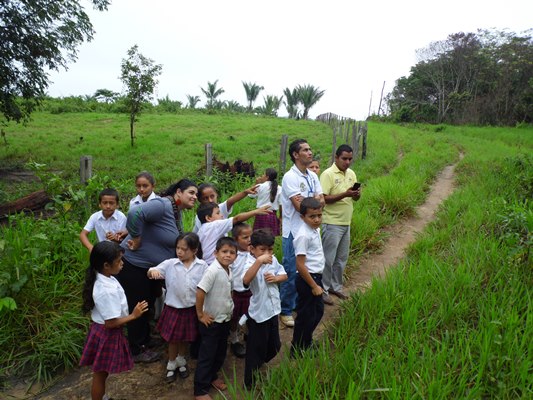
Reaching the village of el Anzuelo takes about 4 hours on a motorbike during good weather and in the rainy season, about 5 hours from the town of Mapiripan. There is rural based educational venue, Policarpa Salvarrieta, a site with 12 boys and girls aged from 6 to 12 years.


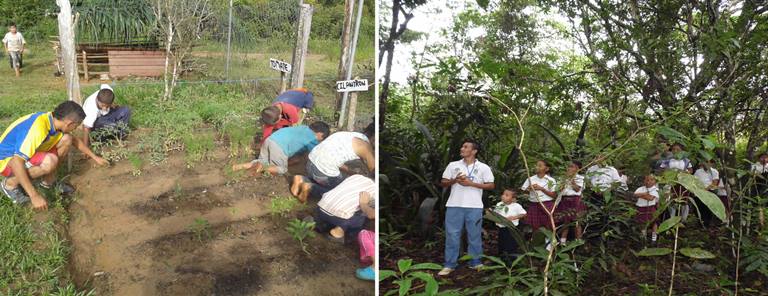
collage EB 2


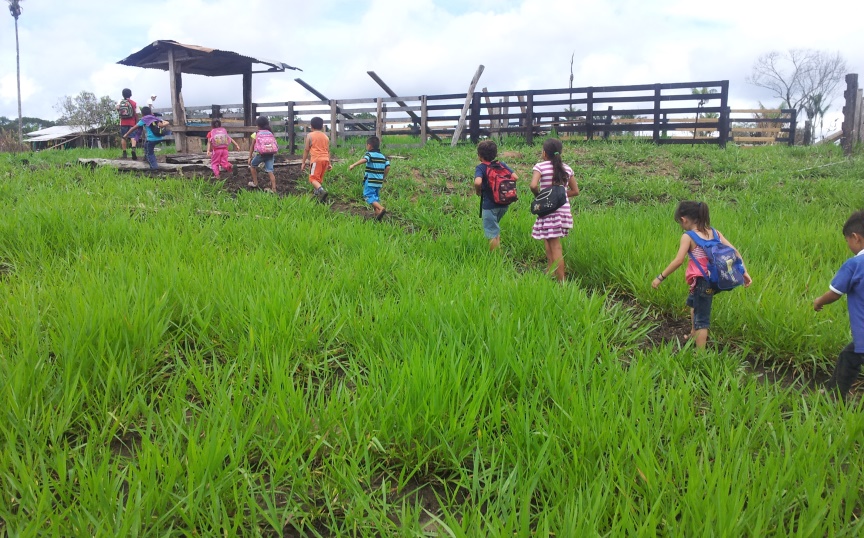
Surrounded by a small forest in the middle of the giant savanna, the school functions as a fortnightly boarding school and the children can go to their homes, some of them walk up to 8 hours to get there, others use horses; his teacher, 26-year-old Luis Alberto Pallares, with his rector, Jairo Novoa, have shown that the remoteness and lack of resources is no excuse for managing school activities aimed at conservation.

.

SAM_1922

ProAves has, for more than a year, with the Amazonas Project and biological education strategy, checked out this educational venue leaving the basis for developing ecological bio-literacy efforts in the field learning from practice, recognition of territory, experiences with living organisms and enjoying nature.

Today we see these children accompanied by their teacher walking the nearby farms, meeting the owners and hearing their stories, they go out to find monkeys in the few patches of remaining forests, climb mango trees and better still the children have a garden at the back of their school, used to prepare meals and to recognize native plants that are disappearing.

inicio web Educación Biológica

This strengthening of the activities proposed by ProAves, is valuable because it shows that the appropriation and sense of belonging by teachers is heading towards a true continuity and comprehensive training for the conservation of biodiversity and ecosystems.

Supported by:

Basic CMYK


Categorías
News

Visit the El Dorado Reserve, a paradise of birds

El Dorado Bird Reserve, golden afternoons between mountains and sea. The Sierra Nevada de Santa Marta is the paradise that every ornithologist and nature lover should visit and enjoy. www.eldoradoreserve.org

El Dorado Bird Reserve was created in 2006 by ProAves to preserve one of the most fragile and important sites in Colombia and the world, the Sierra Nevada de Santa Marta; a total of 2.530 acres, all preserved in perpetuity, is home to many unique plant and animal species, in its interior is one of the largest concentrations of the most important endemic species on the planet.

panoramica_dorado

El Dorado Reserve is a natural paradise that combines the best of the natural treasures of the Sierra Nevada de Santa Marta with an excellent lodge, from here you can see, not only the vastness of the mountains surrounding the reserve, but the greatness of the sea, it is an ideal place to relax and enjoy the scenery and the great snow-capped peaks of the Sierra Nevada de Santa Marta, the highest in the country.

dorado_collage2

In the Reserve you can see 337 birds species including 19 endemic species such as the Santa Marta parakeet (Pyrrhura viridicata), the Santa Marta bush tyrant (Myiotheretes pernix) and the Santa Marta saberwing (Campylopterus phainopeplus). For these values the reserve is classified as a AZE Site (www.zeroextinction.org) and an important area for the conservation of birds -AICA- (www.birdlife.org).


periquito de santa marta
Santa Marta parakeet (Pyrrhura viridicata)

Go to www.eldoradoreserve.org  and clicking on Make Your Reservation bottom you will find information about rooms, food and transportation; in one place you can book, pay for your travel and live an unforgettable experience.

Staying at the lodge you will be supporting the maintenance of the El Dorado Reserve and conservation work by advance for ProAves, we invite you to meet this beautiful gem in the middle of the Sierra. Birding and preserving!

                                                                       EcoTurs-300x171    ABC   loro_parque_fundacion

Categorías
News

Nature and Photography of unique species in the Sierra Nevada de Santa Marta

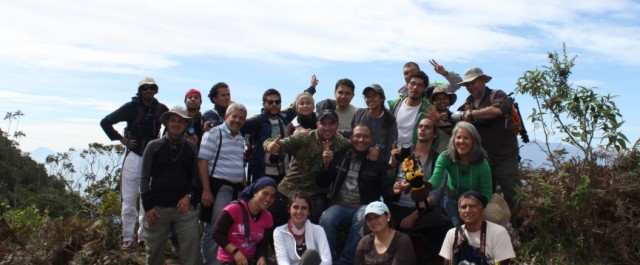
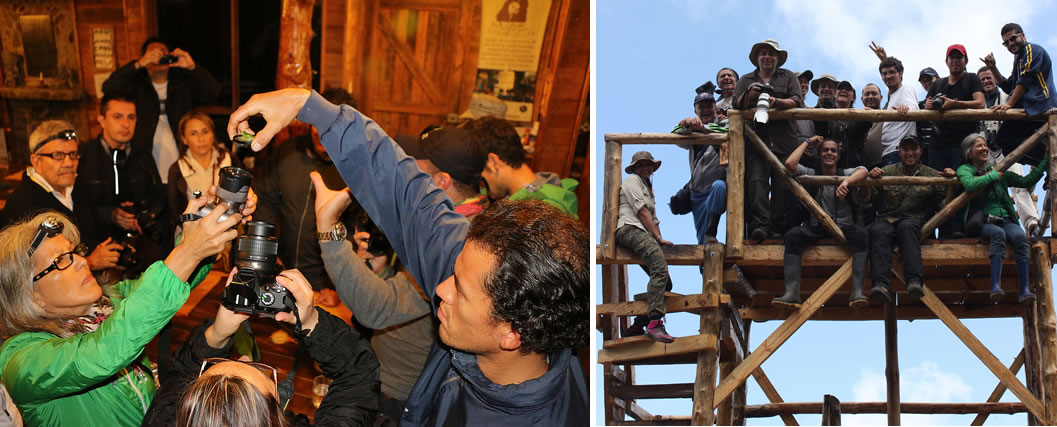
From June 27 to 30, the second theoretical-practical nature photo workshop was conducted by Foundación ProAves and Ecoturs called “Nature and Photography of unique species”. The event was held at El Dorado Bird Reserve, located in the Sierra Nevada de Santa Marta, village of Minca 2 hours from Santa Marta.

The place where the reserve is located is a strategic and ecological landscape because it has an incredible view of the sea and the Sierra Nevada de Santa Marta with its snowy peaks, all from the same place.


11982487246_2a5d606134_k
El Dorado Bird Reserve

El Dorado  Bird Reserve was created in 2006, based on the urgency of conserving one of the most fragile and important sites of Colombia, the Sierra Nevada de Santa Marta, home to many unique plant and animal species. The insulation effect is a high degree of endemism of flora and fauna, this means that most of the species observed in the reserve cannot be seen anywhere else.

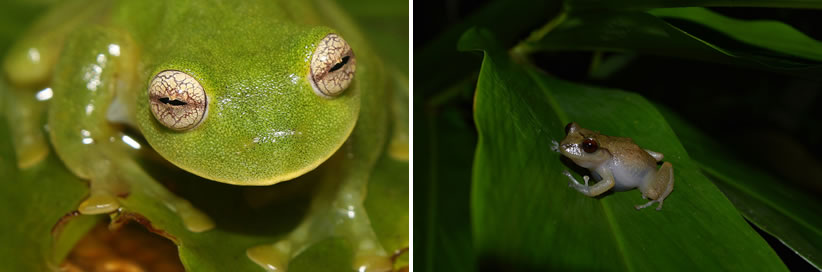
Importantly the Reserve counts on species like the Glass Frog (Centrolene tayrona) and two Harlequin frogs (Atelopus), which are undergoing a constant monitoring as part of one of conservation projects in the reserve. These amphibians are endemic and of great ecological importance, their monitoring is to verify the presence of the fungus Batrachochytrium dendrobatidis that threatens the world’s amphibian population.

ranas_collage1
Photos: Daniel Múnera and Heidy Bello

During this excursion several workshops were held with different photography techniques one of which was fast shutter photography in which different species of hummingbirds were of great help in using the troughs located in the reserve, this was achieved by capturing some species in frozen and sweeps.

colibris_collage2
Cesar Devia and Javier Roa

Another workshop was that of long exposure photography, this was done with the aim that the participants learn the basic techniques for photographing moonlight, long exposure and physiograms (light painting). In this activity the participants were able take advantage of outdoor spaces and landscapes.

Access was made in 4×4 vehicles to the top of the Cuchilla de San Lorenzo, leaving the reserve at 4:30 am., in order to photograph the best planes of the Sierra Nevada de Santa Marta between 5:30 am and 6:00 am, before the haze increases and mist appear, the so called “blue hour” for landscape photographers.

paisaje_collage3
Mauricio Múnera and Alejandro Grajales


14681141735_f0c792f44c_z
Mauricio Múnera

A photography workshop in heights was also performed, to photograph artificial nests installed for endangered bird species found in the reserve (Santa Marta parakeet). Similarly, a workshop building HiDE was held for photographing the foxes visiting the areas surrounding the reserve, also a night excursion to photograph birds and nocturnal primates took place because in the Reserve there are several species of interest.

The journalists accompanying Telecaribe made a photographic and video record of the activities.

ultimo_collage4

To end the activities, a photo contest was held in which participants showed their three best photos and explained their techniques and experiences in making them; the winner was rewarded with accommodation for two people in any of the ProAves reserves.

We hope this has been a great excursion for sharing time with nature, photography and unique landscapes.  This was one of the events that are accessible to members of ProAves. Join in and support us in conservation in the Country of Birds!

Flickr album

EcoTurs-300x171


Categorías
News

Workshop with indigenous communities in Las Tangaras Reserve.

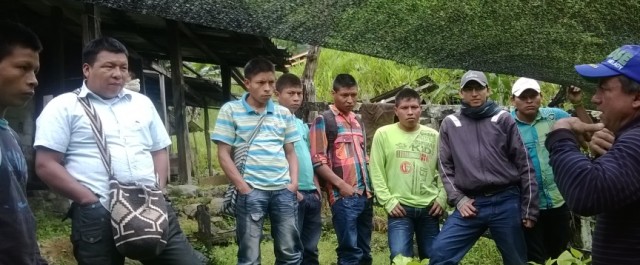
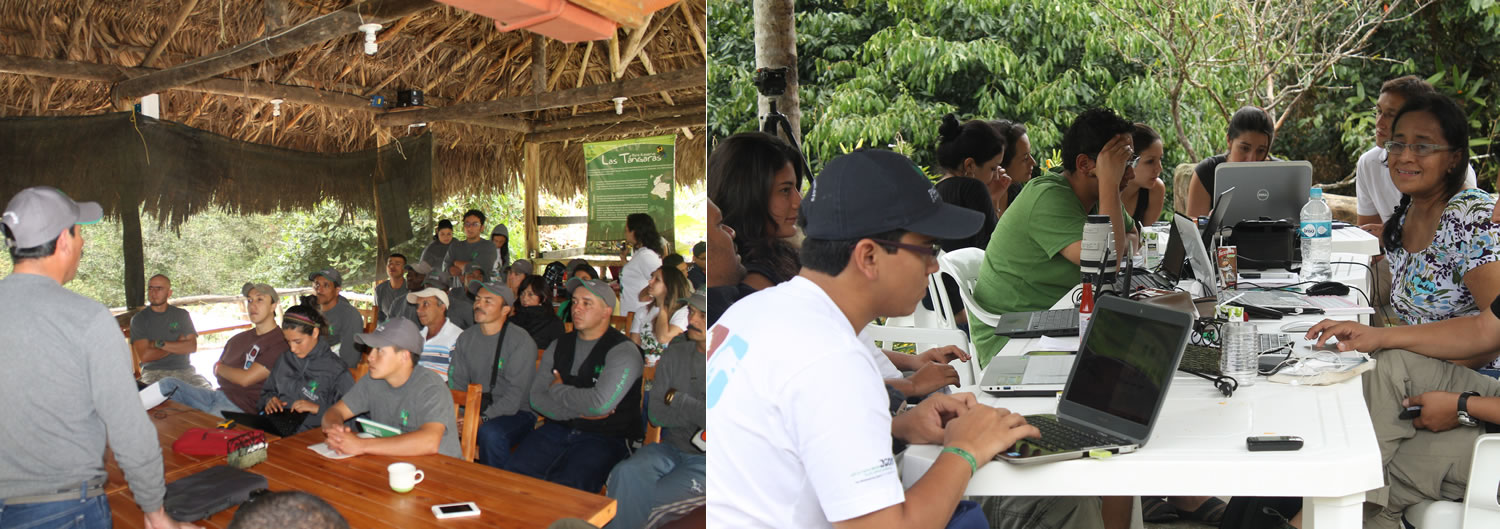
Las Tangaras Bird Reserve, located in the municipality of Carmen de Atrato, Chocó, was honored to receive a 15 community members of the indigenous reserve of La Puria and El Consuelo in order to make a practical theoretical workshop on seedling production nursery.

The call was made ​​by the City Hall of Medellín, the town of Carmen de Atrato and ProAves under the Return Plan of family’s victims of forced displacement, who since 2013 have begun to return to their territories. The workshop was conducted with the objective of making enrichment with native plant species they identify as the most traditionally used to build houses and fences as well as to eat and make crafts.

collage_taller

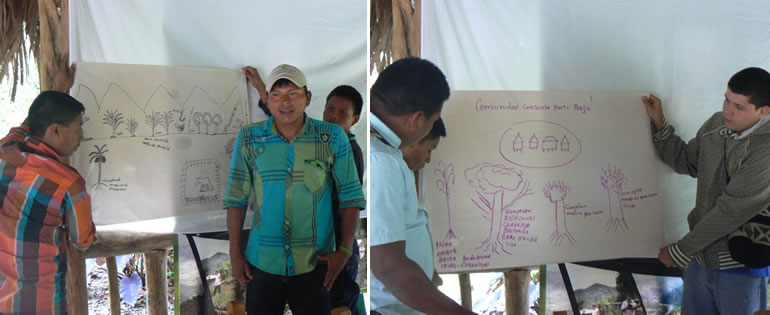
The workshop, which lasted for 6 hours, was led by the ProAves conservation and environmental education team composed of Dany Quiceno and Elver Ledesma. It started with an activity of social mapping where participants drew and described the native tree species used in their communities; as a result, it was found that indigenous communities used many palms and native trees to make their homes, fences, and others like banana and peach palm trees, for food.

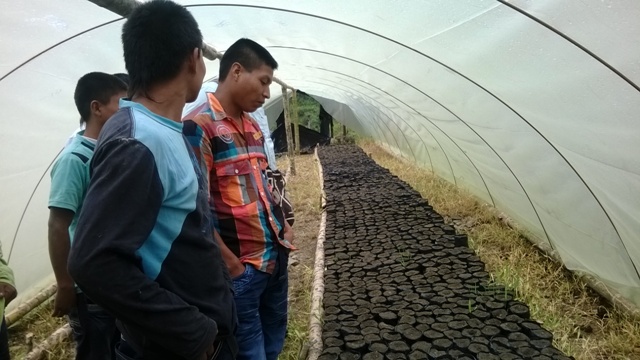
Then the ProAves forester explained how to build a nursery and start the plant production process. Likewise, he explained the different methods used to collect seeds from the forest and reproduce the plants in the nursery.
To finish a practice session was conducted in the two nurseries of the Tanagaras Reserve, where attendees were able to see how native tree species nurseries are produced.

taller_tangaras2

With the completion of these workshops in the town of Carmen de Atrato, in conjunction with the City Hall of Medellín – UARIV (Care and Reparation for Victims Unit) and ProAves, the local communities are expected to start producing the species most used by them in nurseries. These species have been decimated and it is now very difficult to find them in abundance from previous years so it is necessary to enrich them with species they, themselves, identify as the most traditionally used.


We appreciate the participation of the 15 leaders of the indigenous reserves; also we thank the City Hall of Carmen del Atrato and the City Hall of Medellín – UARIV for its interest in promoting this type of activity.


carmen de atrato medellín
Categorías
News

One of the rarest parrots in the world, the Fuertes Parrot occupy artificial nests

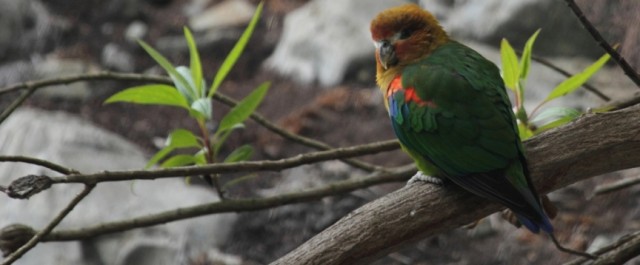
This record is very important since the Fuertes Parrot is an endemic species; it is Critically Endangered and is estimated to have a population of just over 300 individuals restricted to 74 acres in the ProAves Reserves of El Mirador, Loro Coroniazul, Giles Fuertesi and Loros Andinos.

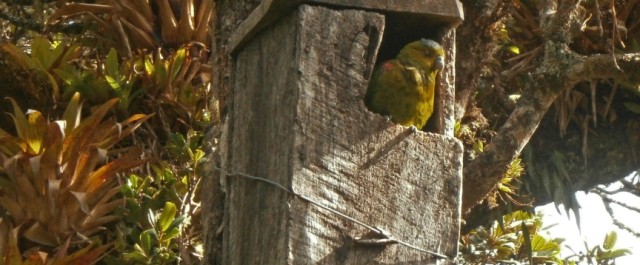
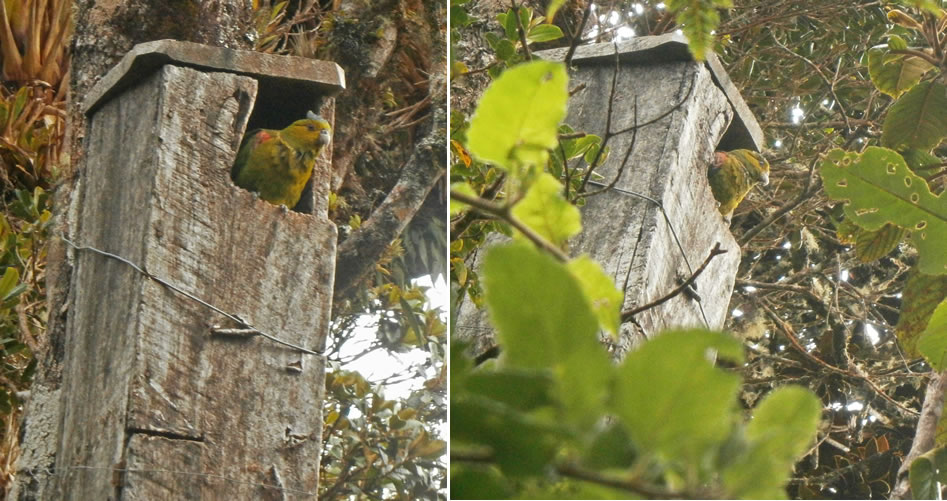
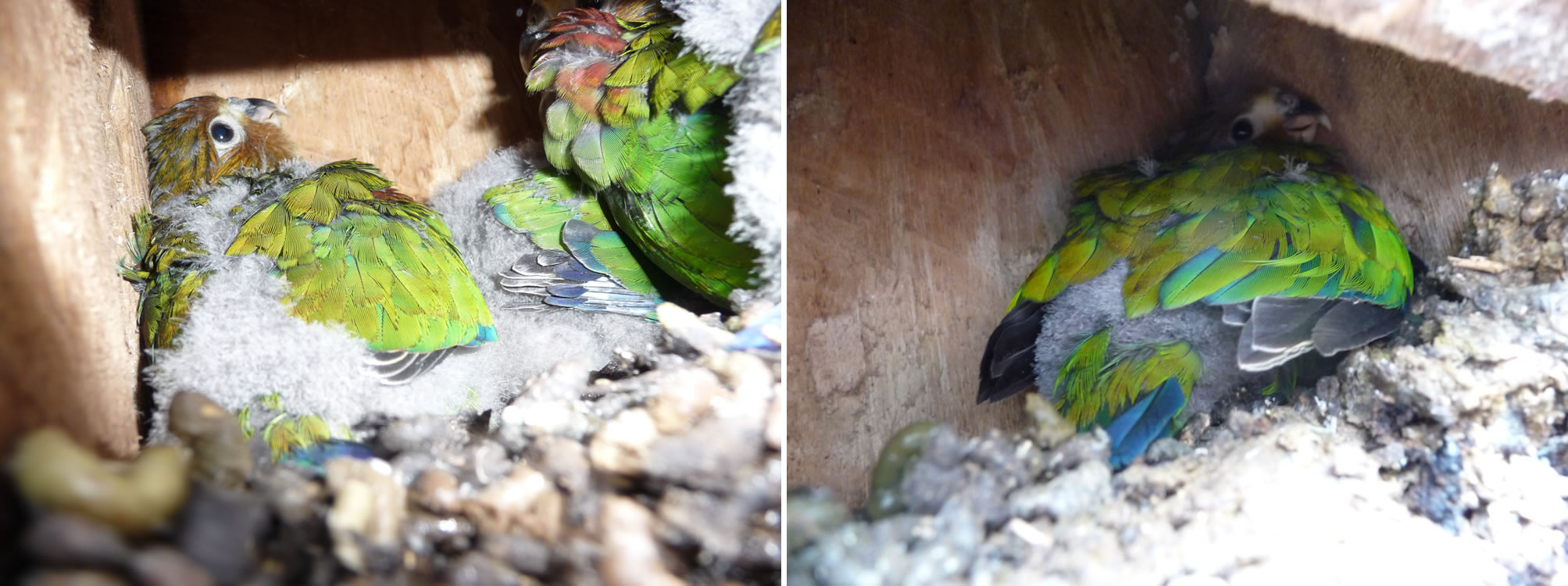
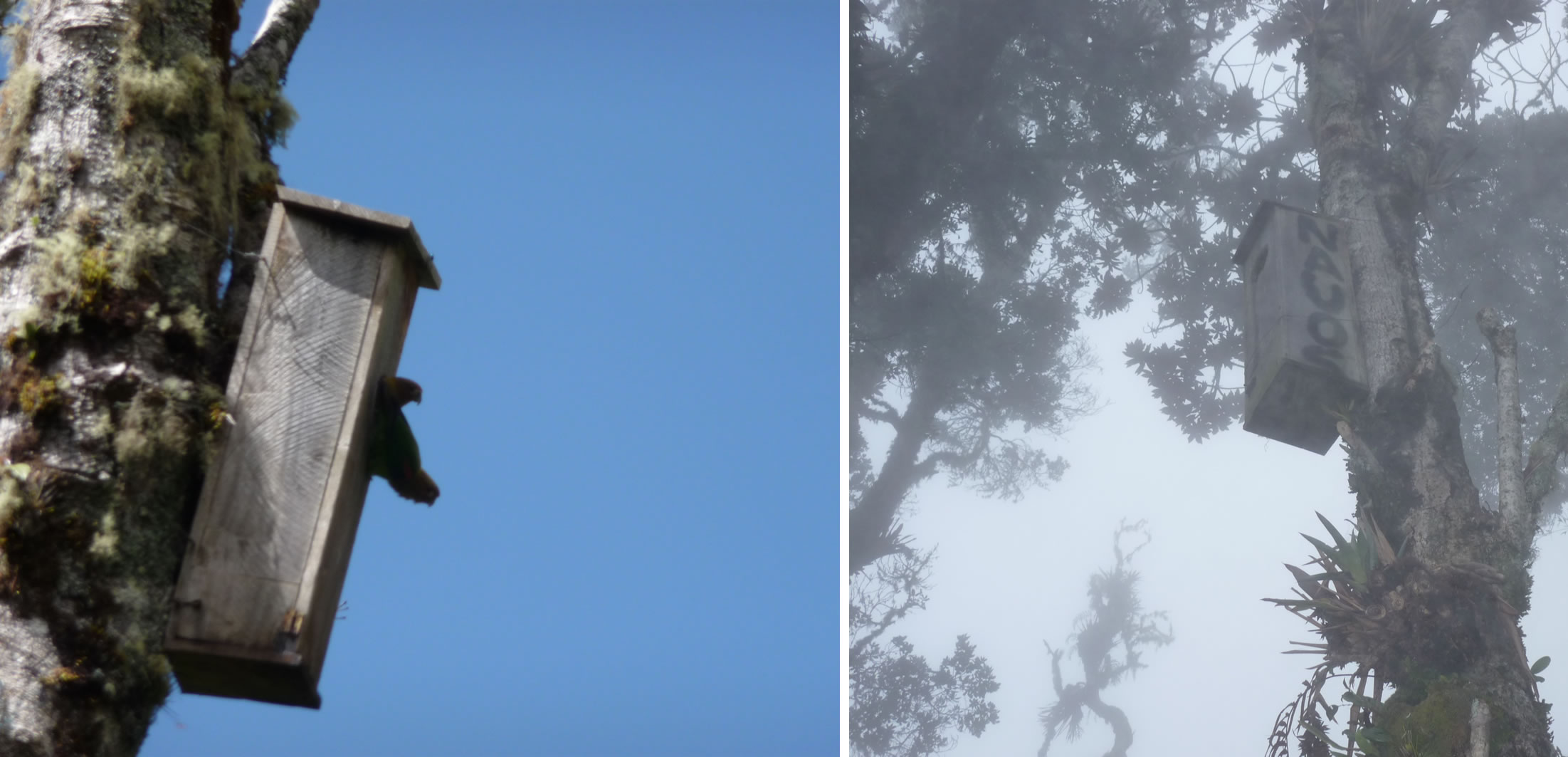
In June 2014 the occupation of an artificial nest by a couple of Fuertes Parrot (Hapalopsittaca fuertesi) was reported in one of the nests located within a small patch of forest in the El Mirador Bird Reserve.

This record becomes a promising hope for the species since the Fuertes Parrot is one of the species most endangered in Colombia, it is endemic and is currently listed as Critically Endangered (CR) according to the International Union for Conservation of Nature, due to the deterioration of their natural habitat and the consequent alarming reduction of its range.

collage_nidos_fuertesi

According to studies presented by ProAves it was determined that the only viable Fuertes parrot habitat is reduced to only 74 acres, in a range between 2600 and 3500 m, on both flanks of the Cordillera Central, so far only three breeding populations with a total population of approximately 300 individuals are known.

It is a gregarious species that flies in small groups; however, at the beginning of the breeding season in February, they form pairs, which remain together until hatching and post-hatching chicks to the months of June – July and January-February, after which they again form large groups. They eat a variety of seeds, fruits and flower buds of trees primarily thistle, olive and Romeron pine.

The Reserve is progressing in the artificial nests project, with about 20 nests installed in potential reproduction areas, considering which areas provide greatest availability of food and cavities as parrots nest naturally in hollow cavities in old trees like oak and encenillo, these being the main wood energy resource in the region.

Believed extinct after for over 90 years, it was rediscovered in 2002 by current CEO of ProAves, Alonso Quevedo, who, thanks to the Loro Parque Fundación and American Bird Conservancy, found a flock of 14 Fuertes Parrots confirming the survival of a species which had been last seen in 1911
In 2009, ProAves formulated the “Plan of management and conservation of Fuertes Parrot” where a strategy that serves as a guide to for prioritizing activities to be raised in order to ensure the conservation of the species. Download the document in pdf

We greatly appreciate the support provided by Loro Parque Foundation, American Bird Conservancy, the community and the City Hall of the municipality of Genova to continue saving the Fuertes parrot and its critical habitat.

loro_parque_fundacion ABC Gnova


Categorías
News Noticias Cucarachero de Chicamocha

ProAves Reserve Linked to SINAP

cucarachero_nicefori_web
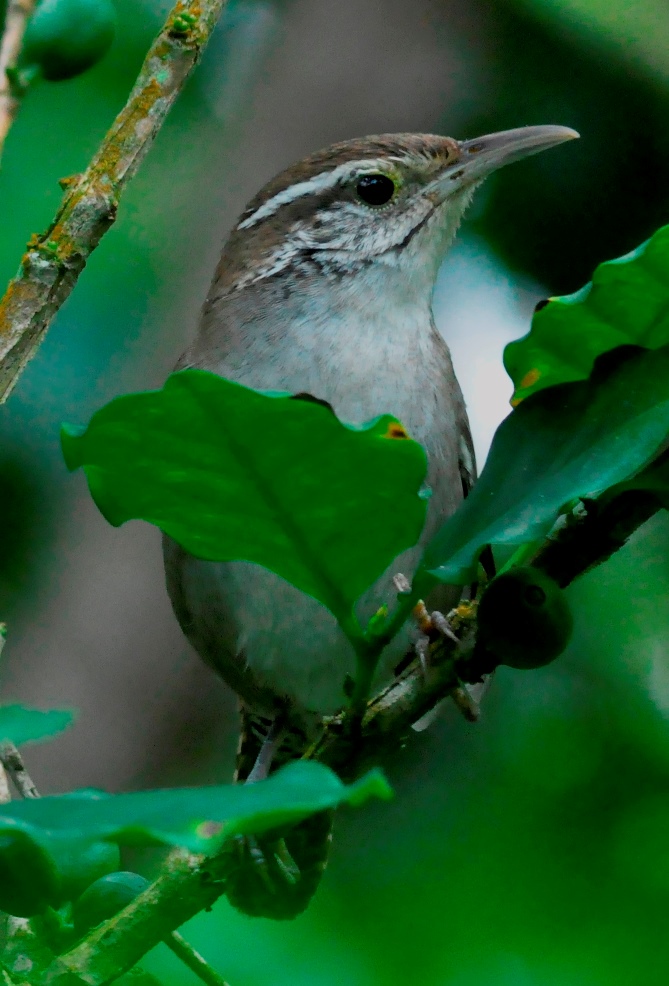
Niceforo’s Wren (Thryothorus nicefori)

The Niceforo’s Wren Bird Reserve is now registered as a Civil Society Reserve through resolution 057 of June 10 2014, being now part of the National System of Protected Areas.

We are pleased to announce the union of a new nature reserve to the National System of Protected Areas SINAP (for its acronym in Spanish) its the Niceforo’s Wren Bird Reserve

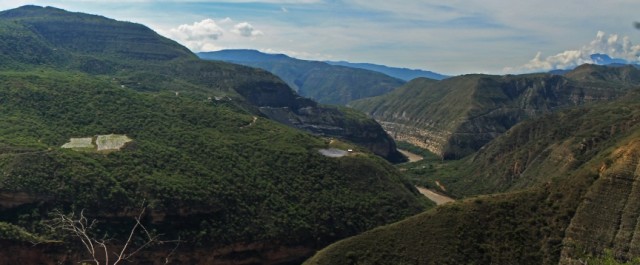
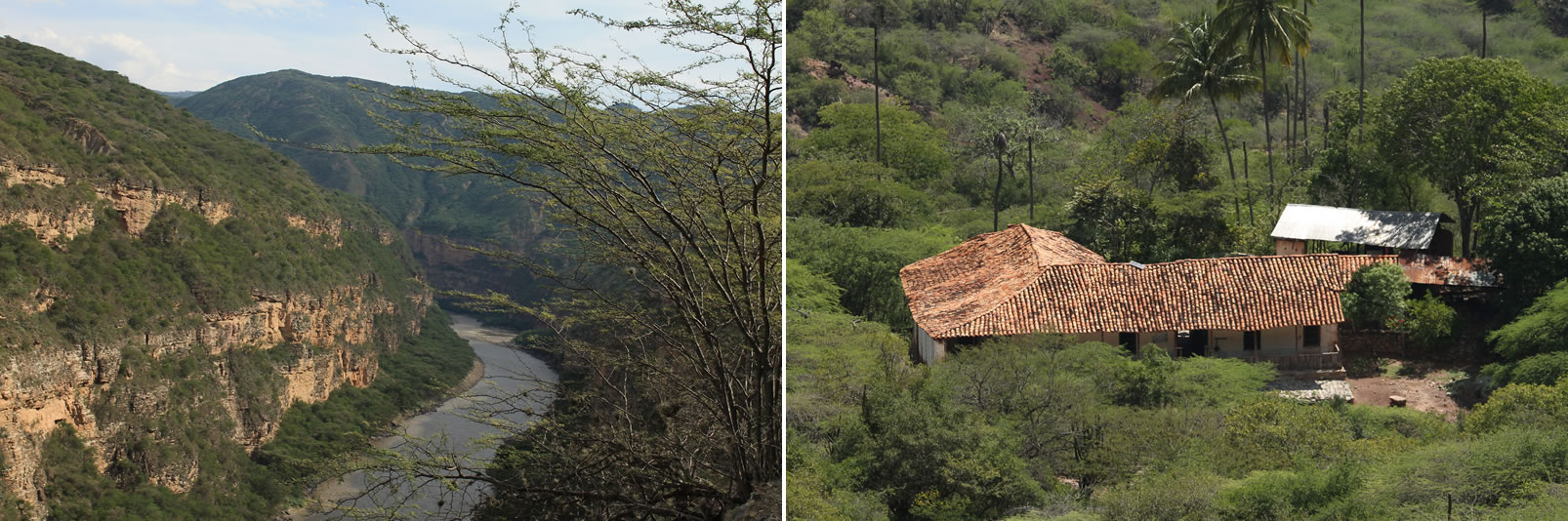
The Reserve is located in the Municipality of Zapatoca, Santander and was created in 2006 based on the urgency to preserve one of the most threatened ecosystems in Colombia and the world, the tropical dry forest, home of a large number of unique plant and animal species to this particular and almost extinct ecosystem.

In the area there are two species of endemic and endangered birds in the  Chicamocha Canyon, the Niceforo’s Wren (Thryothorus nicefori) and chestnut-bellied hummingbird (Amazilia castaneiventris), as well as two species and three subspecies of endemic birds and a threatened species of cactus.

In June it was decided to register ProAves Reserve as a natural reserve of the Civil Society through resolution 057 of June 10, 2014, and is now part of the National System of Protected Areas (SINAP). But what are the benefits this new figure?

collage_panoramicas
Niceforo’s Wren Bird Reserve

The Natural Reserves of the Civil Society are a figure of private conservation dedicated to the conservation of sample plots of natural ecosystems established at the discretion of the owners and defined by Law 99 of 1999. The objective is highlighted on the integrated sustainability criteria for handling that guarantees the conservation, preservation, regeneration or restoration of the natural ecosystems contained therein.

For ProAves it is a very important linkage of the field as this figure emphasizes state recognition of the conservation initiative begun over 8 years ago in this town in Northeastern Colombia.

For more information about SINAPs visit http://www.parquesnacionales.gov.co


Categorías
News

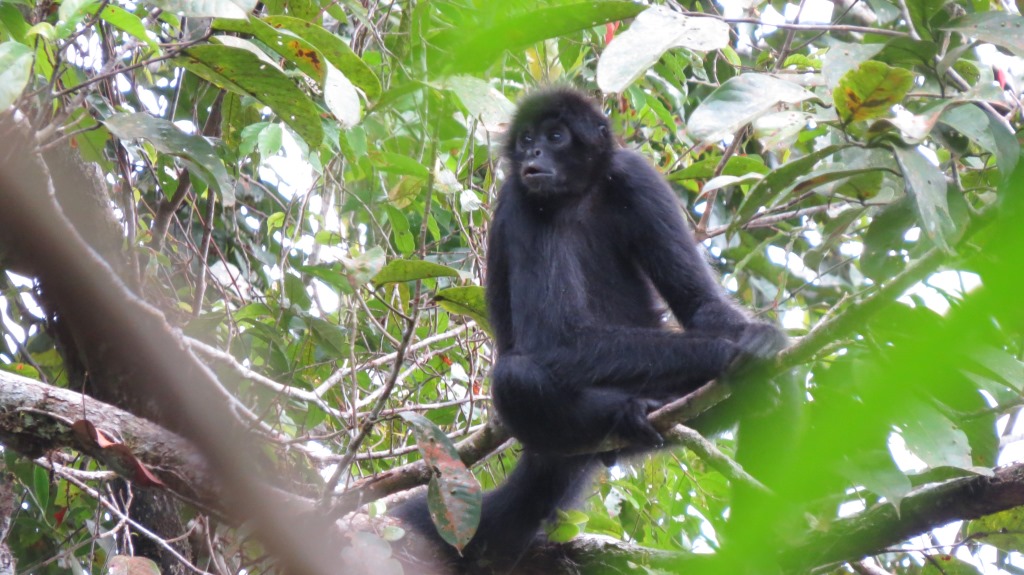
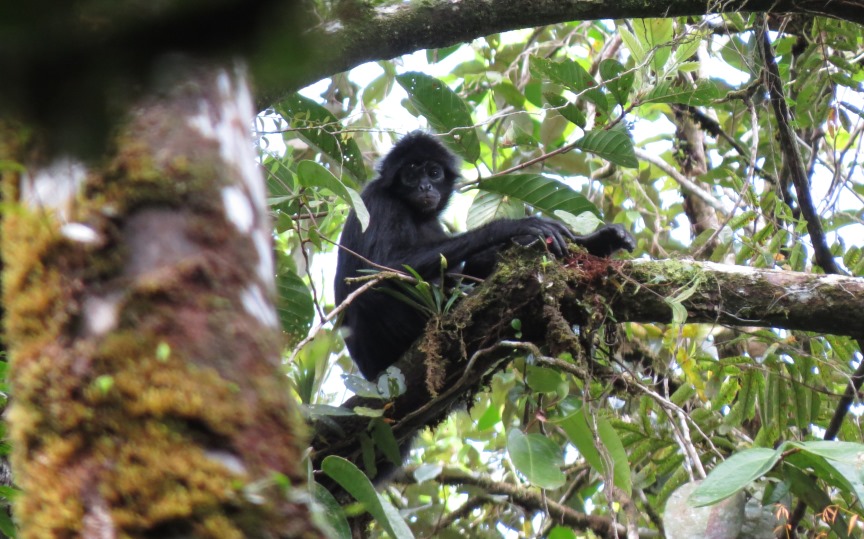
Spectacular record of the Black-headed Spider monkey on the Titi Cabeza del Algodón Reserve

21 individuals of the Black-headed Spider monkey (Ateles fusciceps), species critically endangered, were found on the Fundación ProAves Titi Cabeza del Algodón Reserve, within the framework of the Evaluation y Conservation project of the Black-headed Spider monkey.

This primate, known by indigenous people Embera Katíos as Yarré, is one of the most endangered and least studied primates in Colombia. It has a restricted habitat in Panama, Colombia and Ecuador and is currently included in the Red List of the International Union of Nature (IUCN) as Critically Endangered. This is due to the reduction of their population in 80% in the last three generations, coupled with the constant threat of hunting for bushmeat, trafficking of individuals and the loss and transformation of their habitat.

Like other primates, it plays an important role in the ecosystem, being key in seed dispersal in forests. It is one of the largest New World monkeys; weighing between 7 and 10 kg, having long limbs, elongated body, no thumb on its hands and a prehensile tail. It inhabits mature and disturbed forests, is frugivorous, diurnal and uses the canopy for displacement activities, foraging and resting (Defler, 2010).

marimonda4_web marimonda1_web

The trails where Juliett Gonzalez, Project researcher, registered Black-headed Spider monkey individuals in May have high diversity, height and plant heterogeneity, making them a suitable habitat for this species.

During June 2014, daytime walking tours took place during which a total of 21 individuals of the species were sighted. A first encounter with 8 individuals: an infant, three adult males, three adult females, and a juvenile in displacement activity and a second register of 13 individuals: an infant, seven juveniles, two adult females and three adult males.

The species is known by locals and can certainly be used as a flag to preserve the last remnants of tropical rainforest in the Chocó. Currently in Colombia there is a misjudgement of the status of populations of this primate.

Special thanks to:

RTVmain1


Categorías
News

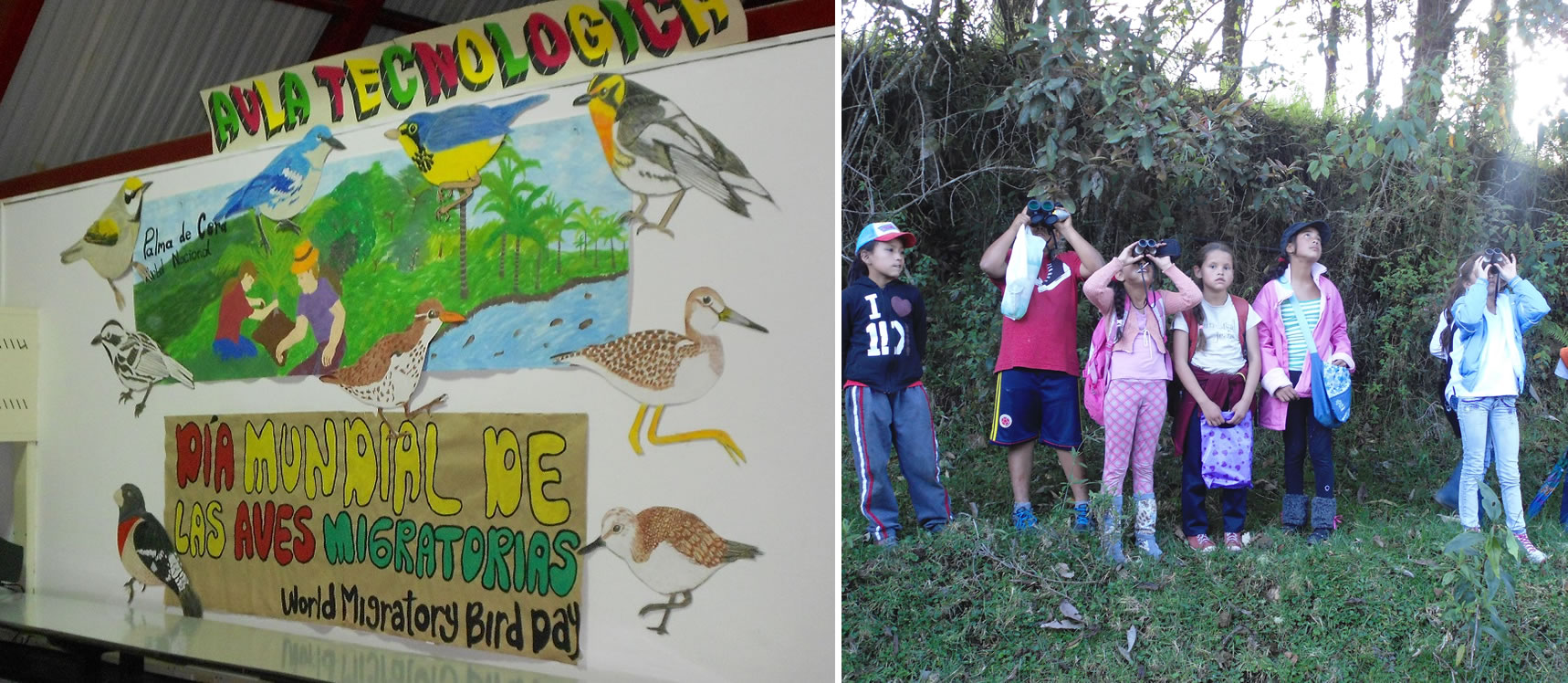
ProAves Reserves are destination for migratory birds

With 25 activities of ProAves in 7 municipalities and the Colombian capital, we celebrated the International Migratory Bird Day 2014.  The World Migratory Bird Organization recorded this year’s celebration, as the most successful in history with more than 400 events in 90 countries.

For this year’s campaign, World Migratory Bird Day in association with the World Tourism Organization (WTO) highlighted the importance of the mutually beneficial relationship between tourism and conservation. With the theme “Aerial Corridors: Migratory Birds and Tourism”, thousands of people gathered at events worldwide, from bird watching and great eco-tours, local art exhibitions, international birding conferences, all to celebrate migratory birds and the need for their conservation.

In Colombia, the foundation ProAves conducted various events with the aim of bringing the knowledge of Migratory Birds to the community and actions to protect them, such activities rang from field trips, art exhibitions, traditional games to radio programs, among others..


Migratorias_Collage2

Through these initiatives in the area of environmental and biological education, inclusive processes arise, where the community, especially the educational, recognizes and appropriates part of each of the strategies that promote the conservation of this biological group in particular.

In Bogotá, with the support of Proárbol, Acueducto de Bogotá and the Secretaria Distrital de Ambiente, trips were performed around the Jaboque and Tibabuyes wetlands and Jardín Botánico de Bogotá,  we also participated in the Usaquén Environmental Festival led by Conservation International,  Usaquén Verde and Alcaldía Local de Usaquén; these were some of the programs directed from the capital for this important celebration, bearing in mind that in May we also celebrated the International Day of Biodiversity.

In the town of Jardín, Antioquia, 5 activities were conducted that gathered about 166 people, mostly children and young people . Among the activities include the  bird watching excursions, a radio program, circuit game about migratory  birds, Cinema in the Park and an ecological workshop.

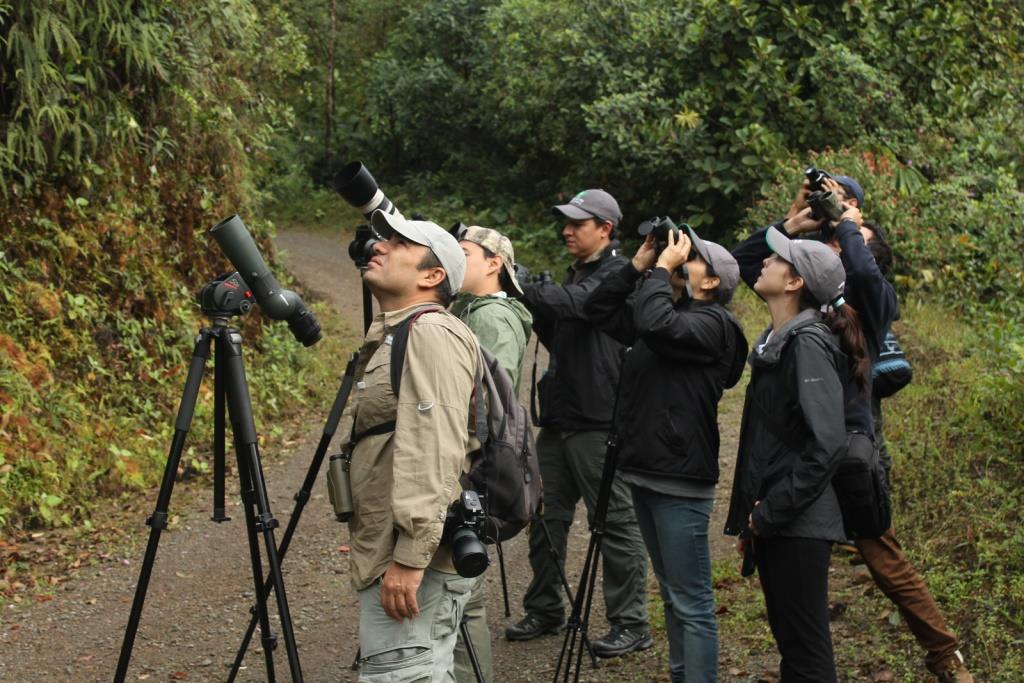
In the village of Minca, Santa Marta, 6 ecological Migratory Birds workshops were performed: from Snow to Sun, Four Beautiful Migratory Birds, We’re not the Only Ones, Road Map and Migratory Ladder. These activities culminated in craftwork in El Campano, Vista Nieves, agroindustrial colleges of Minca, with about 180 participants, highlighting the birding workshop with the environmental group Friends of the Birds to the El Dorado Nature Reserve.


Migratorias_Collage1

The activities in the town of Roncesvalles, Tolima, focused on traditional recreational games such as Ladder on Migratory Birds, Reach the bird, Lottery, Ladder, Find the Couple. Finishing in an evaluative manner, the participating children solved a word search. In Roncesvalles they were attended by 80 schoolchildren from Antonia Santos, Bruselas and el Coco schools.

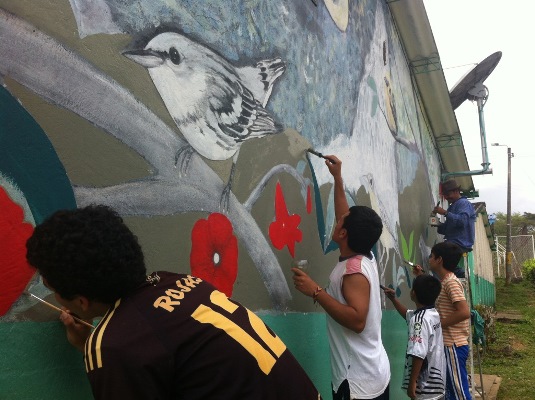
mural

 In Génova, Quindío, 4 activities were performed: a Field Trip to observe birds and an Exhibition at the Main Park with large format migratory birds painted by members of the environmental group Friends of Birds, a query type workshop where young people in the group could inquire about 2 of these species and culminating with  decorating the municipal library with the mural “Migratory Bird Month”. These activities gathered around 150 people.

In Cajamarca, Tolima, 2 Field bird watching took place in which 35 people participated.

In the town of Mapiripan, Meta held a drawing competition for migratory birds with students from Mapiripan Educational Headquarters of the town and a field trip for bird watching in which 20 children between 7 and 12 years old participated.

In San Vicente de Chucuri, Santander, two radio programs were performed, an a discussion on climate change with the support of Fundación Natura and workshops on solid waste recovery.

With the support of:

loro_parque_fundacion WMBD
Categorías
News

Historical reproductive record of the Rusty-faced Parrot

poyuelos_peq
3 plluelos en nido artificial

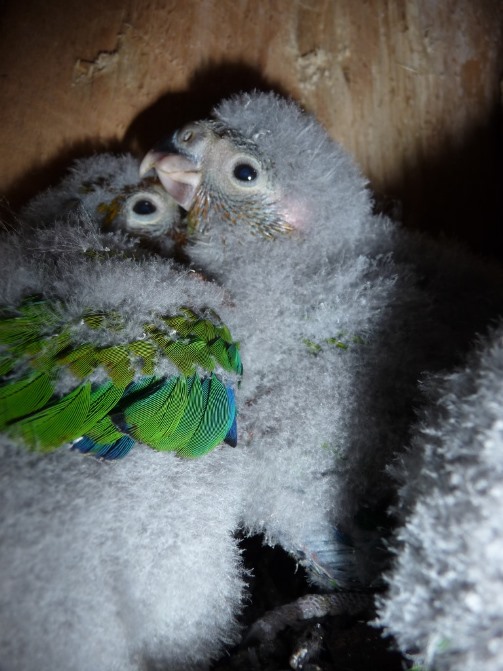
We have a historical record of the Rusty-faced Parrots (Hapalopsittaca amazonina), 6 active nests with up to 3 chicks between March and June, in late March the first occupation was recorded and the first chicks were recorded in early June. In May, the count of 79 individuals was performed in the usual monitoring site in the Colibrí del Sol Bird Reserve, they never had numbered that amount before.

After three successful years with the occupation of 4 nests between 2012 and 2013, in 2014, and after maintenance work, we double this figure with 6 occupied nests.

The maintenance tasks include changes in the shape of the nests and location sites of these places trying to find the right height. Changes were performed in the size and shape of the cavities that allow entry to the nest, and annual maintenance, where the sawdust inside is replaced at the end of the breeding season so that new couples find them suitable.

The Rusty-faced Parrot (Hapalopsittaca amazonina) is categorized as Vulnerable, primarily due to the small size of its population and the loss and fragmentation of its natural habitat caused by the expansion of the agricultural frontier in the Andean forest; for their protection, in 2005, ProAves created the Colibrí del Sol Bird Reserve, with the support of American Bird Conservancy. 

poyuelos
2 registros de polluelos en nidos artificiales

The reserve is located on the western flank of the Western Cordillera in the geographic system Páramo de Frontino, in the municipality of Urrao, Antioquia. It was created to conserve the habitat of the Dusky Starfrontlet (Coligena orina) and other endemic birds in the Páramo del Sol area, it has an area of 1806 acres of forest and high Andean paramo, between 2400 and 3750 m

This reproductive success is thanks to the initial support provided in 2008, by The Zoological Society For The Conservation Of Species And Populations (ZGAP) that allowed the preliminary study of the natural history of the species in Colombia and project continuity provided by Loro Parque Foundación and American Bird Conservancy.

nidos_artificiales
Nidos artificiales en la Reserva Colibrí del Sol

The populations of Rusty-faced Parrot (Hapalopsittaca amazonina) have increased in recent years; this can be evidenced in the records of the monthly monitoring performed in Colibri del Sol Bird Reserve, reaching a historical record in May 2014 where a count of 79 individuals was performed in the usual monitoring site, never before have they numbered that amount.

Adopt a nestbox

To prevent the extinction of a species of parrot in Colombia, you can support us through the online donation program Adopt a Nestbox, which is sponsoring the exploration, construction, monitoring and assessment of natural nests and artificial nestboxes during a year for some of the most endangered parrot species in the country. To make a donation, simply click here to complete the adoption form.

loro_parque_fundacion ABC ZGAP1 FbP SPS
Categorías
News

Creation of Reserve Offers First Protection for Threatened Colombian Ecosystem

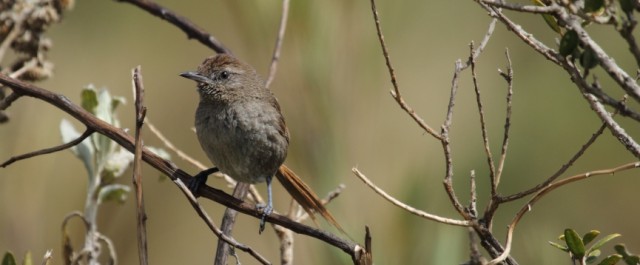
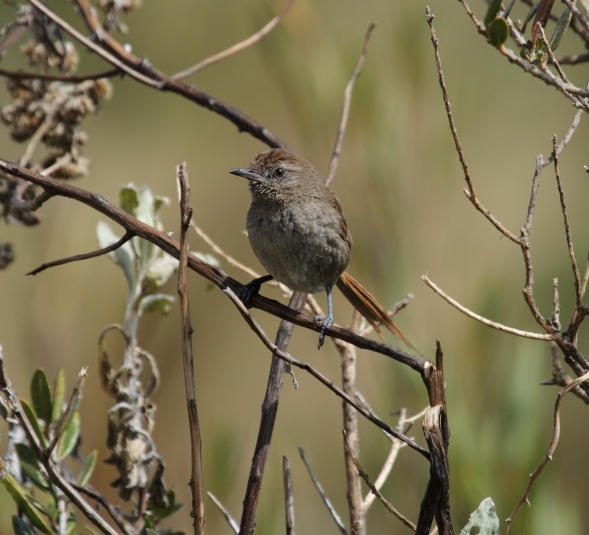
Asthenes perijana2
Perijá Thistletail

ProAves, Rainforest Trust and Global Wildlife Conservation (GWC) have announced the creation of the Chamicero de Perijá Nature Reserve, the first protected area in northern Colombia’s Serranía de Perijá mountain range.

ProAves has acquired 11 adjacent properties that form the 1,850-acre Chamicero de Perijá Nature Reserve. The reserve’s establishment is extremely timely, as 98 percent of the Serranía de Perijá’s rainforests have already been destroyed due to colonization and agricultural expansion. The reserve protects a pristine cloud forest environment that includes critical habitat for threatened wildlife.

“Without this reserve, the chances are high that within a few years nothing would be left of the spectacular forests that once covered Colombia’s Serranía de Perijá,” said Dr. Paul Salaman, CEO of Rainforest Trust.

Due to a history of difficulties conducting research in the area, the Serranía de Perijá remains one of the least-known natural environments in the Northern Andes. Field research by ProAves, however, has confirmed its importance as a stronghold for many endemic and rapidly declining species.

“ProAves has been working in the Serranía de Perijá for almost a decade in an effort to protect its last forested areas. Thanks to our alliance with Rainforest Trust and GWC, we’ve finally achieved a lasting victory for the region’s imperiled wildlife,” said Luis Felipe Barrera, Director of Conservation for ProAves.

Atlapetes nigrifrons3
Perijá Brush-finch

New research has established the presence of three endangered and endemic species, the Perijá Thistletail, Perijá Metaltail, and the Perijá Brush-finch.  Several other bird species have also been discovered, including a new Brush-finch, Tapaculo, Screech-owl, and Spinetail.

“The new reserve is globally important, as it is recognized as an Alliance for Zero Extinction site.  The incredible fauna and flora include many species found nowhere else in the world,” said Dr. Wes Sechrest, Chief Scientist and CEO of Global Wildlife Conservation.

The Chamicero de Perijá Nature Reserve will protect one of the best-preserved tracts of forest remaining in Colombia’s Serranía de Perijá. It also protects two watersheds that are vital for the city of Valledupar and several towns in the otherwise arid Cesar Department.

“This reserve is a win for everyone. Not only is it going to be a permanent lifeline for the region’s many endemic species that have nowhere else to go, but it is also a major victory for nearby cities and towns that will benefit for years from the water it provides,” said Dr. Salaman.

ProAves, Rainforest Trust, and GWC would like to extend thanks to all donors and partners that helped raise funds, especially the Our Children’s Earth Foundation and the Sangreal Foundation.

With the support of:

logos_todos

Categorías
News

New strategy increases development sites for the most poisonous frog

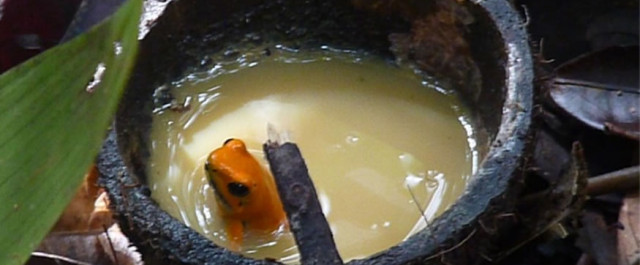
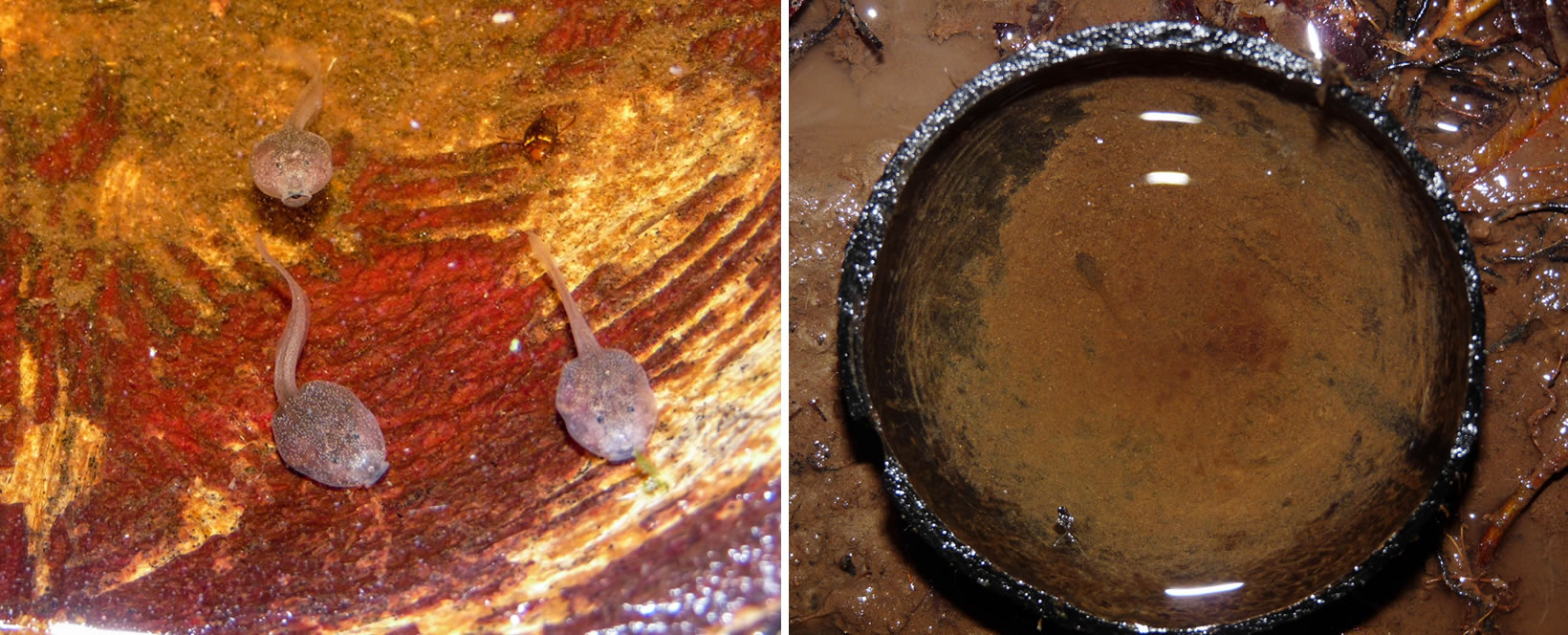
In order to increase the available sites for development of the tadpoles of the Golden Poison frog (Phyllobates terribilis), 84 coconut halves were installed in the Rana Terribilis Reserve, in 4 months 107 tadpoles in 41 coconuts were recorded.

The Golden Poison or Terribilis frog (Phyllobates terribilis) is an amphibian belonging to the Dendrobatidae family, and is known as the most poisonous vertebrate in the world for the presence of toxic alkaloids in its skin. It is endemic to the Colombian Pacific coast, it has a very restricted distribution, and its habitat is the humid jungles in the Cauca and Chocó departments, where forests with high rates of rain (5,000 mm or more) between 90 and 200 meters above sea level predominate.

This species is endangered (EN) according to the threat categories of IUCN and its populations are in decline as a result of human activities such as deforestation, expansion of the agricultural frontier, illicit crops and pollution resulting from fumigation.

As a result of the activities of Juan Sebastian Forero under his degree work, during the months of October 2013 to January 2014, 84 coconut halves were installed in areas of the reserve where it is common to see individuals of the frog with the aim of increasing the available sites for development of the tadpoles of this species. As of November 2013 recording of the tadpoles in the installed coconuts began and subsequent detailed review of these, showed they belonged to P. terribilis.

collage_renacuajos

At the end of January 107 tadpoles in 41 coconuts in the reserve, which represents 47.61 % of all installed coconuts, were recorded. The monthly increase in tadpoles was notable as in November 10 were recorded, in December 30 and finally in January 107.

The implementation of this strategy effectively increases the survival of tadpoles of P. terribilis allowing a greater number of individuals to reach youth and adult stages. In addition, temporary pools where this species lays its tadpoles depend on constant rain to keep the water level needed to ensure the survival of tadpoles, and coconuts maintain the water level for longer and can be filled manually.

The Natural Frog Reserve Rana Terribilis is located in the department of Cauca, in the town of Timbiquí in the urban area of ​​the county seat, on the right bank of the River Timbiquí, it has an area of 47 hectares, between 10 and 50 meters above sea level and belongs to the area of tropical rain forest.

Supported by:


RTVmain1 wlt_logo1
Categorías
News

Planning, Protected Areas and Environmental Education 2014 Meeting

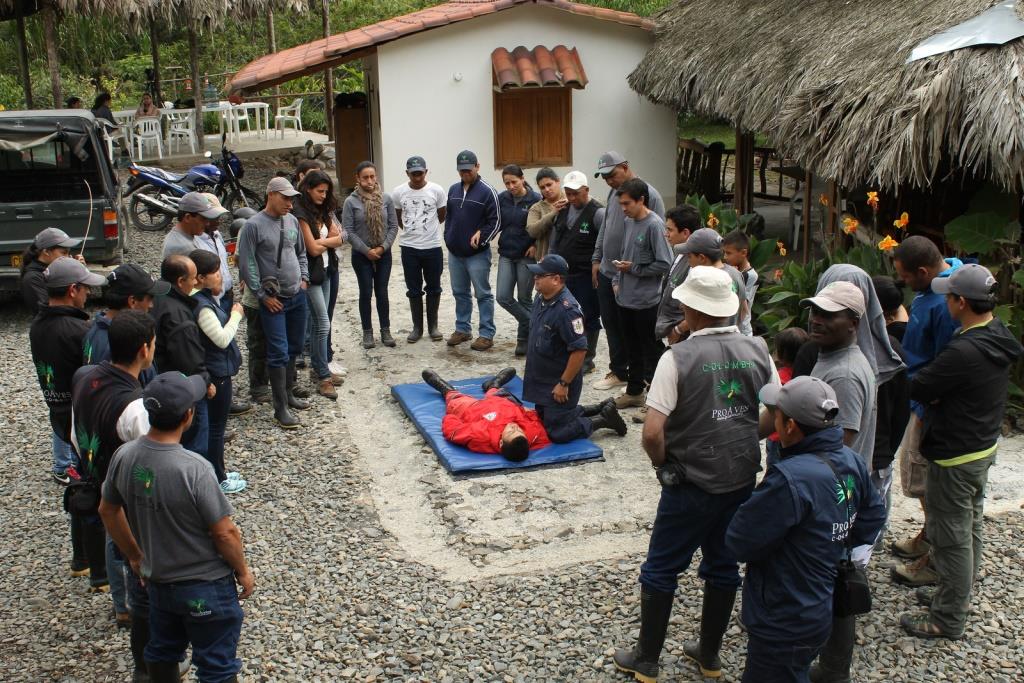
The meeting was held in the Las Tanagers Bird Reserve between April 22 and 27 2014 and was attended by nearly 60 people, including administrators, teachers, wardens and area directors.

The meeting was divided into 2 parts, during the first 3 days; each area presented the main achievements during 2013 and projected goals to meet during 2014.

In a second session the Strategic Plan for the current year was designed, based on the Five-Year Plan drawn up at the meeting of the Board of Directors held in 2013. At the end of this feedback session on the Strategic Plans were made ​​for the purpose of unifying ideas and suggestions from all the ProAves team.

collage_reunion

During the next 3 days the Reserve received more than 40 people who make up the team of environmental educators, Rangers, researchers and managers of protected areas, including the executive management team, administrative area, accounting and Ecoturs

During the meeting 3 training sessions were conducted on different issues of vital importance to fieldwork:

Construction and maintenance of septic tanks, where we had the participation of an expert in septic tanks from CORANTIOQUIA.

auxilios

Forest fires and first aid training, for this we had the participation of the Firefighters ‘Ciudad Bolivar’ Unit.

And Occupational Health, Occupational Hazards , election COPASO and Coexistence Committee , during this training the importance of working with security teams prepared by the Rangers in the reserves, the importance of working in good physical conditions (hydration, food, rest, etc. ) was emphasized. The respective elections of representatives to COPASO and the coexistence committee were made.

Additionally, the accounting area presented a theoretical-practical workshop where the area of work and the specifications that should be provided to perform contracts, third party payments, invoices, etc.

The ​​environmental education area held a contest to measure the level of knowledge that the Rangers have about the organization with the aim of rewarding and strengthening their sense of belonging.

Similarly, an activity was performed to identify the main threats affecting the reserves, a team consisting of the Director of Conservation, the assistant directors and the Rangers who identified 4 main threats: hunting, fires, mining and deforestation. Then they held their respective socialization, managing to geographically identify them and propose different solutions.

During the meeting, he acknowledged the Rangers and their work, and thanks to them we have managed to have a network of consolidated reserves to ensure the conservation of the most endangered birds of Colombia. Additionally, the annual budget was delivered to the whole team of the foundation.

salida

“I want to thank the whole ProAves team for their participation in the meeting held last month. It is very rewarding and encouraging for me to see a solid, compact team with common goals. From all accounts the meeting was a success, we have set clear goals that will guide our way this year, know each other and the work areas of our colleagues, their achievements and difficulties; this activity strengthens us internally reflecting our deep commitment to environmental and materializing outside the daily work. I am very satisfied with its commitment to the conservation of the birds of Colombia and the Foundation ProAves. THANK YOU FOR YOUR PARTICIPATION we will see each other next year! “Alonso Quevedo Gil. Executive Director, Foundación ProAves .

To see more photos visit: Flickr

Supported by:

logolp RTVmain1
Categorías
News

ProAves delivers more than 4300 plants during Palm Sunday

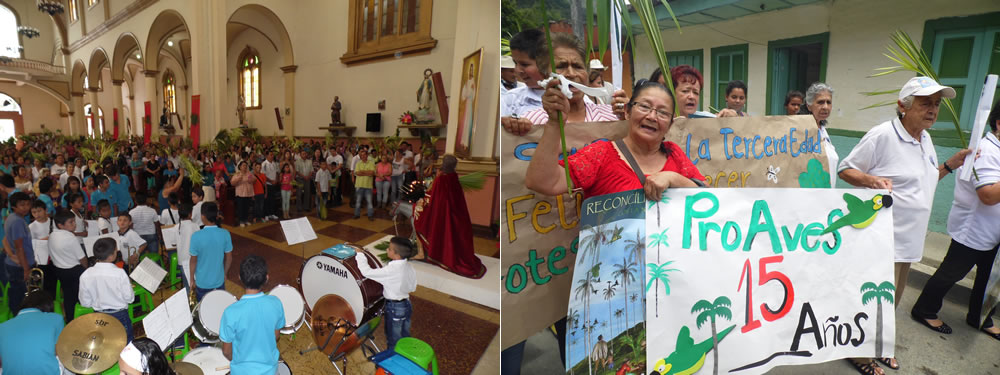
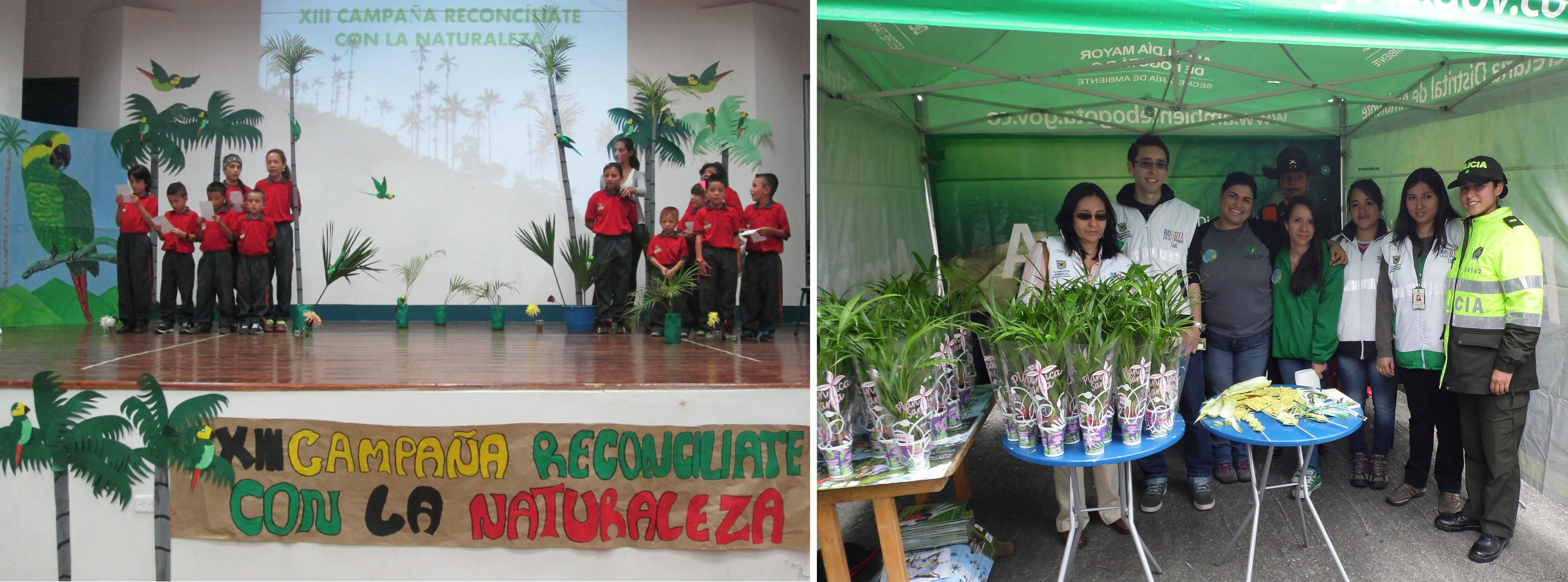
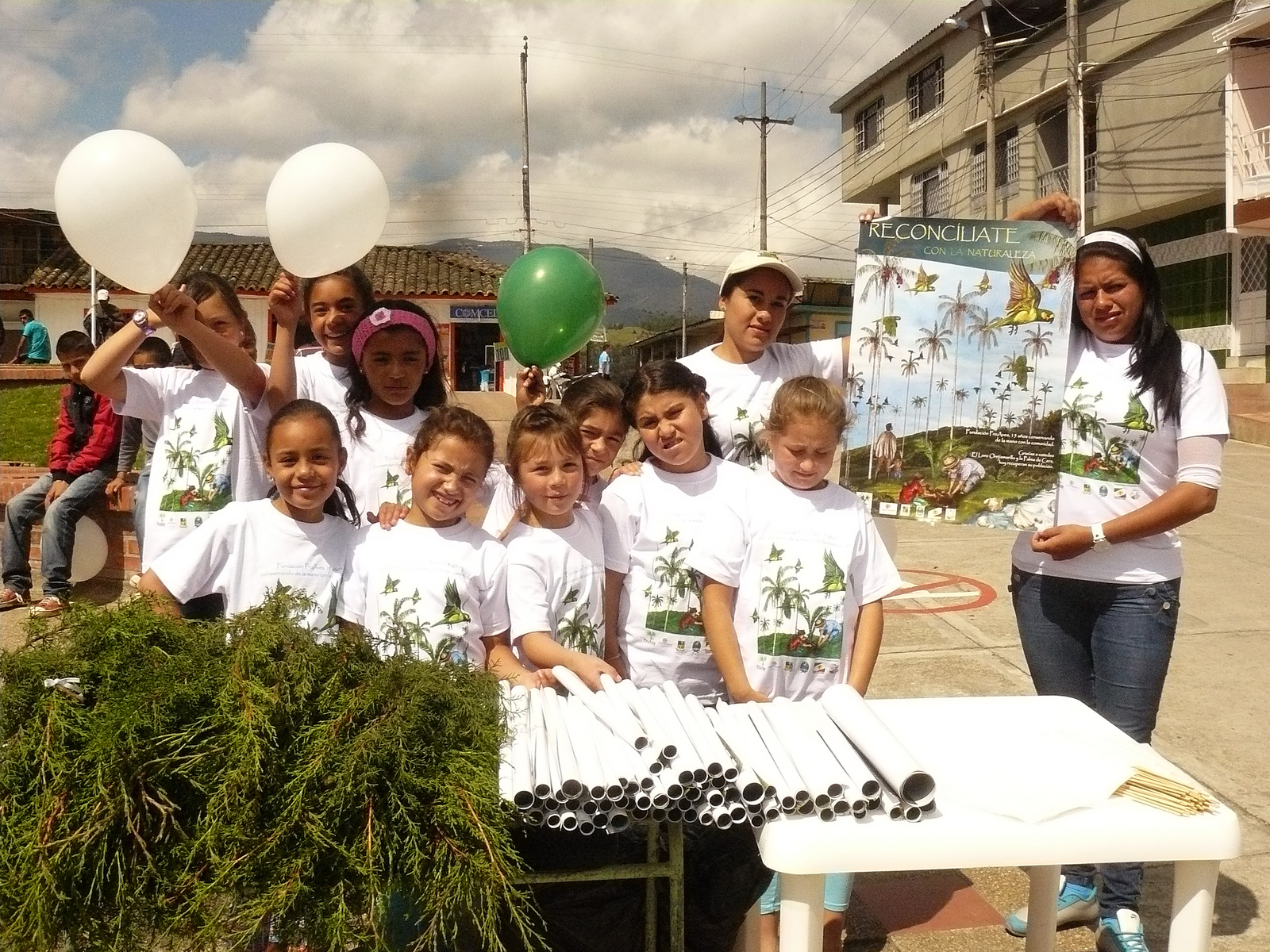
In 2014, Colombia was reconciled with nature. During the XIII version Reconcile with Nature campaign held in Bogotá and in 7 towns of Colombia where the wax palm branches were replaced for live plants which was promoted by delivering more than 4,300 live plants across the country during the celebration of Palm Sunday.

This year the campaign was conducted in the towns of Roncesvalles, Tolima; Génova. Quindio; Jardín, Antioquia; San Vicente de Chucuri , Santander; Minca, Santa Marta and Bogotá and, for the first time, in the town of Cajamarca, Tolima. Confirming that this great event benefits the conservation of endangered palms of Colombia and their fauna.

procesión_cajamarca
Palm Sunday Celebration in Génova, Quindío

During the last version of the campaign we saw zero use of the wax palm and other threatened species in these towns, with the support of local priests and a greater number of participants in the environmental activities and cultural proposals by the foundation such as: drawing competitions, nature walks, bird watching visits to nature reserves, ecological workshops, “plant a tree” days and art exhibitions, which promoted the replacement of palm branches by living plants, delivering more than 500 native trees to the community and ornamental plants in pots made ​​by children from recycled plastic.

jardin-bta
Palm Sunday Celebration in Jardín, Antioquia and Bogotá

During the season of Lent we helped the Environmental Police and the CARs at checkpoints installed on the access roads to towns, with fun activities and the delivery of informative and educational material.

During Palm Sunday, at information stalls we gave away over 4,300 live plants, 400 balloons, 300 banners, 1.000 posters, 300 t-shirts and 1.000 stickers, all with the clear message of conservation of the Yellow-eared Parrot and Wax Palm, receiving support from regional autonomous corporations and the mayors of each town, and the priests in their Easter sermons, who insisted on the protection of God’s work, using alternative branches, they are our greatest allies in achieving this change in culture.

ronces
Palm Sunday Celebration in Roncesvalles, Tolima.

This year we held the campaign for the first time the town of Cajamarca, in the department of Tolima, which has large areas of Wax Palm, conducting the campaign in the districts of Alpes, Toche, Anaime and San Lorenzo Alto, accompanied by the the church priest Hugo Barragan, and giving out ProAves educational material, we also visited the owners of farms with wax palms to speak of the importance of this species and prevent their commercialization during this holy feast.

reconciliate
Palm Sunday Celebration in Cajamarca, Tolima.


Supported by:


log_comp_capaña2014


Categorías
News

Internationally recognized: Two species of hummingbirds and a flycatcher, new to Colombia

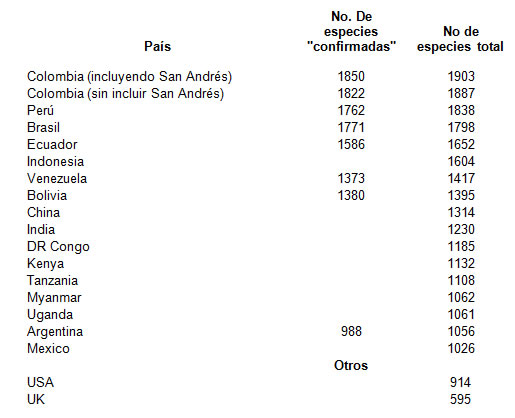
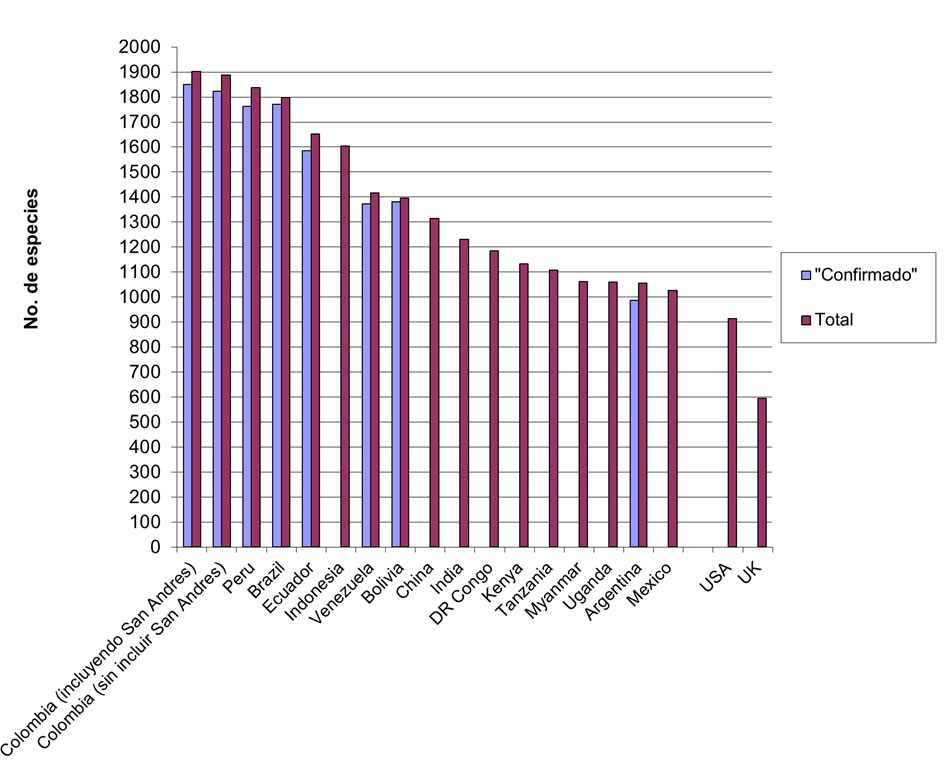
Colombian Biodiversity includes 2 species of hummingbirds and flycatcher proposals published in the Journal of ProAves, which are now internationally recognized. We currently have 1903 species of birds in our country, the most biodiverse in birds of the world:

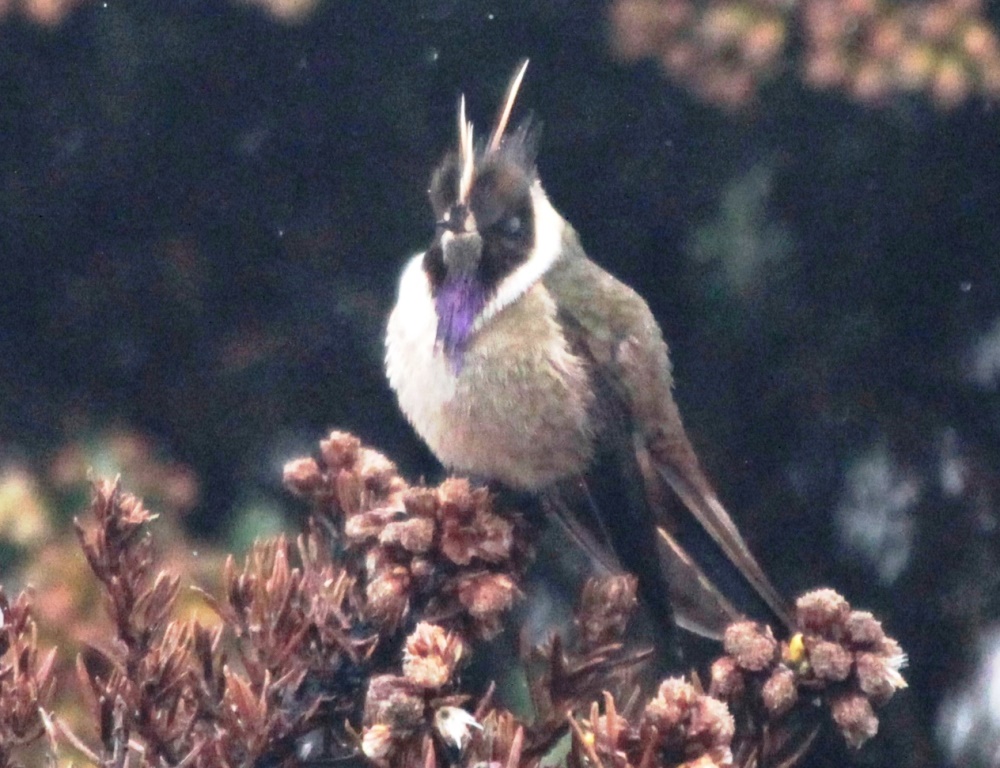
Because of studies published in the 19th edition of the scientific journal of the ProAves , Conserción Colombiana, written by international experts Dr Nigel Collar of BirdLife International and Dr Paul Salaman, of the Rainforest Trust, biometric and morphological variation was assessed, in plumage and vocalizations, of four populations of the Bearded Helmetcrest (Oxypogon guerinii) throughout its range. This species is found in isolated paramos in several parts of the country and Venezuela, each population being very different from one another. The article is available at the following link: The taxonomic and conservation status of the Oxypogon helmetcrests 

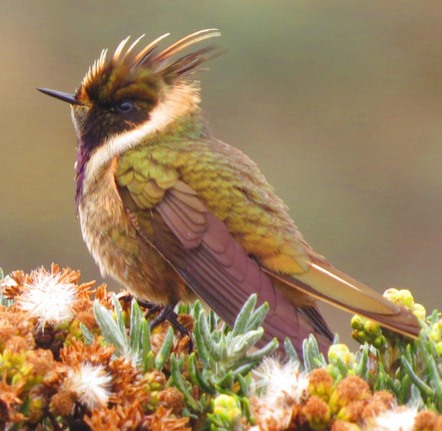
In the published study, it was proposed to recognize as separate species populations located in the Sierra Nevada de Santa Marta (O. cyanolaemus); Venezuelan Andes (O. lindenii); the Eastern Cordillera of Colombia (O. guerinii) and the Central Cordillera of Colombia (O. stubelii).

Now, a committee of the American Ornithologists’ Union, called the South American Classification Committee (SACC), which has the task of evaluating the systematic (or names and taxonomic treatment) of the birds of South America; deliberated on this work and accepted to treat  Oxypogon as four valid species.

Furthermore, other recognized groups, such as the International Ornithological Congress (IOC) and BirdLife International / IUCN, have also accepted this proposal

Proposal (609) AOU-SACC 

www.worldbirdnames.org 

www.birdlife.org

Photos and details of these species are found below under the following names:

1

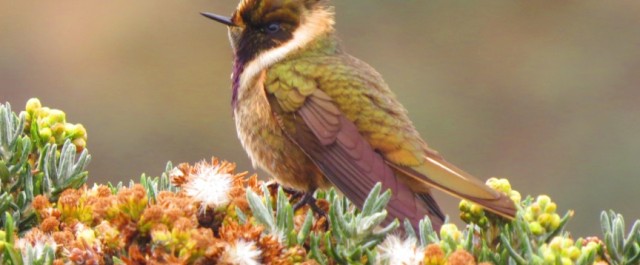
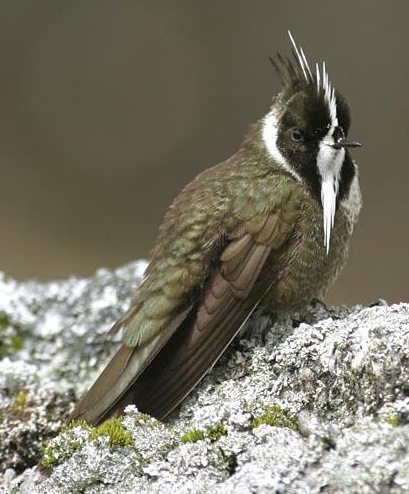
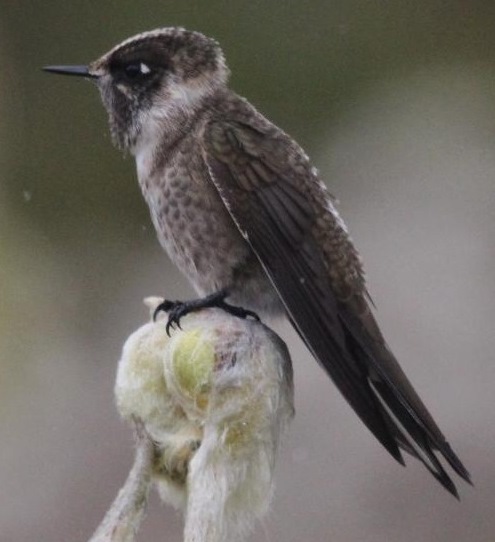
White-bearded Helmetcrest (Oxypogon linden), endemic to Venezuela and only present in the Andes of Venezuela. Photo – Peter Boesman

2

Green-bearded Helmetcrest (Oxypogon guerinii), endemic to Colombia and based only on the eastern cordillera (Páramos of Chingaza, Sumapaz, Cocuy and Pisba). Photo: Mauricio Rueda.
3

Buffy Helmetcrest (Oxypogon stubelii). Endemic to Colombia, located in the central mountain range (the paramos surrounding the Parque los Nevados). Photos: Oswaldo Cortés

Blue-bearded Helmetcrest (Oxypogon cyanolaemus), endemic to Colombia and found only on the Sierra Nevada de Santa Marta. (No photos for this species).

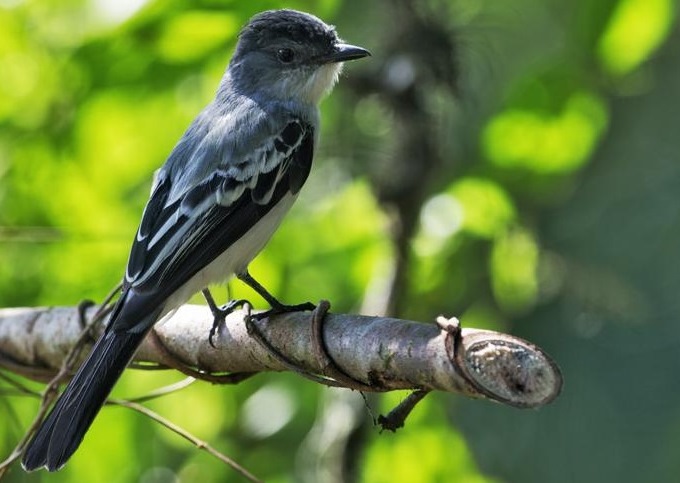
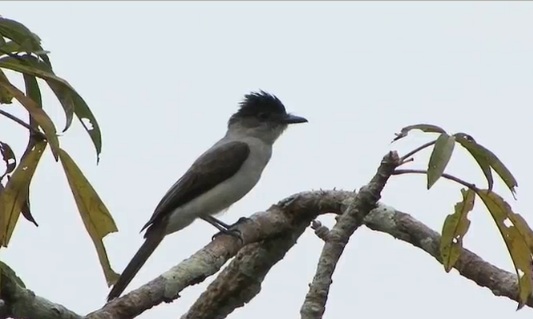
At the same time, the AOU-SACC and IOC have accepted the recognition of four flycatchers in South America, two in Colombia, in the Sirystes genus. This separation was given by Thomas Donegan of ProAves , also in the 19th edition of Conservación Colombiana. This study was based primarily on differences in voice and plumage. This group flytrap, is restricted to tropical forests. Article and committee deliberations are in the links below with pictures of the species also presented:

www.proaves.org

www.museum.lsu.edu

www.wordbirdnames.org

The recognized species are: 

4

Choco Sirystes S. albogriseus of western Colombia, S of Panama and N of EcuadorFoto: Nick Athanas

5

White-rumped Sirystes S. albocinereus western Amazonia, including Colombia. Foto: Josep del Hoyo


Categorías
News

XIII Reconcile with Nature Campaign

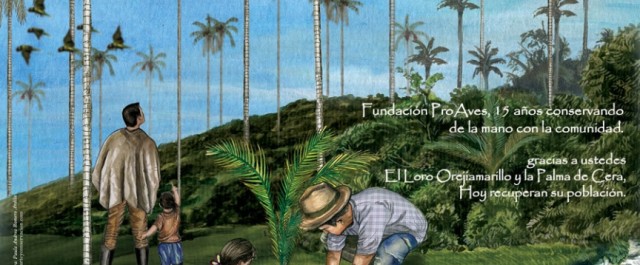
Thanks to the community, the Yellow-eared Parrot and the Wax Palm have recovered their populations. ProAves 15 Years conserving.

Reconciliate 2014_low
Poster of the campaing 2014 – Paula Andrea Romero de Arte y Conservación www.arteyconservacion.com

Since the start of the campaign in 2002, the community has shown their commitment every day to avoid using the wax palm as a palm branch in the Catholic celebration of Palm Sunday. With a great contribution to the conservation of Yellow-eared Parrot and the Wax palm, the Reconcile with Nature campaign gives Colombia a party in harmony with the environment.

Improving the philosophy of the campaign focuses on preventing the use of endangered species of palm in Colombia , ProAves is implementing a series of environmental education activites with the communities of the towns of Jardín, Antioquia; Genova, Quindio; Roncesvalles and Cajamarca, Tolima and Minca, Santa Marta, aimed at prevention.

Through radio programs, ProAves seeks to publicize the ecological importance of these species for balance and perpetuity of the fragile ecosystems as valuable habitats for many species of animals such as yellow-eared parrots, toucans, woodpeckers, spectacled bears and for the human being.

Also, we have been doing ecological workshops in rural educational centers, nature walks, visits to nature reserves and excursions for bird watching; with these activities contact of the community with nature is strengthened forming in turn leaders who multiply the message to protect the natural heritage of our country.

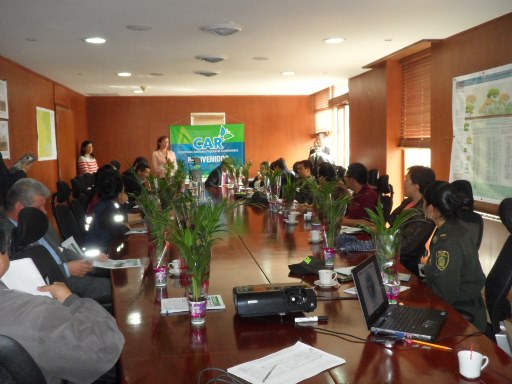
As usual, for the launch of the campaign a simultaneous event will be held in Bogotá and the towns. The March 25th Campaign Launch was held in Bogotá, in partnership with the Corporación Autónoma Regional de Cundinamarca CAR, Secretaria Distrital de Ambiente, the Colombian Episcopate, Jardineros S.A, Jardín Botánico de Bogotá, the Carabineros Police, Transport Terminal and the Fiscalía General de la Nación, in a press conference, where the positive statistics against decreased use of the palms on this date were announced; also, efforts for prevention and control were invited to continue, and the use of alternatives to the palm branches, like living plants, amero branches or craft and white flowers.

In the towns the launch was celebrated with drawing competitions, networking events of the achievements of 15 years of work of ProAves in cultural and artistic activities.

SAM_6052
Launch of the Campaign in the CAR in Bogotá

Activities to celebrate Palm Sunday by region:

Bogotá: April 6th celebrating Mass in the Eucharistic Templete at the Simon Bolivar Park and live plants will be given supported by Jardineros S.A.
April 13th: At the Palm Sunday ceremony in Bogotá, the Jardín Botánico will be given live plants to attendees.

In other towns where we have permanent environmental education activities, we will, with the support of members of ProAves environmental groups such as Friends of Birds and Social Service, accompany the Environmental Police officers installed at control posts addressing the occupants of vehicles with recreational activities  and pedagogical information on the legal framework of the illegal trafficking of wild fuana and flora.

In the procession of Palm Sunday, we will be giving away live native plants, seeds of ornamental plants, white pumps and flowers, these events will include musical groups, theater, cinema in the park and environmental fairs, all geared to continue on the path of prevention.

With the support of:

log_comp_capaña2014


Categorías
News

ProAves promotes research into grasshoppers in Colombia

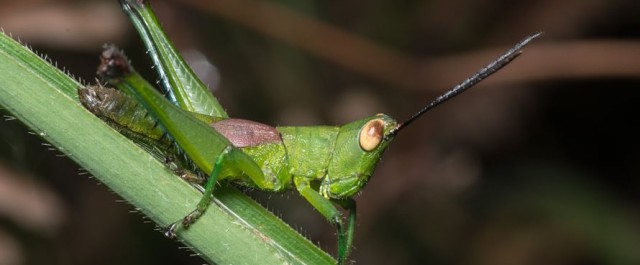
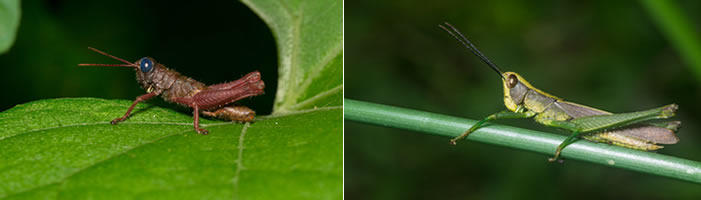
ProAves promotes research not only into birds but also other species such as the special but little-studied case of the grasshopper. Currently, the entity, Forestry Consulting Group, is conducting the “Grasshoppers of Colombia” series among other publications seeking to collect visual and biological information for these species.

The research is being conducted in the Cerulean Warbler Bird Reserve located in the town of San Vicente de Chucurí, Santander. The entity Forestry Consulting Group, is currently conducting a photographic and information gathering survey about the grasshoppers of Colombia, with our Reserve Reinita Cielo Azul, one of the research centers that generated the observation of a large number of possible species and new records. Saltamontes de Colombia

collage_grillos
Rhytidochrota / Phaeopariini-male


According to the researcher Juan Manuel Cardona, a member of the research team which is performing the collection of grasshoppers of Colombia to print a number of publications, ranging from research papers and monographs, articles and books to guides oriented to the interested public.

One of the jobs that is expected to have a major impact, is the publication of the new records of species and genera in locations where they were not yet known, because as Cardona explained “specialists in these Orthopteras are practically nonexistent in the country, despite their obvious abundance and diversity.”

That is how ProAves promotes the conservation of the rich biodiversity of our Colombian forests.

Categorías
News

Women for Conservation seeking international markets

The initiative of Women for Conservation participated in the latest version of an important showcase for sustainable fashion called Brand Preview, this showcase allows access to a wide audience around the world through the Ethical Fashion Forum which has over 7,000 members in 130 countries.

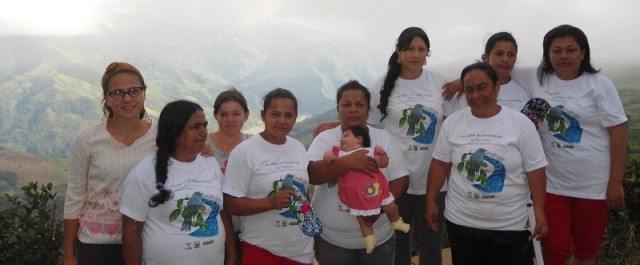
The initiative of Women for Conservation which has the Wildlife Friendly ® certification, works with women living in the areas surrounding the ProAves foundation reserves providing job opportunities through training in the production of jewelry with natural seeds helping them understand and actively participate in conservation.


collage,joyas
Tagua seeds


Brand Preview 2014, is a showcase of fashion business whose dynamics is completely virtual, this year the event was held between 4 and 5 February, during these two days each brand had a space of 10 minutes to present themselves and answer questions from buyers; this event is one of the most exciting spaces and one of the best opportunities for sustainable fashion brands to do business. 

Sustainable production of jewelry not only empowers the Colombian artisans to be financially independent, but it becomes a catalyst for change in their own communities through initiatives linked to protect two species of endangered birds, the Bluebilled Curassow (Crax alberti) and the Santa Marta Parakeet (Pyrrhura viridicata), both endemic to Colombia.

Recently the renowned naturalist , author and host of English television programs, Nick Baker, has offered to be one of the ambassadors of the project Women for Conservation and says: ‘Being a conservationist man, I find it is difficult to find gifts for the ladies in my life, but when I learned about Women for Conservation I was glad about the work they are doing , empowering women living near some of the most biodiverse areas in Colombia to have economic independence, using sustainable products found in nature. Buying these beautiful pieces will be supporting the invaluable conservation work giving value to systems of wild forests (many of the materials can be found in nature as part of the ecosystem) promoting sustainable handicrafts of the region but with the added value of knowing that is helping to empower rural women, the artists behind these wonderful creations. Of course, these creations are not just for women , I have one of the bracelets on my wrist as I write this. I take a little bit of the spirit of the jungle of Colombia to everywhere I go. “


 

IMG_1228
Nick Baker and Elizabeth Salaman, Women for conservation CEO

Para apoyar el proyecto y realizar tu compras ingresa a www.womenforconservation.com

Categorías
News

International Women’s Day


On the International Women’s  Day, March 8, Women for Conservation calls international community for empowering women in the remote areas of Colombia and protecting  rainforest by creating new job opportunities through introducing a new brand of ecofriendly jewelry.

Women for Conservation assists women in Colombian rural areas rich with biodiversity by providing them with job opportunities through teaching useful craft skills and helping them to understand and actively participate in conservation. Elizabeth Salaman, CEO Women for Conservation, believes that  “women are a catalyst for change.”  Women are the key to the conservation because they have power to educate children to be better citizens of the Earth. “We want to bring to the world a different perspective on women and their major role in protecting natural resources,” said Ms. Salaman.

Giving women an access to training and opportunity to earn supplemental income help local families, whose wellbeing often depends on extracting natural resources or forest cutting, to be good stewards of their environment.  For the past two years Women for Conservation successfully conducted 20 workshops, training 45 women the skills of jewelry making; soap, candle, hand stitch leather handbag making; and knitting. Selling their goods will create an additional, much needed income for the families of Colombian artisans, living in the impoverished communities in the buffer zones of protected areas. Thanks to the extra money many families were able to purchase what they have been dreaming about for a long time, such as washing machine, a digital camera, and farm animals.

Women use only natural, sustainably harvested resources and nontoxic, lead-free dyes in creating their goods. Due to natural patterns there are never two products alike. They are unique, one of a kind masterpieces made out of Tagua, Azai, Bombona, Chocho Rojo, and Coconut. These exotic seeds are often handpicked right from the forest floor. Harvesting and commercializing seeds promotes forest growth and provides a sustainable way to generate income for local communities, reducing deforestation and illegal hunting for endangered wildlife species.

Women for Conservation is not new to the conservation field. The initiative started in 2008 by Colombian born sisters, Sara and Elizabeth Salaman, in the memory of the deceased mother. Women for Conservation began as a pilot project of Fundacion ProAves, American Bird Conservancy’s Colombian partner and had fantastic results in involving women in conservation of wildlife species at the grassroots level.

Women for Conservation’s idea of empowering Colombian women extends to encouraging them to continue their education, training them basic business and skills, providing medical assistance to them and their children, and generally making them feel valued, appreciated, and respected.


WfC¥logo-JAN13Rebrand_aw2

Categorías
News

ProAves manages to recover part of the Ñambí River after oil spill

In 2009 the River Ñambí suffered a severe environment blow as a result of the illegal exploitation of oil that took place in the pipeline that runs through the grounds of the El Pangan Reserve. Today, thanks to our complaint, working together with Ecopetrol, the identification of critical areas and the provision of two forest rangers, the recovery of the river and the return of associated species are evident.

El Pangan Bird Reserve is located in the village of Junin, municipal of Barbacoas, Nariño. It was established in 2002 in the interests of conserving the forests in the south of the country, in the foothills of the Nudo de Pastos in Nambi river basin, a tributary of the River Telembí.

8723499336_a14e0aa168_o
Polluted affluent of the river

In 2009, the foundation ProAves made ​​a serious complaint about the irresponsible behavior of unscrupulous people who punctured the pipeline that crosses the reserve. The extraction of crude oil was made through illegal valves installed on the Empresa de Petróleos de Colombia, Ecopetrol’s pipeline.  The situation was catastrophic for the ecosystem as waste from the extracted products was thrown into the water sources, at the time it was estimated that over one hundred thousand gallons of oil had flowed through the ravines into the Ñambi river causing enormous damage and death to the flora and fauna of the region.

rioÑambi
Ñambí river today


Today, thanks to the vigilance through patrols made by two guards at critical points of the pipeline, and timely reporting to state authorities with jurisdiction in the area, we have managed to prevent further spills. Therefore, water sources largely have recovered and hence the Nambi River, where it is again possible to observe some of the species that were displaced during the time when the river was in bad shape.

For more than 12 years the foundation also has held ​​ProAves socialization activities with neighboring communities to avoid other scourges such as logging, hunting and other activities that jeopardize the spectacular nature reserve, home to such important species as The Harlequin Poison frog (Dendrobates histrionicus), the Spectacled Bear (Tremarctos ornatos) ) and the Plumbeous Forest Falcon (Micrastur plumbeus).


cepf rainforest birdlife Healthy_Planet_Logo
Categorías
News

An important example of conservation for the moors of Antioquia

Thanks to the interest and the work of the Environmental Management Board of Urrao, in Antioquia, of which ProAves forms a part, the Municipal Council of the same municipality regulates the entry of visitors to the Paramo del Sol thus contributing to its conservation.

Since 2012 a process initially led by CORPOURABA called “Workshops Páramo del Sol” in which the Municipality, National Parks, Educational Institutions, township tour operators, civil society and Fundación ProAves participated.

First the entry rules to the Páramo del Sol for visitors were settled, then the group increased participation and stakeholders to become what is now the Urrao Environmental Board where different groups and sectors of the municipality interested in environmental conservation come together and increase the environmental knowledge among residents of this county.

mesa_urraoi
.

The greatest achievement of the Board is to regulate the entry of visitors to the Paramo del Sol, which was approved unanimously by the Urrao City Council in November 2013. The project was born from the Environmental Board and today is in the socialization phase with the community.

For the Mayor of the town of Urrao, Luis Eduardo Urrego, “the environmental Board  allows us to hear the voice of the citizens, who recognize the importance of a naturally biodiverse zone, the protection of the paramo is very significant for those of us who live in the town and know the impact on the development of conservation areas, from the administration we hope to expand and ensure the reserve area”

During 2014 the Board will begin a series of workshops and training for its participants and socialization activities that benefit environmental education and awareness, use and appropriation of Urraeños in terms of environmental conservation and the natural spaces in the town.

Paramo
Dusky Starfrontlet Bird Reserve

The Dusky Starfrontlet Bird Reserve is located in the municipality of Urrao which is linked to the National System of Protected Areas (SINAPs). It has dense forests and high altitude Andean valleys with a variety of endemic species.

On an expedition in 2004, a critically endangered species of hummingbird, Dusky Starfrontlet (Coeligena orina), was rediscovered and the Reserve took its name from it. There has been no record of it for over 50 years.

ProAves has been present in the town of Urrao for over 8 years, where many major research, conservation and environmental education projects have taken place which seeks the benefit of environmental conservation and the natural heritage of the town.


ABC parquesnacionales escudo_Urrao logo_corpouraba_fondo_blanco_actualizado
Categorías
News

ProAves Reserve exempt from tax

The municipality of Jardín, Antioquia, shows its environmental commitment to providing this benefit to the Yellow eared Parrot Bird Reserve. Since 2014 we received this incentive to the conservation and protection of renewable natural resources through unified exemption from property tax.  

loro_orejiamarillo_web
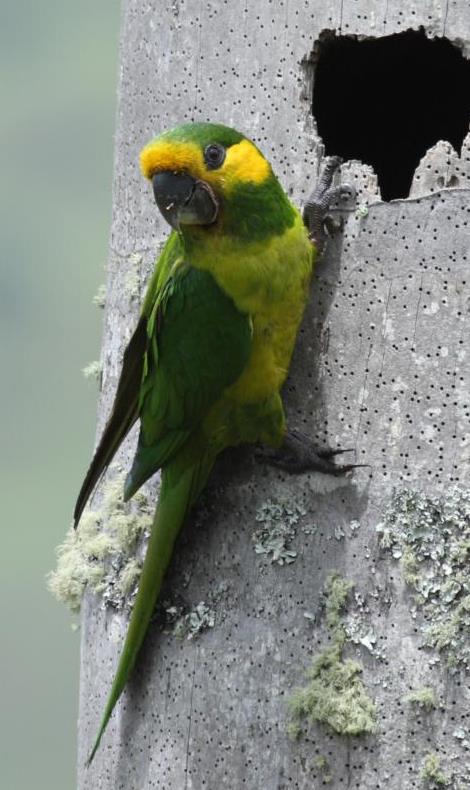
Yellow eared Parrot (Ognorhynchus icterotis)

This incentive is a recognition of the work carried out by ProAves in the town, it shows the enormous conservation will by the municipality in terms of the preservation of rare and endangered species found in its territory. It becomes a reason to continue with the objectives of research, conservation and environmental education developed by ProAves around this protected area

Since 1998 ProAves has developed the Yellow-eared Parrot Conservation Project in the town of Jardín, one of the main activities for the protection of this species.

as a result of the Project, ProAves founded the Yellow eared Parrot Bird Reserve in 2006 with the aim of conserving the Yellow-eared Parrot (Ognorhynchus icterotis) a bird species in danger of extinction. At present, the population of the Yellow-eared Parrot in the municipality of Jardín and the Yellow eared Parrot Bird Reserve is one of the two most stable populations of this species in Colombia.

Their habitat is between 1,500 and 2,800 meters above sea level and is associated with the presence of Wax Palm (Ceroxylim quindiuense) in high Andean forests. This species is recognized as the national tree but it is threatened by its use in the preparation of bouquets during the celebration of Palm Sunday at Easter time. Deforestation and implementation of open areas in palm plantations; the Wax Palm is the tallest palm in the world and it grows at higher elevations above the sea.

The reserve also conserves various species of endangered endemic flora and fauna like the Tanager Finch (Oreothraupis arremonops) an almost endemic species categorized as vulnerable (VU), the Purplish-mantled Tanager (Iridosornis porphyrocephalus) an almost endemic tanager species considered threatened (NT), the Spectacled Bear (Tremarctos ornatos)  listed as vulnerable to extinction (VU) and the species of Jardín Passion Flower (Pasiflora jardinensis) endemic to Colombia registered for the first and only time in the Yellow Eared Parrot Bird Reserve.


jardin
Categorías
News Noticias Gorrión de Andivia Noticias Reservas Proaves @en

Gorrión Andivia Bird Reserve

Historia:

La Reserva ProAves Gorrión Andivia, fue creada en el año 2012 con el objetivo de conservar el habita  del Gorrión tangarino (Oreothraupis arremonops) y del Cucarachero de munchique (Henicorhina negreti) especies amenazadas de extinción, consideradas en estado vulnerable (VU)  y en peligro crítico (CR).

Esta Reserva se consolida como la primera donación de un predio privado por parte de su propietario con fines de conservación y su nombre radica a el Gorrión tangarino (Oreothraupis arremonops) y andivia en honor al antiguo propietario de dicho predio.

Ubicación y Área:

La Reserva está ubicada en el municipio del Carmen de Atrato, Chocó, cordillera Occidental de los Andes, en límites con el municipio de Urrao, Antioquia, en el sitio conocido como el alto de la EME, entre los  2.500 y 3.000 m.s.n.m. este sitio es de gran importancia porque constituye el nacimiento del río Atrato (el río más importante del Chocó). Tiene una extensión de 402 hectáreas de bosque andino y alto andino. Cuenta con una vía de acceso principal. Para ingresar, desde el municipio del Carmen de Atrato se realiza un recorrido de aproximadamente 60 minutos desde el área urbana del municipio por la vía que del Carmen de Atrato conduce al municipio de Urrao.


Importancia biológica:

En la Reserva se protege el hábitat de diferentes especies de aves endémicas y en peligro como el Cucarachero de munchique (Henicorhina negreti) CR, Gorrión tangarino (Oreothraupis arremonops) VU,  Picaflor pechirrufo (Diglossa gloriosissima) EN, Cotinga alirufa (Ampelion rufaxilla), Tapaculo ocelada (Acropternis orthonyx), en estos bosques andinos se encuentran además diferentes especies de árboles de alta importancia como Laureles, siete cueros  y distintas especies de orquídeas. Se destacan las familias Orchidaceae, Melastomataceae y Ericaceae por ser las más dominantes en cuanto al mayor número de especies; también Bromelliaceae y Rosaceae, aportan un cantidad significativa de especies. Estos bosques también poseen una alta oferta hídrica  con importantes caídas  de agua  y quebradas, características de zonas con humedad relativa alta.

Clima:

Se encuentra en un área donde predominan la neblina y las precipitaciones a lo largo del año, la  temperatura  anual oscila entre los 6°C y 21°C, con una precipitación anual mayor a los 4.000 mm.

Conservación:

Restauración ecológica.

Programa de protección de los bosques y las aves amenazadas presentes en el área protegida.

Es de destacar que en la reserva se pueden apreciar  grandes extensiones Bosque primario así como algunas pequeñas áreas en procesos de recuperación de las zonas alteradas en donde se encuentran familias de plantas pioneras en los procesos de sucesión.

Investigación:

Monitoreo poblacional  de anfibios y aves de la cordillera occidental.

Educación:

Escuelas Amigas de las Aves.

Atractivos turísticos:

Belleza paisajística y avistamiento de aves amenazadas.

Visítanos:

Escriba a info@proaves.org

Categorías
News

197 additional acres for the protection of the Santa Marta Parakeet

Now the El Dorado Reserve has an additional property located in the upper part of the Cuchilla de San Lorenzo. There are 197 acres of which 74 acres are grazing lands that were dedicated to livestock and the rest is composed of cloud forests and palms, the original habitat of the Santa Marta parakeet.

periquito
Santa Marta Parakeet (Pyrrhura viridicata)

The El Dorado Reserve was created in 2006 based on the urgency of preserving one of the most important and fragile sites in Colombia, the Sierra Nevada de Santa Marta, home to a large number of unique plant and animal species. In 2013, the Sierra was named the most important concentration of threatened wildlife on Earth. The Sierra Nevada de Santa Marta is the place with the highest number of endemic species in Colombia, which places it as the most important for the development of conservation projects at this time in our country.

The acquisition of this property is very important for the conservation of the Santa Marta Parakeet (Pyrrhura viridicata), a species of high Andean parrot, endemic to the mountains and is listed as an Endangered species. This newly protected area gives the Santa Marta Parakeet natural resources important for their development and population stability, the forests are also the feeding, foraging, roosting and nesting place of this species.

The reserve is also home to other important bird species such as The Santa Marta Bush Tyrant (Myiotheretes pernix) EN and the Antpitta of Santa Marta (grallaria bangsi) VU, the Harlequin frogs, atelopus nahumae and atelopus laetissimus, are also endemic to Santa Marta.

In the new properties in addition to the Natural Bird Reserve El Dorado, the “Laguna Sagrada” also is an important place for the indigenous communities of the Sierra Nevada de Santa Marta and also threatened by livestock.


paisaje dorado
El Dorado Bird Reserve

All this biological and cultural heritage generated the need to purchase and preserve the new property, now, ProAves, after 3 years, can provide protection for research activities such as monitoring the population of Santa Marta Parakeet (Pyrrhura viridicata) the program of artificial nests for this species, reforestation and natural restoration programs in order to recover the 74 acres of pastures and provide more and better habitat for species conservation.

The 2530 acres that now comprise the entire Reserva El Dorado now have the maintenance and monitoring of two rangers, being one of the preferred worldwide locations for specialist birdwatchers.

Income and visits Contact Ecoturs: Carrera 20 No. 36 61, Bogotá, Colombia. Tels. (1) 245-5134, 340-3285. info@ecoturs.org 

Supported by:

ABC RTVmain1
Categorías
News

Now is possible to see the Blue-Billed Curassow thanks to the protected areas

Since August 2013 we have recorded the daily visit of two female and a male Blue-Billed Curassow (Crax alberti) in the vicinity of the cabin on The El Paujil Reserve. Since January the couple alternate foraging for food, which may mean a possible nesting, at the same time the second female also makes sporadic approaches.

The Blue-billed Curassow (Crax alberti) is considered one of the most endangered species on the continent, mainly due to habitat destruction, fragmentation of the forests where it lives and the hunting for human consumption.

Until now Curassow observations were very sporadic, random and of few individuals. Thanks to the creation of the Natural Bird Reserve El Paujil in 2003, a substantial recovery in vegetation cover and population density of the species has been made.

collagePaujil

From the very same year of its creation the Reserve records have been kept of the species by camera traps installed in the Reserve, but only today, and thanks to the recovery of its habitat, it is possible to see directly and easily this elusive species.

The importance of the reserve as a safe haven for biodiversity has been confirmed with additional observations, on their properties, with camera traps, such important species as the Puma (Puma concolor) Spectacled Bear (Tremarctos ornatus) and one of the largest and least known of South American mammals, the Critically Endangered Colombian Tapir (Tapirus terrestris columbianus).

The ProAves foundation by running campaigns for environmental education and conservation as the main tool for the protection of threatened species and their habitats, has generated several conservation strategies complemented with research to protect the Blue-billed Curassow, it also has directly involved the community concerned in different areas where there are populations that, after more than 10 years of uninterrupted work, have achieved these concrete results.

Income and visits Contact Ecoturs: Carrera 20 No. 36 61, Bogotá, Colombia. Tels. (1) 245-5134, 340-3285. info@ecoturs.org 
Con el apoyo de


ABC RTVmain1_peq CI_nuevo Healthy_Planet_Logo
Categorías
News

Jardín’s goals for 2014 are the Reciprocal Agreements for Water

The Reciprocal Agreements for Water -ARAS- continue to promote the protection of the high Andean forests, watersheds and endangered species in the municipality of Jardín, Antioquia. The goal is to sign eight agreements with owners of significant water production for forested areas.

Jardin
.


The year begins with the identification of the owners who are interested in signing ARAS, this is achieved through visits to each of the properties upstream strategically located in the villages of Quebrada Bonita and Herrera; also voluntary contribution receipts will be distributed and urns will be installed to start the collection of these contributions by the users of the water service in the town of Jardín, these resources will be used to encourage homeowners who signed up to maintain their properties.

The interagency committee called the ” Committee for the Conservation of High Andean Forests and Watersheds Jardín A. ” composed of officials from the Municipality, representatives of educational institutions , Boards of rural and urban community action, the water company Ingeniería Total, Jardín Environmental Table , representatives of Aqueducts Multiveredales and ProAves is responsible for promoting voluntary contributions from the community and to visit the properties for the characterization of biological significance for the conservation of water sources , implement the signatures of the ARAS for delivery of incentives and generate support among other entities to strengthen the process of compensation band the development of the Pride Campaign.

reunion_1 reunion_2 reunion_3

Visits to landlords and identification of strategic properties to sign the ARAS in Jardín and the first meeting of the Conservation Committee in 2014.

Parallel to these activities continuity will be given to strengthen the Pride Campaign through environmental workshops with owners and residents of the villages of the upper basin, spots and radio programs, ecological slots on television , community meetings in urban and rural areas with the community of Jardin, nature walks for the recognition of natural heritage and other cultural and educational outreach events to strengthen the spread of the ARAS project and the sense of ownership by the municipality for the conservation of the watersheds, the high Andean forests and endangered species such as the Yellow eared Parrot (Ognorhynchus icterotis) EN and the Spectacled bear (Tremarctos ornatus) VU.

The support of institutions and organizations such as the Heritage Fund, The University of Antioquia, The water company Ingeniería Total, Jardín Public Enterprises, The Jardín City Hall, Corantioquia, National Police, District Integrated Management Cuchilla Jardín Támesis and Jardín Environmental Table have allowed the ARAS in Jardín to become a reality in 2014, for high basin owners who will benefit from the incentives and with their desire to protect are providing a better  quality of life to downstream users who receive fresh water and healthy forests for the preservation of many species.

Supported by:

 logos_aras2

Categorías
News

Sharing ProAves’s Environmental Education Experience in Guanacaste Costa Rica

grupo_guanacaste

Sharing ProAves’s Environmental Education Experience in Guanacaste Costa Rica

The Guanacaste Conservation Area in Costa Rica is considered one of the best examples of conservation in Latin America. The ProAves team visited it recently and received eight days of intensive training and exchanged lessons learned during their 15 years of doing conservation and educational work.

From November 16 to 23 Juan Carlos Rivas, Deputy Director of the Southwest Region, and Juliana Toro, Deputy Director of Environmental Education, visited the Guanacaste Conservation Area in Costa Rica, to attend a Biological Education Training Program.

The training focused on the program that, for the last 27 years, has developed and strengthened awareness of nature in children of school age living close to the conservation area, to promote appropriate attitudes about the use and conservation of natural resources.

The Biological Education Program differs from Environmental Education because it passes from basic natural concepts and campaigns to teaching biology and ecology in the field. They call it the Natural Library, in which children develop sensitivity and better criteria for environmental decision-making in the future. In contact with nature, they assimilate how nature works and is structured, and they learn all the processes that occur within it. It is a new process because it uses the forest as a laboratory classroom, the child learns through live action, he identifies with and understands the dynamics of an ecosystem.


Gira en la Zona Rocosa Grupo de PEB Grupo de PEB IMG_0683 Biolep  Biolep
La casona Gira en la Zona Rocosa Gira en la Zona Rocosa Gira en la Zona Rocosa Gira en la Zona Rocosa Gira en la Zona Rocosa 
Gira en la Zona Rocosa Gira en la Zona Rocosa Gira en la Zona Rocosa Gira en la Zona Rocosa Gira en la Zona Rocosa Gira en la Zona Rocosa

“A child who has had a biological education will be in the future a citizen who has greater possibilities of acting correctly on the management of the environment, making more rational decisions on environmental issues and have greater capability in relation to the ordinary decisions of life” this is the program’s philosophy, according its Coordinator, Gabriela Gutierrez.

Guanacaste Conservation Area was established in 1994 and has 1,470 km ² of marine, dry, wet and cloud ecosystems. Because of its high biodiversity and special and unique connectivity, UNESCO declared it a World Heritage Site in 1999. Its size, diversity and location, both on the Atlantic and Pacific slopes, as well as the higher massifs of the Orosi and Cacao volcanoes, make the park a special place in biodiversity.

Within the research programs, entomological characterization is highlighted, cataloging more than 12,000 species of butterflies. Research into genetic improvement with native tree species led them to develop successful conservation programs such as reforestation for the recovery of dry forest that, years ago, was believed to have disappeare. As well as training and forest fire control brigades, all under the concept of bio-development hand in hand with the community, in order to make them a part of the conservation processes.

This is a great experience for Fundación ProAves and its Environmental Education area because, apart from learning the essence of the operation of the park, we learned that these processes are successful and durable. They promote values like perseverance, willingness, respect and a sense of belonging. For us the challenge is to articulate this strategy within our own Environmental Education processes, making them more experiential processes of unforgettable experiences for children, experiences that make the seed sown flourish into responsible adults, conscious of and advocates for our natural heritage.

We want to thank the entire team of the Guanacaste Conservation Area, in particular the Biological Education team, thank you for your attention and willingness to teach us another wonderful strategy to generate future conservationist spirits.

Biological Educators, who trained us:

Alban Jimenez

Rosibel Elizondo

Pablo Vásquez Badillo

Roberto Vargas Sanabria

Rolando Vega

Rolando Ramos


Gabriela Gutiérrez – Coordinator

Roger Blanco – Assistant Director of ACG

Maria Martha Chavarria – Biologist and researcher

Ruth Franco – Laboratory Coordinator BioLep

Petrona Rios – Parataxonomist


With the support of


logo acg logo-peb permian-global-85814484
Categorías
News

Family of Spectacled bears captured by camera traps in the ProAves El Paujil Reserve.

Camera traps in the ProAves El Paujil Reserve captured a female Spectacled Bear (Tremarctos Ornatus) and her two cubs, a species that is categorized as Vulnerable (VU) according to IUCN. Its altitudinal elevation enhances the importance of this record, as it is perhaps the lowest recorded for the species.

ProAves Foundation implemented monitoring through photo trapping of fauna about four years ago as an innovative research strategy in protected areas.

This methodology involves the installation of automated devices such as camera traps, which allow logging 24 hours a day of all the movements and behavior of animals in a given area that is monitored; these devices once installed hold up to 5,000 photos on their memory cards.

During this research, we have managed to monitor the forests in 12 nature reserves, where we have managed to record 53 species of animals belonging to different orders. The record of 41 species of mammals stands out. We have found that this monitoring strategy is ideal for assessing the status of the populations of mammals present and protected in our system of protected areas.

Click the image to enlarge

Oso de anteojos RNA El paujil Osos de anteojos (Tremarctus ornatus) Osos de Anteojos (Tremarctus ornatus) Oso de anteojos RNA El paujil Oso de anteojos RNA El paujil Oso de anteojos RNA El paujil
Oso de anteojos RNA El paujil Oso de anteojos RNA El paujil Oso de anteojos RNA El paujil Oso de anteojos RNA El paujil Oso de anteojos RNA El paujil Oso de anteojos RNA El paujil

RNA Paujil, Nov 2013, Spectacled Bear (tremarctus ornatus) camera traps la guinea, Flickr.

The main results are related to the record of the Spectacled Bear (Tremarctos Ornatus) in the north-east of Antioquia in the Arrierito Antioqueño bird reserve, an ecosystem strongly transformed and where no recent records of the species existed, and in the Páramo de Frontino in Western Antioquia, in the Natural Bird Reserve Colibrí del Sol.

Likewise, we recorded the presence of this species in the high Andean ecosystems of the Municipalities of Roncesvalles and Cajamarca, in the department of Tolima, where ProAves is present in their system of protected areas. Additionally, we have established the most important records related to the altitudinal range, perhaps the lowest recorded for the species, in El Paujil bird reserve, in the middle Magdalena, an ecosystem that retains the last major remnants of tropical rainforest in this basin and where the presence and reproduction of the species is guaranteed.

M2E3L17-27R350B300

In this reserve in the middle Magdalena, which is a priority ecosystem for conservation because of the advanced fragmentation and habitat destruction in this area of the Andes, a record also was achieved of the subspecies of the South American tapir (Tapirus Terrestris). This is an endangered species and rarely recorded in the wild and of which little is known about their population status.

Besides making continuous monitoring of the first primate species Ateles hybridus, the endangered Brown spider monkey, which approached an area biologically known as a salting area (saladero) and where different aspects of the intra-specific behavior of the species were obtained.

On the eastern plains, at the regional boundaries with the Colombia Amazon, a number of large mammals have been sighted like the Jaguar (Panthera onca), the Tapir (Tapirus terrestris), deer (Mazama Americana) and large groups of peccaries, or wild pigs. This demonstrates the ecological importance of this ecosystem heavily pressurized by the rapid exploitation of non-renewable natural resources in this area of the country and threatening ecological dynamics of species distributed in eastern Colombia.

Additionally, by analyzing images taken in these different areas of the country, it has been possible to establish the existence of different sub species of Mazama americana, which has allowed experts in this area to recognize the need for a thorough taxonomical review of the species.

The camera traps not only allowed us to obtain important records of mammals, thanks to its systematic installation and regular monitoring, it is possible to conduct ongoing monitoring of the Blue-billed Curassow (Crax Alberti), one of the most endangered species in the country. It has been monitored so that its recovery is evident in the Paujil Reserve, with over 150 photographic records that have identified new individuals added each year to the relict population that now shows a promising future.

This method therefore is a great tool for conservationists and research bodies in the country, allowing the study in the wild of cryptic or species shy to the observer and that can generate key information to the development of more specific future conservation plans.


mision_r2_c3 WLT logo (high res) RTVmain1
Categorías
News

New tapaculo from ProAves’ Cerulean Warbler reserve.

tapaculo
Donegan, T. M. & Avendaño, J. E. & Lambert, F. 2013. A new tapaculo related to Scytalopus rodriguezi from Serranía de los Yariguíes, Colombia. Bull BOC 133(4): 4-19


A new bird in a family known as the “tapaculos” has been discovered in Colombia and described as “Scytalopus rodriguezi yariguiorum”.  It was originally discovered in montane forest which now forms part of Fundacion ProAves’ Cerulean Warbler reserve.

This finding was made during a ProAves-supported expedition in 2003 whose results also led to the protection of these forests.  Details of the discovery were only published in full this year, following completion and publication of a scientific paper describing the subspecies and including information about the new tapaculo’s morphology and vocalisations.  It occurs c.580 km distant from its closest relative, the Upper Magdalena Tapaculo of Huila, in its darker dorsal coloration, shorter tail, smaller body, lower mass and lower pitched song.

The new tapaculo is borderline as to its treatment as a species in its own right or as a subspecies of Upper Magdalena Tapaculo S. rodriguezi.  The nominate Upper Magdalena Tapaculo is restricted to mountains of Huila department.  The latter species was also discovered in 2003, but details of the finding were published much earlier, in 2005.  Both populations have tiny distributions and are considered threatened with extinction.  ProAves’ Cerulean Warbler reserve is of great importance for the protection of this new population and other bird species.

The description was published by ProAves consejo member Thomas Donegan, together with ornithologists Jorge Avendaño and Frank Lambert in Bulletin of the British Ornithologists’ Club, a leading international journal on avian taxonomy and distribution.

Video of Scytalopus rodriguezi in ibc.lynxeds.com recorded by Professor Cedric Prys-Roberts at the Cerulea Warbler Bird Reserve. The bird was seen in the forest on the side of the Camino Lengerke, in the Serrania de los Yariguies on February 22, 2012.

mapa_tapaculo
Distribuciones de S. rodriguezi yariguiorum y S. r. rodriguezi en Colombia.

Categorías
News

Colombia Celebrates over 1,900 Bird Species

Bogotá, Colombia 11 December 2013 (Fundación ProAves). A new scientific publication has confirmed that the official number of birds registered in the country of Colombia has for the first time exceeded 1,900 species. This represents a new world record and firmly establishes Colombia as the world’s most biodiverse country.

This finding was published in the 19th issue of the scientific journal Conservación Colombiana. This year, a sixth annual review was published through a collaboration of ornithological experts from Colombia, the USA and Europe, verifying the number of species registered within Colombia. A total of 1,903 species have now been recorded inside Colombia.

A vagrant Kelp Gull Larus dominicanusrecorded in Guajira on 25 January 2013 is officially the 1900th species for Colombia. This finding was made on a birdwatching tour organized by Ecoturs, Fundación ProAves’ ecotourism partner, and is also published in Conservación Colombiana 19.After 15 years of compilation, fieldwork and detailed revisions by the authors, these publications reveal Colombia to host almost one fifth (18%) of the 10,507 birds (source: IOC) known on earth in just 0.8% of its land surface. In an area the size of Texas and California, Colombia has registered almost twice as many bird species as the entire continental United States and Canada (with 976 species) (source: ABA)

Colombia leads Peru in second place with 1838 species and Brazil in third place with 1798 species. Using another measure, the number of species “confirmed” with photograph and specimen records, Colombia scores 1850 bird species (exceeding Peru’s total of 1762 and Brazil’s of 1771).The checklist to the Birds of Colombia and updates have been annually published by Fundación ProAves in Conservación Colombiana since 2007, while the first edition was published in 2001.

Significant improvements in the security situation in large parts of Colombia in recent years have led to a wave of tours by birdwatchers experiencing Colombia’s stunning bird diversity” said checklist coauthor, Alonso Quevedo. “With this increase in ecotourism and continuing explorations of remote regions by Colombian and other ornithologists, the Colombian bird list will doubtless grow further, highlighting the region as key area for bird conservation.”

Although the Colombian list has increased, largely through ornithological study and findings of rare vagrant species, the situation for the best habitats for birds in Colombia – its primary forests – is less secure.  With the return of security to many parts of rural Colombia and economic development, threats to bird life in Colombia have been mounting, forests are being cleared at accelerating rates and bird populations have been reduced.  The greatest threats involve clearance of lowland tropical forest for African oil palm plantations for ethanol production (biofuels) in the western lowland forests of Chocó and Amazonian regions, as well as deforestation of Andean forests for agriculture.

Worryingly, 206 bird species in Colombia are at risk of extinction, including 59 endemic bird species restricted to the country” noted Dr. Paul Salaman, director of Rainforest Trustand another coauthor of the Checklist since 2001. “Fortunately, the Colombian bird conservation group, Fundación ProAves, has been working towards the protection of the most critically endangered birds in recent years with a network of 24 bird reserves established across the country to protect over 1,300 bird species.”

Further information and photographs for public use


Larus dominicanus

Kelp Gull Larus dominicanus is the 1900th species for Colombia. Photo credits: Jesse Fagan


Oxypogon stubeli by W.P. Murdoch, Jr.

Buffy Helmetcrest Oxypogon stubelii is reclassified as a valid species that is endemic to Colombia.

Photo credits: W.P. Murdoch, Jr.

año_N especies_2

_ _ _ _ _ _ _ _ _ _ _ _ _ _ _ _ _ _ _ _ _ _ _ _ _ _ _ _ _ _ _ _ _ _ _ _ _ _ _ _ _ _ _ _ _ _ _ _

año_N especies_tabla

_ _ _ _ _ _ _ _ _ _ _ _ _ _ _ _ _ _ _ _ _ _ _ _ _ _ _ _ _ _ _ _ _ _ _ _ _ _ _ _ _ _ _ _ _ _ _ _

pais_N especies_tabla_2

_ _ _ _ _ _ _ _ _ _ _ _ _ _ _ _ _ _ _ _ _ _ _ _ _ _ _ _ _ _ _ _ _ _ _ _ _ _ _ _ _ _ _ _ _ _ _ _

N especies_comp


Supported by:

ABC logo-NUEVO_edit Mediano LOGO PROAVES- final 2008 Basic CMYK RT_peq loro_parque_fundacion WLT logo (high res)
Categorías
News News

15 years dedicated to the conservation of Colombian birds and biodiversity

Ognorhynchus

15 years after initiating a series of actions to preserve the Yellow-eared Parrot, we are proud to have a strong team of more than 75 people. We protect 23 nature reserves in perpetuity, which hold 15% of the world’s bird species and 85% of all birds recorded for Colombia. More than 14,000 children participate in the ecological “friends of the birds” groups.. The development of a large number of educational and research initiatives position us as one of the stongest and most important conservation organizations in Colombia.

Categorías
News

New nestbox design brings hope of breeding success for the Santa Marta Parakeet

Thirty nestboxes, with a new design, were installed in the El Dorado Bird Reserve. In just three days, the first individuals were recorded exploring the nestboxes, giving optimism for  a significant advance in the recovery of the species.