Fundación ProAves – por la conservación en el país de las aves

Categorías
News

Biodiversity of Antioquia presented in Jardín

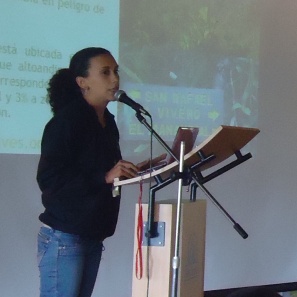
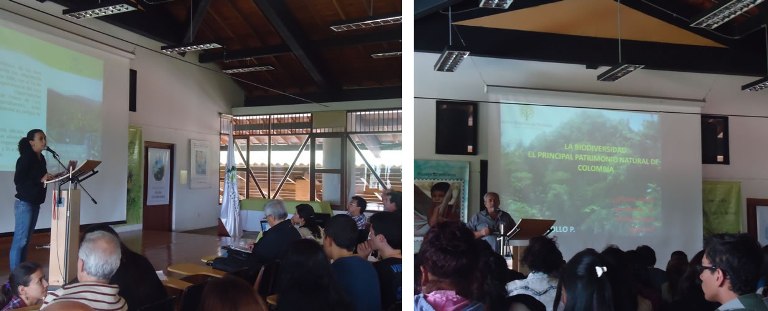
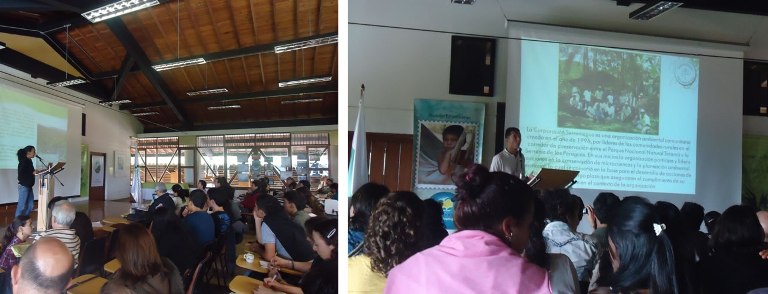
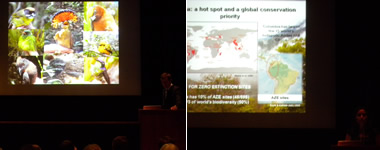
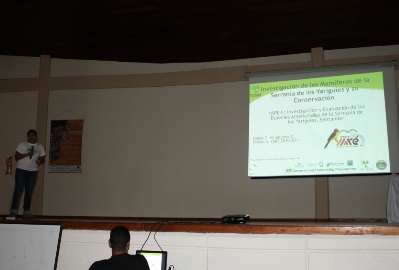
This was an academic event where the environmental work carried out by different organizations, institutions and local governments in southwestern Antioquia was shown. Fundación ProAves in its paper “Natural Bird Reserves: a strategy for the conservation of biodiversity in Southwestern Antioquia” by Johanna Villa, Northwest Region Assistant Director, presented the work undertaken in Conservation, Research and Environmental Educatio, with the valuable support of the Spanish organization Loro Parque Fundación, over 13 years in the municipalities of Jardín and Urrao, she also outlined the strategies by which species as important as the Yellow-eared Parrot, Wax Palm and the Colibrí del Sol have been conserved through its three lines of action.

The meeting achieved the alliance of different institutions in regard to the valuation of natural and scenic treasures of Southwestern Antioquia. They called on different state institutions, universities, nongovernmental organizations and researchers who are involved in the conservation, research, environmental education and sustainable use of biological resources through papers which set out the conservation work, research and work with communities to benefit environment, so it was possible to direct future actions to address the environmental work in the region.

Also the methods and results that have been obtained in the management of forest reserves, natural reserves of civil society, integrated management districts, processes research focused on wildlife identification and conservation strategies for endemic and / or threatened were shown.

Ponencia_1

Participants performed 3 field trips to 3 places of interest in the town of Jardín: Natural Bird Reserve Loro Orejiamarillo, a la Cueva del Esplendor and the Serranías trail.

In the event it was shown that the difficulties in the conservation of the species in Colombia remain the same: deforestation, lack of resources, habitat loss, insufficient protected areas and the lack of commitment to the conservation of biodiversity in Colombia, particularly in the region.

Ponencia_2

The conclusions reached at the meeting referred to the need to coordinate action between the different institutions that perform work for Research, Education, Conservation and use of biodiversity of the region to generate representative and far-reaching actions and influence the decisions that concern the environment in the region, establish participatory mechanisms to achieve the joint objectives and integrate an environmental network for the southwest region of Antioquia.

The meeting was convened by the Municipal Administration of Jardín, the District Administration Office of Manejo Integrated Cuchilla Jardín – Támesis, Fundación ProAves, Fundación Colibrí and Environmental Mesa Jardín Town, with the support of the Ministry of Environment of the Government of Antioquia and CORANTIOQUIA.

Supported by:

Logos_Jardn_2

Categorías
News

International Environment Fair news

During the event (held at Corferias from 6 to 9 June 2012), we managed to establish contacts with various national and international environmental organizations to create potential partnerships work. The ProAves Foundation was also recognized for their hard work over the last 13 years for the conservation of our birds, at the same time noting that Colombia stands first place in the world for its great diversity with 1,889 species of birds.

[slickr-flickr search=”sets” set=”72157630008482053″ items=”20″ type=”gallery”]

The fair had a designated area for the promotion of Colombian environmental goods and services, as well as the Andean and Central American region. Similarly, there were several trade shows and academic programs in four thematic areas: climate change, cleaner production, responsible consumption and water resources.

In FIMA 2012, ProAves socialized with the attendants the number of ongoing projects that it has at a national level like: Alliance for Zero Extinction (AZE), Reciprocal Agreements for Water (ARAS) and the different corridors and conservation easements established in Colombia; also exposed the most outstanding achievements made ??during these 13 years in Conservation, Research, Environmental Education and Membership.

The International Environment Fair 2012, included 167 national and international exhibitors from different economic sectors, from technology producers, clean production equipment and supplies, industrial sector producers, services and consulting, government agencies and related bodies, embassies, academia, multilateral sectors, communities, financial institutions and NGOs.

With the support of:

ecoturs

Categorías
News

Conservation Success for three Endemic and Threatened Colombian Birds


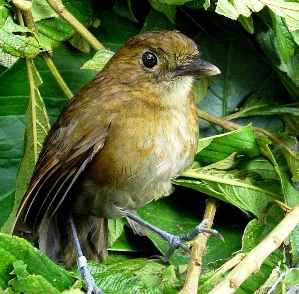
Grallaria_3

Brown-banded Antpitta (Grallaria milleri)

The most recent update of the Red List of the International Union for Conservation of Nature (IUCN), published by BirdLife International this month, shows the change of category of three endemic species of Colombia placing them at a lower risk of extinction.

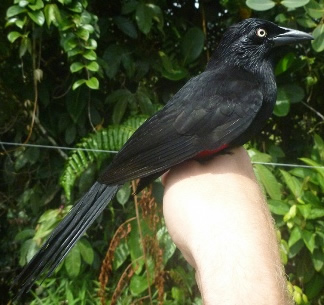
The species that moved out of Endangered status to that of Vulnerable are: White-mantled Barbet (Capito hypoleucus), Brown-banded Antpitta (Grallaria milleri) and the Red-bellied Grackle (Hypopyrrhus pyrohypogaster). These three species are found in 9 of the 21 Bird Reserves owned by ProAves.

The White-mantled Barbet can be seen in the Cerulean Warbler, Helmeted Curassow, Ranita Dorada, Chestnut-capped Piha and El Paujil Bird Reserves. The Brown-banded Antpitta can be seen in the Andean Parrots, Ranita Dorada and Giles-fuertes’s Reserves and Red-bellied Grackle in the Las Tángaras, Yellow-eared parrot and Chestnut-capped Piha Reserves.

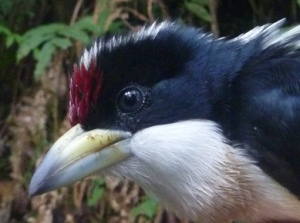
Capito
White-mantled Barbet (Capito hypoleucus)

This great conservation achievement is thanks to the shared work of the interdisciplinary team of more than 60 ProAves staff, which over the course of 13 years has achieved their objectives for the conservation of our birds through strategic conservation, investigation, and work with the community.  Together, we can see that it is possible to stop the disappearance of birds and their habitats, which represents a breakthrough in preventing extinction.

We would like to thank some of our key partners: Fundación Loro Parque, US Fish Wildlife Service (NMBCA), American Bird Conservancy and World Land Trust-US. This achievement is also thanks to the valuable contributions from birders and ornithologists.

Cacique
Red-bellied Grackle (Hypopyrrhus pyrohypogaster)

The IUCN Red List is an evaluation on the conservation status of all species on earth and includes three categories that place species at risk of extinction: Critically Endangered, Endangered, and Vulnerable.

The global number of species in 2012, according to BirdLife, is 10,064. Of these 130 are extinct, 4 are extinct in the wilderness, 197 are in Critical Danger of Extinction, 389 are Endangered, 727 are Vulnerable, and 880 are Near-threatened. 

Colombia has 1,889 species, and is the country with the greatest bird diversity in the world. Of these species 15 are classified as Critically Endangered (CR), 33 are Endangered (EN), 53 are Vulnerable (VU), and 60 are Near-threatened (NT).

Categorías
News Uncategorized @en

Ranita Terribilis Bird Reserve

Historia:

En este predio y gran parte de la zona se encuentra la rana dardo venenosa (Phyllobates terribilis), la rana dardo es endémica de la costa pacífica colombiana. Este anfibio, pertenece al grupo de la familia dendrobatidae, es actualmente considerado el vertebrado más venenoso del mundo. Su hábitat son las selvas húmedas del Chocó y Colombia. El hábitat óptimo de la Phyllobates terribilis son los bosques lluviosos con alta tasa de lluvia (5000 milímetros o más).

Ubicación y área:

Se encuentra ubicada en el departamento del Cauca, municipio de Timbiquí, en la zona urbana de la cabecera municipal, sobre el margen derecho del río Timbiquí; con temperaturas de al menos 26°C y humedad relativa entre 80% y 90%.

Importancia biológica:

La Reserva ProAves Rana Terribilis también protege a varias especies de aves clave incluyendo la Pava del Baudó que se encuentra en peligro de extinción, igualmente resguarda la Chilacoa Parda, en estado vulnerable, y el Paujil del Chocó.

Visítanos:

Escriba a info@proaves.org

Categorías
News

16th Nazca Booby Banding Trip

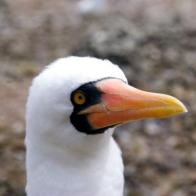
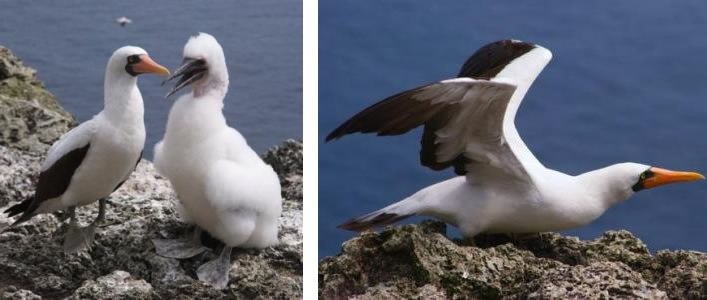
From the 1st to the 4th of December 2011, within the Malpelo Flora and Fauna reserve, the team was able to capture a total of 157 individual Nazca Boobies, some being never before captured birds and other being birds captured in the previous expeditions. As was the case for the previous expeditions, most captured birds were adults however during the 4 day project on the island, all developmental stages of the species were observed (eggs, chicks, fledglings, juveniles and adults).

During the captures, individuales were determined to be male or female via direct observation and differences in vocalizations and size.

Piquero1

The booby captures took place in the early morning and late afternoon. Each individual’s age, sex, reproductive state, feather stage, weight, wing and beak length were recorded.

Along with this banding trip, ProAves will continue to assist in the development and implementation of monitoring projects for this important species and its population on the island of Malpelo. The long-term goal is to generate enough information to create conservation parameters that guarante the survival of this species in Colombia and around the world.

Piquero2

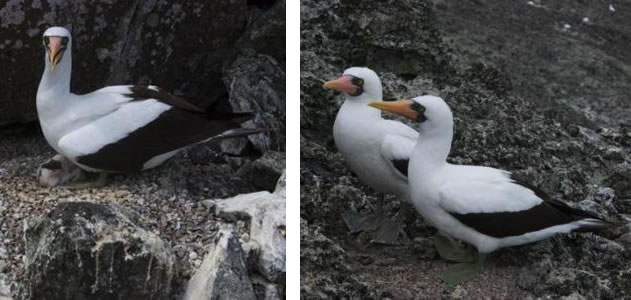
To document the birds’ behavior, volunteers observed and recorded important behaviors such as the number of nests and eggs, nest building, incubation times, feeding and protection of young, resting times, mate recognition and territorial disputes.

Piquero3

The ecological requirements of the Nazca Booby are of great importance. On the island of Malpelo, one finds the largest colony of banded Nazca’s, making the species one of the more important ones in maintaining ecological stability for the island and the other species inhabiting it. The information generated create a deeper understanding for biologists about this bird and its role in the Malpelo ecosystem and the importance of its conservation.

With the support of:

malpelo

PDF:

16 Jornada de anillamiento de Piquero de Nazca

PDF:

Fotos Malpelo (Piquero de Nazca)


Categorías
News

Worldwide interest in ProAves projects

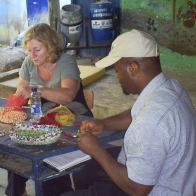
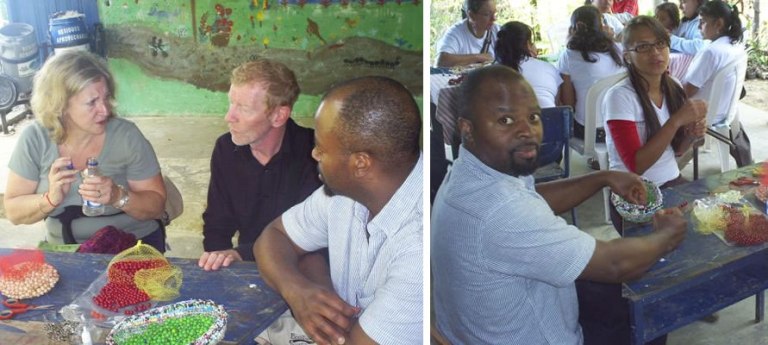
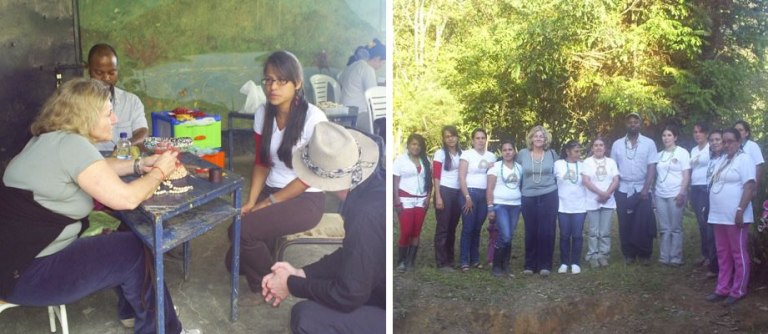
During their visit to the reserve, Rosie and Ben took advantage of the beautiful and unique flora and fauna of the el Dorado and at the same time familiarizing themselves with the Women for Conservation project. Both were quite enthusiastic and impressed with the work that ProAves has spearheaded with local women and this alternative income project. Rosie was kind enough to offer her support from England to disseminate information about the program, being that she is dedicated to expanding the rights and roles of women in societies around the world.

Intro

The visitors were shown the procedures for obtaining materials for the handicrafts and how sales are produced. Also, they were invited to participate in the creation of a typical necklace, being guided by Liliana Restrepo, one of supervisors for the women group at Reserve El Dorado.

Intro2_

We would like to thank Rosie and Ben for their visit to the Women for Conservation group, and for showing a keen interest in the effort ProAves has put into making this Project successful.

Profiles

Rosie Boycott is the founder of the female magazine Spare Rib and the editor of Virago Press. She has also been the editor of Esquire Magazine, The Independent on Sunday, The Independent and the Daily Express. She is a frequent collaborator on programs such as Late Review, Woman’s Hour and Politics Show. Rosie has also presented her own show on BBC2, Life and is the author of the book “spotted Pigs and Green Tomatoes: A year in the life of her smallholding in Somerset”. Currently she is the Travel Editor for the magazine The Oldie and president of London Food.

Ben Okri is a poet and novelist from Nigeria who has one of the most respected writers in Africa. Ben is the Vice-president of the English Center of International PEN – the World Association of Writers and is in charge of promoting and the freedom of expression and is a member of the board of directors for the Royal National Theatre. Ben has worked as presenter for the BBC World Service on the cultural program “Network Africa” and was a Nobel Prize candidate for literature in 1991 for his work “The Famished Road”. Ben currently lives in London.

With the support of:

abc

Categorías
News

Reconcile with nature 2012 success

The celebration of Palm Sunday is a crucial event for the campaign, and the success of the “reconcile with nature” campaign can be seen lending to the fact that the towns of Roncesvalles (Tolina), Jardín (Antioquia), Génova (Quindio) and in Bogotá, the use of the wax palm for the Sunday processions has been almost entirely extinguished. In its place, the celebrants use bamboo and corn husks. Towns have even set up police check-points making sure that the materials used during the processions are not from wax palms.

The campaign started on the 25th of March, the Sunday before  Palm Sunday with a celebration which took place at a religious temple near Bogotás Metropolitan Park Simon Bolivar.

[slickr-flickr search=”sets” set=”72157629339188086″ items=”20″ type=”gallery”]

The launch took place on March 27 in the auditorium facilities San Francisco de Sales of the neighborhood on 20 de Julio in Bogota. The event began with the words of the directors of each participating entity, then, addressed the Salesian College Philharmonic Orchestra Juan del Rizzo, and culminated with training in the development of branches in amero given by the District Department of Environment to the community wizard.

[slickr-flickr search=”sets” set=”72157629539542828″ items=”20″ type=”gallery”]

The success of this campaign would never of been possible without the help of many important entities and partners in conservation. ProAves wishes to thank the following: the Mayorships of the Municipalities of Génova, Roncesvalles y Jardín; Regional environmental agencies, the Ministry of the Environment and Sustainable Development, the Secretary of the Environment, Jardineros Ltda., Plataforma Alto, la Bancada Política Animalista, the Cavalry and the Rural Police Security Force whom responded to the call of duty and supported very important activities such as radio programs, distributing print-outs and educational materials TV commercials, information stands and workshops to educate communities about the use of alternative plants permitted for use during the Palm Sunday celebrations.

During the last 11 versions of this campaign, we have had the fortune to establish some very strong alliances with several institutions allowing our and efforts and potential to extend to many different regions of the country. Through the establishment of alliances and the dedication of entities, communities, agencies and individuals, the Yellow-eared Parrot, once on the brink of extinction with only 81 individuals in 1998, now has a population of over 1,000 and has its category has been reduced from Critically Endangered to now Endangered.

With the support of:

Logos_Reconciliate

Categorías
News

International Migratory Bird Day


migratorias2

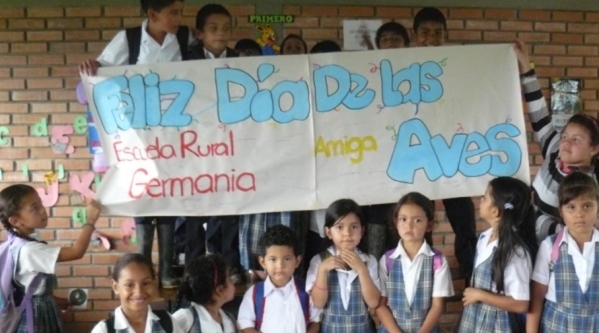
Fundación ProAves dedicated to protect birds of all kinds, created the Cerulean Warbler Bird Reserve, in 2005, making it the first reserve in Colombia and Latin America to specifically protect a species of migratory bird.


Feliz_Da

International Migratory Bird Day celebration. Children from the rural school Germania
near San Vicente de Chucurí, Santander, Colombia. May 2012.


migratorias3

Every year around 197 species of migratory birds visit Colombia in search of warm locales to refuel and wait out the cold winter months of different latitudes. And for this very reason, ProAves will host a Migratory Birds Festival with the objective of generating community interest in learning more about these extreme travelers and the importance of preserving their rapidly decreasing habitats.

Categorías
News

Conservation Victory For One of World’s Deadliest Animals

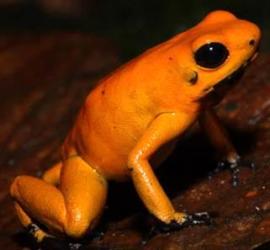
Its poison is so toxic that even coming in contact with a paper towel that has touched the frog has been fatal to animals. Although they are only two inches long, it is estimated that each golden poison frog has enough toxin to kill ten adult people within minutes.

Rio_timbiqui
Timbiquí River and Rana Terribilis Nature Reserve

In one of the wettest tropical rainforests in the world, along the Pacific coast of western Colombia, World Land Trust, American Bird Conservancy, and Global Wildlife Conservation have helped purchase 124 acres of threatened Chocó forest, creating the Rana Terribilis Amphibian Reserve named for the Spanish word for frog – rana – and the frog’s Latin name Phyllobates terribilis. The reserve is owned and managed by Fundación ProAves, Colombia’s leading conservation organization. This is the second amphibian reserve owned by ProAves in Colombia – the first is the Ranita Dorada Reserve.

This frog is named because of its bright orange skin that is covered by a secretion of deadly alkaloid poison (batrachotoxins). The toxin prevents nerves from transmitting impulses, leaving muscles in a constant state of contraction – leading to heart failure. Death comes within minutes.

The species has long been recognized by indigenous cultures for its lethal poison and is strongly embedded within cultural traditions. The Chocó Emberá Indians use the frog’s toxin as poison in their darts used to hunt food; by gently brushing the tips of arrows and darts on the frogs back, without harming it, the weapons can keep their deadly effect for over two years.

Rana_2

The frog’s poison is entirely for self-defense, yet it does little to help its chances of survival against its single biggest threat – bulldozers. Habitat damage and destruction continues to escalate due to illegal gold-mining (an estimated 100 bulldozers and excavators are destroying the area), and illegal logging.

Despite this frog’s infamous reputation and its importance to indigenous cultures, it is considered by many to be on the edge of extinction, and until now the species was completely unprotected. Dependent on primary forest, the golden poison frog occurs patchily across an area less than the size of the tiny Caribbean island of Barbados. Due to its restricted range and low population, the frog was added to the list of some of the world’s most imperiled creatures identified by the Alliance for Zero Extinction.

Notably, the reserve will also afford protection for several key bird species, including the endangered Baudó Guan, a medium-sized game fowl whose worldwide population is estimated at 10,000-20,000 individuals; the vulnerable Brown Wood-Rail, a medium-sized, mostly rufous-brown rail whose population is estimated to be between only 1,000 and 2,500 individuals; and the vulnerable Great Curassow, a large, pheasant-like bird whose population is estimated to be between 10,000 and 60,000 individuals.

“The support from our partners made the creation of this critical new reserve possible, and one of the world’s most amazing creatures, the beautiful and deadly golden poison frog, is now protected.” said Lina Daza, Executive Director of Fundación ProAves.

“That this effort is helping to save even a portion of a rainforest is significant, and we’re glad we have been a part of it. We need to halt the continued, rapid disappearance of rainforests and the resultant loss of wildlife that depend on them,” said Dr. George Fenwick, President of American Bird Conservancy.

Acclaimed journalist Simon Barnes, a WLT council member, wrote in The Times of London newspaper in September 2011: “Astonishing: we are on the edge of wiping out one of the most extraordinary and thrilling creatures on the planet. No matter how well a creature is protected by nature and by evolution, it is always vulnerable to humans. There’s nothing we can’t do when we put our minds to it. Still, at least we are now beginning to put our minds to saving the golden poison frog: we would all be much poorer without such a creature to give us nightmares.”

The Golden Poison Frog Reserve is supported by Conservation International, the International Union for the Conservation of Nature, the Beneficia Foundation, and private donors.

Organizations that support us:

Logos_comunicado_ranita_1
Categorías
News

Conservation Victory For One of World’s Deadliest Animals

Terribilis
Golden Poison Frog

(Washington, D.C., May 8, 2012) Conservationists are celebrating the establishment of a new nature reserve in Colombia that provides the first sanctuary for the endangered golden poison frog, an animal that also has the distinction of being possibly the world’s deadliest animal. Its poison is so toxic that even coming in contact with a paper towel that has touched the frog has been fatal to animals. Although they are only two inches long, it is estimated that each golden poison frog has enough toxin to kill ten adult people within minutes.

In one of the wettest tropical rainforests in the world, along the Pacific coast of western Colombia, World Land Trust, American Bird Conservancy, and Global Wildlife Conservation have helped purchase 124 acres of threatened Chocó forest, creating the Rana Terribilis Amphibian Reserve named for the Spanish word for frog – rana – and the frog’s Latin name Phyllobates terribilis. The reserve is owned and managed by Fundación ProAves, Colombia’s leading conservation organization. This is the second amphibian reserve owned by ProAves in Colombia – the first is the Ranita Dorada Reserve.

This frog is named because of its bright orange skin that is covered by a secretion of deadly alkaloid poison (batrachotoxins). The toxin prevents nerves from transmitting impulses, leaving muscles in a constant state of contraction – leading to heart failure. Death comes within minutes.

The species has long been recognized by indigenous cultures for its lethal poison and is strongly embedded within cultural traditions. The Chocó Emberá Indians use the frog’s toxin as poison in their darts used to hunt food; by gently brushing the tips of arrows and darts on the frogs back, without harming it, the weapons can keep their deadly effect for over two years.

The frog’s poison is entirely for self-defense, yet it does little to help its chances of survival against its single biggest threat – bulldozers. Habitat damage and destruction continues to escalate due to illegal gold-mining (an estimated 100 bulldozers and excavators are destroying the area), and illegal logging.

Despite this frog’s infamous reputation and its importance to indigenous cultures, it is considered by many to be on the edge of extinction, and until now the species was completely unprotected. Dependent on primary forest, the golden poison frog occurs patchily across an area less than the size of the tiny Caribbean island of Barbados. Due to its restricted range and low population, the frog was added to the list of some of the world’s most imperiled creatures identified by the Alliance for Zero Extinction.

Notably, the reserve will also afford protection for several key bird species, including the endangered Baudó Guan, a medium-sized game fowl whose worldwide population is estimated at 10,000-20,000 individuals; the vulnerable Brown Wood-Rail, a medium-sized, mostly rufous-brown rail whose population is estimated to be between only 1,000 and 2,500 individuals; and the vulnerable Great Curassow, a large, pheasant-like bird whose population is estimated to be between 10,000 and 60,000 individuals.

“The support from our partners made the creation of this critical new reserve possible, and one of the world’s most amazing creatures, the beautiful and deadly golden poison frog, is now protected.” said Lina Daza, Executive Director of Fundación ProAves.

“That this effort is helping to save even a portion of a rainforest is significant, and we’re glad we have been a part of it. We need to halt the continued, rapid disappearance of rainforests and the resultant loss of wildlife that depend on them,” said Dr. George Fenwick, President of American Bird Conservancy.

Acclaimed journalist Simon Barnes, a WLT council member, wrote in The Times of London newspaper in September 2011: “Astonishing: we are on the edge of wiping out one of the most extraordinary and thrilling creatures on the planet. No matter how well a creature is protected by nature and by evolution, it is always vulnerable to humans. There’s nothing we can’t do when we put our minds to it. Still, at least we are now beginning to put our minds to saving the golden poison frog: we would all be much poorer without such a creature to give us nightmares.”

The new reserve is also the initiation of an ambitious project called the Chocó Corridor that will connect many highly threatened habitats, from the mangroves on the Pacific Coast to cloud forests on the highest peaks of the western Andes. The Golden Poison Frog Reserve and Choco Corridor is supported by Conservation International, the International Union for the Conservation of Nature, the Beneficia Foundation, and private donors.  

American Bird Conservancy (ABC) is a 501(c)(3) not-for-profit membership organization whose mission is to conserve native birds and their habitats throughout the Americas. ABC acts by safeguarding the rarest species, conserving and restoring habitats, and reducing threats, while building capacity in the bird conservation movement. 

ProAves is a Colombian NGO dedicated to the conservation of birds and their habitats through research, outreach and direct conservation actions in collaboration with local communities.

The World Land Trust is an international conservation organization that takes direct action to save rainforest and other wildlife habitats. WLT and its overseas project partners have been instrumental in the purchase and protection of over two million acres, now protected as permanent wildlife reserves. WLT-US is a 501(c)(3) not-for-profit organization that is consistently awarded the highest rating by the independent group, Charity Navigator.

Global Wildlife Conservation improves life on Earth by advancing both academic and applied approaches to conservation research, action, and education. Along with its numerous strategic worldwide partners, GWC is pursuing a common goal: to save plants and animals from extinction and better understand and maintain the natural world and its biological diversity.
Logos_3
Categorías
News

Colombian Reserve to Double in Size, Aiding Critically Endangered Parrot

These organizations joined forces to acquire about 356 acres of land to double the size of the existing Giles-Fuertesi Nature Reserve. The reserve is managed by ProAves, ABC’s partner and the leading conservation organization in Colombia.

RNA_fuertesi2_edit
Giles-Fuertesi Bird Reserve.

With fewer than 250 individuals thought to exist, the beautifully colored Fuertes’s Parrot is one of the world’s rarest birds. Also known as the Indigo-winged Parrot, it was thought to be extinct for 90 years, but was rediscovered in 2002 when ProAves biologists, funded by an ABC grant, discovered a small population of about a dozen individuals living in fragmented and unprotected high-Andean cloud forests at the site of this reserve. The Fuertes’s sole breeding habitat remains a 19-square-mile area.

“The Fuertes’s Parrot is endemic to Colombia and exists only in the wild at two sites where it bizarrely depends on epiphytic mistletoe fruits,” said Lina Daza, Executive Director of FundaciónProAves, “so with our partners support to secure private lands for its conservation, we have ensured a new and important lease of life to this wonderful parrot and a major step away from the abyss of extinction.”

fuertesi_vertical
Fuerte’s Parrot (Hapalopsittaca fuertesi).

“With one of the world’s largest discoveries of gold recently uncovered by AngloGold Ashanti just miles from this key population of the Fuertes’s Parrot and with the risk of deforestation sharply rising, we were able to quickly respond to the urgent request of our Colombian partner and assist them in buying and permanently protecting this critical site.” said Dr. Paul Salaman, CEO of World Land Trust-US.

“Saving one of the world’s most endangered birds has required an intensive, decade-long effort and funding an on-the-ground organization like ProAves that delivers concrete conservation results clearly has paid great dividends. This is certainly one of the more gratifying efforts in which we have been a part,” said Dr. George Fenwick, President of ABC.

Since the Fuertes’s Parrot was rediscovered, ProAves, ABC, and WLT have worked hard to protect its tiny range. In 2004, ProAves conducted a pilot nest box project that was a huge success thanks to the support of Loro Parque Fundación. By early 2005, 23 pairs of the parrots were nesting in these boxes–all successfully raising broods. In 2009, the Giles-Fuertesi Reserve was established, and now protects roughly one fifth of the global population of the Fuertes’s Parrot.

RNA_fuertesi3_edit
Giles- Fuertesi Bird Reserve.

ProAves and other conservation groups have established a series of reserves known collectively as the Threatened Parrot Corridor, which includes one municipal and three private reserves, all managed by ProAves. With the new additions, these reserves conserve over 18,000 acres of key habitat, and protect approximately 70% of the Fuertes’s Parrot population, as well as populations of four other species of imperiled parrots: the Yellow-eared Parrot, Rusty-faced Parrot, the Golden-plumed Parakeet, and the Rufous-fronted Parakeet.

The main threat to the parrots comes from forests containing key nesting sites being logged and cleared for farming, cattle ranching and mining.

Supporting organizations

proaves worldlandtrust Robert lpf abc


Categorías
News

Women for Conservation on display

Women for Conservation products were exhibited at the fair which lasted 5 days. Being the largest in the UK, it brings about 73,000 British and international traders.

Spring Fair is an event that hosts the largest collection of products designed in Britain and around the world, where one can observe household items, flowers, toys, stationery, jewelry and fashion. Each year, this fair has approximately 300,000 new products.

During the event, and through Amparo Crafts, product marketing entity of the Women for Conservation, several appointments were scheduled with four international traders interested in becoming a branch for the products, including Universal Studios in Florida (USA) who were attracted by the project.

[slickr-flickr search=”sets” set=”72157629431456896″ items=”20″ type=”gallery”]

Due to the work of Women for Conservation over the years, many work centers for the care of the environment such as zoos and Botanical Gardens, visited the stand and showed interest in the products; for this, the program has developed a simplified product line which will be well received in these centers.

Thanks to the above, the women who are members of the project are enjoying increased production to meet the demand for products in the domestic and international market which has a positive impact on the economy of the communities where they live.

With the support of:

abc


Categorías
News

8th Blue-billed Curassow Festival 2012

For eight consecutive years ProAves has developed this festival in order to work for the sustainable use of natural resources and protection of critically endangered species, like the Blue-billed Curassow, with special emphasis on birds and their habitats. Likewise, it seeks to increase community interest in conservation programs undertaken by the Foundation and raise awareness of the situation facing the Blue-billed Curassow (Crax alberti) and other endangered species of the region.

The central theme of the VIII Blue-billed Curassow Festival focused on ecosystems, because most of the economic activities taking place in the town of Puerto Pinzón require some use of natural resources and undoubtedly leave a mark on the ecosystems in the municipality.

A total of 42 activities were developed, including ecological workshops, the making of masks and flags for the closing parade, development of a mural and mass activities with the participation of 2 Rural Schools, Quince Letras y Dos Quebradas, the Puerto Pinzón school and the wider community of the town.

Environmental education activities developed in the Reserve sought to link with the community directly in the conservation efforts of the Blue-billed Curassow conducted by ProAves was developed and a visit by students and some parents of the school Puerto Pinzón with the aim of learning about this species and other flora and fauna present there.

[slickr-flickr search=”sets” set=”72157629214007204″ items=”20″ type=”gallery”]

34 people also participated in touring the road to the reserve, there was a related introduction to the El Paujil Bird Reserve and then ??a one-hour drive was made along the paths. They were given Field Guides of the Birds of Colombia in Spanish version and festival T-shirts.

Afterwards, we summoned the whole community to the formal ceremony involving students and teachers of Puerto Pinzón School, there were cultural events like songs, poems, coplas, an ecological costume contest and presentations of organic material produced by students like billboards.

Finally, with the participation of at least 400 people including children, youths, teachers, parents and the community at large from the district of Puerto Pinzón, the parade was made ??to close the VIII 2012 Blue-billed Curassow Festival through the main streets of the town to carry an educational message of conservation to the community.

ProAves wishes to thank the entire community of the town of Puerto Pinzón for their presence, commitment and full support for the activities in this festival, especially the educational community, the director of the institution, each of the teachers who with open arms welcomed us and allowed this festival to be possible, to students for their cooperation and participation in activities that were developed because they were the main motivation for this event.

With support from:

cgl petroamerica panamerican


Categorías
News

Las Tangaras Nature Reserve launched

The reserve, established with the generous support of American Bird Conservancy, World Land Trust U.S. and World Land Trust U.K., covers an area of 7, 076 acres and is considered one of the Choco’s most important protected habitat corridors.

The reserve is an ideal destination for bird lovers, protecting the habitat of two key species of endemic and endangered birds: the Gold-ringed Tanager (Bangsia aureocincta) (EN) and The Black-and-Gold Tanager (Bangsia melanochlamys)(VU).

In addition, the reserve forests constitute the source of several importance streams for communities located in the lower part of the vereda Guaduas, as they are also tributaries of the Guaduas River, one of the main river basins of the municipality of Carmen de Atrato.

[slickr-flickr search=”sets” set=”72157629358829392″ items=”20″ type=”gallery”]

Participants at the event included: Executive Director of ProAves, Dr. Lina Eugenia Daza; ProAves Director of Conservation, Luis Felipe Barrera, Mayor of the Municipality of Carmen de Atrato, Engineer Alexander Agudelo Echavarria accompanied by the First Lady of the municipality, a member of the board of directors of ProAves, officials from CODECHOCO, the National Police, councilors of the municipality of Carmen de Atrato, local government officials and Carmen community representatives.

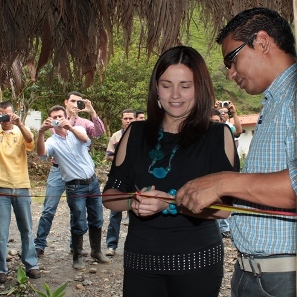
Symbolically, the Mayor of the Municipality of Carmen de Atrato and the Executive Director of ProAves, cut the ribbon to the reserve welcoming the guests. The event featured some words from the Mayor, the Executive Director and Conservation Director who explained to guests the conservation objectives of ProAves, its programs and projects to be developed in the reserve, and also presented the reserve staff officially.

During the event an interagency agreement was signed between the town council of Carmen de Atrato and ProAves to produce 15,000 seedlings of native plant species, the agreement is aimed to reforest pasturelands, create living fences and enrich pastures for the next two years with support from the local community in the municipality.

The launch event was an opportunity to share conservation goals for the town and to socialize the reserve staff with the community; a total of 35 people attended the event that made ??a commitment to the conservation of forests in the municipality and the species that inhabit them.

Also, activities included a bird-watching hike where the participants were able to observe the biodiversity of the reserve and had the opportunity to see the Black-and-gold Tanager (Bangsia melanochlamys) (VU) which posed very close to the observers.

Finally, it is important to note that the people who took part in the event are allies in the conservation objectives of ProAves and actively participate in the processes developed in the reserve for the benefit of wildlife species that live there.

Supported by:

abc worldlandtrust World_Land_Trust_tm


Categorías
News

ProAves Seeking an Environmental Educator


Formación académica:  

Profesional, Técnico y/o Estudiante de últimos semestres en pedagogía o Ciencias Naturales (biología, ecología, ingeniería ambiental, Ingeniería forestal y otras afines). 

Competencias personales:  

Vocación, respeto e interés por la conservación de los recursos naturales y con experiencia en trabajo con comunidades; facilidad para desarrollar actividades en equipo, organización y liderazgo.

  • Una bacante es solicitada en La Reserva Natural de las Aves Las Tangaras ubicada en el municipio del Carmen de Atrato (Chocó).
  • La segunda bacante se solicita para desarrollar las actividades en la Reserva Natural de las Aves Colibrí del sol ubicada en el municipio de Urrao (Antioquia).

Los o las interesadas por favor enviar sus hojas de vida y carta de intensión al siguiente correo electrónico: ldaza@proaves.org

Categorías
News

ProAves featured in Audubon Magazine

On a tour conducted around the towns of Jardín (Antioquia) and Roncesvalles (Tolima), the writer, accompanied by Ecuadorian nature photographer Paul Corral Vega and 3 ProAves biologists, describes the work done by ProAves since its founders rediscovered the parrot after it was believed extinct. The article also talks about the beginnings of the Yellow-eared Parrot Project supported by the Spanish foundation Loro Parque, and the first-ever research on the behavior of the species by ProAves.

Yellow-eared_parrot

Audubon Magazine cover article.

In 2001 the Reconcile with Nature Campaign was created to prevent the use of the Quindío Wax Palm in the religious celebration of Palm Sunday. The article also describes how this strong tradition nearly led to the extinction of the Yellow-eared Parrot and its favored Wax Palm, and how the tireless efforts of the co-founders of ProAves persuaded the Catholic Church to halt the use of the wax palm so that today we can tell the wonderful story of the recovery of one of the most charismatic species in Colombia.

Download the full article in pdf: Birds Parrot Sunday

?To view the online journal can enter the following link: Audubon Magazine March/April 2012


Categorías
News

Director of Operations Position with EcoTurs now open

Ideally the person will have a minimum of 2 year’s experience working in the tourism industry, preferably in field operations and logistics.  Guide experience as either a naturalist or bird guide is highly desirable.

The person should have the following skills:

  • Attention to detail
  • Excellent customer service skills
  • Fluency in English with a high level of Spanish speaking and writing abilities
  • Ability to work effectively in a fast-paced environment  and in groups and with people from different backgrounds and experiences
  • Flexibility
  • Positive attitude
  • Computer literacy (excel, word, etc.)

Qualifications:

  • University degree in tourism or biological field
  • Minimum 2 years experience working in tourism
  • Fluency in English with a high level of Spanish speaking and writing abilities

Duties:

  • Daily customer service (office visits, telephone,  e-mail inquiries)
  • Reservations and entering of planned tours in calendar/reservations system.
  • Providing a service voucher for each tour to specify all the services offered to the client.
  • Payments receivable
  • Monthly reports
  • Post tour evaluations
  • Creation of potential new tour routes, destinations and tourism activities
  • Assigning guides
  • Last minute changes and adaptions to tours/client requests

 Interested persons please send a cover letter and resume (CV) with two contact references to convocatoria@ecoturs.org


Categorías
News

In 2012, Reconcile with Nature

orejiamarillo

Year after year the campaign has been strengthened by support from many partners. This year the campaign is again led by ProAves with strong support coming from the District Department of Environment, Episcopal, Catholic, Anglican and Lutheran churches, the National Police through the Directorate of Rural Security, Jardineros Ltda., Animalist Policy Caucus, the Plataforma ALTO, the Parroquia Niño Jesús – 20 de julio, and the Mayors of the towns of Génova, Quindío, Jardín, Antioquia and Roncesvalles, Department of Tolima.

From the 25th of March to the 2nd of April the 11th annual campaign Reconcile with Nature, will be held at the national level. This national campaign aims to raise awareness and engage the Colombian community as a whole to contribute and participate in activities to preserve our natural resources. We urge the Colombian community during this Holy Week to not use the branches or any part of the wax palm and instead to use live plants or sweet corn husks.

Training Session and Launch

On March 25th, the Sunday before Palm Sunday, there will be a religious celebration at the open-air temple of Simon Bolivar Metropolitan Park at 11 am, in Bogotá, with Monsignor Carlos Julio Ramirez Lopez presiding. This celebration is an urgent call to the Catholic community to understand the imperative and necessity of preserving our natural resources, and especially the Quindio wax palm, a palm listed as Critically Endangered and the only habitat of the Endangered Yellow-eared parrot.

The training session event will take place on March 27th at 7 am in the Auditorium of San Francisco de Sales located on the premises of the Salesian School. Juan Del Rizzo, of the district of 20 de Julio in Bogotá will lead the performance of the Symphony Orchestra of the same school.

A small official ceremony will begin the campaign and will train about 1400 people in the making of branches using the guidance of 30 artists invited by the Niño Jesús of the 20 de Julio district school and trained by the District Department of Environment to train people in a new way to celebrate Palm Sunday without wax palms. This training will provide a productive alternative to sector traders in the use of other materials and Jardineros Ltda. will donate 300 Areca Palms for the two activities, all in order to mitigate the impact of religious celebrations on the environment.

palmas2

Endangered Species

The Yellow-eared Parrot (Ognorhynchus icterotis) is an Andean parrot about 42 cm long as an adult. It has gregarious habits, makes long-distance flights and is completely dependent on the Quindío wax palm, on which it feeds, roosts and nests. Today it is the most endangered species of parrot in Colombia, due mainly to habitat destruction, hunting pressure and because of its restricted distribution, which makes it even more vulnerable to the threats. Through the success of the campaign and education the parrot is now categorized as Endangered (EN) after the International Union for Conservation of Nature (IUCN) downgraded its threat category from Critically Endangered (CR) in 2010.

The Quindio wax palm (Ceroxylum quindiuense) is currently critically endangered and is cut to adorn churches and to be carried during Palm Sunday processions. Unfortunately, the palm takes many decades to mature and is critical for the survival of the Yellow-eared Parrot.

Results of the campaign and direct conservation activities

During the last 10 campaigns, alliances have been established with the Catholic Church and various environmental organizations at the local and national level. Efforts have tended to concentrate on enhancing advocacy in different regions of the country. Much success has resulted due to these efforts, and this is reflected in the increasing protection and conservation of the two endangered species that are the centerpieces of this campaign.

These results have been generated by significant conservation and education efforts carried out directly by Fundación ProAvesin Tolima, Antioquia and Quindío, and the main towns where the yellow-eared parrot and Quindio wax palm can be found. These efforts have undeniably contributed to the increase in numbers of this species, from 80 individuals in 1998 to over 1000 today. These efforts have resulted in the downgrading in the threat category for the Parrot which was achieved in 2010. Moreover, in Roncesvalles, Tolima, the Festival of the Yellow-eared Parrot and Wax Palm have been institutionalized as a celebration of the local culture in the town of Jardín, Antioquia. The Yellow-eared parrot is now even included within the municipal coat of arms.

The efforts of ProAves include several conservation and reforestation programs along with the placement of artificial nests, conservation easements and environmental education campaigns throughout the country.

Among other significant contributions to the conservation of the Quindio wax palm is that of the District Department of Environment which, with their skills, have made a progressive replacement of the traditional bouquet of wax palm leaves with sweet corn husks provided by the company Jardineros Ltda. Year after year they have donated more than 5000 seedlings of alternative species such as Areca palm for use during Palm Sunday celebrations.


palmas

Brief history of the campaign

Since 1998, the campaign has been strongly supported by Loro Parque Foundation, after the rediscovery of the species by Alonso Quevedo, the now general manager of ProAves. Noting the intensive use of this wax palm in the celebrations of Palm Sunday in the Town of Jardín, department of Antioquia, the Reconcile with Nature campaign was founded in 2001 by Conservation International and later the Episcopal Conference and the Ministry of Environment with conservation efforts being undertaken by ProAves.

Since then, the Reconcile with Nature campaign has been carried out continuously at the local and national level for 11 years.

Supporting organizations:

Logos_Reconciliate

Categorías
News

Job Opportunity in EcoTurs Colombia

The Colombian NGO ProAves and its tourism subsidiary EcoTurs Colombia run a recently renovated historic 14-room eco-hotel in the village of Minca, on the slope of the Sierra Nevada de Santa Marta. The hotel is just 35 minutes from Caribbean beach resorts and lies within the coffee belt, en route to the famous El Dorado Bird Reserve.

We are looking for an individual or couple that are efficient, honest and hard-working to manage the hotel including bookings, accounts, hotel staff, bar/restaurant, and marketing. Experience of managing people and ability to communicate effectively both in Spanish and English is essential. An interest in conservation and the environment is desirable, in order to help promote the hotel and the town as an eco-tourism destination, both to foreigners including birdwatchers and the national market. See: www.hotelminca.com   

Send resume and cover letter to: info@ecoturs.org

Categorías
News

Critical New Nature Reserve Established to Protect Endangered Species and Indigenous Communities in the Chocó

Located in Colombia, the rainforest contains one of the highest concentrations of endemic biodiversity in the world, with many birds, plants and amphibians at risk of extinction.

In 2010, an international team of tropical biology experts and students from the Universidad Tecnológica del Choco (Quibdó), Global Wildlife Conservation (GWC) and ProAves visited a previously unstudied region of the northern Chocó rainforest now called “Las Tangaras” that includes both lowland rainforest to highland cloud forest.

Many of the amphibians uncovered during the expedition are likely to be new species – previously unknown to science. Various spectacular multicolored frogs were found and are believed to reside nowhere else on Earth.

Additionally, the area is home to several rare and threatened bird species, including the Endangered Chocó Vireo and Gold-ringed Tanager, as well as other threatened species such as the Spectacled Bear and Jaguar.  This location became the target area for creating a new reserve. A total of sixteen private colonist properties in the area were immediately acquired to create the 7,076 acre Tanagers Reserve. The reserve is located close to several Embera indigenous communities and aims to create a buffer against a new increasing wave of colonists eager to exploit the areas rich natural resources.

vistaT
Las Tangaras Nature Bird Reserve.

The Las Tangaras Nature Reserve is one of the most diverse and important tropical forest sites on earth, and will protect a great elevational gradient – from 2,000 to 12,900 feet above sea level. This area protects the watershed of the Rio Atrato – the Chocó’s most important river which serves as a vital economic resource for tens of thousands of inhabitants living in poor rural communities. This strategic land acquisition helps consolidate a buffer zone protecting over one hundred thousand acres, against unsustainable rapid colonization, and strengthens the protection of several isolated indigenous communities threatened by colonization.

“We are strategically acquiring and protecting a critical area of privately held rainforest to create a buffer zone against colonization and strengthen the protection of adjacent indigenous communities that are besieged by gold-miners and ranchers”, stated Dr. Paul Salaman of World Land Trust, a champion of conservation action in the megadiverse Choco Hotspot.

“We are thrilled that such a vital piece of habitat will be protected in the future,” said Dr. George Fenwick, President of ABC. “This new reserve will likely also safeguard many undiscovered biodiversity gems”.

embera

The Las Tangaras Nature Reserve, owned and operated by ProAves, is expected to be a major attraction to visiting birdwatchers and nature tourists. The area boasts remarkable opportunities for birding (over 250 species documented at the reserve so far) in a country that is home to more avian species than any other on the planet. A spacious, eight-bedroom lodge, a house for staff, and a restaurant featuring a balcony overlooking the Atrato river were just constructed. Other important species found in the reserve include the endangered Chestnut-bellied Flowerpiercer and Yellow-eared Parrot, and the vulnerable Black-and-Gold Tanager and Toucan Barbet.

“Visitors will be astounded how easy it is to see an incredible diversity of rare and little known biodiversity, including a dozen endemic bird species. We hope people will come from all over to visit and appreciate what the Colombian Chocó has to offer, be they from nearby Medellin or from Miami, or London”, commented Lina Daza, Executive Director of ProAves.

CabaaT

Visitor information:

Located four hours by highway from the city of Medellin, the Las Tangaras reserve lies at the gateway from the Andean highlands into the Choco lowlands and offers spectacular scenery, lush forests and some of Colombia’s rarest wildlife attractions, all conveniently located around the spacious Mary Giles lodge in a meandering loop of the Rio Atrato. For more information and bookings, please contact Juan Caicedo info@ecoturs.org at EcoTurs Colombia www.EcoTurs.org.

Categorías
News

Vote for the Giles-Fuertesi Reserve!

There are six projects within the nature category, if the Giles-Fuertesi Reserve receives the most votes a total of €8.423 will be donated to ProAves and be used for reforestation, capacity building, equipment and infrastructure projects within the reserve.

Enter here to vote and help conserve biodiversity in Colombia!

http://www.outdoorconservation.eu

Deadline to vote is April 1st.

Categorías
News

New ProAves reserve thanks to land donation

The property is called “la M”, and is situated between the towns of Carmen de Atrato (Chocó Department) and Urrao (Antioquia Department).

The La M property has an approximate area of 53 hectares of Andean montane and cloud forests; these are forests of vital importance, since they are the habitat of the Negretti Wren (Henichorina Negretti) a Critically Endangered endemic species, and the Tangarino Sparrow (Oreothraupis Arremonops) a Vulnerable species according to the International Union for the Conservation of Nature (IUCN).

The forests of this property also help in the regulation of water in the Chocó biogeographic region and the Colombian Pacific as both are important sources of the Atrato River.

[slickr-flickr search=”sets” set=”72157628514615717″ items=”20″ type=”gallery”]

We wish to sincerely thank Mr. Sergio Agudelo for his generosity and interest in supporting conservation in the municipality of Carmen de Atrato. Mr. Agudelo’s work began some decades ago when he decided to conserve this part of his property, later he discovered the work of ProAves, and realized that our mission and objectives were closely associated with what he wanted for his property.

This donation is a great example of how the community and its initiatives can support conservation of our fauna and flora. The aim is to create a Nature Bird Reserve for the Negretti Wren and the Tangarino Sparrow, and to manage the activities necessary for a protected area.

BIOGRAPHY

Mr. Sergio de Jesus Agudelo Valderrama was born in the town of Carmen de Atrato (Chocó Department), is 79 years old and currently lives in the city of Medellín (Antioquia Department). Mr. Agudelo studied Social and Political Sciences and psychology at the University of Antioquia, and completed his PhD from the University Complutense of Madrid (Spain).

Categorías
News

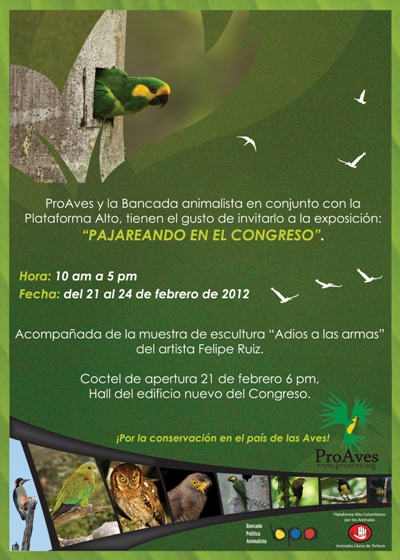
Birding at Congress


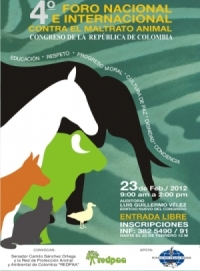
foro_2

“Birding at Congress” is an exhibition open to the public. The exhibition is located at the new building for Congress, between the hours of 10am and 5pm.

The exhibition is part of the IV annual International Forum Against Animal Abuse, convened by Senator Camilo Sanchez and Animal Environment Protection Network (REPPA/AEPN) with support from the Franz Weber Foundation.

A specific forum will be held inside the Luis Guillermo Velez Auditorium on Thursday the 23rd of February from 9am to 4 pm. This year it will feature a special presentation by Anna Mulá, a professor at the University of Barcelona, ??considered the greatest Latina expert on animal rights. Also, Núria Querol, Director of the Observatory of Violence Towards Animals in Spain, who is considered to be the most important scientist in comparative research between animal abuse and interpersonal violence.

In this same time frame, on Thursday February 23rd at 3:00 pm, ProAves will present its experience in the implementation of environmental education strategies developed and implemented throughout Colombia for over 12 years.

Invitacin_Expo_Congreso

Invitation to the Exhibition “Birding at Congress”.

If you wish to attend and learn more about ProAves, register by sending an email to ybautista@proaves.org with the following information: first and last name, phone number, ID number and the entity to which you belong.

Categorías
News

First ever photographs of the male Black-backed Thornbill

[slickr-flickr search=”sets” set=”72157629317115909″ items=”20″ type=”gallery”]

The Black-backed Thornbill is an endangered and endemic species of the Sierra Nevada de Santa Marta and its survival is by no means secure. Unrelenting habitat loss due to the conversion of forested areas to agricultural lands and cattle pastures have severely impacted this birds habitat and its ability to forage and reproduce successfully.

The El Dorado Bird Reserve protects 880 hectares (2,175 acres) of critical montane cloud forest for this spectacular species and many other endangered and critically endangered species which call the Santa Marta de Sierra Nevada home.

With support from many entities and individuals, the El Dorado Bird Reseve protects into perpetuity critical habitat for the Black-backed Thornbill and many other enigmatic creatures of the Sierra Nevada de Santa Marta found nowhere else on the planet.

To read El Dorado’s Reserve Administrator Sam Martinez’s account of this species please click here

Tour ProAves Reserves:

Contact EcoTurs headquarters at Carrera 20 No. 36 – 61, Bogotá, Colombia, telephone (57) (1) 287-6592, visit  EcoTurs at  www.ecoturs.org or write them at info@ecoturs.org

With the support of:

abc worldlandtrust lpf conservacioninternacionalcolombia


Categorías
News

Reforestation efforts underway in 228 farms

The main objective of the corridor is to restore habitat connectivity, ensure viable genetic exchange between populations and ecosystem conservation according to the characteristics of the land and its use. To date they have built living fences, windbreaks and shade for the coffee and cocoa crops. Pastures have been recovered whilst watershed protection and silvopastoral programs and agroforestry systems have been implemented.

[slickr-flickr search=”sets” set=”72157629219775019″ items=”20″ type=”gallery”]

The Cerulean Warbler Conservation Corridor is located in the municipality of San Vicente de Chucuri (Santander), and covers an area 10 km long by 1 wide uniting the Natural Bird Reserves of the Cerulean Warbler (209 ha), located on the highlands of Yariguíes Pauxi pauxi Bird Reserve (1800 ha), located on the Cerro de la Paz. This corridor has been a great strategy for conservation and protects the habitat for threatened endemic species, and also the forests that at this time of year host many migratory birds from North America.

Another achievement that has been obtained in the corridor has been the implementation of sustainable farming alternatives (training – support – management), based on the search for native seeds, care and maintenance in the phases of germination, growth and development of seedlings, planting and monitoring, all in order to raise community awareness for the protection of the communities environmental resources.

Also, due to the implementation of the Esperanza Verde (Green Hope) nurseries in the Cerulean Warbler Reserve and cocoa plantations, in the Pauxi pauxi Bird Reserve, 62,976 trees have been produced so far! Reforestation has taken place on 228 farms interested in protecting their environment, these properties are located in the villages of: Germania Center sectors, Siberia and Morelia, Barro Amarillo, Cantarranas I and II, Matecacao, La Trinidad and Buenavista, El Cerro, El Cerrito, Palmira and Palestina.

ProAves projects promote and ensure a better habitat for these protected areas, at the same replacing unsustainable forestry practices that threaten environmental health in the region with sustainable and environmentally sound practices.

Learn more

With support from:

abc
Categorías
News

Ermitaño River Biological Corridor Project

For this first meeting, tools and silvopastoral techniques were explained which allow better use of areas designated as pasture, thereby preventing the expansion of new pastures that fragment vegetation and habitat.

Collage_paujil

The Ermitaño River and the El Paujil Bird Reserve.

The farmers in the region were identified as key players in the effort, however, the support of the Regional Environmental Corporation and private sector are expected to achieve the acquisition of approximately 4940 acres that make up this natural forest relic on the banks of the river Ermitaño. Not promoting strong conservation measures with different entities in the area could lead to isolation in the short-term of these two protected areas.

The workshop was attended by farmers from different farms that have direct influence on the buffer areas that connects the regional park Serranía de las Quinchas and the El Paujil Bird Reserve.

Facilitated and led by ProAves, the implementation of these new, more efficient farming techniques, and the acceptance from the farming community for the River Corridor Ermitaño project is a move in the right direction for more environmentally friendly farming techniques and the advancement of conservation efforts.

Categorías
News

Annual Planning Meeting – 2012 ProAves

The meeting was held at Hotel Minca, located in the town of Minca, Santa Marta, Department of Magdalena, near the road that leads up to the Natural Bird Reserve El Dorado.

The meeting consisted of an overview of the most significant achievements of 2011 within the organizations areas of conservation, research, communication, environmental education and membership. The presentations continued with a thorough evaluation of strategic and operational plans for each of the areas. The Strategic Plan 2009 – 2013, has and continues to set objectives and priorities to be developed during 2012.

[slickr-flickr search=”sets” set=”72157629043644069″ items=”20″ type=”gallery”]

The ProAves team present at the meeting was made up by Lina Daza Rojas (Executive Director) and her assistant Monica Parada, Alonso Quevedo (Chairman), Director of Conservation and Protected Areas Luis Felipe Barrera, the protected areas Subdirector’s Ana Esperanza Contreras, Johanna Villa, Luis Gabriel Mosquera and Juan Carlos Rivas, the Subdirector of Research Alexander Monsalve, the Subdirector of Communications Ivon Alzate, the Legal Assistant Diego Ruiz and his assistant Yamile Hernandez, the Deputy Director of Restoration and Conservation Heidy Valle, the International Development Director Nathan Skinner, Environmental Education and Membership Yulied Bautista and Fernanda Martinez, administrative area Anzola Anyesul and on behalf of the accounting area Paloma Carrillo.

Also, we had the presence and valuable support of Mr. John Lázaro Toro and Mr. Robert Giles who are members of the Board of Directors.

Strategic Planning is carried out annually and is very important in that it has allowed us to direct our efforts to faithfully fulfill our vision and mission, taking into account the social and economic changes that Colombia faces.

“I thank all our contributors for their attendance at the annual Planning Meeting 2011 – 2012 for their valiant effort and all the creative ideas that were presented, we hope this year will be a year full of triumphs for the conservation of biodiversity and for birds of the world” Lina Daza Rojas, Executive Director.

With the support of:

lpf


Categorías
News

2011 was an Exceptional Year for ProAves!

In January of 2011, Dr. Lina Eugenia Daza Rojas was appointed Executive Director and under her leadership there have been a number of significant changes, many of which helped generate the achievements listed below.

  • There is much to celebrate! Like the establishment of two new Natural Reserves. We are proud to announce an increase of 23% in the total areas protected by ProAves for a total of 28,075 hectares, 5,321 more for 2011.
  • The publication of the Field Guide to the Birds of Colombia in Spanish which brings together the original artwork of the 1,889 species recorded in Colombia.
  • The rediscovery of the Santa Marta Tree Rat after 113 years. This magnificent and enigmatic rodent was observed by two research volunteers in the Natural Bird Reserve of ProAves El Dorado.
  • The first ever signing of Reciprocal Water Agreements for 8 properties (Environmental Service Payments). These agreements protect 2,650 hectares of forested wilderness and the once critically endangered Yellow-eared parrot’s foraging and breeding habitat.
  • Cerulean Warbler Conservation Coffee is now on sale, and is certificated “Specialty Coffee” by Rainforest Alliance for the second year in row.

[slickr-flickr search=”sets” set=”72157629029731097″ items=”20″ type=”gallery”]

  • During 2011, multiple environmental education activities were conducted, like the Fuertes’s Parrot Festival, the Migratory Bird Festival, the Blue-billed Curassow (el Paujil) Festival, the Festival of Threatened Parrots of Colombia and the tenth edition of “Reconcile with Nature Campaign”. These activities created fun and educational field trips and workshops involving about 18,000 children, as well as young adults throughout Colombia with the aim of educating and inspiring the Colombian youth about their countries amazing biodiversity.
  • In December 2011, a revamped ProAves website www.proaves.org was launched with new and innovative designs making the website much more user friendly. Now users can easily find the latest conservation news in Colombia and enjoy greater interactivity with social networks including Facebook, Twitter, Flickr and Youtube.
  • For the fifth consecutive year ProAves and EcoTurs participated in the 2011 Bird Fair which was held in the UK. This is the biggest event in the world for birds and was an incredible opportunity to promote the great work being done by ProAves in conservation. The Women for Conservation Project was showcased along with the Field Guide to the Birds of Colombia as well as the various tour packages offered by EcoTurs for people passionate about birds and conservation in Colombia.
  • During 2011, EcoTurs managed the tours of 629 Birders visiting ProAves Reserves. Two new eco-shops, with local sustainably produced products by Women for Conservation and conservation coffee were opened at Las Tangaras and Chestnut-capped Piha Bird Reserves.
  • Two very important training events for our staff and the communities surrounding the reserves took place; the Fifth Training Course of protected areas in the El Pauji Reserve and the Ecological Guidance Course at the Reinita Cielo Azul Reserve. These two events brought together 15 forest guardians of ProAves and key issues were addressed for both personal growth and development for our employees and for the work being performed in the field.
  • ProAves Executive Director Lina Eugenia Daza participated in the First South American Members Forum of the International Union for the Conservation of Nature (IUCN) held from the 13th to 15th of July in the city of Lima, Peru.
  • Deputy Director of Restoration and Conservation Heidy Valle participated and presented at the meeting of the Council of the Global Environment Facility (GEF) held from the 23rd to 26th of May 2011 in Washington DC. The goal was to present the progress of the campaign “For the pride of Roncesvalles – El Espinal and the Reciprocal Water Agreements”.
  • With these achievements, new responsibilities and challenges are faced for 2012. After twelve years of tireless commitment to conservation, research and education ProAves will continue to stay committed to the conservation of birds and their habitats in the country of Colombia.

We sincerely thank all of our supporters and hope that our 2012 conservation achievements will be even greater than the ones from 2011! Thank You!

Categorías
News

ProAves is member of the Environment Alliance Pact

Tuesday 16 March 2010.

On 30 May the presidential elections will be called in our country and on that day we will have the opportunity to choose the candidate who best fits our ideas and needs. However, we must not forget the obligation of governments to protect and preserve natural and ecological resources; it’s a global clamor, from which we Colombians can not be alien to. To this end the Environment Alliance Pact in Colombia has been created.

This initiative, led by Fundación Malpelo and Conservation International – Colombia, seeks to mobilize Colombians to sign the agreement and ask the future president of the republic that the overcoming of the environmental crisis is incorporated as the center piece of his government’s program and development plan 2010-2014.

Presidential Candidates

Presidential Candidates

The Pact seeks public debate about 12 specific target approaches in which the candidates in which the environmental crisis and its solution takes the forefront of the presidential campaign and in the decision of the Colombians.

What does the Environment Alliance Pact ask of Colombians?

Colombians are called to express concern about issues such as climate change, ecosystem destruction, air, soil and water pollution, species extinction, global warming etc, these are manifestations of the global environmental crisis of the persistence of an economic model and a way of life that cause this crisis. This is done through the signing of accession to the Pact and pledging ourselves to know the candidates’ proposals on the Pact and Environment to evaluate them before deciding our vote.

What does the Environmental Pact to the presidential candidates?

1. A written undertaking, solemn, for which the candidate expresses his/her willingness to act and to make ecology a national priority.
2. His/her proposals around 12 Objectives raised by the Environment Alliance Pact of Colombia.

3. To speak out in political debates, in public settings, in academia and in press conferences and news sites on the objectives of the Environment Alliance Pact of Colombia and propose policies and actions that take place in his/her government to achieve them.

When the presidential candidates express their commitment and views we Colombians can judge their knowledge, environmental vocation, the relevance of their proposals and the expected goals of each of them and when we decide to vote we can vote wisely.

The 12 objectives of the Colombian Environment Alliance Pact fall within the following fields:

– Economy
– Energy
– Agriculture and rural
– Territory
– Transportation
– Fiscal
– Biodiversity
– Health
– Research
– International Politics
– Fishing activities
– Education

Visit the website of the alliance: www.pactoambientalcolombia.com

We invite all Colombians to participate and be part of the Alliance signed the agreement at the following link www.pactoambientalcolombia.com / vincularse.html

Colombian entities Alliance members:

Categorías
News

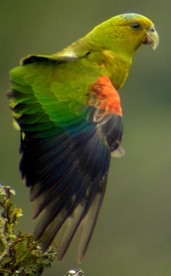
Original Yellow-eared Parrot painting for sale!

Monday 26 April 2010.

Fundación ProAves
Cordially invites you to participate on
“THE YELLOW-EARED PARROT” online benefit auction.
www.auction.arteyconservacion.com
From April 26 to July 30 2010

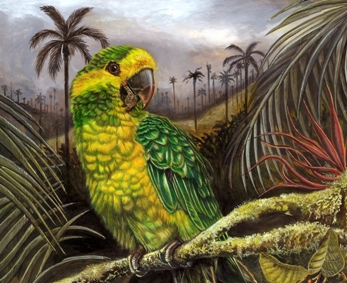
In an exciting initiative between ProAves and “Art & Conservation”, a group of artists dedicated to support biodiversity and habitat conservation through art, the original Yellow-eared Parrot painting is for sale with proceeds used to support conservation. The artist, Paula Andrea Romero, did a magnificent and inspiring job painting this beautiful parrot in its natural habitat.

“A Hope in the Mist” 2009

Author: Paula Andrea Romero Ardila. Artist and illustrator from Art Conservation.

Medium: Acrylic on illustration board.

Dimensions: 18” X 22” inches

Description: Painting of the Colombian Yellow-eared Parrot. (Ognorhynchus icterotis). Created and inspired by the 10 years of hard work for the conservation of the Endangered Parrots of Colombia by Fundación ProAves.

This unique artwork has been considered by the ornithological community one of the most faithful paintings of this beautiful parrot.

Please, Join us on this noble cause

There might be numerous reasons for painting inspired on nature, but one of the main reasons is its beauty and comprehensibility.
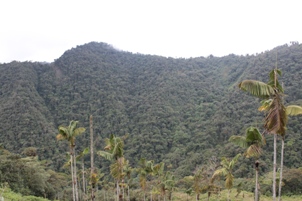
The only risk while appreciating daily this painting, is that it would make you feel as if you belong to the place portrayed and you would only be compelled to say, “How I Wish I was there!”. There is no need to find the hidden meaning behind the painting, but instead all you need to do is look and immerse into the beauty of this marvelous piece of art.

History

In 1998, Fundación ProAves with the support of the Fundación Loro Parque, initiated the yellow-eared parrot project with the main objective of ensuring the survival of the species and to protect their habitat in the Colombian Andes. 10 years later we continue working steadily and dedicated with the purpose of ensuring that the populations of Yellow-eared Parrot (Ognorhynchus icterotis) are healthy and stable.

This project is a conservation model that has been replicated to other endangered species and to the establishment of protected areas throughout Colombia. During these 10 years the project has involved more than 180 people and 47 organizations worldwide, adding the essential contribution and effort of different communities and the success in the specific activities in research, conservation and education, allows us to proudly claim that thanks to the efforts done, the species have now a hopeful future. Of 81 individuals found in 1999 we can now report that the population exceeds over 1000.

This highlights a strong commitment to the species, its habitat and local communities. We are now confident that future generations will know and cherish this dream and this species. ProAves owes its birth and growth to the Yellow-eared Parrot and support of Fundación Loro Parque.

About us

Art and Conservation:

Is a Colombian artist collective, which support biodiversity and habitat conservancy through art. Our objective is to donate founds to raise awareness in regards to the need of an inmediate attitude change towards environmental issues, through Art Exhibitions, Publications, Workshops and Education.

More info:www.arteyconservacion.com

Fundación ProAves

Is a Colombian non-profit organization that focuses on the study and conservation of our biodiversity, especially birds at risk of extinction and their habitats, in partnership with local communities. Our objective is to support and promote the protection of Colombia’s incredible but endangered natural heritage with the ultimate aim of benefiting the planet and humanity.
buy and offer

Dear Visitor, if you want this painting, contact and let us know which is your offer. the open price is 2.000 $ (established by the artist). We will constantly inform you via email and through this site, the highest bidding price so that you can follow the status of the auction.

Remember we conclude in September 30, 2010.

Please, lets Join hands for this noble cause and forward this link to every person to whom you know so that these

painting can get immediate sale on highest price.

NEED HELP?

Contact

Eliane Arzuza

Director of Development, who will gladly guide you.

Phone Contact: +57-1 3403261-3403229 (Bogotá, Colombia)

Or to the following email earzuza @ proaves.org

Thank you!

Categorías
News

Official Announcement of the description of a new bird species in Colombia

Friday 21 May 2010.

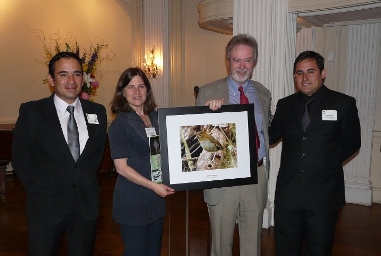
The bird is called Grallaria fenwickorum (“Fenwick’s Antpitta” in English and “Tororoi de Urrao” in Spanish), in honor of the President of American Bird Conservancy (ABC), George Fenwick, and his family for their unconditional commitment to the conservation of birds in Colombia.

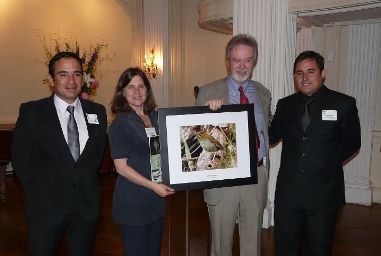
Alonso Quevedo, Director General ProAves, Rita Fenwick, ABC Director of Development, George Fenwick, President of ABC and David Caro, Executive Director ProAves.

“I am deeply honored by this appointment. I know it reflects equally the contributions of my family and the organization ABC (American Bird Conservancy), who have promoted many sound conservation efforts for birds in Colombia,” said Dr. George Fenwick.

“I am particularly pleased that this effort was achieved without the loss of the bird’s life. Rare and special birds like this should not be sacrificed in this process,” he added.

“This family and ABC have done much in the last 8 years on behalf of the Colombian bird conservation, and I look forward to the continuation of these great achievements for decades to come,” said Ambassador Barco.

Jorge Velasquez, board member and founder of ProAves, David Caro, Executive Director ProAves, Eliane Arzuza, ProAves Development Director, Carolina Barco Ambassador of Colombia in the USA, Alonso Quevedo, Director General ProAves; Christian Olaciregui, Assistant Director of Protected Areas (Caribbean).

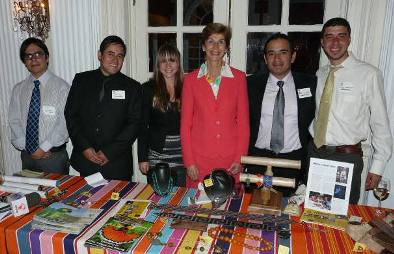
The hostess of honor was Wendy Paulson, who is a leading conservationist in DC. Dr. George H. Fenwick president of American Bird Conservancy also attended. On behalf of ProAves were present David Caro, Executive Director, Alonso Quevedo, Director General, Eliane Arzuza, Director of Development and Cristian Olaciregui, Assistant Director of Protected Areas (Caribbean).

This event was an excellent opportunity to showcase the important work that is being carried out by ProAves and the recognition and support it receives abroad.

Categorías
News

Celebrating Colombia’s 200th anniversary, in London

Tuesday 20 July 2010.

“Colombia: Paradise of Biodiversity”

20 July 2010 is a special date: the 200th anniversary of the declaration of independence of Colombia. This occasion has been especially celebrated in Britain, a country which supported Colombia’s independence movement financially and militarily and where Simon Bolivar planned his independence struggle. The Natural History Museum in London hosted an event on 19 July 2010 entitled “Colombia: Paradise of Biodiversity” as part of the celebrations. This was introduced by Colombia’s ambassador to the UK, HE Mauricio Rodriguez and Natural History Museum director of science, Dr. Richard Lane. Among the 200 guests attending included former President of Colombia, Belisario Betancur.

Thomas Donegan, Blanca Huertas, former President Belisario Betancur and the ambassador of Colombia in the UK, Mauricio Rodríguez.

Blanca Huertas, the butterfly curator of the Natural History Museum, gave an illustrated and animated talk about Colombia’s unrivalled biodiversity, landscapes and habitats and the work of the Natural History Museum with the country, as well as her work with butterflies in South America. Thomas Donegan of ProAves then gave a talk about Colombia’s birds and their conservation, highlighting the conservation achievements of ProAves and giving attendees a preview of the forthcoming Field Guide to the Birds of Colombia. Afterwards, there was a wine reception for all participants. ProAves and EcoTurs were also represented in the event by Robert Giles and Angela Gómez.

Thomas Donegan and Blanca Huertas during the event.

On 20 July there was a celebratory meeting with MPs in the UK’s Houses of Parliament, followed by lunch at the Royal Automobile Club in London, at which Belisario Betancur gave a speech about the influence and thought leadership of the botanist Jose Celestino Mutis in the years prior to Colombia’s independence. These events were a wonderful way to celebrate Colombia’s greatest treasure – its biodiversity – on this important occasion. ProAves would like to thank the Natural History Museum, Colombian Embassy in the UK and ProExport for organising these occasions and allowing us to participate in them.

Thanks to:

Categorías
News

Wetlands: critical habitat for migratory birds

Thursday 10 November 2011.

Wetlands are ecosystems of great importance; they are regulators of the water cycle, control and prevent flooding, contribute to the recharge and discharge from aquifers, retain sediments and nutrients and act as reservoirs. Unfortunately, global warming, pollution, the buildings around them, the dumping of garbage, debris and household spills constitute a major threat to wetlands in Bogotá endangering the species that inhabit these ecosystems.

During these days of bird watching the wetlands of Jaboque, in the locality of Engativá, El Burro, in the locality of Kennedy, Cordoba and La Conejera, in the locality of Suba were visited. There, attendees were able to recognize the plant and animal species that inhabit these places; they also developed recreational and educational activities, emphasizing the importance of protecting these ecosystems.

[slickr-flickr search=”sets” set=”72157627990242748″ items=”20″ type=”gallery”]

Wetlands are home to more than 200 species of birds, including 4 endemic: the Apolinar’s Wren (Cistothorus apolinari), the Spot-flanked Gallinule (Gallinula melanops), the Bogotá Rail (Rallus semiplumbeus) and the Ruddy Duck (Oxyura jamaicensis).

86 species of migratory birds seek food and refuge in the wetlands of the Savannah of Bogotá: Blue-winged tead (Anas discors), Purple Gallinule (Porphyrio martinica), Lesser Yellowlegs (Tringa flavipes) and Solitary Sandpiper (Tringa solitari).

Unfortunately, the species most affected by the deplorable conditions found in the wetlands are the birds, especially migratory birds, they travel thousands of miles from their breeding sites in North America or the southern tip of South America to meet highly contaminated, damaged ecosystems, addressing this concern, ProAves supported by Loro Parque Fundación in conjunction with Fundación Humedales, conducted these activities in order that we recognize the importance of conserving and protecting them.


Categorías
News

Celebrating the birds of Colombia

Tuesday 8 November 2011.

Throughout the month of October various activities were developed to highlight the festivities, and generate a greater commitment to the protection of biodiversity among the population of Jardín.

Among the main activities can be highlighted: ecological workshops at Bird Friendly Schools, radio programs and spots, televised note on the community channel, painting competitions, contests of knowledge, observation race for children and youths, and an information stand in the town’s main park.

A highlight of the activities involved the painting contest on Migratory Birds and the Yellow-eared Parrot in the context of the activity “Painting in the Park”, for this, there was a professional jury made up of two painters from the town and Ana Cristina Velásquez, ProAves environmental educator. The top three designs were chosen according to creativity, aesthetics and message of the drawing.

[slickr-flickr search=”sets” set=”72157627965509731″ items=”20″ type=”gallery”]

The winners took several awards including Anchetas, thanks to donations made by traders in the town. Approximately 920 people participated in the Festivals, including the student community of Jardín.

In the municipality of Génova, Department of Quindío, Colombia, the 7th Fuertes’s Parrot Festival took place. Some of the activities which people participated in were visits to important community landmarks and to both rural and urban schools. Workshops motivating community involvement in biodiversity conservation efforts were also offered. More than 1,000 children participated in this event, which gave the children reason to learn about, value and protect their environment.

[slickr-flickr search=”sets” set=”72157628086080376″ items=”20″ type=”gallery”]

The purpose of these festivals is to promote community interest in the understanding of migratory birds, the Yellow-eared Parrot and Fuertes’s Parrot as well the importance of conserving their habitat. It also seeks to strengthen and consolidate a network of organizations and individuals committed to the conservation of birds in our country.

With the support of:

lpf

Jardin

Jardín (Antioquia)

genova

Génova (Quindío)

proaves
Categorías
News

EcoGuide Course at the Cerulean Warbler Reserve

Monday 28 November 2011.

The Ecoguide course was conducted in order to train our forest guardians along with people of influence from the communities invloved in the YARÉ II Project (San Vicente de Chucuri and Zapatoca, Santander). The course stressed ecological stewardship with an emphasis on bird watching and knowledge and tools for how communities in this area could benefit from ecotourism in the region and especially the up and coming EcoRoute the “Lengerke Road”. The course trained a total of 23 people belonging to different organizations in the area.

The course also covered topics such as: the importance of birds, identification of different families and species of birds in the field, skills and abilities of a guide, group management, use and maintenance of observation equipment, basic knowledge of English and first aid.

[slickr-flickr search=”sets” set=”72157627880115301″ items=”20″ type=”gallery”]

The event began with a meeting attended by representatives from 11 institutions and organizations of San Vincente de Chucurí such as: the City Hall, Parques Nacionales, Corporación Autónoma de Santander, Comité de Cacaoteros y Cafeteros, Educational Institutions and tourism, and the Servicio Nacional de Aprendizaje SENA – Bucaramanga branch. Similarly, there was a presentation from Fundación ProAves, EcoTurs and results and successes obtained during the YARÉ II Project. A socialization of the EcoRoute”Lengerke Road” and the mini guide of the Serranía de los Yariguíes was also conducted to enhance ecotourism strategies for the region.

One of the themes of the course consisted in implementing theoretical basis for guiding tourists, focused specifically on ecotourism and birding, conservation, management of field teams, use of field guides and field practices in birding and group management for local guides. A strategy a forest guardian was allocated to each local guide so that their previous experience would support them for better learning.

In addition, each organization was given the Guide to the Birds of Colombia in Spanish and each individual recieved a course manual, as part of the important material for the development of the training and learning of the participants.

At the end of the environmental guidance course, our forest guardians and the local communities were very satisfied with what they learned, and they expressed interest in participating in more training by ProAves in the future. Also through the results of the YARÉ II Project and the Lengerke Road Recovery they were encouraged to create actions for the conservation and maintenance of the this tourist attracion for the long term, as a product that will be important for ecotourism in the coming years.

The YARÉ II Project “Evaluation and Research of Endangered Species in the Serranía de los Yariguíes” by Fundación ProAves, won the Follow-Up Awards 2010 prize by the Conservation Leadership Programme.

Yar

With the support of:

conservationleadership proaves ecoturs
Categorías
News

Help ProAves through Healthy Planet


Paisaje_Giles

Healthy Planet’s Adopt a plot

Healthy Planet was created to inspire, motivate and support individuals and businesses around the world to make a difference to themselves, their children and the planet.

Through Healthy Planet, you can support conservation by adopting a plot in the Giles Fuertesi Reserve. We need your help to protect and restore 368 acres of critical cloud forest habitat to save one of the most endangered parrots in the world, the Fuertes’s Parrot. To donate click here 

With the help of Healthy Planet’s land adoption projects, ProAves managed to acquire around 3000 acres of some of the last remaining humid lowland forest in the Magdalena Valley. This protected habitat is known as the “El Paujil Nature Reserve”. Aside from birds, the reserve is one of the last refuges for several species of endangered and endemic lowland forest animals, including the Variegated Spider Monkey (one of the 25 rarest primates on earth), the Magdalena Lowland Tapir, and the Fallox Robber Frog. You can read the whole story at www.healthyplanet.org 


Categorías
News

First record of spectacled bear in El Paujil Reserve

Friday 18 November 2011.

The use of camera traps has allowed us to make records of species that are not easily observed, as in the case of large mammals such as the Andean bear (Tremarctos ornatus) VU. This is the only bear species found in South America and due to the degradation and destruction of their habitat, the Andean bear is listed as one of the carnivores most prone to extinction. Another problem facing the species is a lack of scientific data for local distribution and status within the Andes, making it difficult to monitor and asses changes in distribution and to establish realistic and effective actions for their conservation.

The Spectacled bear has a geographic distribution that extends along the tropical Andes and utilizes a wide variety of habitats between 250 and 4,750m above sea level. The El Paujil Bird Reserve is located within this altitudinal range in the Middle Magdalena Valley between the Departments of Boyacá and Santander, Colombia.

For two years we have used camera trap stations within the framework of Saving the Critically Endangered Blue-billed Curassow and Brown Spider Monkey Project to monitor the Blue Billed Curassow with support from the United States Fish and Wildlife Service. During surveys conducted during August 2011 the presence of an individual Tremarctos ornatus was recorded at 300m above sea level at 9:46 am, along one of the paths used for research in the reserve.

Oso_Intro

Spectacled bear (Tremarctos ornatus)

The existence of the El Paujil Natural Bird Reserve allows this species, whose population is estimated at less than 20,000 individuals in Colombia, to make use of more than 14,800 acres of healthy forest in the Serranía de las Quinchas and the Colombian Middle Magdalena. These images allow for recording charismatic species as the spectacled bear in time to make conservation decisions in this area, creating connectivity between habitats that hopefully ensure its survival as a species over time.


Categorías
News

YARÉ II in the I Colombian Congress of Mammalogy

The organizing committee of the I Colombian Congress of Mammalogy “a multivariate in depth look at the Colombian mammalogy,” by the Colombian Society of Mammalogy (SCMas) and the Technological University of Chocó, accepted as oral presentation, the work entitled: Project YARÉ II: Investigation of the mammals of the Serranía de los Yariguíes and their conservation by Diana Carolina Villanueva, a mammalogy researcher at YARÉ and project coordinator.

Ponencia

Presentation on mammal research in the Serranía de los Yariguíes in the YARÉ project, at the Colombian Congress of Mammalogy I.

The research was presented before an audience of more than 400 people from the scientific community, explaining the methodologies used and the most important results like the record of 62 species grouped in nine orders and 25 families, of which nine species are included on the IUCN list with some kind of vulnerability, nine are in Appendix III, 12 in Appendix II and six species in Appendix I according to CITES.

The study of the fauna and flora of the Serranía de los Yariguíes of the project YARÉ, provided, in the first phase, conducted in 2005-2006, key information for the establishment of protected areas; in phase two 2010-2011 conservation strategies are being developed such as creating a conservation corridor, environmental education with children from rural schools, community work in reforestation with native trees and the recovery of the Lengerke path as an ecotourism strategy. During the congress socialization of the project was also conducted with the explanation and delivery of educational material in a more personalized manner.

Socializacin

Socialization of the YARÉ Project to participants of the First Colombian Congress of Mammalogy.

The Colombian Congress of Mammalogy gave an important space to the entire scientific community interested in the study of mammals to socialize their research, receive feedback and suggestions from experts on the topic, provide key insights for the study of this group and identify the need to involve other fields of knowledge in the investigation of Colombian mammalogy. For the project YARÉ the conference was an important place to make known to the scientific community studies in mammals in the Seranía de los Yariguíes and conservation strategies that are being developed for the conservation of endangered species, as well as getting to know the interest of different students in conducting research in the Serranía from the results in the YARÉ project.

YARÉ ll project “Research and Evaluation of Endangered Species of the Serranía de los Yariguíes” was winner of the Follow-Up Awards 2010 by the Conservation Leadership Programme 

afiches

Delivery of posters to attendees of Project YARÉ II and the Festival del Paujil at the I Colombian Congress of Mammalogy.

Yar

With the support of:

Congreso_colombiano Sociedad conservationleadership proaves
Categorías
News

VII Fuertes’s Parrot Festival 2011

The “Threatened Parrots Festival” hatched in 2002 with the objectives of transmitting to communities the importance of the environment and with goals to seek out conservation strategies for threatened and endemic parrots within the Municipality of Génova, Quindío, Colombia.

Starting this year, the festival will now be known as the “Fuertes’s Parrot Festival” thanks to the agreement establishing the parrot as the Municipality of Génova, Quindío, symbol for the environment, during “Culture Week” when traditional activities are celebrated.

Throughout the month of October, educational and leisure activities revolving around environmental issues will be developed allowing the integration and participation of the community. A specific emphasis will be placed on threatened and endemic species which share their habitat with the Fuertes’s Parrot.

FESTIVAL MAIN ACTIVITIES

October 4, main day of the festival.

FASHION SHOW – CARNIVAL: 9:00 to 11:00 a.m. The all in one party. Costumes, masks, stilts, and dancing.

Each participant will have a mask representing a species living near the city of Génova. In this parade, different groups representing the cultural events developed by the municipality, will aim to encourage young people to participate in the festival. Prizes will be awarded for the best two masks.

ACTIVITIES AT THE MAIN CITY PARK: 11:00 am – 1:00 p.m. Performing arts, environmental groups, rural and urban schools.

“INTERPRETATION OF THE LAND, THE CULTURE AND THE GENOVÉS ENVIRONMENT”: 2:30 to 5:00 pm

During this part of the festival, children, youth and adults will be involved and teams of five contestants will visit five stations (in a predetermined order by the organizing committee) and complete (as a team) every puzzle and exercise located in each unique station.

NIGHT OF MYTHS AND LEGENDS:

Dim lights, dead leaves, a palms imperceptible movement, breathing quickens. Something dwells between the seats, behind the trees, under the sinks, something that is part human, part natural, sometimes in the present, but mostly in the past. Myths and legends invade on the night of October 4, 2011. The so called PATASOLA, THE HOJARASQUERO, La Llorona, the Madremonte, occupy the bodies of children and youth as Genovese’s race to live another day in the memories of Colombians.

With the support of:

lpf genova
Génova (Quindío)