
Fundación ProAves – por la conservación en el país de las aves

Categorías
Uncategorized @en

Chamicero del Perijá Bird Reserve

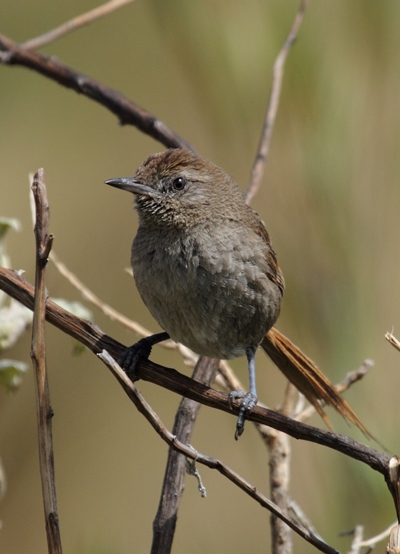
Asthenes perijana2_webpage
Chamicero del Perijá (Asthenes Perijana)

Establishment:

The Chamicero del Perijá Bird Reserve was created on January 28, 2014, in order to preserve one of the most fragile and important sites of Colombia, the Serranía del Perijá, habitat for a large number of animal species
and unique plants.

Location and Area:

The Reserve is located in the villages of El Cinco and Altos de Perijá, in the municipality of Manaure, department of Cesar, approximately 36 miles from the city of Valledupar. The Reserve has an area of approximately 1850ac. of high andean forests, subparamo and paramo.

Biological importance:

The area has a high number of endemic species of fauna and flora which are threatened with extinction; also conserved forests benefit from the species of birds endemic to the upper and middle sections of the Perijá: Perijá metaltail (Metallura iracunda), The Perija Thistletail (Asthenes perijana), Perijá brush finch (Arremon perijanus) Black-fronted Nunbird Monasa (Atlapetes nigrifrons) and Tapaculo Perijá (Scytalopus sp) a new species recently discovered.

Hydrography

The western sector of the reserve is located on the river basin Manaure which is vital to the town of Manaure, Cesar; many water bodies are third and fourth grade Manaure River tributaries and a few others are vital for aqueducts in the sector of Cinco and El Venado.

Climate:

The area has an average temperature of 59°F and a distribution of rains bimodal climate with four seasons; the total annual rainfall is 1247 mm and close to the multi-year monthly average is 104 mm; periods of increased rainfall occur between April and June and September to November, October is the month with the highest rainfall (163 mm). Dry periods are December to March and June to August, January is the driest month (32 mm)
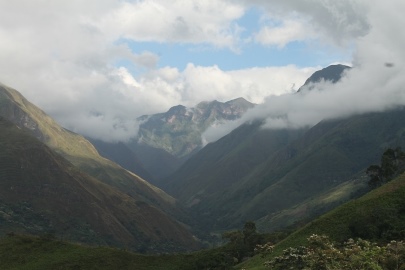
perija_land
Serranía del Perijá

Ecosystem:

The reserve protects subtropical forests (mist) of the Andean and
sub-Andean zones, subpáramos (2600-2900 m) and páramos (3000-3500 m).
The sub-Andean forests are mainly between 1700-2300 m elevation and
Andean about 2,300 m.

Vegetation:

The reserve is made up of forests in different successional stages in the High Andean and sub-Andean bands. In the high Andean (2800-3000 m) band in sites with higher degree of conservation forests dominated by high Hesperomeles ferruginea (association Ilici sessiliflorae – Hesperomeletum ferruginae) have become established with a lower tree layer  elements with heights between 12 and 25 m) dominate coverage and values Importance Values Index (IVI) for Prumnopytis montana, Clusia multiflora, Ternstroemia meridionalis, Podocarpus oleifolius,
Weinmannia pinnata and Hesperomeles ferruginea.

In areas where human intervention is well advanced, scrubby forests dominated by Weinmannia pinnata, Podocarpus oleifolius and Brunellia integrifolia, are stunted elements. In the open páramo vegetation in the northern part of the mountains, the Páramo El Avión (between 3100 and 3400 m) scrub vegetation dominated by páramo bambooand a species of chite are established. Associations including the alliance are: Espeletio perijaensis-Chusqueetum tesse- llatae (chuscal-frailejonal); Arcytophyllo nitidae-Calamagrostietum Intermediae (scrub-grassland) and Geranio holosericeae – Plantaginetum sericeae (meadows). COLOMBIA DIVERSIDAD BIÓTICA V La alta montaña de la Serranía de Perijá. J.O. RANGEL-CH. 2007

Biodiversity:

The Reserve has some important values at the level of both faunal and floral biodiversity. According to studies by the National University in the area 177 vascular plant species have been recorded representing 46% of all species in the mountains of Perijá. In terms of wildlife 4 species of amphibians, 130 species of birds, 23 species of mammals (flying and non-flying) and 54 species of butterflies have been recorded.
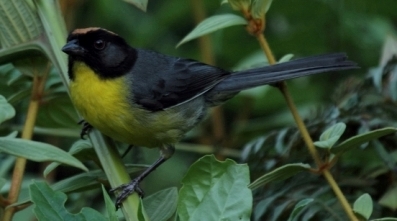
Atlapetes_pal otro lao
Gorrión Montes de Perijá (Atlapetes nigrifrons)

Important species for conservation:

Among the species of flora and fauna of importance for its threatened
status and endemism found 5 species of birds: the Perijá metaltail (Metallura iracunda), The Perijá Thistletail (Asthenes Perijana), Perijá Brush-finch (Atlapetes nigrifrons) and Tapaculo Perijá (Scytalopus sp) a recently discovered new species. And 32 species of flora of interest to the area, 19 endemic and near-endemic restricted to the Colombian side and 13 that are shared with Venezuela were recorded.

Conservation:

Eradication of exotic species, ecological restoration.

Research:

Monitoring of threatened and endemic species.

Facilities:

There is accommodation for 10 people, in modern and comfortable cabins with electricity, running water and cell phone signal.

Contact Info:

visit@conservation.co  or visit:  Perija-ecolodge

Tourist attractions:

Observation of scenic beauty; the snowy peaks of the Sierra Nevada de Santa Marta, the blonde savannah and imposing hill scenery is displayed; you can hike and do bird watching.

General recommendations:

* Respect the natural values of the reserve, plants and animals.
* The collection of biological materials is not allowed.
* Follow directions the reserve staff and travel on established trails.
* Within the reserve camping is not allowed.
* Must bring coats for the cold, Pantanal and waterproof boots.

Con el apoyo de:

rain+icfc


Categorías
Uncategorized

Reserva Proaves Chamicero del Perijá

Historia:

La Reserva ProAves Chamicero del Perijá fue creada el 28 de enero de 2014, con el objetivo de  conservar uno de los sitios más frágiles e importantes de Colombia, la Serranía del Perijá, hábitat de un gran número de especies animales y vegetales únicas.

Ubicación y área:

La Reserva se encuentra ubicada en las veredas El Cinco y Altos de Perijá en el municipio de Manaure, departamento del Cesar a aproximadamente 58 Km de la ciudad de Valledupar. La Reserva cuenta con un área aproximada de 749 ha de bosques altoantinos, subpáramo y páramos.

Importancia biológica:

El área cuenta con un alto número de especies endémicas de fauna y flora amenazadas de extinción; además, los bosques conservados benefician a las especies de aves endémicas de la parte alta y media de la Serranía del Perijá: el Colibrí del Perijá (Metallura Iracunda), El Chamicero del Perijá (Asthenes Perijana), Gorrión Montes de Phelps (Arremon Perijanus), Gorrión Montes de Perijá (Atlapetes nigrifrons) y el Tapaculo del Perijá (Scytalopus sp), una nueva especie descubierta recientemente.

Hidrografía:

El sector occidental de la Reserva se encuentra ubicado sobre la cuenca del río Manaure el cual es de vital importancia para el municipio de Manaure, Cesar; numerosos cuerpos de agua de tercer y cuarto grado son tributarios del río Manaure y otros cuantos son de vital importancia para acueductos veredales en el sector del Cinco y El Venado.


Clima:

La zona presenta una temperatura promedio de 15°C y un  régimen de distribución de lluvias de tipo bimodal-tetraestacional; la precipitación total anual está cercana a 1247 mm y el promedio mensual multianual es 104 mm; los períodos de mayor pluviosidad se presentan entre abril y junio y de septiembre a noviembre, octubre es el mes con mayor precipitación (163 mm). Los períodos secos van de diciembre hasta marzo y de junio hasta agosto, enero es el mes más seco (32 mm)

perija_land
Serranía del Perijá

Ecosistema:

La Reserva protege bosques subtropicales (de niebla) de las franjas subandina y andina, subparamos (2600-2900) y paramos (3000-3500 m). Los bosques subandinos se encuentran principalmente entre los 1700-2.300 m de elevación y los andinos sobre los 2.300 m.


Vegetación:

La Reserva está constituida por bosques en diferentes estados sucesionales en las franjas sub andinas y altoandinas. En la franja altoandina (2800-3000 m) en sitios con mayor grado de conservación, se establecen los bosques altos dominados por Hesperomeles ferruginea (asociación Ilici sessiliflorae – Hesperomeletum ferruginae) con un estrato arbóreo inferior (elementos con alturas entre 12 y 25 m) dominado en cobertura y en valores de Índice de Valores de Importancia (IVI) por Prumnopytis montana, Clusia multiflora, Ternstroemia meridionalis, Podocarpus oleifolius, Weinmannia pinnata Hesperomeles ferruginea.

En zonas donde la intervención antrópica ha avanzado bastante, se establecen los bosques dominados por Weinmannia pinnata, Podocarpus oleifolius Brunellia integrifolia, con elementos achaparrados. En la vegetación abierta del páramo, en la parte norte de la serranía, en el Páramo El Avión (entre 3100 y 3400 m) se establece la vegetación de chuscales-matorrales dominados por el bambú de páramo y una especie de chite. Las asociaciones que incluye la alianza son: Espeletio perijaensis-Chusqueetum tesse- llatae (chuscal-frailejonal); Arcytophyllo nitidae-Calamagrostietum intermediae (matorral-pajonal) y Geranio holosericeae – Plantaginetum sericeae (prados). 

Biodiversidad:

La Reserva cuenta con unos importantes valores a nivel de biodiversidad tanto faunística como florística. Según estudios realizados por la Universidad Nacional, en el sector se han registrado 177 especies de plantas vasculares lo cual representa el 46 % de las especies en toda la serranía del Perijá. A nivel de fauna se han registrado 4 especies de anfibios, 130 especies de aves, 23 especies de mamíferos (voladores y no voladores) y 54 especies de mariposas.

Atlapetes_pal otro lao
Gorrión Montes de Perijá (Atlapetes nigrifrons)

Especies importantes para la conservación:

Entre las especies de fauna y flora de importancia por su estado de amenaza o endemismo encontramos 5 especies de aves: el Colibrí del Perijá (Metallura Iracunda), El Chamicero del Perijá (Asthenes Perijana), Gorrión Montes de Phelps (Arremon Perijanus), Gorrión Montes de Perijá (Atlapetes nigrifrons) y el Tapaculo del Perijá (Scytalopus sp) una nueva especie descubierta recientementeA nivel florístico se registran 32 especies de interés para el área, 19  especies endémicas y restringidas a la vertiente colombiana y 13 casi endémicas que se comparten con Venezuela.

Estrategias de las Reservas ProAves:

Con el apoyo de: