

Fundación ProAves – por la conservación en el país de las aves



The Chamicero del Perijá Bird Reserve was created on January 28, 2014, in order to preserve one of the most fragile and important sites of Colombia, the Serranía del Perijá, habitat for a large number of animal species
and unique plants.
Location and Area:
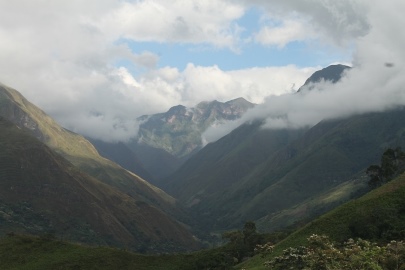
The Reserve is located in the villages of El Cinco and Altos de Perijá, in the municipality of Manaure, department of Cesar, approximately 36 miles from the city of Valledupar. The Reserve has an area of approximately 1850ac. of high andean forests, subparamo and paramo.
Biological importance:
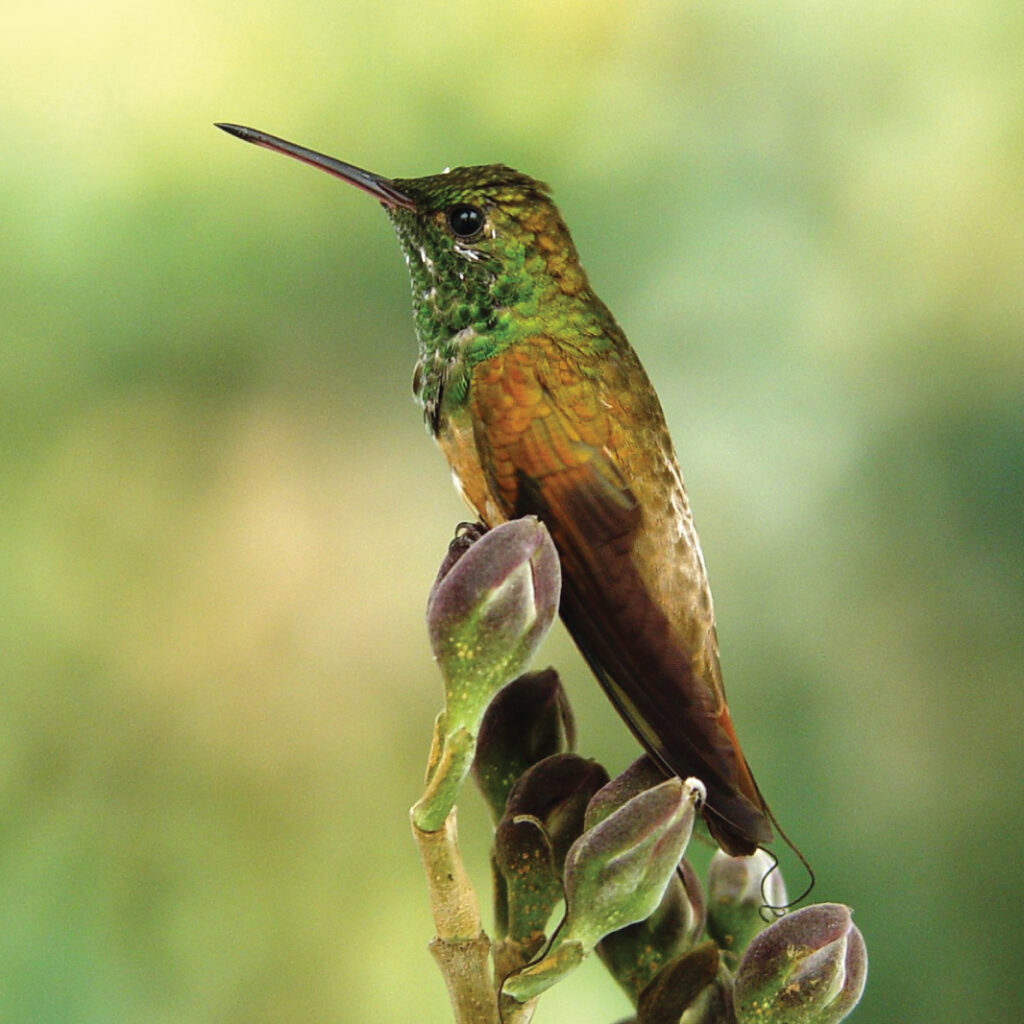
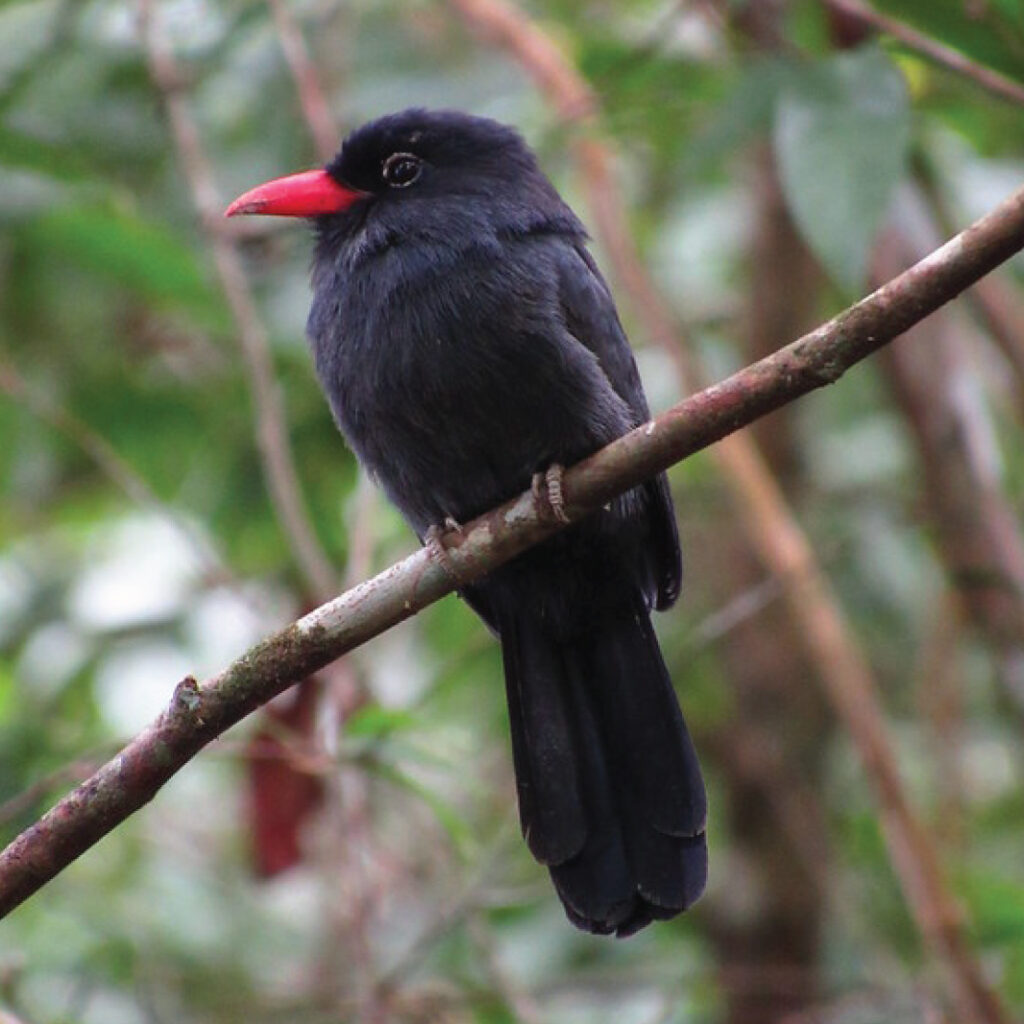
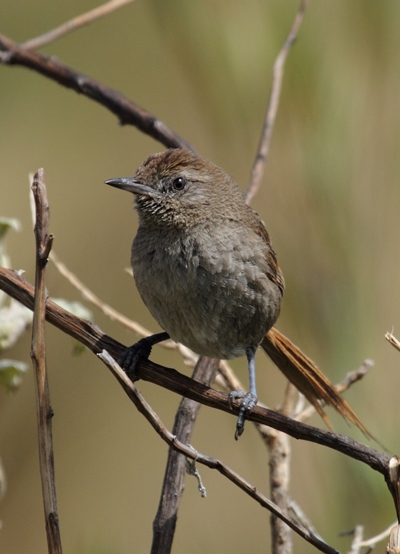
The area has a high number of endemic species of fauna and flora which are threatened with extinction; also conserved forests benefit from the species of birds endemic to the upper and middle sections of the Perijá: Perijá metaltail (Metallura iracunda), The Perija Thistletail (Asthenes perijana), Perijá brush finch (Arremon perijanus) Black-fronted Nunbird Monasa (Atlapetes nigrifrons) and Tapaculo Perijá (Scytalopus sp) a new species recently discovered.
Hydrography
The western sector of the reserve is located on the river basin Manaure which is vital to the town of Manaure, Cesar; many water bodies are third and fourth grade Manaure River tributaries and a few others are vital for aqueducts in the sector of Cinco and El Venado.
Climate:
The area has an average temperature of 59°F and a distribution of rains bimodal climate with four seasons; the total annual rainfall is 1247 mm and close to the multi-year monthly average is 104 mm; periods of increased rainfall occur between April and June and September to November, October is the month with the highest rainfall (163 mm). Dry periods are December to March and June to August, January is the driest month (32 mm)
Ecosystem:
The reserve protects subtropical forests (mist) of the Andean and
sub-Andean zones, subpáramos (2600-2900 m) and páramos (3000-3500 m).
The sub-Andean forests are mainly between 1700-2300 m elevation and
Andean about 2,300 m.
Vegetation:
The reserve is made up of forests in different successional stages in the High Andean and sub-Andean bands. In the high Andean (2800-3000 m) band in sites with higher degree of conservation forests dominated by high Hesperomeles ferruginea (association Ilici sessiliflorae – Hesperomeletum ferruginae) have become established with a lower tree layer elements with heights between 12 and 25 m) dominate coverage and values Importance Values Index (IVI) for Prumnopytis montana, Clusia multiflora, Ternstroemia meridionalis, Podocarpus oleifolius,
Weinmannia pinnata and Hesperomeles ferruginea.
In areas where human intervention is well advanced, scrubby forests dominated by Weinmannia pinnata, Podocarpus oleifolius andBrunellia integrifolia, are stunted elements. In the open páramo vegetation in the northern part of the mountains, the Páramo El Avión (between 3100 and 3400 m) scrub vegetation dominated by páramo bambooand a species of chite are established. Associations including the alliance are: Espeletio perijaensis-Chusqueetum tesse- llatae (chuscal-frailejonal); Arcytophyllo nitidae-Calamagrostietum Intermediae (scrub-grassland) and Geranio holosericeae – Plantaginetum sericeae (meadows). COLOMBIA DIVERSIDAD BIÓTICA V La alta montaña de la Serranía de Perijá. J.O. RANGEL-CH. 2007
Biodiversity:
The Reserve has some important values at the level of both faunal and floral biodiversity. According to studies by the National University in the area 177 vascular plant species have been recorded representing 46% of all species in the mountains of Perijá. In terms of wildlife 4 species of amphibians, 130 species of birds, 23 species of mammals (flying and non-flying) and 54 species of butterflies have been recorded.
Important species for conservation:
Among the species of flora and fauna of importance for its threatened
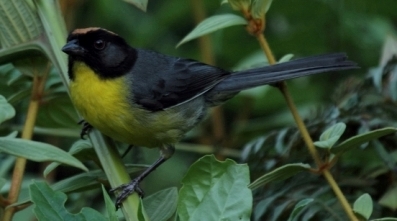
status and endemism found 5 species of birds: the Perijá metaltail (Metallura iracunda), The Perijá Thistletail (Asthenes Perijana), Perijá Brush-finch (Atlapetes nigrifrons) and Tapaculo Perijá (Scytalopus sp) a recently discovered new species. And 32 species of flora of interest to the area, 19 endemic and near-endemic restricted to the Colombian side and 13 that are shared with Venezuela were recorded.
Conservation:
Eradication of exotic species, ecological restoration.
Research:
Monitoring of threatened and endemic species.
Facilities:
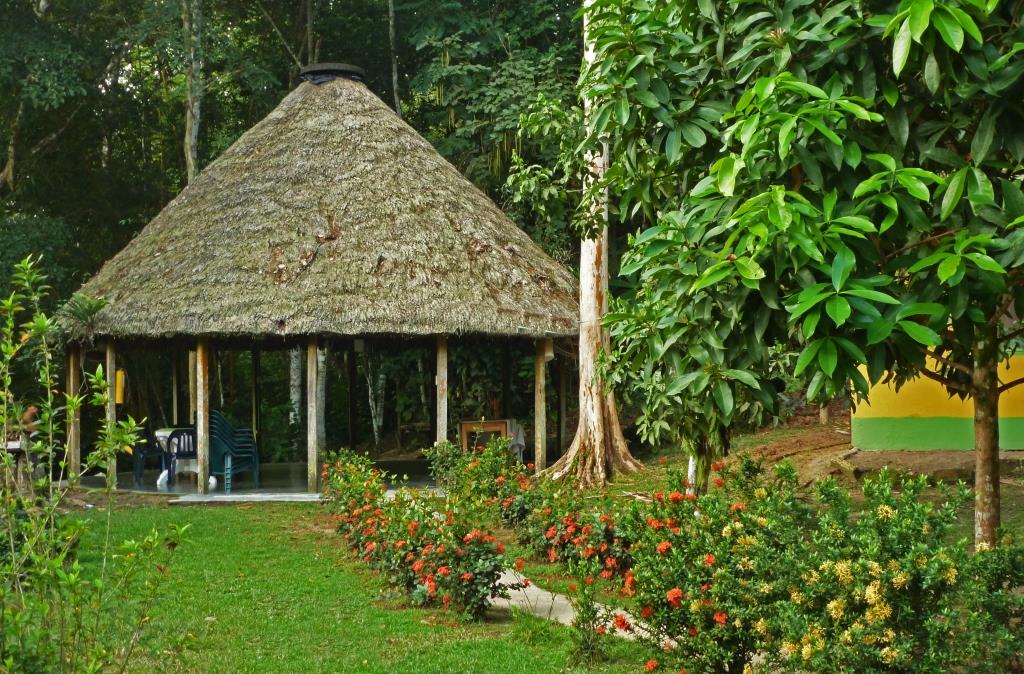
There is accommodation for 10 people, in modern and comfortable cabins with electricity, running water and cell phone signal.s.
Tourist attractions:
Observation of scenic beauty; the snowy peaks of the Sierra Nevada de Santa Marta, the blonde savannah and imposing hill scenery is displayed; you can hike and do bird watching.
General recommendations:
* Respect the natural values of the reserve, plants and animals.
* The collection of biological materials is not allowed.
* Follow directions the reserve staff and travel on established trails.
* Within the reserve camping is not allowed.
* Must bring coats for the cold, Pantanal and waterproof boots.
Reserve your visit NOW:
Email: visit@conservation.co or make an online reservation immediately: www.conservation.co
Supported by

Bird watching excursions and nature conservation In a pioneering initiative in Colombia, ProAves provide bird watching excursions and nature observation of high quality and safety, 100% of the contributions are destined to support our Reserves. With the support of many donors, ProAves has established a spectacular network of 26 nature reserves that protect a little over 95.000 acres all conserved in perpetuity; also our reserves protect 60% of threatened birds in Colombia, over 1000 species of birds, numerous amphibians, mammals and other threatened species. Visits to the Reserve: contact the ProAves main office in Bogota at Carrera 20 No. 36 61, Bogotá, Colombia. Tels. (571) 340-3229 – 3403261. visit@conservation.co or conservation.co
Check Availability:


Establishment:
The Chamicero del Perijá Bird Reserve was created on January 28, 2014, in order to preserve one of the most fragile and important sites of Colombia, the Serranía del Perijá, habitat for a large number of animal species
and unique plants.
Location and Area:
The Reserve is located in the villages of El Cinco and Altos de Perijá, in the municipality of Manaure, department of Cesar, approximately 36 miles from the city of Valledupar. The Reserve has an area of approximately 1850ac. of high andean forests, subparamo and paramo.
Biological importance:
The area has a high number of endemic species of fauna and flora which are threatened with extinction; also conserved forests benefit from the species of birds endemic to the upper and middle sections of the Perijá: Perijá metaltail (Metallura iracunda), The Perija Thistletail (Asthenes perijana), Perijá brush finch (Arremon perijanus) Black-fronted Nunbird Monasa (Atlapetes nigrifrons) and Tapaculo Perijá (Scytalopus sp) a new species recently discovered.
Hydrography
The western sector of the reserve is located on the river basin Manaure which is vital to the town of Manaure, Cesar; many water bodies are third and fourth grade Manaure River tributaries and a few others are vital for aqueducts in the sector of Cinco and El Venado.
Climate:
The area has an average temperature of 59°F and a distribution of rains bimodal climate with four seasons; the total annual rainfall is 1247 mm and close to the multi-year monthly average is 104 mm; periods of increased rainfall occur between April and June and September to November, October is the month with the highest rainfall (163 mm). Dry periods are December to March and June to August, January is the driest month (32 mm)
Ecosystem:
The reserve protects subtropical forests (mist) of the Andean and
sub-Andean zones, subpáramos (2600-2900 m) and páramos (3000-3500 m).
The sub-Andean forests are mainly between 1700-2300 m elevation and
Andean about 2,300 m.
Vegetation:
The reserve is made up of forests in different successional stages in the High Andean and sub-Andean bands. In the high Andean (2800-3000 m) band in sites with higher degree of conservation forests dominated by high Hesperomeles ferruginea (association Ilici sessiliflorae – Hesperomeletum ferruginae) have become established with a lower tree layer elements with heights between 12 and 25 m) dominate coverage and values Importance Values Index (IVI) for Prumnopytis montana, Clusia multiflora, Ternstroemia meridionalis, Podocarpus oleifolius,
Weinmannia pinnata and Hesperomeles ferruginea.
In areas where human intervention is well advanced, scrubby forests dominated by Weinmannia pinnata, Podocarpus oleifolius and Brunellia integrifolia, are stunted elements. In the open páramo vegetation in the northern part of the mountains, the Páramo El Avión (between 3100 and 3400 m) scrub vegetation dominated by páramo bambooand a species of chite are established. Associations including the alliance are: Espeletio perijaensis-Chusqueetum tesse- llatae (chuscal-frailejonal); Arcytophyllo nitidae-Calamagrostietum Intermediae (scrub-grassland) and Geranio holosericeae – Plantaginetum sericeae (meadows). COLOMBIA DIVERSIDAD BIÓTICA V La alta montaña de la Serranía de Perijá. J.O. RANGEL-CH. 2007
Biodiversity:
The Reserve has some important values at the level of both faunal and floral biodiversity. According to studies by the National University in the area 177 vascular plant species have been recorded representing 46% of all species in the mountains of Perijá. In terms of wildlife 4 species of amphibians, 130 species of birds, 23 species of mammals (flying and non-flying) and 54 species of butterflies have been recorded.
Important species for conservation:
Among the species of flora and fauna of importance for its threatened
status and endemism found 5 species of birds: the Perijá metaltail (Metallura iracunda), The Perijá Thistletail (Asthenes Perijana), Perijá Brush-finch (Atlapetes nigrifrons) and Tapaculo Perijá (Scytalopus sp) a recently discovered new species. And 32 species of flora of interest to the area, 19 endemic and near-endemic restricted to the Colombian side and 13 that are shared with Venezuela were recorded.
Conservation:
Eradication of exotic species, ecological restoration.
Research:
Monitoring of threatened and endemic species.
Facilities:
There is accommodation for 10 people, in modern and comfortable cabins with electricity, running water and cell phone signal.
Contact Info:
visit@conservation.co or visit: Perija-ecolodge
Tourist attractions:
Observation of scenic beauty; the snowy peaks of the Sierra Nevada de Santa Marta, the blonde savannah and imposing hill scenery is displayed; you can hike and do bird watching.
General recommendations:
* Respect the natural values of the reserve, plants and animals.
* The collection of biological materials is not allowed.
* Follow directions the reserve staff and travel on established trails.
* Within the reserve camping is not allowed.
* Must bring coats for the cold, Pantanal and waterproof boots.
Con el apoyo de:

Establishment:
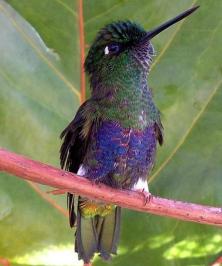
The Gorgeted Puffleg Hummingbird Bird Reserve was established in 2011 in order to conserve the habitat of the Gorgeted Puffleg Hummingbird (Eriocnemis isabellae) endemic and listed as critically endangered by the International Union for Conservation of Nature IUCN.
Location and Area
Located in the Colombian Pacific, on the western flank of the Western Cordillera, in the town of Argelia, Department of Cauca, Colombia. In 1853 acres the Colorful Puffleg Hummingbird (Eriocnemis mirabilis), an endemic species which is critically endangered, is also protected.
Biological importance
On the Reserve, the following species have been reported as having some risk of extinction:
2 species which are critically endangered CR, the Gorgeted Puffleg Hummingbird (Eriocnemis isabellae) and the Colorful Puffleg Hummingbird (Eriocnemis mirabilis).
2 species in Vulnerable (VU) state, The Black-and-chestnut Eagle (Spizaetus isidori ) and Giant Antpitta (Grallaria gigantea) .
6 almost endemic and Vulnerable status species (VU) , The Cloud-forest Pygmy Owl (Glaucidium nubicola), The Baudó Guan (Penelope ortoni) endemic, the Long-wattled Umbrellabird (Cephalopterus penduliger), The Bicolored Antvireo (Dysithamnus occidentalis) , The Multicoloured Tanager (Chlorochrysa nitidissima), The Tanager Finch (Oreothraupis arremonops) .
8 almost endemic state and Near Threatened (NT) species; The Black-billed Mountain Toucan (Andigena nigrirostris), The Chestnut-crested Cotinga (Ampelion rufaxilla) , The Chestnut Wood Quail (Odontophorus hyperythrus) , The Toucan Barbet (Semnornis ramphastinus) , The Star-chested Treerunner (Margarornis stellatus) , The Yellow-headed Manakin (Xenopipo flavicapilla) , The Beautiful Jay (Cyanolyca pulchra), The Purplish-mantled Tanager (Iridosornis porphyrocephalus) (near-endemic) .
Biophysical properties
The altitudinal variation ranges from 1,550-3,500 masl encompassing sub Andean ecosystems and well preserved Andean moors and being part of the sub-basins of Guaitara and Plateado rivers, major tributaries of the San Juan del Micay.
Climate
The climate is typical of montane and montane moist forests are forests with low fog concentration where mosses and ferns predominate.
General recommendations:
Join and visits:
write email fundacion@proaves.org
With the support of:

Establishment
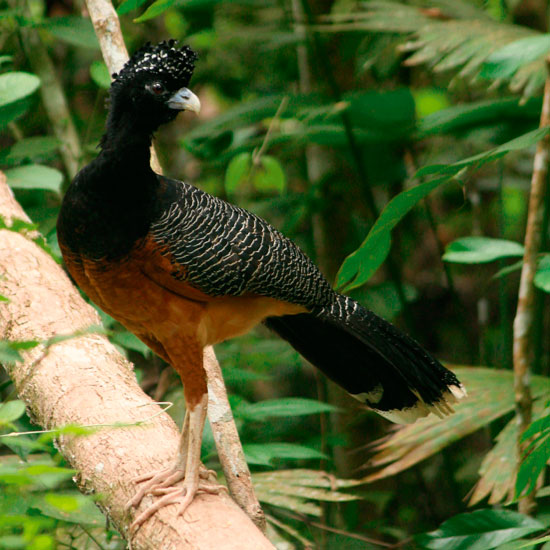
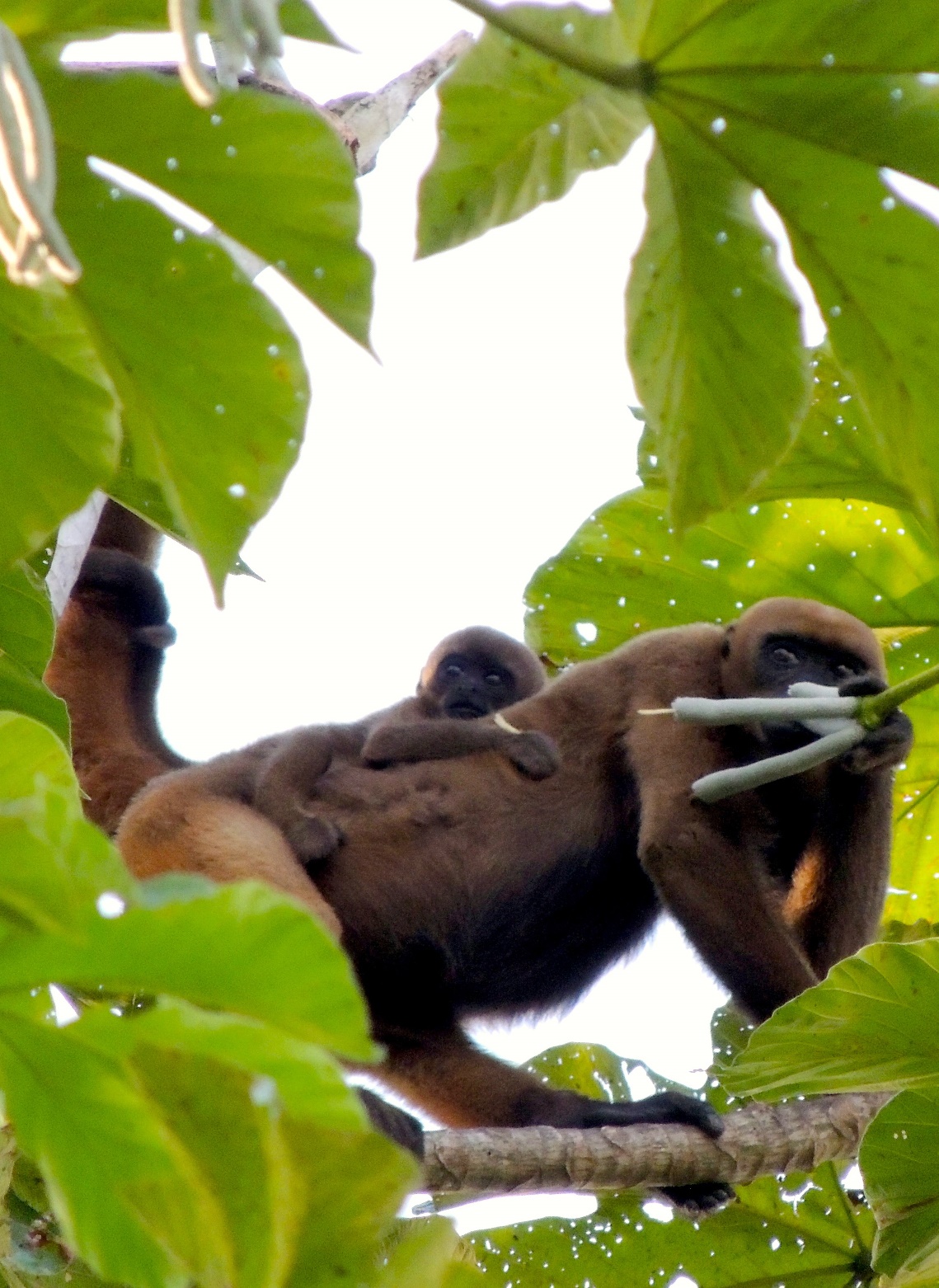
The Jaguar Natural Reserve was established on February 5th 2013 in order to conserve the habitat of the Jaguar (Panthera onca), the Pink Amazon Dolphin or Boto (Inia geoffrensis), the Tapir (Tapirus terrestris), the Brown Woolly monkey (Lagothrix lagotricha) The Horned Screamer (Anhima cornuta) and other species important to the area.
Location and Area
The Jaguar Nature Reserve is located in the eastern part of Colombia, in the department of Meta, Mapiripán municipality, located in the center of the country, west of the Eastern Cordillera. The reserve is in the villages of Caño Evaristo and Esteros Altos, 330 km from the city of Villavicencio. It has two ways of access: by river and by land. The first is 13.64 km from the municipality of Mapiripán, downstream on the banks of the Guaviare River, the waterway that leads to the village of Caño Evaristo and the trip lasts 20 minutes, the second is 18.32 km from the urban area leading to Esteros Altos village, the trip takes 40 minutes.
Biological Significance
In this place nearly 295 species of birds have been recorded, species of medium to large mammals such as the Giant Anteater ( Myrmecophaga tridactyla ) or the Capybara (Hydrochoerus hydrochaeris), Lowland paca (Cuniculus paca) , South American tapir (Tapirus terrestris VU ), the Jaguar ( Panthera onca NT ), Giant River Otter ( Pteronura brasiliensis EN) among others. Also include: the Rose-breasted Chat ( Granatellus pelzelni ), Velvet-fronted Grackle ( Lampropsar tanagrinus ), the Dot-backed Antbird ( Hylophylax punctulatus ),the Brown Nunlet ( Nonnula brunnea ), the Crestless Curassow (Mitu tomentosum ), the Black Curassow (Crax alector ), the Horned Screamer ( Anhima cornuta) and the Blue-throated Piping Guan (Pipile cumanensis ) among others.
Hydrography
The Reserve has important tributaries like the Guaviare River, the Evaristo Canal, the Cachicamo Canal, the Toninas Lagoon, the Encantos Lagoon and various wetlands, the forests protecting water bodies are in good condition to a height ranging from 160-230 meters above sea level.
Climate
Average temperature 26.5 ° C, the annual average rainfall is 2,078 to 2,500 mm; regime rainfall is monomodal, characterized by a dry season between December and January and one rainy period between April and July, with some intermediate periods of lower precipitation being the driest months October to April and May to September the wettest.
Vegetation
This consists of forest and riparian gallery, savannas, morichales , marshland , ponds, lagoons, lakes and natural wetlands , high dense mainland forest, transformed vegetation (weedy grasses ), low dense mainland forest and high dense floodplain heterogeneous forest: the families of species best represented are mimosaceae, moraceae, melastomataceae , lauraceae, fabaceae, euphorbiaceae, rubiaceae, burseraceae, Sapotaceae and myrtaceae. The species identified to date are as follows: wheel tree (Aspidosperma excelsum), acai (Euterpe precatoria) barrigona (Iriartea deltoid) moriche palm (Mauritia flexuosa) , Bauhinia (Bauhinia guianensis) and rebalsero freighter (Eschweilera amazonica) Grapia (Apuleia leiocarpa) velvet tamarind (Dialium guianense), algarrobo (Hymenaea oblongifolia), Guanandi (Calophyllum brasiliense), macano (Terminalia amazonia) fariñero (Clathrotropis macrocarpa), tilo (Ocotea cymbarum), Wyra Caspi (Cedrelinga cateniformis ), goats milk tree (Pseudolmedia laevigata), woolly (Pseudolmedia laevis ) and Milpo or purple flower (Erisma uncinatum) and Sandpaper Tree (Curatella americana).
Biodiversity
The most important feature of the Reserve’s biodiversity and that makes it of great conservation concern, is that the Reserve’s fauna and flora have a high density of species witch are easily observed. Among these species are at the Pink Amazon Dolphin or Boto (Inia geoffrensis ) , the Lowland tapir (Tapirus terrestres VU) , the giant river otter ( Pteronura brasiliensis EN) among others.
Important species for conservation:
We found the brown woolly monkey ( Lagothrix lagotricha VU) , Jaguar ( Panthera onca NT ) among others.
Conservation Activities
Ecological restoration, zoning, nursery of native species, reforestation, Co – management of Barren Areas in 3 departments and Forest Reserve.
Research
Monitoring with camera traps
Environmental Education Activities
Training of 19 Mapiripán Township Schools in environmental and biological education, two schools in the department of Vichada and 6 schools in the department of Guaviare with the aim of creating friends of birds research schools.
Tourist attractions:
Navigating the river and lagoons to observe the Pink Amazon Dolphin, river-edge birds, wildlife photography and high demand hiking.
General recommendations:
Income and visits:
write e-mail address is fundacion@proaves.org
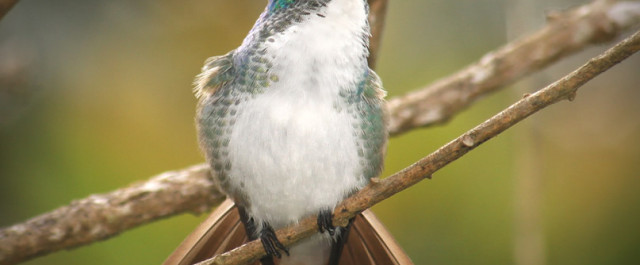
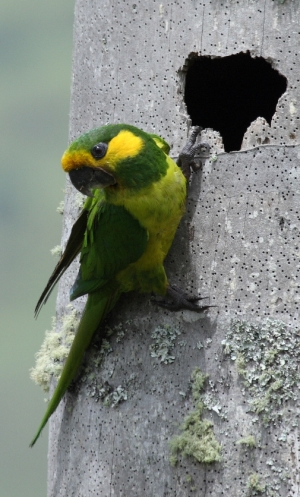 ProAves is a purely conservationist NGO, which for more than 10 years has been implementing and developing tools and conservation activities, in order to mitigate the impact caused by the man on the habitats of endangered species.
The ProAves conservation area works to contribute to maintaining the quality and availability of habitat for conservation of priority bird species through the establishment and management of nature reserves in civil society and to develop other forms of protection supported by a concept of self-sustainability and community integration, influencing local, regional and national environmental protection.
Its objectives are:
We have thus managed to retain under our Natural Bird Reserves 30,503 hectares of various kinds of ecosystems, and restore and reforest 1,200 hectares and establish 3,600 hectares under figures of Payments for Environmental Services.
Related news
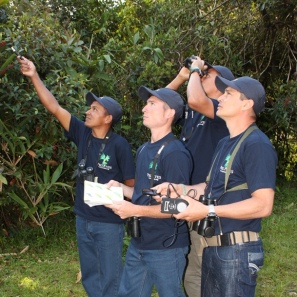 |
A new generation of Eco-Guides in Colombia
Thursday 2 August 2012.
The 3rd Eco-guide Training Course was undertaken by professional guides from 13-21 June in the Las Tangaras Bird Reserve with rural community citizens and Reserve Rangers. A new generation of highly trained guides in birding and nature guiding will provide outstanding services.
 |
Biodiversity of Antioquia presented in Jardín
Friday 27 July 2012.
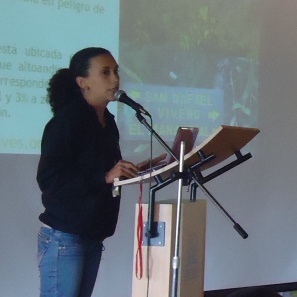
At the Regional Meeting “Southwestern Antioquia: the Biodiversity Jardín” with around 200 participants took place in May in Jardín, where ProAves presented “Bird Reserves: a strategy for the conservation of biodiversity in southwestern Antioquia”.
 |
Conservation Success for three Endemic and Threatened Colombian Birds
Tuesday 3 July 2012.
The recent change in the threat category for three Colombian endemic bird species – now no longer in imminent danger of extinction – is in large part thanks to the conservation and research efforts of ProAves, particularly with its strategic network of 21 Bird Reserves across Colombia.
 |
Sloth rescue in Colombia’s threatened forest
Wednesday 14 December 2011.
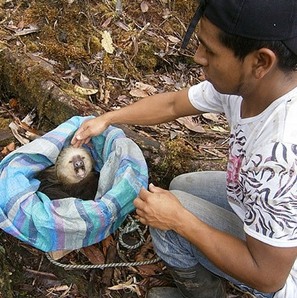
Generous donations to rangers help protect the forest home of the Two-toed sloth and a multitude of other threatened species.
|
ProAves published the 15th issue of its journal Conservación Colombiana, which includes five articles related to new bird records for Colombia plus the annual review of the national list of birds. To date, we confirm a total of 1,889 bird species occurring in Colombia to reaffirm that Colombia is the #1 nation of birds on earth. |
 |
Roncesvalles, pioneer town for the signing of Reciprocal Water Agreements
Thursday 29 September 2011.
In September, ProAves assisted two property owners in Roncesvalles, Tolima, to commit to preserving the majority of their land that is within the town’s watershed. As agreed, for at least ten years, the total of 3,200 acres will be saved and restored for natural habitat conservation.
 |
ProAves establishes Colombia’s first joint Municipality Environmental service agreement
Thursday 4 August 2011.
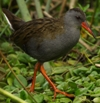
The Municipality Council of Roncesvalles approved ProAves Environmental Service Agreement to create the first joint program, funded by water users, to protect watersheds and endangered species.
 |
The wetlands of Bogotá – critical habitat for birds
Monday 1 August 2011.
At the invitation of the Association EcoVida, our collaborator Monica Parada gave a Talk: “The wetlands of Bogotá and Cundinamarca, an important habitat for waterfowl in Colombia”, in the Wetlands Course with the lakeside community of Santa Maria del Lago.
 |
ProAves at the IUCN Regional Forum
Thursday 21 July 2011.
ProAves Executive Director, Lina Daza, attended the first South American Forum of Members of the International Union for Conservation of Nature (IUCN) in Lima, Peru, from 13-15 June.
 |
Fifth protected areas management course
Wednesday 29 June 2011.
The 5th meeting of protected area managers from 15 protected areas from across Colombia was held from 3-11 June, 2011 in El Paujil Bird Reserve thanks to NMBCA. Training included monitoring biodiversity, camera trapping, management planning, mapping and constructing platforms.
 |
ProAves presents to the GEF Council in Washington DC
Wednesday 15 June 2011.
ProAves presented its progress on establishing some of Colombia’s first environmental service agreements in Tolima to the Global Environment Facility (GEF) Council between 23 to 26 May 2011 in Washington DC.
 |
ProAves helps protect Paramo del Sol in Antioquia
Tuesday 4 January 2011.
To socialize the actions and strategies undertaken at local level aimed at the protection and management of the Páramo del Sol, on 9th December ProAves held a workshop on “Management, Conservation and Protected Areas of the Páramo del Sol”. ProAves is working to protect this highly vulnerable AZE site.
 |
Life Distinction Award for Fundación ProAves
Monday 25 October 2010.
The Corporación Autónoma Regional CorAntioquia, celebrated its 15 years of work with a ceremony in which it acknowledged ProAves with a Life Distinction, the highest award given to organizations who have worked diligently and consistently for the preservation of natural resources in Antioquia.
 |
Pride Campaign in Roncesvalles, Tolima
Monday 2 August 2010.
Under an agreement established with the Conservation Organization RARE and through Pride Campaign, ProAves is promoting actions aimed at the conservation of ecosystems that offer environmental goods and services to generate environmental awareness in communities.
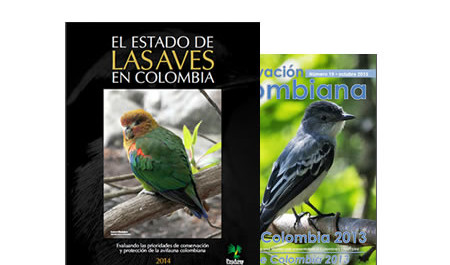

Conservación Colombiana is a scientific journal launched in 2006 and published by Fundación ProAves. The main topic of the journal is the ecology and status of threatened bird species in Colombia.
Fundación ProAves has supported numerous conservation initiatives in the past and is encouraging its own researchers and others to convert informal reports and other publications into a more formal setting and make such materials available to a wider audience. Articles are published in Spanish and English.
Although a majority of the articles in the editions to date are by researchers who have been supported by, or who work with, ProAves, the editors welcome articles from researchers at other institutions and organizations.
Download on-line editions
List of the Birds of Colombia in Excel file
The editions of Conservación Colombiana published to date are available from Fundación ProAves, email fundacion@proaves.org. The journal is sold at cost ($30.000 pesos / U.S.$10 per issue plus any postage costs).
Editions are available online and for purchase from ProAves at the address and email above. We would like to encourage people to subscribe to the journal (and encourage their libraries to do so).
With the support of:
 |
 |
 |
Related news
 |
Conservationists Join Forces to Save Cerulean Warbler
Wednesday 18 August 2010.
ProAves, the Grupo Cerúleo and American Bird Conservancy have joined forces to develop and published the “Conservation Plan for the Cerulean Warbler on its Non-breeding Range” in a bid to save one of the world’s most threatened migratory birds. Download the Plan in the journal Conservación Colombiana.
 |
Conservación Colombiana #13 published
Tuesday 18 May 2010.
Today, 18 May 2010, the 13th volume of Conservación Colombiana is published and printed editions are available for sale at the ProAves offices in Bogota.
 |
Colombian Migratory Bird Conservation Plan published
Tuesday 23 February 2010.
The Colombian Migratory Bird Conservation Plan has been published in the journal Conservación Colombiana. The 160 page Plan presents a comprehensive assessment as to the state of terrestrial Neotropical migratory birds in Colombia and establishes clear priorities for their conservation.
 |
The plight of Polylepis forests in Colombia exposed
Monday 19 October 2009.
The 10th issue of ProAves Conservación Colombiana journal is dedicated to understanding the ecology and conservation of the little-known Polylepis forests. These unique high Andean forests support many endemic flora and fauna species, which are all at great risk. Less than 3% of these forests survive today.
 |
Published journal Colombian Conservation No.9
Friday 31 July 2009.
ProAves publishes online the 9th edition of Colombian Conservation , with a synthesis of the results of the study Indicators and Models to evaluate biodiversity changes in the CDM forestry project in the Chinchiná river basin, carried out in the community of Caldas, Colombia and developed by ProAves.
 |
Birds of Colombia: more species but more endangered!
Wednesday 20 May 2009.
The “Checklist to the birds of Colombia 2009” has been published which documents an increase in the number of bird species in Colombia from 1,870 species in 2008 to 1,871 species in 2009. Colombia officially remains the most diverse country for birds on the planet, but sadly, an additional four bird species are considered threatened with extinction in Colombia in 2009.
 |
Conservation Plan for Fuertes’s Parrot
Monday 16 February 2009.
Seven years of research and conservation by ProAves and Fundacion Loro Parque have been compiled to produce a management and conservation plan for the Critically Endangered Fuertes’s Parrot, now published in Conservation Colombiana.
 |
Officially: Colombia has the most bird species on Earth
May 14 2008.
The checklist to the birds of Colombia 2008” just published by ProAveson line in Conservación Colombiana reveals that Colombia has officially recorded 1,870 species – almost one fifth of all birds known on earth. Sadly, the number of threatened birds has increased.

This charismatic mammal is the first carnivore species to be discovered in America for the last 35 years and is protected on two ProAves Reserves.
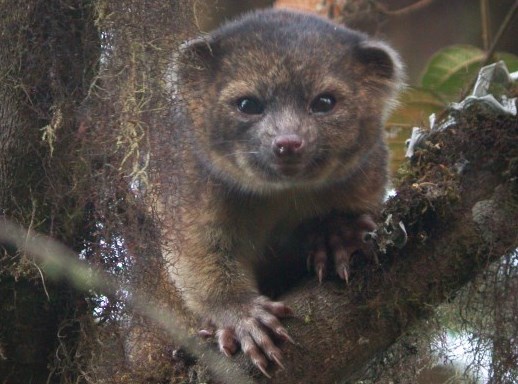
The newly described mammal species known as the Olinguito (Bassaricyon neblina) is protected for perpetuity on two ProAves Reserves, one of which is the Colibrí del Sol Bird Reserve. This reserve has an area of 731 hectares of forest and high Andean páramo between 2,800 and 4,060 meters and is located in the department of Antioquia on the eastern slopes of the Cordillera Occidental. This species was recorded in the same area by P. Hershkovitz, in April 1951 and now, after 30 years, this species has been recategorized as a carnivore, making it the first species of this group discovered in America in recent times.
Additionally, this charismatic animal was recorded on the eastern slopes and the western slope of the Andes, in the town of El Tambo, Cauca, at the top of the PNN Munchique in a tropical Mist forest ecosystem that protects the Mirabilis Swarovski Bird Reserve, with an area of 1,378 hectares between 1,500 and 3,020 meters of altitude.
ProAves Bird Reserves are protected areas designed or the long term conservation objectives of endemic bird species or threatened species and their habitats. With the discovery of this new species of mammal, the Colibrí del Sol and Mirabilis Swarovski Bird Reserves have a new conservation objective and in turn, the Olinguito has two protected high Andean forest areas in excellent condition.
The reserves’ rangers have recorded the Olinguito several times; this new species will be monitored and researched by the ProAves team.
Source and Photo: Smithsonian Institution
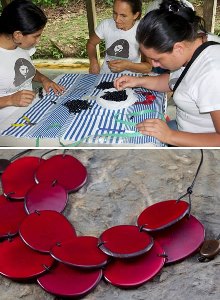 Women for Conservation was established to offer income and a better way of life for women living in the areas surrounding the bird reserves established by ProAves in Colombia. Prior to the beginning of the project, the local people’s main means of survival was to exploit the natural resources around them in order to provide for their families. Hunting wildlife for food and illegal trapping of birds and primates for the pet trade were common practices in such areas.
The project provides income opportunities for women in the reserve’s buffer areas by training them to make environmentally friendly hand-made jewellery using sustainable harvested exotic seeds.
We have seen results of involving the women at the grassroots level in the conservation of threatened species of wildlife. The main two species that the project is helping to preserve are: El Paujil de Pico Azul (Crax alberti) – critically endangered and the Santa Marta Parakeet (Pyrrhura viridicata) – endangered; both of which are endemic to Colombia.
The Women for Conservation initiative is now part of the only certified organization that conserves threatened wildlife and their habitats while contributing to the economic vitality of rural communities. For more information on Wildlife Friendly Certification, please visit their website: http://wildlifefriendly.org
Women for Conservation has launched their brand new website for global retail sales. Visit now www.womenforconservation.com and enjoy 20% off. Just type the code ALETEO.
Follow us on Facebook www.facebook.com/pages/Women-for-Conservation
Thanks to the support of




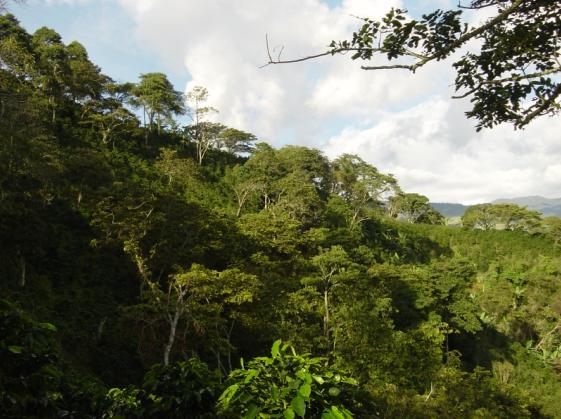
A conservation easement is an agreement between two or more owners in which at least one of them agrees voluntarily to limit the use of part or all of their property called the servant estate in favor of any natural or legal person for conservation purposes and protection of natural resources and biodiversity.
The initial development of this strategy was in Jardín, Antioquia in 2006, establishing a figure between two private properties one belonging to the Network of Civil Society Reserves to conserve habitat and foraging area of the Yellow-eared Parrot. From its inception to date, we have established 24 Ecological Easements under this figure protecting 1,300 hectares of high Andean forest, páramo and rain forest.
The purpose of the easement is to allow private landowners to have a legal instrument to conserve and make proper management of natural resources on their land, with appropriate legal protection (contract and registration of same), through mandatory clauses to be respected by the current and future owners until the completion of the contract period.
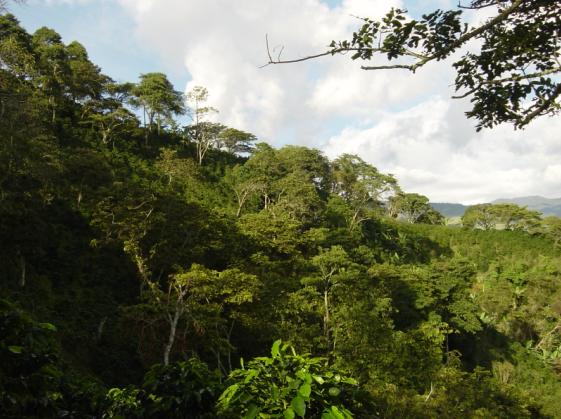 |
|
Conservation Easements El Capado. |
To establish an easement two premises are required: a servant which is the land that suffers the limitation on the use of resources (load support is the provision of certain services for other land for conservation) and a dominant tenement which is the property receiving the benefit (conservation).
The benefits of establishing an easement are:
The advantages of conservation easements are:
Related news
 |
Eight New Ecological Easements
Wednesday 23 September 2009.
The ecological easement program continues to gain ground in Colombia. It is one of the conservation tools that the Foundation has been using to help threatened bird species and their habitats.
 |
New permanent ecological easements
Tuesday 24 March 2009.
With the support of Fundación Loro Parque and American Bird Conservancy, ProAves worked with the local community to sign a second ecological easement of private lands beside the Yellow-eared Parrot Bird Reserve, benefiting the conservation of the parrot and its unique habitat.
 |
Ecological easement program news
Tuesday 26 August 2008.
ProAves established the second ecological easements between the Yellow-eared Parrot Bird Reserve and the land La Meseta, property of Mr. Mario Peláez in Jardín, Antioquia.

Friday 31 July 2009.
ProAves proudly presents the no. 9 edition of its Colombian conservation journal, publishing an abstract of the results from the study Indicators and Models to evaluate biodiversity changes in the CDM forestry project in the Chinchiná river basin, elaborated by ProAves together with several institutions nearby the basin in the municipality of Caldas, Colombia.
The CDM forestry project (CDM stands for Clean Development Mechanisms) has been advanced by forestry producers associated to Procuenca,Two phases of this study, study field and analysis, has been carried out by ProAves between 2006 and 2007, with the valuable support of Centro Andino para la Economía del Medio Ambiente (CAEMA), the Fundación Ecológica Cafetera, Conservación Internacional (CI) and Corpocaldas, among others.
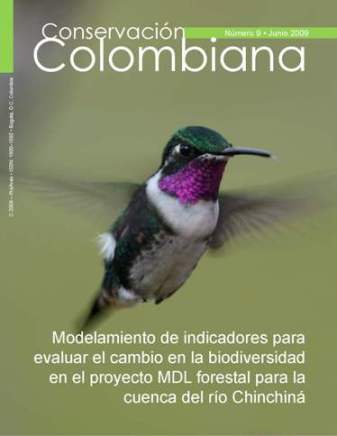
This research offers a simple and novel way to incorporate biological indicator analysis about productive systems, alongside the evaluation of the impact on altered or natural systems.
Click here here to download the journal as pdf.
 |
 |
 |
 |
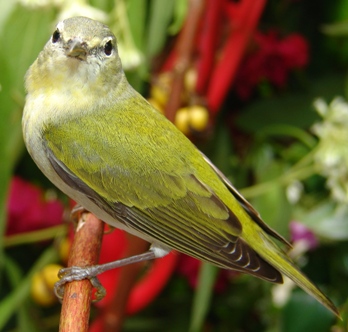 |
| Oreothlypis peregrina |
The National Programme for the Monitoring and Preservation of Migratory Birds is a ProAves Foundation initiative carried out with the cooperation of Preservation International so as to monitor and preserve endangered neotropical migrant birds with the help of the 27 monitoring stations existing in Colombia.
Nearly 183 neotropical migrants arrive each year in Colombia and from here they spread throughout the South American continent. Unfortunately, the critical areas and habitats on which they depend are threatened due to their over-exploitation or destruction. ProAves Foundation and Preservation International launched in 2003 the Colombian Monitoring and Preservation Programme for Migratory Birds, a pioneer initiative in Latin America
This programme seeks to consolidate a strategic network for bird monitoring, to raise awareness of the importance of preserving these species and their natural habitats in Colombia and to increase the national capacity to undertake studies and preservation actions regarding migratory birds and their habitats.
The main achievements upon completion of Phase II of the programme in July 2007 were:
Protection and management of bird populations
First protected area for the preservation of migratory birds in Latin America. Establishment and expansion of the Reinita Cielo Azul Bird Reserve. The protected area includes oak and shadowy coffee forests, ideal habitat for the main species of the reserve, the Cerulean Warbler (Dendroica cerulea).
Pauxi pauxi Bird Reserve. 1347 hectares to protect the species Cerulean Warbler in the Hill la Paz (department of Santander), main winter residence area for this species. It also protects nine endangered species.
Bird Information System online.A database with 260,000 entries of data resulting from the monitoring process and that follow national and international standards so as to facilitate the exchanges of information. MySQL on-line platform. There is a record of about 57% of the total number of birds, 75% of land migratory birds, 64% of the endemic birds and near-endemic and 44% of threatened birds in Colombia (54% critically endangered, 48% endangered and 40% vulnerable).
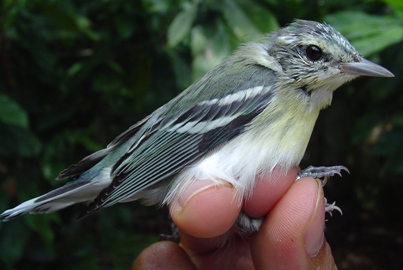 |
| Dendroica cerulea |
Maintenance, management, protection and restoration of the habitat for neotropical migratory birds
Migratory Bird Action Plan implemented in Colombia. 95 species of migratory birds and 82 endangered species. 53.5% of the 155 species in this category for Colombia are preserved in 12,660 acres under protection agreements signed for critical areas. These protection agreements have been approved with the help of the Colombian Network of Civil Society Reserves (CNCSR) and ProAves Foundation:
a) 10 protected areas administered by the ProAves Foundation. 1 protected area administered in partnership with the CNCSR . Five Reserves established in 2006 and three in 2005.
b) 1347 ha of the Pauxi pauxi Bird Reserve in Betulia, Santander. 2006.
c) 1 hectare Chincherry Bird Reserve. San Andres Island, Archipelago.
d) 100 acres Orejiamarillo Parrot Bird Reserve. Jardín, Antioquia.
e) 529 acres El Dorado Bird Reserve.Sierra Nevada de Santa Marta. February 2006.
f) 220 acres Reinita Cielo Azul Bird Reserve, San Vicente de Chucuri, Santander.
g) 1100 hectare Mirabilis-Swarovski Bird Reserve. Munchique, Cauca.July 2005.
Ecological Restoration. Creation of nurseries in the Orejiamarillo Parrot Bird Reserve with an annual production of 10,000 young plant productions. Project for forestry and grazing techniques implemented in the Reserves of the Civil Society. Implementation of the work plan for the ecologic easement in Antioquia, 2005.
Preservation Coffee plantation for the Cerulean Warbler. Marketing and sales by the American Bird Conservancy of the specialty coffee Cerulean Warbler.
Strengthening institutional capacity. Meetings on protected areas, annual plannings and Ecoguide courses.
Research and monitoring
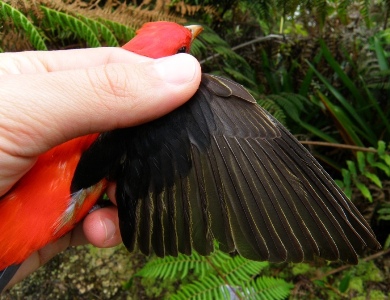
Consolidation of a strategic network for bird monitoring. 27 banding stations in operation since November 2003 spread throughout four of the five regions of Colombia: Andean, Caribbean, Pacific and Amazonia.199 people linked to the program, 37 banders, 105 field assistants and 57 local volunteers.
Strategic alliances. Banding Seabirds and university banding groups.
First bird observatory in San Andres Island, Colombia. Currently under construction.
Evaluated Banding methods.
National Bird Census.
Strengthening of a Banding system in Colombia. Construction of the foundations for the implementation of a national banding system. 12.355 banding historical data collected, 9000 bands distributed to 31 projects belonging to 22 organizations or individuals. Existing Website for Banding.
Capacity building for monitoring and banding.402 researchers, students, and amateur ornithologists across Colombia trained in bird monitoring techniques, in 9 classes in 6 different locations throughout the country with 39 instructors recognized both nationally and internationally:
1.National and International acknowledgement as an organization that offers regular ornithology courses at different levels.
2. Training of skilled people in banding.
Cooperación entre proyectos de aves migratorias: Cooperation between migratory birds projects:
a) Coordination in the Western Hemisphere of the Banding Network.
b) Initiative of the Western Hemisphere for Migratory Bird Species.
c) Participation in:
Cerulean Group. Participation and support of the activities of the group Cerúleo. Support for the postulation of the Cerulean Warbler in the list of threatened species of the United States.
Alianza Alas Doradas. Coordination of the research and preservation working group for the Reinita Alidorada in non-reproductive areas.
PriorityP Migratory AverAves Priority. Participation and support of the initiative Migratory AverAves Priority led by Cornell Laboratory.
Environmental education, awareness and community development
Mobile Environmental Classroom. The Mobile Environmental Classroom has travelled more than 30,000 miles rising ecological awareness in 46,206 people from 36 different municipalities belonging to 7 departments. There has been a very high participation of children between the age of 7 and 12 years. This age group has represented 67% of the individuals sensitized thanks to the Mobile Environmental Classroom.
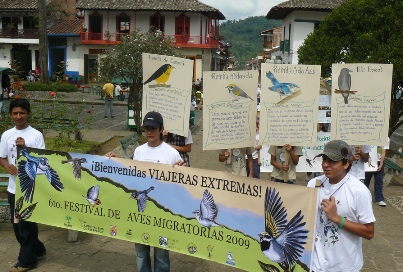
Migratory Bird Festival 2006 outstretched to Ecuador and Peru.
Environmental Bird-Friendly groups. 3785 children and youth belonging to different environmental Bird-Friendly groups based in 5 departments and 7 municipalities. 46 Bird-Friendly schools belonging to 8 municipalities in 6 departments. 43 youth-related social services dealing with environmental issues in bird conservation. Implementation of Bird-Friendly Schools in the municipalities of Génova, Quindío and Roncesvalles and Tolima.
Disclosure.
a) Website with information and interactive games especially designed for Bird-Friendly children.
b) Educational materials: posters, stickers, bookmarks, shirts and caps related to the events that deal with environmental education. Second version of the Migratory Bird Didactic Book, Extreme Travellers, 2000 copies printed.
c) Media. High diffusion of environmental education events in the local and regional media.
d) Conferences, symposia, meetings, seminars.Participation in 8 international congresses, 3 national congresses and 4 regional.
e) Five publications.
 |
|
 |
 |
Related news
$4.3 Million for Neotropical Migratory Birds and Habitat Conservation
Wednesday 11 May 2011.
The U.S. Fish and Wildlife Service announced today more than $4.3 million in grants for 34 projects that will support neotropical migratory bird conservation throughout the Western Hemisphere.
 |
Successful VI Banding course with emphasis on migratory and endangered birds
Tuesday 10 May 2011.
Meeting the expectations of participants, instructors and organizers, the VI banding course with emphasis on migratory and threatened birds, held from March 26 to April 3 in Minca and RNA El Dorado, was a success.
 |
Second year of the Golden-winged Warbler project
Monday 10 May 2010.
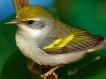
In order to produce a comprehensive non-breeding conservation plan for the Golden-winged Warbler, field surveys were undertaken for the second consecutive year. ProAves conducted explorations in area with the highest probability of occurrence of the species, according to predictive distribution models.
 |
Great results in the V Banding Course
Monday 10 May 2010.
With the ringing of 370 individuals the V course of banding with emphasis on migratory birds and endangered species was successfully completed. Organized by ProAves and supported by The Wetland Trust, it was attended by 20 students, two of whom were selected to attend intensive training in England.
 |
ACT for songbirds! Support funding for NMBCA
Wednesday 11 June 2008.
The alarming decline of migratory birds has prompted US lawmakers to consider an early reauthorization of the highly successful conservation program, the Neotropical Migratory Bird Conservation Act (NMBCA).
 |
Migratory birds loyal to Colombia
Friday 24 August 2007.
The fidelity of Neotropical migratory birds to a particular non-breeding site and habitat in Colombian was shown in the past season with the recapture of 17 individuals of eight different species.



|
Por que Apoyarnos? ProAves ha dedicado 10 años a salvar y proteger los hábitats y las especies en peligro crítico de extinción en Colombia. Nuestras acciones enfocadas hacia acciones directas de conservación, basadas en investigaciones científicas han salvado hasta la fecha 254.056 has en toda Colombia, incluyendo la adquisición directa de 19,400 has de bosques en peligro inminente de destrucción. Hoy en día, son protegidos a perpetuidad. Estamos salvando por medio de nuestras acciones la biodiversidad más expuesta al peligro en territorio nacional. Trabajamos de la mano con las comunidades pobres con la intención alcanzar un desarrollo sostenible económico y por ende la mejora de su calidad de vida. Cuando nos apoyas, estas aportando a acciones reales. 100% de tu donación será destinada a salvar hábitats en peligro: Por favor contacte a Eliane Arzuza para orientación: Teléfono (+57) 1.340.3261 or 1.340.3229 (Bogotá) |
|
Fundación ProAves: We are a Colombian non-profit organization that focuses on the study and conservation of our biodiversity, especially birds at risk of extinction and their habitats, in partnership with local communities. Our objective is to support and promote the protection of Colombia’s incredible but endangered natural heritage with the ultimate aim of benefiting the planet and humanity.
“Por la conservación en el país de las Aves”
{mosmap msid=’116793956650586609499.0004824048b026abe9f8d’|controltype=’UI’} Ampliar mapa
Fundación ProAves hatched in 1998 out of the initiative of a group of dedicated Colombian conservationist interested in saving the Yellow-eared Parrot. ProAves’s mission is to protect birds and their habitats in Colombia through research, conservation actions and community outreach.
ProAves is a registered non-profit organization with free membership, open to all who share our vision to prevent the extinction of threatened species and protect key sites, with the help of citizens who are proud of their natural resources and who will promote development in harmony with nature.
The passion and commitment of the ProAves family thrives on our partnerships and collaboration with different individuals, groups and organizations, at local, regional and national levels, working together for conservation. Colombians have a great passion for nature and we are always encouraged to find communities eager and willing to cooperate.
ProAves is a UK registered charity that supports the work of Fundación ProAves in Colombia.
Related news
 |
International Environment Fair news
Friday 27 July 2012.
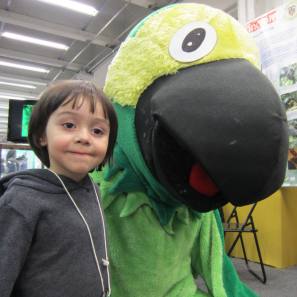
The 2012 International Environment Fair held in Bogotá in June received more than 19,000 people. ProAves had a stand at the event where our mission and actions were shown to the public and many other participating entities. Over 200 new members for ProAves signed up at the event.
 |
Annual Planning Meeting – 2012 ProAves
Thursday 26 January 2012.
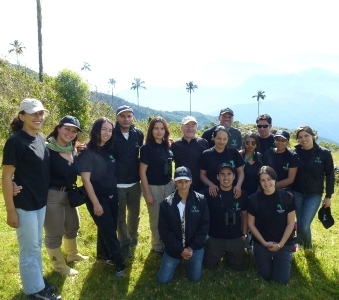
From the 11th to the 17th of January the annual planning meeting took place with aims of assessing the activities carried out during the previous year and to strategically plan actions to be undertaken in 2012.
 |
2011 was an Exceptional Year for ProAves!
Thursday 25 January 2012.
These are just a few of the achievements obtained thanks to the hard work of 65 members of the ProAves team and with the selfless support of over 10 organizations committed to the conservation of the incredible, yet threatened biodiversity of Colombia.
 |
New Colombian stamps promote Endangered birds
Thursday 8 April 2010.
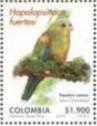
A colorful set of nine new stamps entitled “Endangered Colombian Birds” has been issued, which includes eight species which are protected in ProAves reserves across Colombia, such of the Yellow-eared and Fuertes’ Parrot.
 |
Invitation to “NATURE”: paintings of nature for conservation
Wednesday 28 October 2009.
The cultural center Skandia, ProAves and the Art and Conservation Project are pleased to invite you to the exhibition of “Nature” paintings of Colombian nature by the artists Emmanuel Romero Laverde and Paula Andrea Ardila.
 |
Miniature, the art of Nature in miniature
Friday 31 July 2009.
As part of the Colombian Independence celebration (July 20), ProAves and artists Fernando Laverde and Paula Andrea Romero, with the support of the National Parks administration, invite everyone to visit the exposition “Miniature”, the art of nature in miniature.
 |
Annual Report 2008 published
Wednesday 15 April 2009.
ProAves 2008 Annual Report has been publish and available online to show our major achievements during the past year. ProAves is also proud to have completed 10 years of conservation, with numerous successes, such as setting up 15 bird reserves conserving 78% of threatened species in Colombia.
 |
ProAves Council assists 5-year planning
Monday 16 February 2009.
Celebrating 10 years of conservation, the ProAves Advisory Council and senior staff met in El Dorado Bird Reserve to refine a five year institutional strategy. ProAves future focus will be on conservation actions for threatened biodiversity across Colombia.
 |
ProAves accepted as new IUCN member
Friday 5 December 2008.
ProAves is pleased to announce that it has been admitted as a formal member of IUCN – the International Union for Conservation of Nature during the last World Conservation Congress held during October 2008 in Barcelona, Spain.
ProAves receives international bird conservation award
Tuesday 19 February 2008.
ProAves recieves a prestigious conservation award from Partners in Flight (PIF) for its outstanding contributions to bird conservation in the America’s.
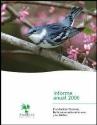 |
ProAves Annual Report 2006
Saturday 4 August 2007.
ProAves presents its “Annual Report 2006”, summarizing important achievements such as the creation of five new reserves, the production of bird-friendly coffee, a new subspecies, and much more.
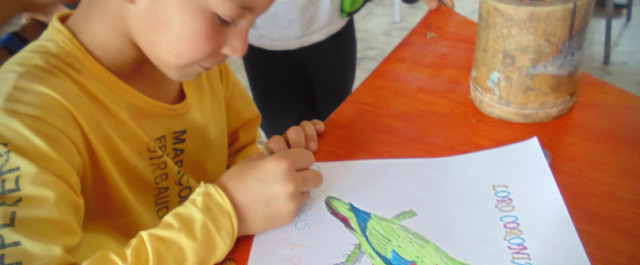
Through the development of diverse tools, products and programs, Fundación ProAves works to generate strategies of environmental education with the intention of increase knowledge, sustainable use and conservation of biodiversity in our country, with a special emphasis into birds. ProAves understands the significance of working in cooperation with the population living in the outskirts of the reserves, since this association guarantees the continuity end effectiveness of field work, and with their valuable support, ProAves can ensure a complete and structured work. In the same way, the intervention in areas where there is no constant work being carried out, is highly important for the general care of the environment, ensuring the permanence of birds in Colombia and, generally, of the world. Within the area of environmental education, Fundación ProAves develops different programs in order to create a process of sensibility within the population. Bird Friends Ecological Groups The group is intended for kids and youngsters, where different activities related to environmental education are carried out, such as workshops, bird site-seeing trips, conferences, cinemas, forums, among others.
Schools linked to ProAves participate in some activities related to conservation, research and environmental education that are being carried our by ProAves in each region. During this training is delivered educational materials such as leaflets, stickers and posters, this makes children become more motivated to participate in the activities proposed by ProAves.
Mostly directed to educational institutions with 10th and 11th level (high school), in which social service is a curricular obligation; Fundación ProAves proposes the linkage to diverse activities being carried out in each of its Natural Reserves.
Group made of by a young group of people interested in conservation and research of bird species studied by Fundación ProAves.
Are children under 6 years who conducts workshops for conservation and preservation with the goal of that from his earliest years, children know their relationship with nature and the importance of protecting it.
The Parrot Bus is a mobile classroom of environmental education that drives along the entire country in order to generate conscience among the entire population with knowledge, conservation and sustainable use of the biodiversity of our country, using informational panels, didactic games, workshops, discussions and videos.
These are educational processes in favor of one endangered bird species or a group of them. Events developed in favor of one endangered bird species or a group of them. As support to the environmental education activities developed by ProAves. |
Related news
 |
Environmental Education and Conservation
Thursday 16 September 2010.
Thanks to Loro Parque Fundación we have advanced environmental education activities in Roncesvalles, Tolima. See the latest activities and achievements towards saving the Endangered Quindío Wax Palm and the adoption of the Yellow-eared Parrot as the municipality symbol.
 |
Celebrate World Environment Day
Thursday 10 June 2010.
On June 5th, ProAves celebrated World Environment Day with a month-long campaign of environmental education with the objective of making rural communities across Colombia aware of the importance of conserving the habitat of some of the most endangered wildlife on the planet.
 |
ProAves Celebrated Earth Day
Sunday 25 April 2010.
Framed within the “2010 Year of Biodiversity”, ProAves celebrated Earth Day on April 22nd; the celebration included a special program of outreach activities in rural municipalities across Colombia and in the city of Bogotá. Earth Day and the Year of Biodiversity: join forces with ProAves to help save the planet.
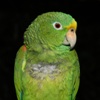 |
Release of 13 Yellow-crowned Parrots in Caldas
Friday 23 April 2010.
Thirteen Yellow-crowned Parrots were released back into the wild in forests beside the La Miel river, in the department of Caldas. The release was part of a collaboration between CORPOCALDAS and ProAves to save biodiversity in the beautiful department of Caldas.
Research is at the core of every one of our preservation actions.
The belief that biodiversity can not be preserved by ad hoc actions is becoming an increasing tendency in the conservationist community. They think that the threat is too overwhelming to be addressed by the limited resources available in the form of projects that lack a strategic line and a sound basis for the monitoring of its activities.
The field of research of Fundación ProAves has a 10 years proven experience and expertise in the design and implementation of projects that increase the scientific knowledge concerning some species allowing us to know the economic requirements for their conservation as well as the threats that would endanger their well being.
ProAves has worked with 78% of the total endangered and vulnerable species of Colombia and our mission is to continue and to increase our research activities so that we will be able to design and implement conservational activities aimed at covering 95% of the population of endangered bird species in Colombia.
The work that we have carried out so far has only been possible thanks to the generous donations of our contributors, the environmental agencies collaborating with us in the area and to the community that have always been closely and enthusiastically linked to each one of our projects.
The different projects implemented by Fundación ProAves are:
Thereatened parrots
The parrot species belongs to the Psittacidae family, the world most endangered bird species. 21% of them are in danger and this is the reason why ProAves has dedicated its actions to look after these species since 1999.
Migratory Birds Project
The aim of this project is to monitor and preserve neo-tropical endangered migratory birds. From 27 monitoring stations located in different regions of Colombia our team registers all the data concerning these migratory birds.
Threatened bird species project
9% of bird species in Colombia are listed in any danger and 21% of these are endemic, ProAves understands its importance and struggle to keep them.
Monitoring
ProAves is trying to implement a monitoring system for birds using the standardized methodologies available in Colombia. With this procedure, the Foundation hopes to compile the necessary information to develop strategic programs and to build the basis for the preservation of the different bird species endangered.
Database Project
Since 2003 ProAves has dedicated its efforts to gather information with an emphasis on the threatened species of Colombia so as to determine the preservation needs that they require. If you want to support our research activities around Colombia please donate on line or write to fundacion@proaves.org
Programas desarrollados:
[su_menu name=”Investigación”]

Establisment:
|
|
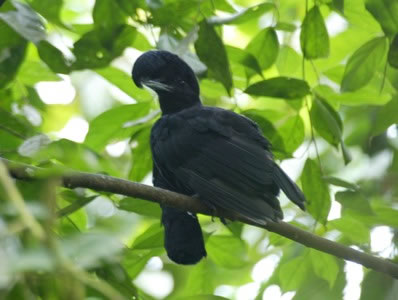
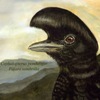
(Cephalopterus peduliger)
|
The Pangán Bird Reserve was created in 2002 through the interest of the fundación ProAves to conserve forests in the South Pacific in the Nariño foothills on the western slope of the western mountains, in the department of Nariño, Barbacoas Town.
This area is considered one of the most biodiverse areas of Colombia with a high number of endemic species which makes it one of the highest priority ecosystems for conservation. It has been affected by the rapid growth of surrounding communities and the expansion of different crops in the area.
Also, because of its location a binational corridor can be created together with other protected areas and indigenous reserves, thus promoting the conservation of the habitat of about 45 species of endemic birds like the Pangan, the local name for the Long-wattled Umbrellabird (Cephalopterus peduliger). It is also classified by the Alliance for Zero Extinction as an AZE site http://www.zeroextinction.org
Currently the reserve is at an altitude range between 550 and 1,900 meters above sea level, it has more than 17.300 acres of directly protected conservation land and 20.613 acres indirectly preserved by a process of awareness with people from the nearby villages among which are Junín, San Francisco de Cuchirrabo, Mirador de Tajadas, El Gualte and El Gavilán.
Ecosystem:
Climate: It has a minimum temperature of 12 º C and maximum 24 ° C.
Biophysical characteristics: It is geographically located in the foothills of the western plain of the nudo de los pastos in Ñambí River Basin, a tributary of the river Telembí and thanks to the purchase of new properties the river Yaguapi is also being protected. Tropical rain forest and montane rain forest are also present.
Biodiversity:
In the El Pangán Bird Reserve there are approximately 360 species of birds, among which 21 are threatened, 2 endangered, 13 near threatened, 4 vulnerable and 49 endemic 4 (EBA 041-Stattersfield et al. 1998). Amongst Herpete there is a record of about 21 species of amphibians in 6 families and 17 species of Reptiles distributed in 7 families. Amongst mammals there is a record of about 36 species distributed in 21 families of which 10 are globally threatened. Likewise, there is a variety of diurnal Lepidoptera, 91 species distributed in 68 genera, 6 families and 14 subfamilies, of which 28 are endemic species, 20 species are rare or very rare and 66 are common species.
Infrastructure:
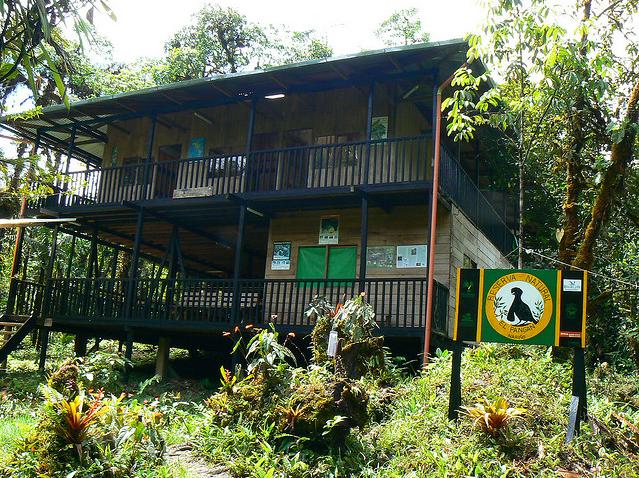
The Pangán Bird Reserve has a main lodge that can accommodate 45 people comfortably; it also has water service, electricity grid, kitchen and a meeting room.
The entrance to the main cabin reservation is made along a 2.7 km long path, in very good condition that allows you to observe the flora and fauna of this area, in addition to this, there are 4 paths through much of the reserve totaling 12km, which are used for ecotourism and research.
In addition to the cabin on the reserve, we have a two-story house in Junín, which is used for short stays and as an educational center, as it has a conference room, two bedrooms, bathrooms, showers and water and electricity.
 |
|
El Pangan Bird Reserve – hut. |
General recommendations:
Income and visits:
Contact or visit:visit@conservation.co y fundacion@proaves.org
With the support of:
 |
 |
  |
Related news
 |
Oil pipeline theft threatens biodiversity in the Nariño
Friday 8 October 2010.
A major Ecopetrol oil pipeline from the Amazon to the Pacific coastal port of Tumaco is being severely damaged as people drill holes into the pipeline to extract and process oil for producing cocaine! The resulting major oil spills run into the “El Pangan Reserve” to destroy forest and contaminate its once pristine rivers.
 |
El Pangan Bird Reserve celebrates its 10th Anniversary
Wednesday 16 December 2009.
Protecting over 11,900 acres of pristine foothill and subtropical forest on the Pacific slope of the Andes in southwest Colombia, El Pangán Bird Reserve guarantees the protection of 48 extremely range-restricted bird species and represents one of the most important protected areas for biodiversity in the Chocó region.
 |
Young Conservationists help in El Pangán Reserve
Thursday 30 April 2009.
Members of ProAves Young Researchers group have been helping manage the El Pangán Bird Reserve in Nariño and outreach activities. However, the group is seeking the support of used binoculars.
 |
New bird discovered, but feared extinct
Wednesday 25 March 2009.
After over 120 years, a new Colombian bird for science has been discovered and decribed from Medellin by ProAves Council members. ProAves searched for the new subspecies called Giles’s Antpitta (Grallaria milleri gilesi), but proclaimed extinct.
 |
Ecological disaster: oil spill for cocaine
Wednesday 25 March 2009.
A critical area for biodiversity and indigenous communities in the Chocó region, has been devastated by an oil spill started by thieves stealing oil to produce gasoline for cocaine processing. Please help: support our forest guardians.
|
In 1998 the ProAves Foundation began the Yellow-eared Parrot Project with the support of Loro Parque Fundación, the Society for the Preservation of the Species and Colonies (ZGAP) and American Bird Conservancy. The main aim of this project was the preservation and survival of the species as well as the protection of its habitat in the Colombian Andes. In 1999, after one year of research, it was found a colony of 81 individuals in the Central Andean Mountain Range, in the department of Tolima. Later, in January 2001, a colony of 63 individuals was found in the surroundings of the Western Mountain Range, in the department of Antioquia.
If you would like to know the results concerning the studies and research carried out by ProAves on the topics of the Yellow-eared Parrot’s reproductive biology, ecology and their use of the habitat please consult the following links that resume the conclusions of the study: Reproductive Biology Pacheco Garzón, J.A. 2004. Basic Aspects of the Reproductive Biology in the Yellow-eared Parrot (Ognorhynchus icterotis) in the Roncesvalles-Tolima Municipality. Read Resume Ecology Arango Arbeláez, J.D. B.C, Brock. 2004. Study of the Auto-ecology in an Yellow-eared Parrot Colony (Ognorhynchus icterotis) in Tolima Aiming at the Preservation of This Species. Read Resume Flores, P. 2005. Ecology of a Colony of Yellow-eared Parrots (Ognorhynchus icterotis) in Antioquia and Caldas and its Application to the Preservation of this Species. Read Resume Use of the Habitat Urrego Marín, D.M. 2007. Habitat use of the Yellow-eared Parrot (Ognorhynchus icterotis) in the Municipalities of Jardín (Antioquia) and Riosucio (Caldas). Read Resume
|
Related news
 |
Huge increase in the Yellow-eared Parrot population
Monday 4 October 2010.
The Endangered Yellow-eared Parrot population in Tolima Department has reached historically high population levels with 727 individuals following there most successful breeding season with 291 chicks fledged from 131 nests, thanks to on-going conservation actions.
 |
Environmental Victory for Colombia
Wednesday 26 May 2010.
In 1998, the Yellow-eared Parrot was almost extinct. After 11 years of sustained conservation efforts by ProAves, Loro Parque, CI and ABC the Yellow-eared Parrot has recovered to over 1000 individuals – a triumphant success. Now the IUCN Red List status of the Yellow-eared Parrot is being moved to a less threatened status.
 |
Huge boost for Yellow-eared Parrot population
Wednesday 10 September 2008.
An unprecedented 203 Yellow-eared Parrot chicks successfully fledged from natural nests and artificial nest boxes between May-July 2008. This is the highest fledgling success ever recorded by the ProAves project since commencing in June 1998.
 |
Oustanding breeding succes for Yellow-eared Parrot
Wednesday 5 December 2007.
Supported by Loro Parque Fundación, the best ever breeding season of the Yellow-eared Parrot was recorded in Tolima in 2007: 52 active nests produced 132 chicks!
Great success for the Yellow-eared Parrot
Wednesday 6 December 2006.
The population of the Yellow-eared Parrot has increased greatly since ProAves began to conserve this species in 1998.
The birds are a very diverse group comprising the terrestrial vertebrate taxa varied and their ecology, behavior, biogeography and taxonomy are relatively well known, which transforms them into a solid unit for use with monitoring and evaluation purposes. Functionally, the birds are important for controlling insect populations, seed dispersal and pollination combined with defined types of studies and distance make this group particularly useful for assessing and managing impacts on biodiversity and ecosystem change . This close relationship of birds with different habitats and transformations of them has done that 9% of birds in Colombia is ranked in some degree of threat, including 62% of endemic species.
The latest revision of the classification of threatened species by the International Union for Conservation of Nature (2006), shows how changes in categories result, in most cases, to have more precise information available about the species. This is why it framed in overall conservation ProAves, the endangered species program has been created with the main aim of increasing knowledge and promoting specific conservation actions on endangered bird species in Colombia.
This program has been developed through the implementation of over 100 investigations around 35 Endangered species on various aspects of natural history, behavior and ecology, which have laid the groundwork for the development of conservation tools such as the implementation of the Birds Nature Reserve, which in turn potentiate the protection of habitat for a greater number of threatened and endemic species. Currently, the Nature Reserves of the birds, protect the habitat of 83 of the 155 (53.54%) species in some category of threat, which correspond to 8 of the 11 Critically Endangered (72.7%), 14 out of 22 In Hazard (63.6%), 30 of the 48 Vulnerable (62.5%) and 32 of the 61 near-threatened (52.4%) recognized so far in Colombia.
Overall Objective
|
|
|
Pyrrhura calliptera |
Strengthen throughout Colombia the monitoring and preservation actions designed for four species of parrots, namely Pyrrhura Colombia; Pyrrhura viridicata (endangered); Pyrrhura calliptera (vulnerable); Pyrrhura caeruleiceps (probably critically endangered) and Pyrrhura melanura pacifica through Colombia.
Specific objectives
Monitoring and research:
To monitor the population of Pyrrhura Pyrrhura calliptera viridicata and to estimate its population trends.
To intensify studies of the ecology and reproductive biology of P. and P. viridicata calliptera.
To increase the research spectrum on caeruleiceps P. (inc. pantchenckoi ssp) together with the collaboration of the local community.
Implementation of a thesis study on P. m. pacifica . pacifica.
Storage:
Provision of artificial nests for P. m. pacifica .
Expansion of the artificial nest initiative for P. viridicata
Monitoring and maintenance of artificial nests.
Environmental education:
Implementation of the campaign “Adopt a nest” so as to support the initiative of artificial nests.
Available visits to the “Loro Bus” in the study areas considered for the Pyrrhura Project.
Related news
 |
New locality for the Todd’s Parakeet
Monday 27 September 2010.
An exploration by ProAves in Cesar Department has discovered an important new population of Todd’s Parakeet (Pyrrhura caeruleiceps) that is considered to be Critically Endangered. This represents only the third extant population of the species and only surviving population in the Serranía de Perijá.
 |
Flame-winged Parakeet nesting filmed
Tuesday 23 December 2008.
The first images of the threatened Flame-winged Parakeet have been captured within an artifical nest-box as part of Project Pyrrhura supported by Fundación Loro Parque.
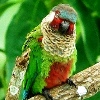 |
Perija Parakeet roost site discovered
Sunday 21 December 2008.
A study on a small population of the little known Perijá Parakeet surviving in a highly fragmented forest area near the town of Ocaña, department of Norte de Santander has discovered much exciting new information.

Local communities living in localities bordering the nature reserves are mostly people who are subject to extreme poverty and depend on local natural resources to survive. Thus through the years these families have been forced to do logging and hunting of animals, in an effort to generate an income for their survival.ProAves established a pilot program, Women for Conservation, to help protect four of its nature reserves by promoting business opportunities for women living in the neighboring rural communities with support from American Bird Conservancy and Audubon Naturalist Society
 |
The ProAves pilot program, which began in 2004, has trained women from four villages in the use of natural resources for the development of several products, focusing on export-quality jewelry made with tagua & seeds.
ProAves sells the finished articles in the shops on their reserves. In 2009 Amparo Crafts www.amparocrafts.com was established in the UK to market and promote goods produced by Women for Conservation in the international market. With the realization of events and participation in trade shows they have been able to increase direct sales and wholesale. The money is used to buy materials and to pay a fair wage to the artisans which generates a positive attitude towards the reserves by the local population.
 |
ProAves also employs people in the community as rangers, guides and field assistants and to help with reforestation, all of which ends up benefiting the local people. They also design environmental education programs to integrate local children in conservation efforts.
Women for Conservation has provided some of its members with gas stoves and cylinders to replace the wood used for cooking. Medical campaigns also have been of great benefit to members and their families.

The articles made by Women for Conservation are made using mostly the tagua, also known as vegetable ivory because of its softness and hardness. Tagua is the fruit of the palm Phytelephas macrocarpa which grows in tropical forests from Paraguay to Panama. The tagua is polished, processed and cut into different shapes. Other seeds used in jewelry are: camajuro, bombona, coconut and totumo.
How to buy?
 |
 |
 |
 |
| El Dorado | Reinita Cielo Azul | El Paujil | Las Tángaras |
Click on the image to enlarge
[slickr-flickr search=”sets” set=”72157626067834368″ items=”20″ type=”gallery”]
Women for Conservation Initiative
{youtube}ijsWU_sKK8c|425|344|1{/youtube}
With the support of:
|
 |
Related news
 |
Worldwide interest in ProAves projects
February 2012.
Rosie Boycott, founder of the female magazine Spare Rib and editor of Virago Press, along with Ben Okri, a Nigerian poet and novelist visited the Women for Conservation group at ProAves El Dorado Bird Reserve to learn more and spread the news of the project.
 |
Women for Conservation on display
Friday 13 April 2012.
Women for Conservation was present at the International Spring Fair, held in Birmingham, UK from the 5-9th of February 2012, promoting and showcasing the great work that ProAves has done with this project for eight years.
 |
Amparo Crafts has received a Fair Trade certificate in the UK
Monday 1 August 2011.
Amparo Crafts product marketing entity of the Women for Conservation project, has received a BAFTS (British Asociation of Fair Trade Shops), certificate.
 |
Women for Conservation present in England
Thursday 17 March 2011.
As principal guest speaker at a women’s event in Manchester (England), the wife of former British Prime Minister, Cherie Blair, received a necklace from the ProAves led program Women for Conservation, which she wore during her presentation.
 |
Supporting women for conservation
Wednesday 11 August 2010.
Amparo Crafts launch their new website www.amparocrafts.com, designed to promote and market handcrafts made by local communities in ProAves “Women for Conservation” program. This initiative seeks to alleviate poverty in rural areas around protected areas in Colombia through empowering women to produce and market fair trade and environmentally-friendly products.
 |
Women for Conservation collecting palm seeds
Tuesday 3 November 2009.
The members of Women for Conservation show how they collect Tagua palm seeds in the Paujil Reserve, an amazing seed that looks like ivory and is used as an environmentally-friendly natural material to decorate handicrafts.
 |
Medical checkup for Women for Conservation
Tuesday 2 June 2009.
ProAves provided a comprehensive medical and health checkup for the members of its Women for Conservation program beside El Paujil Bird Reserve. During the event, women and children received for the first time free medical and dental and school kits as well as gas stoves and cylinders to cook without using firewood.
 |
Photo gallery, handcrafts made by Women for Conservation
Wednesday 15 April 2009.
These products are made by the group Women for Conservation. These products are a sample of the collection and each design uses different colors and materials. To obtain more information and purchase these products please contact agomez@ecoturs.org

 |
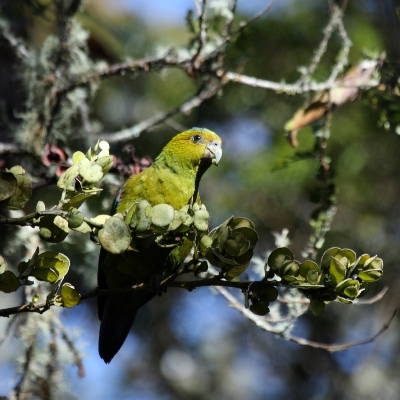 |
| Fuertes’s Parrot (Hapalopsittaca fuertesi) |
Establishment:
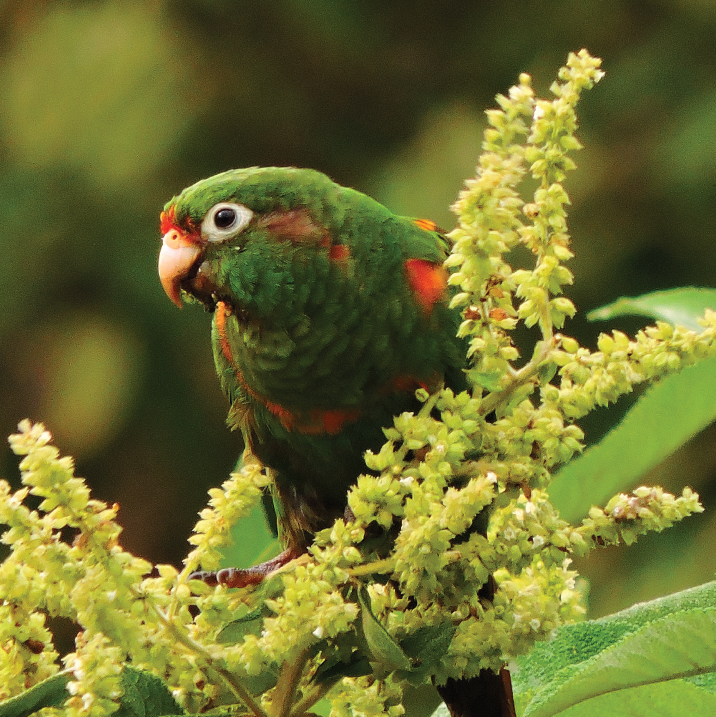
The Giles – Fuertes´s Parrot Bird Reserve was established to ensure the habitat conservation of Fuertes’s Parrot (Hapalopsittaca fuertesi) and the resident and migratory birds that frequent it.
Location and Area:
It is located on the eastern flank of the Central Cordillera of Colombia, in the village of Potosi Alto, in the town of Cajamarca, Tolima. Its altitudinal range extends from the 2.750 up to 3.600 m above sea level. It has an area of approximately 726 acres between the fragile ecosystems of the Andean forest, high Andean plateaus of the central cordillera of Colombia, in which live Fuertes’s Parrot and the Golden-plumed Parakeet(Leptosittaca branickii). (See map).
Biological importance:
There are species of high conservation significance like the Fuertes’s Parrot (Hapalopsittaca fuertesi), an endemic and critically endangered species, the Golden-plumed Parakeet (Leptosittaca branickii), a species considered vulnerable, and the Rufous-fronted parakeet (Bolborhynchus ferrugineifrons), an endemic species considered endangered and some species of mammals like the spectacled bear (Tremarctus ornatus).
Climate:
The average temperature is 10 ° C and is an area that has a high cloud.
Biophysical characteristics:
The reserve covers a large sample of High Andean and Mist forest .
Condition:
The Reserve is a protected area in perpetuity for the conservation of the Fuertes’s Parrot and the forest of the Central Cordillera and it will become the research center of the species, with the aim of expanding the knowledge of the natural history of this population, developing studies on habitat use, behavior and reproduction. The Artificial Nests Program is also being implemented, 20 artificial nests were placed in January 2010 in order to increase and stabilize the populations of parrots, which are greatly affected by the lack of natural nests in the area.
General Recommendations:
Income and visits:
fundacion@proaves.org
Supported by:
|
Related news
 |
Colombian Reserve to Double in Size, Aiding Critically Endangered Parrot
Monday 23 April 2012.
The critically endangered Fuertes’s Parrot and eleven other globally threatened species of birds, mammals, and amphibians will receive greater protections thanks to a joint effort by Fundación ProAves, World Land Trust-US, Robert Giles, Loro Parque Fundación and American Bird Conservancy.

Establishment: The Fuertes’s Parrot Bird Reserve was established in December 2007 in order to ensure the conservation of the Fuertes’s Parrot (Hapalopsittaca fuertesi) habitat and resident and migratory birds that frequent it. Location and Area: It is located on the western flank of the Cordillera Central of Colombia, in the village Pedregales Alto, Genova, Quindio, in the vicinity of the Municipal Reserve El Mirador. Its altitudinal range extends from the 2,900m up to 4,000m. It has an area of 1.619 acres between the fragile ecosystems of the Andean forest, high Andean plateaus and moorlands of the central cordillera of Colombia, in which live the Fuertes’s Parrot and the Golden-plumed Parakeet (Leptosittaca branickii). It is considered by the Alliance for Zero Extinction as an AZE site. (See map). Biological Significance: There are species of high conservation significance as the Fuertes’s Parrot (Hapalopsittaca fuertesi), an endemic and critically endangered species, the Golden-plumed Parakeet (Leptosittaca branickii), a species considered vulnerable, and Rufous-fronted Parakeet (Bolborhynchus ferrugineifrons) endemic species and endangered. Climate: Temperatures range between 6 and 15 ° C and it is an area that has a lot of cloud. Biophysical features: It is situated between: Andean forest, between 2,400m and 3,000m, with an estimated rainfall between 900-1000mm; high Andean forest, between 3,000m and 3,200m, in which the annual amount of rainfall is 1,852mm; low moorland, between 3,200m and 3,500m, with a total annual rainfall of 1,716mm, and high moorland average between 3,501m and 4,100m presenting an annual amount of rainfall of 1,548mm. |
||||
|
Conservation: Project Central Cordillera, ecological easements, Women for conservation Restoration ecological y Artificial nest program. Facilities: Capacity of accommodation for nine people, electricity and water Attractions: bird watching tour, identifying the local parrot species. General Recommendations:
Income and visits: fundacion@proaves.org
|
Related news
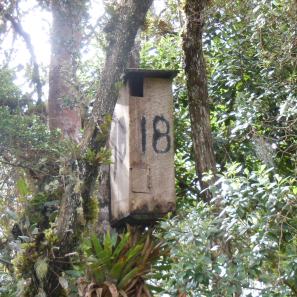 |
New artificial nests for Fuertes’s Parrot
Friday 27 July 2012.
With the aim of increasing the supply of nesting sites for Fuertes’s Parrot (Hapalopsittaca fuertesi) conservation staff have established 20 artificial nest boxes in the Giles-Fuertesi Reserve, in the hope that the species will continue to increase their population size.
 |
New Reserve in defense of the Indigo-winged Parrot
Monday 9 August 2010.
ProAves has set up the new 368 acre Giles-Fuertesi Bird Reserve that protects a unique High Andean cloud Forest located on the eastern flank of the Central Cordillera in Cajamarca, Tolima Dept. The reserve protects one of only two known breeding populations of the Indigo-winged Parrot and critical for its survival.
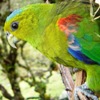 |
Stronghold site for Fuertes’s Parrot saved
Monday 16 February 2009.
ProAves has purchased and saved 1,500 acre of montane forest for one of Colombia’s most endangeered species, the Fuertes’s Parrot, thanks to American Bird Conservancy and IUCN Netherlands/SPN and Netherlands Postcode Lottery.


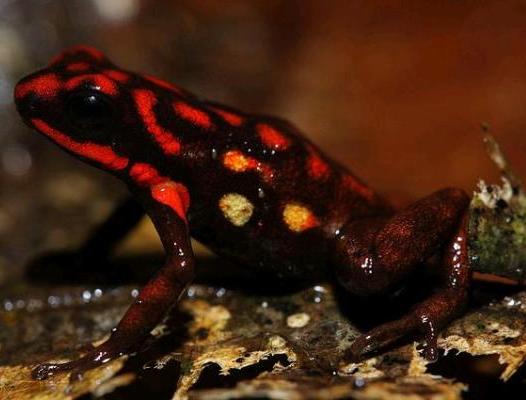 |
| Ranitomeya doriswainsonae |
Establishment:
Ranita Dorada Amphibian Reserve, the first in the world created for the conservation of threatened species in this order, was established in December 2008, with the contribution of important institutions such as IUCN Netherlands, Dendrobatidae Nederland, Conservation International and Netherlands Postcode Lottery,in order to preserve a piece of subtropical forest inhabited by two endemic and endangered Colombia: Ranitomeya doriswainsonae and Ranitomeya tolimense, described in 2006 and 2007 respectively.
Among the objectives of conservation included the following species: Cochranella rosada EN, Cochranella susatamai VU, Cochranella punctulata VU, Centrolene prosoblepon LC, Centrolene robledoi VU, Bolitoglosa lozanoi LC, Eleutherodactylus fallax EN, Eleutherodactylus penelopus VU and Eleutherodactylus raniformis VU, these species were found outside a conservation scheme directed to protecting and restoring forests in highly processed in the town of Falan North of the department of Tolima.
Location and Area:
it is located on the western flank of the Central Andes in the locality of the El llano, belonging to the village of Frias, Southwest of the town of Falan, North of the department of Tolima, Colombia (5º 01’N 75º 02’W) It covers an area of 284 acres distributed in an altitudinal range between 1.580 and 1.900 m approximately above sea level.
Ecosystem:
Weather: Predominantly an average temperature between 15 and 22 ° C. The mean annual rainfall varies between 2,000 and 2,500 mm (HIMAT, 1990) in the municipality. The seasonal pattern of rainfall is bimodal type and the rainy months are mostly March, April and May.
Life Zone:
According to the classification system of life zones by Holdridge, the town can be considered as lower montane wet forest (BMH-MB) (IGAC 1977).
Biodiversity:
The Town of Falan has a high faunal diversity index with records of 291 species of birds up to the present, of which 6 species are endemic to Colombia: Ortalis columbiana, Capito hypoleucus, Myiarchus apicalis, Euphonia concinna, Habia gutturalis, Atlapetes flaviceps; 40 species of mammals, of which is highlighted the presence of Saguinus leucopus, endemic marmoset EN and the nocturnal monkey Aotus griseimembra VU (Quevedo, 2002.) Additional off limits records of the Coral Snake Micrurus ancoralis and a lizard Echinosaura horridus Gymnophthalmidae for the central mountains. Additionally, a representative number of amphibians threatened with Cochranella rosada EN, Cochranella susatamai VU, Cochranella punctulata VU, Centrolene prosoblepon LC, Centrolene robledoi VU, Bolitoglosa lozanoi LC, Eleutherodactylus fallax EN, Eleutherodactylus penelopus VU, and Eleutherodactylus raniformis VU have been reported.
Projects:
Income and visits:
fundacion@proaves.org
Related news
 |
Commitment to threatened amphibians
Thursday 15 July 2010.
Fundación ProAves anticipates a successful process of restoring the habitat of the Little Golden Frog (Ranitomeya tolimensis) designed to restore native forests in the upper part of the municipality of Falan.
 |
ALERT: illegal frog smugglers visiting Colombia
Friday 9 July 2010.
The attractive and endemic frogs of Colombia is attracting illegal traffickers from Europe. Through informants in Germany, ProAves has petitioned the Colombian government and immigration officials to be on the look-out for 4 notorious illegal frog collectors who are planning to visit Colombia soon.
 |
Illegal wildlife trafficking in Colombia
Thursday 1 July 2010.
Due to its strategic location, Colombia is one of the most biologically diverse countries in the world, a situation that makes it vulnerable to trafficking and illegal trade in endangered species with terrible consequences for conservation.
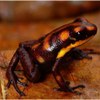 |
Ranita Dorada Amphibian Reserve in DN Magazine
Thursday 26 November 2009.
The Dutch DN Magazine, specialized in the publication of Poison-dart frog news, published an extensive article and video of the ProAves Ranita Dorada Amphibian Nature Reserve.
 |
World’s first Amphibian Reserve launched in Colombia
Tuesday 23 December 2008.
2008 is “The year of the frog” and ProAves is proud to launch the world’s first amphibian reserve, the Ranita Dorada Amphibian Reserve, to protect a unique forest for amphibians in the Cordillera Central of Colombia, including the Little Golden Poison Frog.
|
Última actualización : Viernes 2 de julio de 2010 Adquiera libros de manera fácil Escriba a gcurrego@proaves.org. Envíos a cualquier parte del país o visite la sede central de Fundación ProAves en la ciudad de Bogotá (Carrera 20 # 36-61) Listado de Libros a la venta:
Descripción: coincidiendo con el Bicentenario de la independencia, ProAves publica esta Guía que reúne bellas ilustraciones originales de cada una de las 1.879 especies de aves de nuestro país. Es muy fácil de utilizar y constituye la primera guía de bolsillo para la más rica avifauna del mundo.. Para comprar el libro en línea entra aquí
Descripción: La 4ª edición de la Lista contiene datos sobre las 1.879 especies que se encuentran en Colombia. El listado es del mismo tamaño compacto y de bolsillo que tiene la nueva Guía de Campo de las aves Colombianas; además, sigue la misma secuencia y nomenclatura para que sea más fácil la consulta simultanea entre los dos libros. Revista Conservación Colombiana
Título:Edición Nº1 Loros amenazados de Colombia: parte 1.
Título: Edicion Nº2. Loros amenazados de Colombia: parte 2.
Título: Edición Nº3. Biodiversidad y conservación en la Serranía de los Churumbelos.
Título: Edición Nº5. Listado de aves de Colombia 2008.
Título: Edición Nº7. Plan de manejo y conservación del loro coroniazul.
Título: Edición Nº13. Una nueva especie de tororoi de la Reserva Natural de las Aves Colibrí del sol, colombia / Revisión del estatus de especies de aves en Colombia. Libros:
Título: Cuidado, manejo y conservación de las colecciones biológicas.
Título: Mamíferos colombianos – Sus nombres comunes e indígenas.
Título: Congreso mundial de páramos. Memorias Tomo I
Título: Congreso mundial de páramos. Memorias Tomo II
Título: Congreso mundial de páramos. Resúmenes.
Título: Congreso mundial de páramos. Memorias
Título: Un recorrido por el páramo. Cartilla Ambiental
Título: Lecciones del campo II. La iniciativa Tagua
Título: Los pájaros de mi ciudad. Relatos desde Bogotá.
Título: Libro Rojo de los Anfibios de Colombia.
Título: Un compañero neotropical. Serie Libretas de Campo – Mini Guías Descripción: Estas libretas muestran gráfica y animadamente al usuario la problemática del grupo que se está considerando; además ilustran sobre posibles soluciones para minimizar el conflicto y le invitan a colaborar con esta tarea.
Título: Nº 1: Tortugas marinas neotropicales.
Título: Nº 2: Loros, pericos & guacamayas neotropicales.
Título: Nº 3: Paujiles, pavones, pavas & guacharacas neotropicales.
Título: Nº 4: Mamíferos acuaticos y relacionados con el agua.
Título: Nº 5: Ranas arlequines. Afiches: ProAves 10 años conservando.
|
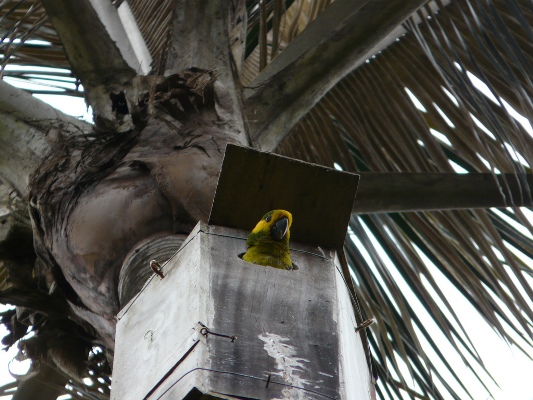
Inscríbete en línea ya, haciendo clic aquí
Objetivo
Aumentar la oferta in situ de nidos para las especies de loros más amenazadas del país incluyendo las endémicas, siendo una alternativa inmediata frente a la escasa oferta de nidos, entretanto se recuperan su hábitat, actualmente afectados por diferentes factores como la deforestación, actividades agropecuarias, extracción de madera, cultivos ilícitos entre otros que han contribuido a la disminución de la oferta de nidos naturales.
Descripción de la posición
Estará a cargo de tomar los datos correspondientes, ser responsable de los equipos necesarios, llevar a cabo la limpieza de los nidos acorde con sus necesidades, reubicar los mismos si esto así lo amerita, y en general prestar la asistencia requerida a las actividades en campo. Llevara a cabo con entusiasmo y compromiso las labores asignadas, debe ser una persona proactiva en el cumplimiento de sus responsabilidades con o sin supervisión.
Actividades del Ecovoluntario
. Toma de datos en campo
. Apoyo con equipos
. Construcción de nuevos nidos artificiales
. Instalación y mantenimiento de nidos artificiales.
. Limpieza de nidos
. Asistencia en campo con las actividades relacionadas al programa
. Reubicación de nuevos nidos
Duración
El mínimo tiempo requerido para trabajar en este proyecto es de un mes. Los Ecovoluntarios trabajarán un promedio de 40 horas a la semana, el horario de atención al programa es de 08:00 -5:00 p.m. El proyecto comienza el lunes de cada mes con excepción de aquellos días que sean festivos. En el mes de diciembre por motivos de las festividades no se estarán recibiendo Ecovoluntarios.
Perfil del Ecovoluntario
Ser mayor de 18 anos, con flexibilidad para trabajar en campo con condiciones difíciles. Habilidad para crear nuevas estrategias, con capacidad para trabajar sin supervisión. Actitud de trabajo con motivación y entusiasmo y estar dispuesto a llevar un estilo de vida simple. No es necesaria alguna experiencia previa, solo el interés de aportar a la conservación de la biodiversidad. No se requiere título universitario. Para extranjeros se necesita un nivel básico del idioma español.
Alojamiento:Los Ecovoluntarios pueden trabajar en: Reserva Natural de las Aves El Dorado.
¿Qué debe traer el voluntario?
 Repelente contra insectos (es recomendable 40% DEET) Crema de protección solar Linterna Baterías Cantimplora Navaja Botas de caucho Chaqueta impermeable Camisetas con mangas largas Traje de baño Zapatos para caminar (Trekking) Gorra Saco para dormir (opcional) Sandalias Toalla Cámara-binoculares Libros para leer Bolígrafo Tiempo Libre: Los fines de semana los Ecovoluntarios tienen la opción de realizar algunas actividades turísticas cercanas a las reservas como caminatas, senderismo, y en algunos casos a las playas cercanas, al igual que visitar a otros pueblos y lugares arqueológicos. (los costos los asume el Ecovoluntario)
Incríbete en línea ya, haciendo clic acá
Para mayores informes cominíquese con Gloria Castillo a gcastillo @ proaves.org
{articlesofcategory=39,3}
 |
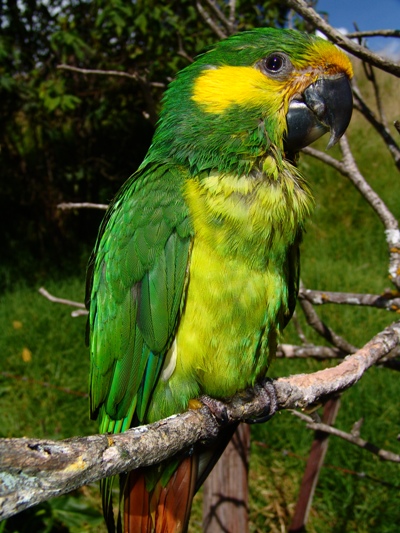 |
| Yellow-eared Parrot (Ognorhynchus icterotis) |
Establishment:
The Yellow eared Parrot Bird Reserve was established on May 6th, 2006, in order to ensure survival and to promote conservation actions targeting populations of Yellow-eared Parrot (Ognorhynchus icterotis) and Wax Palma (Ceroxylon quindiuense), national tree of Colombia and in danger of extinction, areas of Jardín, and Riosucio and Antioquia, Caldas, Colombia.
Location and Area:
It is located in the village of Ventanas, an hour’s journey from the Township of Jardín, (Antioquia) on the road that links this municipality with Riosucio, Caldas. It has an area of 465 acres and has altitudes ranging from 1,900 to 2,600m above sea level is classified by the Alliance for Zero Extinction as an AZE site. (See Map).
Biological Significance:
The most important birds for conservation are the Yellow-eared Parrot (Ognorhynchus icterotis) and the Dusky Starfrontlet (Coeligena orina), among others. The wildlife is rich and varied, with mammals such as the spectacled bear (Tremarctos ornatus) and deer. Within the characteristic vegetation of the reserve stocks of the Wax Palm (Ceroxylon quindiuense) can be found and a species of Passion Flower endemic to the area of Jardín (Passiflora jardinensis).
Weather:
Registers temperatures ranging between 4 and 24 ° C.
Physical aspects and ecosystem:
The reserve is located in a montane rain forest, of which 97% relate to areas of natural forest areas and 3% being regeneration. It has two water sources that originate at the headwaters.
Conservation:
Project Ognorhynchus, ecological restoration, Co-operation and Silvopastoral, Artificial nests program, and Wax Palm nurseries.
Environmental Education:
Campaign Reconciled with nature, parrot bus, friends of birds schools, bird friends group.
Research:
Facilities:
Capacity of accommodation for eight people.
Attractions:
Hiking and bird watching can be done on the reservation, drinking places for hummingbirds, feeders for Grallaria (Grallaria fenwickorum), parrot dormitories, Wax Palm nursery.
General Recommendations:
Admission and tours:
fundacion@proaves.org
With the support of:
|
|
 |
Related news
 |
ProAves and the Yellow-eared Parrot in the Audubon Magazine
Tuesday 3 Abril 2012.
In the latest edition of the renowned Audubon Magazine (March-April 2012), writer Susan McGrath describes her tour through Colombia, her visits to ProAves reserves, and the historic rediscovery of the Yellow-eared Parrot and its remarkable recovery after it was believed to be extinct.
 |
10 years of saving the Yellow-eared Parrot
Monday 30 November 2009.
Thanks to ten years of conservation efforts with over 180 people, ProAves is delighted to report the recovery of the Yellow-eared Parrot (Ognorhynchus icterotis) from 81 individuals in 1999 to over 1000 in 2009.
 |
Yellow-eared Parrot added to municipality shield
Tuesday 24 November 2009.
Thanks to our conservation work in Jardin, Antioquia, the Yellow-eared Parrot has been named as the municipality’s official bird. The community of Jardin have also changed their shield to add the parrot.
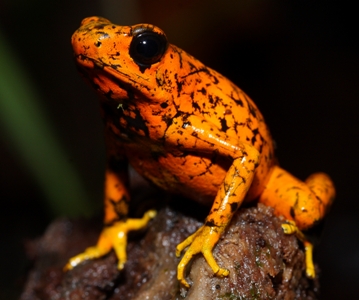
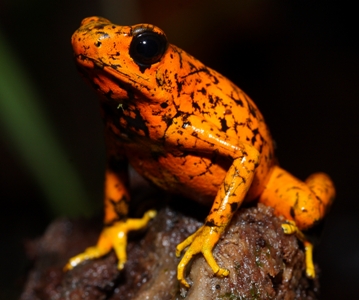 ProAves Foundation (or ProAves UK) is the sister organization in the UK of Fundación ProAves. The main aim of ProAves Foundation is to support the work of Fundación ProAves, for example through fundraising and other initiatives.
Important work by ProAves Foundation to date has included:
 Fundraising and support for the purchase of various reserves in ProAves’ reserve network, particularly Pangan and El Dorado.
Fundraising for various ProAves research programs and expeditions (e.g. EBA project).
The establishment and operation of a ProAves Trust Fund for the costs of managing ProAves’ reserve network.
ProAves Foundation is a charitable trust registered in the UK with the Charities Commission http://www.charity-commission.gov.uk/registeredcharities/showcharity.asp?remchar=chyno=1098530 (registered no. 1098530). Important details about ProAves Foundation are included in the Charity Commission’s website in the link above.
The trustees of ProAves Foundation are: Thomas Donegan, Robert Giles, Nigel Hughes, Mark Mulligan, Claire Salaman and Paul Salaman. Various of these persons are also on the Consejo de Directores of Fundación ProAves.
ProAves Foundation has no office in the UK. Its trustees are volunteers concerned at furthering the cause of conservation in Colombia.
If you pay income tax in the UK and would like to make a donation to ProAves, we are a member of the government’s gift aid scheme.
As a UK-registered Charity we are able to claim back the tax on all donations made by UK tax payers. At present the amount we receive is 22% (i.e. 28p extra for every £1.00 you donate). A form is available online.
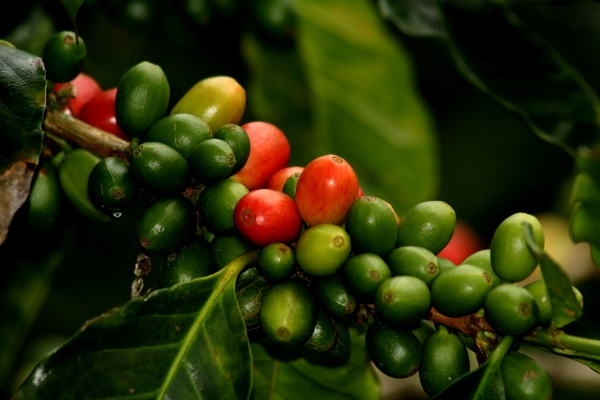
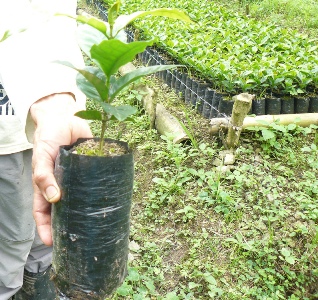
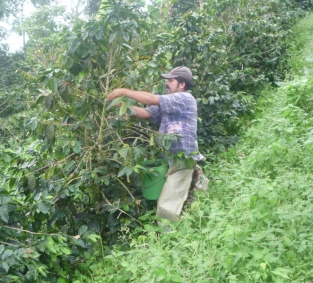

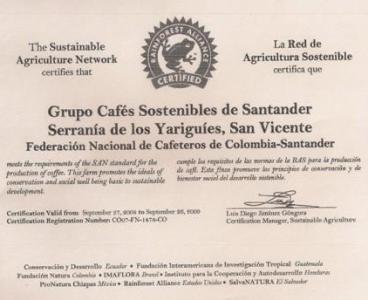

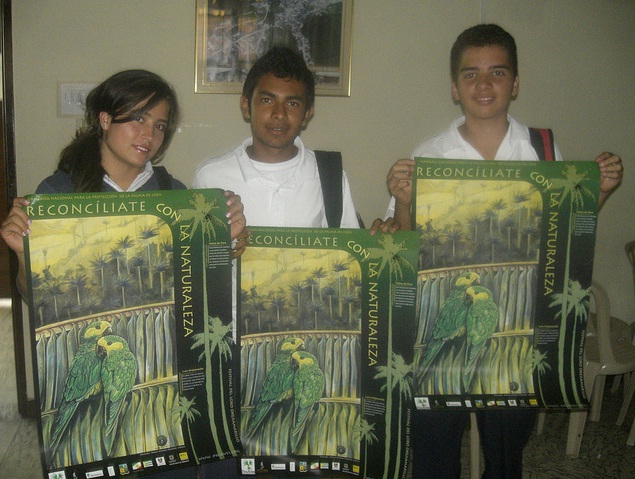
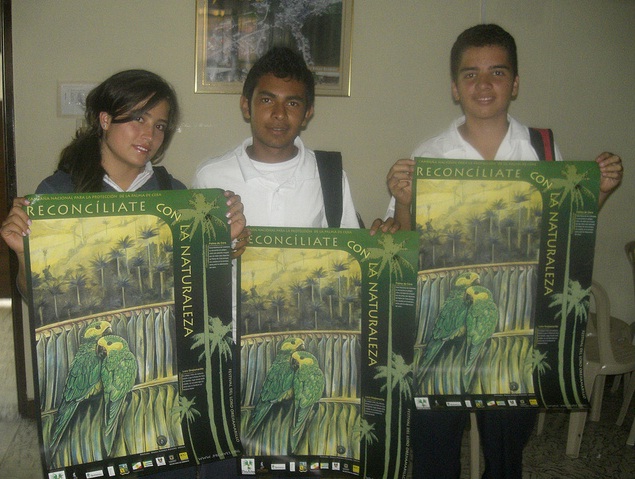
Mostly directed to educational institutions with 10th and 11th level (high school), in which social service is a curricular obligation; Fundación ProAves proposes the linkage to diverse activities being carried out in each of its Natural Reserves.
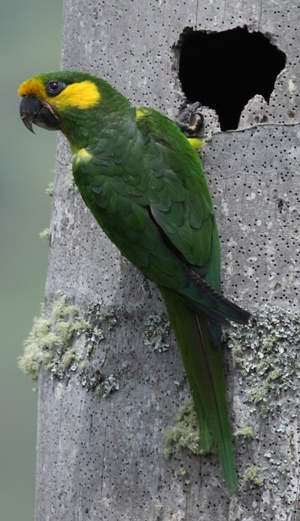
|
b. To develop studies and investigations about distinct aspects of the biology and living environment of the birds of Colombia and promulgate these studies throughout the American continent. c. To maintain a database on the bird populations in Colombia and the American continent. d. To inform all education levels in the country and abroad about the importance of birds and their natural environments. e. To encourage and establish national and international agreements for the protection and management of birds. f. To promote the development of protection and conservation policies for birds and their habitats. g. To develop educational programmes directed at the scientific community and the general population promoting the knowledge of basic biological aspects of birds and their habitats. h. To promote the establishment of natural reserve areas in civil society and the awareness of incentives, including economic incentives, for the conservation of natural resources and sustainable development, in agreement with current legislation. |
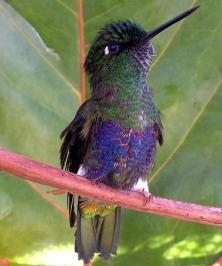
Establishment: The Mirabilis-Swarovki Bird Reserve was established on May 20, 2005 in order to conserve the habitat of the Hummingbird, Colorful Puffleg (Eriocnemis mirabilis) and other endemic species of importance to the area. It is considered by the Alliance for Zero Extinction as a site AZE. Location and Area: It is located on the western slopes of the Cordillera Occidental of Colombia, in the town of El Tambo, Cauca province, 70 kilometers from the city of Popayan. This reserve is part of the buffer zone south of Munchique National Park (44,000 ha), on July 20, hamlets sectors and Huisito. (See map). The reserve covers an area of 3.405 acres and is located at an altitude range between 1,500 and 3,020 meters. Biological importance: The following species have been reported in the reserve that have some risk of extinction: the Hummingbird, Colorful Puffleg (Eriocnemis mirabilis), the Chestnut Wood-quail (Odontophorus hyperythrus), the Munchique Wood-Wren (Henicorhina negreti) and the Tanager-finch (Oreothraupis arremonops). Other important endemic species can be observed in the area, but do not have any endangered category: the Plain-breasted Hawk (Accipiter ventralis) and the Hummingbird Velvet-purple coronet (Boissonneaua Jardini), among others. Some of the possible mammal species seen in the area are Common Opossum (Didelphys marsupialis), The White-lipped Peccary (Tayassu peccary) and the tree squirrel (Sciurus sp), among others. Climate: The minimum temperature in the cold months of November and December is 12 º C and maximum temperature in the hot months of July and August is 26 º C. Conservation: Facilities: It has no accommodation for visitors. Tourist Attractions: The main attraction consists of observing wildlife in the area, mainly from groups such as birds and mammals and botanical groups such as orchids and epiphytes. Besides this activity, the reserve has suitable infrastructure for walking and observatories for high and low regions of the Biogeographic Chocó, from which in the summer the Pacific Ocean and Gorgona Island can be glimpsed. General recommendations:
Entry and visits: write to fundacion@proaves.org With the support of:
|
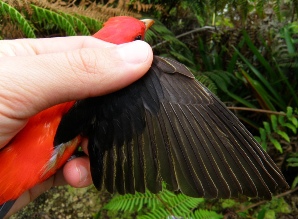
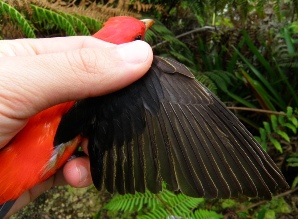
Aimed at students, professionals, representatives of governmental and nongovernmental organizations from all countries of Latin America with prior basic experience in catching, handling and banding of birds that want to delve into this technique and receive high level training for its completion.
Objective
Raise the level of people with basic experience in banding and provide advanced training in this technique to raise the level of banders in Colombia and Latin America to internationally accepted standards.
Bird banding is a technique that requires practice to be perfected. From the ring to the most experienced rookie constantly needs to refresh their knowledge and exchange with others to adapt new techniques to further progress and better quality of information that is collected. Learning never ends and the good use of this tool is important to raise awareness about birds in the Neotropics.
Upon completion of the course participants will be able to:
• Determining the age and sex of the species using general methods (eg, different generations of feathers, a feather, growing rods and wear, brood patch, cloacal protuberance, sexual dimorphism in color or size). And as these general methods are related to specific criteria used to determine the age and sex of birds within the life cycle of the species.
• Use the book Identification Guide to the Birds of North America (Pyle 2001) for identification and determination of the age and sex of Neotropical migratory birds.
• Recognize the health of a bird as hypothermia, overheating, stress, cramps, weakness, and to take necessary measures to ensure the welfare of the bird.
• Code the proportion of the development of flight feathers in the molting process (quantification d moves) and understand its relationship to life history and ecology of the species. And as this is useful for determining the age of the bird in the hand.
• Estimate the wing formula, number of primaries emarginate, number of primaries to the wing tip (primary longer) and length of the second primary in relation to the other primaries of equal length.
Course Structure
Six modules to be developed in theoretical sessions – and practices
a. Standardization of techniques for capturing
b. Security during annealing
c. Quantification of the mute
d. Determination of fitness of the bird
e. Formula wing
f. Banding project formulation and analysis
For more information:
cursos@proaves.org
Related news
 |
Six nations join the III Advanced Banding Course
Monday 3 December 2007.
The 3rd Advanced Banding Course by ProAves was carried out from October 19-29, 2007, at the El Dorado Bird Reserve. 21 students from Nicaragua, Panamá, Venezuela, Chile, Ecuador and Colombia attended.
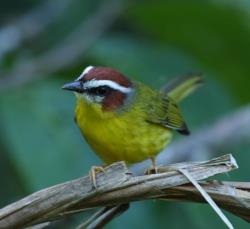


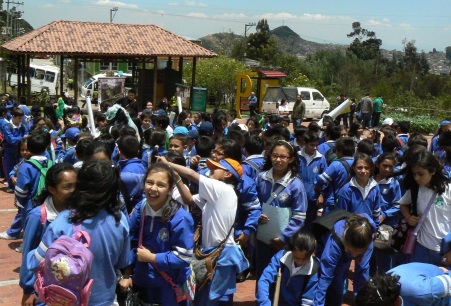
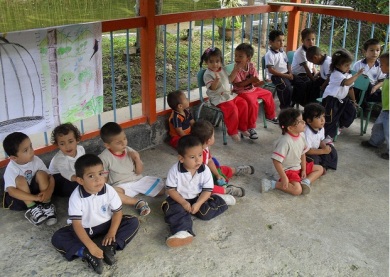
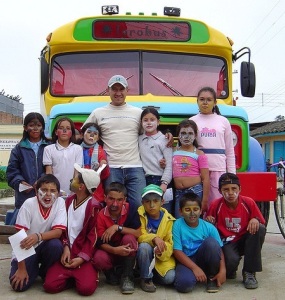

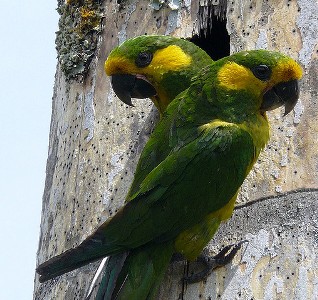 These two colonies have been monitored since then and several studies have been carried out. This has allowed ProAves to get very relevant information regarding their diet, distribution, reproductive biology, use of their habitat and demography among others and all this data has been compiled in a database to use it a the basis for the programming phase of a future strategic action aimed at the preservation of these species.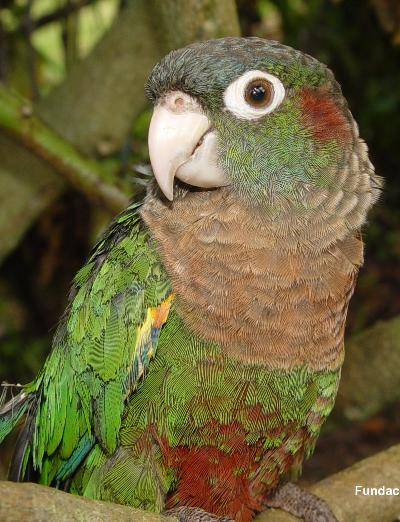

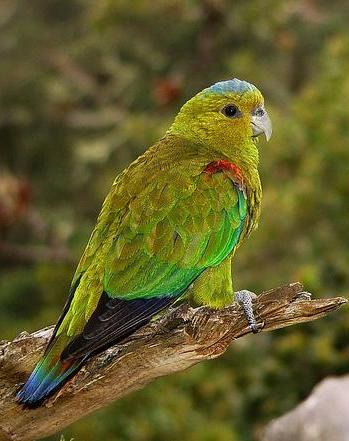

 Título: Guía de Campo de las Aves de Colombia.
 Título: Lista de las Aves de Colombia.