Fundación ProAves – por la conservación en el país de las aves

Categories
Uncategorized @en

Prueba

Reserva ProAves

Revisar señalética de rutas de evacuación con Susana
Revisar señalética de rutas de evacuación con SusechfewfV S  ana

Revisar señalética de rutas de evacuación con SusanaRevisar señalética de rutas de evacuación con SusanaRevisar señalética de rutas de evacuación con SusanaRevisar señalética de rutas de evacuación con SusanaRevisar señalética de rutas de evacuación con SusanaRevisar señalética de rutas de evacuación con SusanaRevisar señalética de rutas de evacuación con SusanaRevisar señalética de rutas de evacuación con SusanaRevisar señalética de rutas de evacuación con SusanaRevisar señalética de rutas de evacuación con SusanaRevisar señalética de rutas de evacuación con SusanaRevisar señalética de rutas de evacuación con SusanaRevisar señalética de rutas de evacuación con SusanaRevisar señalética de rutas de evacuación con SusanaRevisar señalética de rutas de evacuación con SusanaRevisar señalética de rutas de evacuación con SusanaRevisar señalética de rutas de evacuación con SusanaRevisar señalética de rutas de evacuación con SusanaRevisar señalética de rutas de evacuación con SusanaRevisar señalética de rutas de evacuación con SusanaRevisar señalética de rutas de evacuación con SusanaRevisar señalética de rutas de evacuación con SusanaRevisar señalética de rutas de evacuación con SusanaRevisar señalética de rutas de evacuación con SusanaRevisar señalética de rutas de evacuación con SusanaRevisar señalética de rutas de evacuación con SusanaRevisar señalética de rutas de evacuación con SusanaRevisar señalética de rutas de evacuación con SusanaRevisar señalética de rutas de evacuación con SusanaRevisar señalética de rutas de evacuación con SusanaRevisar señalética de rutas de evacuación con SusanaRevisar señalética de rutas de evacuación con SusanaRevisar señalética de rutas de evacuación con SusanaRevisar señalética de rutas de evacuación con SusanaRevisar señalética de rutas de evacuación con SusanaRevisar señalética de rutas de evacuación con SusanaRevisar señalética de rutas de evacuación con SusanaRevisar señalética de rutas de evacuación con SusanaRevisar señalética de rutas de evacuación con Susana

Categories
News Noticias El Pangán

The list of amphibians in the El Pangán ProAves Reserve increases

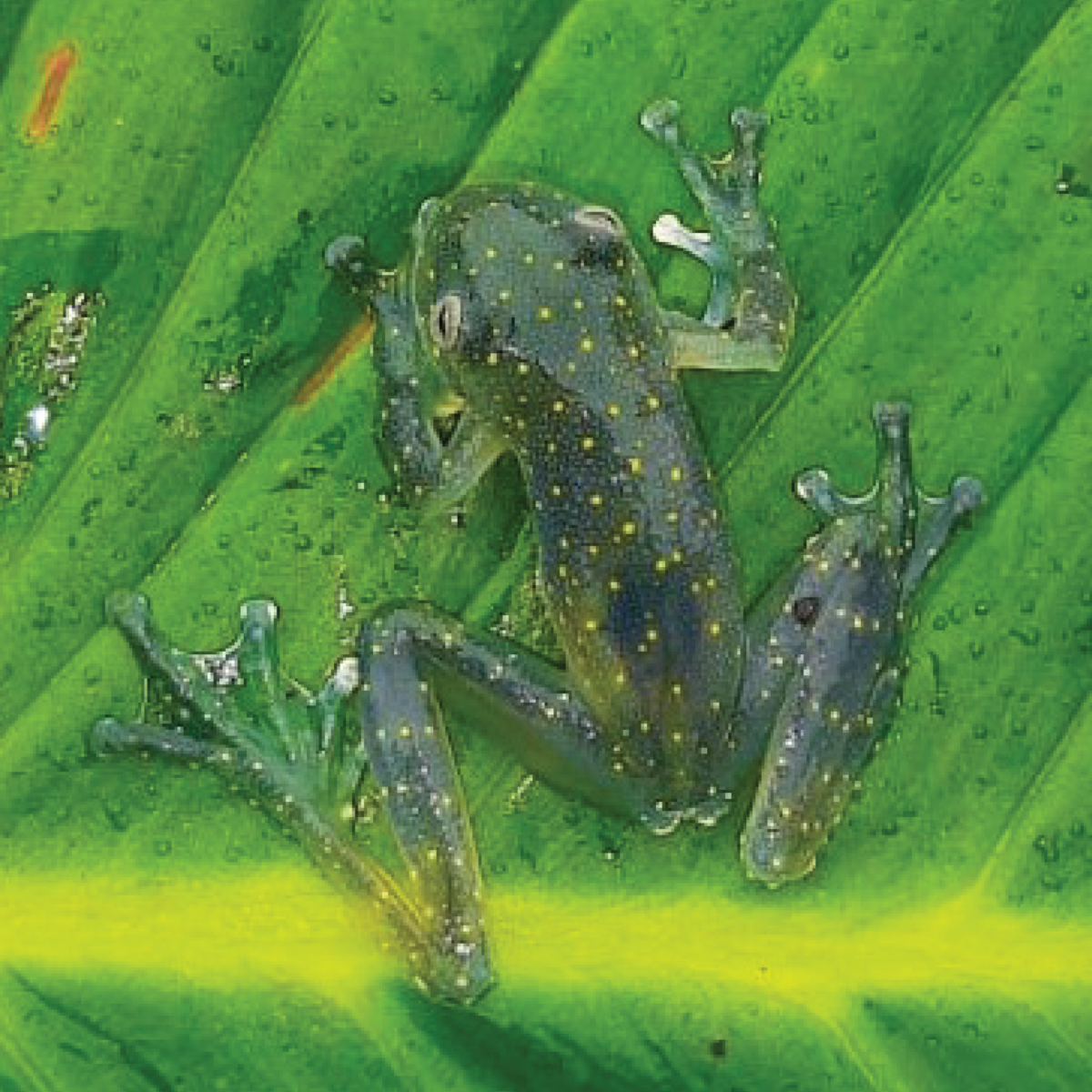
The ecosystems that the El Pangán ProAves Reserve protects are exuberantly beautiful and extraordinarily diverse. A few days ago, in the midst of a torrential downpour, the Deputy Director of the Southwestern Region of the Fundación ProAves, Juan Carlos Luna, observed for the first time in the protected area the presence of the Mache Glass Frog (Cochranella mache).

This would be the first confirmed record for the department of Nariño. Previously the species had been reported for the departments of Antioquia, Valle del Cauca and Chocó. The Mache Glass Frog is distributed west of the Andes of Ecuador and Colombia in the Chocó tropical forest. 

Its range includes lowland forests of northwestern Ecuador and Colombia, an area under constant pressure from logging companies, especially on the Ecuadorian side. This species is nocturnal and is associated with small bodies of water in primary and secondary forests.

The site where this individual was found is primary and well-preserved forest. It was found approximately 30 centimeters from the ground and was located thanks to its vocalization.

The name Cochranella is a patronymic in honor of Doris Mable Cochran, curator associated with the National Museum of Natural History of the Smithsonian Institution, who focused her research mainly on the Herpetofauna of Western India and South America, especially Brazil and Colombia. The specific epithet refers to the name of the Mache Mountain, where the species is was first described.

Thanks to the World Land Trust (WLT), American Bird Conservancy (ABC), Neotropical Migratory Bird Conservation Act (NMBCA) and Women for Conservation for their great commitment to the threatened amphibians of Colombia.

U.S. Fish & Wildlife Service
Categories
News Noticias Ranita Terribilis

A new hope for the world’s most poisonous frog

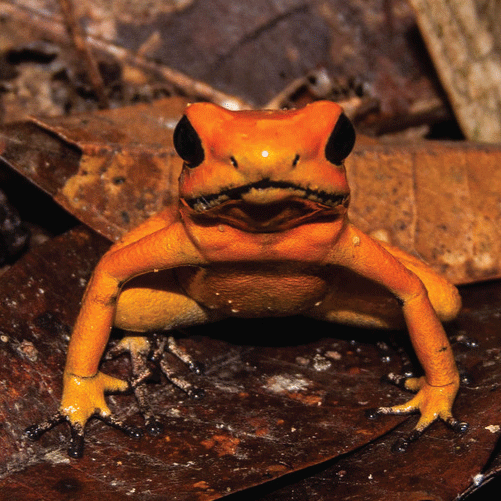
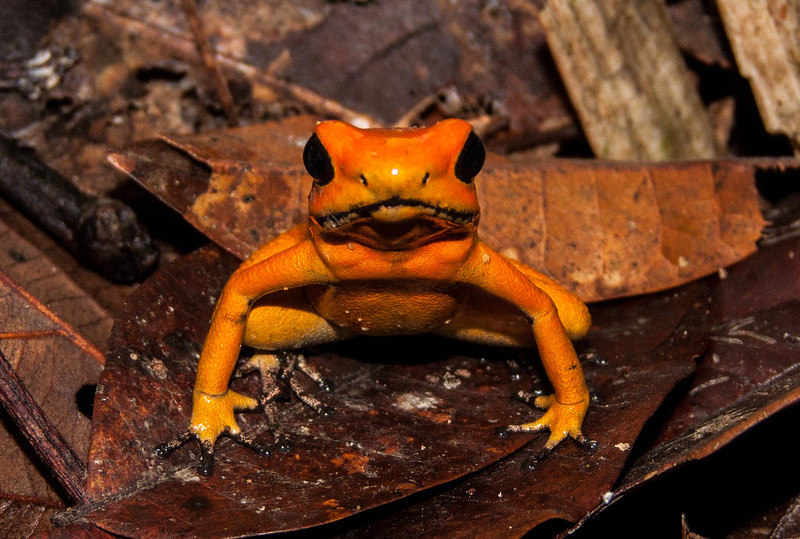
Located to the western side of the department of Cauca, on the banks of the imposing Timbiquí River, stands one of the most important areas on the Pacific Coast for the conservation of nature. There lies the Ranita Terribilis ProAves Reserve; established in 2008 by the Fundación ProAves to protect populations of the world’s most poisonous amphibian, Phyllobates terribilis.

The Golden Poison Dart Frog (La Rana Kokoi in Spanish), named after the ancestral people Eperara Siapidara, is a species of amphibian belonging to the Dendrobatidae family. There are several species of poisonous and endemic frogs in this family, from Central and South America, that are called poison dart frogs. This name comes from the fact that indigenous tribes used to smear the tips of their arrows on the back of the frog before hunting animals.

The distribution of the Golden Poison Dart Frog, considered an endemic species of Colombia, is restricted only to the department of Cauca. But the Dendrobatidae family, to which this amphibian belongs, is present in the entire biogeographic region of Chocó, from the department of Chocó in Colombia, to the province of Manabí in Ecuador.

Within the large family of Dendrobatids, La Rana Kokoi is relatively large, with adult individuals reaching between 5 and 5.5 centimeters. The entire group of poisonous frogs stands out, mainly, for different aposematic coloration patterns on the skin, a type of pigmentation that is usually related to the toxicity of the animal and functions as a warning sign against potential predators. Despite their name, not all Golden Poison Dart Frogs are golden; there are three different color morphs in the region.

PROTECTING THE HOME OF THE MOST POISONOUS AMPHIBIAN ON THE PLANET

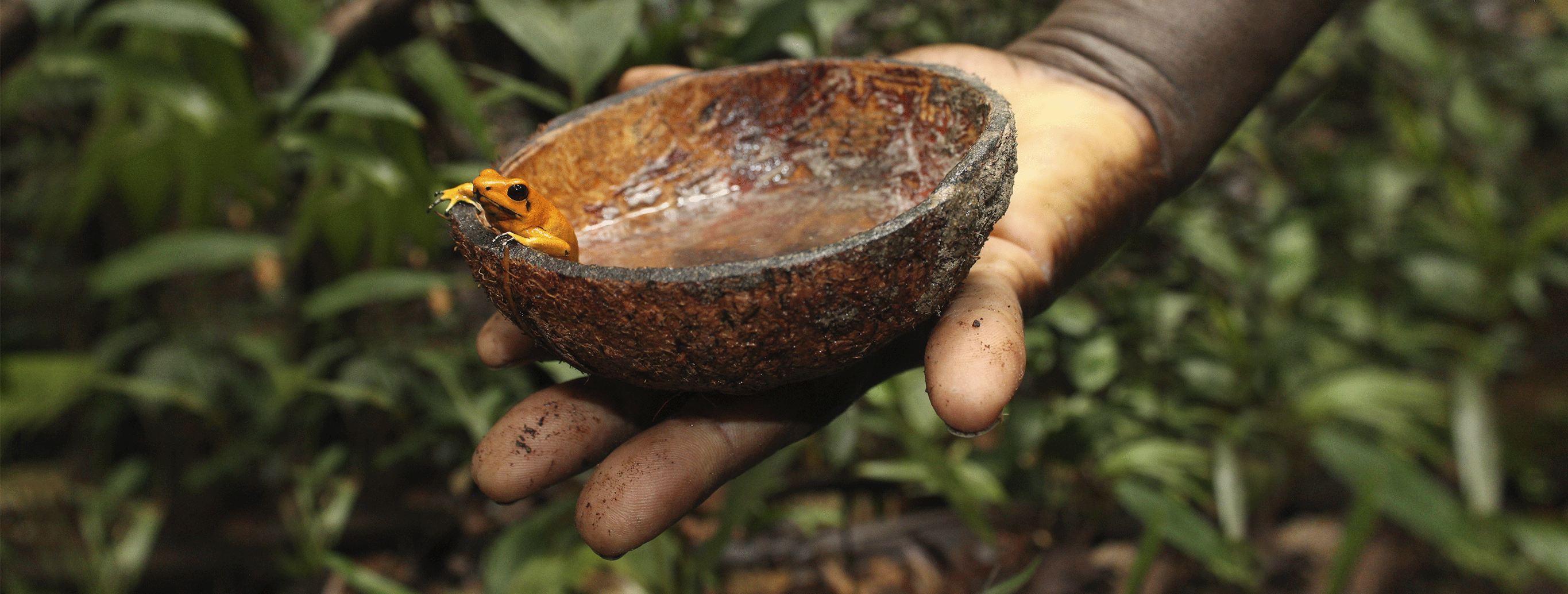
The Ranita Terribilis ProAves Reserve is home to 2 of the 3 morphs present in the region. Empty coconut covers have been installed in the protected area for several years, with the purpose of being used by the frogs to deposit their young, helping the reproduction of the species; That is why one of the most important tasks of our team within the Nature Reserve is the daily monitoring of the population of Phyllobates terribilis. 

The Golden Poison Dart Frog is listed as an endangered species, according to the IUCN red list, despite having a powerful defense system against predators. The survival of this amphibian is mainly threatened by human interference in its habitat due to hunting, capture and deforestation. Illegal wildlife trafficking in many places has caused enormous damage to populations leading to extinction.

THE HABITAT OF ONE OF THE DEADLIEST ANIMALS IN THE WORLD

In their natural habitat, these frogs are diurnal, they tend to look for food mainly in the morning and early afternoon. It is a carnivorous animal, whose diet consists of insects, mainly ants of the Brachymyrmex and Paratrechina families. Although they also catch crickets, caterpillars, flies, cockroaches, and beetles, among other insects.

Currently, many specialists assume that the very high toxicity of the Golden Poison Dart Frog is due to the high consumption of a small species of beetle, which in addition to producing formic acid, would also be capable of synthesizing Batrachotoxin. It is believe that the presence of this chemical in the frog’s diet contributes to their toxicity.

However, this hypothesis has not yet been confirmed. Within the same protected area, one of the ants most feared by the locals stands out, it is the Paraponera clavata, known locally as Konga. The pain from the sting of this insect is said to be greater than that of any other Hymenoptera and is classified as the most painful, according to the Schmidt index of pain by sting. It is possible that La Rana Kokoi includes this type of ants in its diet, making it the most poisonous amphibian on the planet.  It’s so venous that the venom of a single frog would be enough to kill 10 people.

We thank the World Land Trust (WLT) and the American Bird Conservancy (ABC) for helping us protect and conserve the world’s most poisonous amphibian, Phyllobates terribilis.

Categories
News

New Amphibian Species Recorded in Colombia!

In the expeditions carried out in the El Pangán ProAves Reserve, our field team was able to register a new species of amphibian, Pristimantis ornatissimus, for the first time in Colombia. For many years, this species was considered endemic to Ecuador.

EL PANGÁN PROAVES RESERVE, HOME TO THOUSANDS OF FLORA AND FAUNA SPECIES

The El Pangán ProAves Reserve is located in the foothills of the Pacific Slope of the Western Andes range, in the municipality of Barbacoas (Nariño Department). This protected area is located within the biogeographic region of Chocó, one of the areas with the highest amount of endemism on the continent. This makes the Nature Reserve a “Biodiversity Hotspot” and one of only 25 regions of the world classified as priority for nature conservation. 

The area where the Nature Reserve is located has an extraordinary biodiversity, making it a hotspot for the identification of new species. In this region, deputy director of the ProAves Southwest Region, Juan Carlos Luna, was able to confirm the presence of Pristimantis ornatissimus, considered endemic to Ecuador for many years.

The first record occurred in 2003, during the Migratory Bird Monitoring project of Fundación ProAves in the El Pangán. In April 2021, a second individual was registered at an elevation of 1,450 meters above sea level, in the upper part of the same Nature Reserve.

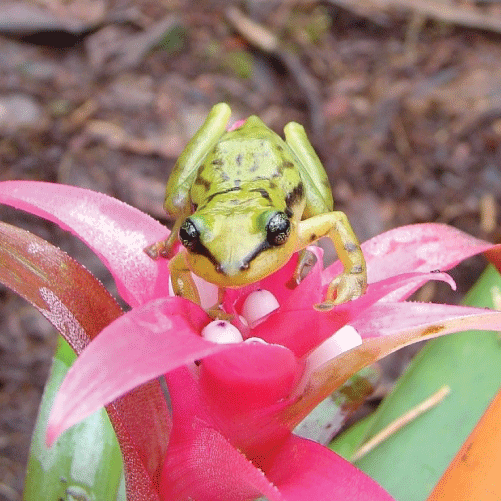
The finding of this species constitutes the first documented record for Colombia, showing that the species is expanding its range. Pristimantis ornatissimus is known to prefer well-preserved forests and, in both observations, the species was recorded in association with Heliconias, 60 centimeters above the ground.

The original distribution of this species in Ecuador is in the northwestern foothills of the Andes Mountains, with additional records in the provinces of Esmeraldas, Pichincha, Santo Domingo de los Tsáchilas, Cotopaxi and Carchi. This new registry in Colombia, in the Municipality of Barbacoas (Nariño Department), constitutes the first documented report for the country. These findings confirm the species has expanded its distribution range by several kilometers into the southwest region of Colombia.

Pristimantis ornatissimus

This species is an anuran of the Strabomantidae family. Currently, this species is known to inhabit the tropical humid forests of Chocó, as well as western piedmont forest in its original Ecuadorian range. The coloration of this organism varies across its lifespan, from green to yellow on the dorsal surface. The back has longitudinal lines with black spots. Their feet may have an orange hue, and their belly is yellow or pale green. The iris can be yellow or gold with black crosslinks. It is known to inhabit primary and secondary forest.

Pristimantis ornatissimus is considered a rare species and its populations are currently declining, with its greatest threats being livestock, cropland expansion, agricultural pollution and road construction. These factors contribute to the species’ listing as Vulnerable (VU) on the IUCN Red List. Currently, habitat within its Ecuadorian range of distribution is highly fragmented. 

The presence of this beautiful species within the El Pangán ProAves Reserve reaffirms our never-ending commitment to the protection and conservation of this majestic ecosystem and its species.

We appreciate the great support of World Land Trust (WLT), American Bird Conservancy (ABC), Neotropical Migratory Bird Conservation Act (NMBCA) and Women for Conservation for helping us protect the most threatened amphibians in the country. Together for Conservation!


U.S. Fish & Wildlife Service
Categories
News Women for Conservation (Mujeres por la Conservación)

Children and Youth, the Future of Conservation

In order for the community to learn more about the species and the great diversity that inhabits its municipality, Fundación ProAves, under the auspices of Women for Conservation and the support of the Environment area of the Mayor’s Office of Mapiripán, created the “Mapiripán Bird Workshop” with children, youth and adults who live near the El Jaguar ProAves Reserve.

During the activities carried out in the municipal seat of the municipality of Mapiripán, department of Meta, the members of the Bird Group were able to see different species of birds in their natural state, and they learned to identify them and the importance they have for the ecosystems. Thanks to the guides and binoculars provided by the environmental authority CORMACARENA, the participants were able to closely observe the birds in all their beautiful detail: their beaks, colors, legs, plumage and unique behaviors. 

In one of the field trips, which coincided with the first assembly of the National Youth Environment Network Nodo Mapiripán, several teens from the Group of Birds in training were selected as leaders of the process. At the end of the event, 20 native trees were donated to the forest of the Jorge Eliécer Gaitán de Mapiripán Educational Institution, which thrive in the El Jaguar ProAves Reserve, thanks to the conservation work carried out by Reserve Ranger Daniel Villar.

Work with the communities

For ProAves it is essential to work hand in hand with local communities so they understand the importance of living in harmony with nature, value the biodiversity of their regions, and take action for conservation.

To this end, ProAves has created ecological groups called “Amigos de las Aves” (Friends of the Birds) in various regions of the country, especially where the Foundation maintains Protected Areas. These groups, made up of both children and adults, promote a key cultural transformation. The goal is to instill a deep respect and commitment to protect the environments where group members live. Through education and community involvement, ProAves hopes to ignite a lifelong passion for the natural world and inspire a generation of conservationists.

We appreciate the great support of Permian Global and Women for Conservation